
 A SCHOLARLY BOOK REPOSITORY


As this volume suggests, the distributional consequences of these proposals are substantially different and may disproportionately affect those groups who depend on social security to avoid poverty in old age. Together, these studies persuasively show that appropriately designed investment-based social security reforms can effectively reduce the long-term burden of an aging society on future taxpayers, increase the expected future income of retirees, and mitigate poverty rates among the elderly.

Some of his key findings include:
- U.S. debt is approaching 100 percent of GDP, the highest level since World War II.
- By 2050, debt is on track to reach an unprecedented 145 percent of GDP. Under one pessimistic (but probably more realistic) scenario, CBO estimates that debt could rise to 244 percent of GDP, which means lights out.
- By 2050, federal spending is projected to exceed 29 percent of GDP, levels not seen since the height of World War II. We’re on track to spending more money on baby boomers in retirement than we did to defeat the Nazis.
- Since 1984, the median net worth for households headed by someone under the age of 35 has declined 68 percent. For retirement age households, net worth has increased 42 percent over that same period. The result is the largest generational wealth gap in history. Boomers did better than their kids in early adulthood, and will do better than their kids in retirement.
- As millennials remain childless and single for longer, they face one of the highest tax rates (16.9 percent) for their demographic in the developed world.

In Invoking the Invisible Hand Robert Asen scrutinizes contemporary debates over proposals to privatize Social Security. Asen argues that a rights-based rhetoric employed by Social Security's original supporters enabled advocates of privatization to align their proposals with the widely held belief that Social Security functions simply as a return on a worker's contributions and that it is not, in fact, a social insurance program.
By analyzing major debates over a preeminent American institution, Asen reveals the ways in which language is deployed to identify problems for public policy, craft policy solutions, and promote policies to the populace. He shows how debate participants seek to create favorable contexts for their preferred policies and how they connect these policies to idealized images of the nation.
But what is the average person to make of all this? How many Americans know where the money for Social Security benefits really comes from, or who wins and loses from the system's overall operations? Few people understand the current Social Security system in even its broadest outlines. And yet Social Security reform is ranked among the most important social issues of our time.
With Making Sense of Social Security Reform, Daniel Shaviro makes an important contribution to the public understanding of the issues involved in reforming Social Security. His book clearly and straightforwardly describes the current system and the pressures that have been brought to bear upon it, before dissecting and evaluating the various reform proposals. Accessible to anyone who has an interest in the issue, Shaviro's new work is unique in offering a balanced, nonpartisan account.

As America’s haves and have-nots drift further apart, rising inequality has undermined one of the nation’s proudest social achievements: the Social Security retirement system. Unprecedented changes in longevity, marriage, and the workplace have made the experience of old age increasingly unequal. For educated Americans, the traditional retirement age of 65 now represents late middle age. These lucky ones typically do not face serious impediments to employment or health until their mid-70s or even later. By contrast, many poorly educated earners confront obstacles of early disability, limited job opportunities, and unemployment before they reach age 65.
America’s system for managing retirement is badly out of step with these realities. Enacted in the 1930s, Social Security reflects a time when most workers were men who held steady jobs until retirement at 65 and remained married for life. The program promised a dignified old age for rich and poor alike, but today that egalitarian promise is failing. Anne L. Alstott makes the case for a progressive program that would permit all Americans to retire between 62 and 76 but would provide more generous early retirement benefits for workers with low wages or physically demanding jobs. She also proposes a more equitable version of the outdated spousal benefit and a new phased retirement option to permit workers to transition out of the workforce gradually.
A New Deal for Old Age offers a pragmatic and principled agenda for renewing America’s most successful and popular social welfare program.


This book presents a careful analysis of pension data collected by the Health and Retirement Study, a unique survey of people over the age of fifty conducted by the University of Michigan for the National Institute on Aging. The authors studied pensions as they evolve over individuals’ work lives and into retirement: how pension coverage and plans change over a lifetime, how many pensions workers have by the time they retire and what these pensions are worth, what pensions contribute to individual retirement incomes, and how trends and policy changes affect retirement plans.
The book focuses on the major features of pensions, including plan type and participation, ages of eligibility for retirement, values of different pension types, how pension values are influenced by retirement age, how plans are settled when a worker leaves a firm, how well people understand their pensions, the importance of pensions in retirement saving and as a share of household wealth, and the vulnerability of the retirement age population to the current financial crisis.
This book provides readers with an invaluable look at the crucial but ever-changing role of pensions in supporting retirees.
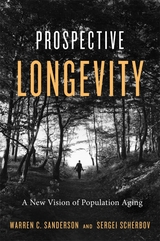
From two leading experts, a revolutionary new way to think about and measure aging.
Aging is a complex phenomenon. We usually think of chronological age as a benchmark, but it is actually a backward way of defining lifespan. It tells us how long we’ve lived so far, but what about the rest of our lives?
In this pathbreaking book, Warren C. Sanderson and Sergei Scherbov provide a new way to measure individual and population aging. Instead of counting how many years we’ve lived, we should think about the number of years we have left, our “prospective age.” Two people who share the same chronological age probably have different prospective ages, because one will outlive the other. Combining their forward-thinking measure of our remaining years with other health metrics, Sanderson and Scherbov show how we can generate better demographic estimates, which inform better policies. Measuring prospective age helps make sense of observed patterns of survival, reorients understanding of health in old age, and clarifies the burden of old-age dependency. The metric also brings valuable data to debates over equitable intergenerational pensions.
Sanderson and Scherbov’s pioneering model has already been adopted by the United Nations. Prospective Longevity offers us all an opportunity to rethink aging, so that we can make the right choices for our societal and economic health.
The topics focus on sustainable capital and societal investments in people and firms at the neighborhood level. Proposed solutions cover a range of possibilities for enhancing the quality of life for individuals, households, and neighborhoods. These include everything from microenterprises to factories; from social spaces for collective and social action to private facilities; from affordable housing and safety to gated communities; and from neighborhood public education to cooperative, charter, and private schools.
Contributors: Andy Clarno, Teresa Córdova, Nilda Flores-González, Pedro A. Noguera, Alice O'Connor, Mary Pattillo, Janet Smith, Nik Theodore, Elizabeth S. Todd-Breland, Stephanie Truchan, and Rachel Weber.

Beginning with the stock market crash of 1929, Blanche Coll documents the evolution of the federal and state government policymaking for welfare and Social Security, our "safety net." As Coll points out, the policies that determine who is "entitled" to aid, how standard dollar amounts are set, child support responsibilities, the equitable fiscal division between state, federal, and local governments, and the resulting impact on the poorÐÐparticularly women and children of all racesÐÐhave fluctuated throughout the history of welfare.
Coll shows how demographic patterns, the definition of a family, the relative health of the economy, and Presidents' political agendas all deeply affect the system of entitlements to Social Security and welfare, the kernal of the American welfare state.
Safety Net is the only comprehensive history of modern welfare in the United States. Clearly written and unpolemical, it is based on a wealth of primary sources, interviews with key policymakers, and the authoritative analysis of a trained historian who served as a research administrator in the federal government through Democractic and Republican administrations. Saftey Net will be indispensable reading for everyone concerned with contemporary debates about welfare and Social Security.

Many of us suspect that Social Security faces eventual bankruptcy. But the government projects its future finances using long outdated methods. Employing a more up-to-date approach, Jagadeesh Gokhale here argues that the program faces insolvency far sooner than previously thought.
To assess Social Security’s fate more accurately under current and alternative policies, Gokhale constructs a detailed simulation of the forces shaping American demographics and the economy to project their future evolution. He then uses this simulation to analyze six prominent Social Security reform packages—two liberal, two centrist, and two conservative—to demonstrate how far they would restore the program’s financial health and which population groups would be helped or hurt in the process.
Arguments over Social Security have raged for decades, but they have taken place in a relative informational vacuum; Social Security provides the necessary bedrock of analysis that will prove vital for anyone with a stake in this important debate.
The essays here highlight the problems that the European pension reform process faces and how it differs from that of the United States. This timely volume will significantly enrich the debate on pension reform worldwide.

The sixth stage of an ongoing research project studying the relationship between social security programs and labor force participation, this volume draws on the work of an eminent group of international economists to consider the extent to which differences in labor force participation across countries are determined by the provisions of disability insurance programs. Presented in an easily comparable way, their research covers twelve countries, including Canada, Japan, and the United States, and considers the requirements of disability insurance programs, as well as other pathways to retirement.
Drawing on the work of an international group of noted economists, the editors argue that social security programs provide strong incentives for workers to leave the labor force by retiring and taking the benefits to which they are entitled. By penalizing work, social security systems magnify the increased financial burden caused by aging populations, thus contributing to the insolvency of the system. This book is a model of comparative analysis that evaluates the effects of illustrative policies for countries facing the impending rapid growth of social security benefits. Its insights will help inform one of the most pressing debates.
In this volume, the authors turn to a country-by-country analysis of retirement behavior based on micro-data. The result of research compiled by teams in twelve countries, the volume shows an almost uniform correlation between levels of social security incentives and retirement behavior in each country. The estimates also show that the effect is strikingly uniform in countries with very different cultural histories, labor market institutions, and other social characteristics.

A global analysis of the effects of social security reforms on the retirement incentives and labor force trends of older workers.
Employment among older men and women has increased dramatically in recent years, reversing a downward trend in the closing decades of the twentieth century. Social Security Programs and Retirement around the World examines how changing retirement incentives have reshaped labor force participation trends among older workers. The chapters feature country-specific analyses for Belgium, Canada, Denmark, France, Germany, Italy, Japan, Netherlands, Spain, Sweden, the United Kingdom, and the United States. They find that while there is significant heterogeneity across countries, the reforms of recent decades have generally reduced the implicit tax on work at older ages. These changes correlate positively with labor force participation. The studies exploit the variation in the timing and extent of reforms of retirement incentives and employ microeconometric methods to investigate whether this correlation reflects a causal relationship. Policy changes appear to have contributed to rising labor force activity, but other factors like the role of women in the labor force, improved health, and changes in private pensions likely also play important roles.

According to the authors of this important new study, the answer to these questions is a resounding no. In Social Security: The Phony Crisis, economists Dean Baker and Mark Weisbrot argue that there is no economic, demographic, or actuarial basis for the widespread belief that the program needs to be fixed.
As the authors emphasize, there is virtually no disagreement about the facts of Social Security's finances, or even the projections for its future. Rather, the Social Security debate has been foundering on misconceptions, confusion, and lack of agreement on the meaning of crucial terms.
The authors also take on related issues: that privatization would help save Social Security, that America has a pressing need to increase its national savings, and that future generations will suffer from the costs—especially for health care—of supporting a growing elderly population.
As New York Times columnist Fred Brock recently wrote, "So-called reform of the Social Security system is looking more and more like a solution in search of a problem." In this accessible and insightful work, Baker and Weisbrot seek to cut through some of the myths and fallacies surrounding this crucial policy issue.
"Dean Baker and Mark Weisbrot have no trouble at all demonstrating that even on highly conservative assumptions about economic growth, the much-forecast insolvency of the Social Security system by about 2030 is most unlikely to happen then, if indeed ever."—The Economist
"The authors challenge basic assumptions with vigor and intelligence. . . . An absolutely relevant and important analysis, presented with force and clarity, that asks, basically, what kind of a nation we really are."—Kirkus Reviews
"Proponents—like George W. Bush—of Social Security privatization . . . typically ignore prospects for a stagnant or falling stock market. In Social Security: The Phony Crisis, [Baker and Weisbrot] show how a falling stock market could place pressure on both future Social Security payments and privatization schemes because earnings from the trust fund could actually fall."—Jeff Madrick, New York Review of Books


READERS
Browse our collection.
PUBLISHERS
See BiblioVault's publisher services.
STUDENT SERVICES
Files for college accessibility offices.
RECENTLY PUBLISHED







UChicago Accessibility Resources
home | accessibility | search | about | contact us
BiblioVault ® 2001 - 2025
The University of Chicago Press