
 A SCHOLARLY BOOK REPOSITORY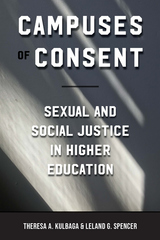
Winner of the 2020 OSCLG Outstanding Book Award
This new book for scholars and university administrators offers a provocative critique of sexual justice language and policy in higher education around the concept of consent. Complicating the idea that consent is plain common sense, Campuses of Consent shows how normative and inaccurate concepts about gender, gender identity, and sexuality erase queer or trans students' experiences and perpetuate narrow, regressive gender norms and individualist frameworks for understanding violence.
Theresa A. Kulbaga and Leland G. Spencer prove that consent in higher education cannot be meaningfully separated from larger issues of institutional and structural power and oppression. While sexual assault advocacy campaigns, such as It's On Us, federal legislation from Title IX to the Clery Act, and more recent affirmative-consent measures tend to construct consent in individualist terms, as something “given” or “received” by individuals, the authors imagine consent as something that can be constructed systemically and institutionally: in classrooms, campus communication, and shared campus spaces.

Winner of the 2023 National Communication Association's American Studies Division Outstanding Book Award
News media and popular culture in the United States have produced a conventional narrative of the outcomes of sexual abuse: someone perpetrates sexual violence, goes to trial, and is then punished with prison time. Survivors recede into the background, becoming minor characters in their own stories as intrepid prosecutors, police officers, and investigators gather evidence and build a case.
Leland G. Spencer explains how the stories we tell about sexual assault serve to reinforce rape culture, privileging criminal punishment over social justice and community-based responses to sexual violence. Examining a broad range of popular media, including news coverage of the Brock Turner case, Naomi Iizuka’s popular play Good Kids, the television program Criminal Minds, and the book turned television show 13 Reasons Why, Spencer demonstrates how these representations shore up the carceral state, perpetuate rape myths, blame victims, and excuse those who harm. While increased discussion about sexual violence represents feminist progress, these narratives assume that policing and prosecution are the only means of achieving justice, sidelining other potential avenues for confronting perpetrators and supporting victims.
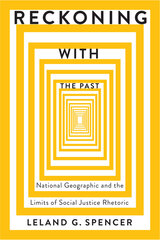
For over a century, National Geographic has shaped American visual culture, captivating audiences with stunning photography and compelling storytelling. Yet behind its iconic yellow border lies a fraught legacy of gender bias, racial misrepresentation, and colonialist narratives.In this incisive study, Leland G. Spencer examines the brand's recent attempts to reckon with that legacy across its magazine and television platforms. From special issues spotlighting transgender lives, to a public acknowledgment of past racism, to a magazine edition created entirely by women, these efforts signal a move toward inclusivity. But as Spencer reveals through rigorous rhetorical analysis, these gestures often fall short. The texts themselves frequently echo the same systemic inequalities they seek to redress. National Geographic's progressive rebranding, he argues, remains tangled in the very histories it aims to transcend.
READERS
Browse our collection.
PUBLISHERS
See BiblioVault's publisher services.
STUDENT SERVICES
Files for college accessibility offices.
RECENTLY PUBLISHED







UChicago Accessibility Resources
home | accessibility | search | about | contact us
BiblioVault ® 2001 - 2026
The University of Chicago Press