
 A SCHOLARLY BOOK REPOSITORY
Results by Title
3 books about Starch
3 books about Starch
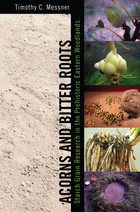
Acorns and Bitter Roots
Starch Grain Research in the Prehistoric Eastern Woodlands
Timothy C. Messner
University of Alabama Press, 2011
Starch grain analysis in the temperate climates of eastern North America using the Delaware River Watershed as a case study for furthering scholarly understanding of the relationship between native people and their biophysical environment in the Woodland Period
People regularly use plants for a wide range of utilitarian, spiritual, pharmacological, and dietary purposes throughout the world. Scholarly understanding of the nature of these uses in prehistory is particularly limited by the poor preservation of plant resources in the archaeological record. In the last two decades, researchers in the South Pacific and in Central and South America have developed microscopic starch grain analysis, a technique for overcoming the limitations of poorly preserved plant material.Messner’s analysis is based on extensive reviews of the literature on early historic, prehistoric native plant use, and the collation of all available archaeobotanical data, a review of which also guided the author in selecting contemporary botanical specimens to identify and in interpreting starch residues recovered from ancient plant-processing technologies. The evidence presented here sheds light on many local ecological and cultural developments as ancient people shifted their subsistence focus from estuarine to riverine settings. These archaeobotanical datasets, Messner argues, illuminate both the conscious and unintentional translocal movement of ideas and ecologies throughout the Eastern Woodlands.
[more]

Skin and Starch
Manioc and Worldmaking in the Caribbean
Isabel Bradley
Duke University Press, 2027
Skin and Starch traces the movements and meanings of manioc, also known as cassava or yuca, across the Atlantic world to show how this tropical plant sustained both colonial exploitation and assertions of Black and Indigenous humanity. Isabel Bradley follows manioc from Caribbean forest gardens to slaving ships, from plantation provision grounds to maroon subsistence networks, to reveal how transplantations of this tuberous root helped to shape human projects of subjugation and self-making. Drawing from an extensive archive of natural histories, plantation records, printed images, material culture, and francophone Caribbean literature and art, Bradley argues that embodied encounters between manioc and its growers informed modes of perception and possibility for subjects navigating colonial modernity. Skin and Starch presents a dynamic study of the diverse knowledges produced in the orbit of manioc cultivation and the generative forms of resistance and worldmaking that emerged within and against colonial monoculture and its violence.
[more]
Skin and Starch
Manioc and Worldmaking in the Caribbean
Isabel Bradley
Duke University Press, 2027
Skin and Starch traces the movements and meanings of manioc, also known as cassava or yuca, across the Atlantic world to show how this tropical plant sustained both colonial exploitation and assertions of Black and Indigenous humanity. Isabel Bradley follows manioc from Caribbean forest gardens to slaving ships, from plantation provision grounds to maroon subsistence networks, to reveal how transplantations of this tuberous root helped to shape human projects of subjugation and self-making. Drawing from an extensive archive of natural histories, plantation records, printed images, material culture, and francophone Caribbean literature and art, Bradley argues that embodied encounters between manioc and its growers informed modes of perception and possibility for subjects navigating colonial modernity. Skin and Starch presents a dynamic study of the diverse knowledges produced in the orbit of manioc cultivation and the generative forms of resistance and worldmaking that emerged within and against colonial monoculture and its violence.
[more]
READERS
Browse our collection.
PUBLISHERS
See BiblioVault's publisher services.
STUDENT SERVICES
Files for college accessibility offices.
RECENTLY PUBLISHED




UChicago Accessibility Resources
home | accessibility | search | about | contact us
BiblioVault ® 2001 - 2026
The University of Chicago Press