
 A SCHOLARLY BOOK REPOSITORY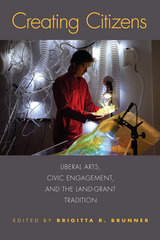
Creating Citizens is a collection of essays about Community and Civic Engagement (CCE) learning at land-grant universities.
In Creating Citizens, professors and administrators at Auburn University’s College of Liberal Arts recount valuable, first-hand experiences teaching Community and Civic Engagement (CCE). They demonstrate that, contrary to many expectations, CCE instruction both complements the mission of liberal arts curricula and powerfully advances the fundamental mission of American land-grand institutions.
The nine essays in Creating Citizens offer structures for incorporating CCE initiatives into university programs, instructional methods and techniques, and numerous case studies and examples undertaken at Auburn University but applicable at any university. Many contributors describe their own rewarding experiences with CCE and emphasize the ways outreach efforts reinvigorate their teaching or research.
Creating Citizens recounts the foundation of land-grant institutions by the Morrill Act of 1862. Their mission is to instruct in agriculture, military science, and mechanics, but these goals augmented rather than replaced an education in the classics, or liberal arts. Land-grant institutions, therefore, have a special calling to provide a broad spectrum of society with an education that not only enriched the personal lives of their students, but the communities they are a part of. Creating Citizens demonstrates the important opportunities CCE instruction represents to any university but are especially close to the heart of the mission of land-grant colleges.
In open societies, the role and mission of public institutions of higher learning that are supported by public subsidies are perennial subjects of interest and debate. Creating Citizens provides valuable insights of interest to educators, education administrators, students, and policy makers involved in the field of higher education.
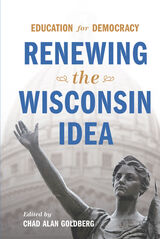
Using the Wisconsin Idea as a lens, Education for Democracy argues that public higher education institutions remain a bastion of collaborative problem solving. Examinations of partnerships between the state university and people of the state highlight many crucial and lasting contributions to issues of broad public concern such as conservation, LGBTQ+ rights, and poverty alleviation. The contributors restore the value of state universities and humanities education as a public good, contending that they deserve renewed and robust support.
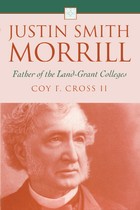
Smith Morrill: Almost every land-grant college or university in the United States has a building named for him; but are his contributions truly recognized and understood? Here is the first biography on this renowned statesman in six decades. Representative and then senator from Vermont, Morrill began his tenure in Congress in 1855 and served continuously for forty-three years. His thirty- one years in the upper chamber alone earned him the title "Father of the Senate." Coy F. Cross reveals a complex and influential political figure who, as chair of the House Ways and Means Committee, and then the Senate Finance Committee, influenced American economic policy for nearly fifty years.
Morrill's most-recognized achievements are the pieces of legislation that bear his name: the Morrill land-grant college acts of 1862 and 1890. His legacy, inspired by the Jeffersonian ideal of an educated electorate, revolutionized American higher education. Prior to this legislation, colleges and universities were open primarily to affluent white men and studies were limited largely to medicine, theology, and philosophy. Morrill's land-grant acts eventually opened American higher education to the working class, women, minorities, and immigrants. Since 1862, more than 20 million people have graduated from the 104 land-grant colleges and universities spawned by his grand vision. In this long-overdue study, Cross shows the "Father of Land-Grant Colleges" to be one of America's formative nineteenth- century political figures.

The Morrill Land-Grant College Act of 1862 created a series of institutions—at least one in every state and territory—with now familiar names: Michigan State University, Ohio State University, Purdue University, Rutgers University, the University of Arizona, and the University of California, to name a few. These schools opened educational opportunities and pathways to a significant segment of the American public and gave the United States a global edge in science, technical innovation, and agriculture.
Science as Service provides an essential body of literature for understanding the transformations of the land-grant colleges established by the Morrill Act in 1862 as well as the considerable impact they had on the history of the United States. Historians of science, technology, and agriculture, along with rural sociologists, public decision and policy makers, educators, and higher education administrators will find this an essential addition to their book collections.

From their founding, land-grant schools have provided educational opportunities to millions, producing many of the nation’s scientific, technical, and agricultural leaders and spawning countless technological and agricultural innovations. Nevertheless, their history has not always been smooth or without controversy or setbacks. These vital centers of learning and research have in fact been redefined and reconceptualized many times and today bear only a cursory resemblance to their original incarnations.
The thirteen essays in this collection explore such themes as the emphasis on food science and home economics, the country life movement, the evolution of a public research system, the rise of aerospace engineering, the effects of the GI Bill, the teaching of military science, the sustainable agriculture movement, and the development of golf-turf science. Woven together, these expertly curated scenes, vignettes, and episodes powerfully illustrate these institutions’ ability to flex and adapt to serve the educational needs of an ever-changing American citizenry.
By dint of their mission to remedy social, economic, and technical problems; to improve standards of living; and to enhance the quality of life, land-grant universities are destined and intended to be agents of change—a role that finds them at times both celebrated and hotly contested, even vilified. A readable and fascinating exploration of land-grant universities, Service as Mandate offers a vital exploration of these dynamic institutions to educators, policy makers, students, and the wider communities that land-grant universities serve.
The University and the People chronicles the influence of Populism—a powerful agrarian movement—on public higher education in the late nineteenth century. Revisiting this pivotal era in the history of the American state university, Scott Gelber demonstrates that Populists expressed a surprising degree of enthusiasm for institutions of higher learning. More fundamentally, he argues that the mission of the state university, as we understand it today, evolved from a fractious but productive relationship between public demands and academic authority.
Populists attacked a variety of elites—professionals, executives, scholars—and seemed to confirm academia’s fear of anti-intellectual public oversight. The movement’s vision of the state university highlighted deep tensions in American attitudes toward meritocracy and expertise. Yet Populists also promoted state-supported higher education, with the aims of educating the sons (and sometimes daughters) of ordinary citizens, blurring status distinctions, and promoting civic engagement. Accessibility, utilitarianism, and public service were the bywords of Populist journalists, legislators, trustees, and sympathetic professors. These “academic populists” encouraged state universities to reckon with egalitarian perspectives on admissions, financial aid, curricula, and research. And despite their critiques of college “ivory towers,” Populists supported the humanities and social sciences, tolerated a degree of ideological dissent, and lobbied for record-breaking appropriations for state institutions.
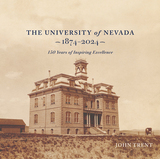
As both the University’s student body and the state’s population grew, the campus was transferred to Reno in 1885-86 as an effort to secure the fledgling institution’s prospects for survival. Many of the initial class of thirty-five students resided in Morrill Hall, the only building on campus, where they also received instruction and ate their meals. As the University enhanced its academic offerings, enrollment grew to more than 1,000 students by the turn of the century. A strong belief that the University must always be changing and evolving to meet the needs of its students and answer the challenges of a particular era became the guiding forces behind the administration’s decision-making. With an increasingly diverse student body and one of the most productive academic faculties in the country, the little school on the hill expanded during its first 100 years to become a leading public university in the western United States.
Today, the University continues to achieve institutional benchmarks, including a record 5,000 graduates during the 2019–20 academic year. It is exactly this kind of student success that has always been at the heart of the Wolf Pack Family’s mission to help students find the path that is right for them, and beckon others to share in their journey.
The 150th anniversary book is published in honor of this milestone and highlights numerous parts of the University’s history, showcasing why the University of Nevada, Reno has truly been a catalyst for success and change throughout the state’s story.
Writing at the State U presents a comprehensive, empirical examination of writing programs at 106 universities. Rather than using open survey calls and self-reporting, Emily Isaacs uses statistical analysis to show the extent to which established principles of writing instruction and administration have been implemented at state comprehensive universities, the ways in which writing at those institutions has differed from writing at other institutions over time, and how state institutions have responded to major scholarly debates concerning first-year composition and writing program administration.
Isaacs’s findings are surprising: state university writing programs give lip service to important principles of writing research, but many still emphasize grammar instruction and a skills-based approach, classes continue to be outsized, faculty development is optional, and orientation toward basic writing is generally remedial. As such, she considers where a closer match between writing research and writing instruction might help to expose and remedy these difficulties and identifies strategies and areas where faculty or writing program administrators are empowered to enact change.
Unique in its wide scope and methodology, Writing at the State U sheds much-needed light on the true state of the writing discipline at state universities and demonstrates the advantages of more frequent and rigorous quantitative studies of the field.
READERS
Browse our collection.
PUBLISHERS
See BiblioVault's publisher services.
STUDENT SERVICES
Files for college accessibility offices.
RECENTLY PUBLISHED



UChicago Accessibility Resources
home | accessibility | search | about | contact us
BiblioVault ® 2001 - 2025
The University of Chicago Press