
 A SCHOLARLY BOOK REPOSITORY
9 start with A start with A
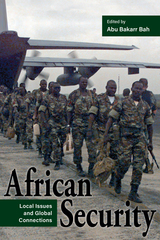
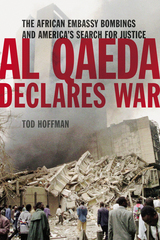

Despite the frequent appearances of Osama Bin Laden and Ayman al-Zawahiri on television screens worldwide, Al Qaeda remains an elusive entity. As the world has grown increasingly familiar with the spectacle of Islamist terrorism, Al Qaeda’s essential worldview has remained bewilderingly opaque. To reveal its inner workings, Gilles Kepel and his collaborators, all scholars of Arabic and Islam, have collected and brilliantly annotated key texts of the major figures from whom the movement has drawn its beliefs and direction. The resulting volume offers an unprecedented glimpse into the assumptions of the salafist jihadists who have reshaped political life at the beginning of the third millennium.
Excerpts from the work of Azzabdallah Azzam, Ayman al-Zawahiri, Osama Bin Laden, and Abu Musab al-Zarqawi—drawn from speeches, internet postings, and published writings—tell the story of Al Qaeda’s evolution, from its origins in the Afghan war through the war in Iraq. These texts reveal the rational, discursive mode used to persuade and to justify violent armed struggle in a universe defined by militant Islam. Substantial interpretive introductions to each leader’s work and extensive critical commentary provide unparalleled access to the intellectual and doctrinal context of Al Qaeda in which these radical ideas have taken shape.
By viewing Al Qaeda from within, this indispensable volume reveals the terrorist network’s insidious role in the global web culture of today and the full dimensions of its frightening threat to world stability and security.

Aldo Moro’s kidnapping and violent death in 1978 shocked Italy as no other event has during the entire history of the Republic. It had much the same effect in Italy as the assassination of President John F. Kennedy had in the United States, with both cases giving rise to endless conspiracy theories. The dominant Christian Democratic leader for twenty years, Moro had embodied the country’s peculiar religious politics, its values as well as its practices. He was perceived as the most exemplary representative of the Catholic political tradition in Italy. The Red Brigades who killed him thought that in striking Moro they would cause the collapse of the capitalist establishment and clear the way for a Marxist-Leninist revolution.
In his thorough account of the long and anguished quest for justice in the Moro murder case, Richard Drake provides a detailed portrait of the tragedy and its aftermath as complex symbols of a turbulent age in Italian history. Since Moro’s murder, documents from two parliamentary inquiries and four sets of trials explain the historical and political process and illuminate two enduring themes in Italian history. First, the records contain a wealth of examples bearing on the nation’s longstanding culture of ideological extremism and violence. Second, Moro’s story reveals much about the inner workings of democracy Italian style, including the roles of the United States and the Mafia. These insights are especially valuable today in understanding why the Italian establishment is in a state of collapse.
The Moro case also explores the worldwide problem of terrorism. In great detail, the case reveals the mentality, the tactics, and the strategy of the Red Brigades and related groups. Moro’s fate has a universal poignancy, with aspects of a classical Greek tragedy. Drake provides a full historical account of how the Italian people have come to terms with this tragedy.
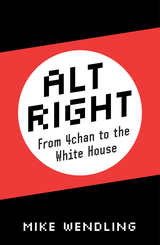
Journalist Mike Wendling knows. He’s been following the Alt-Right closely for years, and with this book he shares the deep knowledge he’s gleaned. Media accounts to the contrary, the Alt-Right didn’t just burst out of nowhere in 2016—rather, they have been building their network quietly for years, using bulletin boards and social media to spread a toxic hybrid of technological utopianism, reactionary philosophy, and racial hatred. Wendling traces clearly the rise of the movement and the evolution of its ideas, and he introduces us to some of its key figures—many of whom he interviewed personally for the book. He explores links between Alt-Right rhetoric and hate crimes and terrorism, showing that the evidence connecting them is undeniable. Ultimately, however, he builds a strong case that the movement’s lack of a coherent base and its contradictory tendencies are already sapping its strength and will lead to its downfall.
A shocking exposé of a movement whose emergence stunned the world, Alt-Right presents a disturbing picture of our current political moment.
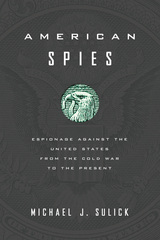
A history of Americans who spied against their country and what their stories reveal about national security
What's your secret?
American Spies presents the stunning histories of more than forty Americans who spied against their country during the past six decades. Michael Sulick, former head of the CIA's clandestine service, illustrates through these stories—some familiar, others much less well known—the common threads in the spy cases and the evolution of American attitudes toward espionage since the onset of the Cold War. After highlighting the accounts of many who have spied for traditional adversaries such as Russian and Chinese intelligence services, Sulick shows how spy hunters today confront a far broader spectrum of threats not only from hostile states but also substate groups, including those conducting cyberespionage.
Sulick reveals six fundamental elements of espionage in these stories: the motivations that drove them to spy; their access and the secrets they betrayed; their tradecraft, or the techniques of concealing their espionage; their exposure; their punishment; and, finally, the damage they inflicted on America's national security.
The book is the sequel to Sulick's popular Spying in America: Espionage from the Revolutionary War to the Dawn of the Cold War. Together they serve as a basic introduction to understanding America's vulnerability to espionage, which has oscillated between peacetime complacency and wartime vigilance, and continues to be shaped by the inherent conflict between our nation's security needs and our commitment to the preservation of civil liberties. Now available in paperback, with a new preface that brings the conversation up to the present, American Spies is as insightful and relevant as ever.

The potential for creating and using biological weapons to wreak havoc is an urgent concern not just in America, but worldwide. In fact, many security experts believe that the next act of widespread terrorism will likely come from a weapon of biochemical means.
In Anthrax: Bioterror as Fact and Fantasy, Philipp Sarasin explores the real threats of biological weapons--in contrast to the idea of biological substances as nebulous agents of terror--by analyzing the famous anthrax scares that occurred in the United States in 2001. Basing his analysis on government documents and media coverage between the events of September 11, 2001, and the beginning of the Iraq War in March 2003, he shows that the anthrax letters became the necessary fantasy-link between the 9/11 attacks and Saddam Hussein's "weapons of mass destruction." While many bioterrorism experts agree that it would be difficult to use anthrax effectively as a weapon in a large-scale attack, the anthrax scares that occurred in the wake of the September 11 terrorist attacks amplified the American public's fear and uncertainty about what might come next. In effect, these incidents infected the American psyche and created an increased sense of vulnerability that shaped the public's understanding of the War on Terror.
Sarasin, in offering a European's view of the U.S. reaction to the anthrax scare, argues that while threats of bioterrorism are real, they are disproportionate to the fantasmal fears and illusions that now permeate American politics and culture. In short, fear of bioterror has contaminated modern American life.
Children have served as soldiers throughout history. They fought in the American Revolution, the Civil War, and in both world wars. They served as uniformed soldiers, camouflaged insurgents, and even suicide bombers. Indeed, the first U.S. soldier to be killed by hostile fire in the Afghanistan war was shot in ambush by a fourteen-year-old boy.
Does this mean that child soldiers are aggressors? Or are they victims? It is a difficult question with no obvious answer, yet in recent years the acceptable answer among humanitarian organizations and contemporary scholars has been resoundingly the latter. These children are most often seen as especially hideous examples of adult criminal exploitation.
In this provocative book, David M. Rosen argues that this response vastly oversimplifies the child soldier problem. Drawing on three dramatic examples-from Sierra Leone, Palestine, and Eastern Europe during the Holocaust-Rosen vividly illustrates this controversial view. In each case, he shows that children are not always passive victims, but often make the rational decision that not fighting is worse than fighting.
With a critical eye to international law, Armies of the Young urges readers to reconsider the situation of child combatants in light of circumstance and history before adopting uninformed child protectionist views. In the process, Rosen paints a memorable and unsettling picture of the role of children in international conflicts.

The definition and understanding of "terrorism" is in a state of unprecedented evolution. No longer are acts of terrorism rare and far-flung. Following the horrendous attacks on the World Trade Center and the Pentagon, U.S. citizens have had their eyes opened to a new world where this nightmare stalks the daily news and is never far from consciousness.
Attacking Terrorism brings together some of the world's finest experts, people who have made the study of this rising menace their life's work, to provide a comprehensive picture of the challenges and opportunities of the campaign against international terrorism. Part one, "The Nature of Terrorism," provides an overview and foundation for the current campaign, placing it within the political and historical context of previous threats and responses. Part two, "The Responses to Terrorism," looks at the range of policy instruments required in an effective strategy against terrorism.
The contributors to this volume bring finely honed analyses and nuanced perspectives to the terrorist realities of the twenty-first century—history, analyses, and perspectives that have been too often oversimplified or myopic. They bring a new depth of understanding and myriad new dimensions to the crisis of terrorism. And they reach into aspects of counterterrorism that broaden our grasp on such important tools as diplomacy, intelligence and counterintelligence, psycho-political means, international law, criminal law enforcement, military force, foreign aid, and homeland security, showing not only how these tools are currently being employed but how often they are being underutilized as well.
Attacking Terrorism demonstrates that there are no easy answers—and that the road toward victory will be long and arduous, frightening and dangerous—but as Audrey Kurth Cronin states in her introduction, "As the campaign against international terrorism unfolds, a crucial forward-looking process of strategic reassessment is under way in the United States, and this book is intended to be a part of it."
READERS
Browse our collection.
PUBLISHERS
See BiblioVault's publisher services.
STUDENT SERVICES
Files for college accessibility offices.
RECENTLY PUBLISHED





UChicago Accessibility Resources
home | accessibility | search | about | contact us
BiblioVault ® 2001 - 2025
The University of Chicago Press