
 A SCHOLARLY BOOK REPOSITORY
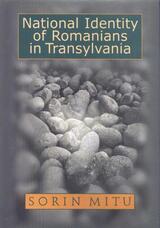
This meticulously researched and elegantly written book is the most authoritative study of the emergence of modern Romanian identity in Transylvania during the eighteenth and nineteenth centuries. Based upon a plethora of contemporary published sources, Mitu approaches national identity from a variety of perspectives - from within the Romanian community itself and their reaction to the image others had of them.
The author sheds new light on the problems of self-evaluation using a method he describes as "functional analysis" to examine a complex set of ideologies and propaganda. This approach helps the reader to understand the intricate web of contemporary Romanian nationalism.
National Identity of Romanians in Transylvania appeals to scholars of modern Romanian history, those focusing on the Habsburg Monarchy and the study of modern nationalism. The book is an important contribution to the expanding debate on nationalism and national identity from an East European perspective.


Long before Rumania existed as a sovereign state, Rumanians struggled for national identity in Transylvania, an area in Eastern Europe of great ethnic and cultural diversity. The growth of their national consciousness between 1780 and 1849 affords an intriguing case study in nationalism. Keith Hitchins gives us in this book the first systematic survey and analysis of the movement—its leadership, techniques, and literary and political manifestations.
Transylvania at that time was a principality in the Habsburg domain inhabited by four groups: Magyars, Szeklers, Saxons, and Rumanians. Through the centuries the region had frequently changed status—at times independent, more often dominated by either Hungary or Austria. In 1867 it became an integral part of Hungary. After the First World War it was annexed by Rumania (which had won its independence in 1878) and is Rumanian soil today.
Hitchins finds that in the late eighteenth and early nineteenth centuries, the national movement in Transylvania was led by Western-oriented Rumanian intellectuals, the majority of whom were Uniate and Orthodox priests or the sons of priests. Their principal weapons were their writings, the schools, and the church. Influenced by the Enlightenment, these men fashioned the goals of the movement and gave it its characteristic dimensions—its moderation, rationalism, and Western orientation. Through their emphasis on education and their own personal labors in the fields of Rumanian history and linguistics, they succeeded in creating a national ethos, without which political activity of any kind would have been fruitless and on which, later, more secularly-oriented national leaders could base their specific political demands.
Chronicling the changing course of the Rumanian struggle, the author shows that the nationalists began with a demand for the feudal rights enjoyed by their neighbors the Magyars, Szeklers, and Saxons, who were represented in the provincial diet and organized according to estates, or noble nations. Still reasoning within the context of a feudal constitution and thinking in terms of the historic principality, the Rumanians, who constituted a majority of the population of Transylvania, did not yet dare dream of a separate Rumanian nation in which they would be the dominant element. By 1849, however, they had come to regard the recognition of Rumanian autonomy within the Austrian Empire as the paramount issue and even looked toward the accretion of Rumanian-inhabited areas outside Transylvania to the grand duchy they hoped to see established. Ultimately, their goal became a union of all Rumanians, including the Kingdom of Rumania, in a modern national state.

The chapters in the volume capture the widest possible variety of political and administrative systems in the region. Transylvanian towns were structured and governed similarly to other small Central European urban centers, however significant diversity can be discerned following the Reformation. Moldavian and Wallachian towns in the 18th and 19th century are little known to international scholarship, and the chapters in this volume will fill this gap.
READERS
Browse our collection.
PUBLISHERS
See BiblioVault's publisher services.
STUDENT SERVICES
Files for college accessibility offices.
RECENTLY PUBLISHED





UChicago Accessibility Resources
home | accessibility | search | about | contact us
BiblioVault ® 2001 - 2025
The University of Chicago Press