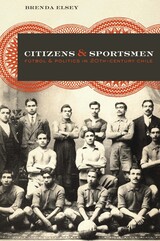
front cover of Citizens and Sportsmen
Citizens and Sportsmen
Fútbol and Politics in Twentieth-Century Chile
By Brenda Elsey
University of Texas Press, 2011

Fútbol, or soccer as it is called in the United States, is the most popular sport in the world. Millions of people schedule their lives and build identities around it. The World Cup tournament, played every four years, draws an audience of more than a billion people and provides a global platform for displays of athletic prowess, nationalist rhetoric, and commercial advertising. Fútbol is ubiquitous in Latin America, yet few academic histories of the sport exist, and even fewer focus on its relevance to politics in the region. To fill that gap, this book uses amateur fútbol clubs in Chile to understand the history of civic associations, popular culture, and politics.

In Citizens and Sportsmen, Brenda Elsey argues that fútbol clubs integrated working-class men into urban politics, connected them to parties, and served as venues of political critique. In this way, they contributed to the democratization of the public sphere. Elsey shows how club members debated ideas about class, ethnic, and gender identities, and also how their belief in the uniquely democratic nature of Chile energized state institutions even as it led members to criticize those very institutions. Furthermore, she reveals how fútbol clubs created rituals, narratives, and symbols that legitimated workers' claims to political subjectivity. Her case study demonstrates that the relationship between formal and informal politics is essential to fostering civic engagement and supporting democratic practices.


[more]

front cover of Workers Like All the Rest of Them
Workers Like All the Rest of Them
Domestic Service and the Rights of Labor in Twentieth-Century Chile
Elizabeth Quay Hutchison
Duke University Press, 2022
In Workers Like All the Rest of Them, Elizabeth Quay Hutchison recounts the long struggle for domestic workers’ recognition and rights in Chile across the twentieth century. Hutchison traces the legal and social history of domestic workers and their rights, outlining their transition from slavery to servitude. For most of the twentieth century, domestic service remained one of the key “underdeveloped” sectors in Chile’s modernizing economy. Hutchison argues that the predominance of women in that underpaid, underregulated labor sector provides one key to persistent gender and class inequality. Through archival research, firsthand accounts, and interviews with veteran activists, Hutchison challenges domestic workers’ exclusion from Chilean history and reveals how and under what conditions they mobilized for change, forging alliances with everyone from Catholic Church leaders and legislators to feminists and political party leaders. Hutchison contributes to a growing global conversation among activists and scholars about domestic workers’ rights, providing a lens for understanding how the changing structure of domestic work and worker activism has both perpetuated and challenged forms of ethnic, gender, and social inequality.
[more]


Send via email Share on Facebook Share on Twitter