
 A SCHOLARLY BOOK REPOSITORY
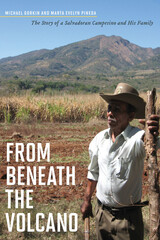
Luis, his mother, his wife, his in-laws, his children, and some neighbors recall in a simple and often eloquent manner their experiences of everyday life before, during, and after the civil war. Nina Bonafacia, Luis’s mother, tells of the days before the war when two of her daughters were murdered and she fled with her family to a refugee camp. Julia, Luis’s wife, recounts her life as a guerrillera during which, incidentally, she gave birth to the first two of her eight children. Joaquin, a neighbor and comrade-in-arms, discusses how he and others took control of the land of Comunidad Guazapa and began rebuilding in those turbulent days and months right after the war. Margarita and Francisco, the two oldest children, with candor and insight discuss the trajectory of their lives and that of the postwar generation. And at the center of all these stories stands Luis, the guerrillero, farmer, neighbor, husband, father—and raconteur par excellence.
In sum, the multiple voices in From Beneath the Volcano combine to form a rich tapestry displaying a story of war, family, and community and provide a never-before-seen view of both the past and present El Salvador.
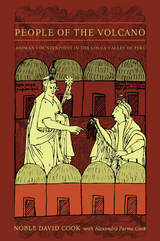
Social structures, the domestic export and economies, and spiritual spheres within native Andean communities are key elements of analysis. Also highlighted is the persistence of duality in the Andean world: perceived dichotomies such as those between the coast and the highlands, Europeans and Indo-Peruvians. Even before the conquest, the Cabana and Collagua communities sharing the Colca Valley were divided according to kinship and location. The Incas, and then the Spanish, capitalized on these divisions, incorporating them into their state structure in order to administer the area more effectively, but Colca Valley peoples resisted total assimilation into either. Colca Valley communities have shown a remarkable tenacity in retaining their social, economic, and cultural practices while accommodating various assimilationist efforts over the centuries. Today’s population maintains similarities with their ancestors of more than five hundred years ago—in language, agricultural practices, daily rituals, familial relationships, and practices of reciprocity. They also retain links to ecological phenomena, including the volcanoes from which they believe they emerged and continue to venerate.
READERS
Browse our collection.
PUBLISHERS
See BiblioVault's publisher services.
STUDENT SERVICES
Files for college accessibility offices.
RECENTLY PUBLISHED



UChicago Accessibility Resources
home | accessibility | search | about | contact us
BiblioVault ® 2001 - 2025
The University of Chicago Press