
 A SCHOLARLY BOOK REPOSITORY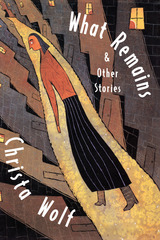
What Remains and Other Stories . . . is clear and farsighted. The eight heartfelt stories in the book show why she has been respected as a serious author since her 1968 novel, The Quest for Christa T. . . . Wolf uses her own experiences and observations to create universal themes about the controls upon human freedom.—Herbert Mitgang, New York Times
Christa Wolf has set herself nothing less than the task of exploring what it is to be a conscious human being alive in a moment of history.—Mary Gordon, New York Times Book Review
The simultaneous publication of these two volumes offers readers here a generous sampling of the short fiction, speeches and essays that Wolf has produced over the last three decades.—Mark Harman, Boston Globe

Winner of the 2020 Victor Turner Prize in Ethnographic Writing
Nearly 1,600 Americans are still unaccounted for and presumed dead from the Vietnam War. These are the stories of those who mourn and continue to search for them.
For many families the Vietnam War remains unsettled. Nearly 1,600 Americans—and more than 300,000 Vietnamese—involved in the conflict are still unaccounted for. In What Remains, Sarah E. Wagner tells the stories of America’s missing service members and the families and communities that continue to search for them. From the scientists who work to identify the dead using bits of bone unearthed in Vietnamese jungles to the relatives who press government officials to find the remains of their loved ones, Wagner introduces us to the men and women who seek to bring the missing back home. Through their experiences she examines the ongoing toll of America’s most fraught war.
Every generation has known the uncertainties of war. Collective memorials, such as the Tomb of the Unknowns in Arlington National Cemetery, testify to the many service members who never return, their fates still unresolved. But advances in forensic science have provided new and powerful tools to identify the remains of the missing, often from the merest trace—a tooth or other fragment. These new techniques have enabled military experts to recover, repatriate, identify, and return the remains of lost service members. So promising are these scientific developments that they have raised the expectations of military families hoping to locate their missing. As Wagner shows, the possibility of such homecomings compels Americans to wrestle anew with their memories, as with the weight of their loved ones’ sacrifices, and to reevaluate what it means to wage war and die on behalf of the nation.
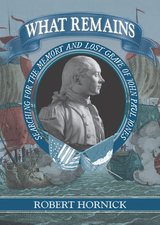
John Paul Jones is now considered a Revolutionary War hero and the father of the American Navy, his defiant words “I have not yet begun to fight!” the epitome of courage under fire. It has not always been so. When the Revolutionary War ended, Jones's celebrity vanished. His death in Paris a decade later went unnoticed; he was buried in a foreign grave and forgotten by his fellow Americans.
In What Remains, Robert Hornick explores why Jones was forgotten, the subsequent recovery of his memory and remains, and the much delayed commemoration of his achievement. The book chronicles the efforts of the men and women who, in the nineteenth and early twentieth centuries, reconstructed Jones's legacy, searched for and finally found his lost grave, and returned both his physical remains and his memory to a place of honor. It also recounts the extraordinary moment when Theodore Roosevelt utilized Jones's commemoration to proclaim America a global power. What Remains offers a fascinating story of opportunists and evangelists: of politicians who needed Jones to advance their agendas, but also of fellow warriors committed to recovering one of their own from obscurity and shame.
READERS
Browse our collection.
PUBLISHERS
See BiblioVault's publisher services.
STUDENT SERVICES
Files for college accessibility offices.
RECENTLY PUBLISHED






UChicago Accessibility Resources
home | accessibility | search | about | contact us
BiblioVault ® 2001 - 2025
The University of Chicago Press