
 A SCHOLARLY BOOK REPOSITORY
After the Nation proposes a series of groundbreaking new approaches to novels, essays, and short stories by Carlos Fuentes and Thomas Pynchon within the framework of a hemispheric American studies. García-Caro offers a pioneering comparativist approach to the contemporary American and Mexican literary canons and their underlying nationalist encodement through the study of a wide range of texts by Pynchon and Fuentes which question and historicize in different ways the processes of national definition and myth-making deployed in the drawing of literary borders. After the Nation looks at these literary narratives as postnational satires that aim to unravel and denounce the combined hegemonic processes of modernity and nationalism while they start to contemplate the ensuing postnational constellations. These are texts that playfully challenge the temporal and spatial designs of national themes while they point to and debase “holy” borders, international borders as well as the internal lines where narratives of nation are embodied and consecrated.
Drawn mainly from the centennial anniversary symposium on James Agee held at the University of Tennessee in the fall of 2009, the essays of Agee at 100 are as diverse in topic and purpose as is Agee’s work itself. Often devalued during his life by those who thought his breadth a hindrance to greatness, Agee’s achievements as a poet, novelist, journalist, essayist, critic, documentarian, and screenwriter are now more fully recognized. With its use of previously unknown and recently recovered materials as well as established works, this groundbreaking new collection is a timely contribution to the resurgence of interest in Agee’s significance.
The essays in this collection range from the scholarly to the personal, and all offer insight into Agee’s writing, his cultural influence, and ultimately Agee himself. Dwight Garner opens with his reflective essay on “Why Agee Matters.” Several essays present almost entirely new material on Agee. Paul Ashdown writes on Agee’s book reviews, which, unlike Agee’s film criticism, have received scant attention. With evidence from two largely unstudied manuscripts, Jeffrey Couchman sets the record straight on Agee’s contribution to the screenplay for The African Queen and delves as well into his television “miniseries” screenplay Mr. Lincoln. John Wranovics treats Agee’s lesser-known films--the documentaries In the Street and The Quiet One and the Filipino epic Genghis Khan. Jeffrey J. Folks wrestles with Agee’s “culture of repudiation” while James A. Crank investigates his perplexing treatment of race in his prose. Jesse Graves and Andrew Crooke provide new analyses of Let Us Now Praise Famous Men, and Michael A. Lofaro and Philip Stogdon both discuss Lofaro’s recently restored text of A Death in the Family. David Madden closes the collection with his short story “Seeing Agee in Lincoln,” an imagined letter from Agee to his longtime confidante Father Flye.
The contributors to Agee at 100 utilize materials new and old to reveal the true importance of Agee's range of cultural sensibility and literary ability. Film scholars will also find this collection particularly engrossing, as will anyone fascinated by the work of the author rightly deemed the “sovereign prince of the English language.”
Michael A. Lofaro is Lindsay Young Professor of American Literature and American and Cultural Studies at the University of Tennessee. Most recently, he restored James Agee’s A Death in the Family and is the general editor of the projected eleven-volume The Works of James Agee.
During the first centuries of the Roman Empire, Greek intellectuals wrote a great many texts modeled on the dialect and literature of Classical Athens, some 500 years prior. Among the most successful of these literary figures were sophists, whose highly influential display oratory has been the prevailing focus of scholarship on Roman Greece over the past fifty years. Often overlooked are the period’s historians, who spurned sophistic oral performance in favor of written accounts. One such author is Arrian of Nicomedia.
Daniel W. Leon examines the works of Arrian to show how the era's historians responded to their sophistic peers’ claims of authority and played a crucial role in theorizing the past at a time when knowledge of history was central to defining Greek cultural identity. Best known for his history of Alexander the Great, Arrian articulated a methodical approach to the study of the past and a notion of historical progress that established a continuous line of human activity leading to his present and imparting moral and political lessons. Using Arrian as a case study in Greek historiography, Leon demonstrates how the genre functioned during the Imperial Period and what it brings to the study of the Roman world in the second century.

A Blake Bibliography was first published in 1964. Minnesota Archive Editions uses digital technology to make long-unavailable books once again accessible, and are published unaltered from the original University of Minnesota Press editions.
The aim of this book is to list every reference to William Blake published between 1757 and 1863 and every criticism and edition of his works from the beginning to the present. Partly because of the deluge of scholarship in the last forty years, it includes perhaps twice as many titles as Sir Geoffrey Keynes's great bibliography of 1921.
An introductory essay on the history of Blake scholarship puts the most significant works into perspective, indicates the best work that has been done, and points to some neglected areas. In addition, all the most important references and many of the less significant ones are briefly annotated as to subject and value. Because many of the works are difficult to locate, specimen copies of all works published before 1831 have been traced to specific libraries. Each of Blake's manuscripts is also traced to its present owner.
Two areas which have received relatively novel attention are early references to Blake (before 1863) and important sale and exhibition catalogues of his works. In both areas there are significant number of important entries which have not been noticed before by Blake scholars. The section on Blake's engravings for commercial works receives especially detailed treatment. A few of the titles listed here have not been described previously in connection with Blake.

Girolamo Cardano was an Italian doctor, natural philosopher, and mathematician who became a best-selling author in Renaissance Europe. He was also a leading astrologer of his day, whose predictions won him access to some of the most powerful people in sixteenth-century Europe. In Cardano’s Cosmos, Anthony Grafton invites readers to follow this astrologer’s extraordinary career and explore the art and discipline of astrology in the hands of a brilliant practitioner.
Renaissance astrologers predicted everything from the course of the future of humankind to the risks of a single investment, or even the weather. They analyzed the bodies and characters of countless clients, from rulers to criminals, and enjoyed widespread respect and patronage. This book traces Cardano’s contentious career from his first astrological pamphlet through his rise to high-level consulting and his remarkable autobiographical works. Delving into astrological principles and practices, Grafton shows how Cardano and his contemporaries adapted the ancient art for publication and marketing in a new era of print media and changing science. He maps the context of market and human forces that shaped Cardano’s practices—and the maneuvering that kept him at the top of a world rife with patronage, politics, and vengeful rivals.
Cardano’s astrology, argues Grafton, was a profoundly empirical and highly influential art, one that was integral to the attempts of sixteenth-century scholars to understand their universe and themselves.
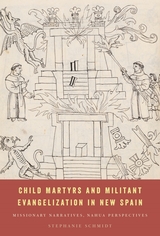
Examines the many iterations of a story of child martyrdom in colonial Mexico.
A cornerstone of the evangelization of early New Spain was the conversion of Nahua boys, especially the children of elites. They were to be emissaries between Nahua society and foreign missionaries, hastening the transmission of the gospel. Under the tutelage of Franciscan friars, the boys also learned to act with militant zeal. They sermonized and smashed sacred objects. Some went so far as to kill a Nahua religious leader. For three boys from Tlaxcala, the reprisals were just as deadly.
In Child Martyrs and Militant Evangelization in New Spain, Stephanie Schmidt sheds light on a rare manuscript about Nahua child converts who were killed for acts of zealotry during the late 1520s. This is the Nahuatl version of an account by an early missionary-friar, Toribio de Benavente Motolinía. To this day, Catholics venerate the slain boys as Christian martyrs who suffered for their piety. Yet Franciscan accounts of the boys’ sacrifice were influenced by ulterior motives, as the friars sought to deflect attention from their missteps in New Spain. Illuminating Nahua perspectives on this story and period, Schmidt leaves no doubt as to who drove this violence as she dramatically expands the knowledgebase available to students of colonial Latin America.
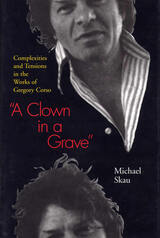
Using a number of critical approaches, Michael Skau examines Gregory Corso's complex imagination, his humor, and his poetic techniques in dealing with America, the Beat generation, and death.
Skau covers the complete works of Corso, one of the four major Beat Generation writers (with Jack Kerouac, Allen Ginsberg, and William S. Burroughs) who attempted to provide an alternative to what they saw as the academic forms of literature dominating American writing through the 1940s and 1950s. The Beat option focused on ordinary people, spurning the cultural pretensions of the intelligentsia and using common language as well as the rhythms of actual speech. Corso, abandoned as a child by his mother, subjected to a variety of foster homes, and imprisoned as an adolescent, became an authentic voice of America's neglected streetwise youth. He embodies much of the tension, confusion, and rebellion that emerged in America after World War II and eventually crested in the 1960s.
Corso emphasizes social issues, yet risks undermining this significance by using wit, wordplay, and humor. While conceding mortality, he is adamant in refusing to acknowledge death's power. Even as he rebels against conventional literature, he still is enchanted by classicism and romanticism, often borrowing their techniques and idioms. Skau examines these complexities and seeming contradictions throughout Corso's career, showing that Corso finds value in inconsistency and vacillation. For him, as illustrated in the poems "Hair" and "Marriage," contradiction and ambivalence suggest the foundations of freedom of imagination.
In spite of Corso's significance as an American poet, Skau's is the first extensive study of his work, including his fiction. Skau also provides the first complete bibliography of Corso's published work in more than thirty years.
Including an exclusive interview with bestselling American novelist Elizabeth Strout, this groundbreaking study will engage literature scholars and general readers alike.
Written in accessible language, this book is the first to offer a sustained analysis of Elizabeth Strout’s work. A recipient of the Pulitzer Prize and the O. Henry Award, among other accolades, Strout has achieved a vast popular following as well. Amy and Isabelle was made into a television movie; Olive Kitteridge, which sold more than one million copies, was adapted as a miniseries; The Burgess Boys has been optioned for HBO; and My Name Is Lucy Barton was reimagined for the stage in London and on Broadway. Oh William!, the sequel to My Name Is Lucy Barton, appeared in 2021, and Strout’s latest book, Lucy by the Sea, is slated for release in fall 2022.
At the height of her literary powers as a chronicler of American life and particularly the lives of American women, Strout is currently enjoying both commercial and critical success. Her sales and perennial presence on book club lists indicate a tremendous impact on the popular realm and the growing attention to her in academia charts her importance in American letters. This book will satisfy readers looking for a serious, in-depth introduction to Strout’s work, as well as those interested in women’s writing, contemporary fiction, ethics, and literature. It includes a new interview with Strout in which she discusses these issues.
Montwieler traces the evolution of Strout’s voice, themes, and characters, which uniquely address American twenty-first-century feminine perspectives and sensibilities. From classic domestic spats between a mother and daughter to hate crimes aimed at mosques, from sweeping forays into decades past to snapshots of contemporary life, Strout compassionately portrays humanity at its most brutal and its most intimate. Though her canvas is vast, her eye for detail is astute and her ear for nuance is keen. Looking across Strout’s work, Montwieler explores how she portrays the endurance of hope, the complexities of family, the effects of trauma on individuals and communities, the sustaining power of the natural world, and the effects of place on personal and collective character.
Strout’s creations cultivate empathy in her readers, teaching them to be attuned to the suffering of others and to the human need for connection. Across her work and in the new interview included within this book, Strout shows her readers that they are not alone in this impersonal, often violent world. The connection that acknowledges our limitations, our woundedness, our capability to do harm, our remorse, and our recognition of beauty and humor distinguishes Strout’s unique contribution to contemporary American letters.
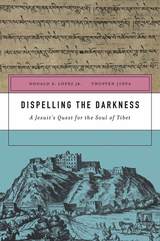
In a remote Himalayan village in 1721, the Jesuit priest Ippolito Desideri awaited permission from Rome to continue his mission to convert the Tibetan people to Christianity. In the meantime, he forged ahead with an ambitious project: a treatise, written in classical Tibetan, that would refute key Buddhist doctrines. If he could convince the Buddhist monks that these doctrines were false, thought Desideri, he would dispel the darkness of idolatry from Tibet.
Offering a fascinating glimpse into the historical encounter between Christianity and Buddhism, Dispelling the Darkness brings Desideri’s Tibetan writings to readers of English for the first time. This authoritative study provides extended excerpts from Inquiry concerning the Doctrines of Previous Lives and Emptiness, Desideri’s unfinished masterpiece, as well as a full translation of Essence of the Christian Religion, a companion work that broadens his refutation of Buddhism. Desideri possessed an unusually sophisticated understanding of Buddhism and a masterful command of the classical Tibetan language. He believed that only careful argumentation could demolish the philosophical foundations of Buddhism, especially the doctrines of rebirth and emptiness that prevented belief in the existence of God. Donald Lopez and Thupten Jinpa’s detailed commentary reveals how Desideri deftly used Tibetan literary conventions and passages from Buddhist scriptures to make his case.
When the Vatican refused Desideri’s petition, he returned to Rome, his manuscripts in tow, where they languished unread in archives. Dispelling the Darkness brings these vital texts to light after centuries of neglect.
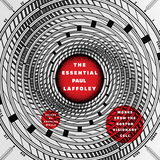
Living and working in a tiny space in Boston he called the “Boston Visionary Cell,” Laffoley became best known for his large mandala-like paintings filled with symbols and texts. Their titles range from the paranormal and arcane, such as The Ectoplasmic Man and The Sexuality of Robots, to the organic, as with Das Urpflanze Haus, to the erudite, including De Rerum Natura, a reference to the Roman poet Lucretius. Whether focused on working with plants to create living architecture or centered on the process of alchemy, these detailed, brilliantly colored works reflect Laffoley’s utopian hopes and transdisciplinary interests: throughout, he aimed to unite the boundless freedom of human imagination with the mathematical precision of the physical world.
Nearly one hundred of Laffoley’s works are showcased here along with his accompanying “thought-forms,” texts specific to each painting that comment on its particular content. Together with an introduction by editor and gallerist Douglas Walla, a biography by fellow artist Steven Moskowitz, and essays by scholars Linda Dalrymple Henderson and Arielle Saiber, this book is a long-awaited celebration of the theories, writings, and artworks of an extraordinary mind.
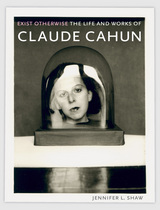
In the turmoil of the 1920s and ’30s, Claude Cahun challenged gender stereotypes with her powerful photographs, montages, and writings, works that appear to our twenty-first-century eyes as utterly contemporary, or even from the future. She wrote poetry and prose for major French literary magazines, worked in avant-garde theater, and was both comrade of and critical outsider to the Surrealists. Exist Otherwise is the first work in English to the tell the full story of Claude Cahun’s art and life, one that celebrates and makes accessible Cahun’s remarkable vision.
Jennifer L. Shaw embeds Cahun within the exciting social and artistic milieu of Paris between the wars. She examines her relationship with Marcel Moore—Cahun’s stepsister, lover, and life partner—who was a central collaborator helping make some of the most compelling photographs and photomontages of Cahun’s oeuvre, dreamscapes of disassembled portraiture and scenes that simultaneously fascinate and terrify. Shaw follows Cahun into the horrors of World War II and the Nazi occupation of the island of Jersey off the coast of Normandy, and she explores the powerful and dangerous ways Cahun resisted it. Reading through her letters and diaries, Shaw brings Cahun’s ideas and feelings to the foreground, offering an intimate look at how she thought about photography, surrealism, the histories of women artists, and queer culture.
Throughout her work, Octavia E. Butler explored, critiqued, and created religious ideology. Her prescient thoughts on the synergy between politics and religion in America are evident in her 1993 dystopian novel, Parable of the Sower, and its 1998 sequel, Parable of the Talents. They explored, respectively, what happens during a divisive “cultural war” that unjustly impacts the disenfranchised, and the rise of a fascistic president, allied with white fundamentalist Christianity, who chants the slogan, “Make America Great Again.”
But religion, for Butler, need not be a restricting force. The editors of and contributors to God Is Change heighten our appreciation for the range and depth of Butler’s thinking about spirituality and religion, as well as how Butler’s work—especially the Parable and Xenogenesis series—offers resources for healing and community building. Essays consider the role of spirituality in Butler’s canon and the themes of confronting trauma as well as experiencing transformation and freedom. God Is Change meditates on alternate religious possibilities that open different political and cultural futures to illustrate humanity’s ability to endure change and thrive.
This book provides the point of departure for anyone wishing to study Huguccio first-hand. It will be worthy reading for students of medieval canon law and an essential addition to all libraries supporting research in medieval studies.
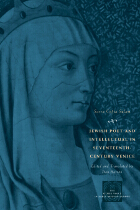
The first Jewish woman to leave her mark as a writer and intellectual, Sarra Copia Sulam (1600?–41) was doubly tainted in the eyes of early modern society by her religion and her gender. This remarkable woman, who until now has been relatively neglected by modern scholarship, was a unique figure in Italian cultural life, opening her home, in the Venetian ghetto, to Jews and Christians alike as a literary salon.
For this bilingual edition, Don Harrán has collected all of Sulam’s previously scattered writings—letters, sonnets, a Manifesto—into a single volume. Harrán has also assembled all extant correspondence and poetry that was addressed to Sulam, as well as all known contemporary references to her, making them available to Anglophone readers for the first time. Featuring rich biographical and historical notes that place Sulam in her cultural context, this volume will provide readers with insight into the thought and creativity of a woman who dared to express herself in the male-dominated, overwhelmingly Catholic Venice of her time.
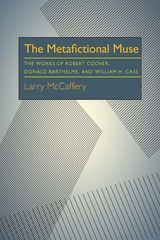
McCaffery interprets the works of three major writers of radically experimental fiction: Robert Coover; Donald Barthelme; and Willam H. Gass. The term “metafiction” here refers to a strain in American writing where the self-concious approach to the art of fiction-making is a commentary on the nature of meaning itself.
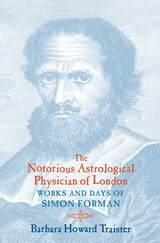
Although he received no formal medical education, Forman built a thriving practice. His success rankled the College of Physicians of London, who hounded Forman with fines and jail terms for nearly two decades. In addition to detailing case histories of his medical practice—the first such records known from London—as well as his run-ins with the College, Forman's manuscripts cover a wide variety of other matters, from astrology and alchemy to gardening and the theater. His autobiographical writings are among the earliest English examples of their genre and display an abiding passion for reworking his personal history in the best possible light, even though they show little evidence that Forman ever intended to publish them.
Fantastic as many of Forman's manuscripts are, it is their more mundane aspects that make them such a priceless record of what daily life was like for ordinary inhabitants of Shakespeare's London. Forman's descriptions of the stench of a privy, the paralyzed limbs of a child, a lost bitch dog with a velvet collar all offer tantalizing glimpses of a world that seems at once very far away and intimately familiar. Anyone who wants to reclaim that world will enjoy this book.
Banished from the Massachusetts Bay Colony for his refusal to conform to Puritan religious and social standards, Roger Williams established a haven in Rhode Island for those persecuted in the name of the religious establishment. He conducted a lifelong debate over religious freedom with distinguished figures of the seventeenth century, including Puritan minister John Cotton, Massachusetts governor John Endicott, and the English Parliament.
James Calvin Davis gathers together important selections from Williams’s public and private writings on religious liberty, illustrating how this renegade Puritan radically reinterpreted Christian moral theology and the events of his day in a powerful argument for freedom of conscience and the separation of church and state. For Williams, the enforcement of religious uniformity violated the basic values of Calvinist Christianity and presumed upon God’s authority to speak to the individual conscience. He argued that state coercion was rarely effective, often causing more harm to the church and strife to the social order than did religious pluralism.
This is the first collection of Williams’s writings in forty years reaching beyond his major work, The Bloody Tenent, to include other selections from his public and private writings. This carefully annotated book introduces Williams to a new generation of readers.

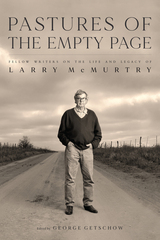
A collection of essays that offers an intimate view of Larry McMurtry, America’s preeminent western novelist, through the eyes of a pantheon of writers he helped shape through his work over the course of his unparalleled literary life.
When he died in 2021, Larry McMurtry was one of America’s most revered writers. The author of treasured novels such as Lonesome Dove and The Last Picture Show, and coauthor of the screenplays for Brokeback Mountain and Streets of Laredo, McMurtry created unforgettable characters and landscapes largely drawn from his life growing up on the family’s hardscrabble ranch outside his hometown of Archer City, Texas. Pastures of the Empty Page brings together fellow writers to honor the man and his impact on American letters.
Paulette Jiles, Stephen Harrigan, Stephanie Elizondo Griest, and Lawrence Wright take up McMurtry’s piercing and poetic vision—an elegiac literature of place that demolished old myths of cowboy culture and created new ones. Screenwriting partner Diana Ossana reflects on their thirty-year book and screenwriting partnership; other contributors explore McMurtry’s reading habits and his passion for bookselling. And brother Charlie McMurtry shares memories of their childhood on the ranch. In contrast to his curmudgeonly persona, Larry McMurtry emerges as a trustworthy friend and supportive mentor. McMurtry was famously self-deprecating, but as his admirers attest, this self-described “minor regional writer” was an artist for the ages.
Plants from the Past is a fascinating, comprehensive record of the work of two dedicated plant scientists who were instrumental in the establishment of archaeobotany and paleoethnobotany as vigorous subdisciplines within American archaeology. Hugh Carson Cutler and Leonard Watson Blake worked together for many decades at the Missouri Botanical Garden in St. Louis, identifying and interpreting plant remains from archaeological sites all over North America.
Covering a period of 30 years and tracing the development of the study of plant remains from archaeological sites, the volume will give archaeologists access to previously unavailable data and interpretations. It features the much-sought-after extensive inventory "Plants from Archaeological Sites East of the Rockies," which serves as a reference to archaeobotanical collections curated at the Illinois State Museum. The chapters dealing with protohistory and early historic foodways and trade in the upper Midwest are especially relevant at this time of increasing attention to early Indian-white interactions.
The editors' introduction provides coherence and historical context for the papers and points to the book's potential as a resource for future research. Graced by Dr. Blake's brief introductions to each chapter, Plants from the Past neatly compiles the earliest research in archaeobotany by two originators of the science.
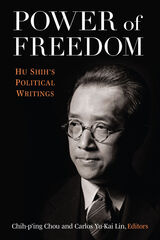
For decades—and today to a certain extent—Hu Shih’s political writings were considered sensitive and even dangerous. As a strident critic of the Chinese Communist Party’s oligarchical practices, he was targeted by the CCP in a concerted national campaign to smear his reputation, cast aspersions on his writings, and generally destroy any possible influence he might have in China. This volume brings together a collection of Hu Shih’s most important, mostly unpublished, English-language speeches, interviews, and commentaries on international politics, China-U.S. relations, and the International Communist Movement. Taken together, these works provide an insider’s perspective on Sino-American relations and the development of the International Communist Movement over the course of the 20th century.

Tavuzzi shows that, aside from being Luther’s first opponent, Prierias played a key role in significant early-sixteenth-century controversies such as the cases of Reuchlin, Erasmus, and Pomponazzi. Drawing on previously untapped primary sources, Tavuzzi traces Prierias’s early career as preacher, professor, inquisitor, and administrator, and places him in the context of the struggles fought between unreformed and observant friars during the Renaissance. Prierias’s activities as Master of the Sacred Palace, his long-standing and bitter conflict with Cardinal Cajetan, and especially his forceful writings warning against the threat of witches and witchcraft are also described. Focusing closely on Prierias’s clash with Luther, Tavuzzi accounts for its development and illuminates the ecclesiological issues at stake. Prierias reveals the little-known world of the friars on the eve of the Reformation.
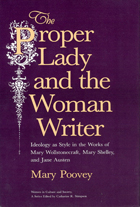
"The proper lady was a handy concept for a developing bourgeois patriarchy, since it deprived women of worldly power, relegating them to a sanctified domestic sphere that, in complex ways, nourished and sustained the harsh 'real' world of men. With care and subtle intelligence, Poovey examines this 'guardian and nemesis of the female self' through the ways it is implicated in the style and strategies of three very different writers."—Rachel M. Brownstein, The Nation
"The Proper Lady and the Woman Writer is a model of . . . creative discovery, providing a well-researched, illuminating history of women writers at the turn of the nineteenth century. [Poovey] creates sociologically and psychologically persuasive accounts of the writers: Wollstonecraft, who could never fully transcend the ideology of propriety she attacked; Shelley, who gradually assumed a mask of feminine propriety in her social and literary styles; and Austen, who was neither as critical of propriety as Wollstonecraft nor as accepting as Shelley ultimately became."—Deborah Kaplan, Novel
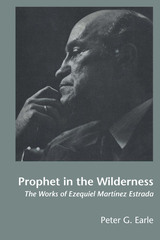
A universal test of great writers is the quality of their response to the human dilemma. Prophet in the Wilderness traces the development of that response in the works of the Argentine writer Ezequiel Martínez Estrada, from the first ambitious poems to its definitive expression in the essays and short stories.
His theme is progressive disillusionment, in history and in personal experience, both of which are interpreted in his work as accumulations of error. Modern civilization, he believes, has created many more problems than it has solved. Like Schopenhauer, Freud, and Spengler, the three thinkers who influenced him most, Martínez Estrada found in real events and circumstances all the symbols of disenchantment. Many today have begun to share this disenchantment, for since the publication of X-Ray of the Pampa in 1933 the real world has become more and more like his symbolic world.
Prophet in the Wilderness examines Martínez Estrada's foremost concern: the world as a complex reality to be discovered behind the image of one's own most intimate community. For him, the community assumed many forms: Buenos Aires, the enigmatic metropolis; the cathedral in his story "The Deluge"; the innumerable family of Marta Riquelme; Argentina itself in his masterpiece, X-Ray of the Pampa.
Martínez Estrada is the great solitary of Hispanic American literature, independent of all fashions and trends. With Borges, he had become by 1950 one of the two most discussed writers in Argentina.
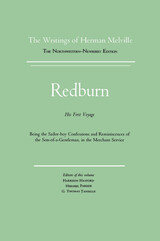
Melville so disliked the novel that he submitted it to his publisher without polishing it. This scholarly edition corrects a number of errors that have persisted in subsequent editions. Based on collations of the editions published during his lifetime, it incorporates corrections made in the English edition and emendations made by the present editors.
As with all the books in the Northwestern-Newberry series, this edition of Redburn is an Approved Text of the Center for Editions of American Authors (Modern Language Association of America).
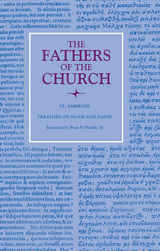
The first treatise presents Noah as a model just man, as Ambrose pairs the literal and the higher or spiritual meaning of the Genesis flood narrative to address topics ranging from the Genesis narrative to Stoic ethics to the Incarnation. In his defense of David to the emperor Theodosius, Ambrose ties David’s sin and repentance to his own close reading of Psalm 51(50), David’s plea for himself in his famous “Miserere.” While the authenticity of the third treatise included in the volume, the Second Apology of David, has long been challenged, recent scholarship suggests that it transmits Ambrose’s own preaching, which applies the lessons of David’s life to the situation of gentile unbelievers, Jews, and the church; even if it is the work of a later imitator, the Second Apology is a compelling and systematic treatment of the David’s sin and repentance as relevant to Christian morality and doctrine.
The three treatises, previously unavailable in English translation, broaden our understanding of exegesis in the Latin West and our interpretation of Ambrose as preacher and exegete.
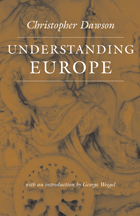
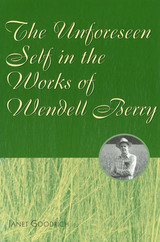
In this fresh approach to Wendell Berry's entire literary canon, Janet Goodrich argues that Berry writes primarily as an autobiographer and as such belongs to the tradition of autobiography. Goodrich maintains that whether Berry is writing poetry, fiction, or prose, he is imagining and re- imagining his own life from multiple perspectives—temporal as well as imaginative.
Through the different vocations that compose his being, Berry imaginatively shapes his experience into literary artifice. Goodrich identifies five of these vocations—the autobiographer, the poet, the farmer, the prophet, and the neighbor—and traces them in the body of Berry's work where they are consistently identifiable in the authorial voice and obvious to the imagination in fictive characterizations. Berry's writings express these "personae" as they develop, and it is this complexity of perspective that helps to make Berry vital to such a range of readers as he writes and rewrites his experience.
Goodrich's book is organized thematically into five chapters, each examining one of Berry's imaginative voices. Within each chapter, she has proceeded chronologically through Berry's work in order to trace the development in each point of view. By acknowledging the relationships between these different themes and patterns of language in the texts, Goodrich avoids reducing Berry as she helps the reader appreciate the richness with which he writes his life into art.
Whereas others have categorized Berry according to just one of his many facets, The Unforeseen Self in the Works of Wendell Berry takes account of his work in all its complexity, providing a coherent critical context and method of study. Reconciling the sometimes contradictory labels pinned on Berry, this vital study of his poems, stories, and essays from 1957 to 2000 offers an enriching and much needed new perspective for Berry's growing, diverse readership.
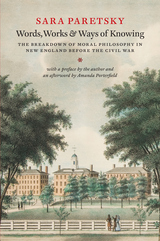
What’s less well-known is that before Paretsky began her writing career, she earned a PhD in history from the University of Chicago with a dissertation on moral philosophy and religion in New England in the early and mid-nineteenth century. Now, for the first time, fans of Paretsky can read that earliest work, Words, Works, and Ways of Knowing.
Paretsky here analyzes attempts by theologians at Andover Seminary, near Boston, to square and secure Calvinist religious beliefs with emerging knowledge from history and the sciences. She carefully shows how the open-minded scholasticism of these theologians paradoxically led to the weakening of their intellectual credibility as conventional religious belief structures became discredited, and how this failure then incited reactionary forces within Calvinism. That conflict between science and religion in the American past is of interest on its face, but it also sheds light on contemporary intellectual battles.
Rounding out the book, leading religious scholar Amanda Porterfield provides an afterword discussing where Paretsky’s work fits into the contemporary study of religion. And in a sobering—sometimes shocking—preface, Paretsky paints a picture of what it was like to be a female graduate student at the University of Chicago in the 1970s. A treat for Paretsky’s many fans, this book offers a glimpse of the development of the mind behind the mysteries.
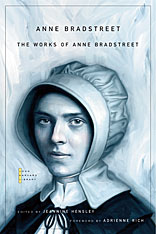
Anne Bradstreet, the first true poet in the American colonies, wrote at a time and in a place where any literary creation was rare and difficult and that of a woman more unusual still. Born in England and brought up in the household of the Earl of Lincoln where her father, Thomas Dudley, was steward, Anne Bradstreet sailed to Massachusetts Bay in 1630, shortly after her marriage at sixteen to Simon Bradstreet. For the next forty years she lived in the New England wilderness, raising a family of eight, combating sickness and hardship, and writing the verse that made her, as the poet Adrienne Rich says in her Foreword to this edition, "the first non-didactic American poet, the first to give an embodiment to American nature, the first in whom personal intention appears to precede Puritan dogma as an impulse to verse."
All Anne Bradstreet's extant poetry and prose is published here with modernized spelling and punctuation. This volume reproduces the second edition of Several Poems, brought out in Boston in 1678, as well as the contents of a manuscript first printed in 1857. Adrienne Rich's Foreword offers a sensitive and illuminating critique of Anne Bradstreet both as a person and as a writer, and the Introduction, scholarly notes, and appendices by Jeannine Hensley make this an authoritative edition.
Adrienne Rich observes, "Intellectual intensity among women gave cause for uneasiness" at this period--a fact borne out by the lines in the Prologue to the early poems: "I am obnoxious to each carping tongue/ Who says my hand a needle better fits." The broad scope of Anne Bradstreet's own learning and reading is most evident in the literary and historical allusions of The Tenth Muse, the first edition of her poems, published in London in 1650. Her later verse and her prose meditations strike a more personal note, however, and reveal both a passionate religious sense and a depth of feeling for her husband, her children, the fears and disappointments she constantly faced, and the consoling power of nature. Imbued with a Puritan striving to turn all events to the glory of God, these writings bear the mark of a woman of strong spirit, charm, delicacy, and wit: in their intimate and meditative quality Anne Bradstreet is established as a poet of sensibility and permanent stature.
In Works of Hesiod and the Homeric Hymns, highly acclaimed poet and translator Daryl Hine brings to life the words of Hesiod and the world of Archaic Greece. While most available versions of these early Greek writings are rendered in prose, Hine's illuminating translations represent these early classics as they originally appeared, in verse. Since prose was not invented as a literary medium until well after Hesiod's time, presenting these works as poems more closely approximates not only the mechanics but also the melody of the originals.
This volume includes Hesiod's Works and Days and Theogony, two of the oldest non-Homeric poems to survive from antiquity. Works and Days is in part a farmer's almanac—filled with cautionary tales and advice for managing harvests and maintaining a good work ethic—and Theogony is the earliest comprehensive account of classical mythology—including the names and genealogies of the gods (and giants and monsters) of Olympus, the sea, and the underworld. Hine brings out Hesiod's unmistakable personality; Hesiod's tales of his escapades and his gritty and persuasive voice not only give us a sense of the author's own character but also offer up a rare glimpse of the everyday life of ordinary people in the eighth century BCE.
In contrast, the Homeric Hymns are more distant in that they depict aristocratic life in a polished tone that reveals nothing of the narrators' personalities. These hymns (so named because they address the deities in short invocations at the beginning and end of each) are some of the earliest examples of epyllia, or short stories in the epic manner in Greek.
This volume unites Hine's skillful translations of the Works of Hesiod and the Homeric Hymns—along with Hine's rendering of the mock-Homeric epic The Battle of the Frogs and the Mice—in a stunning pairing of these masterful classics.
These works by a tenth-century woman, who wrote plays when no one else in Europe was writing plays and who imitated the style of Terence when most people thought the classics had been forgotten, caused a literary sensation when they were first published in 1501.
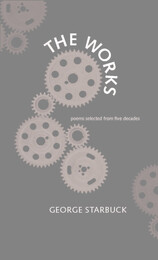
Eighty-one poems spanning the career of the late George Starbuck, widely praised luminary of modern American verse.
Starbuck was known in his lifetime and is remembered today as a practitioner of verse remarkable for its pathos, intelligence, and wit. A master of American vernacular, sensitive to the rhythms of everyday speech, Starbuck was also a brilliant lyricist, at once erudite and irreverent. He addressed some of the most profound issues of his day with a playful ingenuity and a virtuosity of talent that Glyn Maxwell, poetry editor of the New Republic, writing in The Oxford Companion to Twentieth Century Poetry, calls a "veritable arsenal of strategies against the darkness."
Starbuck came to wide critical notice in 1960 with the publication of his first book, Bone Thoughts, which won the Yale Series of Younger Poets prize. He published work regularly in the New Yorker and other major literary journals in the United States. His work was consistently recognized with awards, among them the Prix de Rome, an Ingram-Merrill Fellowship, a Rockefeller Foundation Fellowship, the Beth Hokin Prize, a Notable Book of the Year designation from the New York Times, the Lenore Marshall poetry prize, and an Aiken-Taylor Lifetime Achievement Award.
Grouped together by decades, the poems reveal Starbuck's developing genius. His technical agility and his singular voice are evident. As Anthony Hecht declares in his foreword, "I come to this posthumous collection with serene and justified confidence in finding enormous pleasure, astonishment, admiration, and genuine satisfaction. [This book] is a generous sampling of a profound poetic legacy, one for which readers ought to be deeply grateful."
READERS
Browse our collection.
PUBLISHERS
See BiblioVault's publisher services.
STUDENT SERVICES
Files for college accessibility offices.
RECENTLY PUBLISHED



UChicago Accessibility Resources
home | accessibility | search | about | contact us
BiblioVault ® 2001 - 2024
The University of Chicago Press