Results by title
5550 books match the query 'Biography & Autobiography' and 25 start with a non-letter
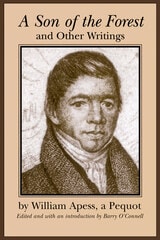
"A Son of the Forest" and Other Writings
William Apess
University of Massachusetts Press, 1997
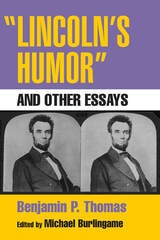
"Lincoln's Humor" and Other Essays
Benjamin P. Thomas. Edited by Michael Burlingame
University of Illinois Press, 2006
A skilled historian and a masterful storyteller himself, Thomas was widely regarded as the greatest Lincoln historian of his generation. With these essays, he combines historical depth with narrative grace in delineating Lincoln's qualities as a humorist, lawyer, and politician. From colorful tall tales to clever barbs aimed at political opponents, Lincoln clothed a shrewd wit in a homespun, backwoods vernacular. He used humor to defuse tension, illuminate a point, put others at ease--and sometimes for sheer fun. From an early reliance on broad humor and ridicule in speeches and on the stump, Lincoln's style shifted in 1854 to a more serious vein in which humor came primarily to elucidate an argument. "If I did not laugh occasionally I should die," he is said to have told his cabinet, "and you need this medicine as much as I do." Thomas brings his deep knowledge of Lincoln to essays on the great man's tumultuous career in Congress, his work as a lawyer, his experiences in the Courts, and his opinions of the South. A gracious survey of Lincoln's early biographers, particularly Ida Tarbell, stands alongside an appreciation of Harry Edward Pratt, a key figure in the early days of the Abraham Lincoln Association. Thomas also assesses Lincoln's use of language and the ongoing significance of the Gettysburg Address.
This diverse collection is enhanced by an introduction by Michael Burlingame, himself a leading biographer of Lincoln. Burlingame provides a balanced portrait of Thomas and his circuitous path toward writing history.
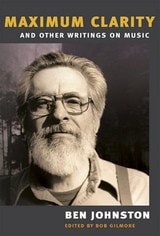
"Maximum Clarity" and Other Writings on Music
Ben Johnston. Edited by Bob Gilmore
University of Illinois Press, 2022
This collection spans forty years and brings together forty-one of Johnston's most important writings, including many rare and several previously unpublished selections. They include position papers, theoretical treatises, program notes, historical reflections, lectures, excerpts from interviews, and letters, and they cover a broad spectrum of concerns--from the technical exegesis of microtonality to the personal and the broadly humanistic. A discography of commercially available recordings of Johnston's music closes out the collection.
"Of Our New Day Begun"
A Memoir of the Origins and Early Years of the National Council for Black StudiesWilliam M. King
University Press of Colorado, 2027
A primary source–rich account of the founding of the National Council for Black Studies, "Of Our New Day Begun" is both a personal and institutional story. Through a composite of personal recollection and historical research, author William M. King recounts the story of the people, events, and processes involved in the prelude, formation, and initiation of the council through the first five years of its existence.
In "Of Our New Day Begun" King fuses two separate and distinct stories: the story of the creation and evolution of the Black Studies program at the University of North Carolina, Charlotte, and the story of how the specific needs of that program—especially accreditation—led to the creation of the NCBS. For the first part of the story, King relies on Bertha Maxwell-Roddey's 1974 doctoral dissertation, supplemented with additional archival documents and conversations. The second part of the story is based primarily on King’s memories, files, and research as one of the founders of NCBS, supplemented by interviews; materials from the NCBS archives; local, regional, and national newspaper accounts; and additional secondary materials.
Part memoir and part institutional history, "Of Our New Day Begun" is also a story about how to build an institution during times of social change. A reconstruction of the sights, sounds, ideas, and birth pangs King witnessed and experienced and the meanings he has come to make of them, this work is a significant contribution to the story of race and race relations in the United States during the mid to late twentieth century.
"The Stage's Glory"
John Rich (1692–1761)Berta Joncus
University of Delaware Press, 2011
Published by University of Delaware Press. Distributed worldwide by Rutgers University Press.
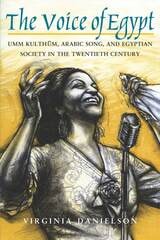
"The Voice of Egypt"
Umm Kulthum, Arabic Song, and Egyptian Society in the Twentieth CenturyVirginia Danielson
University of Chicago Press, 1997
Danielson examines the careful construction of Umm Kulthum's phenomenal popularity and success in a society that discouraged women from public performance. From childhood, her mentors honed her exceptional abilities to accord with Arab and Muslim practice, and as her stature grew, she remained attentive to her audience and the public reception of her work. Ultimately, she created from local precendents and traditions her own unique idiom and developed original song styles from both populist and neo-classical inspirations. These were enthusiastically received, heralded as crowning examples of a new, yet authentically Arab-Egyptian, culture. Danielson shows how Umm Kulthum's music and public personality helped form popular culture and contributed to the broader artistic, societal, and political forces that surrounded her.
This richly descriptive account joins biography with social theory to explore the impact of the individual virtuoso on both music and society at large while telling the compelling story of one of the most famous musicians of all time.
"She is born again every morning in the heart of 120 million beings. In the East a day without Umm Kulthum would have no color."—Omar Sharif
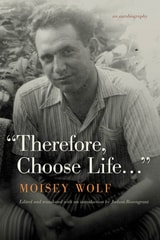
"Therefore, Choose Life..."
An AutobiographyMoisey Wolf
Oregon State University Press, 2014
Wolf describes his Jewish childhood and youth in pre-war Poland, his escape from the Holocaust and subsequent medical service in the Soviet Army during World War II and the following decade, his distinguished career in psychiatry in post-Stalinist Soviet Russia, and his final years in Portland, Oregon, after his departure from the Soviet Union in 1992.
Wolf’s narrative skill and evocative personal insights, combined with Judson Rosengrant’s judicious editing and annotation and elegant translation, provide the reader with direct access to a world that has seemingly ceased to exist, yet continues to resonate and inform our own lives in powerful ways.
“Therefore, Choose Life…” will appeal to readers interested in the history of the East-European twentieth century, pre-Holocaust Jewish family life in Poland, and in the survival of a man of deep religious faith and cultivation in the face of the catastrophes and vicissitudes of his time and place.
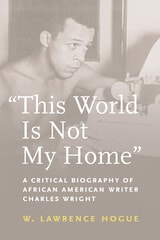
"This World Is Not My Home"
A Critical Biography of African American Writer Charles WrightW. Lawrence Hogue
University of Massachusetts Press, 2023
One of Book Authority's 8 New African-American and Black Biography Books Shaping 2025
In the 1960s, Charles Wright’s (1932–2008) star was on the rise. After dropping out of high school and serving in the Korean War, the young Black writer landed in New York, where he was mentored by Norman Mailer, signed a book deal with a leading publisher, and was celebrated by the likes of Langston Hughes and James Baldwin.
Over the decades to follow, Wright would lead a peripatetic and at times precarious life, moving between Tangier, Veracruz, Paris, and New York, penning a regular column for the Village Voice, living off the goodwill of his friends, and battling addiction and, later, mental health issues. As W. Lawrence Hogue shows, Wright’s innovative fiction stands apart, offering a different vision of outcast Black Americans in the postwar era and using satire to bring agency and humanity to working-class characters. This critical biography—the first devoted to Wright’s significant but largely forgotten story—brings new attention to the writer’s impressive body of work, in the context of a wild, but troubled, life.
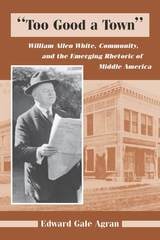
"Too Good a Town"
William Allen White, Community, and the Emerging Rhetoric of Middle AmericaEdward G. Agran
University of Arkansas Press, 1999
For fifty years, William Allen White, first as a reporter and later as the long-time editor of the Emporia Gazette, wrote of his small town and its Mid-American values. By tailoring his writing to the emerging urban middle class of the early twentieth century, he won his “gospel of Emporia” a nationwide audience and left a lasting impact on he way America defines itself.
Investigating White’s life and his extensive writings, Edward Gale Agran explores the dynamic thought of one of America’s best-read and most-respected social commentators. Agran shows clearly how White honed his style and transformed the myth of conquering the western frontier into what became the twentieth-century ideal of community building.
Once a confidante of and advisor to Theodore Roosevelt, White addressed, and reflected in his work, all the great social and political oscillations of his time—urbanization and industrialism, populism, and progressivism, isolationism internationalism, Prohibition, and New Deal reform. Again and again, he asked the question “What’s the matter?” about his times and townspeople, then found the middle ground. With great care and discernment, Agran gathers the man strains of White’s messages, demonstrating one writer’s pivotal contribution to our idea of what it means to be an American.
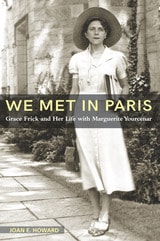
"We Met in Paris"
Grace Frick and Her Life with Marguerite YourcenarJoan E. Howard
University of Missouri Press, 2020
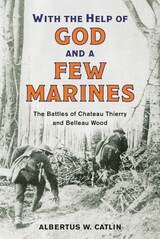
"With the Help of God and a Few Marines"
The Battles of Chateau Thierry and Belleau WoodAlbertus W. Catlin
Westholme Publishing, 2013
“The story of the marines in France is told with authority and interest.”—Booklist
“It is one of the books about the American war effort which is well worth keeping as well as reading.”—Outlook
“A well-written and complete account.”—Library Bulletin
In an area of woods smaller than New York City’s Central Park, the United States Marines made a desperate and dramatic stand against the might of the Imperial Germany Army’s final offensive in June 1918. Had the Germans broken through the lines as planned, there would have been no Allied forces between them and Paris. World War I had stagnated for nearly four years, and this last German push was a desperate, but powerful gamble to finally bring the war to a close. As at Guadalcanal during World War II, the enemy had not anticipated the ferocity and doggedness of the United States Marines. Leading this small expeditionary force was Brigadier General Albertus Wright Catlin. For most of the month of June the marines fought the Germans at close range, using their rifles effectively and engaging in hand-to-hand combat. Toward the end of the battle, Catlin was shot in the chest by a sniper and removed from the field. While recuperating, he began “With the Help of God and a Few Marines”, his account of the marines’ experience in France, including what became known as the Battle of Belleau Wood. First published in 1919, and considered among the finest American memoirs from World War I, it is notable for its description of what it means to be a United States Marine—an account as relevant today as it was nearly a century ago—and its straightforward depiction of life and death on the Western Front in the last months of the war.
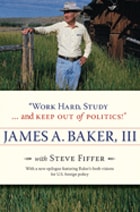
"Work Hard, Study . . . and Keep Out of Politics!"
James A. Baker III with Steve Fiffer
Northwestern University Press, 2008
Beginning in 1975 with the Ford administration, in a job procured for him by friend and tennis partner George H. W. Bush, Baker was in the thick of American politics. He recounts the inside story of Ford’s rejection of Reagan as a running mate in 1976 with the same insight he has into Reagan’s rejection of Ford four years later. When the White House was plunged into turmoil after the Reagan assassination attempt, he was there, and his stories take readers deeper into those chaotic days. Baker was on hand for the George H. W. Bush campaign’s battle over running mate Dan Quayle and, more recently, he was again on the front row as George W. Bush fought it out in Florida. Spellbinding and frank, his stories are the ones between the lines of our history books.
In this new edition, Baker also responds for the first time in print to the George W. Bush administration’s reaction to the Iraq Study Group Report, written with his input. Baker is very qualified to comment on the political operation of the current administration, and his new writing for this paperback brings the full weight of his experience to bear.
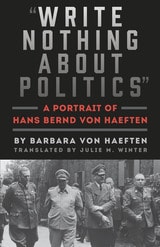
"Write Nothing about Politics"
A Portrait of Hans Bernd von HaeftenBarbara von Haeften
Michigan State University Press, 2018
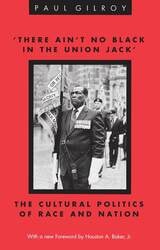
'There Ain't no Black in the Union Jack'
The Cultural Politics of Race and NationPaul Gilroy
University of Chicago Press, 1991
"Gilroy demonstrates effectively that cultural traditions are not static, but develop, grow and indeed mutate, as they influence and are influenced by the other changing traditions around them."—David Edgar, Listener Review of Books.
"A fascinating analysis of the discourses that have accompanied black settlement in Britain. . . . An important addition to the stock of critical works on race and culture."—David Okuefuna, Chicago Tribune
... And Heaven Shed No Tears
Henry Armin Herzog
University of Wisconsin Press, 2005
1995 paperback, Saga Publishers / Folio Private

1001 Beds
Performances, Essays, and TravelsTim Miller; Edited by Glen Johnson
University of Wisconsin Press, 2006
Here we have the most complete Miller yet—a raucous collection of his performance scripts, essays, interviews, journal entries, and photographs, as well as his most recent stage piece Us. This volume brings together the personal, communal, and national political strands that interweave through his work from its beginnings and ultimately define Miller's place as a contemporary artist, activist, and gay man.
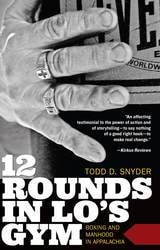
12 Rounds in Lo's Gym
Boxing and Manhood in AppalachiaTodd D. Snyder
West Virginia University Press, 2018
Part love letter to Appalachia, part rigorous social critique, readers may find 12 Rounds in Lo’s Gym—and its narrative of individual and community strength in the face of globalism’s headwinds—a welcome corrective to popular narratives that blame those in the region for their troubles.
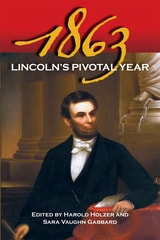
1863
Lincoln's Pivotal YearEdited by Harold Holzer and Sara Vaughn Gabbard
Southern Illinois University Press, 2013
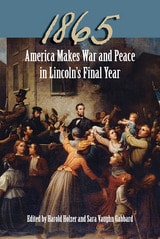
1865
America Makes War and Peace in Lincoln’s Final YearEdited by Harold Holzer and Sara Vaughn Gabbard
Southern Illinois University Press, 2015
In 1865 Americans faced some of the most important issues in the nation’s history: the final battles of the Civil War, the struggle to pass the Thirteenth Amendment, the peace process, reconstruction, the role of freed slaves, the tragedy of Abraham Lincoln's assassination, and the trials of the conspirators. In this illuminating collection, prominent historians of nineteenth-century America offer insightful overviews of the individuals, events, and issues on 1865 that shaped the future of the United States.
Following an introduction by renowned Lincoln scholar Harold Holzer, nine new essays explore the end of the Civil War, Lincoln’s death, and the start of the tentative peace in 1865. Michael Vorenberg discusses how Lincoln shepherded through the House of Representatives the resolution sending the Thirteenth Amendment to the states for ratification, John F. Marszalek and Michael B. Ballard examine the partnership of Lincoln’s war management and General Ulysses S. Grant’s crucial last thrusts against Robert E. Lee, and Richard Striner recounts how Lincoln faced down Confederate emissaries who proposed immediate armistice if Lincoln were to reverse the Emancipation Proclamation. Ronald C. White Jr. offers a fresh look at Lincoln’s second inaugural address, and Richard Wightman Fox provides a vivid narrative of Lincoln’s dramatic walk through Richmond after the Confederates abandoned their capital.
Turning to Lincoln’s assassination, Edward Steers Jr. relates the story of Booth’s organizational efforts that resulted in the events of that fateful day, and Frank J. Williams explains the conspirators’ trial and whether they should have faced military or civilian tribunals. Addressing the issue of black suffrage, Edna Greene Medford focuses on the African American experience in the final year of the war. Finally, Holzer examines the use of visual arts to preserve the life and legacy of the martyred president.
Rounding out the volume are a chronology of national and international events during 1865, a close look at Lincoln’s activities and writings from January 1 through April 14, and other pertinent materials. This thoughtful collection provides an engaging evaluation of one of the most crucial years in America’s evolution.

23 Woodcock in 22 Years
Reflections on Hunting, the Night Sky, and Our Place in the UniverseJeff Wilkerson
University of Iowa Press, 2024
As Wilkerson’s thoughts soar to the stars that produced the chemical elements that form us and all the land and its creatures, simple reflections on going afield to harvest a woodcock for a special holiday meal ground him. What emerges is a love story about a bird, the land, and all of creation from atomic nuclei to the farthest reaches of the universe, and a reminder to acknowledge the gentle flow of time while cherishing the everyday existence around us.
Águila
The Vision, Life, Death, and Rebirth of a Two-Spirit Shaman in the Ozark MountainsMaría Cristina Moroles
University of Arkansas Press, 2024
‘We Didn’t Do Very Well’
The CorrespondenceIngeborg Bachmann and Max Frisch
Seagull Books, 2026
The fraught and generative relationship between two postwar literary giants—revealed through a series of letters published for the first time in English.
Ingeborg Bachmann (1926–1973) stands among the most vital voices of postwar German literature—an acclaimed poet and prose writer who also reshaped radio drama and opera. In 1958, a letter of admiration from the Swiss novelist Max Frisch (1911–1991), written after hearing Bachmann’s radio play The Good God of Manhattan, led to a meeting in Paris and the beginning of an intense, volatile love affair that would forever leave a mark on both their lives and work. Presented here for the first time in English, 299 letters written between 1958 and 1973 trace the arc of that relationship: long separations, the strain of two writers attempting to share a life, creative rivalry, sexual jealousy, and gendered tensions sharpened by a fifteen-year age gap. The correspondence ranges from everyday logistics to raw psychological insight, from passion and longing to bitterness, silence, and regret. The later letters, written as Bachmann’s health declined, expand to include friends, relatives, and key literary figures. First published in German in 2022, this correspondence overturned long-held myths about the two writers, revealing mutual influence, negotiated freedom, and a struggle to reconcile incompatible needs. Intimate and revelatory, these letters illuminate the fragile intersection of love, power, and creativity.

“A Good Poor Man’s Wife”
Being a Chronicle of Harriet Hanson Robinson and Her Family in Nineteenth-Century New EnglandClaudia L. Bushman
University Press of New England, 1998
“Here Lies” preceded by “The Indian Culture”
Antonin Artaud
Diaphanes, 2021
“Here Lies” preceded by “The Indian Culture” was translated by the award-winning translator Clayton Eshleman, widely seen as the preeminent translator into English of Artaud’s work, with its profound intensity and multiply nuanced language. For the first time since its first publication, this bilingual edition presents the two works in one volume, as Artaud originally intended. This edition also features a contextual afterword by Stephen Barber as well as new material, previously untranslated into English.
“The Most Dangerous Communist in the United States”
A Biography of Herbert ApthekerGary Murrell
University of Massachusetts Press, 2015
When J. Edgar Hoover declared Herbert Aptheker “the most dangerous Communist in the United States,” the notorious FBI director misconstrued his true significance. In this first book-length biography of Aptheker (1915–2003), Gary Murrell provides a balanced yet unflinching assessment of the controversial figure who was at once a leading historian of African America, radical political activist, literary executor of W. E. B. Du Bois, and lifelong member of the American Communist Party. Although blacklisted at U.S. universities, Aptheker published dozens of books, including the groundbreaking American Negro Slave Revolts (1943) and the monumental seven-volume Documentary History of the Negro People (1951–1994). He also edited four volumes of the correspondence and unpublished writings of Du Bois, an achievement that Eric Foner, writing in the New York Times Book Review, called “a milestone in the coming of age of Afro-American history.”
As Murrell shows, Aptheker the historian was inseparable from Aptheker the leading Communist Party intellectual, polemicist, and agitator. During the 1960s, his ability to rouse and inspire both black and white student radicals made him one of the few Old Leftists accepted by the New Left. Aptheker had joined the CPUSA during its heyday in the 1930s, convinced that only through the party's leadership could fascism be defeated and true liberation be achieved: he ended his affiliation five decades later in 1991 after the collapse of socialism in the Soviet Union and Eastern Europe.
In an afterword, Bettina Aptheker adds to Murrell's narrative by illuminating her mother Fay's vital contributions to her father's work and by affirming the particularly devastating challenges of life in a family dedicated to radical political and social change.