Results by title
3388 books match the query 'Fiction' and 28 start with a non-letter
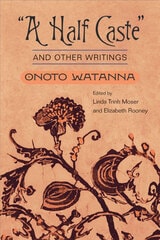
"A Half Caste" and Other Writings
Onoto Watanna
University of Illinois Press, 2003
Born Winnifred Eaton to a British father and Chinese mother, Onoto Watanna was the first novelist of Chinese descent published in the United States. Eaton "became" Watanna to escape Americans' scorn of the Chinese and to capitalize on their fascination with all things Japanese.
This volume includes nineteen of Watanna's shorter works, including thirteen short stories and six essays. "A Half Caste," the earliest essay, appeared in 1898, a year before Miss Numé: A Japanese-American Romance, the first of her bestselling novels. The last short story, “Elspeth,” appeared in 1923. Some of Watanna’s fictional characters will remind readers of the delicate but tragic Madame Butterfly, while others foreshadow types like the trickster in Maxine Hong Kingston’s Tripmaster Monkey (where Watanna makes a cameo appearance). Throughout, Watanna tells stories of people very much like herself—capable, clever, and endlessly inventive.
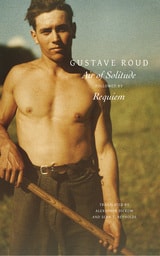
"Air of Solitude" Followed by "Requiem"
Gustave Roud
Seagull Books, 2019
Between each section of Air of Solitude, Roud inserts short vignettes that provide fleeting and lyrical images that resemble allusions to half-forgotten memories. However, Roud leaves the relationship between the titled sections and the interludes ambiguous. As the book concludes with Requiem, the remnants of narrative shatter, leaving behind only the spectral tatters of memory as Roud confronts the enigma of loss in peerless, jewel-studded elegiac prose. With these two tales, Roud revives the pastoral tradition and injects it with distinctly modernist anxiety and disillusionment.
"And there will be singing"
An Anthology of International WritingJim Hicks
University of Massachusetts Press, 2019
"Incantations" and Other Stories
An Important New Young Voice From IndiaAppachana, Anjana
Rutgers University Press, 1992
All life seems to be prescribed; these characters bravely or cautiously confront the rules and regulations or finally give in to them resignedly—any small triumphs they achieve are never clear-cut. One of the most unusual aspects of many of the stories is the way in which they are informed by but never ruled by the author's feminism. She never lectures her readers but lets us see for ourselves: a bride caught in a hopeless marriage where she has given up all rights to any life of her own, a hapless college student who is confined to campus for minor infractions just at the time when she had an appointment for an abortion, a young girl who keeps the dark secret of her sister's rape, a woman executive and a digruntled male clerk both trapped in the intricate bureaucracy of their business firm and the roles they must play to survive there. By turns warm, gullible, arrogant and bigoted, all of these characters live their lives amid contradictions and double standards, superstitions and impossible dreams. Appachana's vision is unique, her writing superb. Readers will thank her for allowing them to enter territory that is at once distant and exotic but also familiar and recognizable.
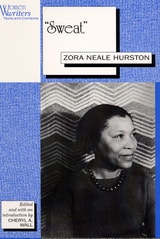
"Sweat"
Written by Zora Neale HurstonWall, Cheryl A
Rutgers University Press, 1997
Now frequently anthologized, Zora Neale Hurston's short story "Sweat" was first published in Firell, a legendary literary magazine of the Harlem Renaissance, whose sole issue appeared in November 1926. Among contributions by Gwendolyn Bennett, Countee Cullen, Langston Hughes, and Wallace Thurman, "Sweat" stood out both for its artistic accomplishment and its exploration of rural Southern black life. In "Sweat" Hurston claimed the voice that animates her mature fiction, notably the 1937 novel Their Eyes Were Watching God; the themes of marital conflict and the development of spiritual consciousness were introduced as well. "Sweat" exemplifies Hurston's lifelong concern with women's relation to language and the literary possibilities of black vernacular.
This casebook for the story includes an introduction by the editor, a chronology of the author's life, the authoritative text of "Sweat," and a second story, "The Gilded Six-Bits." Published in 1932, this second story was written after Hurston had spent years conducting fieldwork in the Southern United States. The volume also includes Hurston's groundbreaking 1934 essay, "Characteristics of Negro Expression," and excerpts from her autobiography, Dust Tracks on a Road. An article by folklorist Roger Abrahams provides additional cultural contexts for the story, as do selected blues and spirituals. Critical commentary comes from Alice Walker, who led the recovery of Hurston's work in the 1970s, Robert Hemenway, Henry Louis Gates, Gayl Jones, John Lowe, Kathryn Seidel, and Mary Helen Washington.
"Tecumseh" and Other Stories of the Ohio River Valley by Julia L. Dumont
Of The Ohio River ValleySandra Parker
University of Wisconsin Press, 2000
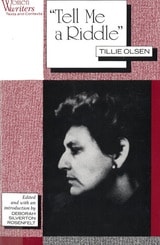
"Tell Me a Riddle"
Tillie OlsenRosenfelt, Deborah S
Rutgers University Press, 1995
This casebook includes an introduction by the editor, a chronology of Olsen’s life, an authoritative text of “Tell Me a Riddle,” relevant essays by Olsen, seven critical essays, and a bibliography.
The contributors are: Joanne Trautmann Banks, Constance Coiner, Rachel Blau Duplessis, Mara Faulkner, Elaine Orr, Linda Ray Pratt, and Deborah Silverton Rosenfelt.
"The Amber Gods" and Other Stories by Harriet Prescott Spofford
Bendixen, Alfred
Rutgers University Press, 1989
The title story presents a self-centered and captivating woman who ruthlessly steals her orphan cousin's lover. In "Circumstance," a pioneer woman returning home through the woods at night is caught by a panther; her husband, who has come to save her, can only watch from the ground as she sings for her life, pinned in a tree. A train engineer hallucinates again and again that he is running over his wife. And Mrs. Craven, who's a bit "weak" in the head, mindlessly repeats "Three men went down cellar and only two came up." These stories combine elements of the best ghost stories—timing, detail, and character —with just enough chill to make you think twice about turning out your lights at night.
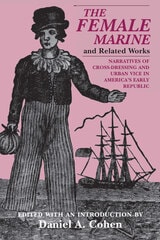
"The Female Marine" and Related Works
Narratives of Cross-Dressing and Urban Vice in America's Early RepublicDaniel A. Cohen
University of Massachusetts Press, 1997
The alternately racy and moralistic narrative recounts the adventures of a young woman from rural Massachusetts who is seduced by a false-hearted lover, flees to Boston, and is entrapped in a brothel. She eventually escapes by disguising herself as a man and serves with distinction on board the U.S. frigate Constitution during the War of 1812. After subsequent onshore adventures in and out of male dress, she is happily married to a wealthy New York gentleman.
In his introduction, Daniel A. Cohen situates the story in both its literary and historical contexts. He explains how the tale draws upon a number of popular Anglo-American literary genres, including the female warrior narrative, the sentimental novel, and the urban exposé. He then explores how The Female Marine reflects early-nineteenth-century anxieties concerning changing gender norms, the expansion of urban prostitution, the growth of Boston's African American community, and feelings of guilt aroused by New England's notoriously unpatriotic activities during the War of 1812.
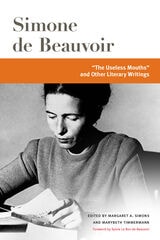
"The Useless Mouths" and Other Literary Writings
Simone de Beauvoir; Edited by Margaret A. Simons and Marybeth Timmermann; Foreword by Sylvie Le Bon de Beauvoir
University of Illinois Press, 2021
The volume begins with a new translation of the 1945 play The Useless Mouths, written in Paris during the Nazi occupation. Other pieces were discovered after Beauvoir's death in 1986, such as the 1965 short novel "Misunderstanding in Moscow," involving an elderly French couple who confront their fears of aging. Two additional previously unknown texts include the fragmentary "Notes for a Novel," which contains the seed of what she later would call "the problem of the Other," and a lecture on postwar French theater titled Existentialist Theater. The collection notably includes the eagerly awaited translation of Beauvoir's contribution to a 1965 debate among Jean-Paul Sartre and other French writers and intellectuals, "What Can Literature Do?"
Prefaces to well-known works such as Bluebeard and Other Fairy Tales,La Bâtarde, and James Joyce in Paris: His Final Years are also available in English for the first time, alongside essays and other short articles. A landmark contribution to Beauvoir studies and French literary studies, the volume includes informative and engaging introductory essays by prominent and rising scholars.
Contributors are Meryl Altman, Elizabeth Fallaize, Alison S. Fell, Sarah Gendron, Dennis A. Gilbert, Laura Hengehold, Eleanore Holveck, Terry Keefe, J. Debbie Mann, Frederick M. Morrison, Catherine Naji, Justine Sarrot, Liz Stanley, Ursula Tidd, and Veronique Zaytzeff.
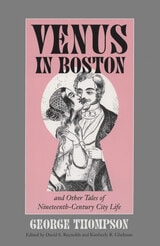
"Venus in Boston" and Other Tales of Nineteenth-Century City Life
George Thompson
University of Massachusetts Press, 2002
The three works in this volume offer a rich representative sample of Thompson's writing. The two novels—Venus in Boston and City Crimes—depict the American city as a place of dark mystery, bawdy humor, and near-universal corruption peopled with con artists and criminals of all kinds. In each novel, a complex narrative structure interweaves multiple stories of exploited labor, abuse of power, seduction, intrigue, and crime. Thompson's autobiography, My Life, presents the author's life in terms nearly as lively as his fiction.
Thompson's zestful, unconventional writings fly in the face of the stereotypical view of Victorian America as straitlaced and sentimental. Ideal for use as a classroom text, this new edition includes a scholarly introduction and an extensive bibliography.
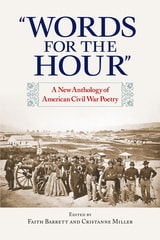
"Words for the Hour"
A New Anthology of American Civil War PoetryFaith Barrett
University of Massachusetts Press, 2005
“Words for the Hour” presents a readable and illuminating account of the Civil War, told through the words of poets North and South. From bathos to profound philosophical meditation and sorrow, the range of these poems illuminates the complexity of their era while also revealing the continuing power of this turning point in American history to speak to readers in the present day.
The volume is divided into three parts, each offering a different perspective on the poetry generated by the war. Part I samples the extraordinary range of poems written immediately preceding and during the war and published in popular periodicals, providing a kind of poetic newspaper account as one might have read it then—from the early days of optimistically heralded victory on both sides, through the mounting casualties and brutal deaths of the long middle years, to the war's conclusion and President Lincoln's assassination. Viewing the struggle from many different vantage points gives the reader access to the ways that people from various backgrounds experienced the trajectory of the war. Civilians and soldiers, free blacks and proponents of slavery, women and men from Massachusetts and Virginia and from recently admitted states and barely developed territories, writers with their eyes on the national political stage and those focused on personal domestic issues: these are the multiple voices of America responding to the war.
Part II includes substantial selections of poems by writers who published extensively in response to the conflict, providing more complex and comprehensive perceptions of the war. These poets include not just well-known figures such as Walt Whitman, Herman Melville, and John Greenleaf Whittier, but also African American poets George Moses Horton and Frances Ellen Watkins Harper and Southern poets Henry Timrod and Sarah Piatt.
Part III offers poems by two poets who did not publish during their lifetimes, but had strong imaginative responses to the conflict, thus giving a sense of the long reach of the war as a defining national experience. One of these two poets (Emily Dickinson) is now renowned while the other (Obadiah Ethelbert Baker) is first published in this volume.
“Words for the Hour” is indeed “new” among anthologies of Civil War poetry not only in its wide range of poems by popular, anonymous, and now canonical poets but also in its informational apparatus. A historical timeline listing major battles and events of the war begins the volume, and historical photographs or lithographs introduce each section of poems. The book also includes a substantial introduction, a glossary of important names and terminology relevant to understanding the poems, and biographical sketches for all the poets whose work is included.
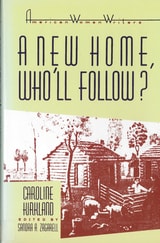
'A New Home, Who Will Follow?' by Caroline Kirkland
Zagarell, Sandra A
Rutgers University Press, 1990
A New Home is a vivid contribution to a new kind of narrative developed during the antebellum period, ethnographic fiction. Kirkland highlights the importance and the drama of local practices and everyday life in Montacute. She traces the way two groups of settlers slowly adjust to each other - the old hands and the newcomers from the East;. Dramatizing differences of class and culture, she also shows how the groups finally form a genuine community and a new, diverse culture. Kirkland also gives ethnographic fiction an original twist: she satirizes the provincialism and the rigidity of both groups of settlers.
After writing A New Home, Kirkland became a professional literary woman, working as an editor as well as a writer. In her introduction, Sandra Zagarell explores the implications of Kirkland's writing and professional career for our understanding of women, writing, and the world of literature in antebellum America.
'I'
Wolfgang Hilbig
Seagull Books, 2019
First published in Germany in 1993 and hailed as an instant classic, “I” is a black comedy about state power and the seductions of surveillance. Its penetrating vision seems especially relevant today in our world of cameras on every train, bus, and corner. This is an engrossing read, available now for the first time in English.
“[Hilbig writes as] Edgar Allan Poe could have written if he had been born in Communist East Germany.”—Los Angeles Review of Books
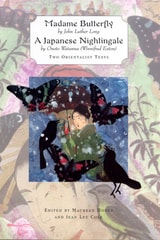
'Madame Butterfly' and 'A Japanese Nightingale'
Two Orientalist TextsCole, Jean Lee
Rutgers University Press, 2002
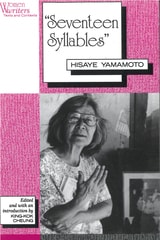
'Seventeen Syllables'
Hisaye YamamotoEdited by King-Kok Cheung
Rutgers University Press, 1994
Yamamoto's disarming style matches the verbal economy of haiku, in which all meaning is contained within seventeen syllables. Her deft characterizations and her delineations of sexuality create a haunting story of a young girl's transformation from innocence to adulthood.
This casebook includes an introduction and an essay by the editor, an interview with the author, a chronology, authoritative texts of "Seventeen Syllables" (1949) and "Yoneko's Earthquake" (1951), critical essays, and a bibliography. The contributors are Charles L. Crow, Donald C. Goellnicht, Elaine H. Kim, Dorothy Ritsuko McDonald, Zenobia Baxter Mistri, Katharine Newman, Robert M. Payne, Robert T. Rolf, and Stan Yogi.
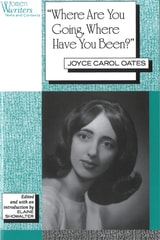
'Where Are You Going, Where Have You Been?'
Joyce Carol OatesShowalter, Elaine
Rutgers University Press, 1994
Joyce Carol Oates’s prize-winning story “Where Are You Going, Where Have You Been?” takes up troubling subjects that continue to occupy her in her fiction: the romantic longings and limited options of adolescent women; the tensions between mothers and daughters; the sexual victimization of women; and the American obsession with violence. Inspired by a magazine story about a serial killer, its remarkable portrait of the dreamy teenager Connie has made it a feminist classic. Connie’s life anticipates the emergence of American society from the social innocence of the fifties into the harsher contemporary realities of war, random violence, and crime. The story was the basis for the movie Smooth Talk, which became the subject of much feminist debate.
This casebook includes an introduction by the editor, a chronology of Oates’s life, an authoritative text of “Where Are You Going, Where Have You Been,” an essay by Oates on Smooth Talk, the original Life article about the serial killer, ten critical essays (including two about the film), and a bibliography.
The contributors are Brenda O. Daly, Christina Marsden Gillis, Don Moser, Tom Quirk, B. Ruby Rich, R.J.R. Rockwood, Larry Rubin, Gretchen Schulz, Marie Mitchell Oleson Urbanski, Joyce M. Wegs, Marilyn C. Wesley, and Joan D. Winslow.
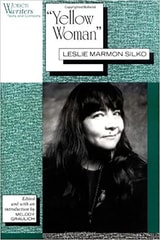
'Yellow Woman'
Leslie Marmon SilkoEdited by Melody Graulich
Rutgers University Press, 1993
In the past twenty-five years many Native American writers have retold the traditional stories of powerful mythological women: Corn Woman, Changing Woman, Serpent Woman, and Thought Woman, who with her sisters created all life by thinking it into being. Within and in response to these evolving traditions, Leslie Marmon Silko takes from her own tradition, the Keres of Laguna, the Yellow Woman. Yellow Woman stories, always female-centered and always from the Yellow Woman's point of view, portray a figure who is adventurous, strong, and often alienated from her own people. She is the spirit of woman. Ambiguous and unsettling, Silko's "Yellow Woman" explores one woman's desires and changes--her need to open herself to a richer sensuality. Walking away from her everyday identity as daughter, wife and mother, she takes possession of transgressive feelings and desires by recognizing them in the stories she has heard, by blurring the boundaries between herself and the Yellow Woman of myth.
Silko's decision to tell the story from the narrator's point of view is traditional, but her use of first person narration and the story's much raised ambiguity brilliantly reinforce her themes. Like traditional yellow women, the narrator is unnamed. By choosing not to reveal her name, she claims the role of Yellow Woman, and Yellow Woman's story is the one Silko clearly claims as her own. The essays in this collection compare Silko's many retellings of Yellow Woman stories from a variety of angles, looking at crucial themes like storytelling, cultural inheritances, memory, continuity, identity, interconnectedness, ritual, and tradition.
This casebook includes an introduction by the editor, a chronology, an authoritative text of the story itself, critical essays, and a bibliography for further reading in both primary and secondary sources. Contributors include Kim Barnes, A. LaVonne Ruoff, Paula Gunn Allen, Patricia Clark Smith, Bernard A. Hirsch, Arnold Krupat, Linda Danielson, and Patricia Jones.
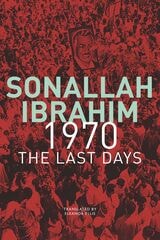
1970
The Last DaysSonallah Ibrahim
Seagull Books, 2024
In 1959, at the age of twenty-two, Egyptian novelist Sonallah Ibrahim was imprisoned by Gamal Abdel Nasser’s regime. Over the following five years in prison in Egypt’s Western Desert, Ibrahim kept diaries that he smuggled out on cigarette papers.
In this novel, Ibrahim takes up Nasser as a fictional character tied tightly to real events, offering a window into his daily life in his final years. Ibrahim follows Nasser during the War of Attrition and the aftermath of the 1967 war with Israel and looks back on the events of the previous decades. He also chronicles Nasser at his most vulnerable, detailing a more private set of Nasser’s setbacks and defeats: the daily routines of a diabetic suffering from heart trouble in the months before his death. Political events as well as social and economic transformations are narrated through newspaper clippings and archival fragments, painting a portrait of the decline of a man who was once larger than life.
2008
a NovelSusan McCarty
Carnegie Mellon University Press, 2026
It’s 2008: the age of the blog, the dawn of social media, and the birth of the smartphone. Obama is running for president on a slogan of hope, while in the shadows, an opioid crisis emerges, and the housing market teeters. Stevie and Sam, two old high school flames who have grown up and grown apart, are brought back together in the aftermath of a tragedy that throws them off the tracks of their lives. Sam, a struggling realtor, is determined to solve a mystery at any cost. Stevie hits on a plan for a “redo” that involves abandoning her adult life to relive her teenage glory days. As both struggle inside the mediocrity of their early adulthoods, the disenchanted world begins to reveal itself, and secrets threaten to overwhelm them. On the cusp of a new era of uncertainty, these old friends must find ways to reconcile their past and find their way home.
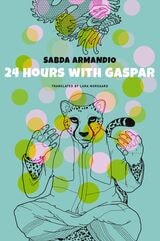
24 Hours with Gaspar
Sabda Armandio
Seagull Books, 2023
Decades into the future, Indonesia’s crowded capital city is underwater. A mysterious novelist searches what remains of the metropolis for the story of an old, infamous crime. He combs the streets for traces of Gaspar: private-eye-cum-criminal-mastermind who plotted a seemingly simple robbery of a jewelry store. Far from just unlocking riches, however, the heist unearths a series of interlinking conflicts that have haunted Gaspar since childhood.
In this brilliant twist of genres, this book combines noir with a laugh-out-loud detective and touches of surreal science fiction. The book’s eclectic blend of allusions and narrative strategies opens new horizons for literary crime fiction while also painting a fresh, postmodern portrait of Jakarta. In a city webbed by roadways and canals, personal vendettas trace back to political crimes and social ills. First impressions can’t be trusted, meta-literary motorbikes possess free will, and a senile witness might be a police detective’s best bet at finding the true whodunnit—if we are to believe that a single truth exists at all. It is a chess game in which your knight no longer moves in the shape of an L, and Gaspar intends to win.
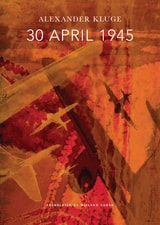
30 April 1945
The Day Hitler Shot Himself and Germany's Integration with the West BeganAlexander Kluge
Seagull Books, 2015
April 30, 1945, marked an end of sorts in the Third Reich. The last business day before a national holiday and then a series of transfers of power, April 30 was a day filled with contradictions and bewildering events that would forever define global history. It was on this day that while the Red Army occupied Berlin, Hitler committed suicide in his underground bunker, and, in San Francisco, the United Nations was being founded.
Alexander Kluge’s latest book, 30 April 1945, covers this single historic day and unravels its passing hours across the different theaters of the Second World War. Translated by Wieland Hoban, the book delves into the events happening around the world on one fateful day, including the life of a small German town occupied by American forces and the story of two SS officers stranded on the forsaken Kerguelen Islands in the South Indian Sea. Kluge is a master storyteller, and as he unfolds these disparate tales, one unavoidable question surfaces: What is the appropriate reaction to the total upheaval of the status quo?
Presented here with an afterword by Reinhard Jirgl, translated by Iain Galbraith, 30 April 1945 is a riveting collection of lives turned upside down by the deadliest war in history. The collective experiences Kluge paints here are jarring, poignant, and imbued with meaning. Seventy years later, we can still see our own reflections on the upheaval of a single day in 1945.
57 Octaves Below Middle C
Kevin McIlvoy
Four Way Books, 2017
99 Fables
William March
University of Alabama Press, 2011
At the time of his death, the longest manuscript still in William March's possession was a collection of fables, which he had completed for the first time in 1938. While Company K, The Tallons, The Bad Seed, and all the rest were in progress, March culled and rewrote, polished and revised these fables, always finding them “too good to destroy,” yet never finding them a good venture for a commercial publisher. Now, posthumously, the collection appears in this book, and readers can enjoy the fabulous world of William March.
This is not to imply that it is a “pretty world.” The fables themselves are an immediate delight, and everyone will find many favorites among the 99. But in the end, March's view of the world is a hard one, and the morals, however charmingly expressed are bitter enough to rival the themes of his novels.
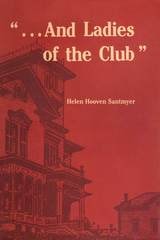
“. . . And the Ladies of the Club”
Helen Hooven Santmyer
The Ohio State University Press, 1980
In this longest and most ambitious of Santmyer’s books, there is—as with all of her previous work—a poignant sense of a past made present again through an acute sensibility, of human life and experience as somehow cumulative, and of lives and events, largely fugitive and forgotten, as captured and transformed as the stuff of her poetry.
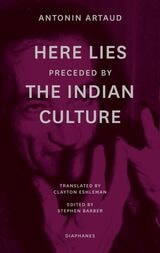
“Here Lies” preceded by “The Indian Culture”
Antonin Artaud
Diaphanes, 2021
“Here Lies” preceded by “The Indian Culture” was translated by the award-winning translator Clayton Eshleman, widely seen as the preeminent translator into English of Artaud’s work, with its profound intensity and multiply nuanced language. For the first time since its first publication, this bilingual edition presents the two works in one volume, as Artaud originally intended. This edition also features a contextual afterword by Stephen Barber as well as new material, previously untranslated into English.
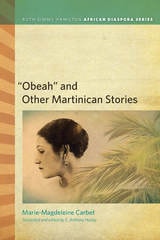
“Obeah” and Other Martinican Stories
Marie-Magdeleine Carbet
Michigan State University Press, 2017
“The Sting of Death” and Other Stories
Shimao Toshio; Translated with an Introduction and Interpretive Comments by Kathryn Sparling
University of Michigan Press, 1985