Results by title
377 books match the query 'French' and 4 start with a non-letter
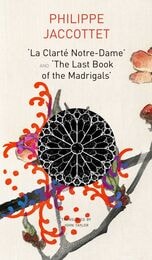
"La Clarté Notre-Dame" and "The Last Book of the Madrigals"
Philippe Jaccottet
Seagull Books, 2022
The last works of the last great classic European poet now available in English.
In his 96th and final year, and with the help of the poet José-Flore Tappy, celebrated Swiss poet Philippe Jaccottet finished two manuscripts-in-progress, one in prose and one in poetry, both of which are presented in this volume in John Taylor’s sensitive translation.
The first work, “La Clarté Notre-Dame,” takes off from the “pure, weightless, fragile, yet crystal-clear tinkling” of a monastery bell heard during a walk with friends. With this thought-provoking sound as a leitmotiv, Jaccottet looks back on a life of writing, reading, and scrutinizing humankind’s existential and spiritual aspirations. He sets these concerns against his equally lifelong preoccupation with “the rise of evil in today’s world,” notably in Syria. Composed in a baroque style, the verse poems collected in “The Last Book of Madrigals” explore love. Jaccottet returns in spirit to Italy, the country which for him symbolizes happiness and sensuality. As he evokes amorous attraction, he conjures up Monteverdi’s madrigals, one of Dante’s little-known rhymes, and Giuseppe Ungaretti’s last poem. Reinventing and commenting on these works, Jaccottet meditates on old age, approaching death, despair, and the persistence of love.
Together, both works grapple with devastating darkness, but as Tappy observes in her afterword, however, Jaccottet’s “greatest force” was “his perpetually renewed desire, during the most terrifying night, to head for the light.”
[more]
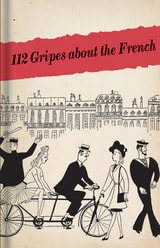
112 Gripes about the French
The 1945 Handbook for American GIs in Occupied FranceEdited by the Bodleian Library
Bodleian Library Publishing, 2013
When American troops arrived in Paris at the end of World War II, they were at first welcomed by the local population. However, the French soon began to resent the Americans for their brashness and display of wealth, while the Americans found the French and their habits equally irritating and incomprehensible: they bathed too little, drank too much, and were almost unfailingly unfriendly.
To bridge the cultural divide, the War Department commissioned humorist Leo Rosten to write this surprisingly candid guide that paired common complaints about the French with answers aimed at promoting understanding. From the fascinations of French nightlife to Gallic grooming and fashions, the guide sought to correct the misconceptions behind a litany of common complaints: Laissez-faire is not in fact a call to laziness, and the French do not play checkers in cafés all day—though they do extol the virtues of a leisurely lunch. The moral principles of the Frenchwoman ought not to be drawn from the few one might find loitering on the fringes of the camp.
Beyond their intended instructive purposes, the grievances included in the guide are at times as revealing of the preconceptions of the American servicemen as they are of the French, as well as offering fascinating insight into the details of daily life immediately after the war, including the acute poverty, the shortage of food and supplies, and the scale of destruction suffered by France during the six years of conflict. Illustrated throughout with charming cartoons and written in a direct, no-nonsense style, 112 Gripes about the French is by turns amusing and thought-provoking in its valiant stand against prejudice and stereotype.
[more]
“Obeah” and Other Martinican Stories
Marie-Magdeleine Carbet
Michigan State University Press, 2017
This volume comprises French versions and English translations of seven short stories written by Marie-Magdeleine Carbet, Martinique’s most prolific woman writer. Four of these stories are previously unpublished, culled from documents obtained from Carbet’s niece. While analyses of the literature of the French Caribbean have tended to portray these people typically as suffering from pathologies of colonial oppression, the situations and reflections presented in these stories offer different perspectives on the lives and concerns of ordinary Martinicans and thus provide insight into some of the missing links of the sociocultural scene. This unique, multifaceted text fills an important pedagogical and scholarly need, and allows the reader to access the daily lives of French Caribbeans in a significantly authentic way.
[more]
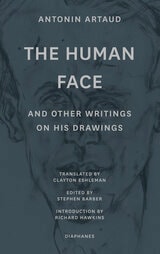
“The Human Face” and Other Writings on His Drawings
Antonin Artaud
Diaphanes, 2021
The first comprehensive collection in English of Antonin Artaud’s writings on his artworks.
The many major exhibitions of Antonin Artaud’s drawings and drawn notebook pages in recent years—at New York’s Museum of Modern Art, Vienna’s Museum Moderner Kunst, and Paris’s Centre Georges Pompidou—have entirely transformed our perception of his work, reorienting it toward the artworks of his final years. This volume collects all three of Artaud’s major writings on his artworks. “The Human Face” (1947) was written as the catalog text for Artaud’s only gallery exhibition of his drawings during his lifetime, focusing on his approach to making portraits of his friends at the decrepit pavilion in the Paris suburbs where he spent the final year of his life. “Ten years that language is gone” (1947) examines the drawings Artaud made in his notebooks—his main creative medium at the end of his life—and their capacity to electrify his creativity when language failed him. “50 Drawings to assassinate magic” (1948), the residue of an abandoned book of Artaud’s drawings, approaches the act of drawing as part of the weaponry deployed by Artaud at the very end of his life to combat malevolent assaults and attempted acts of assassination. Together, these three extraordinary texts—pitched between writing and image—project Artaud’s ferocious engagement with the act of drawing.
The many major exhibitions of Antonin Artaud’s drawings and drawn notebook pages in recent years—at New York’s Museum of Modern Art, Vienna’s Museum Moderner Kunst, and Paris’s Centre Georges Pompidou—have entirely transformed our perception of his work, reorienting it toward the artworks of his final years. This volume collects all three of Artaud’s major writings on his artworks. “The Human Face” (1947) was written as the catalog text for Artaud’s only gallery exhibition of his drawings during his lifetime, focusing on his approach to making portraits of his friends at the decrepit pavilion in the Paris suburbs where he spent the final year of his life. “Ten years that language is gone” (1947) examines the drawings Artaud made in his notebooks—his main creative medium at the end of his life—and their capacity to electrify his creativity when language failed him. “50 Drawings to assassinate magic” (1948), the residue of an abandoned book of Artaud’s drawings, approaches the act of drawing as part of the weaponry deployed by Artaud at the very end of his life to combat malevolent assaults and attempted acts of assassination. Together, these three extraordinary texts—pitched between writing and image—project Artaud’s ferocious engagement with the act of drawing.
[more]