Results by title
8812 books match the query 'Political Science' and 31 start with a non-letter
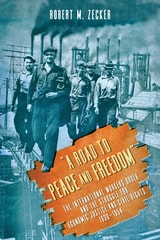
"A Road to Peace and Freedom"
The International Workers Order and the Struggle for Economic Justice and Civil Rights, 1930-1954Robert M. Zecker
Temple University Press, 2017
Mining extensive primary sources, Robert Zecker gives voice to the workers in “A Road to Peace and Freedom.” He describes the group's economic goals, commitment to racial justice, and activism, from lobbying to end segregation and lynching in America to defeating fascism abroad. Zecker also illustrates the panoply of entertainment, sports, and educational activities designed to cultivate the minds and bodies of members.
However, the IWO was led by Communists, and the Order was targeted for red-baiting during the Cold War, subject to government surveillance, and ultimately "liquidated." Zecker explains how the dismantling of the IWO and the general suppression of left-wing dissenting views on economic egalitarianism and racial equality had deleterious effects for the entire country. Moreover, Zecker shows why the sobering lesson of the IWO remains prescient today.
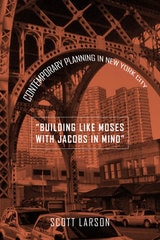
"Building Like Moses with Jacobs in Mind"
Contemporary Planning in New York CityScott Larson
Temple University Press, 2013
The antagonism between urbanist and writer Jane Jacobs and master builder Robert Moses may frame debates over urban form, but in "Building Like Moses with Jacobs in Mind," Scott Larson aims to use the Moses-Jacobs rivalry as a means for examining and understanding the New York City administration's redevelopment strategies and actions. By showing how the Bloomberg administration's plans borrow selectively from Moses' and Jacobs' writing, Larson lays bare the contradictions buried in such rhetoric and argues that there can be no equitable solution to the social and economic goals for redevelopment in New York City with such a strategy.
"Building Like Moses with Jacobs in Mind" offers a lively critique that shows how the legacies of these two planners have been interpreted—and reinterpreted—over time and with the evolution of urban space. Ultimately, he makes the case that neither figure offers a meaningful model for addressing stubborn problems—poverty, lack of affordable housing, and segregation along class and racial lines—that continue to vex today's cities.

"Discourse and Truth" and "Parresia"
Michel Foucault
University of Chicago Press, 2019
These lectures—carefully edited and including notes and introductory material to fully illuminate Foucault’s insights—are a major addition to Foucault’s English language corpus.
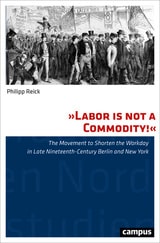
"Labor Is Not a Commodity!"
The Movement to Shorten the Workday in Late Nineteenth-Century Berlin and New YorkPhilipp Reick
Campus Verlag, 2016
As Reick demonstrates, while on both sides of the Atlantic workers opposed the unchecked commodification of labor power as a violation of their political, social, and economic rights, the emerging movements for protection from commodification did not promote a universalist concept of rights. By showing that American and German workers drew upon a strikingly similar rationality when formulating demands, this book reveals that we cannot label either the US labor movement as a deviation from the supposed norm of industrial contestation or its German counterpart as the embodiment of that norm.

"Mr. Taxpayer versus Mr. Tax Spender"
Taxpayers' Associations, Pocketbook Politics, and the Law during the Great DepressionLinda Upham-Bornstein
Temple University Press, 2023
“Mr. Taxpayer versus Mr. Tax Spender” presents a comprehensive overview of these grassroots taxpayers’ leagues beginning in the 1860s and shows how they evolved during their heyday in the 1930s. Linda Upham-Bornstein chronicles the ways these taxpayers associations organized as well as the tools they used—constructive economy, political efforts, tax strikes, and tax revolt through litigation—to achieve their objectives.
Taxpayer activity was a direct consequence of—and a response to—the economic crisis of the Great Depression and the expansion of the size and scope of government. “Mr. Taxpayer versus Mr. Tax Spender” connects collective tax resistance in the 1930s to the populist tradition in American politics and to other broad impulses in American political and legal history.
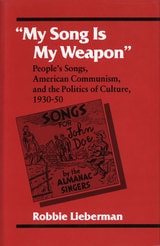
"My Song Is My Weapon"
People's Songs, American Communism, and the Politics of Culture, 1930-50Robbie Lieberman
University of Illinois Press, 1989
"To Serve a Larger Purpose"
Engagement for Democracy and the Transformation of Higher EducationEdited by John Saltmarsh and Matthew Hartley
Temple University Press, 2012
"To Serve a Larger Purpose" calls for the reclamation of the original democratic purposes of civic engagement and examines the requisite transformation of higher education required to achieve it. The contributors to this timely and relevant volume effectively highlight the current practice of civic engagement and point to the institutional change needed to realize its democratic ideals.
Using multiple perspectives, "To Serve a Larger Purpose" explores the democratic processes and purposes that reorient civic engagement to what the editors call "democratic engagement." The norms of democratic engagement are determined by values such as inclusiveness, collaboration, participation, task sharing, and reciprocity in public problem solving and an equality of respect for the knowledge and experience that everyone contributes to education, knowledge generation, and community building. This book shrewdly rethinks the culture of higher education.

"We Are All Leaders"
The Alternative Unionism of the Early 1930sEdited by Staughton Lynd
University of Illinois Press, 1996
Contains the Bryant Spann Memorial Prize in Literature for 1997, an award-winning essay, "The Very Last Hurrah" by Eric Leif Davin
This collection of articles delves into the little-known community-based unionism of the 1930s. Worlds apart from bureaucratic business unions like the AFL-CIO, these organizations emerged from workers involved in many kinds of labor, from African American nutpickers in St. Louis to chemical and rubber workers in Akron, and from bootleg miners in Pennsylvania to tenant farmers in the Mississippi Delta.
The contributors draw on eyewitness interviews, first-person narratives, trade union documents, and other primary sources to describe experimental forms of worker activism during the period. This alternative unionism was democratic, deeply rooted in mutual aid among workers in different crafts and work sites, and politically independent. The key to it was a value system based on egalitarianism. The cry, "We are all leaders!" resonated among rank-and-file activists. Their struggle, though often overlooked by historians, has much to teach us about union organizing today.
Contributors: John Borsos, Eric Leif Davin, Elizabeth Faue, Rosemary Feurer, Janet Irons, Michael Kozura, Mark D. Naison, Peter Rachleff, and Stan Weir

#Triggered
Social Media, Subjectivity, and the Struggle for Safe SpaceSean Johnson Andrews
University of Michigan Press, 2027
In this time of social crisis and revolutionary change, words have become one of the key sites of social struggle. Using a framework informed by trans studies, critical race theory, and digital media studies, #Triggered looks at the peak period of progressive social media activism in the U.S. and argues that it is primarily a struggle over whether it is safe for each of us to be ourselves, openly, publicly, proudly, and without permission from the dominant culture.
The term “triggered” and the concept of the trigger warning are just two of many emergent sites of struggle. This book provides a contextual, theoretical history to consider them alongside movements like #BlackLivesMatter, #MeToo, and #TimesUp and concepts like cultural appropriation, “cancel culture,” and safe spaces. These on- and offline struggles have transformed the way we talk, the words we use, and the dominant cultural conversation of race, gender, sexuality, police violence, trauma, and equity. And yet the status quo is still one where marginalized individuals are made to fear for their lives if they do not exhibit the appropriate care and deference. #Triggered invites readers to consider the legitimate complaints about oppressive systems underlying this social crisis, the hierarchy of traumas and subjectivity these movements are opposing, and the opportunity to develop a more open and less repressive society and culture.
#identity
Hashtagging Race, Gender, Sexuality, and NationAbigail De Kosnik and Keith P. Feldman, editors
University of Michigan Press, 2019
#identity is among the first scholarly books to address the positive and negative effects of Twitter on our contemporary world. Hailing from diverse scholarly fields, all contributors are affiliated with The Color of New Media, a scholarly collective based at the University of California, Berkeley. The Color of New Media explores the intersections of new media studies, critical race theory, gender and women’s studies, and postcolonial studies. The essays in #identity consider topics such as the social justice movements organized through #BlackLivesMatter, #Ferguson, and #SayHerName; the controversies around #WhyIStayed and #CancelColbert; Twitter use in India and Africa; the integration of hashtags such as #nohomo and #onfleek that have become part of everyday online vernacular; and other ways in which Twitter has been used by, for, and against women, people of color, LGBTQ, and Global South communities. Collectively, the essays in this volume offer a critically interdisciplinary view of how and why social media has been at the heart of US and global political discourse for over a decade.
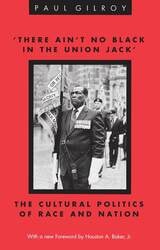
'There Ain't no Black in the Union Jack'
The Cultural Politics of Race and NationPaul Gilroy
University of Chicago Press, 1991
"Gilroy demonstrates effectively that cultural traditions are not static, but develop, grow and indeed mutate, as they influence and are influenced by the other changing traditions around them."—David Edgar, Listener Review of Books.
"A fascinating analysis of the discourses that have accompanied black settlement in Britain. . . . An important addition to the stock of critical works on race and culture."—David Okuefuna, Chicago Tribune

(Mis)Understanding the Other Side
How Americans Explain Opposing Political ViewsMatthew V. Hibbing, Matthew Mettler, Jeffery J. Mondak, and Isaiah R. Raynal
Temple University Press, 2027
A genuine understanding of politics requires us to accept that even those with whom we disagree may have a reasoned basis for their preferences. Acknowledgment of the existence and legitimacy of opposing perspectives may help people with ingrained political differences communicate better and develop more thoughtful and informed rationales for their own opinions. (Mis)Understanding the Other Side analyzes Americans’ ability to recognize and understand dissenting views, a necessary step if we are to reduce partisan polarization and be more effective citizens.
The authors conducted a national survey of 2500 Americans to gauge people’s political motivations and their views on major political issues. The respondents were also asked to explain the rationale for “the other side.” Exploration of respondents’ own words and subsequent statistical analyses combine to show how well people articulate their own issue rationales and the extent to which they understand, and are receptive to, opposing positions.
(Mis)Understanding the Other Side identifies severe limitations in how and how well Americans explain both their own positions and those of people who disagree with them. The authors highlight the challenges these limitations pose for effective citizenship and point to strategies that may foster better understanding across lines of political difference.
(New) Fascism
Contagion, Community, MythNidesh Lawtoo
Michigan State University Press, 2019
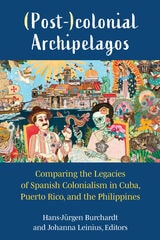
(Post-)colonial Archipelagos
Comparing the Legacies of Spanish Colonialism in Cuba, Puerto Rico, and the PhilippinesHans-Jürgen Burchardt and Johanna Leinius, Editors
University of Michigan Press, 2022
The Puerto Rican debt crisis, the challenges of social, political, and economic transition in Cuba, and the populist politics of Duterte in the Philippines—these topics are typically seen as disparate experiences of social reality. Though these island territories were colonized by the same two colonial powers—by the Spanish Empire and, after 1898, by the United States—research in the fields of history and the social sciences rarely draws links between these three contexts.
Located at the intersection of Postcolonial Studies, Latin American Studies, Caribbean Studies, and History, this interdisciplinary volume brings together scholars from the US, Europe, Latin America, the Caribbean, and the Philippines to examine the colonial legacies of the three island nations of Cuba, Puerto Rico, and the Philippines. Instead of focusing on the legacies of US colonialism, the continuing legacies of Spanish colonialism are put center-stage. The analyses offered in the volume yield new and surprising insights into the study of colonial and postcolonial constellations that are of interest not only for experts, but also for readers interested in the social, political, economic, and cultural dynamics of Cuba, Puerto Rico, and the Philippines during Spanish colonization and in the present. The empirical material profits from a rigorous and systematic analytical framework and is thus easily accessible for students, researchers, and the interested public alike.
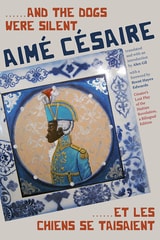
......And the Dogs Were Silent/......Et les chiens se taisaient
Aimé Césaire. Translated and with an introduction by Alex Gil. With a foreword by Brent Hayes Edwards.
Duke University Press, 2024

100 Years of Permanent Revolution
Results and ProspectsEdited by Bill Dunn and Hugo Radice
Pluto Press, 2006
One hundred years after their first appearance in Leon Trotsky's Results and Prospects, this book critically reevaluates two key Marxist theories: uneven and combined development, and permanent revolution. It brings together a formidable array of Marxist intellectuals from across the world including Daniel Bensaid, Michael Löwy, Hillel Ticktin and Patrick Bond.
Marx saw societies progressing through distinct historical stages feudal, bourgeois and communist. Trotsky advanced this model by considering how countries at different stages of development influence each other. Developed countries colonise less developed countries and exploit their people and resources. Elsewhere, even as many were kept in poverty, the influence of foreign capital and state-led industrialisation produced novel economic forms and prospects for political alliances and change. The contributors show how, 100 years on from its original publication, Trotsky's theories are hugely useful for understanding today's globalised economy, dominated by US imperialism. The book makes an ideal introduction to Trosky's thinking, and is ideal for students of political theory and development economics.
101 CHAMBERS
CONGRESS, STATE LEGISLATURES, & THE FUTURE OF LEGISLATIVE STUDIESPeverill Squire and Keith E. Hamm
The Ohio State University Press, 2005
Although legislative studies is thriving, it suffers from one glaring weakness: a lack of truly comparative, cross-institutional research. Instead, research focuses overwhelmingly on the U.S. Congress. This unfortunate fixation limits the way scholars approach the testing of many compelling theories of legislative organization and behavior, and it ignores the invaluable research possibilities that comparison with the 99 American state legislative chambers offers.
State legislatures are easily compared to Congress: They arise out of the same political culture and history. Their members represent the same parties and face the same voters in the same elections using the same rules. And the functions and roles are the same, with each fully capable of initiating, debating, and passing legislation. None of the methodological problems found when comparing presidential system legislatures with parliamentary system legislatures arise when comparing Congress and the state legislatures.
However, while there are great similarities, there are also important differences that provide scholars leverage for rigorously testing theories. The book compares and contrasts Congress and the state legislatures on histories, fundamental structures, institutional and organizational characteristics, and members. By highlighting the vast array of organizational schemes and behavioral patterns evidenced in state legislatures, the authors demonstrate that the potential for the study of American legislatures, as opposed to the separate efforts of Congressional and state legislative scholars, is too great to leave unexplored.
1989
Revolutionary Ideas and IdealsKrishan Kumar
University of Minnesota Press, 2001
In 1989, from East Berlin to Budapest and Bucharest to Moscow, communism was falling. The walls were coming down and the world was being changed in ways that seemed entirely new. The conflict of ideas and ideals that began with the French Revolution of 1789 culminated in these revolutions, which raised the prospects of the "return to Europe" of East and Central European nations, the "restarting of their history," even, for some, the "end of history." What such assertions and aspirations meant, and what the larger events that inspired them mean-not just for the world of history and politics, but for our very understanding of that world-are the questions Krishan Kumar explores in 1989.
A well-known and widely respected scholar, Kumar places these revolutions of 1989 in the broadest framework of political and social thought, helping us see how certain ideas, traditions, and ideological developments influenced or accompanied these movements-and how they might continue to play out. Asking questions about some of the central dilemmas facing modern society in the new century, Kumar offers critical insight into how these questions might be answered and how political, social, and historical ideas and ideals can shape our destiny.
Contradictions Series, volume 12
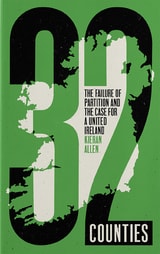
32 Counties
The Failure of Partition and the Case for a United IrelandKieran Allen
Pluto Press, 2021
'This is Irish history seen anew, from below, bristling with practical lessons for working-class struggle today' - Eamonn McCann
The 32 counties of Ireland were divided through imperial terror and gerrymandering. Partition was borne from a Tory strategy to defend the British Empire and has spawned a 'carnival of reaction' in Irish politics ever since. Over the last 100 years, conservative forces have dominated both states offering religious identity as a diversion from economic failures and inequality.
Through a sharp analysis of the history of partition, Kieran Allen rejects the view that the 'two cultures' of Catholic and Protestant communities lock people into permanent antagonism. Instead, the sectarian states have kept its citizens divided through political and economic measures like austerity, competition for reduced services and low wages.
Overturning conventional narratives, 32 Counties evokes the tradition of James Connolly and calls for an Irish unity movement from below to forge the North and the Republic into a secular, socialist and united Ireland.
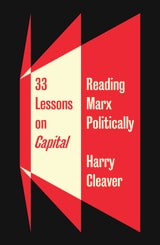
33 Lessons on Capital
Reading Marx PoliticallyHarry Cleaver
Pluto Press, 2019
Harry Cleaver's treatise outlines and critiques Marx's analysis chapter by chapter. His unique interpretation of Marx's labour theory of value reveals how every theoretical category of Capital designates aspects of class struggle in ways that help us resist and escape them. At the same time, while rooted within the tradition of workerism, he understands the working class to include not only the industrial proletariat but also unwaged peasants, housewives, children and students.
A challenge to scholars and an invaluable resource for students and activists today.
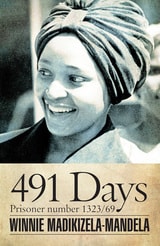
491 Days
Prisoner Number 1323/69Winnie Madikizela-Mandela
Ohio University Press, 2014
On a freezing winter’s night, a few hours before dawn on May 12, 1969, South African security police stormed the Soweto home of Winnie Madikizela-Mandela, activist and wife of the imprisoned Nelson Mandela, and arrested her in the presence of her two young daughters, then aged nine and ten.
Rounded up in a group of other antiapartheid activists under Section 6 of the Terrorism Act, designed for the security police to hold and interrogate people for as long as they wanted, she was taken away. She had no idea where they were taking her or what would happen to her children. For Winnie Mandela, this was the start of 491 days of detention and two trials.
Forty-one years after Winnie Mandela’s release on September 14, 1970, Greta Soggot, the widow of one of the defense attorneys from the 1969–70 trials, handed her a stack of papers that included a journal and notes she had written while in detention, most of the time in solitary confinement. Their reappearance brought back to Winnie vivid and horrifying memories and uncovered for the rest of us a unique and personal slice of South Africa’s history.
491 Days: Prisoner Number 1323/69 shares with the world Winnie Mandela’s moving and compelling journal along with some of the letters written between several affected parties at the time, including Winnie and Nelson Mandela, himself then a prisoner on Robben Island for nearly seven years.
Readers will gain insight into the brutality she experienced and her depths of despair, as well as her resilience and defiance under extreme pressure. This young wife and mother emerged after 491 days in detention unbowed and determined to continue the struggle for freedom.
7/7
The London Bombings, Islam and the Iraq WarMilan Rai
Pluto Press, 2006
This is the book Tony Blair doesn't want you to read about 7/7.
In February 2003, Tony Blair was warned by British intelligence that the invasion of Iraq would 'heighten' the risk of terrorism in Britain.
In July 2005, al-Qaeda struck in the heart of London. Despite the British Government's increasingly desperate attempts at denial, polls show that an overwhelming majority of people in Britain are convinced that there is a connection between the London bombings and the war on Iraq. A majority of Britons fault Tony Blair himself.
Using secret government documents declassified since the bombings, and leaks from British intelligence, Milan Rai exposes official deceit at the highest levels, and establishes the crucial role of British foreign policy in generating a home-grown version of al-Qaeda. Rai shows how an official report drawn up by the Home Office and Foreign Office in early 2004 identified 'foreign policy' - and the war in Iraq in particular - as a major cause of alienation among young British Muslims.
Examining the backgrounds of the 7/7 bombers, Milan Rai demonstrates that Islam is not to blame. Most importantly, the book shows us how to make sure that this never happens again -- and offers brief obituaries for the 52 people who lost their lives that day.

911 A Public Emergency?, Volume 20
Ella Shohat, Brent Edwards, Stefano Harney, Randy Martin, Timothy Mitchell, and Fred Moten, eds.
Duke University Press, 0
Examining the strengths and shortcomings of area, race, and gender studies in the search for understanding, this issue considers cross-cultural feminism as a means of combating terrorism; racial profiling of Muslims in the context of other racist logics; and the homogenization of dissent. The issue includes poetry, photographic work, and an article by Judith Butler on the discursive space surrounding the attacks of September 11. This impressive range of contributions questions the meaning and implications of the events of September 11 and their aftermath.
Contributors. Muneer Ahmad, Meena Alexander, Lopamudra Basu, Judith Butler, Zillah Eisenstein, Stefano Harney, Randy Martin, Rosalind C. Morris, Fred Moten, Sandrine Nicoletta, Yigal Nizri, Jasbir K. Puar, Amit S. Rai, Ella Shohat, Ban Wang
@ is for Activism
Dissent, Resistance and Rebellion in a Digital CultureJoss Hands
Pluto Press, 2011
@ is For Activism examines the transformation of politics through digital media, including digital television, online social networking and mobile computing.
Joss Hands maps out how political relationships have been reconfigured and new modes of cooperation, deliberation and representation have emerged. This analysis is applied to the organisation and practice of alternative politics, showing how they have developed and embraced the new political and technological environment.
Hands offers a comprehensive critical survey of existing literature, as well as an original perspective on networks and political change. He includes many case studies including the anti-war and global justice movements, peer production, user created TV and 'Twitter' activism. @ is For Activism is essential for activists and students of politics and media.
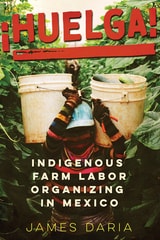
¡Huelga!
Indigenous Farm Labor Organizing in MexicoJames Daria
University of Arizona Press, 2026
On March 17, 2015, tens of thousands of Mexican farmworkers went on strike in San Quintin, Baja California, to protest horrible working conditions on the farms that produce most of the fresh fruits and vegetables you consume. Calling themselves the “slaves of the twenty-first century,” these mostly Indigenous men, women, and children rose up in defiance of the conditions of modern slavery, forced labor, sexual harassment, and “hunger wages.” This ethnography provides an in-depth look into how Indigenous farmworkers organize in the fields and their communities to improve wages and working conditions.
Since the strike, the farmworkers have organized a union to fight for justice in the fields. In this work, author James Daria accompanies these farmworkers as they struggle for dignity. Daria also charts the tensions inside the farmworker movement as women struggle to gain greater power in the home as well as at work. In an era of complex global integration, Daria shows us how what we eat is tied to the suffering of those who produce our food.
This book highlights and centers the Indigenous workers who struggle for justice in a global food system that connects us all.

“Eastern Europe” and War
A New Kidnapping?Aliaksei Kazharski
Central European University Press, 2026
“Good Mothers”, Nations and Nationalisms
Cases from Lithuania, Russia and SwedenYulia Gradskova
Central European University Press, 2026

“Here, There and Everywhere”
The Foreign Politics of American Popular CultureEdited by Reinhold Wagnleitner and Elaine Tyler May
University Press of New England, 2000
“Proletarian Hegemony” in the Chinese Revolution and the Canton Commune of 1927
S. Bernard Thomas
University of Michigan Press, 1975
“Sing for the Pro-Palestinian Student Activists.” A Commencement Speech and the Fight to Protect the Freedom of Expression
Rebekah Modrak
Disobedience Press, 2026
Sing for the pro-Palestinian student activists who have, over these past two years, opened our hearts to the injustice and inhumanity of Israel’s war in Gaza.
This single sentence, concluding a brief commencement address by the University of Michigan’s Faculty Senate Chair, ignited a controversy that simmered for weeks. Professor Derek Peterson had praised the work of female, Jewish, and Black activists who had fought for inclusion, ending with a shoutout to students who protested the university’s financial ties to Israel’s war on Gaza.
Hours later, U-M President Domenico Grasso publicly apologized, calling the remarks “hurtful and insensitive.” Peterson faced a barrage of threatening hate mail, alongside demands that he be fired and the university defunded. Conversely, a chorus of passionate dissent argued that a college education should equip students for, not shield them from, sharp controversies.
This volume collects commentary from students, alumni, labor organizers, and faculty. Most, but not all, defend Peterson’s right to say what he said, reflecting on questions of academic freedom, repressive notions of what is “appropriate,” the institution’s traditions of moral courage, the danger of assuming a monolithic “Jewish community,” and the Palestine exception to free speech.
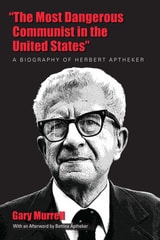
“The Most Dangerous Communist in the United States”
A Biography of Herbert ApthekerGary Murrell
University of Massachusetts Press, 2015
When J. Edgar Hoover declared Herbert Aptheker “the most dangerous Communist in the United States,” the notorious FBI director misconstrued his true significance. In this first book-length biography of Aptheker (1915–2003), Gary Murrell provides a balanced yet unflinching assessment of the controversial figure who was at once a leading historian of African America, radical political activist, literary executor of W. E. B. Du Bois, and lifelong member of the American Communist Party. Although blacklisted at U.S. universities, Aptheker published dozens of books, including the groundbreaking American Negro Slave Revolts (1943) and the monumental seven-volume Documentary History of the Negro People (1951–1994). He also edited four volumes of the correspondence and unpublished writings of Du Bois, an achievement that Eric Foner, writing in the New York Times Book Review, called “a milestone in the coming of age of Afro-American history.”
As Murrell shows, Aptheker the historian was inseparable from Aptheker the leading Communist Party intellectual, polemicist, and agitator. During the 1960s, his ability to rouse and inspire both black and white student radicals made him one of the few Old Leftists accepted by the New Left. Aptheker had joined the CPUSA during its heyday in the 1930s, convinced that only through the party's leadership could fascism be defeated and true liberation be achieved: he ended his affiliation five decades later in 1991 after the collapse of socialism in the Soviet Union and Eastern Europe.
In an afterword, Bettina Aptheker adds to Murrell's narrative by illuminating her mother Fay's vital contributions to her father's work and by affirming the particularly devastating challenges of life in a family dedicated to radical political and social change.