Results by title
471 books match the query 'Aesthetics' and 73 start with a
A Company of Poets
Louis Simpson
University of Michigan Press, 1981
A Defense of Judgment
Michael W. Clune
University of Chicago Press, 2021
Michael W. Clune’s provocative book challenges these objections to judgment and offers a positive account of literary studies as an institution of aesthetic education. It is impossible, Clune argues, to separate judgments about literary value from the practices of interpretation and analysis that constitute any viable model of literary expertise. Clune envisions a progressive politics freed from the strictures of dogmatic equality and enlivened by education in aesthetic judgment, transcending consumer culture and market preferences. Drawing on psychological and philosophical theories of knowledge and perception, Clune advocates for the cultivation of what John Keats called “negative capability,” the capacity to place existing criteria in doubt and to discover new concepts and new values in artworks. Moving from theory to practice, Clune takes up works by Keats, Emily Dickinson, Gwendolyn Brooks, Samuel Beckett, and Thomas Bernhard, showing how close reading—the profession’s traditional key skill—harnesses judgment to open new modes of perception.
A Democratic Enlightenment
The Reconciliation Image, Aesthetic Education, Possible PoliticsMorton Schoolman
Duke University Press, 2020
A Different Order of Difficulty
Literature after WittgensteinKaren Zumhagen-Yekplé
University of Chicago Press, 2020
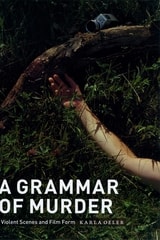
A Grammar of Murder
Violent Scenes and Film FormKarla Oeler
University of Chicago Press, 2009
The dark shadows and offscreen space that force us to imagine violence we cannot see. The real slaughter of animals spliced with the fictional killing of men. The missing countershot from the murder victim’s point of view. Such images, or absent images, Karla Oeler contends, distill how the murder scene challenges and changes film.
Reexamining works by such filmmakers as Renoir, Hitchcock, Kubrick, Jarmusch, and Eisenstein, Oeler traces the murder scene’s intricate connections to the great breakthroughs in the theory and practice of montage and the formulation of the rules and syntax of Hollywood genre. She argues that murder plays such a central role in film because it mirrors, on multiple levels, the act of cinematic representation. Death and murder at once eradicate life and call attention to its former existence, just as cinema conveys both the reality and the absence of the objects it depicts. But murder shares with cinema not only this interplay between presence and absence, movement and stillness: unlike death, killing entails the deliberate reduction of a singular subject to a disposable object. Like cinema, it involves a crucial choice about what to cut and what to keep.

A Language of Its Own
Sense and Meaning in the Making of Western Art MusicRuth Katz
University of Chicago Press, 2009
The Western musical tradition has produced not only music, but also countless writings about music that remain in continuous—and enormously influential—dialogue with their subject. With sweeping scope and philosophical depth, A Language of Its Own traces the past millennium of this ongoing exchange.
Ruth Katz argues that the indispensible relationship between intellectual production and musical creation gave rise to the Western conception of music. This evolving and sometimes conflicted process, in turn, shaped the art form itself. As ideas entered music from the contexts in which it existed, its internal language developed in tandem with shifts in intellectual and social history. Katz explores how this infrastructure allowed music to explain itself from within, creating a self-referential and rational foundation that has begun to erode in recent years.
A magisterial exploration of a frequently overlooked intersection of Western art and philosophy, A Language of Its Own restores music to its rightful place in the history of ideas.
A Poetic for Sociology
Toward a Logic of Discovery for the Human SciencesRichard Harvey Brown
University of Chicago Press, 1989
By recognizing this "aesthetic" common ground between science and art, Brown demonstrates that a fusion can be achieved within the human sciences of these two principal ideals of knowledge—the scientific or positivist one and the artistic or intuitive one. A path, then, is opened for creating a knowledge of ourselves and society which is at once objective and subjective, at once valid scientifically and significantly humane.
A Precarious Happiness
Adorno and the Sources of NormativityPeter E. Gordon
University of Chicago Press, 2023
A strikingly original account of Theodor Adorno’s work as a critique animated by happiness—now in paperback.
"Gordon’s confidently gripping and persistently subtle interpretation brings a new tone to the debate about Adorno’s negativism."—Jürgen Habermas
Theodor Adorno is often portrayed as a totalizing negativist, a scowling contrarian who looked upon modern society with despair. Peter E. Gordon thinks we have this wrong: if Adorno is uncompromising in his critique, it is because he sees in modernity an unfulfilled possibility of human flourishing. In a damaged world, Gordon argues, all happiness is likewise damaged but not wholly absent. Through a comprehensive rereading of Adorno’s work, A Precarious Happiness recovers Adorno’s commitment to traces of happiness—fragments of the good amid the bad. Ultimately, Gordon argues that social criticism, while exposing falsehoods, must also cast a vision for an unrealized better world.
A Significant Life
Human Meaning in a Silent UniverseTodd May
University of Chicago Press, 2015
What makes for a good life, or a beautiful one, or, perhaps most important, a meaningful one? Throughout history most of us have looked to our faith, our relationships, or our deeds for the answer. But in A Significant Life, philosopher Todd May offers an exhilarating new way of thinking about these questions, one deeply attuned to life as it actually is: a work in progress, a journey—and often a narrative. Offering moving accounts of his own life and memories alongside rich engagements with philosophers from Aristotle to Heidegger, he shows us where to find the significance of our lives: in the way we live them.
May starts by looking at the fundamental fact that life unfolds over time, and as it does so, it begins to develop certain qualities, certain themes. Our lives can be marked by intensity, curiosity, perseverance, or many other qualities that become guiding narrative values. These values lend meanings to our lives that are distinct from—but also interact with—the universal values we are taught to cultivate, such as goodness or happiness. Offering a fascinating examination of a broad range of figures—from music icon Jimi Hendrix to civil rights leader Fannie Lou Hamer, from cyclist Lance Armstrong to The Portrait of a Lady’s Ralph Touchett to Claus von Stauffenberg, a German officer who tried to assassinate Hitler—May shows that narrative values offer a rich variety of criteria by which to assess a life, specific to each of us and yet widely available. They offer us a way of reading ourselves, who we are, and who we might like to be.
Clearly and eloquently written, A Significant Life is a recognition and a comfort, a celebration of the deeply human narrative impulse by which we make—even if we don’t realize it—meaning for ourselves. It offers a refreshing way to think of an age-old question, of quite simply, what makes a life worth living.
A Significant Life
Human Meaning in a Silent UniverseTodd May
University of Chicago Press, 2015
This is an auto-narrated audiobook edition of this book.
What makes for a good life, or a beautiful one, or, perhaps most important, a meaningful one? Throughout history most of us have looked to our faith, our relationships, or our deeds for the answer. But in A Significant Life, philosopher Todd May offers an exhilarating new way of thinking about these questions, one deeply attuned to life as it actually is: a work in progress, a journey—and often a narrative. Offering moving accounts of his own life and memories alongside rich engagements with philosophers from Aristotle to Heidegger, he shows us where to find the significance of our lives: in the way we live them.
May starts by looking at the fundamental fact that life unfolds over time, and as it does so, it begins to develop certain qualities, certain themes. Our lives can be marked by intensity, curiosity, perseverance, or many other qualities that become guiding narrative values. These values lend meanings to our lives that are distinct from—but also interact with—the universal values we are taught to cultivate, such as goodness or happiness. Offering a fascinating examination of a broad range of figures—from music icon Jimi Hendrix to civil rights leader Fannie Lou Hamer, from cyclist Lance Armstrong to The Portrait of a Lady’s Ralph Touchett to Claus von Stauffenberg, a German officer who tried to assassinate Hitler—May shows that narrative values offer a rich variety of criteria by which to assess a life, specific to each of us and yet widely available. They offer us a way of reading ourselves, who we are, and who we might like to be.
Clearly and eloquently written, A Significant Life is a recognition and a comfort, a celebration of the deeply human narrative impulse by which we make—even if we don’t realize it—meaning for ourselves. It offers a refreshing way to think of an age-old question, of quite simply, what makes a life worth living.
A Violent Embrace
Art and Aesthetics after Representationrenée c. hoogland
Dartmouth College Press, 2014
AESTHETICS & EDUCATION
Michael J. Parsons and H. Gene Blocker
University of Illinois Press, 1993
What is the appropriate content of aesthetics for students of art at different age levels? How can it best be taught? How should it be combined with studio work and other art disciplines?
Michael J. Parsons and H. gene Blocker answer these and other questions in a volume designed to help art educators, potential educators, and curriculum developers integrate aesthetics into the study of art in the school curriculum. The two introduce some of the philosophical problems and questions in art, encouraging teachers and others to form a personal outlook on these issues.
AESTHETICS AND ARTS EDUCATION
Edited by Ralph A. Smith and Alan Simpson
University of Illinois Press, 1991
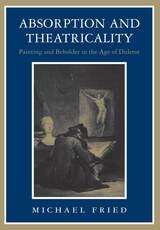
Absorption and Theatricality
Painting and Beholder in the Age of DiderotMichael Fried
University of Chicago Press, 1988
"A reinterpretation supported by immense learning and by a series of brilliantly perceptive readings of paintings and criticism alike. . . . An exhilarating book."—John Barrell, London Review of Books
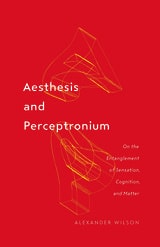
Aesthesis and Perceptronium
On the Entanglement of Sensation, Cognition, and MatterAlexander Wilson
University of Minnesota Press, 2019
A new speculative ontology of aesthetics
In Aesthesis and Perceptronium, Alexander Wilson presents a theory of materialist and posthumanist aesthetics founded on an original speculative ontology that addresses the interconnections of experience, cognition, organism, and matter. Entering the active fields of contemporary thought known as the new materialisms and realisms, Wilson argues for a rigorous redefining of the criteria that allow us to discriminate between those materials and objects where aesthesis (perception, cognition) takes place and those where it doesn’t.
Aesthesis and Perceptronium negotiates between indiscriminately pluralist views that attribute mentation to all things and eliminative views that deny the existence of mentation even in humans. By recasting aesthetic questions within the framework of “epistemaesthetics,” which considers cognition and aesthetics as belonging to a single category that can neither be fully disentangled nor fully reduced to either of its terms, Wilson forges a theory of nonhuman experience that avoids this untenable dilemma.
Through a novel consideration of the evolutionary origins of cognition and its extension in technological developments, the investigation culminates in a rigorous reevaluation of the status of matter, information, computation, causality, and time in terms of their logical and causal engagement with the activities of human and nonhuman agents.
Aesthetic Experience and Literary Hermeneutics
Jauss, Hans Robert
University of Minnesota Press, 1982
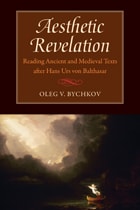
Aesthetic Revelation
Reading Ancient and Medieval Texts after Hans Urs von BalthasarOleg Bychkov
Catholic University of America Press, 2010

Aesthetic Revolutions and Twentieth-Century Avant-Garde Movements
Aleš Erjavec, editor
Duke University Press, 2015
Contributors. John E. Bowlt, Sascha Bru, David Craven, Aleš Erjavec, Tyrus Miller, Raymond Spiteri, Miško Šuvakovic
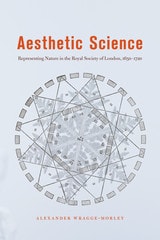
Aesthetic Science
Representing Nature in the Royal Society of London, 1650-1720Alexander Wragge-Morley
University of Chicago Press, 2020
To show how early modern naturalists conceived of the interplay between sensory experience and the production of knowledge, Aesthetic Science explores natural-historical and anatomical works of the Royal Society through the lens of the aesthetic. By underscoring the importance of subjective experience to the communication of knowledge about nature, Wragge-Morley offers a groundbreaking reconsideration of scientific representation in the early modern period and brings to light the hitherto overlooked role of aesthetic experience in the history of the empirical sciences.
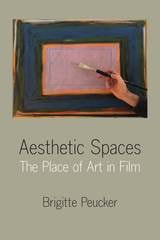
Aesthetic Spaces
The Place of Art in FilmBrigitte Peucker
Northwestern University Press, 2019
The films studied in these chapters include those by Abbas Kiarostami, Alfred Hitchcock, Michelangelo Antonioni, Jean-Luc Godard, Carl Th. Dreyer, Peter Greenaway, Rainer Werner Fassbinder, Ingmar Bergman, Jacques Rivette, Fritz Lang, F. W. Murnau, Lars von Trier, Spike Jonze, Éric Rohmer, Lech Majewski, and others. Where two media are in evidence in these films, there is usually a third, and often theater mediates between film and painting. Aesthetic Spaces interrogates issues of cinematic space and mise-en-scène from different but interconnected theoretical perspectives, organizing its chapters around some of the formal principles—space, spectator, frame, color and lighting, props, décor, and actor—that shape films.
Drawing on the older arts to renew cinema, the films examined deploy paintings as material: Poussin and Bruegel, Rembrandt, Hals and Klimt, and medieval illustrations and modernist abstractions are used to expand our notions of cinematic space. Peucker shows that when different media come together in film, they create effects of dissonance out of which new modes of looking may arise.
Aesthetic Subjects
Pamela R. Matthews
University of Minnesota Press, 2003
Demonstrates the remarkable resurgence of interest in the aesthetic
Recent calls for a return to aesthetics occur precisely at a moment when it is increasingly evident that nothing concerning aesthetics is self-evident anymore. Determined to recover the value of aesthetic experience for artistic, cultural, and social analysis, the contributors to this volume—prominent scholars in literature, philosophy, art history, architecture, history, and anthropology—begin from a shared recognition that ideological readings of the aesthetic have provided invaluable insights, in particular, that analyses of aesthetics within historical and social contexts tell us a great deal about the experience of aesthetic encounters.
From multiple and complementary perspectives, the contributors address topics as varied as Nabokov and Dickens, Caravaggio and Shelley Winters, gender and sexuality, advertising and AIDS. Taken together, their essays constitute a sustained and multifarious effort to resituate aesthetic pleasure in the mixed, impure conditions characteristic of every social practice and experience, however privileged or marginalized, and to ask what happens to the aesthetic if we consider it apart from—or at least in tension with—its historically dominant discursive formulations. As such, this volume establishes a renewed sense of aesthetic discourse and its usefulness as a tool for understanding culture. Contributors: Leo Bersani, U of California, Berkeley; Susan Bordo, U of Kentucky; Bill Brown, U of Chicago; Beatriz Colomina, Princeton U; Ulysse Dutoit, U of California, Berkeley; Lee Edelman, Tufts U; Maureen Harkin, Reed College; Howard Horwitz, U of Utah; Audrey Jaffe, U of California, Santa Cruz; Martin Jay, U of California, Berkeley; Kay Bea Jones, Ohio State U; Robert Kaufman, Stanford U; Alphonso Lingis, Pennsylvania State U; Joseph Litvak, Tufts U; Douglas Mao, Cornell U; Barbara Stafford, U of Chicago; Kathleen Stewart, U of Texas; Kathryn Bond Stockton, U of Utah; Judith Stoddart, Michigan State U; Michael Taussig, Columbia U.
Aesthetic Theory
Theodor W. Adorno Adorno
University of Minnesota Press, 1998
Aesthetic Theory
Edited by Dieter Mersch, Sandro Zanetti, and Sylvia Sasse
Diaphanes, 2019
Aesthetic Understanding
Roger Scruton
St. Augustine's Press, 1998
Brings together essays on the philosophy of art in which a philosophical theory of aesthetic judgment is tested and developed through its application to particular examples. Each essay approaches, from its own field of study, what Roger Scruton argues to be the central problems of aesthetics -- what is aesthetic experience, and what is its importance for human conduct?
The book is divided into four parts. The first contains a resume of modern analytical aesthetics, which also serves as an introduction to subsequent chapters. It also includes an essay that reviews current theories of literary criticism. The second part is devoted to musical aesthetics and contains the theoretical core of the work. Here Scruton describes the contours of aesthetic understanding, and defends the view that the object of aesthetic experience is inherently significant, even when it has no "content" that can be described in propositional terms. He rebuts the view that music is representational, and in the third part goes on to propose a theory of representation whereby to refute the suggestion that photography is a representational art. This third section also contains a study of film. The final part comprises essays relating aesthetic judgment to the understanding of culture, humor, and design. It covers many subjects, including the prose works of Samuel Beckett and the architecture of Leninism. The essays in this book form parts of a single intellectual enterprise, which is to give analytical foundations to the criticism of literature, visual art, music, and culture.
Aesthetics and Marxism
Chinese Aesthetic Marxists and Their Western ContemporariesKang Liu
Duke University Press, 2000
Far from being secondary considerations in Chinese Marxism, aesthetics and culture are in fact principal concerns. In this respect, such Marxists are similar to their Western counterparts, although Europeans have had little understanding of the Chinese experience. Liu traces the genealogy of aesthetic discourse in both modern China and the West since the era of classical German thought, showing where conceptual modifications and divergences have occurred in the two traditions. He examines the work of Mao Zedong, Lu Xun, Li Zehou, Qu Qiubai, and others in China, and from the West he discusses Kant, Schiller, Schopenhauer, and Marxist theorists including Horkheimer, Adorno, Benjamin, and Marcuse. While stressing the diversity of Marxist positions within China as well as in the West, Liu explains how ideas of culture and aesthetics have offered a constructive vision for a postrevolutionary society and have affected a wide field of issues involving the problems of modernity.
Forcefully argued and theoretically sophisticated, this book will appeal to students and scholars of contemporary Marxism, cultural studies, aesthetics, and modern Chinese culture, politics, and ideology.
Aesthetics and Revolution
Nicaraguan Poetry 1979-1990Greg Dawes
University of Minnesota Press, 1993
In Aesthetics and Revolution, Dawes demonstrates that there is an objective grounding for cultural studies found in the aesthetic means of production. By analyzing the relations and forces of production in this realm we inevitably cross over into the economic means of production as well as the struggle for political representation. Ultimately, aesthetics is at the intersection of class and gender interests and their struggle for hegemony.
In Aesthetics and Revolution, Dawes has chosen a group of writers of different theoretical sympathies, class, gender, and social positions to reveal the conflictual interests of the social classes and genders as a whole. Through close readings of their work, Dawes examines the thematic nodes that are expressed in positions as diverse as Ernesto Cardenal’s liberation theology, Pablo Antonio Cuadra’s populism, the campesino’s oral tradition, and Gioconda Belli’s erotic verses in relation to the changes taking place in revolutionary Nicaragua.
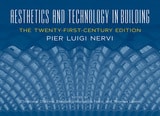
Aesthetics and Technology in Building
The Twenty-First-Century EditionPier Luigi Nervi; Edited by Cristiana Chiorino, Elisabetta Margiotta Nervi, and Thomas Leslie
University of Illinois Press, 2018
Aesthetics and Technology in Building: The Twenty-First-Century Edition introduces Nervi's ideas about architecture and engineering to a new generation of students and admirers. More than 200 photographs, details, drawings, and plans show how Nervi put his ideas into practice. Expanding on the seminal 1961 Norton Lectures at Harvard, Nervi analyzes various functional and construction problems. He also explains how precast and cast-in-place concrete can answer demands for economy, technical and functional soundness, and aesthetic perfection. Throughout, he uses his major projects to show how these now-iconic buildings emerged from structural truths and far-sighted construction processes.
This new edition features dozens of added images, a new introduction, and essays by Joseph Abram, Roberto Einaudi, Alberto Bologna, Gabriele Neri, and Hans-Christian Schink on Nervi's life, work, and legacy.

Aesthetics and the End(s) of American Cultural Studies, Volume 76
Christopher Castiglia and Russ Castronovo, eds.
Duke University Press, 0
Aesthetics and the Theory of Criticism
Selected Essays of Arnold IsenbergArnold Isenberg
University of Chicago Press, 1973
Aesthetics at Large
Volume 1: Art, Ethics, PoliticsThierry de Duve
University of Chicago Press, 2019
Central to de Duve’s re-reading of the Critique of Judgment is Kant’s idea of sensus communis, ultimately interpreted as the mere yet necessary idea that human beings are capable of living in peace with one another. De Duve pushes Kant’s skepticism to its limits by submitting the idea of sensus communis to various tests leading to questions such as: Do artists speak on behalf of all of us? Is art the transcendental ground of democracy? Or, Was Adorno right when he claimed that no poetry could be written after Auschwitz?
Loaded with de Duve’s trademark blend of wit and erudition and written without jargon, these essays radically renew current approaches to some of the most burning issues raised by modern and contemporary art. They are indispensable reading for anyone with a deep interest in art, art history, or philosophical aesthetics.
Aesthetics from Classical Greece to the Present
Monroe C. Beardsley
University of Alabama Press, 1975
Before the publication of Aesthetics from Classical Greece to the Present there were three histories of aesthetics in English—Bosanquet's pioneering work, the second part of Croce's Aesthetic in the Ainsle translation, and the comprehensive volume by Gilbert and Kuhn. While each of these is interesting in its own ways, and together they cover a good deal of ground, none of them is very new. Thus none could take advantage of recent work on many important philosophers and periods and bring into a consideration of the past the best concepts and principles that have been developed by present-day philosophy.
Aesthetics in Grief and Mourning
Philosophical Reflections on Coping with LossKathleen Marie Higgins
University of Chicago Press, 2024
In Aesthetics of Grief and Mourning, philosopher Kathleen Marie Higgins reflects on the ways that aesthetics aids people experiencing loss. Some practices related to bereavement, such as funerals, are scripted, but many others are recursive, improvisational, mundane—telling stories, listening to music, and reflecting on art or literature. Higgins shows how these grounding, aesthetic practices can ease the disorienting effects of loss, shedding new light on the importance of aesthetics for personal and communal flourishing.
Aesthetics of Alienation
Reassessment of Early Soviet Cultural TheoriesEvgeny Dobrenko
Northwestern University Press, 2005
In chapters on Proletkult, RAPP, LEF, and Pereval, Dobrenko reexamines the theories generated by these major Marxist literary groupings of the early Soviet Union. He shows how each approached the problems of literature's response to the presumed social mandate of the young communist society, and how Socialist Realism emerged as a conglomerate of these earlier, revolutionary theories. With extensive and detailed reference to supporting testimony and documents, Dobrenko clearly demonstrates how Socialist Realism was created from within the revolutionary culture, and how this culture and its disciples fully participated in this creative process. His work represents a major breakthrough in our current understanding of the complex sources that contributed to early Soviet culture.
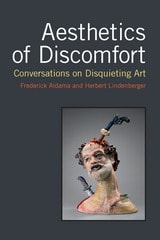
Aesthetics of Discomfort
Conversations on Disquieting ArtFrederick Aldama and Herbert Lindenberger
University of Michigan Press, 2016
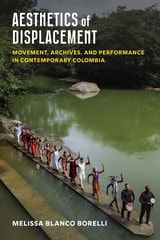
Aesthetics of Displacement
Movement, Archives, and Performance in Contemporary ColombiaMelissa Blanco Borelli
University of Michigan Press, 2026
Aesthetics of Displacement centers the embodied aesthetic practices of Afro-Colombian people and their experiences, asking readers to reassess Colombian national history, legacies of colonialism and racism, politics of memory, and the inheritances of violence related to the Colombian armed conflict. Through a theoretical frame of destierro or “displacement” and an examination of the Afro-Colombian philosophy vivir sabroso or “to live harmoniously,” Aesthetics of Displacement focuses on how theatre-makers, choreographers, filmmakers, activist groups, and photojournalists create an embodied Colombian perspective informed by decolonial practices and thinking that rely on movement as a strategy for existence and that counter European hegemonic aesthetics as the major foundations of taste and value. This approach not only enhances our understanding of contemporary Colombian culture, but also highlights the importance of performance as a means of resistance and identity formation.

Aesthetics of Disturbance
Anti-Art in Avant-Garde DramaDavid Graver
University of Michigan Press, 1995

Aesthetics of Excess
The Art and Politics of Black and Latina EmbodimentJillian Hernandez
Duke University Press, 2020
Aesthetics of Renewal
Martin Buber's Early Representation of Hasidism as KulturkritikMartina Urban
University of Chicago Press, 2008
Aesthetics of Self-Invention
Oscar Wilde To David BowieShelton Waldrep
University of Minnesota Press, 2004
Traces the influence of Oscar Wilde as the precursor of twentieth-century artists of self-performance
By printing the title “Professor of Aesthetics” on his visiting cards, Oscar Wilde announced yet another transformation—and perhaps the most significant of his career, proclaiming his belief that he could redesign not just his image but his very self. Shelton Waldrep explores the cultural influences at play in Wilde’s life and work and his influence on the writing and performance of the twentieth century, particularly on the lives and careers of some of its most aestheticized performers: Truman Capote, Andy Warhol, David Hockney, and David Bowie. As Waldrep reveals, Wilde’s fusing of art with commerce foresaw the coming century’s cultural producers who would blend works of both “high art” and mass-market appeal.
Whether as a gay man or as a postmodern performance artist ahead of his time, Wilde ultimately emerges here as the embodiment of the twentieth-century media-savvy artist who is both subject and object of the aesthetic and economic systems in which he is enmeshed.
Aesthetics of the Commons
Edited by Cornelia Sollfrank, Felix Stalder, and Shusha Niederberger
Diaphanes, 2021
Aesthetics of the Commons examines a series of artistic and cultural projects—drawn from what can loosely be called the (post)digital—that take up this challenge in different ways. What unites them, however, is that they all have a double character. They are art in the sense that they place themselves in relation to (Western) cultural and art systems, developing discursive and aesthetic positions, but, at the same time, they are operational in that they create recursive environments and freely available resources whose uses exceed these systems. The first aspect raises questions about the kind of aesthetics that are being embodied, the second creates a relation to the larger concept of the commons. In Aesthetics of the Commons, the commons are understood not as a fixed set of principles that need to be adhered to in order to fit a definition, but instead as a thinking tool—in other words, the book’s interest lies in what can be made visible by applying the framework of the commons as a heuristic device.

Aesthetics of the Natural Environment
Emily Brady
University of Alabama Press, 2003
Aesthetic experience is one of the fundamental ways that we develop a relationship to our natural surroundings. Emily Brady provides a comprehensive study of this type of experience and the central philosophical issues related to it, developing her own original theory of aesthetic appreciation of nature. She provides useful background to the current debate and an up-to-date critical appraisal of contemporary theories.
The context of the contemporary debate is laid out through a discussion of aesthetic experience and aesthetic qualities; early theories of aesthetic appreciation of nature, including the beautiful, the sublime, and the picturesque; and differences between artistic and environmental appreciation and interpretation. Brady situates her own approach in relation to a set of noncognitive accounts of appreciation. Her "integrated aesthetic" brings together various features of appreciation, including the senses, emotion, and imagination, with a reappraisal of the concept of disinterestedness. These ideas are further developed within the more practical domains of aesthetic judgment and education of the environment and through an examination of the role of aesthetic value in environmental conservation.
Arnold Berleant of Long Island University, a pioneer in this area of research, has declared Brady’s work, “admirably comprehensive coverage of the subject.” Julie C. Van Camp of California State University, Long Beach, has said, “The bibliography is priceless. . . . The discussions of such philosophers as Kant and Dewey seem plausible and understandable to an audience of students and the educated public.” This book will be valuable to readers interested in such wide-ranging subjects as philosophy, aesthetics, ethics, ecology, conservation, environmental policy-making, geography, and landscape architecture.
Aesthetics, Industry, and Science
Hermann von Helmholtz and the Berlin Physical SocietyM. Norton Wise
University of Chicago Press, 2018
In Aesthetics, Industry, and Science M. Norton Wise answers these questions not simply from a technical perspective of theories and practices but with a broader cultural view of what was happening in Berlin at the time. He emphasizes in particular how rapid industrial development, military modernization, and the neoclassical aesthetics of contemporary art informed the ways in which these young men thought. Wise argues that aesthetic sensibility and material aspiration in this period were intimately linked, and he uses these two themes for a final reappraisal of Helmholtz’s early work. Anyone interested in modern German cultural history, or the history of nineteenth-century German science, will be drawn to this landmark book.
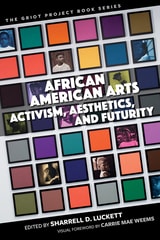
African American Arts
Activism, Aesthetics, and Futurityweems, carrie mae
Bucknell University Press, 2020
Contributors: Carrie Mae Weems, Carmen Gillespie, Rikki Byrd, Amber Lauren Johnson, Doria E. Charlson, Florencia V. Cornet, Daniel McNeil, Lucy Caplan, Genevieve Hyacinthe, Sammantha McCalla, Nettrice R. Gaskins, Abby Dobson, J. Michael Kinsey, Shondrika Moss-Bouldin, Julie B. Johnson, Sharrell D. Luckett, Jasmine Eileen Coles, Tawnya Pettiford-Wates, Rickerby Hinds.
Published by Bucknell University Press. Distributed worldwide by Rutgers University Press.
African Diasporic Cinema
Aesthetics of ReconstructionDaniela Ricci
Michigan State University Press, 2020

African Luxury
Aesthetics and PoliticsEdited by Mehita Iqani and Simidele Dosekun
Intellect Books, 2019
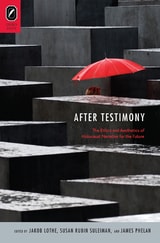
After Testimony
The Ethics and Aesthetics of Holocaust Narrative for the FutureEdited by Jakob Lothe, Susan Rubin Suleiman, and James Phelan
The Ohio State University Press, 2012
After Testimony: The Ethics and Aesthetics of Holocaust Narrative for the Future collects sixteen essays written with the awareness that we are on the verge of a historical shift in our relation to the Third Reich’s programmatic genocide. Soon there will be no living survivors of the Holocaust, and therefore people not directly connected to the event must assume the full responsibility for representing it. The contributors believe that this shift has broad consequences for narratives of the Holocaust. By virtue of being “after” the accounts of survivors, storytellers must find their own ways of coming to terms with the historical reality that those testimonies have tried to communicate. The ethical and aesthetic dimensions of these stories will be especially crucial to their effectiveness. Guided by these principles and employing the tools of contemporary narrative theory, the contributors analyze a wide range of Holocaust narratives—fictional and nonfictional, literary and filmic—for the dual purpose of offering fresh insights and identifying issues and strategies likely to be significant in the future. In addition to the editors, the contributors are Daphna Erdinast-Vulcan, Sidra DeKoven Ezrahi, Anniken Greve, Jeremy Hawthorn, Marianne Hirsch, Irene Kacandes, Phillipe Mesnard, J. Hillis Miller, Michael Rothberg, Beatrice Sandberg, Anette H. Storeide, Anne Thelle, and Janet Walker.
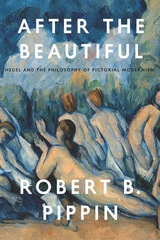
After the Beautiful
Hegel and the Philosophy of Pictorial ModernismRobert B. Pippin
University of Chicago Press, 2013
While Hegel could never engage modernist painting, he did have an understanding of modernity, and in it, art—he famously asserted—was “a thing of the past,” no longer an important vehicle of self-understanding and no longer an indispensable expression of human meaning. Pippin offers a sophisticated exploration of Hegel’s position and its implications. He also shows that had Hegel known how the social institutions of his day would ultimately fail to achieve his own version of genuine equality, a mutuality of recognition, he would have had to explore a different, new role for art in modernity. After laying this groundwork, Pippin goes on to illuminate the dimensions of Hegel’s aesthetic approach in the path-breaking works of Manet, the “grandfather of modernism,” drawing on art historians T. J. Clark and Michael Fried to do so. He concludes with a look at Cézanne, the “father of modernism,” this time as his works illuminate the relationship between Hegel and the philosopher who would challenge Hegel’s account of both modernity and art—Martin Heidegger.
Elegantly inter-weaving philosophy and art history, After the Beautiful is a stunning reassessment of the modernist project. It gets at the core of the significance of modernism itself and what it means in general for art to have a history. Ultimately, it is a testament, via Hegel, to the distinctive philosophical achievements of modernist art in the unsettled, tumultuous era we have inherited.
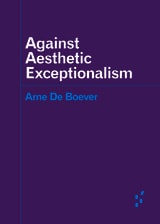
Against Aesthetic Exceptionalism
Arne De Boever
University of Minnesota Press, 2019
Reconsiders exceptionalism between aesthetics and politics
Here, Arne De Boever proposes the notion of aesthetic exceptionalism to describe the widespread belief that art and artists are exceptional. Against Aesthetic Exceptionalism challenges that belief by focusing on the sovereign artist as genius, as well as the original artwork as the foundation of the art market. Engaging with sculpture, conceptual artwork, and painting by emerging and established artists, De Boever proposes a worldly, democratic notion of unexceptional art as an antidote to the problems of aesthetic exceptionalism.
Forerunners: Ideas First
Short books of thought-in-process scholarship, where intense analysis, questioning, and speculation take the lead
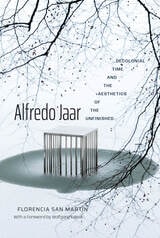
Alfredo Jaar
Decolonial Time and the Aesthetics of the UnfinishedFlorencia San Martin. With a Foreword by Wolfgang Kaleck.
Duke University Press, 2026
In Alfredo Jaar, Florencia San Martín analyzes the work of the prominent Chilean-born artist Alfredo Jaar, whose work challenges the linear and triumphalist temporality of Western modernity that obscures the violence of colonization and globalization. San Martín argues that Jaar’s work represents decolonial time, exposing the limits of the violent systems we inhabit. His art, she maintains, is informed by and responds to two interconnected historical events relevant to his own life: the US-backed military coup that established Pinochet’s dictatorship in Chile and the implementation around the world of the corollary neoliberal economic system. San Martín explores the key themes in Jaar’s artistic practice—mourning, accountability, and failure—which situates the victims of the Chilean regime in a global context, directly confronts the architects of atrocity, and questions how ideas of diversity and inclusion have been co-opted by modern neoliberal discourses. Alfredo Jaar enables us to reimagine art history, offering a fresh paradigm with which to think about global contemporary art.
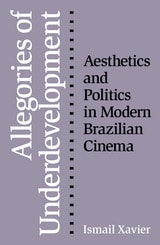
Allegories Of Underdevelopment
Aesthetics and Politics in Modern Brazilian CinemaIsmail Xavier
University of Minnesota Press, 1997
Examines the centrality of Cinema Novo to filmmaking in Brazil.
“A camera in the hand and ideas in the head” was the primary axiom of the young originators of Brazil’s Cinema Novo. This movement of the 1960s and early 1970s overcame technical constraints and produced films on minimal budgets. In Allegories of Underdevelopment, Ismail Xavier examines a number of these films, arguing that they served to represent a nation undergoing a political and social transformation into modernity.
Its best-known voice, filmmaker Glauber Rocha claimed that Cinema Novo was driven by an “aesthetics of hunger.” This scarcity of means demanded new cinematic approaches that eventually gave rise to a legitimate and unique Third World cinema. Xavier stands in the vanguard of scholars presenting and interpreting these revolutionary films—from the masterworks of Rocha to the groundbreaking experiments of Julio Bressane, Rogério Sganzerla, Andrea Tonacci and Arthur Omar—to an English-speaking audience. Focusing on each filmmaker’s use of narrative allegories for the “conservative modernization” Brazil and other nations underwent in the 1960s and 1970s, Xavier asks questions relating to the connection between film and history. He examines the way Cinema Novo transformed Brazil’s cultural memory and charts the controversial roles that Marginal Cinema and Tropicalism played in this process. Among the films he discusses are Black God, White Devil, Land in Anguish, Red Light Bandit, Macunaíma, Antônio das Mortes, The Angel Is Born, and Killed the Family and Went to the Movies.A compelling chronicle of the history of modern Brazilian cinema, Allegories of Underdevelopment brings to light the work of many filmmakers who are virtually unknown in the English-speaking world.