1677 books match the query 'Archaeology' and 222 start with a
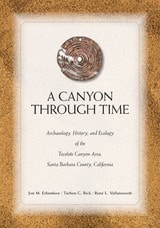
cover of A Canyon through Time: Archaeology, History, and Ecology of the Tecolote Canyon Area, Santa Barbara County, California

A Canyon through Time

Archaeology, History, and Ecology of the Tecolote Canyon Area, Santa Barbara County, California

Jon M Erlandson

University of Utah Press, 2008

Long a refuge for bootleggers and hobos, Tecolote Canyon was engulfed by an industrialized oil boom for twenty years beginning in the 1930s, and endured the only Japanese attack on the contiguous U.S. during World War II. In the postindustrial era, the lower canyon was a haven for surfers, nudists, and gravediggers before being transformed into a five-star resort in the 1990s. But this beautiful area of California’s Santa Barbara coast has been occupied by humans for at least 9,000 years.
Known by the Chumash Indians as Hel’apunitse (guitar fish), the canyon was a major nexus of Chumash village life from about 2000 to 500 years ago. After the arrival of Europeans, the canyon passed from Chumash hands through successive Spanish, Mexican, and American administrations.

In A Canyon through Time, the authors summarize the deep history of this beautiful canyon, which serves as a fascinating history in microcosm of the California coastal region. Using data from archaeology, ecology, geology, geography, and history, they weave an interdisciplinary tale of the natural and human prehistory and history of the Tecolote Canyon area.
[more]
cover of A Computer Program for Monothetic Subdivisive Classification in Archaeology

A Computer Program for Monothetic Subdivisive Classification in Archaeology

Robert Whallon Jr.

University of Michigan Press, 2019

In this report, Robert Whallon provides a brief description of monothetic subdivisive classification, why it is useful in defining objective typologies in archaeology, and how it can be applied to an archaeological data set using a computer program. Because he wrote at a time when computer programs were run on paper cards, Whallon includes operating instructions for the computer program, including an illustration showing the deck arrangment for the cards. He also includes a source listing of a Fortran IV program for the classification.
[more]
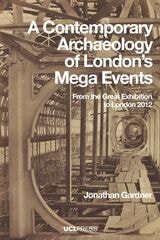
cover of A Contemporary Archaeology of London's Mega Events: From the Great Exhibition to London 2012

A Contemporary Archaeology of London's Mega Events

From the Great Exhibition to London 2012

Jonathan Gardner

University College London, 2022

The contemporary archaeology of urban mega-events.

This book explores the traces of London’s most significant modern “mega events”: the Great Exhibition of 1851, the 1951 Festival of Britain’s South Bank Exhibition, and the 2012 Olympic and Paralympic Games. Though only open for a few weeks or months, mega events permanently and disruptively reshape their host cities and societies: they demolish and rebuild whole districts, they draw in materials and participants from around the globe, and their organizers self-consciously seek to leave a “legacy” that will endure for decades or more. The book argues that these spectacles must thus be seen as long-lived and persistent, rather than simply transient or short-term phenomena. It explores the long-term history of each event through contemporary archaeology, examining the contents and building materials of the Great Exhibition’s Crystal Palace and their extraordinary afterlife at Sydenham, South London; how the Festival of Britain’s South Bank Exhibition employed displays of ancient history to construct a new postwar British identity; and how London 2012 dealt with competing visions of the past as archaeology, waste, and heritage in creating a vision of the future.
[more]
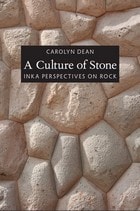
cover of A Culture of Stone: Inka Perspectives on Rock

A Culture of Stone

Inka Perspectives on Rock

Carolyn Dean

Duke University Press, 2010

A major contribution to both art history and Latin American studies, A Culture of Stone offers sophisticated new insights into Inka culture and the interpretation of non-Western art. Carolyn Dean focuses on rock outcrops masterfully integrated into Inka architecture, exquisitely worked masonry, and freestanding sacred rocks, explaining how certain stones took on lives of their own and played a vital role in the unfolding of Inka history. Examining the multiple uses of stone, she argues that the Inka understood building in stone as a way of ordering the chaos of unordered nature, converting untamed spaces into domesticated places, and laying claim to new territories. Dean contends that understanding what the rocks signified requires seeing them as the Inka saw them: as potentially animate, sentient, and sacred. Through careful analysis of Inka stonework, colonial-period accounts of the Inka, and contemporary ethnographic and folkloric studies of indigenous Andean culture, Dean reconstructs the relationships between stonework and other aspects of Inka life, including imperial expansion, worship, and agriculture. She also scrutinizes meanings imposed on Inka stone by the colonial Spanish and, later, by tourism and the tourist industry. A Culture of Stone is a compelling multidisciplinary argument for rethinking how we see and comprehend the Inka past.
[more]
cover of A Fateful Day in 1698: The Remarkable Sobaipuri-O’odham Victory over the Apaches and Their Allies

A Fateful Day in 1698

The Remarkable Sobaipuri-O’odham Victory over the Apaches and Their Allies

Deni J. Seymour

University of Utah Press, 2014

In 1698, the Apache and their allies attacked a sleeping Sobaipuri-O’odham village on the San Pedro River at the northern edge of New Spain, now in southern Arizona. This book, about one of the most important Southwestern battles of the era in this region, reads like a mystery. At the same time, it addresses in a scholarly fashion the methodological question of how we can confidently infer anything reliable about the past.
 
Translations of original Spanish accounts by Father Kino and others convey important details about the battle, while the archaeological record and ethnographic and oral traditions provide important correctives to the historic account. A new battlefield signature of native American conflict is identified, and the fiery context of the battle provides unprecedented information about what the Sobaipuri grew and hunted in this out-of-the-way location, including the earliest known wheat.
 
That this tumultuous time was a period of flux is reflected in the defensive, communal, and ceremonial architecture of the O'odham, which accommodated Spanish tastes and techniques. Practices specific to the O’odham as they relate to the day’s events and to village life illuminate heretofore unexplained aspects of the battle. The book also records a visit by descendant O’odham, reinforcing the importance of identifying the historically documented location.
 
A Fateful Day in 1698 will be of significant interest to archaeologists and historians.
[more]
cover of A Forest of History: The Maya after the Emergence of Divine Kingship

A Forest of History

The Maya after the Emergence of Divine Kingship

Travis W. Stanton

University Press of Colorado, 2020

David Freidel and Linda Schele’s monumental work A Forest of Kings: The Untold Story of the Ancient Maya (1990) offered an innovative, rigorous, and controversial approach to studying the ancient Maya, unifying archaeological, iconographic, and epigraphic data in a form accessible to both scholars and laypeople. Travis Stanton and Kathryn Brown’s A Forest of History: The Maya after the Emergence of Divine Kingship presents a collection of essays that critically engage with and build upon the lasting contributions A Forest of Kings made to Maya epigraphy, iconography, material culture, and history.
 
These original papers present new, cutting-edge research focusing on the social changes leading up to the spread of divine kingship across the lowlands in the first part of the Early Classic. The contributors continue avenues of inquiry such as the timing of the Classic Maya collapse across the southern lowlands, the nature of Maya warfare, the notion of usurpation and “stranger-kings” in the Classic period, the social relationships between the ruler and elite of the Classic period Yaxchilán polity, and struggles for sociopolitical dominance among the later Classic period polities of Chichén Itzá, Cobá, and the Puuc kingdoms.
 
Many of the interpretations and approaches in A Forest of Kings have withstood the test of time, while others have not; a complete understanding of the Classic Maya world is still developing. In A Forest of History recent discoveries are considered in the context of prior scholarship, illustrating both the progress the field has made in the past quarter century and the myriad questions that remain. The volume will be a significant contribution to the literature for students, scholars, and general readers interested in Mesoamerican and Maya archaeology.
 
Contributors:
Wendy Ashmore, Arlen F. Chase, Diane Z. Chase, Wilberth Cruz Alvarado, Arthur A. Demarest, Keith Eppich, David A. Freidel, Charles W. Golden, Stanley P. Guenter, Annabeth Headrick, Aline Magnoni, Joyce Marcus, Marilyn A. Masson, Damaris Menéndez, Susan Milbrath, Olivia C. Navarro-Farr, José Osorio León, Carlos Peraza Lope, Juan Carlos Pérez Calderón, Griselda Pérez Robles, Francisco Pérez Ruíz, Michelle Rich, Jeremy A. Sabloff, Andrew K. Scherer, Karl A. Taube
[more]
cover of A Fuego y Sangre: Early Zapotec Imperialism in the Cuicatlán Cañada, Oaxaca

A Fuego y Sangre

Early Zapotec Imperialism in the Cuicatlán Cañada, Oaxaca

Elsa M. Redmond

University of Michigan Press, 1983

In this volume, Elsa M. Redmond reconstructs the history of the Cuicatec region in Oaxaca, Mexico, from the Middle Formative period through the Lomas phase, when the Zapotec state based at Monte Albán took control, into the Trujano phase and the Spanish conquest. Redmond integrates archaeological data and sixteenth-century ethnohistoric records to inform her study of the political and social strategies of the Cuicatec region during these time periods. From 1977 to 1978, Redmond conducted an archaeological survey in this region, and she presents the results of that fieldwork here.
[more]
cover of A Gazetteer of Buildings in Muslim Palestine

A Gazetteer of Buildings in Muslim Palestine

Andrew Petersen

Council for British Research in the Levant, 2001

The aim of the survey on which this book is based was to make a record of all buildings constructed in Palestine during the medieval and Ottoman periods. The survey area covers the modern state of Israel excluding West Jerusalem and Ramla (which are covered in separate publications). The West Bank and Gaza will be the subject of Volume II.


Library of Congress subject headings for this publication:
Architecture, Islamic -- Palestine -- Guidebooks.
Architecture, Ottoman -- Palestine -- Guidebooks.
Architecture, Medieval -- Palestine -- Guidebooks.
Historic buildings -- Palestine -- Guidebooks.
[more]
cover of A Gendered Past: A Critical Bibliography of Gender in Archaeology

A Gendered Past

A Critical Bibliography of Gender in Archaeology

Foreword by Alison Wylie. Edited by Elisabeth A. Bacus, Alex W. Barker, Jeffrey D. Bonevich, Sandra L. Dunavan, J. Benjamin Fitzhugh, Debra L. Gold, Nurit S. Goldman-Finn, William Griffin, and Karen M. Mudar

University of Michigan Press, 1993

This annotated bibliography reviews contributions from a wide variety of theoretical orientations, many from geographical or temporal contexts.
[more]
cover of A Historical Commentary on Thucydides: A Companion to Rex Warner's Penguin Translation

A Historical Commentary on Thucydides

A Companion to Rex Warner's Penguin Translation

David Cartwright

University of Michigan Press, 1997

Much of the modern way of thinking about history and historiography in fact begins with the great Greek historian Thucydides, an Athenian general in the latter half of the fifth century b.c.e. It is also Thucydides who provides us with the historical framework for fifth-century Greece, a period of progress and creativity rarely equaled in human history. His work, The Peloponnesian War, recounts that destructive conflict and also includes the only surviving contemporary record of the rise of the Athenian empire. Thucydides teaches his readers that the most powerful states in the world can come to a humiliating end, that a careless tyranny, especially toward the weak, and, nearly two millennia before Machiavelli, that absolute power corrupts absolutely. In A Historical Commentary on Thucydides, David Cartwright aims to guide the Greekless reader through Thucydides' fascinating yet demanding narrative. Cartwright's is the only such full-length, one-volume commentary and companion: it is based on Rex Warner's Penguin translation of Thucydides -- the most widely used translation -- and requires no knowledge of Greek. The introduction to A Historical Commentary on Thucydides includes a brief biography of Thucydides: his approach, aims, and methods are discussed, as are the general character of his work and his contribution to historiography. The commentary gives brief accounts of the people and places mentioned by Thucydides and puts events in their immediate and wider contexts. Cartwright provides occasional summaries, explains Greek concepts and technical terms, and offers interpretations of difficult or controversial passages. The author also picks out important historiographical issues and discusses the themes' underlying events.For both first-time readers and seasoned students, this commentary gives broad access to one of antiquity's most profound and difficult writers. Historians, classicists, and anyone else interested in the cultural and intellectual achievements of ancient Greece will find A Historical Commentary on Thucydides a welcome addition to their library.
[more]
cover of A History of Boston in 50 Artifacts

A History of Boston in 50 Artifacts

Joseph M. Bagley

University Press of New England, 2016

History is right under our feet; we just need to dig a little to find it. Though not the most popular construction project, Boston’s Big Dig has contributed more to our understanding and appreciation of the city’s archaeological history than any other recent event. Joseph M. Bagley, city archaeologist of Boston, uncovers a fascinating hodgepodge of history—from ancient fishing grounds to Jazz Age red-light districts—that will surprise and delight even longtime residents. Each artifact is shown in full color and accompanied by description of the item’s significance to its site location and the larger history of the city. From cannonballs to drinking cups and from ancient spears to chinaware, A History of Boston in 50 Artifacts offers a unique and accessible introduction to Boston’s history and physical culture while revealing the ways objects can offer a tantalizing entrée into our past. Packed with vivid descriptions and art, this lively history of Boston will appeal to all manner of readers, locals and visitors alike.
[more]
cover of A History of Boston in 50 Artifacts

A History of Boston in 50 Artifacts

Joseph M. Bagley

Brandeis University Press, 2021

A new edition of a bestselling book looking at the history of Boston through fifty artifacts.
 
Joseph M. Bagley, the city archaeologist of Boston, uncovers a fascinating hodgepodge of history—from ancient fishing grounds to Jazz Age red-light districts—that will surprise and delight even longtime residents. Each artifact is shown in full color with a description of the item’s significance to its site location and Boston’s larger history. From cannonballs to drinking cups and from ancient spears to chinaware, A History of Boston in 50 Artifacts offers a unique and accessible introduction to Boston’s history and physical culture while revealing the ways objects can offer a tantalizing entrée into our past. Packed with vivid descriptions and art, this lively history of Boston will appeal to all manner of readers, locals, and visitors alike. This new edition showcases an important fact which has come to light since its first publication, that a chapter about a cat has now been shown to be a dog, thus demonstrating the perils of the archaeologist.
 
[more]
cover of A Manual for Neanderthals

A Manual for Neanderthals

By H. Mewhinney

University of Texas Press, 1957

The story of humanity’s earliest days on earth has come down to us chiefly in the tools and weapons early hominids shaped from flint. With these tools, they gained ascendancy over less dexterous beasts and began the slow conquest of their environment. Other records, including their very bones, have largely rotted away, but their tools of flint endure.

H. Mewhinney presents A Manual for Neanderthals as “a common-sense, down-to-earth study of how flint tools and weapons were made—or for that matter, can still be made by any descendant of Stone Age man.”

The author first sets the scene with a delightful and informative disquisition on flintflaking and flint-flakers, and then explains clearly and concisely how he and earlier Neanderthals have made flint artifacts, illustrating each step with drawings and photographs.

Archeologists and anthropologists will discover in this book a modest but genuine contribution to their fields, while collectors of Indian relics and people who like to tinker with tools and master unusual skills will find it a surprisingly practical guide to an interesting and ancient art. With patience, and with A Manual for Neanderthals at your side, you too can learn to flake flint.

[more]
cover of A Marriage Out West: Theresa and Frank Russell’s Explorations in Arizona, 1900–1903

A Marriage Out West

Theresa and Frank Russell’s Explorations in Arizona, 1900–1903

Theresa Russell, Nancy J. Parezo, and Don D. Fowler

University of Arizona Press, 2020

A Marriage Out West is an intimate biographical account of two fascinating figures of twentieth-century archaeology. Frances Theresa Peet Russell, an educator, married Harvard anthropologist Frank Russell in June 1900. They left immediately on a busman’s honeymoon to the Southwest. Their goal was twofold: to travel to an arid environment to quiet Frank’s tuberculosis and to find archaeological sites to support his research.

During their brief marriage, the Russells surveyed almost all of Arizona Territory, traveling by horse over rugged terrain and camping in the back of a Conestoga wagon in harsh environmental conditions. Nancy J. Parezo and Don D. Fowler detail the grit and determination of the Russells’ unique collaboration over the course of three field seasons. Delivering the first biographical account of Frank Russell’s life, this book brings detail to his life and work from childhood until his death in 1903. Parezo and Fowler analyze the important contributions Theresa and Frank made to the bourgeoning field of archaeology and Akimel O’odham (Pima) ethnography. They also offer never-before-published information on Theresa’s life after Frank’s death and her subsequent career as a professor of English literature and philosophy at Stanford University.

In 1906 Theresa Russell published In Pursuit of a Graveyard: Being the Trail of an Archaeological Wedding Journey, a twelve-part serial in Out West magazine. Theresa’s articles constituted an experiential narrative based on field journals and remembrances of life in the northern Southwest. The work offers both a biography and a seasonal field narrative that emphasized personal experiences rather than traditional scientific field notes. Included in A Marriage Out West, Theresa’s writing provides an invaluable participant’s perspective of early 1900s American archaeology and ethnography and life out West.
[more]
cover of A Maya Universe in Stone

A Maya Universe in Stone

Stephen Houston

J. Paul Getty Trust, The, 2021

The first study devoted to a single sculptor in ancient America, as understood through four unprovenanced masterworks traced to a small sector of Guatemala.

In 1950, Dana Lamb, an explorer of some notoriety, stumbled on a Maya ruin in the tropical forests of northern Guatemala. Lamb failed to record the location of the site he called Laxtunich, turning his find into the mystery at the center of this book. The lintels he discovered there, long since looted, are probably of a set with two others that are among the masterworks of Maya sculpture from the Classic period. Using fieldwork, physical evidence, and Lamb’s expedition notes, the authors identify a small area with archaeological sites where the carvings were likely produced.

Remarkably, the vividly colored lintels, replete with dynastic and cosmic information, can be assigned to a carver, Mayuy, who sculpted his name on two of them. To an extent nearly unique in ancient America, Mayuy can be studied over time as his style developed and his artistic ambition grew. An in-depth analysis of Laxtunich Lintel 1 examines how Mayuy grafted celestial, seasonal, and divine identities onto a local magnate and his overlord from the kingdom of Yaxchilan, Mexico. This volume contextualizes the lintels and points the way to their reprovenancing and, as an ultimate aim, repatriation to Guatemala.
[more]
cover of A New Deal for Southeastern Archaeology

A New Deal for Southeastern Archaeology

Edwin A. Lyon

University of Alabama Press, 1996

Recipient of the 1994 Anne B. and James B. McMillan Prize

This comprehensive study provides a history of New Deal archaeology in the Southeast in the 1930s and early 1940s and focuses on the projects of the Federal Emergency Relief Administration, the Civil Works Administration, the Works Progress Administration, the Tennessee Valley Authority, the National Park Service, and the Smithsonian Institution.

Utilizing primary sources including correspondence and unpublished reports, Lyon demonstrates the great importance of the New Deal projects in the history of southeastern and North American archaeology. New Deal archaeology transformed the practice of archaeology in the Southeast and created the basis for the discipline that exists today. With the current emphasis on curation and repatriation, archaeologists and historians will find this volume invaluable in reconstructing the history of the projects that generated the many collections that now fill our museums.


[more]
cover of A Prehistoric Sequence in the Middle Pecos Valley, New Mexico

A Prehistoric Sequence in the Middle Pecos Valley, New Mexico

Arthur J. Jelinek

University of Michigan Press, 1967

Arthur J. Jelinek describes the results of his archaeological surveys and excavations in east central New Mexico and provides a prehistoric cultural sequence of the Middle Pecos Valley, from the Paleoindian period to the Late McKenzie Phase. With a contribution on pollen analysis by Paul S. Martin.
[more]
cover of A Prehistory of Ordinary People

A Prehistory of Ordinary People

Monica L. Smith

University of Arizona Press, 2010

For the past million years, individuals have engaged in multitasking as they interact with the surrounding environment and with each other for the acquisition of daily necessities such as food and goods. Although culture is often perceived as a collective process, it is individual people who use language, experience illness, expend energy, perceive landscapes, and create memories. These processes were sustained at the individual and household level from the time of the earliest social groups to the beginnings of settled agricultural communities and the eventual development of complex societies in the form of chiefdoms, states, and empires.

Even after the advent of “civilization” about 6,000 years ago, human culture has for the most part been created and maintained not by the actions of elites—as is commonly proclaimed by many archaeological theorists—but by the many thousands of daily actions carried out by average citizens.

With this book, Monica L. Smith examines how the archaeological record of ordinary objects—used by ordinary people—constitutes a manifestation of humankind’s cognitive and social development. A Prehistory of Ordinary People offers an impressive synthesis and accessible style that will appeal to archaeologists, cultural anthropologists, and others interested in the long history of human decision-making.
 
List of Figures
Preface
Prologue: A Chance Encounter
1 The Origins of Multitasking
2 Individuals and Food
3 Individuals and Goods
4 Individuals and Work
5 Multitasking and Social Complexity
References
Figure Credits
Index
[more]
cover of A Prehistory of the North: Human Settlement of the Higher Latitudes

A Prehistory of the North

Human Settlement of the Higher Latitudes

Hoffecker, John F

Rutgers University Press, 2004

Early humans did not simply drift northward from their African origins as their abilities to cope with cooler climates evolved. The initial settlement of places like Europe and northern Asia, as well as the later movement into the Arctic and the Americas, actually occurred in relatively rapid bursts of expansion. A Prehistory of the North is the first full-length study to tell the complex story, spanning almost two million years, of how humans inhabited some of the coldest places on earth.

In an account rich with illustrations, John Hoffecker traces the history of anatomical adaptations, diet modifications, and technological developments, such as clothing and shelter, which allowed humans the continued ability to push the boundaries of their habitation. The book concludes by showing how in the last few thousand years, peoples living in the circumpolar zone—with the exception of western and central Siberia—developed a thriving maritime economy.

Written in nontechnical language, A Prehistory of the North provides compelling new insights and valuable information for professionals and students.

[more]
cover of A Projectile Point Guide for the Upper Mississippi River Valley

A Projectile Point Guide for the Upper Mississippi River Valley

Robert F. Boszhardt

University of Iowa Press, 2003

The most common relics of the 12,000-year occupancy of the Upper Mississippi River Valley may be the chipped stone projectile points that Native Americans fastened to the ends of their spears, darts, and arrow shafts. This useful guide provides a key to identifying the various styles of points found along the Upper Mississippi River in the Driftless region stretching roughly from Dubuque, Iowa, to Red Wing, Minnesota, but framed within a somewhat larger area extending from the Rock Island Rapids at the modern Moline-Rock Island area to the Falls of St. Anthony at Minneapolis-St. Paul.

Logging tens of thousands of miles and visiting private collectors from all walks of life since 1982, Robert Boszhardt has documented thousands of projectile points found in this region. In addition to drawings of each style, he provides other accepted names as well as names of related points, age, distribution, a description (including length and width), material, and references for each type. The guide is meant for the many avocational archaeologists who collect projectile points in the Upper Midwest and will be a useful reference tool for professional field archaeologists as well.

Emphasizing the preservation of sites as well as a mutual exchange of information between professional and avocational archaeologists, this guide will reveal projectile points as clues to the past, time markers which embody crucial information about the cultures of the Mississippi River Valley's early inhabitants.

[more]
cover of A Serpent's Tale: Discovering America's Ancient Mound Builders

A Serpent's Tale

Discovering America's Ancient Mound Builders

Lorett Treese

Westholme Publishing, 2016

The Fascinating Story of the Enigmatic Monuments that Inspired American Archaeology
When American settlers first crossed the Appalachian Mountains they were amazed to discover that the wilderness beyond contained ancient ruins—large man-made mounds and enclosures, and impressive earthen sculptures, such as a gigantic serpent. Reports trickled back to the eager ears of President Thomas Jefferson and others. However, most did not believe these earthworks had anything to do with Native Americans; rather, given the intense interest in the history of Western Civilization at the time, it became popular to speculate that the ruins had been built by refugees from Greece, Rome, Egypt—or even the lost continent of Atlantis. Since their discovery, the mounds have attracted both scholars and quacks, from the early investigations sponsored by the then new Smithsonian Institution to the visions of the American psychic Edgar Cayce.
As Lorett Treese explains in her fascinating history A Serpent’s Tale: Discovering America’s Ancient Mound Builders, the enigmatic nature of these antiquities fueled both fanciful claims and scientific inquiry. Early on, the earthworks began to fall to agricultural and urban development. Realizing that only careful on-site investigation could reveal the mysteries of the mounds, scholars hastened to document and classify them, giving rise to American archaeology as a discipline. Research made it possible to separate the Mound Builders into three distinct pre-contact Native American cultures. More recently, Mound Builder remains have attracted the practitioners of new disciplines like archaeoastronomy who suggest they may have functioned as calendars. There is no doubt that the abandoned monuments that made the Midwest’s Ohio Valley the birthplace of American archaeology have yet to reveal all the knowledge they contain on the daily lives and world views of persons of North American prehistory.
[more]
cover of A Sourcebook of Nasca Ceramic Iconography: Reading a Culture through Its Art

A Sourcebook of Nasca Ceramic Iconography

Reading a Culture through Its Art

Proulx, Donald A.

University of Iowa Press, 2006

For almost eight hundred years (100 BC–AD 650) Nasca artists modeled and painted the plants, animals, birds, and fish of their homeland on Peru’s south coast as well as numerous abstract anthropomorphic creatures whose form and meaning are sometimes incomprehensible today. In this first book-length treatment of Nasca ceramic iconography to appear in English, drawing upon an archive of more than eight thousand Nasca vessels from over 150 public and private collections, Donald Proulx systematically describes the major artistic motifs of this stunning polychrome pottery, interprets the major themes displayed on this pottery, and then uses these descriptions and his stimulating interpretations to analyze Nasca society. After beginning with an overview of Nasca culture and an explanation of the style and chronology of Nasca pottery, Proulx moves to the heart of his book: a detailed classification and description of the entire range of supernatural and secular themes in Nasca iconography along with a fresh and distinctive interpretation of these themes. Linking the pots and their iconography to the archaeologically known Nasca society, he ends with a thorough and accessible examination of this ancient culture viewed through the lens of ceramic iconography. Although these static images can never be fully understood, by animating their themes and meanings Proulx reconstructs the lifeways of this complex society.
[more]
cover of A Study of Some Michigan Indians

A Study of Some Michigan Indians

Frances Densmore

University of Michigan Press, 1949

In this study, Frances Densmore describes the results of her ethnographic research with members of the Chippewa tribe in Michigan’s Upper Peninsula. She visited the town of Watersmeet and the L’Anse reservation, and she includes notes on communities at Bay Mills, Hannahville, Isabella County, and Beaver Island.
[more]
[more]
cover of A Study of the Glacial Kame Culture in Michigan, Ohio, and Indiana

A Study of the Glacial Kame Culture in Michigan, Ohio, and Indiana

Wilbur M. Cunningham

University of Michigan Press, 1948

In this book, Wilbur Cunningham presents data on artifacts from eleven sites in the Midwest, with a focus on the Burch site in Berrien County, Michigan. Rare shell gorgets in the shape of sandals (called sandal-sole gorgets) were found at all of the sites. Includes 10 plates. Appendix by James B. Griffin.
[more]
cover of A Tale of Three Villages: Indigenous-Colonial Interactions in Southwestern Alaska, 1740–1950

A Tale of Three Villages

Indigenous-Colonial Interactions in Southwestern Alaska, 1740–1950

Liam Frink

University of Arizona Press, 2016

People are often able to identify change agents. They can estimate possible economic and social transitions, and they are often in an economic or social position to make calculated—sometimes risky—choices. Exploring this dynamic, A Tale of Three Villages is an investigation of culture change among the Yup’ik Eskimo people of the southwestern Alaskan coast from just prior to the time of Russian and Euro-North American contact to the mid-twentieth century.

Liam Frink focuses on three indigenous-colonial events along the southwestern Alaskan coast: the late precolonial end of warfare and raiding, the commodification of subsistence that followed, and, finally, the engagement with institutional religion. Frink’s innovative interdisciplinary methodology respectfully and creatively investigates the spatial and material past, using archaeological, ethnoecological, and archival sources.

The author’s narrative journey tracks the histories of three villages ancestrally linked to Chevak, a contemporary Alaskan Native community: Qavinaq, a prehistoric village at the precipice of colonial interactions and devastated by regional warfare; Kashunak, where people lived during the infancy and growth of the commercial market and colonial religion; and Old Chevak, a briefly occupied “stepping-stone” village inhabited just prior to modern Chevak. The archaeological spatial data from the sites are blended with ethnohistoric documents, local oral histories, eyewitness accounts of people who lived at two of the villages, and Frink’s nearly two decades of participant-observation in the region.

Frink provides a model for work that examines interfaces among indigenous women and men, old and young, demonstrating that it is as important as understanding their interactions with colonizers. He demonstrates that in order to understand colonial history, we must actively incorporate indigenous people as actors, not merely as reactors.
[more]
cover of A Time Before New Hampshire: The Story of a Land and Native Peoples

A Time Before New Hampshire

The Story of a Land and Native Peoples

Michael J. Caduto

University Press of New England, 2004

In this masterful and elegant book, Michael J. Caduto tells the complete story of the land of New Hampshire—starting with the formation of earth 4.6 billion years ago and continuing with changes to its peoples and the environment through the seventeenth century. Part I offers a comprehensive look at every aspect of the ancient natural world—including geology, glaciology, botany, climatology, ecology, zoology, and paleobotany. It describes the formation of the land hundreds of millions of years ago as a result of major movements in the tectonic plates; chronicles the rise and fall of reptiles, mammals, birds, and plants and other life forms stemming from climatic changes; and explores the arrival of human beings during and after the relatively recent ice age. The rest of the volume immerses the reader in the history of the human populations in New Hampshire, beginning with the Paleoindian period of hunter gatherers over twelve thousand years ago and continuing through the arrival of horticulture among the Alnôbak (Abenaki) and beyond. Caduto explores the Alnôbak’s day-to-day existence, culture, and traditional tales as preserved by archeologists, anthropologists, historians, and living cultures. Emphasizing the beliefs, cultures, and practices of these native people, Caduto details the Alnôbak’s relationship to the natural world as he tells the story of coevolution between the land and people through time. Caduto takes the reader on an exploration through New Hampshire’s rich and diverse history—using first-hand experiences, re-creations of natural and human environments, journeys through historical landscapes and visits with the families of ancient people—to present a thorough profile of the early beginnings of the Granite State. The volume features an epilogue by Charlie True, Member of the Tribal Council, Abenaki Nation of New Hampshire, and nearly one hundred photographs, illustrations, and detailed maps depicting past peoples, historical trails, and indigenous cultures and environments of New Hampshire.
[more]
cover of A Universal Theory of Pottery Production: Irving Rouse, Attributes, Modes, and Ethnography

A Universal Theory of Pottery Production

Irving Rouse, Attributes, Modes, and Ethnography

Richard A. Krause

University of Alabama Press, 2016

In A Universal Theory of Pottery Production, award-winning archaeologist Richard A. Krause presents an ethnographic account of pottery production based on archaeological evidence.
 
Krause posits that the careful study of an archaeological site’s ceramics can be used to formulate a step-and-stage theory of pottery production for the area. Krause’s work suggests that by comparing the results of inquiries conducted at different sites and for different times, archaeologists may be able to create a general ethnographic theory of pottery production.
 
Krause demonstrates this process through a comprehensive analysis of potsherds from the highly stratified Puerto Rican site of Paso del Indio. He first provides a comprehensive explanation of the archaeological concepts of attribute, mode, feature, association, site, analysis, and classification. Using these seven concepts, he categorizes the production and decorative techniques in the Paso del Indio site. Krause then applies the concept of “focal form vessels” to the site’s largest fragments to test his step-and-stage theory of production against the evidence they provide. Finally, he assigns the ceramics at Paso del Indio to previously discussed potting traditions.
 
Unlike other books on the subject that use statistical methods to frame basic archaeological concepts, Krause approaches these topics from the perspective of epistemology and the explicatory practices of empirical science. In A Universal Theory of Pottery Production Krause offers much of interest to North American, Caribbean, and South American archaeologists interested in the manufacture, decoration, and classification of prehistoric pottery, as well as for archaeologists interested in archaeological theory.
[more]
cover of A Vertebrate Faunal Analysis Coding System, with North American Taxonomy and dBase Support Programs and Procedures (Version 3.3)

A Vertebrate Faunal Analysis Coding System, with North American Taxonomy and dBase Support Programs and Procedures (Version 3.3)

Brian S. Shaffer and Barry W. Baker

University of Michigan Press, 1992

The authors present the constructs for a logical and hierarchal vertebrate coding system for use in the analysis of faunal remains from archaeological sites. FACS consists of a series of numeric codes for recording information on 24 attributes for each faunal specimen.
[more]
cover of A View From Black Mesa: The Changing Face of Archaeology

A View From Black Mesa

The Changing Face of Archaeology

George J. Gumerman

University of Arizona Press, 1984

Finally! A modern book in the field of Southwestern archaeology that can be read, understood and enjoyed by everyone. —Books of the Southwest

"In clear and nontechnical language it provides readers with a synopsis of Anasazi prehistory and cultural ecology. ...Gumerman's work is especially useful for anyone seeking an `on-site' introduction to some of the basic techniques and research orientations of modern American archaeology. Highly recommended for students and general readers." —Choice

"It should be read with thoughtful care by the `professional' archaeologist and ethnographer. And it will even more effectively serve the informed general reader, unconcerned with academic minutiae, through its fresh and direct exposition of the procedures, frustrations, and rewards of the calling." —The Kiva

"An outstanding success....a readable book that is suitable for professional archaeologists and the general public as well." —North American Archaeologist

"A readable book that is suitable for professional archaeologists and the general public." —North American Archaeologist
[more]
cover of A White-Bearded Plainsman: The Memoirs of Archaeologist W. Raymond Wood

A White-Bearded Plainsman

The Memoirs of Archaeologist W. Raymond Wood

W. Raymond Wood

University of Utah Press, 2011

W. Raymond Wood played a leading role in the early days of Great Plains archaeology. In A White-Bearded Plainsman, he tells how his own career emerged, as the discipline of Plains archaeology developed during the post-World War II era. Readers will learn of the childhood influences that lead Wood to pursue the path of archaeologist, and of the events and people that shaped his professional life. In addition to telling Wood’s personal story, the book provides an intellectual history of the discipline of mid-continental archaeology over the last half century. It will thus be valuable to students and scholars in the field, as it describes how the paradigms in Plains and midwestern prehistory have changed over time. To understand the discipline, one must understand the cultural and intellectual underpinnings that shaped it. Wood’s book helps map for a new generation of archaeologists from whence they’ve come, and his role in the developments along the way.

[more]
cover of A World Engraved: Archaeology of the Swift Creek Culture

A World Engraved

Archaeology of the Swift Creek Culture

Edited by Mark Williams and Daniel T. Elliott

University of Alabama Press, 1998

This major summary of the current state of archaeological research on the Swift Creek culture is the first comprehensive collection ever published concerning the Swift Creek people.

The Swift Creek people, centered in Georgia and surrounding states from A.D. 100 to 700, are best known from their pottery, which was decorated before firing with beautiful paddle-stamped designs--some of the most intricate and fascinating in the world.

Comprehensive in scope, this volume details the discovery of this culture, summarizes what is known about it at the present time, and shows how continued improvements in the collection and analysis of archaeological data are advancing our knowledge of this extinct society.

Although they know nothing of Swift Creek language and little about its society, archaeologists have collected valuable information about the
economic strategies of Swift Creek inhabitants. What archaeologists know best, however, is that the Swift Creek people were some of the best wood carvers the world has seen, and their pottery will stand as their lasting legacy for all time. This book presents and preserves their legacy.


[more]
cover of Aboriginal Relationships between Culture and Plant Life in the Upper Great Lakes Region

Aboriginal Relationships between Culture and Plant Life in the Upper Great Lakes Region

Richard Asa Yarnell

University of Michigan Press, 1964

Using the ethnobotanical laboratory at the University of Michigan Museum of Anthropology, as well as ethnographic and archaeological data, Richard Asa Yarnell reported on the prehistoric use of native plants at archaeological sites in the Midwest, including Feeheley and Juntunen. Includes eight appendices on tribal plant use.
[more]
cover of About Antiquities: Politics of Archaeology in the Ottoman Empire

About Antiquities

Politics of Archaeology in the Ottoman Empire

By Zeynep Çelik

University of Texas Press, 2016

Antiquities have been pawns in empire-building and global rivalries; power struggles; assertions of national and cultural identities; and cross-cultural exchanges, cooperation, abuses, and misunderstandings—all with the underlying element of financial gain. Indeed, “who owns antiquity?” is a contentious question in many of today’s international conflicts.

About Antiquities offers an interdisciplinary study of the relationship between archaeology and empire-building around the turn of the twentieth century. Starting at Istanbul and focusing on antiquities from the Ottoman territories, Zeynep Çelik examines the popular discourse surrounding claims to the past in London, Paris, Berlin, and New York. She compares and contrasts the experiences of two museums—Istanbul’s Imperial Museum and the Metropolitan Museum of Art—that aspired to emulate European collections and gain the prestige and power of owning the material fragments of ancient history. Going beyond institutions, Çelik also unravels the complicated interactions among individuals—Westerners, Ottoman decision makers and officials, and local laborers—and their competing stakes in antiquities from such legendary sites as Ephesus, Pergamon, and Babylon.

Recovering perspectives that have been lost in histories of archaeology, particularly those of the excavation laborers whose voices have never been heard, About Antiquities provides important historical context for current controversies surrounding nation-building and the ownership of the past.

[more]
cover of Abundance: The Archaeology of Plenitude

Abundance

The Archaeology of Plenitude

Monica L. Smith

University Press of Colorado, 2020

Using case studies from around the globe—including Mesoamerica, North and South America, Africa, China, and the Greco-Roman world—and across multiple time periods, the authors in this volume make the case that abundance provides an essential explanatory perspective on ancient peoples’ choices and activities. Economists frequently focus on scarcity as a driving principle in the development of social and economic hierarchies, yet focusing on plenitude enables the understanding of a range of cohesive behaviors that were equally important for the development of social complexity.

Our earliest human ancestors were highly mobile hunter-gatherers who sought out places that provided ample food, water, and raw materials. Over time, humans accumulated and displayed an increasing quantity and variety of goods. In households, shrines, tombs, caches, and dumps, archaeologists have discovered large masses of materials that were deliberately gathered, curated, distributed, and discarded by ancient peoples. The volume’s authors draw upon new economic theories to consider the social, ideological, and political implications of human engagement with abundant quantities of resources and physical objects and consider how individual and household engagements with material culture were conditioned by the quest for abundance.

Abundance shows that the human propensity for mass consumption is not just the result of modern production capacities but fulfills a longstanding focus on plenitude as both the assurance of well-being and a buffer against uncertainty. This book will be of great interest to scholars and students in economics, anthropology, and cultural studies.

Contributors: Traci Ardren, Amy Bogaard, Elizabeth Klarich, Abigail Levine, Christopher R. Moore, Tito E. Naranjo, Stacey Pierson, James M. Potter, François G. Richard, Christopher W. Schmidt, Carol Schultze, Payson Sheets, Monica L. Smith, Katheryn C. Twiss, Mark D. Varien, Justin St. P. Walsh, María Nieves Zedeño

[more]
cover of Acorns and Bitter Roots: Starch Grain Research in the Prehistoric Eastern Woodlands

Acorns and Bitter Roots

Starch Grain Research in the Prehistoric Eastern Woodlands

Timothy C. Messner

University of Alabama Press, 2011

Starch grain analysis in the temperate climates of eastern North America using the Delaware River Watershed as a case study for furthering scholarly understanding of the relationship between native people and their biophysical environment in the Woodland Period
 
People regularly use plants for a wide range of utilitarian, spiritual, pharmacological, and dietary purposes throughout the world. Scholarly understanding of the nature of these uses in prehistory is particularly limited by the poor preservation of plant resources in the archaeological record. In the last two decades, researchers in the South Pacific and in Central and South America have developed microscopic starch grain analysis, a technique for overcoming the limitations of poorly preserved plant material.
 
Messner’s analysis is based on extensive reviews of the literature on early historic, prehistoric native plant use, and the collation of all available archaeobotanical data, a review of which also guided the author in selecting contemporary botanical specimens to identify and in interpreting starch residues recovered from ancient plant-processing technologies. The evidence presented here sheds light on many local ecological and cultural developments as ancient people shifted their subsistence focus from estuarine to riverine settings. These archaeobotanical datasets, Messner argues, illuminate both the conscious and unintentional translocal movement of ideas and ecologies throughout the Eastern Woodlands.
 
[more]
cover of Across a Great Divide: Continuity and Change in Native North American Societies, 1400–1900

Across a Great Divide

Continuity and Change in Native North American Societies, 1400–1900

Edited by Laura L. Scheiber and Mark D. Mitchell

University of Arizona Press, 2010

Archaeological research is uniquely positioned to show how native history and native culture affected the course of colonial interaction, but to do so it must transcend colonialist ideas about Native American technological and social change. This book applies that insight to five hundred years of native history. Using data from a wide variety of geographical, temporal, and cultural settings, the contributors examine economic, social, and political stability and transformation in indigenous societies before and after the advent of Europeans and document the diversity of native colonial experiences. The book’s case studies range widely, from sixteenth-century Florida, to the Great Plains, to nineteenth-century coastal Alaska.

The contributors address a series of interlocking themes. Several consider the role of indigenous agency in the processes of colonial interaction, paying particular attention to gender and status. Others examine the ways long-standing native political economies affected, and were in turn affected by, colonial interaction. A third group explores colonial-period ethnogenesis, emphasizing the emergence of new native social identities and relations after 1500. The book also highlights tensions between the detailed study of local cases and the search for global processes, a recurrent theme in postcolonial research.

If archaeologists are to bridge the artificial divide separating history from prehistory, they must overturn a whole range of colonial ideas about American Indians and their history. This book shows that empirical archaeological research can help replace long-standing models of indigenous culture change rooted in colonialist narratives with more nuanced, multilinear models of change—and play a major role in decolonizing knowledge about native peoples.
[more]
cover of Actium and Augustus: The Politics and Emotions of Civil War

Actium and Augustus

The Politics and Emotions of Civil War

Robert Alan Gurval

University of Michigan Press, 1998

On 2 September 31 B.C.E., the heir of Julius Caesar defeated the forces of Antony and Cleopatra in a naval engagement at Actium. Despite the varied judgments this battle received in antiquity, common opinion held that Actium marked the start of a new era, a turning point in Roman history and, indeed, in Western civilization.
Actium and Augustus marks a turning point as well. Robert Alan Gurval's unusual approach is to examine contemporary views of the battle and its immediate political and social consequences. He starts with a consideration of the official celebration and public commemoration of the Actian victory and then moves on to other questions. What were the "Actian" monuments that Octavian erected on the battle site and later in Rome? What role did the Actian victory play in the political formation of the Principate and its public ideology? What was the response of contemporary poetry? Throughout, this volume concentrates on contemporary views of Actium and its results.
Written to include the general reader, Actium and Augustus presents a thoughtful examination of a complex period. All Greek and Latin quotations are translated, and extensive illustrations present graphic evidence about the issues Romans faced.
Robert Alan Gurval is Associate Professor of Classics, University of California, Los Angeles, and has been a recipient of the Rome Prize awarded by the American Academy in Rome.
[more]
cover of Advances in Titicaca Basin Archaeology–III

Advances in Titicaca Basin Archaeology–III

Edited by Alexei Vranich, Elizabeth A. Klarich and Charles Stanish

University of Michigan Press, 2012

The focus of this volume is the northern Titicaca Basin, an area once belonging to the quarter of the Inka Empire called Collasuyu. The original settlers around the lake had to adapt to living at more than 12,000 feet, but as this volume shows so well, this high-altitude environment supported a very long developmental sequence.
[more]
cover of Africa & Africans in Antiquity

Africa & Africans in Antiquity

Edwin M. Yamauchi

Michigan State University Press, 2001

Africa and Africans in Antiquity assesses recent historical research and archaeology under way in Egypt, North Africa, the Sudan, and the Horn of Africa. Whereas many European and American scholars of earlier generations believed that Egyptian contacts with Africa to the south were not culturally significant, research contained in this important collection rejects such notions. At the same time, the volume takes issue with Afrocentric scholars who argue that most Egyptians were 'black' and that blacks are the rightful heirs to Egypt's past grandeur. These ten thought-provoking essays demonstrate that this large region was an ethnic and cultural mosaic in antiquity, a place where Phoenicians, Berbers, Greeks, as well as Egyptians and Nubians interacted.

[more]
cover of After Collapse: The Regeneration of Complex Societies

After Collapse

The Regeneration of Complex Societies

Edited by Glenn M. Schwartz and John J. Nichols

University of Arizona Press, 2006

From the Euphrates Valley to the southern Peruvian Andes, early complex societies have risen and fallen, but in some cases they have also been reborn. Prior archaeological investigation of these societies has focused primarily on emergence and collapse. This is the first book-length work to examine the question of how and why early complex urban societies have reappeared after periods of decentralization and collapse.

Ranging widely across the Near East, the Aegean, East Asia, Mesoamerica, and the Andes, these cross-cultural studies expand our understanding of social evolution by examining how societies were transformed during the period of radical change now termed “collapse.” They seek to discover how societal complexity reemerged, how second-generation states formed, and how these re-emergent states resembled or differed from the complex societies that preceded them.

The contributors draw on material culture as well as textual and ethnohistoric data to consider such factors as preexistent institutions, structures, and ideologies that are influential in regeneration; economic and political resilience; the role of social mobility, marginal groups, and peripheries; and ethnic change. In addition to presenting a number of theoretical viewpoints, the contributors also propose reasons why regeneration sometimes does not occur after collapse. A concluding contribution by Norman Yoffee provides a critical exegesis of “collapse” and highlights important patterns found in the case histories related to peripheral regions and secondary elites, and to the ideology of statecraft.

After Collapse blazes new research trails in both archaeology and the study of social change, demonstrating that the archaeological record often offers more clues to the “dark ages” that precede regeneration than do text-based studies. It opens up a new window on the past by shifting the focus away from the rise and fall of ancient civilizations to their often more telling fall and rise.

CONTRIBUTORS

Bennet Bronson
Arlen F. Chase
Diane Z. Chase
Christina A. Conlee
Lisa Cooper
Timothy S. Hare
Alan L. Kolata
Marilyn A. Masson
Gordon F. McEwan
Ellen Morris
Ian Morris
Carlos Peraza Lope
Kenny Sims
Miriam T. Stark
Jill A. Weber
Norman Yoffee
[more]
cover of After Dark: The Nocturnal Urban Landscape and Lightscape of Ancient Cities

After Dark

The Nocturnal Urban Landscape and Lightscape of Ancient Cities

Nancy Gonlin

University Press of Colorado, 2022

After Dark explores the experience of nighttime within ancient urban settings. Contributors present material evidence related to how ancient people manipulated and confronted darkness and night in urban landscapes, advancing our knowledge of the archaeology of cities, the archaeology of darkness and night, and lychnology (the study of ancient lighting devices).
 
Sensory archaeology focuses on the sensual experience of the nocturnal environment—the sights, sounds, smells, tastes, and feel of an ancient city—and the multi-faceted stimuli that diverse urban populations experienced in the dark. Contributors investigate night work—for example, standing guard or pursuing nocturnal trades—and nightlife, such as gambling at Chaco Canyon. They also examine how urban architecture, infrastructure, and the corresponding lighting were inextricably involved in enabling nighttime pursuits and signaling social status.
 
The subjects of the night, darkness, and illumination taken together form a comprehensive framework for analyzing city life. After Dark embraces night as a conceptual lens through which to view the material and visual cultures of the ancient world and, in doing so, demonstrates a wealth of activities, behaviors, and beliefs that took place between dusk and dawn. This perspective greatly enriches the understanding of urban life and its evolution and has much to offer archaeologists in deepening an examination of complexity and inequality. This volume will be of interest to any scholar or student of the past who is interested in urban activities and the significance of the night in urban settings.
 
Contributors: Susan M. Alt, J. Antonio Ochatoma Cabrera, Martha Cabrera Romero, Tiffany Earley-Spadoni, Kirby Farrah, Nancy Gonlin, Anna Guengerich, Christopher Hernandez, John Janusek, Kristin V. Landau, Maggie L. Popkin, Monica L. Smith, Meghan E. Strong, Susan Toby Evans, Robert S. Weiner
 
[more]
cover of After Monte Albán: Transformation and Negotiation in Oaxaca, Mexico

After Monte Albán

Transformation and Negotiation in Oaxaca, Mexico

Jeffrey P. Blomster

University Press of Colorado, 2016

After Monte Albán reveals the richness and interregional relevance of Postclassic transformations in the area now known as Oaxaca, which lies between Central Mexico and the Maya area and, as contributors to this volume demonstrate, achieved cultural centrality in pan-Mesoamerican networks. Large nucleated states throughout Oaxaca collapsed after 700 C.E., including the great Zapotec state centered in the Valley of Oaxaca, Monte Albán. Elite culture changed in fundamental ways as small city-states proliferated in Oaxaca, each with a new ruling dynasty required to devise novel strategies of legitimization. The vast majority of the population, though, sustained continuity in lifestyle, religion, and cosmology.

Contributors synthesize these regional transformations and continuities in the lower Rio Verde Valley, the Valley of Oaxaca, and the Mixteca Alta. They provide data from material culture, architecture, codices, ethnohistoric documents, and ceramics, including a revised ceramic chronology from the Late Classic to the end of the Postclassic that will be crucial to future investigations. After Monte Albán establishes Postclassic Oaxaca's central place in the study of Mesoamerican antiquity.

Contributors include Jeffrey P. Blomster, Bruce E. Byland, Gerardo Gutierrez, Byron Ellsworth Hamann, Arthur A. Joyce, Stacie M. King, Michael D. Lind, Robert Markens, Cira Martínez López, Michel R. Oudijk, and Marcus Winter.

[more]
cover of Agency in Ancient Writing

Agency in Ancient Writing

Joshua Englehardt

University Press of Colorado, 2012

Individual agents are frequently evident in early writing and notational systems, yet these systems have rarely been subjected to the concept of agency as it is traceable in archeology. Agency in Ancient Writing addresses this oversight, allowing archeologists to identify and discuss real, observable actors and actions in the archaeological record.


Embracing myriad ways in which agency can be interpreted, ancient writing systems from Mesoamerica, Mesopotamia, Egypt, Crete, China, and Greece are examined from a textual perspective as both archaeological objects and nascent historical documents. This allows for distinction among intentions, consequences, meanings, and motivations, increasing understanding and aiding interpretation of the subjectivity of social actors. Chapters focusing on acts of writing and public recitation overlap with those addressing the materiality of texts, interweaving archaeology, epigraphy, and the study of visual symbol systems.


Agency in Ancient Writing leads to a more thorough and meaningful discussion of agency as an archaeological concept and will be of interest to anyone interested in ancient texts, including archaeologists, historians, linguists, epigraphers, and art historians, as well as scholars studying agency and structuration theory.


[more]
cover of Aggregate Analysis in Chipped Stone

Aggregate Analysis in Chipped Stone

Christopher T Hall

University of Utah Press, 2004

Less than two decades ago, archaeologists considered lithic debitage, the flakes and debris left from the manufacture of stone tools, little more than uninformative waste. Since then, fieldworkers have increasingly recognized that stone flakes can provide information both singly and in aggregate.

Many methods are now available for analyzing lithic debitage, yet no single method is entirely reliable as a vehicle to meaningful interpretation of past behavior. Part of the problem lies in the disparity between tightly controlled experimental conditions and the difficulty of sorting individual sequences out of the masses of stone found in many archaeological sites. Contributors to this volume seek to identify the strengths and weaknesses in the more widespread and competing analytical forms while arguing for the use of multiple lines of evidence. As the title indicates, their primary focus is on mass analysis of aggregates rather than individual flakes. Thus several chapters also address problems of subdividing aggregates to better deal with the “mixed assemblages” generated by multiple factors over time.

[more]
cover of Agricultural Intensification and Prehistoric Health in the Valley of Oaxaca, Mexico

Agricultural Intensification and Prehistoric Health in the Valley of Oaxaca, Mexico

Denise C. Hodges

University of Michigan Press, 1989

Author Denise C. Hodges examines the osteological remains from 14 archaeological sites in the Valley of Oaxaca, Mexico, in an attempt to address the relationship between the intensification of agriculture and the health status of the prehistoric population. Volume 9 of the subseries Prehistory and Human Ecology of the Valley of Oaxaca.
[more]
cover of Alabama and the Borderlands: From Prehistory To Statehood

Alabama and the Borderlands

From Prehistory To Statehood

Edited by R. Reid Badger and Lawrence A. Clayton

University of Alabama Press, 1985

Brings together the nation's leading scholars on the prehistory and early history of Alabama and the southeastern US

This fascinating collection was born of a concern with Alabama's past and the need to explore and explain that legacy, so often hidden by the veils of time, ignorance, or misunderstanding. In 1981 The University of Alabama celebrated its 150th anniversary, and each College contributed to the celebration by sponsoring a special sym­posium. The College of Arts and Sciences brought together the nation's leading scholars on the prehistory and early history of Alabama and the Southeastern United States, and for two memora­ble days in September 1981 several hundred interested listeners heard those scholars present their interpretations of Alabama's remarkable past.

The organizers of the symposium deliberately chose to focus on Alabama's history before statehood. Alabama as a constituent state of the Old South is well known. Alabama as a home of Indian cultures and civilizations of a high order, as an object of desire, exploration, and conquest in the sixteenth century, and as a border­land disputed by rival European nationalities for almost 300 years is less well known. The resulting essays in this collection prove as interesting, enlightening, and provocative to the casual reader as to the profes­sional scholar, for they are intended to bring to the general reader artifacts and documents that reveal the reali­ties and romance of that older Alabama.

Topics in the collection range from the Mississippian Period in archaeology and the de Soto expedition (and other early European explorations and settlements of Alabama) to the 1780 Siege of Mobile.

[more]
cover of All the King’s Horses: Essays on the Impact of Looting and the Illicit Antiquities Trade on Our Knowledge of the Past

All the King’s Horses

Essays on the Impact of Looting and the Illicit Antiquities Trade on Our Knowledge of the Past

Paula K. Lazrus

University Press of Colorado, 2012

This volume from the SAA Press examines the impact of looting and the use of artifacts of unknown provenance in the humanities and social sciences, ranging from the impact of amnesty laws for reporting stolen cultural property to the use of Google Earth to assess the scale of illicit excavations, and from the impact of poorly sourced artifacts on early Mycenaean and Minoan studies to the structure of the growing commercial trade in ancient coins.
[more]
cover of Alliance and Landscape on Perry Mesa in the Fourteenth Century

Alliance and Landscape on Perry Mesa in the Fourteenth Century

David R. Abbott

University of Utah Press, 2014

About forty miles north of Phoenix, Arizona, Perry Mesa is today part of Agua Fria National Monument, but during the late thirteenth and early fourteenth centuries, this windswept arid landscape became the site of numerous farming communities. This book explores why people moved to Perry Mesa at that time. Analyses of Perry Mesa contrast with those of the iconic large-scale migrations in the prehistoric Southwest such as the Kayenta diaspora and the gathering of the clans at Hopi. Unlike those long-distance movements into occupied regions, the Perry Mesa case is one of relatively localized aggregation on a largely vacant landscape. But, as was discovered with the iconic migrations, ethnogenesis (the creation of new identities) took hold on Perry Mesa, making it an extremely interesting counterpoint to the better-known migrations of the period.
     Contributors to this volume examine the migration process under two explanatory frameworks: alliance and landscape. These frameworks are used to explore competing hypotheses, positing either a rapid colonization associated with an alliance organized for warfare at a regional scale, or a more protracted migration as this landscape became comparatively more attractive for migrating farmers in the late thirteenth century.
     As the first major publication on the archaeology of Perry Mesa, this volume contributes to theoretical perspectives on migration and ethnogenesis, the study of warfare in the prehistoric Southwest, the study of intensive agricultural practices in a marginal environment, and the cultural history of a little studied and largely unknown portion of the ancient Southwest. It not only documents the migration but also the ensuing birth of a new ethnic identity that arose from the coalescence of diverse groups atop Perry Mesa.
[more]
cover of Alluvium and Empire: The Archaeology of Colonial Resettlement and Indigenous Persistence on Peru’s North Coast

Alluvium and Empire

The Archaeology of Colonial Resettlement and Indigenous Persistence on Peru’s North Coast

Parker VanValkenburgh

University of Arizona Press, 2021

Alluvium and Empire uncovers the stories of Indigenous people who were subject to one of the largest waves of forced resettlement in human history, the Reducción General. In 1569, Spanish administrators attempted to move at least 1.4 million Indigenous people into a series of planned towns called reducciones, with the goal of reshaping their households, communities, and religious practices. However, in northern Peru’s Zaña Valley, this process failed to go as the Spanish had planned. In Alluvium and Empire, Parker VanValkenburgh explores both the short-term processes and long-term legacies of Indigenous resettlement in this region, drawing particular attention to the formation of complex relationships between Indigenous communities, imperial institutions, and the dynamic environments of Peru’s north coast.

The volume draws on nearly ten years of field and archival research to craft a nuanced account of the Reducción General and its aftermath. Written at the intersections of history and archaeology, Alluvium and Empire at once bears witness to the violence of Spanish colonization and highlights Indigenous resilience in the aftermath of resettlement. In the process, VanValkenburgh critiques previous approaches to the study of empire and models a genealogical approach that attends to the open-ended—and often unpredictable—ways in which empires take shape.
 
[more]