Results by title
299 books match the query 'Arizona' and 40 start with a
A Beautiful, Cruel Country
Eva Antonia Wilbur-Cruce
University of Arizona Press, 1987
Eva Antonia Wilbur inherited a unique affinity for the land. Granddaughter of a Harvard-educated physician who came to the Territory in the 1860s, she was the firstborn child of a Mexican mother and Anglo father who instilled in her an appreciation for both cultures. Little Toña learned firsthand the responsibilities of ranching—an education usually reserved for boys—and also experienced the racial hostility that occurred during those final years before the Tohono O'odham were confined to a reservation.
Begun as a reminiscence to tell younger family members about their "rawhide tough and lonely" life at the turn of the century, Mrs. Wilbur-Cruce's book is rich with imagery and dialogue that brings the Arivaca area to life. Her story is built around the annual cycle of ranch life—its spring and fall round-ups, planting and harvesting—and features a cavalcade of border characters, anecdotes about folk medicine, and recollections of events that were most meaningful in a young girl's life. Her account constitutes a valuable primary source from a region about which nothing similar has been previously published, while the richness of her story creates a work of literature that will appeal to readers of all ages.

A Chance to Make a Difference
A MemoirJohn P. Schaefer
University of Arizona Press, 2025
Southwest Books of the Year Top Pick
John P. Schaefer was only thirty-six years old when he assumed the role of fifteenth president of the University of Arizona in 1971. The son of hardworking German immigrants, Schaefer grew up in Queens, New York, where childhood centered on sports, academics, and the great outdoors.
Earning a PhD in chemistry in 1958, Dr. Schaefer’s career skyrocketed through the ranks of academia, moving him from junior faculty to university president in a mere decade. As president, he led the University of Arizona through a transformational period of growth and is credited with securing the university’s status as a top-tier research institution.
A Chance to Make a Difference recounts poignant, eye-opening, and often humorous stories from childhood to presidency, revealing the characteristics of an inspiring university leader.
A Common Humanity
Ritual, Religion, and Immigrant Advocacy in Tucson, ArizonaLane Van Ham
University of Arizona Press, 2011
This is the first book to examine immigrant aid groups from the inside. Author Lane Van Ham spent more than three years observing the groups and many hours in discussions and interviews. He is particularly interested in how immigrant advocates both uphold the legitimacy of the United States and maintain a broader view of its social responsibilities. By advocating for immigrants regardless of their documentation status, he suggests, advocates navigate the conflicting pulls of their own nation-state citizenship and broader obligations to their neighbors in a globalizing world. And although the advocacy organizations are not overtly religious, Van Ham finds that they do employ religious symbolism as part of their public rhetoric, arguing that immigrants are entitled to humane treatment based on universal human values.
Beautifully written and immensely engaging, A Common Humanity adds a valuable human dimension to the immigration debate.
A Desert Feast
Celebrating Tucson's Culinary HeritageCarolyn Niethammer, Foreword by Johnathan Mabry
University of Arizona Press, 2020
Southwest Book of the Year Award Winner
Pubwest Book Design Award Winner
Drawing on thousands of years of foodways, Tucson cuisine blends the influences of Indigenous, Mexican, mission-era Mediterranean, and ranch-style cowboy food traditions. This book offers a food pilgrimage, where stories and recipes demonstrate why the desert city of Tucson became American’s first UNESCO City of Gastronomy.
Both family supper tables and the city’s trendiest restaurants feature native desert plants and innovative dishes incorporating ancient agricultural staples. Award-winning writer Carolyn Niethammer deliciously shows how the Sonoran Desert’s first farmers grew tasty crops that continue to influence Tucson menus and how the arrival of Roman Catholic missionaries, Spanish soldiers, and Chinese farmers influenced what Tucsonans ate.
White Sonora wheat, tepary beans, and criollo cattle steaks make Tucson’s cuisine unique. In A Desert Feast, you’ll see pictures of kids learning to grow food at school, and you’ll meet the farmers, small-scale food entrepreneurs, and chefs who are dedicated to growing and using heritage foods. It’s fair to say, “Tucson tastes like nowhere else.”
A Frontier Documentary
Sonora and Tucson, 1821–1848Edited by Kieran McCarty
University of Arizona Press, 1997
These documents give a sense of immediacy to the military operations, Indian activities, and missionary work going on in Tucson and the surrounding areas. They also demonstrate that Hispanic families maintained continuity in military and political control on the frontier, and clearly show that the frontier was not beset by anarchy in spite of the change in national government. In the forty chapters of translated documents in this collection, the voices of those who lived in what is now the Arizona-Sonora border region provide firsthand accounts of the people and events that shaped their era. These documents record such events as the arrival of the first Americans, the reconstruction of Tucson’s presidio wall, and conflict between Tohono O’odham villagers and Mexicans. All are set against the backdrop of an unrelenting Apache offensive that heightened after the departure of the Spanish military but that was held in check by civilian militias. Each chapter begins with a brief introduction in which historian Kieran McCarty provides background on the documents’ context and authorship. Taken together, they offer a fascinating look at this little-known period and provide a unique panorama of southwestern history.
A Full Life in a Small Place and Other Essays from a Desert Garden
Janice Emily Bowers
University of Arizona Press, 1993
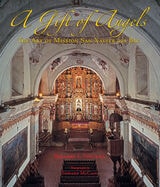
A Gift of Angels
The Art of Mission San Xavier del BacBernard L. Fontana; photographs by Edward McCain
University of Arizona Press, 2010
Mission San Xavier del Bac is a two-century-old Spanish church in southern Arizona located just a few miles from downtown Tucson, a metropolis of more than half a million people in the American Southwest. A National Historic Landmark since 1963, the mission’s graceful baroque art and architecture have drawn visitors from all over the world.
Now Bernard Fontana—the leading expert on San Xavier—and award-winning photographer Edward McCain team up to bring us a comprehensive view of the mission as we’ve never seen it before. With 200 stunning full-color photographs and incisive text illuminating the religious, historical, and motivational context of these images, A Gift of Angels is a must-have for tourists, scholars, and other visitors to San Xavier.
From its glorious architecture all the way down to the finest details of its art, Mission San Xavier del Bac is indeed a gift of angels.
A Guide to Tucson Architecture
Anne M. Nequette
University of Arizona Press, 2002
- walking and driving tours of fourteen areas, complete with maps, beginning with central neighborhoods such as Barrio Historico and Armory Park and moving on to the rapidly expanding outlying areas
- annotated descriptions of individual structures—residences, schools, churches, government buildings, offices, commercial establishments, and others—enhanced by more than 120 photographs
- profiles of prominent Tucson architects, including Henry Trost, Josias Joesler, and Judith Chafee
- a guide to architectural styles found in Tucson—with examples—and a glossary of terms. A Guide to Tucson Architecture is the only book to offer such an extensive guided tour of one of America's favorite destination cities, capturing both its historic character and its dynamic growth. Through it, readers will appreciate the holistic balance of influences that has created Tucson's unique architectural expression and that defines its modern identity.
A Land Apart
The Southwest and the Nation in the Twentieth CenturyFlannery Burke
University of Arizona Press, 2017
Winner, Spur Award for Best Contemporary Nonfiction (Western Writers of America)
A Land Apart is not just a cultural history of the modern Southwest—it is a complete rethinking and recentering of the key players and primary events marking the Southwest in the twentieth century. Historian Flannery Burke emphasizes how indigenous, Hispanic, and other non-white people negotiated their rightful place in the Southwest. Readers visit the region’s top tourist attractions and find out how they got there, listen to the debates of Native people as they sought to establish independence for themselves in the modern United States, and ponder the significance of the U.S.-Mexico border in a place that used to be Mexico. Burke emphasizes policy over politicians, communities over individuals, and stories over simple narratives.
Burke argues that the Southwest’s reputation as a region on the margins of the nation has caused many of its problems in the twentieth century. She proposes that, as they consider the future, Americans should view New Mexico and Arizona as close neighbors rather than distant siblings, pay attention to the region’s history as Mexican and indigenous space, bear witness to the area’s inequalities, and listen to the Southwest’s stories. Burke explains that two core parts of southwestern history are the development of the nuclear bomb and subsequent uranium mining, and she maintains that these are not merely a critical facet in the history of World War II and the militarization of the American West but central to an understanding of the region’s energy future, its environmental health, and southwesterners’ conception of home.
Burke masterfully crafts an engaging and accessible history that will interest historians and lay readers alike. It is for anyone interested in using the past to understand the present and the future of not only the region but the nation as a whole.
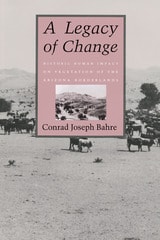
A Legacy of Change
Historic Human Impact on Vegetation in the Arizona BorderlandsConrad Joseph Bahre
University of Arizona Press, 1991
Geographer Conrad Bahre now challenges the view that these vegetation changes are due to climatic change. Correlating his own field research with archival records and photographs, Bahre demonstrates that most of the changes follow some type of human disturbance, such as cattle grazing, fuelwood cutting, wildfire suppression, agriculture, and road construction. Indeed, all available evidence suggests that Anglo settlement brought unprecedented changes to the land.
Vegetation change in the American West has long been an issue of concern. This careful scrutiny of one corner of that region—one of the most ecologically diverse areas of the United States—shows how poorly understood is the relationship between human activities and vegetation. More important, it introduces new techniques for differentiating between natural and anthropogenic factors effecting vegetation change that can be used to help ecologists understand vegetation dynamics worldwide.
A Marriage Out West
Theresa and Frank Russell’s Explorations in Arizona, 1900–1903Theresa Russell, Nancy J. Parezo, and Don D. Fowler
University of Arizona Press, 2020
During their brief marriage, the Russells surveyed almost all of Arizona Territory, traveling by horse over rugged terrain and camping in the back of a Conestoga wagon in harsh environmental conditions. Nancy J. Parezo and Don D. Fowler detail the grit and determination of the Russells’ unique collaboration over the course of three field seasons. Delivering the first biographical account of Frank Russell’s life, this book brings detail to his life and work from childhood until his death in 1903. Parezo and Fowler analyze the important contributions Theresa and Frank made to the bourgeoning field of archaeology and Akimel O’odham (Pima) ethnography. They also offer never-before-published information on Theresa’s life after Frank’s death and her subsequent career as a professor of English literature and philosophy at Stanford University.
In 1906 Theresa Russell published In Pursuit of a Graveyard: Being the Trail of an Archaeological Wedding Journey, a twelve-part serial in Out West magazine. Theresa’s articles constituted an experiential narrative based on field journals and remembrances of life in the northern Southwest. The work offers both a biography and a seasonal field narrative that emphasized personal experiences rather than traditional scientific field notes. Included in A Marriage Out West, Theresa’s writing provides an invaluable participant’s perspective of early 1900s American archaeology and ethnography and life out West.

A Passion for Freedom
The Life of Sharlot HallMargaret F. Maxwell
University of Arizona Press, 1982
A Place All Our Own
Lives Entwined in a Desert GardenMary Irish
University of Arizona Press, 2012
A Place Called Grand Canyon
Contested GeographiesBarbara J. Morehouse
University of Arizona Press, 1996
A Place for Dialogue
Language, Land Use, and Politics in Southern ArizonaSharon McKenzie Stevens
University of Iowa Press, 2007
In A Place for Dialogue, Sharon McKenzie Stevens views the contradictions and collaborations involved in the management of public land in southern Arizona—and by extension the entire arid West—through the lens of political rhetoric. Revealing the socioecological relationships among cattlemen and environmentalists as well as developers and recreationists, she analyzes the ways that language shapes landscape by shaping decisions about land use.
Stevens focuses on the collaborative Sonoran Desert Conservation Plan initiated by Pima County, Arizona, the ubiquitous use of scientific argument to defend contradictory practices, and the construction and negotiation of rancher/environmentalist identities to illuminate both literally and metaphorically the dynamics of land use politics. Drawing specifically upon extensive interviews with a diverse array of agents on all sides of the debate—ranchers, environmentalists, scientists, land managers, government officials—on historical narratives, and on her own conflicting experiences as someone who grew up with those who work the western lands, she demonstrates that it is possible to use differences to solve, rather than to aggravate, the entrenched problems that bridge land and language.
By integrating her richly textured case study of a fragile region with rhetorical approaches to narrative, science-based argument, and collective identities, Stevens makes a significant contribution to the fields of rhetoric, land management, and cultural studies.
A View From Black Mesa
The Changing Face of ArchaeologyGeorge J. Gumerman
University of Arizona Press, 1984
"In clear and nontechnical language it provides readers with a synopsis of Anasazi prehistory and cultural ecology. ...Gumerman's work is especially useful for anyone seeking an `on-site' introduction to some of the basic techniques and research orientations of modern American archaeology. Highly recommended for students and general readers." —Choice
"It should be read with thoughtful care by the `professional' archaeologist and ethnographer. And it will even more effectively serve the informed general reader, unconcerned with academic minutiae, through its fresh and direct exposition of the procedures, frustrations, and rewards of the calling." —The Kiva
"An outstanding success....a readable book that is suitable for professional archaeologists and the general public as well." —North American Archaeologist
"A readable book that is suitable for professional archaeologists and the general public." —North American Archaeologist
Adventures in the Apache Country
A Tour Through Arizona and Sonora, 1864J. Ross Browne
University of Arizona Press, 1974
Adventuring in Arizona
John Annerino
University of Arizona Press, 2003
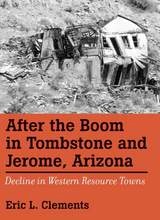
After The Boom In Tombstone And Jerome, Arizona
Decline In Western Resource TownsEric L. Clements
University of Nevada Press, 2014
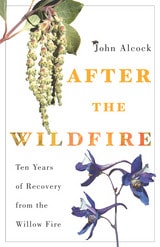
After the Wildfire
Ten Years of Recovery from the Willow FireJohn Alcock
University of Arizona Press, 2017
Swallowtail butterflies frolic on the wind. Vireos and rock wrens sing their hearts out by the recovering creek. Spiders and other predators chase their next meal. Through it all, John Alcock observes, records, and delights in what he sees. In a once-burnt area, life resurges. Plants whose seeds and roots withstood an intense fire become habitat for the returning creatures of the wild. After the Wildfire describes the remarkable recovery of wildlife in the Mazatzal Mountains in central Arizona.
It is the rare observer who has the dedication to revisit the site of a wildfire, especially over many years and seasons. But naturalist John Alcock returned again and again to the Mazatzals, where the disastrous Willow fire of 2004 burned 187 square miles. Documenting the fire’s aftermath over a decade, Alcock thrills at the renewal of the once-blackened region. Walking the South Fork of Deer Creek in all seasons as the years passed, he was rewarded by the sight of exuberant plant life that in turn fostered an equally satisfying return of animals ranging from small insects to large mammals.
Alcock clearly explains the response of chaparral plants to fire and the creatures that reinhabit these plants as they come back from a ferocious blaze: the great spreadwing damselfly, the western meadowlark, the elk, and birds and bugs of rich and colorful varieties. This book is at once a journey of biological discovery and a celebration of the ability of living things to reoccupy a devastated location. Alcock encourages others to engage the natural world—even one that has burnt to the ground.
Alliance and Landscape on Perry Mesa in the Fourteenth Century
David R. Abbott
University of Utah Press, 2014
Contributors to this volume examine the migration process under two explanatory frameworks: alliance and landscape. These frameworks are used to explore competing hypotheses, positing either a rapid colonization associated with an alliance organized for warfare at a regional scale, or a more protracted migration as this landscape became comparatively more attractive for migrating farmers in the late thirteenth century.
As the first major publication on the archaeology of Perry Mesa, this volume contributes to theoretical perspectives on migration and ethnogenesis, the study of warfare in the prehistoric Southwest, the study of intensive agricultural practices in a marginal environment, and the cultural history of a little studied and largely unknown portion of the ancient Southwest. It not only documents the migration but also the ensuing birth of a new ethnic identity that arose from the coalescence of diverse groups atop Perry Mesa.
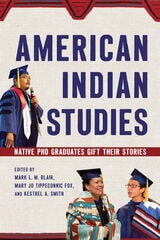
American Indian Studies
Native PhD Graduates Gift Their StoriesEdited by Mark L. M. Blair, Mary Jo Tippeconnic Fox, and Kestrel A. Smith
University of Arizona Press, 2022
In American Indian Studies, Native PhD graduates share their personal stories about their educational experiences and how doctoral education has shaped their identities, lives, relationships, and careers.
This collection of personal narratives from Native graduates of the University of Arizona’s American Indian Studies (AIS) doctoral program, the first such program of its kind, gifts stories of endurance and resiliency, hardship and struggle, and accomplishment and success. It provides insight into the diverse and dynamic experiences of Native graduate students. The narratives address family and kinship, mentorship, and service and giving back. Essayists share the benefits of having an AIS program at a mainstream academic institution—not just for the students enrolled but also for their communities.
This book offers Native students aspiring to a PhD a realistic picture of what it takes. While each student has their own path to walk, these stories provide the gift of encouragement and serve to empower Native students to reach their educational goals, whether it be in an AIS program or other fields of study.
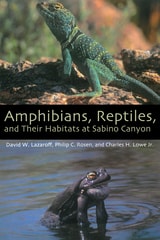
Amphibians, Reptiles, and Their Habitats at Sabino Canyon
David W. Lazaroff, Philip C. Rosen, and Charles H. Lowe, Jr.
University of Arizona Press, 2006
In this first publication to describe Sabino Canyon’s biota in scientific detail, three expert authors pool their knowledge to provide a detailed discussion of ecological change—especially as a consequence of drought, flooding, the introduction of exotic species, and direct human impact. Suburbia has arrived on the canyon’s doorstep, and human visitation has soared, inalterably affecting the area. Of particular concern, breeding habitats for amphibians were profoundly altered by flash flooding in Sabino’s streams following the 2003 Aspen Fire, which ravaged large parts of the Santa Catalina Mountains. The book contains richly detailed accounts of the 57 species found at Sabino—25 snakes, 17 lizards, 8 toads and frogs, 6 turtles, and 1 salamander—emphasizing their local ecology and the behavior likely to be witnessed by visitors. Physical descriptions and numerous photographs—many in color—facilitate identification. Up-to-date distribution maps provide an essential baseline against which future researchers can measure change.
Amphibians, Reptiles, and Their Habitats at Sabino Canyon is essential for anyone who seeks to understand this desert oasis, how it has changed, and how it may change in the future. Written with minimal technical jargon to make it as useful to students and visitors as it will be to scientists and resource managers, it makes a vital contribution to our understanding of creatures underfoot whose habitat we seek to share.

An Illustrated Guide to Arizona Weeds
Kittie F. Parker
University of Arizona Press, 1972

Angela Hutchinson Hammer
Arizona's Pioneer NewspaperwomanBetty E. Hammer Joy
University of Arizona Press, 2005
A true daughter of the West, Angela, born in a tiny mining hamlet in Nevada, came to the Territory of Arizona at the age of twelve. Betty Hammer Joy weaves together the lively story of her grandmother's life by drawing upon Angela's own prodigious writing and correspondence, newspaper archives, and the recollections of family members. Her book recounts the stories Angela told of growing up in mining camps, teaching in territorial schools, courtship, marriage, and a twenty-eight-year career in publishing and printing. During this time, Angela managed to raise three sons, run for public office before women in the nation had the right to vote, serve as Immigration Commissioner in Pinal County, homestead, and mature into an activist for populist agendas and water conservation. As questionable deals took place both within and outside the halls of government, the crusading Angela encountered many duplicitous characters who believed that women belonged at home darning socks, not running a newspaper.
Although Angela's independent papers brought personal hardship and little if any financial reward, after her death in 1952 the newspaper industry paid tribute to this courageous woman by selecting her as the first woman to enter the Arizona Newspaper Hall of Fame. In 1983 she was honored posthumously with another award for women who contributed to Arizona's progress—induction into the Arizona Women's Hall of Fame.
Annotated Checklist of the Birds of Arizona
Gale Monson and Allan R. Phillips
University of Arizona Press, 1981
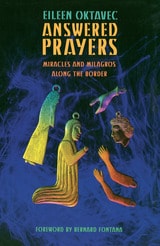
Answered Prayers
Miracles and Milagros along the BorderEileen Oktavec
University of Arizona Press, 1995
In Answered Prayers, the Mexicans, Mexican Americans, Tohono O'odham, and Yaquis who practice this tradition share their stories of unwavering faith and divine intervention. Anthropologist and photographer Eileen Oktavec has spent more than two decades documenting this fascinating tradition in the Arizona-Mexico borderlands. Quoting extensive interviews, she explains the beliefs of the people who perform this ancient folk ritual and the many rules guiding this practice. She also describes the many places where milagros are offered—from the elaborate Mexican baroque Mission San Xavier near Tucson, Arizona, to tiny household shrines and hospitals on both sides of the border. Oktavec also explains how milagros are made, where they are bought, and how they are used in jewelry, sculpture, and art.
Archaeological Explorations in Caves of the Point of Pines Region, Arizona
James C. Gifford
University of Arizona Press, 1980
Archaeological Observations North of the Rio Colorado
Neil M Judd
University of Utah Press, 2010
Archeological Observations North of the Rio Colorado was originally published in 1926 as part of the Smithsonian Institution’s Bureau of American Ethnology (Bulletin 82). It contains the report of six seasons of fieldwork undertaken by Neil M. Judd for the Bureau between 1915 and 1920 in western Utah and northwestern Arizona. The original investigation set out to examine alleged prehistoric sites near Beaver, Utah—specifically sites related to the “Pueblo ruins” found elsewhere in the Southwest. This in turn led to a much larger project, as there were more sites than expected recognized as having a cultural affinity with other prehistoric Puebloan sites. During these six years, Judd’s team covered a region from the Grand Canyon to the northern shore of the Great Salt Lake, east to the Green River and west into the deserts of Nevada.
This book is part of the University of Utah Press’s ongoing effort to reprint selected out-of-print volumes that apply directly to Utah archaeology, in an attempt to allow current students easier access and use of historic information. Owing to continued development, increased artifact collection, and on-going degradation, Utah archaeology is far different today than it was a century ago. The scientific works of these early archaeologists provide a glimpse of the variability that existed within sites and geographic areas in the early 1900s and gives a picture of Utah archaeology in an earlier era.
Archaeology As Anthropology
A Case StudyWilliam A. Longacre
University of Arizona Press, 1970
Arguing with Tradition
The Language of Law in Hopi Tribal CourtJustin B. Richland
University of Chicago Press, 2008
Like many indigenous legal institutions across North America, the Hopi Tribal Court was created in the image of Anglo-American-style law. But Richland shows that in recent years, Hopi jurists and litigants have called for their courts to develop a jurisprudence that better reflects Hopi culture and traditions. Providing unprecedented insights into the Hopi and English courtroom interactions through which this conflict plays out, Richland argues that tensions between the language of Anglo-style law and Hopi tradition both drive Hopi jurisprudence and make it unique. Ultimately, Richland’s analyses of the language of Hopi law offer a fresh approach to the cultural politics that influence indigenous legal and governmental practices worldwide.
Arizona Friend Trips
Stories from the RoadLisa Schnebly Heidinger and Julie Morrison
University of Arizona Press, 2025
Southwest Books of the Year Pick
In Arizona Friend Trips, Lisa Schnebly Heidinger and Julie Morrison invite readers to explore the state’s most cherished places through a blend of poetry, prose, and photography. From the iconic landmarks to hidden gems, each chapter of this captivating travelogue provides a rich tapestry of historical insight, personal anecdotes, and emotional reflections, painting a vivid portrait of Arizona’s diverse landscapes and vibrant culture. Be part of this unique journey as Lisa and Julie embark on an unforgettable adventure, filled with laughter, nostalgia, and a deep appreciation for the beauty of the Grand Canyon State.
Arizona Friend Trips is a celebration of friendship, discovery, and the enduring spirit of exploration. As Lisa and Julie share their favorite trips and formative experiences, readers are treated to an intimate glimpse into their lives, making this book a joyous and uplifting read for travelers and armchair explorers alike. Whether you're planning your own Arizona adventure or simply yearning to wander from the comfort of home, Arizona Friend Trips promises to inspire, delight, and leave you longing for the open road.

Arizona Goes to War
The Home Front and the Front Lines during World War IIBrad Melton
University of Arizona Press, 2003
Arizona Goes to War takes readers back to a time when military installations sprang up all over the state as thousands of airmen arrived to train in Arizona's clear desert skies, and when soldiers destined for North Africa came to get their first taste of desert sands. In its pages, readers will learn not only of the green recruits who passed through Arizona, but also of the state's Native Americans who registered for the draft in record numbers, of Japanese Americans unjustly incarcerated in desert detention centers, and of ordinary citizens who did their bit for the war effort. Included in the book are some of World War II's most incredible stories, such as the testing of tank engines in Arizona dust storms for the North Africa campaign, the interrogation of Japanese consular diplomats from Honolulu at the Triangle T Guest Ranch near Dragoon, and the escape of 25 German POWs from a detention camp outside of Phoenix—called the greatest escape by Axis prisoners from a U.S. compound during the war. A separate chapter pays tribute to Arizona's war heroes: not only Silvestre Herrera, but also fighter ace Grant Turley, Midway hero John C. Butler, and Pima Indian Ira Hayes, who helped raise the flag on Iwo Jima. A host of profiles and sidebars bring people and events of the wartime era to life, and a useful appendix provides a traveler's guide to Arizona's World War II sites.
World War II may have transformed Arizona more than it did any other state; not only did Arizona's industry blossom, its population did as well when servicemen who had been stationed there returned to put down stakes. Arizona Goes to War recaptures the glory and spirit of that era and reminds us that the people who lived through those years are well worth commemorating.

Arizona Place Names
Will Croft Barnes
University of Arizona Press, 1988
For this first toponymic encyclopedia of Arizona, Barnes compiled information from published histories, federal and state government documents, and reminiscences of "old timers, Indians, Mexicans, cowboys, sheep-herders, historians, any and everybody who had a story to tell as to the origin and meaning of Arizona names." The result is a book chock full of oddments, humor, and now-forgotten lore, which belongs on the night table as well as in the glove compartment.
Barnes' original Arizona Place Names has become a booklover's favorite and is much in demand. The University of Arizona Press is pleased to reissue this classic of Arizoniana, which remains as useful and timeless as it was more than half a century ago.

Arizona Politicians
The Noble and the NotoriousJames W. Johnson; Illustrations by David "Fitz" Fitzsimmons
University of Arizona Press, 2002
—A car dealer who propelled himself to the governor's mansion with the help of public recognition of his TV commercials
—An Arizonan who served not only as governor and chief justice of the Arizona Supreme Court, but also as the Majority Leader of the U.S. Senate and chief sponsor of the GI Bill
—A cowboy who delivered speeches to ranchhands and went on to become a U.S. senator known as one of the great orators of the twentieth century
—One of four Arizonans who lost a bid for the presidency yet made the Gallup Poll as one of the ten most admired men in the world
—A secretary who became the first woman in the nation to sit on a state supreme court
Journalist James Johnson has written profiles of 21 men and women from Arizona who have made their mark in the political arena. Chosen for their contributions to the state, their national prominence, their colorful personalities, and in some cases their notoriety, these prominent public servants—from first governor George W. P. Hunt to current senior senator McCain—all have been major participants in state or national affairs. Congressman Mo Udall once commented on Arizona's "civilized brand of politics," in which Republicans and Democrats, conservatives and liberals, treated one another with mutual respect. Johnson conveys both the spirit and spiritedness of Arizona politics and reveals how in many cases these politicians and their family members found their lives and careers overlapping. He tells their stories with humor and objectivity, while political cartoonist David Fitzsimmons captures their trademark styles in original drawings.
Although the individuals may speak from different platforms, all have been proud to call themselves Arizonans and proud to serve their state. This book shares their accomplishments and shows how, for better or worse, they've helped put Arizona in the spotlight.
Arizona Soils
David M. Hendricks
University of Arizona Press, 1985
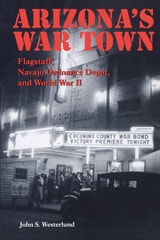
Arizona's War Town
Flagstaff, Navajo Ordnance Depot, and World War IIJohn S. Westerlund
University of Arizona Press, 2003
A clearing in the ponderosa pine forest called Volunteer Prairie met the military's criteria for a munitions depot—open terrain, a cool climate, plentiful water, and proximity to a railroad—and it was also sufficiently inland to be safe from the threat of coastal invasion. Constructing a depot of 800 ammunition bunkers, each the size of a 2,000-square-foot home, called for a force of 8,000 laborers, and Flagstaff became a boom town overnight as construction workers and their families poured in from nearby Indian reservations and as far away as the Midwest and South. More than 2,000 were retained as permanent employees—a larger workforce than Flagstaff's total pre-war employment roster.
As Westerlund's portrait of wartime Flagstaff shows, prosperity brought unanticipated consequences: racism simmered beneath the surface of the town as ethnic groups were thrown together for the first time; merchants called a city-wide strike to protest emerging union activity; juvenile delinquency rose dramatically; Flagstaff women entered the workforce in unprecedented numbers, altering local mores along with their own plans for the future; meanwhile, hundreds of sailors and marines arrived at Arizona State Teachers College to participate in the Navy's "V-12" program. Whether recounting the difficulty of 3,500 Navajo and Hopi employees adjusting to life off the reservation or the complaints of townspeople that Austrian POWs-transferred to the depot to ease the labor shortage-were treated too well, Westerlund shows that the construction and maintenance of the facility was far more than a military matter.
Navajo Ordnance Depot remained operational to support wars in Korea, Vietnam, and the Persian Gulf, and today Camp Navajo provides storage for thousands of deactivated ICBM motors. But in recounting its early days, Westerlund has skillfully blended social and military history to vividly portray not only a city's transitional years but also the impact of military expansion on economic and community development in the American West.
Arizona
A History, Revised EditionThomas E. Sheridan
University of Arizona Press, 2012
Hailed as a model state history thanks to Thomas E. Sheridan's thoughtful analysis and lively interpretation of the people and events shaping the Grand Canyon State, Arizona has become a standard in the field. Now, just in time for Arizona's centennial, Sheridan has revised and expanded this already top-tier state history to incorporate events and changes that have taken place in recent years. Addressing contemporary issues like land use, water rights, dramatic population increases, suburban sprawl, and the US-Mexico border, the new material makes the book more essential than ever. It successfully places the forty-eighth state's history within the context of national and global events. No other book on Arizona history is as integrative or comprehensive.
From stone spear points more than 10,000 years old to the boom and bust of the housing market in the first decade of this century, Arizona: A History explores the ways in which Native Americans, Hispanics, African Americans, Asians, and Anglos have inhabited and exploited Arizona. Sheridan, a life-long resident of the state, puts forth new ideas about what a history should be, embracing a holistic view of the region and shattering the artificial line between prehistory and history. Other works on Arizona's history focus on government, business, or natural resources, but this is the only book to meld the ethnic and cultural complexities of the state's history into the main flow of the story.
A must read for anyone interested in Arizona's past or present, this extensive revision of the classic work will appeal to students, scholars, and general readers alike.
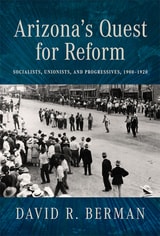
Arizona’s Quest for Reform
Socialists, Unionists, and Progressives, 1900–1920David R. Berman
University of Arizona Press, 2026
In Arizona’s Quest for Reform, David R. Berman traces the rise and fall of a dynamic coalition of socialists, labor activists, and progressive Democrats led by the influential Governor George Hunt as they pursued sweeping reforms in a rapidly changing state. From the fight for workers’ rights and women’s suffrage to the use of the initiative process and the role of radical newspapers, Berman brings to life the people and movements that shaped Arizona’s early political identity.
Drawing on extensive primary sources and organized in a clear chronological structure, Berman’s study reveals the tensions, alliances, and dramatic events that defined Arizona’s reform efforts between 1900 and 1920. The book explores the impact of powerful mining interests, railroad companies, and labor unions, while also examining the racialization of Mexican miners and their evolving role in the labor movement. Through vivid storytelling and rigorous scholarship, Berman uncovers the complexities of political change in a state straddling the transition from territory to statehood.
This landmark work will appeal to scholars of western history, labor studies, and political science, as well as general readers interested in Arizona’s unique place in the national Progressive movement. Arizona’s Quest for Reform not only deepens our understanding of the past but also offers timely insights into the enduring challenges of coalition building, grassroots activism, and political reform. It is a vital contribution to the study of Arizona and the American West.
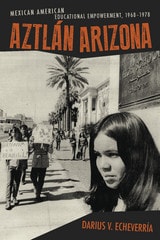
Aztlán Arizona
Mexican American Educational Empowerment, 1968–1978Darius V. Echeverría
University of Arizona Press, 2014
The word Aztlán, originally meaning the legendary ancestral home of the Nahua peoples of Mesoamerica, was adopted as a symbol of independence by Chicano/a activists during the movement of the 1960s and 1970s. In an era when poverty, prejudice, and considerable oppositional forces blighted the lives of roughly one-fifth of Arizonans, the author argues that understanding those societal realities is essential to defining the rise and power of the Chicano Movement.
The book illustrates how Mexican American communities fostered a togetherness that ultimately modified larger Arizona society by revamping the educational history of the region. The concluding chapter outlines key Mexican American individuals and organizations that became politically active in order to address Chicano educational concerns. This Chicano unity, reflected in student, parent, and community leadership organizations, helped break barriers, dispel the Mexican American inferiority concept, and create educational change that benefited all Arizonans.
No other scholar has examined the emergence of Chicano Movement politics and its related school reform efforts in Arizona. Echeverría’s thorough research, rich in scope and interpretation, is coupled with detailed and exact endnotes. The book helps readers understand the issues surrounding the Chicano Movement educational reform and ethnic identity. Equally important, the author shows how residual effects of these dynamics are still pertinent today in places such as Tucson.