Results by title
490 books match the query 'Asian' and 31 start with a
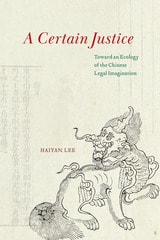
A Certain Justice
Toward an Ecology of the Chinese Legal ImaginationHaiyan Lee
University of Chicago Press, 2023
To many outsiders, China has an image as a realm of Oriental despotism where law is at best window dressing and at worst an instrument of coercion and tyranny. In this highly original contribution to the interdisciplinary field of law and humanities, Haiyan Lee contends that this image arises from a skewed understanding of China’s political-legal culture, particularly the failure to distinguish what she calls high justice and low justice.
In the Chinese legal imagination, Lee shows, justice is a vertical concept, with low justice between individuals firmly subordinated to the high justice of the state. China’s political-legal culture is marked by a mistrust of law’s powers, and as a result, it privileges substantive over procedural justice. Calling on a wide array of narratives—stories of crime and punishment, subterfuge and exposé, guilt and redemption—A Certain Justice helps us recognize the fight for justice outside the familiar arenas of liberal democracy and the rule of law.

A Fan’s Votes
Mass Democratic Politics as Spectator SportDavid Henkin
Prickly Paradigm Press, 2027
A Fictional Commons
Natsume Soseki and the Properties of Modern LiteratureMichael K. Bourdaghs
Duke University Press, 2021
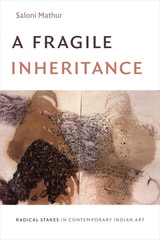
A Fragile Inheritance
Radical Stakes in Contemporary Indian ArtSaloni Mathur
Duke University Press, 2019
A History of the People’s Action Party, 1985-2021
Shashi Jayakumar
National University of Singapore Press, 2020
This narrative history of the PAP follows the story through decisions made by party leaders as they sought to respond to the changing demands and expectations of the Singapore electorate over a thirty-year period that saw Singapore enter the ranks of developed nations. The focus is on change in four dimensions: in the communications methods and styles the party adopted, the mechanisms it developed for managing institutional change, the sometimes vexed question of party renewal, and the evolution of economic and social policy. Drawing on internal party documents and multiple interviews with key leaders over the course of a decade, this book provides a detailed portrait of a robust political institution and establishes a distinctive new narrative of Singapore politics.
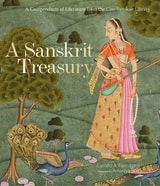
A Sanskrit Treasury
A Compendium of Literature from the Clay Sanskrit LibraryCamillo A. Formigatti
Bodleian Library Publishing, 2020
A Technomoral Politics
Good Governance, Transparency, and Corruption in IndiaAradhana Sharma
University of Minnesota Press, 2024
Examining anticorruption battles and transparency laws to ask: what makes for good governance, and can it limit liberal democratic politics as much as encourage it?
Good governance is meant to empower citizens, increase democratic participation, and make states transparent and accountable, yet this liberal democratic imperative can also promote populist authoritarian rule. Bringing together discourses on ethical goodness with the technicalities of governance as expressed in laws and policies, Aradhana Sharma develops the concept of “technomoral politics” to navigate this fraught topic. With a focus on the work of activists, citizens, and state officials, she offers an ethnographic account of the contradictions and dangers of good-governance politics in twenty-first-century India.
A Technomoral Politics follows the evolution of a group of activists in New Delhi led by Arvind Kejriwal from 2008 to 2014 as they morphed from a protransparency NGO to a mass movement against state corruption to a populist party that promised to change the political system through laws and policies. Sharma explores the technomoral framing of state opacity and corruption as well as the limits of the law in resolving these issues, probing such themes as the contradictory relationship between transparency and bureaucracy and the classed and gendered nature of democratic state institutions.
By examining scalar dimensions of good-governance politics, from the hyperlocal work of activists to global trends, A Technomoral Politics illuminates the paradoxes, limits, and risks of a system that is meant to spread liberal democratic principles but that also ends up promoting antidemocratic, populist-authoritarian forms of rule.
Retail e-book files for this title are screen-reader friendly.
A Thousand Cranes for India
Reclaiming Plurality Amid HatredEdited by Pallavi Aiyar
Seagull Books, 2020
This anthology uses origami cranes as a way for some of India’s best-known writers, poets, and artists to form a shared civic space for a conversation about the fault lines in India at a time of darkness. The twenty-three pieces collected here encompass reportage, stories, poems, memoir, and polemic—the kind of complex and enriching diversity that India demands and deserves. The paper crane becomes a motif of connection, beauty, and reclamation in an otherwise degraded country, enabling those who fight with words to become the best army they can be.
A Thousand Steps to Parliament
Constructing Electable Women in MongoliaManduhai Buyandelger
University of Chicago Press, 2022
Mongolia has often been deemed an “island of democracy,” commended for its rapid adoption of free democratic elections in the wake of totalitarian socialism. The democratizing era, however, brought alongside it a phenomenon that Manduhai Buyandelger terms “electionization”—a restructuring of elections from time-grounded events into a continuous neoliberal force that governs everyday life beyond the electoral period. In this way, electoral campaigns have come to substitute for the functions of governing, from social welfare to the private sector, requiring an accumulation of wealth and power beyond the reach of most women candidates. In A Thousand Steps to Parliament, Buyandelger shows how successful women candidates instead use strategies of self-polishing to cultivate charisma and a reputation for being oyunlag, or intellectful. This carefully crafted identity can be called the “electable self”: treating their bodies and minds as pliable and renewable, women candidates draw from the same practices of neoliberalism that have unsustainably commercialized elections. By tracing the complicated, contradictory paths to representation that women in Mongolia must walk, A Thousand Steps to Parliament holds a mirror up to democracies the world over, revealing an urgent need to grapple with the encroaching effects of neoliberalism in our global political systems.
A Wise One, a Warrior
Meena Kandasamy
Diaphanes, 2025
Meena Kandasamy writes about the Mithuna couple, a seventeenth-century ivory sculpture from Tamil Nadu, India, depicting lovers. Kandasamy unfurls a multi-layered, multi-directional narrative built from images, questions, and contradictions evoked by the sculpture. “How can we look at this work and not talk about who produced it?” Kandasamy asks and then examines how caste and class are carved into the object as indelibly as its physical details. Such knowledge complicates easy associations of love that may be evoked by the couple.
Refusing any impulse to idealize or exoticize, Kandasamy connects the carving to personal and political stories that expose painful realities of who gets to love whom, and how. She sets the intimate alongside the institutional to interrogate terms such as decolonize, restitution, and preservation. Through an astonishing stylistic mix, including Twitter, academic discourse, poetry, and memoir, she talks back, forward, and sideways with the object.
Across Continents
Writing Goans, Making WorldsR. Benedito Ferrão
University of Michigan Press, 2026
Across Continents employs Goan literary subjectivity as epistemology to critique a specific limitation of postcolonial thought, one that does not account for the situations or afterlife of Portuguese colonialism. Employing various novels, R. Benedito Ferrão considers the relationship between Portuguese and British colonialisms through the displacement of Goan characters betwixt Asia, Africa, Europe, and North America. The experiences of these figures in dealing with the processes of nation, statecraft, and political intrigue at various historical junctures offer a comparative understanding of the tumultuous conditions of postcoloniality in the making of marginalized subjectivity across continents.
In examining the mobility and diversity of Goan experiences as represented in works by Salman Rushdie, M. G. Vassanji, Roger King, and Margaret Mascarenhas, this book calls into question limits of citizenship, nationality, and notions of belonging. Ferrão centers seemingly minor figures to exemplify the effects of colonial and postcolonial changes that connect diverse geopolities.

All There Is to Lose
Aiden Heung
Four Way Books, 2026
Marking Aiden Heung’s debut collection, All There Is to Lose is the 2024 winner of the Four Way Books Levis Prize in Poetry. The selecting judge, National Book Award Finalist Ilya Kaminsky, praises the resonant particularities and depth of feeling found in these poems, which convert “elegy [into] its driving force.” Poet and Critic Felicity Plunkett observes, “Dreams and memory move through these porous, venturesome poems. The spectral jostles with the sensual to tell ‘a story in which I could be found.’ Achily tender, they open to light, love and the jab of a joke.” Poet David Tait notes, “Unsettling and luminous, the poems preserve the memory of Village 915: its volatile seasons and hard-worn inhabitants, its headstones, spirits, and myriad forms of water. Here you’ll find not only poems of lyrical beauty, but of grim exactness.” The result is a stunning achievement of a first book, what Kaminsky identifies as an exemplar of “that ages-old mode of poetry wherein the poet uses language to break bread with the dead, to bring them back to life, if only for the moment, for a portion of the moment, an instant, before the line breaks.” Channeling the poet as medium, “I am the tension on the bow that draws the arrow,” Heung writes in “Epilogue.” “To lose myself — that is my destiny.”
Ambient Media
Japanese Atmospheres of SelfPaul Roquet
University of Minnesota Press, 2016
Ambient Media examines music, video art, film, and literature as tools of atmospheric design in contemporary Japan, and what it means to use media as a resource for personal mood regulation. Paul Roquet traces the emergence of ambient styles from the environmental music and Erik Satie boom of the 1960s and 1970s to the more recent therapeutic emphasis on healing and relaxation.
Focusing on how an atmosphere works to reshape those dwelling within it, Roquet shows how ambient aesthetics can provide affordances for reflective drift, rhythmic attunement, embodied security, and urban coexistence. Musicians, video artists, filmmakers, and novelists in Japan have expanded on Brian Eno’s notion of the ambient as a style generating “calm, and a space to think,” exploring what it means to cultivate an ambivalent tranquility set against the uncertain horizons of an ever-shifting social landscape. Offering a new way of understanding the emphasis on “reading the air” in Japanese culture, Ambient Media documents both the adaptive and the alarming sides of the increasing deployment of mediated moods.
Arguing against critiques of mood regulation that see it primarily as a form of social pacification, Roquet makes a case for understanding ambient media as a neoliberal response to older modes of collective attunement—one that enables the indirect shaping of social behavior while also allowing individuals to feel like they are the ones ultimately in control.

Ambivalent Desires
Affect and Boys Love in ChinaLiang Ge
University of Michigan Press, 2027
Ambivalent Desires carefully investigates Chinese danmei creators’ and fans’ everyday affective experiences in the dynamic yet ambivalent boys love cultural ecology of China. Emerging in mainland China in the late 1990s and flourishing in the 2010s, danmei, also known as boys love fiction, is a genre that features male-male romances or erotica. This book offers a rich, empirically grounded account of danmei, examining the complex and embodied lived experiences of those producing and consuming male homoeroticism and framing ambivalence as an ongoing queer feminist project.
Proposing a novel theoretical framework of “the grammar of ambivalences,” Liang Ge seeks to understand how desires, affects, and queer feminist politics operate within and against the everyday heteropatriarchal and party-state conditions of postsocialist China. Ambivalent Desires attends simultaneously to the backward-looking normativities infused within danmei culture and the forward-facing transformative potential it generates, refusing the reductive binary of resistance versus escapism that has structured much existing scholarship.
America's Vietnam
The Longue Durée of U.S. Literature and EmpireMarguerite Nguyen
Temple University Press, 2018
America’s Vietnam challenges the prevailing genealogy of Vietnam’s emergence in the American imagination—one that presupposes the Vietnam War as the starting point of meaningful Vietnamese-U.S. political and cultural involvements. Examining literature from as early as the 1820s, Marguerite Nguyen takes a comparative, long historical approach to interpreting constructions of Vietnam in American literature. She analyzes works in various genres published in English and Vietnamese by Monique Truong and Michael Herr as well as lesser-known writers such as John White, Harry Hervey, and Võ Phiến. The book’s cross-cultural prism spans Paris, Saigon, New York, and multiple oceans, and its departure from Cold War frames reveals rich cross-period connections.
America’s Vietnam recounts a mostly unexamined story of Southeast Asia’s lasting and varied influence on U.S. aesthetic and political concerns. Tracking Vietnam’s transition from an emergent nation in the nineteenth century to a French colony to a Vietnamese-American war zone, Nguyen demonstrates that how authors represent Vietnam is deeply entwined with the United States’ shifting role in the world. As America’s longstanding presence in Vietnam evolves, the literature it generates significantly revises our perceptions of war, race, and empire over time.
An Innocent Abroad
Lectures in ChinaJ. Hillis Miller
Northwestern University Press, 2015
Since 1988, J. Hillis Miller has traveled to China to lecture on literary theory, especially the role of globalization in literary theory. Over time, he has assisted in the development of distinctively Chinese forms of literary theory, Comparative Literature, and World Literature. The fifteen lectures gathered in An Innocent Abroad span both time and geographic location, reflecting his work at universities across China for more than twenty-five years. More important, they reflect the evolution of Miller’s thinking and of the lectures’ contexts in China as these have markedly changed over the years, especially on either side of Tiananmen Square and in light of China’s economic growth and technological change. A foreword by the leading theorist Fredric Jameson provides additional context.
Anglophone Poetry in Colonial India, 1780–1913
A Critical AnthologyMary Ellis Gibson
Ohio University Press, 2011
Anglophone Poetry in Colonial India, 1780–1913: A Critical Anthology makes accessible for the first time the entire range of poems written in English on the subcontinent from their beginnings in 1780 to the watershed moment in 1913 when Rabindranath Tagore won the Nobel Prize in Literature.Mary Ellis Gibson establishes accurate texts for such well-known poets as Toru Dutt and the early nineteenth-century poet Kasiprasad Ghosh. The anthology brings together poets who were in fact colleagues, competitors, and influences on each other. The historical scope of the anthology, beginning with the famous Orientalist Sir William Jones and the anonymous “Anna Maria” and ending with Indian poets publishing in fin-de-siècle London, will enable teachers and students to understand what brought Kipling early fame and why at the same time Tagore’s Gitanjali became a global phenomenon. Anglophone Poetry in Colonial India, 1780–1913 puts all parties to the poetic conversation back together and makes their work accessible to American audiences.With accurate and reliable texts, detailed notes on vocabulary, historical and cultural references, and biographical introductions to more than thirty poets, this collection significantly reshapes the understanding of English language literary culture in India. It allows scholars to experience the diversity of poetic forms created in this period and to understand the complex religious, cultural, political, and gendered divides that shaped them.

Anime’s Media Mix
Franchising Toys and Characters in JapanMarc Steinberg
University of Minnesota Press, 2012
In Anime’s Media Mix, Marc Steinberg convincingly shows that anime is far more than a style of Japanese animation. Beyond its immediate form of cartooning, anime is also a unique mode of cultural production and consumption that led to the phenomenon that is today called “media mix” in Japan and “convergence” in the West.
According to Steinberg, both anime and the media mix were ignited on January 1, 1963, when Astro Boy hit Japanese TV screens for the first time. Sponsored by a chocolate manufacturer with savvy marketing skills, Astro Boy quickly became a cultural icon in Japan. He was the poster boy (or, in his case, “sticker boy”) both for Meiji Seika’s chocolates and for what could happen when a goggle-eyed cartoon child fell into the eager clutches of creative marketers. It was only a short step, Steinberg makes clear, from Astro Boy to Pokémon and beyond.
Steinberg traces the cultural genealogy that spawned Astro Boy to the transformations of Japanese media culture that followed—and forward to the even more profound developments in global capitalism supported by the circulation of characters like Doraemon, Hello Kitty, and Suzumiya Haruhi. He details how convergence was sparked by anime, with its astoundingly broad merchandising of images and its franchising across media and commodities. He also explains, for the first time, how the rise of anime cannot be understood properly—historically, economically, and culturally—without grasping the integral role that the media mix played from the start. Engaging with film, animation, and media studies, as well as analyses of consumer culture and theories of capitalism, Steinberg offers the first sustained study of the Japanese mode of convergence that informs global media practices to this day.
Antiquarians of Nineteenth-Century Japan
The Archaeology of Things in the Late Tokugawa and Early Meiji PeriodsHiroyuki Suzuki
J. Paul Getty Trust, The, 2022
Originally published in Japanese, Antiquarians of Nineteenth-Century Japan looks at the approach toward object-based research across the late Tokugawa and early Meiji periods, which were typically kept separate, and elucidates the intellectual continuities between these eras. Focusing on the top-down effects of the professionalizing of academia in the political landscape of Meiji Japan, which had advanced by attacking earlier modes of scholarship by antiquarians, Suzuki shows how those outside the government responded, retracted, or challenged new public rules and values. He explores the changing process of evaluating objects from the past in tandem with the attitudes and practices of antiquarians during the period of Japan’s rapid modernization. He shows their roots in the intellectual sphere of the late Tokugawa period while also detailing how they adapted to the new era. Suzuki also demonstrates that Japan’s antiquarians had much in common with those from Europe and the United States.
Art historian Maki Fukuoka provides an introduction to the English translation that highlights the significance of Suzuki’s methodological and intellectual analyses and shows how his ideas will appeal to specialists and nonspecialists alike.
Aquinas and the Early Chinese Masters
Chinese Philosophy and Catholic TheologyJoshua Brown
Catholic University of America Press, 2025

Arranging Marriage
Conjugal Agency in the South Asian DiasporaMarian Aguiar
University of Minnesota Press, 2018
The first critical analysis of contemporary arranged marriage among South Asians in a global context
Arranged marriage is an institution of global fascination—an object of curiosity, revulsion, outrage, and even envy. Marian Aguiar provides the first sustained analysis of arranged marriage as a transnational cultural phenomenon, revealing how its meaning has been continuously reinvented within the South Asian diaspora of Britain, the United States, and Canada. Aguiar identifies and analyzes representations of arranged marriage in an interdisciplinary set of texts—from literary fiction and Bollywood films, to digital and print media, to contemporary law and policy on forced marriage.
Aguiar interprets depictions of South Asian arranged marriage to show we are in a moment of conjugal globalization, identifying how narratives about arranged marriage bear upon questions of consent, agency, state power, and national belonging. Aguiar argues that these discourses illuminate deep divisions in the processes of globalization constructed on a fault line between individualist and collectivist agency and in the process, critiques neoliberal celebrations of “culture as choice” that attempt to bridge that separation. Aguiar advocates situating arranged marriage discourses within their social and material contexts so as to see past reductive notions of culture and grasp the global forces mediating increasingly polarized visions of agency.
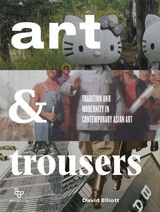
Art and Trousers
Tradition and Modernity in Contemporary Asian ArtDavid Elliott
National University of Singapore Press, 2021
An illustrated collection of more than thirty essays and 640 color images, Art and Trousers moves deftly between regional analysis, portraits of individual artists, and a metaphorical history of trousers. This book presents a panoramic view of modern and contemporary Asian art, varying its focus on the impacts of invention, tradition, exchange, colonization, politics, social development, and gender. David Elliott spotlights the practice of many leading global artists of the early twenty-first century, including Hiroshi Sugimoto, Cai Guo-Qiang, Ai Weiwei, Xu Bing, Rashid Rana, Bharti Kher, Makoto Aida, Chatchai Puipia, and Yeesookyung, among many others. Art and Trousers offers insight into the development of a key curatorial practice for our times, and it will be an essential resource for anyone seeking to understand contemporary art and the way it operates across borders.
Art for a Modern India, 1947-1980
Rebecca M. Brown
Duke University Press, 2009
Through close analyses of specific objects of art and design, Brown describes how Indian artists engaged with questions of authenticity, iconicity, narrative, urbanization, and science and technology. She explains how the filmmaker Satyajit Ray presented the rural Indian village as a socially complex space rather than as the idealized site of “authentic India” in his acclaimed Apu Trilogy, how the painter Bhupen Khakhar reworked Indian folk idioms and borrowed iconic images from calendar prints in his paintings of urban dwellers, and how Indian architects developed a revivalist style of bold architectural gestures anchored in India’s past as they planned the Ashok Hotel and the Vigyan Bhavan Conference Center, both in New Delhi. Discussing these and other works of art and design, Brown chronicles the mid-twentieth-century trajectory of India’s modern visual culture.
Art, Trade, and Culture in the Islamic World and Beyond
From the Fatimids to the MughalsEdited by Alison Ohta, Michael Rogers, and Rosalind Wade Haddon
Gingko, 2016
The essays range across a variety of topics. These include a look at tile production during the reign of the Qaytbay, the book bindings associated with Qansuh al-Ghuri, and the relationship between Mamluk metalwork and that found in Rasulid Yemen and Italy. Several essays examine inscriptions found on buildings of the Fatimid, Mamluk, and Ottoman periods, and others look at the debt of European lacquer works to Persian craftsmen, the Armenian patrons of eighteenth-century Chinese exports, and the influences of Islam on art and architecture found all across India. The result is a sweeping but deeply researched look at one of the richest networks of artistic traditions the world has ever known.
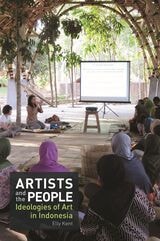
Artists and the People
Ideologies of Art in IndonesiaElly Kent
National University of Singapore Press, 2022
Exploring the work of established and emerging artists in Indonesia’s vibrant art world, this book examines why so many artists in the world’s largest archipelagic nation choose to work directly with people in their art practices. While the social dimension of Indonesian art makes it distinctive in the globalized world of contemporary art, Elly Kent is the first to explore this engagement in Indonesian terms. What are the historical, political, and social conditions that lie beneath these polyvalent practices? How do formal and informal institutions, communities, and artist-run initiatives contribute to the practices and discourses behind socially engaged art in Indonesia? Drawing on interviews with artists, translations of archival material, visual analyses, and participation in artists’ projects, this book presents a unique, interdisciplinary examination of ideologies of art in Indonesia.
Asian American Poetry
THE NEXT GENERATIONEdited by Victoria M. Chang
University of Illinois Press, 2004

Asian Mythologies
Edited by Yves Bonnefoy
University of Chicago Press, 1993
"The almost 100 contributors combine, with characteristic precision and élan, the arts of science and poetry, of analysis and translation. The result is a treasury of information, brilliant guesswork, witty asides, and revealing digressions. This is a work of genuine and enduring excitement."—Thomas D'Evelyn, Christian Science Monitor
Asianisms
Regionalist Interactions and Asian IntegrationEdited by Marc Frey and Nicola Spakowski
National University of Singapore Press, 2015
This book investigates the multifarious discursive and material constructions of Asia within the region and in the West. It reconstructs regional constellations, intersections and relations in their national, transnational and global contexts. Moving far beyond the more well-known Japanese Pan-Asianism of the first half of the twentieth century, the chapters investigate visions of Asia that have sought to provide common meanings and political projects in efforts to trace, and construct, Asia as a united and common space of interaction. By tracing the imagination of civil society actors throughout Asia, the volume leaves behind state-centered approaches to regional integration and uncovers the richness and depth of complex identities within a large and culturally heterogeneous space.
Assembling Ethnicities in Neoliberal Times
Ethnographic Fictions and Sri Lanka’s WarNimanthi Perera-Rajasingham
Northwestern University Press, 2019
Assembling Ethnicities in Neoliberal Times: Ethnographic Fictions and Sri Lanka’s War argues that the bloody war fought between the Sri Lankan state and the separatist Tamil Tigers from 1983 to 2009 should be understood as structured and animated by the forces of global capitalism. Using Aihwa Ong’s theorization of neoliberalism as a mobile technology and assemblage, this book explores how contemporary globalization has exacerbated forces of nationalism and racism.
Nimanthi Perera-Rajasingham finds that ethnographic fictions have both internalized certain colonial Orientalist impulses and critically engaged with categories of objective gazing, empiricism, and temporal distancing. She demonstrates that such fictions take seriously the task of bearing witness and documenting the complex productions of ethnic identities and the devastations wrought by warfare. To this end, Assembling Ethnicities
explores colonial-era travel writing by Robert Knox (1681) and Leonard Woolf (1913); contemporary works by Michael Ondaatje, Romesh Gunesekera, Shobasakthi, Dharmasiri Bandaranayake, and Thamotharampillai Shanaathanan; and cultural festivals and theater, including vernacular performances of Euripides’s The Trojan Women and women workers’ theater.
The book interprets contemporary fictions to unpack neoliberalism’s entanglements with nationalism and racism, engaging current issues such as human rights, the pastoral, Tamil militancy, immigrant lives, feminism and nationalism, and postwar developmentalism.
At the Pivot of East and West
Ethnographic, Literary, and Filmic ArtsMichael M. J. Fischer
Duke University Press, 2023
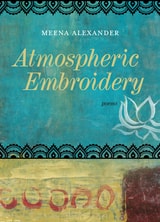
Atmospheric Embroidery
PoemsMeena Alexander
Northwestern University Press, 2018
In this haunting collection of poems we travel through zones of violence to reach the crystalline depths of words: Meena Alexander writes, "So landscape becomes us, / Also an interior space bristling with light." At the heart of this book is the poem cycle "Indian Ocean Blues," a sustained meditation on the journey of the poet as a young child from India to Sudan. There are poems inspired by the drawings of children from war-torn Darfur and others set in present-day New York City. These sensual lyrics of body, memory, and place evoke the fragile, shifting nature of dwelling in our times.