Results by title
165 books match the query 'Caribbean Area' and 17 start with a
A Conditional Embrace
Black Queer Feminism in PerformanceKristyl D. Tift
The Ohio State University Press, 2026
In A Conditional Embrace, Kristyl D. Tift seeks to understand how Black queer women theater and film artists depict their own survival in heterosexist temporalities and spaces. Using the framework of lovin’ on—a theory inspired by Black feminist thought, performance theory, and queer theory—Tift closely reads the works of a selection of artists to investigate the “conditional embrace” of Black queer art in society. Her intersectional and intertextual methodology considers the text and body as part and parcel of performance work, allowing her to examine the multiple and complex intersections of identity at play in works meant to be read and performed. Tift puts the work of more visible artists such as Dee Rees, Sharon Bridgforth, and Staceyann Chin in direct conversation with lesser-known contributors to Black queer feminist performance such as Shirlene Holmes and Donnetta Lavinia Grays, analyzing not only their plays, installations, and poetry but also interviews, personal essays, performances, and more. Centering the works of artists situated, by birth or migration, in the Southern US and the Caribbean, A Conditional Embrace explores how artists at the margins of art and society represent Black queer women’s survival through processes of self-making, community-building, and homemaking.
A Foreign Policy in Transition
Moscow's Retreat from Central America and the Carribbean, 1985-1992Jan S. Adams
Duke University Press, 1992
Jan S. Adams analyzes the factors shaping Gorbachev's foreign policy in Central America by surveying Soviet political views old and new, by describing Gorbachev's bold restructuring of the Soviet foreign policy establishment, and by assessing the implications of his policy of perestroika. A series of country studies demonstrates how changes in Soviet policies and domestic and economic circumstances contributed to significant shifts in the internal conditions and external relations of the Central American and Caribbean nations. Adams discusses in detail such topics as the reduction of Soviet military and economic aid to the region and pressures exerted by Moscow on client states to effect the settlement of regional conflicts by political rather than military means.
The author concludes by speculating about which trends in foreign policy by Russia and other Soviet-successor states toward Central America and the Caribbean may persist in the post-Soviet period, discussing as the implications of these changes for future U.S. policy in the region.
A Fortified Sea
The Defense of the Caribbean in the Eighteenth CenturyEdited by Pedro Luengo and Gene Allen Smith
University of Alabama Press, 2024
WINNER OF THE SOCIETY FOR MILITARY HISTORY'S 2025 DISTINGUISHED BOOK AWARD
A multinational, interdisciplinary study illuminating how fortifications reshaped the Caribbean as a contested imperial borderland in the eighteenth century.
A Fortified Sea illuminates the key role of military forts in the greater Caribbean during the long eighteenth century. The historical Caribbean, with its multiple contested boundaries at the periphery of European western expansion, typically has been analyzed as part of an empire. European powers, including Spain, the Netherlands, England, and Denmark, carved up the Caribbean Sea into a cultural patchwork. These varied cultural contexts were especially evident during regional and national conflicts throughout the eighteenth century and prompted the construction of more fortifications to protect imperial interests. The emergence of Anglo-American colonies during the eighteenth century and later the United States gradually altered previous geopolitical balances, redefining the cultural and geopolitical boundaries of the region.
This collection of essays incorporates several historiographical traditions—from Spanish to American—all portraying the borderland as a breakthrough contested cultural, social, economic, and military boundary. A multinational roster of contributors approaches topics through a war studies lens as well as architecturally and historically, enriching a usually monothematic view. As well, discussion of cultural management of the historical remains of forts shows local communities trying to preserve and interpret the role of forts in society.
Part I defines the training of military engineers in Spain. Part II engages with British defensive military plans and settlements in the Caribbean and shows how the British dealt with the rhetorical image of the empire. Part III clarifies the building processes of fortifications in Santiago de Cuba, Cartagena de Indias, Havana, and Veracruz, among other places. Copious period maps complement the prodigious research. The book will appeal to readers interested in the history of the Caribbean, military history, and European imperial expansion.
CONTRIBUTORS
Mónica Cejudo Collera / Pedro Cruz Freire / María Mercedes Fernández Martín / Aaron Graham / Manuel Gámez Casado / Francisco Javier Herrera García / Nuria Hinarejos Martín / Pedro Luengo / Ignacio J. López-Hernández / José Miguel Morales Folguera / Alfredo J. Morales / Juan Miguel Muñoz Corbalán / Jesús Maria Ruiz Carrasco / Germán Segura García / Gene Allen Smith / Christopher K. Waters
A Region among States
Law and Non-sovereignty in the CaribbeanLee Cabatingan
University of Chicago Press, 2023
How is it that a great swath of the independent, English-speaking Caribbean continues to accept the judicial oversight of their former colonizer via the British institution of the Privy Council? And what possibilities might the Caribbean Court of Justice—a judicial institution responsive to the region, not to any single nation—offer for untangling sovereignty and regionhood, law and modernity, and postcolonial Caribbean identity?
Joining the Court as an intern, Lee Cabatingan studied its work up close: she attended each court hearing and numerous staff meetings, served on committees, assisted with the organization of conferences, and helped prepare speeches and presentations for the judges. She now offers insight into not only how the Court positions itself vis-à-vis the Caribbean region and the world but also whether the Court—and, perhaps, the region itself as an overarching construct—might ever achieve a real measure of popular success. In their quest for an accepting, eager constituency, the Court is undertaking a project of extrajudicial region building that borrows from the toolbox of the nation-state. In each chapter, Cabatingan takes us into an analytical dimension familiar from studies of nation and state building—myth, territory, people, language, and brand—to help us understand not only the Court and its ambitions but also the regionalist project, beset as it is with false starts and disappointments, as a potential alternative to the sovereign state.
A Sense of Arrival
Kevin Adonis Browne
Duke University Press, 2024
A Universal Theory of Pottery Production
Irving Rouse, Attributes, Modes, and EthnographyRichard A. Krause
University of Alabama Press, 2016
Krause posits that the careful study of an archaeological site’s ceramics can be used to formulate a step-and-stage theory of pottery production for the area. Krause’s work suggests that by comparing the results of inquiries conducted at different sites and for different times, archaeologists may be able to create a general ethnographic theory of pottery production.
Krause demonstrates this process through a comprehensive analysis of potsherds from the highly stratified Puerto Rican site of Paso del Indio. He first provides a comprehensive explanation of the archaeological concepts of attribute, mode, feature, association, site, analysis, and classification. Using these seven concepts, he categorizes the production and decorative techniques in the Paso del Indio site. Krause then applies the concept of “focal form vessels” to the site’s largest fragments to test his step-and-stage theory of production against the evidence they provide. Finally, he assigns the ceramics at Paso del Indio to previously discussed potting traditions.
Unlike other books on the subject that use statistical methods to frame basic archaeological concepts, Krause approaches these topics from the perspective of epistemology and the explicatory practices of empirical science. In A Universal Theory of Pottery Production Krause offers much of interest to North American, Caribbean, and South American archaeologists interested in the manufacture, decoration, and classification of prehistoric pottery, as well as for archaeologists interested in archaeological theory.
A World among These Islands
Essays on Literature, Race, and National Identity in Antillean AmericaRoberto Marquez
University of Massachusetts Press, 2010
Caribbean literature and culture have all too often been viewed in fragmented terms, without attention to the broader commonalities of the region. In this collection of essays written over many years, Roberto Márquez offers a more encompassing vision, one that respects the individual traditions of particular locales, languages, and cultures but also sees the larger themes that bind the area's literary heritage and history. Márquez begins by making the case for a genuinely Caribbean literary criticism, one that moves beyond the colonial history of fragmentation and isolation and the critical insularity of more conventional approaches. His pan-Caribbean perspective provides a point of departure for the scrutiny of the evolving dramas of race, nationality, nation-building, and cultural articulation in the region. Márquez then focuses specifically on Puerto Rico—its literary and socio—historical experience, the particularities of its “New Creole” incarnations, and the effects of waves of migration to the United States. In the final section of the book, he discusses writers and cultural figures from the other Spanish, Anglophone, and Francophone territories and the ways in which they engage or reflect the defining themes of literature, race, and national identity in Antillean America.
After Caliban
Caribbean Art in a Global ImaginaryErica Moiah James
Duke University Press, 2025
Allegories of the Anthropocene
Elizabeth M. DeLoughrey
Duke University Press, 2019
American Mediterraneans
A Study in Geography, History, and RaceSusan Gillman
University of Chicago Press, 2022
The naturalist Alexander von Humboldt, visiting the Gulf-Caribbean in the early nineteenth century, called it America’s Mediterranean. Almost a century later, Southern California was hailed as “Our Mediterranean, Our Italy!” Although “American Mediterranean” is not a household phrase in the United States today, it once circulated widely in French, Spanish, and English as a term of art and folk idiom. In this book, Susan Gillman asks what cultural work is done by this kind of unsystematic, open-ended comparative thinking.
American Mediterraneans tracks two centuries of this geohistorical concept, from Humboldt in the early 1800s, to writers of the 1890s reflecting on the Pacific world of the California coast, to writers of the 1930s and 40s speculating on the political past and future of the Caribbean. Following the term through its travels across disciplines and borders, American Mediterraneans reveals a little-known racialized history, one that paradoxically appealed to a range of race-neutral ideas and ideals.
An Aqueous Territory
Sailor Geographies and New Granada's Transimperial Greater Caribbean WorldErnesto Bassi
Duke University Press, 2017
An Eye for the Tropics
Tourism, Photography, and Framing the Caribbean PicturesqueKrista A. Thompson
Duke University Press, 2006
Illustrated with more than one hundred images, including many in color, An Eye for the Tropics is a nuanced evaluation of the aesthetics of the “tropicalizing images” and their effects on Jamaica and the Bahamas. Thompson describes how representations created to project an image to the outside world altered everyday life on the islands. Hoteliers imported tropical plants to make the islands look more like the images. Many prominent tourist-oriented spaces, including hotels and famous beaches, became off-limits to the islands’ black populations, who were encouraged to act like the disciplined, loyal colonial subjects depicted in the pictures.
Analyzing the work of specific photographers and artists who created tropical representations of Jamaica and the Bahamas between the 1880s and the 1930s, Thompson shows how their images differ from the English picturesque landscape tradition. Turning to the present, she examines how tropicalizing images are deconstructed in works by contemporary artists—including Christopher Cozier, David Bailey, and Irénée Shaw—at the same time that they remain a staple of postcolonial governments’ vigorous efforts to attract tourists.
An Unformed Map
Geographies of Belonging between Africa and the CaribbeanPhilip Janzen
Duke University Press, 2025
Archaeology and Geoinformatics
Case Studies from the CaribbeanEdited by Basil A. Reid
University of Alabama Press, 2008
Addressing the use of geoinformatics in Caribbean archaeology, this volume is based on case studies drawn from specific island territories, namely, Barbados, St. John, Puerto Rico, Jamaica, Nevis, St. Eustatius, and Trinidad and Tobago, as well as inter-island interaction and landscape conceptualization in the Caribbean region. Geoinformatics is especially critical within the Caribbean where site destruction is intense due to storm surges, hurricanes, ocean and riverine erosion, urbanization, industrialization, and agriculture, as well as commercial development along the very waterfronts that were home to many prehistoric peoples. By demonstrating that the region is fertile ground for the application of geoinformatics in archaeology, this volume places a well-needed scholarly spotlight on the Caribbean.
Archipelagic American Studies
Brian Russell Roberts and Michelle Ann Stephens, editors
Duke University Press, 2017
Birte Blascheck, J. Michael Dash, Paul Giles, Susan Gillman, Matthew Pratt Guterl, Hsinya Huang, Allan Punzalan Isaac, Joseph Keith, Yolanda Martínez-San Miguel, Brandy Nālani McDougall, Ifeoma Kiddoe Nwankwo, Craig Santos Perez, Brian Russell Roberts, John Carlos Rowe, Cherene Sherrard-Johnson, Ramón E. Soto-Crespo, Michelle Ann Stephens, Elaine Stratford, Etsuko Taketani, Alice Te Punga Somerville, Teresia Teaiwa, Lanny Thompson, Nicole A. Waligora-Davis
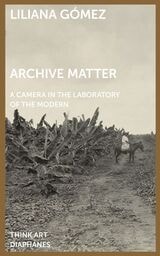
Archive Matter
A Camera in the Laboratory of the ModernLiliana Gómez
Diaphanes, 2023
A journey through the United Fruit Company’s photo archive and its documentation of corporate expansion into the Caribbean.
The establishment of the United Fruit Company as a global political agent with its banana plantations was met with considerable resistance. Now the company’s photographic records are the focal point of Archive Matter as it examines photography’s historical and political impact through the argument that this overlooked, but important, archive made capitalist expansion into the Caribbean possible.
Author Liliana Gómez examines the images from within their “optical unconscious” and via the archive’s silences and omissions. The implication of these silences, Gómez argues, is the attempt to conceal the violence embedded within the realities of the plantations’ daily operations and corporate efforts to “modernize” the Caribbean.
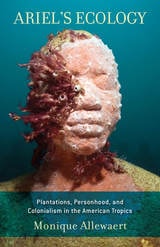
Ariel's Ecology
Plantations, Personhood, and Colonialism in the American TropicsMonique Allewaert
University of Minnesota Press, 2013
What happens if we abandon the assumption that a person is a discrete, world-making agent who acts on and creates place? This, Monique Allewaert contends, is precisely what occurred on eighteenth-century American plantations, where labor practices and ecological particularities threatened the literal and conceptual boundaries that separated persons from the natural world.
Integrating political philosophy and ecocriticism with literary analysis, Ariel’s Ecology explores the forms of personhood that developed out of New World plantations, from Georgia and Florida through Jamaica to Haiti and extending into colonial metropoles such as Philadelphia. Allewaert’s examination of the writings of naturalists, novelists, and poets; the oral stories of Africans in the diaspora; and Afro-American fetish artifacts shows that persons in American plantation spaces were pulled into a web of environmental stresses, ranging from humidity to the demand for sugar. This in turn gave rise to modes of personhood explicitly attuned to human beings’ interrelation with nonhuman forces in a process we might call ecological.
Certainly the possibility that colonial life revokes human agency haunts works from Shakespeare’s Tempest and Montesquieu’s Spirit of the Laws to Spivak’s theories of subalternity. In Allewaert’s interpretation, the transformation of colonial subjectivity into ecological personhood is not a nightmare; it is, rather, a mode of existence until now only glimmering in Che Guevara’s dictum that postcolonial resistance is synonymous with “perfect knowledge of the ground.”