208 books match the query 'Christian Church' and 19 start with a
cover of A Companion to Margaret More Roper Studies: Life Records, Essential Texts, and Critical Essays

A Companion to Margaret More Roper Studies

Life Records, Essential Texts, and Critical Essays

Elizabeth McCutcheon

Catholic University of America Press, 2022

This volume is an important contribution to the field of Margaret More Roper studies, early modern women's writing, as well as Erasmian piety, Renaissance humanism, and historical and cultural studies more generally.

Margaret More Roper is the learned daughter of St. Thomas More, the Catholic martyr; their lives are closely linked to each other and to early sixteenth-century changes in politics and religion and the social upheaval and crises of conscience that they brought. Specifically, Roper's major works - her translation of Erasmus's commentary on the Lord's Prayer and the long dialogue letter between More and Roper on conscience - highlight two major preoccupations of the period: Erasmian humanism and More's last years, which led to his death and martyrdom.

Roper was one of the most learned women of her time and a prototype of the woman writer in England, and this edited volume is a tribute to her life, writings, and place among early women authors. It combines comprehensive and convenient joining of biographical, textual, historical, and critical components within a single volume for the modern reader. There is no comparable study in print, and it fills a significant gap in studies of early modern women writers.
[more]
cover of A Defense of the Catholic Religion: The Necessity, Existence, and Limits of an Infallible Church

A Defense of the Catholic Religion

The Necessity, Existence, and Limits of an Infallible Church

Beda Mayr, OSB

Catholic University of America Press, 2023
The Benedictine Beda Mayr,OSB, (1742–1794) was one of the main figures of the German Catholic Enlightenment. He was not only the first Catholic to wrestle with the challenges of Reimarus and Lessing, but also the first to develop an ecumenical methodology for a reunion of the churches. The text, translated from the German original for the first time, presents a theologian who intentionally went to the margins of orthodoxy in order to allow for more interconfessional dialogue. Mayr argued that Catholic theology should follow minority opinions for unsettled dogmatic questions, which would allow for easier union agreements with Protestant churches. Moreover, he suggested limiting ecclesial infallibility to directly revealed truths, thereby reducing the authoritative truth claims of conciliar or papal decisions. Although the study of Catholic Enlightenment is booming among historians and theologians, too few texts are available in reliable translations. A major strength of this edition is not only that its introduction introduces the reader to the colorful landscape of eighteenth-century theological discussions, but also presents the entire text of Mayr's book (with the exception of its appendix) thereby allowing the reader to see the strengths and weaknesses of Enlightenment ecumenism. Mayr's Limited Infallibility was put on the Index of Forbidden Books, on which it remained until the 20th Century. It invites readers to a modern, non-scholastic way of theologizing for the sake of Christian unity.
[more]
cover of A Flock Divided: Race, Religion, and Politics in Mexico, 1749–1857

A Flock Divided

Race, Religion, and Politics in Mexico, 1749–1857

Matthew D. O Hara

Duke University Press, 2010

Catholicism, as it developed in colonial Mexico, helped to create a broad and remarkably inclusive community of Christian subjects, while it also divided that community into countless smaller flocks. Taking this contradiction as a starting point, Matthew D. O’Hara describes how religious thought and practice shaped Mexico’s popular politics. As he shows, religion facilitated the emergence of new social categories and modes of belonging in which individuals—initially subjects of the Spanish crown, but later citizens and other residents of republican Mexico—found both significant opportunities for improving their place in society and major constraints on their ways of thinking and behaving.

O’Hara focuses on interactions between church authorities and parishioners from the late-colonial era into the early-national period, first in Mexico City and later in the surrounding countryside. Paying particular attention to disputes regarding caste status, the category of “Indian,” and the ownership of property, he demonstrates that religious collectivities from neighborhood parishes to informal devotions served as complex but effective means of political organization for plebeians and peasants. At the same time, longstanding religious practices and ideas made colonial social identities linger into the decades following independence, well after republican leaders formally abolished the caste system that classified individuals according to racial and ethnic criteria. These institutional and cultural legacies would be profound, since they raised fundamental questions about political inclusion and exclusion precisely when Mexico was trying to envision and realize new forms of political community. The modes of belonging and organizing created by colonialism provided openings for popular mobilization, but they were always stalked by their origins as tools of hierarchy and marginalization.

[more]
cover of A Professor in the Wilderness: Peter Damian Before the Gregorian Refor

A Professor in the Wilderness

Peter Damian Before the Gregorian Refor

John Howe

Catholic University of America Press, 2027
In the eleventh century a small group of clerical reformers based in Rome launched a fight for the liberty of the Church. The consequences ultimately included a politically powerful papacy and stronger kingdoms with their own more secular laws and bureaucracies. One way to understand what happened is to examine the life of Peter Damian, the most prolific Latin writer of the mid eleventh century and a pioneer in the reform movement. He has never before received a comprehensive critical historical biography. Peter was an orphan boy from Ravenna who became a successful professor of rhetoric. Then he abandoned that career to join a community of penitent hermits living in the high Apennines at Fonte Avellana. He did not actually manage to leave the world behind because he was chosen as prior of his hermit community and had to employ his rhetorical and legal skills to protect it from predatory local lords and “bad bishops and abbots.” He cultivated contacts with the emperor and the pope. In 1057 he was named bishop of Ostia, the leader of the cardinal bishops. As a high official in the Roman Church, aided by his prolific writings, he promoted a reforming agenda. He proved to be a formidable papal legate. At the end of his career, he retired to Fonte Avellana where he remained active until he died on a final legatine mission, probably in 1073. Peter advanced the movement known today as the “Gregorian Reform” not only by strengthening papal power and canon law but also by helping to develop a powerful curial bureaucracy with new means of communication that gave the Roman curia more control over local churches. His successes, failures, and misadventures illuminate a major turning point in Western civilization.
[more]
cover of A Service Beyond All Recompense

A Service Beyond All Recompense

Kurt Martens

Catholic University of America Press, 2018
When Monsignor Thomas J. Green, professor at the School of Canon Law at The Catholic University of America, approached his seventy-fifth birthday and the fiftieth anniversary of his priestly ordination, his colleagues planned on offering him a fitting tribute in the form of a festschrift. Six people with different backgrounds, but all related to Msgr. Green on one way or another, have written a laudatio – a short congratulatory letter – in honor of Monsignor Green. No less than fifteen contributions on various topics by colleagues, canon law scholars, clearly relate and reflect upon the honoree's scholarly contributions to canon law. The topics are extremely varied, and illustrate how Monsignor Green has been or is active in nearly every area of canon law. Virtually every book of the Code of Canon Law is covered, if not directly, at least indirectly. While the book is a tribute to an eminent professor, the various scholarly contributions are unique pieces of scholarship. The authors of the laudatio are: John Garvey (President, The Catholic University of America); Andrew Abela (Provost, The Catholic University of America); Rev. Msgr. J. Brian Bransfield (General Secretary of the United States Conference of Catholic Bishops); Rev. Msgr. Ronny E. Jenkins (Dean, School of Canon Law, The Catholic University of America); Rev. Msgr. J. James Cuneo (Diocese of Bridgeport) and Sister Sharon Euart, RSM (Executive Director, Resource Center for Religious Institutes, Silver Spring, MD).
[more]
cover of A Sip from the "Well of Grace": Medieval Texts from the Apostolic Penitentiary

A Sip from the "Well of Grace"

Medieval Texts from the Apostolic Penitentiary

Kirsi Salonen

Catholic University of America Press, 2009
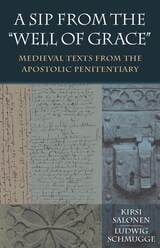
The first book to include full texts and photographs from the Apostolic Penitentiary, A Sip from the "Well of Grace" is groundbreaking in its analysis of one of the most important papal offices of the Middle Ages.
[more]
cover of A Star in the East: The Rise of Christianity in China

A Star in the East

The Rise of Christianity in China

Rodney Stark

Templeton Press, 2015

What is the state of Christianity in China? Some scholars say that China is invulnerable to religion. In contrast, others say that past efforts of missionaries have failed, writing off those converted as nothing more than “rice Christians” or cynical souls who had frequented the missions for the benefits they provided. Some wonder if the Cultural Revolution extinguished any chances of Christianity in China.

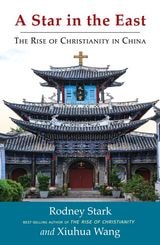
Rodney Stark and Xiuhua Wang offer a different perspective, arguing that Christianity is alive, well, and on the rise. Stark approaches the topic from an extensive research background in Christianity and Chinese history, and Wang provides an inside look at Christianity and its place in her home country of China. Both authors cover the history of religion in China, disproving older theories concerning the number of Christians and the kinds of Christians that have emerged in the past 155 years. Stark and Wang claim that when just considering the visible Christians—those not part of underground churches—thousands of Chinese are still converted to Christianity daily, and forty new churches are opening each week.

A Star in the East draws on two major national surveys to sketch a close-up of religion in China. A reliable estimate is that by 2007 there were approximately 60 million Christians in China. If the current growth rate were to hold until 2030, there would be more Christians in China—about 295 million—than in any other nation. This trend has significant implications, not just for China but for the greater world order. It is probable that Chinese Christianity will splinter into denominations, likely leading to the same political, social, and economic ramifications seen in the West today.

Whether you’re new to studying Christianity in China or whether this has been your area of interest for years, A Star in the East provides a reliable, thought-provoking, and engaging account of the resilience of the Christian faith in China and the implications it has for the future.
[more]
cover of A Woman to Deliver Her People: Joanna Southcott and English Millenarianism in an Era of Revolution

A Woman to Deliver Her People

Joanna Southcott and English Millenarianism in an Era of Revolution

By James K. Hopkins

University of Texas Press, 1982

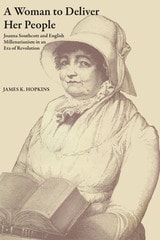
The Second Coming of Christ has been prophesied many times through the centuries but seldom by a figure so fascinating as Joanna Southcott (1750–1814), the domestic servant who at the age of forty-two declared that God had chosen her to announce His return. A Woman to Deliver Her People is the most comprehensive study of this remarkable woman and her movement yet written.

Dramatic social and political changes of the late eighteenth century—among them the revolutions in America and France—had a profound effect on the attitudes of English men and women at all levels of society. With events so far outside the range of ordinary experience, both the educated and the uneducated turned to the prophetic books of the Bible, seeking solace and explanation. A number of prophets and prophetesses appeared, claiming to have a special understanding of the biblical texts and offering startling new revelations which had been disclosed to them by God. The greatest and most influential of these was Joanna Southcott, who attracted tens of thousands of followers from the West Country, London, the Midlands, and the industrial North. Her "spiritual communications" filled some sixty-five books and pamphlets from 1801 until her death.

Most contemporary observers dismissed Southcott as a fanatic, and she was frequently the subject of caricature and ridicule. James Hopkins attempts to remedy this distortion by examining Southcott's life and the millenarian movement she led within the context of the social, political, and economic crises of the period. By tracing the psychological and popular roots of Southcott's piety, and casting her appeal against the backdrop of a revolutionary age, Hopkins not only vividly portrays the life of this fascinating woman but also offers a new perspective on the mentality of ordinary English men and women during the years of their transformation into a working class.
[more]
cover of Ambrosiaster's Commentary on the Pauline Epistles: Romans

Ambrosiaster's Commentary on the Pauline Epistles

Romans

Theodore S. de Bruyn

SBL Press, 2017

A new translation for scholars and students of biblical interpretation and ancient Christianity

The ancient writer dubbed Ambrosiaster was a pioneer in the revival of interest in the Pauline Epistles in the later fourth century. He was read by Latin writers, including Pelagius and Augustine, and his writings, passed on pseudonymously, had a long afterlife in the biblical commentaries, theological treatises, and canonical literature of the medieval and the early modern periods. In addition to his importance as an interpreter of scripture, Ambrosiaster provides unique perspectives on many facets of Christian life in Rome, from the emergence of clerical celibacy to the development of liturgical practices to the subordination of women.

Features

  • An up-to-date overview of what is known about Ambrosiaster, the transmission of his commentary on the Pauline Epistles, his exegetical method, his theological orientation, and aspects of Christianity in Rome in the fourth century
  • A scholarly translation of the final version of the commentary, along with notes that identify significant variants from prior versions of the commentary
  • Bibliography thatincludes a comprehensive list of the scholarly literature on Ambrosiaster
[more]
cover of America's Teilhard

America's Teilhard

Susan Kassman Sack

Catholic University of America Press, 2019

America’s Teilhard: Christ and Hope in the 1960s is a study of the reception of Teilhard in the United States during this period and contributes to an awareness of the thought of this important figure and the impact of his work. Additionally, it further develops an understanding of U.S. Catholicism in all its dimensions during these years, and provides clues as to how it has unfolded over the past several decades. Susan Sack argues that the manner and intensity of the reception of Teilhard’s thought happened as it did at this point in history because of the confluence of the then developing social milieu, the disintegration of the immigrant Catholic subculture, and the opening of the church to the world through Vatican II. Additionally, as these social and historical events unfolded within U.S. culture during these years, the way Teilhard was read, and the contributions which his thought provided changed. This book considers his work as a carrier at times for an almost Americanist emphasis upon progress, energy and hope; in other years his teleological understanding of the value of suffering moves to center. Additionally, the stories of numerous persons – scientists, theologians, politicians, and scholars – who became involved in the American Teilhardian effort are detailed.
[more]
cover of America's Theologian: Father Richard McBride of Notre Dame

America's Theologian

Father Richard McBride of Notre Dame

Todd Hartch

Catholic University of America Press, 2027
America's Theologian: Father Richard McBrien of Notre Dame is an intellectual biography of the Catholic theologian and commentator Richard McBrien (1936-2015), author of the best-selling Catholicism and 24 other books, arguably the most influential American Catholic voice of the 1980s and 1990s. Like Wilson Miscamble’s American Priest: The Ambitious Life and Conflicted Legacy of Notre Dame's Father Ted Hesburgh, this biography gives a respectful yet critical treatment of one of the lions of American liberal Catholicism. Openly radical in his younger days and critical of Vatican II for being too moderate, McBrien was frustrated with the slow pace of religious change in the 1970s but realized that his bold and straightforward approach was not working. His 1980 magnum opus, Catholicism, which sold 150,000 copies in its first edition and 50,000 more in later editions, marked a change of course. From this point forward, he adopted the rhetoric of moderation, used ambiguity to cloak his more radical ideas, and became an outspoken defender of Vatican II. His theology did not change, but he presented himself as a centrist who was defending the legacy of Vatican II. One of those impressed by Catholicism was University of Notre Dame President Ted Hesburgh, who recruited McBrien in 1980 to transform the university’s theology department. During his decade as chair, McBrien turned the Notre Dame theology department into an influential center of liberal Catholic theology.
[more]
cover of An Exemplar of the True: The Tabernacle and the Architecture of Medieval Theology

An Exemplar of the True

The Tabernacle and the Architecture of Medieval Theology

Allison Zbicz Michael

Catholic University of America Press, 2026
Scholarly academics, cloistered monks, and high-ranking prelates once found abundantly fertile material for theological reflection in the Exodus descriptions of Tabernacle and the Ark of the Covenant. Where traditional scholarly accounts of the rise of scholasticism tend to focus almost entirely on the incorporation of Aristotelian thought and the legacy of Peter Lombard’s sententiae, attention to these works illuminates some of the deeply biblical roots of scholastic patterns of thought. The Tabernacle often appealed to these early interpreters because it provided a valuable source for exploring the structural patterns embedded in creation. The first part of this book examines the works of four major twelfth-century figures on this popular interpretive theme. Richard of St. Victor, Stephen Langton, Peter of Poitiers, and Adam of Dryburgh each share the conviction that the details of the Tabernacle’s material structure reflect the structures of immaterial truths. The second part of the book shows the rich inheritance of this tradition, as received by Saint Bonaventure and Saint Thomas Aquinas. In the twelfth-century, the image of the Tabernacle, composed of diverse parts arranged in a coherent whole, provides a divinely-given source for theological method and a model for attempts to systematize and integrate various forms of knowledge. At times, the Tabernacle structure suggests for these interpreters certain correspondences with Aristotelian insights, while elsewhere, the edifice undergirds attempts to offer a rigorous counterbalance to perceived philosophical excesses. In both cases, the Tabernacle is taken as a biblical locus for working through methodological questions prompted by the increasing availability of Aristotle’s corpus. These biblical interpreters bequeathed to the thirteenth-century magistri a structural framework and a confidence that disparate forms of human knowing all fit together.
[more]
cover of Ancient Christian Apocrypha: Marginalized Texts in Early Christianity

Ancient Christian Apocrypha

Marginalized Texts in Early Christianity

Outi Lehtipuu

SBL Press, 2022

This latest volume in the Bible and Women series examines ancient noncanonical Christian texts for what they reveal about women, their engagement with Scripture, and attitudes toward them in texts dating to the second to eighth century. Three sections include once-forgotten texts rediscovered in locations such as Nag Hammadi, those that have been in continuous use through the centuries, and works written by women that are traditionally excluded from discussions of noncanonical texts. Contributors Bernadette J. Brooten, María José Cabezas Cabello, Anna Carfora, Ute E. Eisen, Judith Hartenstein, Ursula Ulrike Kaiser, Karen L. King, Outi Lehtipuu, Heidrun Mader, Antti Marjanen, Silvia Pellegrini, Silke Petersen, Uwe-Karsten Plisch, Cristina Simonelli, Anna Rebecca Solevåg, M. Dolores Martin Trutet, and Carmen Bernabé Ubieta examine a range of texts, including noncanonical gospels and acts, poems, prophecy, and grave inscriptions.
[more]
cover of Apostolic Religious Life in America Today: A Response to the Crisis

Apostolic Religious Life in America Today

A Response to the Crisis

Richard Gribble

Catholic University of America Press, 2011
Divided into two parts, this volume first presents an analysis of the problem and secondly a solution to place apostolic religious life on a positive trajectory in the 21st century.
[more]
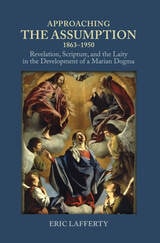
cover of Approaching the Assumption, 1863-1950: Revelation, Scripture, and the Laity in the Development of a Marian Dogma

Approaching the Assumption, 1863-1950

Revelation, Scripture, and the Laity in the Development of a Marian Dogma

Eric Lafferty

Catholic University of America Press, 2026
The Assumption of Mary refers to the ancient Christian belief that the Mother of God was taken up into Heaven, body and soul, at the end of her earthly life. For centuries, Catholics and other Christians celebrated the Assumption as a liturgical feast and meditated on the miraculous event in the Rosary. Nevertheless, its relationship to Revelation remained undefined. This changed in 1950 when Pope Pius XII declared the Assumption of Mary a dogma of the Catholic Church. In this rare exercise of papal authority, Pius XII infallibly and irrevocably taught that the Assumption was a truth revealed by God. This book explores how the definition of this Marian dogma came to fruition. After a brief history of the prior three Marian dogmas — Mother of God, Ever-Virgin, and the Immaculate Conception — this book narrates the major moments in the effort to obtain a dogmatic definition of the Assumption. The beginning of this “Assumptionist movement” can be dated to 1863 when Queen Isabel II of Spain petitioned the pope to declare the Assumption a dogma. Subsequently, petitionary efforts and scholarly inquiry increased and spread throughout the world. In addition to the narrative of this movement, this book gives special consideration to three vital aspects: debate over the Assumption’s definability as a dogma, if and how Scripture reveals the Assumption, and the contribution of the laity on a matter of doctrine. Collectively, the Assumptionist movement emerges as a critical event in the nineteenth- and twentieth-century Catholic Church. Culminating in a dogmatic definition shortly before the opening of Vatican II, it also serves as a key point of inquiry for continuity and development of doctrine. A final chapter argues that the operative beliefs pertaining to Revelation, Scripture, and the laity during the Assumptionist movement stand in continuity with the teachings of Vatican II.
[more]
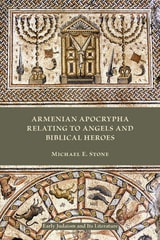
cover of Armenian Apocrypha Relating to Angels and Biblical Heroes

Armenian Apocrypha Relating to Angels and Biblical Heroes

Michael E. Stone

SBL Press, 2016

Explore how the vivid and creative Armenian spiritual tradition shaped biblical stories to serve new needs

Michael E. Stone’s latest book includes texts from Armenian manuscripts that are relevant to the development and growth of biblical themes and subjects. Most of these texts have not been published previously. Stone has collected a fascinating corpus of texts about biblical heroes, such as Joseph and Jonah, Nathan the Prophet, and Asaph the Psalmist. In addition, he has included documents illustrating particular points of the biblical story. This work reflects not just on how the Bible was interpreted in medieval times, but also how its stories and details were shaped by and served the needs of the vivid and creative Armenian spiritual tradition.

Features:

  • Expanded stories from Exodus
  • Introductions,translations, and notes
  • Insights into the Armenian "Embroidered Bible," through which many biblical incidents were known to Armenian literature, art, and thought
[more]
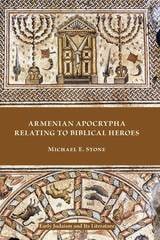
cover of Armenian Apocrypha Relating to Biblical Heroes

Armenian Apocrypha Relating to Biblical Heroes

Michael E. Stone

SBL Press, 2019

Explore richly embellished Armenian tales of biblical heroes

This fifth book of Michael E. Stone's English translations of stories from medieval Armenian manuscripts illustrates how authors transmitted and transformed accounts of biblical heroes. Texts focus on important figures such as Adam, Noah, Abraham, Solomon, Daniel and Susanna, and more. This collection reflects not only the richness of Armenian creativity stimulated by piety and learning but also Michael E. Stone's career-long search for reworkings of biblical traditions, stories, and persons in the Armenian tradition.

Features:

  • A rich tradition of biblical exegesis and commentary, much of it in genres of the older apocryphal and pseudepigraphical literature
  • Reflections on the roots of Armenian texts in ancient Judaism and earliest Christianity
  • Texts, translations, and a critical apparatus
[more]
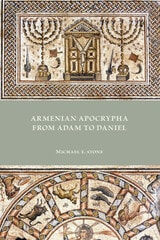
cover of Armenian Apocrypha from Adam to Daniel

Armenian Apocrypha from Adam to Daniel

Michael E. Stone

SBL Press, 2021
In this collection of Armenian apocryphal texts, Michael E. Stone focuses on texts related to heaven and hell, angels and demons, and biblical figures from the Hebrew Bible and apocrypha. The texts, introductions, translations, annotations, and critical apparatus included in this volume make this collection a key resource for students and scholars of apocryphal and pseudepigraphical literature.

[more]
cover of Augustine in the Pelagian Controversy: Defending Church Unity

Augustine in the Pelagian Controversy

Defending Church Unity

Andrew Chronister

Catholic University of America Press, 2024

This book examines St. Augustine of Hippo’s involvement in the Pelagian controversy and argues that this involvement was prompted not simply by his opposition to Pelagian doctrinal views but, to a significant degree, by his desire to defend Church unity. To prove this thesis, Andrew Chronister analyzes the historical context of the controversy as well as Augustine’s argumentation in his anti-Pelagian works. Attending to the historical context reveals the fact that at various moments in the controversy, Augustine was faced with what he believed to be significant threats to Church unity. For example, the beginnings of the controversy coincided with a key attempt in June 411 to end the Donatist schism that had split the African Church for a century: at the very moment when one schism was being healed, another threat to unity appeared in Caelestius and Pelagius. At the same time, internal evidence in Augustine’s anti-Pelagian works reveals his desire not only to refute Pelagian doctrinal views but also to undermine the Pelagians’ claims that they were simply teaching what the Church had always and everywhere taught. This can be seen in a particular way in Augustine’s frequent appeals to liturgical and sacramental praxis as well as in his rather novel practice of citing renowned Christian authors as evidence for the antiquity and universality of his views. Augustine in the Pelagian Controversy has two main contributions: (1) it offers a new perspective on Augustine’s involvement in the controversy that makes his prolonged and polemical engagement with the Pelagians more intelligible and (2) it provides a detailed history of the controversy itself.
[more]