Results by title
43 books match the query 'Progress'

A Global Enlightenment
Western Progress and Chinese ScienceAlexander Statman
University of Chicago Press, 2023
The Enlightenment gave rise not only to new ideas of progress but consequential debates about them. Did distant times and places have anything to teach the here and now? Voltaire could believe that they did; Hegel was convinced that they did not. Early philosophes praised Chinese philosophy as an enduring model of reason. Later philosophes rejected it as stuck in the past. Seeking to vindicate ancient knowledge, a group of French statesmen and savants began a conversation with the last great scholar of the Jesuit mission to China. Together, they drew from Chinese learning to challenge the emerging concept of Western advancement.
A Global Enlightenment traces this overlooked exchange between China and the West to make compelling claims about the history of progress, notions of European exceptionalism, and European engagement with Chinese science. To tell this story, Alexander Statman focuses on a group of thinkers he terms “orphans of the Enlightenment,” intellectuals who embraced many of their contemporaries’ ideals but valued ancient wisdom. They studied astronomical records, gas balloons, electrical machines, yin-yang cosmology, animal magnetism, and Daoist medicine. And their inquiries helped establish a new approach to the global history of science.
Rich with new archival research and fascinating anecdotes, A Global Enlightenment deconstructs two common assumptions about the early to late modern period. Though historians have held that the idea of a mysterious and inscrutable East was inherent in Enlightenment progress theory, Statman argues that it was the orphans of the Enlightenment who put it there: by identifying China as a source of ancient wisdom, they turned it into a foil for scientific development. But while historical consensus supposes that non-Western ideas were banished from European thought over the course of the Enlightenment, Statman finds that Europeans became more interested in Chinese science—as a precursor, then as an antithesis, and finally as an alternative to modernity.

A Nice Derangement of Epistemes
Post-positivism in the Study of Science from Quine to LatourJohn H. Zammito
University of Chicago Press, 2004
Zammito shows how problems that Quine and Kuhn saw in the philosophy of the natural sciences inspired a turn to the philosophy of language for resolution. This linguistic turn led to claims that science needs to be situated in both historical and social contexts, but the claims of recent "science studies" only deepened the philosophical quandary. In essence, Zammito argues that none of the problems with positivism provides the slightest justification for denigrating empirical inquiry and scientific practice, delivering quite a blow to the "discipline" postmodern science studies.
Filling a gap in scholarship to date, A Nice Derangement of Epistemes will appeal to historians, philosophers, philosophers of science, and the broader scientific community.

Cattle, Priests, and Progress in Medicine
Calvin W. Schwabe
University of Minnesota Press, 1978
Cattle, Priests, and Progress in Medicine was first published in 1978. Minnesota Archive Editions uses digital technology to make long-unavailable books once again accessible, and are published unaltered from the original University of Minnesota Press editions.
The author shows that over the centuries many of the most significant breakthroughs in improving humans health have been closely associated with observations and experiments on animals other than man. Because human medical progress has been so dependent on veterinary studies, he urges that schools of veterinary medicine assume a much greater role in the training of persons for research in human medicine.
To illuminate the historical link between animals and man in medical progress, Professor Schwabe recounts highlights in the history of medicine from ancient times onward. He describes the early history of man in terms of animal cultures, focusing on the prehistoric Nile Valley, and points to similarities in medical knowledge between present-day "cattle" societies in Northeastern Africa and the ancient people of the Nile. He discusses the comparative healers of ancient Egypt, the comparative foundations of Greek medicine, the Arabic contribution, Sicily and the beginnings of modern medicine, and subsequent developments through the Renaissance .Bringing the history down to modern times, Professor Schwabe emphasizes the role of veterinary medicine in medical research. He outlines specific reforms in the curricula of schools and colleges of veterinary medicine which would provide for the education of medical investigators.
Community and Progress in Kant's Moral Philosophy
Kate A. Moran
Catholic University of America Press, 2012

Cruel Optimism
Lauren Berlant
Duke University Press, 2011
Arguing that the historical present is perceived affectively before it is understood in any other way, Berlant traces affective and aesthetic responses to the dramas of adjustment that unfold amid talk of precarity, contingency, and crisis. She suggests that our stretched-out present is characterized by new modes of temporality, and she explains why trauma theory—with its focus on reactions to the exceptional event that shatters the ordinary—is not useful for understanding the ways that people adjust over time, once crisis itself has become ordinary. Cruel Optimism is a remarkable affective history of the present.

Entitled to the Pedestal
Place, Race, and Progress in White Southern Women’s Writing, 1920–1945Nghana tamu Lewis
University of Iowa Press, 2007
In this searching study, Nghana Lewis offers a close reading of the works and private correspondences, essays, and lectures of five southern white women writers: Julia Peterkin, Gwen Bristow, Caroline Gordon, Willa Cather, and Lillian Smith. At the core of this work is a sophisticated reexamination of the myth of southern white womanhood.
Lewis overturns the conventional argument that white women were passive and pedestal-bound. Instead, she argues that these figures were complicit in the day-to-day dynamics of power and authorship and stood to gain much from these arrangements at the expense of others.
At the same time that her examination of southern mythology explodes received wisdom, it is also a journey of self-discovery. As Lewis writes in her preface, “As a proud daughter of the South, I have always been acutely aware of the region’s rich cultural heritage, folks, and foodstuffs. How could I not be? I was born and reared in Lafayette, Louisiana, where an infant’s first words are not ‘da-da’ and ‘ma-ma’ but ‘crawfish boil’ and ‘fais-do-do.’ . . . I have also always been keenly familiar with its volatile history.” Where these conflicting images—and specifically the role of white southern women as catalysts, vindicators, abettors, and antagonists—meet forms the crux of this study. As such, this study of the South by a daughter of the South offers a distinctive perspective that illuminates the texts in novel and provocative ways.
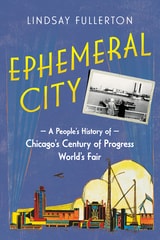
Ephemeral City
A People's History of Chicago's Century of Progress World's FairLindsay Fullerton
University of Illinois Press, 2025
Less celebrated than the 1893 Chicago World’s Fair, the 1933–1934 Century of Progress Exposition brought visitors face-to-face with gleaming American consumerism in the midst of the Great Depression. Lindsay Fullerton draws on a wealth of personal photographs, scrapbooks, oral histories, and writings to illuminate the wildly different experiences of fairgoers against the backdrop of a city steeped in poverty and segregation.
The Exposition took place amidst massive changes sparked by expansion of mass media, Franklin Roosevelt’s election, the repeal of Prohibition, and the Great Migration. A diverse cross-section of Chicagoans informs Fullerton’s history of the event in the context of the fast-changing America of the interwar era. These personal accounts tell stories of how attendees interpreted their own experiences while being surrounded by whiz-bang products and full-throated evangelism on the benefits of progress.
A colorful people’s history, Ephemeral City takes readers inside the other Chicago World’s Fair and how visitors interacted with a pivotal moment in American history.

Frontiers Of Illusion
Science, Technology, and the Politics of ProgressDaniel Sarewitz
Temple University Press, 1996
For the past fifty years, science and technology—supported with billions of dollars from the U.S. government—have advanced at a rate that would once have seemed miraculous, while society's problems have grown more intractable, complex, and diverse. Yet scientists and politicians alike continue to prescribe more science and more technology to cure such afflictions as global climate change, natural resource depletion, overpopulation, inadequate health care, weapons proliferation, and economic inequality.
Daniel Sarewitz scrutinizes the fundamental myths that have guided the formulation of science policy for half a century—myths that serve the professional and political interests of the scientific community, but often fail to advance the interests of society as a whole. His analysis ultimately demonstrates that stronger linkages between progress in science and progress in society will require research agendas that emerge not from the intellectual momentum of science, but from the needs and goals of society.

Gendered Paradoxes
Educating Jordanian Women in Nation, Faith, and ProgressFida Adely
University of Chicago Press, 2012
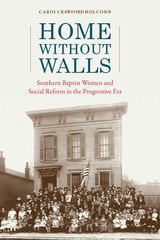
Home without Walls
Southern Baptist Women and Social Reform in the Progressive EraCarol Crawford Holcomb
University of Alabama Press, 2020
The Woman’s Missionary Union (WMU), founded in 1888, carved out a uniquely feminine space within the Southern Baptist Convention during the tumultuous years of the Progressive Era when American theologians were formulating the social gospel. These women represented the Southern Baptist elite and as such had the time to read, write, and discuss ideas with other Southern progressives. They rubbed shoulders with more progressive Methodist and Presbyterian women in clubs and ecumenical missionary meetings. Baptist women studied the missionary publications of these other denominations and adopted ideas for a Southern Baptist audience.
Home without Walls: Southern Baptist Women and Social Reform in the Progressive Era shows how the social attitudes of women were shaped at the time. By studying primary documents—including personal letters, official exchanges and memoranda, magazine publications, newsletters, and editorials—Carol Crawford Holcomb uncovers ample evidence that WMU leaders, aware of the social gospel and sympathetic to social reform, appropriated the tools of social work and social service to carry out their missionary work.
Southern Baptist women united to build a financial empire that would sustain the Southern Baptists through the Great Depression and beyond. Their social attitudes represented a kaleidoscope of contrasting opinions. By no stretch of the imagination could WMU leaders be characterized as liberal social gospel advocates. However, it would also be wrong to depict them as uniformly hostile to progressivism or ignorant of contemporary theological ideas. In the end, they were practical feminists in their determination to provide a platform for women’s views and a space for women to do meaningful work.

Hope Draped in Black
Race, Melancholy, and the Agony of ProgressJoseph R. Winters
Duke University Press, 2016
Is Progress Speeding Up
Multiplying Multitudes Of BlessingsJohn Marks Templeton
Templeton Press, 1998
This book is a thought-provoking view of the progress of humankind in the last century. In spite of the pessimism that prevails in the media, people are better fed, better clothed, better housed, and better educated than at any previous time.
The facts within the book provide documentation for a positive outlook toward our nutrition and health, living standards and working conditions, political and economic freedoms, educational facilities, ability to communicate, ease of movement, increasing leisure, and, most important, our ability to get along with one another and with our Creator. The statistics, charts, and photographs that illustrate this book enhance the reassuring and uplifting view of the state of the world and where it is going.
“His analysis gives us a refreshing balance to the negative, sometimes cynical, views in the media that tend to portray the worst rather than the best in human civilization.” —Jimmy Carter
“After reading Sir John Templeton's latest book, I believe more than ever that we are living in the most exciting time in history. Despite the challenges we face, his demonstration of mankind's progress gives all of us great hopes and high expectations for our next century and the new millennium.” —Jack Kemp, former HUD secretary, director of Empower America
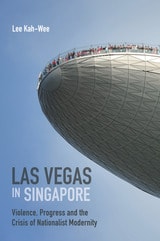
Las Vegas in Singapore
Violence, Progress and the Crisis of Nationalist ModernityLee Kah-Wee
National University of Singapore Press, 2018
The first history begins in colonial Singapore in the 1880s, when British administrators revised gambling laws in response to the political threat posed by Chinese-run gambling syndicates. Following the tracks of these punitive laws and practices, the book moves into the 1960s when the newly independent city-state created a national lottery while criminalizing both organized and petty gambling in the name of nation-building. The second history shifts the focus to corporate Las Vegas in the 1950s when digital technology and corporate management practices found each other on the casino floor. Tracing the emergence of the specialist casino designer, the book reveals how casino development evolved into a highly rationalized spatial template designed to maximize profits. Today an iconic landmark of Singapore, Marina Bay Sands is also an artifact of these two histories, an attempt by Singapore to normalize what was once criminalized in its nationalist history.
Lee Kah-Wee argues that the historical project of the control of vice is also about the control of space and capital. The result is an uneven landscape where the legal and moral status of gambling is contingent on where it is located. As the current wave of casino expansion spreads across Asia, he warns that these developments should not be seen as liberalization but instead as a continuation of the project of concentrating power by modern states and corporations.

Leave Me Alone and I'll Make You Rich
How the Bourgeois Deal Enriched the WorldDeirdre Nansen McCloskey and Art Carden
University of Chicago Press, 2020
For readers looking for a distillation of McCloskey’s magisterial work, Leave Me Alone and I’ll Make You Rich is what you’ve been waiting for. In this lively volume, McCloskey and the economist and journalist Carden bring together the trilogy’s key ideas and its most provocative arguments. The rise of the west, and now the rest, is the story of the rise of ordinary people to a dignity and liberty inspiring them to have a go. The outcome was an explosion of innovation after 1800, and a rise of real income by an astounding 3,000 percent. The Great Enrichment, well beyond the conventional Industrial Revolution, did not, McCloskey and Carden show, come from the usual suspects, capital accumulation or class struggle. It came from the idea of economic liberty in Holland and the Anglosphere, then Sweden and Japan, then Italy and Israel and China and India, an idea that bids fair in the next few generations to raise up the wretched of the earth. The original shift to liberalism arose from 1517 to 1789 from theological and political revolutions in northwest Europe, upending ancient hierarchies. McCloskey and Carden contend further that liberalism and “innovism” made us better humans as well as richer ones. Not matter but ideas. Not corruption but improvement.
Leave Me Alone and I’ll Make You Rich draws in entertaining fashion on history, economics, literature, philosophy, and popular culture, from growth theory to the Simpsons. It is the perfect introduction for a broad audience to McCloskey’s influential explanation of how we got rich. At a time when confidence in the economic system is under challenge, the book mounts an optimistic and persuasive defense of liberal innovism, and of the modern world it has wrought.
Measuring Economic Sustainability and Progress
Edited by Dale W. Jorgenson, J. Steven Landefeld, and Paul Schreyer
University of Chicago Press, 2014
The latest in the NBER’s influential Studies in Income and Wealth series, which has played a key role in the development of national account statistics in the United States and other nations, this volume explores collaborative solutions between academics, policy researchers, and official statisticians to some of today’s most important economic measurement challenges. Contributors to this volume extend past research on the integration and extension of national accounts to establish an even more comprehensive understanding of the distribution of economic growth and its impact on well-being, including health, human capital, and the environment. The research contributions assess, among other topics, specific conceptual and empirical proposals for extending national accounts.

Modernity and Progress
Fitzgerald, Hemingway, OrwellRonald Berman
University of Alabama Press, 2007
Breaks new critical ground by exploring philosophical and aesthetic issues germane to the writings of three major modern literary figures.
In the 1920s and ‘30s, understandings of time, place, and civilization were subjected to a barrage of new conceptions. Ronald Berman probes the work of three writers who wrestled with one or more of these issues in ways of lasting significance.
Hemingway, Fitzgerald, and Orwell all grappled with fluid notions of time: Hemingway’s absolute present, Fitzgerald’s obsession with what might be and what might have been, and Orwell’s concerns with progress. For these authors, progress is also tied to competing senses of place--for Fitzgerald, the North versus the South; for Hemingway, America versus Europe. At stake for each is an understanding of what constitutes true civilization in a post-war world. Berman discusses Hemingway’s deployment of language in tackling the problems of thinking and knowing. Berman follows this notion further in examining the indisputable impact upon Hemingway’s prose of Paul Cézanne’s painting and the nature of perception.
Finally, Berman considers the influence on Orwell of Aristotle and Freud’s ideas of civilization, translated by Orwell into the fabric of 1984 and other writings.
Ronald Berman is Professor of English at the University of California at San Diego and past chairman of the National Endowment for the Humanities. He is author of six books, including “The Great Gatsby” and Fitzgerald’s World of Ideas and Fitzgerald-Wilson-Hemingway: Language and Experience.

Nevada's Environmental Legacy
Progress or PlunderJames W. Hulse
University of Nevada Press, 2009
Nevada's relatively brief history (it became a state in 1864) has been largely a story of the exploitation of its natural resources. Mining has torn down mountains and poisoned streams and groundwater. Uncontrolled grazing by vast herds of sheep and cattle has denuded grasslands and left them prey to the invasion of noxious plant species and vulnerable to wildfire. Clear-cut logging practices have changed the composition of forests and induced serious soil erosion. More recently, military testing, including hundreds of atomic blasts to determine the efficacy of nuclear weapons, has irreversibly polluted expanses of fragile desert landscape. And rampant development throughout the state over the past four decades, along with the public's growing demand for recreational facilities, has placed intolerable demands on the arid state's limited water resources and threatened the survival of numerous rare plant and animal species. Veteran historian and Nevada native James W. Hulse considers the state's complex environmental history as a series of Faustian bargains between the state's need for economic development and the industries, government agencies, and individuals that have exploited Nevada's natural resources with little concern for the long-term consequences of their activities. His survey covers all these issues, and examines public attitudes about the environment and the role of federal and state agencies in creating, interpreting, and enforcing environmental policies.

Parents Without Papers
The Progress and Pitfalls of Mexican American IntegrationFrank D. Bean is Distinguished Professor of Sociology and Director of the Center for Research on International Migration at the University of California, Irvine. Susan K. Brown is associate professor of sociology at the University of California, Irvine. James D. Bachmeier is assistant professor of sociology at Temple University.
Russell Sage Foundation, 2015
Parents Without Papers provides both a general conceptualization of immigrant integration and an in-depth examination of the Mexican American case. The authors draw upon unique retrospective data to shed light on three generations of integration. They show in particular that the “membership exclusion” experienced by unauthorized Mexican immigrants—that is, their fear of deportation, lack of civil rights, and poor access to good jobs—hinders the education of their children, even those who are U.S.-born. Moreover, they find that children are hampered not by the unauthorized entry of parents itself but rather by the long-term inability of parents, especially mothers, to acquire green cards.
When unauthorized parents attain legal status, the disadvantages of the second generation begin to disappear. These second-generation men and women achieve schooling on par with those whose parents come legally. By the third generation, socioeconomic levels for women equal or surpass those of native white women. But men reach parity only through greater labor-force participation and longer working hours, results consistent with the idea that their integration is delayed by working-class imperatives to support their families rather than attend college.
An innovative analysis of the transmission of advantage and disadvantage among Mexican Americans, Parents Without Papers presents a powerful case for immigration policy reforms that provide not only realistic levels of legal less-skilled migration but also attainable pathways to legalization. Such measures, combined with affordable access to college, are more important than ever for the integration of vulnerable Mexican immigrants and their descendants.

Pictures and Progress
Early Photography and the Making of African American IdentityMaurice O. Wallace and Shawn Michelle Smith, eds.
Duke University Press, 2012
Contributors. Michael A. Chaney, Cheryl Finley, P. Gabrielle Foreman, Ginger Hill, Leigh Raiford, Augusta Rohrbach, Ray Sapirstein, Suzanne N. Schneider, Shawn Michelle Smith, Laura Wexler, Maurice O. Wallace
Progress and Religion
An Historical Inquiry (The Works of Christopher Dawson)Christopher Dawson
Catholic University of America Press, 2001
Progress
Fact or Illusion?Leo Marx and Bruce Mazlish, Editors
University of Michigan Press, 1996
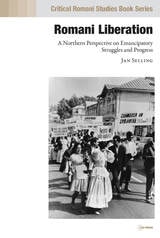
Romani Liberation
A Northern Perspective on Emancipatory Struggles and ProgressJan Selling
Central European University Press, 2022
Centered on the trajectory of the emancipation of Roma people in Scandinavia, Romani Liberation is a powerful challenge to the stereotype describing Romani as passive and incapable of responsibility and agency. The author also criticizes benevolent but paternalistic attitudes that center on Romani victimhood.
The first part of the book offers a comprehensive overview of the chronological phases of Romani emancipation in Sweden and other countries. Underscoring the significance of Roma activism in this process, Jan Selling profiles sixty Romani activists and protagonists, including numerous original photos. The narrative is followed by an analysis of the concepts of historical justice and of the process of decolonizing Romani Studies. Selling highlights the impact of the historical contexts that have enabled or impeded the success of the struggles against discrimination and for equal rights, emphasizing Romani activism as a precondition for liberation.
The particular Swedish framework is accentuated by a stimulating preface by the international activist Nicoleta Bitu, and afterwords by two prominent Romani advocates, the politician Soraya Post and the singer, author, and elder Hans Caldaras.

Science and Social Inequality
Feminist and Postcolonial IssuesSandra Harding
University of Illinois Press, 2006
In Science and Social Inequality, Sandra Harding makes the provocative argument that the philosophy and practices of today's Western science, contrary to its Enlightenment mission, work to insure that more science will only worsen existing gaps between the best and worst off around the world. She defends this claim by exposing the ways that hierarchical social formations in modern Western sciences encode antidemocratic principles and practices, particularly in terms of their services to militarism, the impoverishment and alienation of labor, Western expansion, and environmental destruction. The essays in this collection--drawing on feminist, multicultural, and postcolonial studies--propose ways to reconceptualize the sciences in the global social order.
At issue here are not only social justice and environmental issues but also the accuracy and comprehensiveness of our understandings of natural and social worlds. The inadvertent complicity of the sciences with antidemocratic projects obscures natural and social realities and thus blocks the growth of scientific knowledge. Scientists, policy makers, social justice movements and the consumers of scientific products (that is, the rest of us) can work together and separately to improve this situation.

Terry Sanford
Politics, Progress, and Outrageous AmbitionsHoward E. Covington Jr. and Marion A. Ellis
Duke University Press, 1999
After defeating a segregationist campaign in 1960 to win the governorship, Sanford used his years in office to boost public education and advance race relations. A decade later, at the height of tumult on American campuses, Sanford assumed the presidency of Duke University and led it to its position as one of the top universities in the nation. During his more than fifty years as a public servant he was associated with presidents John F. Kennedy, Lyndon B. Johnson, Richard Nixon, and Jimmy Carter. Sanford was a presidential candidate himself in 1972 and 1976, and he won election to the United States Senate in 1986 where his international commission produced an economic recovery plan for Central America. As one of the last New Deal Democrats in the Senate, he remained passionate about the opportunity for leaders to use government to improve people’s lives.
Terry Sanford draws on Sanford’s considerable private and public archive as well as on the recollections of Sanford himself and his family, colleagues, and friends. This biography offers a unique perspective on North Carolina life, politics, political personalities, and the shifting public allegiances of the second half of the twentieth century that transformed life both in North Carolina and throughout the American South.

The 1933 Chicago World's Fair
A Century of ProgressCheryl R. Ganz
University of Illinois Press, 2012
Chicago's 1933 world's fair set a new direction for international expositions. Earlier fairs had exhibited technological advances, but Chicago's fair organizers used the very idea of progress to buoy national optimism during the Depression's darkest years. Orchestrated by business leaders and engineers, almost all former military men, the fair reflected a business-military-engineering model that envisioned a promising future through science and technology's application to everyday life. Fair organizers, together with corporate leaders, believed that progress rides on the tide of technological innovation and consumerism.
But not all those who struggled for a voice at Chicago's 1933 exposition had abandoned the traditional notions of progress that entailed social justice and equality, recognition of ethnic and gender-related accomplishments, and personal freedom and expression. The stark pronouncement of the fair's motto, "Science Finds, Industry Applies, Man Conforms," was challenged by iconoclasts such as Sally Rand, whose provocative fan dance became a persistent symbol of the fair, as well as a handful of others, including African Americans, ethnic populations and foreign nationals, groups of working women, and even well-heeled socialites. They all met obstacles but ultimately introduced personal, social definitions of "progress" and thereby influenced the ways the fair took shape.
In this engaging social and cultural history, Cheryl R. Ganz examines Chicago's second world's fair through the lenses of technology, ethnicity, and gender. The book also features eighty-six photographs--nearly half of which are full color--of key locations, exhibits, and people, as well as authentic ticket stubs, postcards, pamphlets, posters, and other items. From fan dancers to fan belts, The 1933 Chicago World's Fair: A Century of Progress offers the compelling, untold stories of fair planners and participants who showcased education, industry, and entertainment to sell optimism during the depths of the Great Depression.

The Assault on Progress
Technology and Time in American LiteratureJ. Adam Johns
University of Alabama Press, 2008
A belief in progress is a fundamental ethos in American history and culture. The Assault on Progress probes American literary works that challenge the prevailing notion of technology as a manifestation of progress. J. Adam Johns argues that the idea of technology-as-destiny has long been explored—and undercut—in American literary works and that literature remains a crucial site for ongoing debates in this area.
Johns studies the phenomenon by which each generation comes to regard itself as the hinge upon which history turns. He explores several works by historians of technology, focusing in detail on the works of literary critic Lewis Mumford, whose examinations of Herman Melville’s novels provide an early example of critical interest in the abandonment of progress as a value.
He goes on to study the works of William Faulkner and Ralph Ellison, focusing on the convergence of technology and race—machines and slavery, and highlights the ways that these writers have portrayed humans as reduced to machines, evidence that technological “progress” is not always progressive, or liberating to humanity.
The conclusion argues for a shift in our understanding of the relationship between technology and time. According to Johns, writers like Melville, Faulkner, and Ellison help us to think of technology separate from notions of progress, and therefore help us to escape from a perilous ideological bind that forever situates humankind at the end of history.
The Coming of the King James Gospels
A Collection of the Translators’ Work-in-ProgressWard S. Allen
University of Arkansas Press, 1994
The Coming of the King James Gospels is a primary publication exploring the handwritten annotations of the Oxford New Testament Company, made as members completed Matthew, Mark, Luke, and John. Their original edited pages, gathered into one binding as the Bodleian Bishops’ Bible ([1602] b.1), offer us the only known surviving record of their monumental work.
Ward Allen’s painstakingly produced collation of this Bishops’ Bible is available for the first time in acessible visual layout. It allows a reader to study simultaneously the three texts, that of the original Bishops’ Bible, the revisions suggested for the 1602 text, and the final King James version of the Gospels. Rejected readings reveal the reasoning which led to the wording of the final text. Beautifully produced, The Coming of the King James Gospels is now a prime resource for all students of the Bible and the English language.

The Mirage of Health
Utopia, Progress, and Biological ChangeDubos, Jean
Rutgers University Press, 1987
The Mismeasure of Progress
Economic Growth and Its CriticsStephen J. Macekura
University of Chicago Press, 2020
Beginning with the rise of the growth paradigm in the 1940s and 1950s and continuing through the present day, The Mismeasure of Progress is the first book on the myriad thinkers who argued against growth and the conventional way progress had been measured and defined. For growth critics, questioning the meaning and measurement of growth was a necessary first step to creating a more just, equal, and sustainable world. These critics argued that focusing on growth alone would not resolve social, political, and environmental problems, and they put forth alternate methods for defining and measuring human progress.
In today’s global political scene—marked by vast inequalities of power and wealth and made even more fraught by a global climate emergency—the ideas presented by these earlier critics of growth resonate more loudly than ever. Economic growth appealed to many political leaders because it allowed them to avoid addressing political trade-offs and class conflict. It sustained the fiction that humans are somehow separate from nonhuman “nature,” ignoring the intimate and dense connections between the two. In order to create a truly just and equitable society, Macekura argues, we need a clear understanding of our collective needs beyond growth and more holistic definitions of progress that transcend economic metrics like GDP.

The Myth of Progress
Toward a Sustainable FutureTom Wessels
University Press of New England, 2013

The Myth of Progress
Toward a Sustainable FutureTom Wessels
Brandeis University Press, 2023
In this compelling, cogently argued, and acclaimed book, Tom Wessels demonstrates how our current path toward progress, based on continual economic expansion and inefficient use of resources, runs contrary to three foundational scientific laws that govern all complex natural systems. It is a myth, he contends, that progress depends on a growing economy. Wessels explains his theory with his three laws of sustainability: the law of limits to growth; the second law of thermodynamics, which exposes the dangers of increased energy consumption; and the law of self-organization, which results in the marvelous diversity of such highly evolved systems as the human body and complex ecosystems. Wessels argues that these laws, scientifically proven to sustain life in its myriad forms, have been cast aside since the eighteenth century, first by Western economists, political pragmatists, and governments attracted by the idea of unlimited growth, and more recently by a global economy dominated by large corporations, in which consolidation and oversimplification have created large-scale inefficiencies in both material and energy usage.
Wessels makes scientific theory readily accessible by offering examples of how the laws of sustainability function in the complex systems we can observe in the natural world around us. Demonstrating that all environmental problems have their source in a disregard for the laws of sustainability, he concludes with an impassioned argument for cultural change. This new edition has a new preface wherein the author regards The Myth of Progress as his most important work. It has been in constant demand since it was first published in 2006.

The Paradox of Progress
Economic Change, Individual Enterprise, and Politic Culture in Michigan, 1837-1878Martin J. Hershock
Ohio University Press, 2003
Guiding this transformation was the nineteenth-century Republican party. Drawing heavily from both the pro-market commitments of the early Whig party and the anti-capitalist culture of Jackson's Democratic party, the early Republican party found itself torn between these competing values. Nowhere was this contested process more obvious or more absorbing than in Civil War-era Michigan, the birthplace of the Republican party.
In The Paradox of Progress, a fascinating look at the central factors underlying the history of the GOP, Martin Hershock reveals how in their determination to resolve their ideological dilemma, Republicans of the Civil War era struggled to contrive a formula that wo uld enable them to win popular elections and to model America's acceptance of Gilded Age capitalism.

The Pinochet Case
Origins, Progress and ImplicationsEdited by Madeleine Davis
University of London Press, 2003
Garces (1999 recipient of the Right Livelihood Award for his work in preparing the Pinochet case), Carlos Huneeus (CERC, Chile and Pontificia Universidad Catolica de Chile), Brian Loveman (San Diego State University, USA), Carlos Malamud (Real Instituto Elcano de Estudios Internacionales y Estrategicos, Madrid, Spain), Antonio Remiro Brotons (Universidad Autonoma de Madrid, Spain), Naomi Roht-Arriaza (University of California, Hastings College of Law, USA), and Diana Woodhouse (Oxford Brookes University, UK).

The Progress of Romance
Literary Historiography and the Gothic NovelDavid H. Richter
The Ohio State University Press, 1900
The Promise of Progress
The Life and Work of Lewis Henry MorganDaniel Noah Moses
University of Missouri Press, 2009

The Ruin Dwellers
Progress and Its Discontents in the West German CountercultureJake P. Smith
University of Chicago Press, 2025
The Ruin Dwellers takes readers into the urban spaces of youth revolts during the 1970s and ’80s in West Germany and elsewhere in western and central Europe. Whereas earlier generations of leftist activists were primarily oriented toward the utopian future, participants in the youth movements of the 1970s and ’80s developed a more complex set of temporal practices that sought to scramble the borders between the past, present, and future.
Examining a rich corpus of radical texts and practices, historian Jake P. Smith shows that squatters and their leftist allies in this period engaged in social, cultural, and aesthetic experiments with modes of autonomous living. Smith brings to life the real and imagined landscapes conjured in squatted houses and street protests; in art, dress, music, graffiti, and film; and in philosophical, poetic, and political texts. In so doing, he offers an eye-opening look at anarchic world-making practices that found new ways of imagining an emancipated future through inhabiting the fractured past.
The Saints of Progress
A History of Coffee, Migration, and Costa Rican National IdentityCarmen Kordick
University of Alabama Press, 2019
The Saints of Progress: A History of Coffee, Migration, and Costa Rican National Identity chronicles the development of the Tarrazú Valley, a historically remote—although internationally celebrated—coffee-growing region. Carmen Kordick’s work traces the development of this region from the early nineteenth century to the first decades of the twenty-first century to consider the nation-building process from the margins, while also questioning traditional scholarly works that have reproduced, rather than deconstructed, Costa Rica’s exceptionalist national mythology, which hail Costa Rica as Central America’s “white,” democratic, nonviolent, and egalitarian republic.
In this compelling political, economic, and lived history, Kordick suggests that Costa Rica’s exceptionalist and egalitarian mythology emerged during the Cold War, as revolution, civil war, military dictatorship, and state violence plagued much of Central America. From the vantage point of Costa Rica’s premier coffee-producing region, she examines local, national, and transnational processes. This deeply textured narrative details the inauguration of coffee capitalism, which heightened existing class divisions; a successful armed revolt against the national government, which forged the current political regime; and the onset of massive out-migration to the United States.
Kordick’s research incorporates more than one hundred oral histories and thousands of archival sources gathered in both Costa Rica and the United States to produce a human history of Costa Rica’s past. Her work on the recent past profiles the experiences of migrants in the United States, mostly in New Jersey, where many undocumented Costa Ricans find low-paid work in the restaurant and landscaping sectors. The result is a fine-grained examination of Tarrazú’s development from the 1820s to the present that reshapes traditional understandings of Costa Rica and its national past.
Tradition
Edward Shils
University of Chicago Press, 1981
"Shils is a man of fabled learning, whose mind purrs powerfully like the moth at dusk. I hesitate to use the word conservative of him because it misses the central concern of his work, which is not conservatism, but the conservation of those human resources and achievements which are richest, and matter most."—David A. Martin, Times Literary Supplement
"Tradition is the first comprehensive treatment of the subject that encompasses the totality of tradition in all its multifaceted variables and functions. . . . It is a landmark analytical and theoretical sociological study that not only fills a need but also provides a basic model and impetus for further research."—H. Leon Abrams Jr., Sociology
Understanding ALBA
Progress, Problems, and Prospects of Alternative Regionalism in Latin America and the CaribbeanEdited by Asa K. Cusack
University of London Press, 2018
We
Reviving Social HopeRonald Aronson
University of Chicago Press, 2017
Beneath today’s crisis Aronson examines our heartbreaking story: a century of catastrophic violence and the bewildering ambiguity of progress—all of which have contributed to the evaporation of social hope. As he shows, we are now in a time when hope is increasingly privatized, when—despite all the ways we are connected to each other—we are desperately alone, struggling to weather the maelstrom around us, demoralized by the cynicism that permeates our culture and politics, and burdened with finding personal solutions to social problems.
Yet, Aronson argues, even at a time when false hopes are rife, social hope still persists. Carefully exploring what we mean when we say we “hope” and teasing hope apart from its dangerously misconstrued sibling, “progress,” he locates seeds of real change. He argues that always underlying our experience—even if we completely ignore it—is the fact of our social belonging, and that this can be reactivated into a powerful collective force, an active we. He looks to various political movements, from the massive collective force of environmentalists to the movements around Sanders and Jeremy Corbyn, as powerful examples of socially energized, politically determined, and actionably engaged forms of hope. Even in this age of Donald Trump, the result is an illuminating and inspiring call that anyone can clearly hear: we can still create a better future for everyone, but only if we resist false hopes and act together.

Women at Odds
Indifference, Antagonism, and Progress in Late Victorian LiteratureRiya Das
The Ohio State University Press, 2024
In Women at Odds, Riya Das demonstrates the limitations of female solidarity for the New Woman in Victorian society. On the one hand, feminist antagonism disrupts the status quo in unanticipated ways, and it helps open new domestic and professional pathways for women. On the other hand, the urban professional New Woman’s rhetoric recycles distinctly sexist, racist, and classist conventions, thereby bringing middle-class Englishwomen dialectically—what Das terms “retro-progressively”—into the labor pool of the British empire.
While foregrounding the figure of the New Woman as a white imperialist reformer, Das illustrates how the New Woman movement detaches itself from the domestic politics of female friendship. In works by George Eliot, George Gissing, Olive Schreiner, Bram Stoker, and others, antagonism and indifference enable the fin de siècle New Woman to transcend traditionally defined roles and fashion social progress for herself at the expense of femininities she excludes as “other.” By contesting the critical notion of solidarity as the only force that brings Victorian women’s narratives to fruition, Women at Odds reveals the troubled but effective role of antagonistic and indifferent reformist politics in loosening rigid social structures for privileged populations.
Women in Academe
Progress and ProspectsMariam K. Chamberlain
Russell Sage Foundation, 1988

Women’s Political Representation in Central and Eastern Europe
Enduring Legacies and Complex Realities Amid the Promise of ProgressAnja Vojvodic
Central European University Press, 2026