Results by title
233 books match the query 'Cold War' and 23 start with a
A Cardboard Castle?
An Inside History of the Warsaw Pact, 1955-1991The National Security Archive Mastny
Central European University Press, 2005
A Cold War State of Mind
Brainwashing and Postwar American SocietyMatthew W. Dunne
University of Massachusetts Press, 2013
First popularized during the 1950s, the concept of “brainwashing” is often viewed as an example of Cold War paranoia, an amusing relic of a bygone era. Yet as Matthew W. Dunne shows in this study, over time brainwashing came to connote much more than a sinister form of Communist mind control, taking on broader cultural and political meanings.
Moving beyond well-known debates over Korean War POWs and iconic cultural texts like The Manchurian Candidate, Dunne explores the impact of the idea of brainwashing on popular concerns about freedom, individualism, loyalty, and trust in authority. By the late 1950s the concept had been appropriated into critiques of various aspects of American life such as an insistence on conformity, the alleged “softening” of American men, and rampant consumerism fueled by corporate advertising that used “hidden” or “subliminal” forms of persuasion. Because of these associations and growing anxieties about the potential misuse of psychology, concerns about brainwashing contributed to a new emphasis on individuality and skepticism toward authority in the 1960s. The notion even played an unusual role in the 1968 presidential race, when Republican frontrunner George Romney's claim that he had been “brainwashed” about the Vietnam War by the Johnson administration effectively destroyed his campaign.
In addition to analyzing the evolving meaning of brainwashing over an extended period of time, A Cold War State of Mind explores the class and gender implications of the idea, such as the assumption that working-class POWs were more susceptible to mind control and that women were more easily taken in by the manipulations of advertisers.

A Morning in June
Defending Outpost HarryJames W. Evans, with a foreword by John S. D. Eisenhower
University of Alabama Press, 2010
Exploring the strategic and human dimensions of the defense of Outpost Harry.
By June 1953 the Korean War, marked at the outset by extremely fluid advances and retreats up and down the peninsula, had settled into position warfare very near the original pre-war demarcation line between North and South Korea. At this point both sides were fighting to win a peace, to achieve incremental advantages that could be translated into gains at the peace negotiations in Panmunjom. The battle at Outpost Harry devolved into hand-to-hand combat during a period of constant, intense fighting that lasted two days. The author, although seriously wounded that night, refused evacuation and remained on the hill to successfully lead his company in defense of the outpost. It wasn’t romantic; it wasn’t chivalrous; and many died or were badly wounded. Some of the survivors never fully overcame the mental and physical damage they suffered during the nightmare.
With this book, one of those scarred by that experience recounts the events of the battle and his lifelong efforts to deal with the residual horrors. The Korean Conflict may be called "the forgotten war" by some, but not by those who were on the front lines.
A Rhetorical Crime
Genocide in the Geopolitical Discourse of the Cold WarWeiss-Wendt, Anton
Rutgers University Press, 2018
A Rhetorical Crime shows how genocide morphed from a legal concept into a political discourse used in propaganda battles between the United States and the Soviet Union. Over the course of the Cold War era, nearly eighty countries were accused of genocide, and yet there were few real-time interventions to stop the atrocities committed by genocidal regimes like the Cambodian Khmer Rouge.
Renowned genocide scholar Anton Weiss-Wendt employs a unique comparative approach, analyzing the statements of Soviet and American politicians, historians, and legal scholars in order to deduce why their moral posturing far exceeded their humanitarian action.

A Tale of Two Villages
Coerced Modernization in the East European CountrysideAlina Mungiu-Pippidi
Central European University Press, 2010
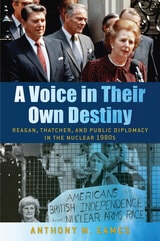
A Voice in Their Own Destiny
Reagan, Thatcher, and Public Diplomacy in the Nuclear 1980sAnthony M. Eames
University of Massachusetts Press, 2023
On June 8, 1982, Ronald Reagan delivered a historic address to the British Parliament, promising that the United States would give people around the world “a voice in their own destiny” in the struggle against Soviet totalitarianism. While British Prime Minister Margaret Thatcher celebrated Reagan’s visit and thanked him for putting “freedom on the offensive,” over 100,000 Britons marched from Hyde Park to Trafalgar Square to protest his arrival and call for nuclear disarmament. Reagan’s homecoming was equally eventful, with 1,000,000 protesters marking his return with a rally for nuclear disarmament in Central Park—the largest protest in American history up to that point.
Employing a wide range of previously unexamined primary sources, Anthony M. Eames demonstrates how the Reagan and Thatcher administrations used innovations in public diplomacy to build back support for their foreign policy agendas at a moment of widespread popular dissent. A Voice in Their Own Destiny traces how competition between the governments of Reagan and Thatcher, the Anglo-American antinuclear movement, and the Soviet peace offensive sparked a revolution in public diplomacy.
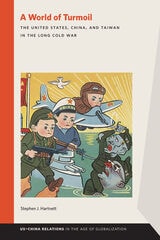
A World of Turmoil
The United States, China, and Taiwan in the Long Cold Warstephen hartnett
Michigan State University Press, 2021
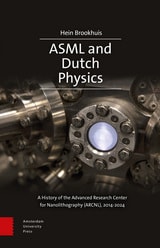
ASML and Dutch Physics
A History of the Advanced Research Center for Nanolithography (ARCNL), 2014-2024Hein Brookhuis
Amsterdam University Press, 2025
ASML and Dutch Physics draws on archival research and interviews to offer insight into how science and industry interact, the motivations that drive such partnerships, and how scientific and technological perspectives are balanced. It reveals how the political and societal context of the twenty-first century imposes new demands on contemporary scientists.
Abuse of Power
How Cold War Surveillance and Secrecy Policy Shaped the Response to 9/11Authored by Athan Theoharis
Temple University Press, 2011
Athan Theoharis, long a respected authority on surveillance and secrecy, established his reputation for meticulous scholarship with his work on the loyalty security program developed under Truman and McCarthy. In Abuse of Power, Theoharis continues his investigation of U.S. government surveillance and historicizes the 9/11 response.
Criticizing the U.S. government's secret activities and policies during periods of "unprecedented crisis," he recounts how presidents and FBI officials exploited concerns about foreign-based internal security threats.
Drawing on information sequestered until recently in FBI records, Theoharis shows how these secret activities in the World War II and Cold War eras expanded FBI surveillance powers and, in the process, eroded civil liberties without substantially advancing legitimate security interests.
Passionately argued, this timely book speaks to the costs and consequences of still-secret post-9/11 surveillance programs and counterintelligence failures. Ultimately, Abuse of Power makes the case that the abusive surveillance policies of the Cold War years were repeated in the government's responses to the September 11 attacks.
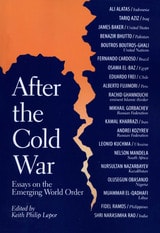
After the Cold War
Essays on the Emerging World OrderEdited by Keith Philip Lepor
University of Texas Press, 1997
The end of the Cold War between the United States and the former Soviet Union reassured people around the world who had lived in fear of a nuclear confrontation between the superpowers. Yet the early euphoria over "peace dividends" and a "new world order" was premature. Conflicts within and between nation-states are springing up around the globe, challenging world leaders and ordinary citizens to find peaceful means for national, group, and individual self-determination.
In this book of specially commissioned essays, twenty world leaders assess the possibilities and perils of the new strategic, political, and economic interrelationships that are emerging around the world. They tackle such fundamental questions as: What is the future of the international system as we approach the twenty-first century? What will be the fate of disintegrating nation-states, and how will the international community respond? Has the nation-state outlived its usefulness? Are we beginning to witness the complete breakdown of the international system?
The contributors are:
- Ali Alatas (Indonesia)
- Tariq Aziz (Iraq)
- James A. Baker III (United States)
- Benazir Bhutto (Pakistan)
- Boutros Boutros-Ghali (United Nations)
- Fernando Henrique Cardoso (Brazil)
- Osama El-Baz (Egypt)
- Eduardo Frei (Chile)
- Alberto Fujimori (Peru)
- Rachid Ghannouchi (eminent Islamic thinker)
- Mikhail Sergeyevich Gorbachev (Russian Federation)
- Kamal Kharrazi (Iran)
- Andrei Kozyrev (Russian Federation)
- Leonid Kuchma (Ukraine)
- Nelson Mandela (South Africa)
- Nursultan Nazarbayev (Kazakhstan)
- Olusegun Obasanjo (Nigeria)
- Muammar El-Qadhafi (Libya)
- Fidel Ramos (Philippines)
- Shri P. V. Narasimha Rao (India)
Ambiguous Borderlands
Shadow Imagery in Cold War American CultureErik Mortenson
Southern Illinois University Press, 2016
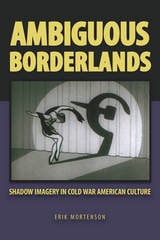
After contextualizing the postwar use of shadow imagery in the wake of the atomic bomb, Ambiguous Borderlands looks at shadows in print works, detailing the reemergence of the pulp fiction crime fighter the Shadow in the late-1950s writings of Sylvia Plath, Amiri Baraka, and Jack Kerouac. Using Freudian and Jungian conceptions of the unconscious, Mortenson then discusses Kerouac’s and Allen Ginsberg’s shared dream of a “shrouded stranger” and how it shaped their Beat aesthetic. Turning to the visual, Mortenson examines the dehumanizing effect of shadow imagery in the Cold War photography of Robert Frank, William Klein, and Ralph Eugene Meatyard. Mortenson concludes with an investigation of the use of chiaroscuro in 1950s film noir and the popular television series The Twilight Zone, further detailing how the complexities of Cold War society were mirrored across these media in the ubiquitous imagery of light and dark.
From comics to movies, Beats to bombs, Ambiguous Borderlands provides a novel understanding of the Cold War cultural context through its analysis of the image of the shadow in midcentury media. Its interdisciplinary approach, ambitious subject matter, and diverse theoretical framing make it essential reading for anyone interested in American literary and popular culture during the fifties and sixties.
American Fiction in the Cold War
Thomas H. Schaub
University of Wisconsin Press, 1991
In American Fiction in the Cold War Thomas Hill Schaub makes it clear that Trilling’s summary was in itself a mythic reconstruction, a prominent example of the way liberal writers in the late 1940s and 1950s came to terms with their political past. Schaub’s book brilliantly analyzes their efforts to reshape an “old” liberalism alleged to hold naively optimistic views of human nature, scientific reason, and social progress into a “new,” skeptical liberalism that recognized the persistence of human evil, the fragility of reason, and the ambiguity of moral decision.
Most important, as American Fiction in the Cold War demonstrates, these liberal reassessments of history, politics, human nature, and destiny—what Schaub calls the “liberal narrative”—mediated the critical and imaginative production of the literary community after World War II. Schaub shows that the elements of this narrative are visible in a wide spectrum of cultural narratives in American history, political philosophy, and social criticism during the Cold War era. His analysis of the dominant critical communities of the late 1940s—led by critics such as Lionel Trilling and Irving Howe, Cleanth Brooks and Allen Tate—recovers the political meanings embedded within their debates over the nature of literary realism, the definition of the novel, and speculations on its “death.”
In the second part of his study, Schaub turns to Ralph Ellison, Flannery O’Connor, Norman Mailer, and John Barth. His readings of their fiction isolate the political and cultural content of works often faulted for their apparent efforts to transcend social history. Reviewing John Barth’s End of the Road, for example, he shows the politics of culture concealed within what seems to be a philosophical narrative. In novel after novel, he demonstrates, the liberal narrative is operating from within, tuning and steering the direction of the plot and the creation of the character. Schaub’s penetrating exploration of the relationship between U.S. political and social thought and the literary consciousness in the early postwar years will be of interest to intellectual historians and to students of American literary culture.
American Girls and Global Responsibility
A New Relation to the World during the Early Cold WarHelgren, Jennifer
Rutgers University Press, 2017
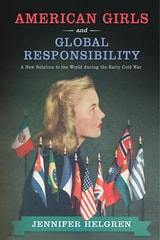
Jennifer Helgren argues that a new internationalist girl citizenship took root in the country in the years following World War II in youth organizations such as Camp Fire Girls, Girl Scouts, YWCA Y-Teens, schools, and even magazines like Seventeen. She shows the particular ways that girls’ identities and roles were configured, and reveals the links between internationalist youth culture, mainstream U.S. educational goals, and the U.S. government in creating and marketing that internationalist girl, thus shaping the girls’ sense of responsibilities as citizens.
American Labor and the Cold War
Grassroots Politics and Postwar Political CultureCherny, Robert
Rutgers University Press, 2004
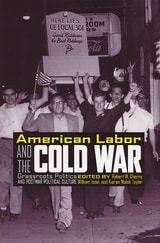
The American labor movement seemed poised on the threshold of unparalleled success at the beginning of the post-World War II era. Fourteen million strong in 1946, unions represented thirty five percent of non-agricultural workers. Why then did the gains made between the 1930s and the end of the war produce so few results by the 1960s?
This collection addresses the history of labor in the postwar years by exploring the impact of the global contest between the United States and the Soviet Union on American workers and labor unions. The essays focus on the actual behavior of Americans in their diverse workplaces and communities during the Cold War. Where previous scholarship on labor and the Cold War has overemphasized the importance of the Communist Party, the automobile industry, and Hollywood, this book focuses on politically moderate, conservative workers and union leaders, the medium-sized cities that housed the majority of the population, and the Roman Catholic Church. These are all original essays that draw upon extensive archival research and some upon oral history sources.
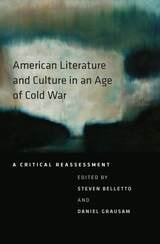
American Literature and Culture in an Age of Cold War
A Critical ReassessmentSteven Belletto
University of Iowa Press, 2012
Likewise, the authors describe phenomena—such as the FBI’s surveillance of writers (especially African Americans), biopolitics, development theory, struggles over the centralization and decentralization of government, and the cultural work of Reaganism—that open up new contexts for discussing postwar culture. Extending the timeline and expanding the geographic scope of Cold War culture, this book reveals both the literature and the culture of the time to be more dynamic and complex than has been generally supposed.
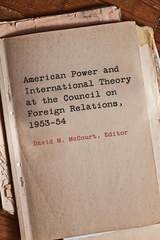
American Power and International Theory at the Council on Foreign Relations, 1953-54
David M. McCourt, Editor
University of Michigan Press, 2020
Between December 1953 and June 1954, the elite think-tank the Council on Foreign Relations (CFR) joined prominent figures in International Relations, including Pennsylvania’s Robert Strausz-Hupé, Yale’s Arnold Wolfers, the Rockefeller Foundation’s William Thompson, government adviser Dorothy Fosdick, and nuclear strategist William Kaufmann. They spent seven meetings assessing approaches to world politics—from the “realist” theory of Hans Morgenthau to theories of imperialism of Karl Marx and V.I. Lenin—to discern basic elements of a theory of international relations.
The study group’s materials are an indispensable window to the development of IR theory, illuminating the seeds of the theory-practice nexus in Cold War U.S. foreign policy. Historians of International Relations recently revised the standard narrative of the field’s origins, showing that IR witnessed a sharp turn to theoretical consideration of international politics beginning around 1950, and remained preoccupied with theory. Taking place in 1953–54, the CFR study group represents a vital snapshot of this shift.
This book situates the CFR study group in its historical and historiographical contexts, and offers a biographical analysis of the participants. It includes seven preparatory papers on diverse theoretical approaches, penned by former Berkeley political scientist George A. Lipsky, followed by the digest of discussions from the study group meetings. American Power and International Theory at the Council on Foreign Relations, 1953–54 offers new insights into the early development of IR as well as the thinking of prominent elites in the early years of the Cold War.
American Theater in the Culture of the Cold War
Producing and Contesting Containment, 1947-1962Judith M. Melton
University of Iowa Press, 1998
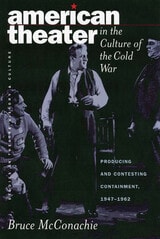
American Theater in the Culture of the Cold War
Producing and Contesting Containment, 1947-1962Bruce A. Mcconachie
University of Iowa Press, 2003
McConachie reconstructs these cognitive processes by relying on scripts, set designs, reviews, memoirs, and other evidence. After establishing his theoretical framework, he focuses on three archtypal figures of containment significant in Cold War culture, Empty Boys, Family Circles, and Fragmented Heroes. McConachie uses a range of plays, musicals, and modern dances from the dominant culture of the Cold War to discuss these figures, including The Seven Year Itch, Cat on a Hot Tin Roof; The King and I,A Raisin in the Sun, Night Journey, and The Crucible. In an epilogue, he discusses the legacy of Cold War theater from 1962 to 1992.
An Absent Presence
Japanese Americans in Postwar American Culture, 1945-1960Caroline Chung Simpson
Duke University Press, 2001
Simpson argues that when popular journals or social theorists engaged the topic of Japanese American history or identity in the Cold War era they did so in a manner that tended to efface or diminish the complexity of their political and historical experience. As a result, the shadowy figuration of Japanese American identity often took on the semblance of an “absent presence.” Individual chapters feature such topics as the case of the alleged Tokyo Rose, the Hiroshima Maidens Project, and Japanese war brides. Drawing on issues of race, gender, and nation, Simpson connects the internment episode to broader themes of postwar American culture, including the atomic bomb, McCarthyism, the crises of racial integration, and the anxiety over middle-class gender roles.
By recapturing and reexamining these vital flashpoints in the projection of Japanese American identity, Simpson fills a critical and historical void in a number of fields including Asian American studies, American studies, and Cold War history.

Anthropology At the Dawn of the Cold War
The Influence of Foundations, Mccarthyism and the CIAEdited by Dustin M. Wax
Pluto Press, 2008
This book breaks new ground in the history of anthropology, opening up an explicit examination of anthropology in the Cold War era. With historical distance, Cold War anthropology has begun to emerge as a distinct field within the discipline. This book brings a number of different approaches to bear on the questions raised by anthropology's Cold War history.
The contributors show how anthropologists became both tools and victims of the Cold War state during the rise of the United States in the post-War period. Examining the intersection between science and power, this book is a compelling read for anthropologists, historians, sociologists, and anyone interested in the way in which colonial and neo-colonial knowledge is produced and constructed.
Anti-Imperialist Modernism
Race and Transnational Radical Culture from the Great Depression to the Cold WarBenjamin Balthaser
University of Michigan Press, 2015
Army of Hope, Army of Alienation
Culture and Contradiction in the American Army Communities of Cold War GermanyJohn P. Hawkins
University of Alabama Press, 2004
Army life has always been known as a life of sacrifice, challenge, and frustration, yet one filled also with deep satisfactions. This is so for the soldiers’ families as much as for the soldiers themselves. Over the years, military and civilian leaders of the US Army have tried to reduce the hardships of military life by creating an array of community services designed to provide social support for soldiers and families and help them live satisfying lives in military communities.
Unfortunately, this effort has not been particularly successful, and frustration, dissatisfaction, and alienation persist among soldiers and family member in the US Army communities in Germany. Discontent continues because the underlying sources of alienation in the Army and among its families are highly complex, poorly understood, and therefore hardly addressed by the Army’s quality-of-life programs that are intended to make soldier and family life more bearable.
In Army of Hope, Army of Alienation: Culture and Contradiction in the American Army Communities of Cold War Germany, the author seeks to penetrate the logic, social structure, and daily practice of life in the American military communities that lay scattered along the frontier between East and West Germany during the final years of the Cold War. In coming to understand the life and thought of these American soldiers and families, ordinary American citizens can learn much about their military forces and about their own society and culture. In addition, a greater understanding about how people work and live around an institution that is at once so important and yet tasked with a mission so different from that of ordinary pursuits can stimulate social scientists and concerned citizens to think differently about culture, society, and behavior in general.
At Penpoint
African Literatures, Postcolonial Studies, and the Cold WarMonica Popescu
Duke University Press, 2020