447 books match the query 'Eastern' and 34 start with a
[more]
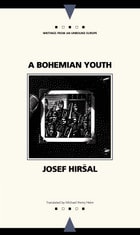
cover of A Bohemian Youth

A Bohemian Youth

Josef Hirsal

Northwestern University Press, 1997

Winner, 1998 PEN Center USA West Award for Translation

Josef Hiršal's experimental novel is a Dada-like romp through the life of a young man born into a Bohemian peasant family. Told in five parts, A Bohemian Youth begins with a word to the wise, moves on to the text, continues with notes and with notes to the note, and ends with a note on the notes to the notes.

More than just a tongue-in-cheek parody of a literary memoir, A Bohemian Youth is a glimpse of the First Czechoslovak Republic as seen through the eyes of a young peasant from the provinces. Abounding in intimate details--the manners of a servant girl, the habits of the town homosexual, the sounds of popular music; the way people eat in wartime—Hiršal's novel is a wrenching and hilarious tale of a young man's emotional and sexual awakening.
[more]
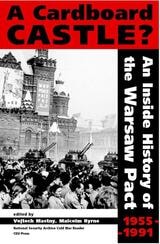
cover of A Cardboard Castle?: An Inside History of the Warsaw Pact, 1955-1991

A Cardboard Castle?

An Inside History of the Warsaw Pact, 1955-1991

The National Security Archive Mastny

Central European University Press, 2005
This is the first book to document, analyze, and interpret the history of the Warsaw Pact based on the archives of the alliance itself. As suggested by the title, the Soviet bloc military machine that held the West in awe for most of the Cold War does not appear from the inside as formidable as outsiders often believed, nor were its strengths and weaknesses the same at different times in its surprisingly long history, extending for almost half a century. The introductory study by Mastny assesses the controversial origins of the "superfluous" alliance, its subsequent search for a purpose, its crisis and consolidation despite congenital weaknesses, as well as its unexpected demise. Most of the 193 documents included in the book were top secret and have only recently been obtained from Eastern European archives by the PHP project. The majority of the documents were translated specifically for this volume and have never appeared in English before. The introductory remarks to individual documents by co-editor Byrne explain the particular significance of each item. A chronology of the main events in the history of the Warsaw Pact, a list of its leading officials, a selective multilingual bibliography, and an analytical index add to the importance of a publication that sets the new standard as a reference work on the subject and facilitate its use by both students and general readers.
[more]
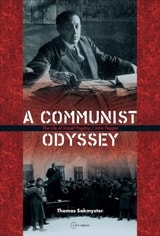
cover of A Communist Odyssey: The life of József Pogány/John Pepper

A Communist Odyssey

The life of József Pogány/John Pepper

Thomas Sakmyster

Central European University Press, 2012
A group of Central European communists, most of them Hungarians, in the interwar period served the world communist movement as international cadres of the Comintern, the Moscow-based Communist International. As an important member of this cohort, József Pogány played a major role in the Hungarian Soviet Republic of 1919, the "March Action" in Germany in 1921, and, under the name of John Pepper, in the development of the American Communist Party of the 1920s. During the 1920s he was an important official in the Comintern apparatus and undertook missions on three continents. A prolific writer and effective organizer, he was one of the most flamboyant and controversial communists of his era. Some of his comrades praised him as "the Hungarian Christopher Columbus." Others, like Trotsky, called him a "political parasite."This study is based on newly available primary sources from Hungary, Russia, and the United States; it is the first ever written about this colorful and well-travelled Hungarian communist. Examines Pogány's development as a socialist and communist, the influence of his Jewish origins on his career, the reasons for his remarkable success in the United States, and the circumstances that led to his arrest and execution in the Stalinist terror.
[more]
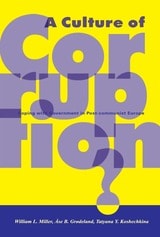
cover of A Culture of Corruption?: Coping with Government in Post-communist Europe

A Culture of Corruption?

Coping with Government in Post-communist Europe

William L. Miller

Central European University Press, 2001
Based upon surveys and interviews with government officials and citizens, this book focuses on issues such as bribery, corruption, inefficiency and freedom of information in Ukraine, Bulgaria, Slovakia and the Czech Republic. The authors go beyond an analysis of public perceptions and behaviour and look at public attitudes towards proposals for reform. They reveal how the problem of citizens' interactions with officials varies in kind as well as in degree across the countries of Central and Eastern Europe.
[more]
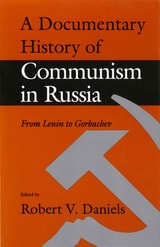
cover of A Documentary History of Communism in Russia: From Lenin to Gorbachev

A Documentary History of Communism in Russia

From Lenin to Gorbachev

Edited by Robert V. Daniels

University Press of New England, 2001
An extensive revision of the valued but unobtainable 1960 edition. Nearly 300 key documents are now readily available in translation.
[more]
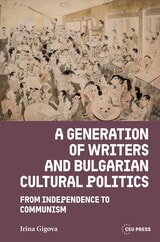
cover of A Generation of Writers and Bulgarian Cultural Politics: From Independence to Communism

A Generation of Writers and Bulgarian Cultural Politics

From Independence to Communism

Irina Gigova

Central European University Press, 2026
In the aftermath of Bulgaria’s liberation from Ottoman rule, a cohort of young men and women found a home in the European arts. This book follows the lives and works of the post-1878 generation of cultural producers who defined Bulgarian identity. A sweeping narrative of social and political change and personal adaptation, the book explores the country’s evolving literary and artistic scene from the 1890s to the 1950s. It traces the impact of wars and coups, ideological shifts and state policies. The book highlights the contributions of key figures and professional associations, their struggles for artistic autonomy, and their efforts to bridge the gaps between high culture and mass entertainment, national and universal art. A portrait of a generation that transformed Bulgarian culture as it navigated the tumult of the early twentieth century, this book offers insights into the broader patterns of transformation, disruption, and cultural negotiation in modern Europe.
[more]
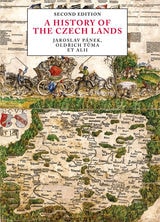
cover of A History of the Czech Lands: Second Edition

A History of the Czech Lands

Second Edition

Edited by Jaroslav Pánek, Oldrich Tuma, et al

Karolinum Press, 2016

Though the Czech Republic is a young nation, the areas within and just outside its modern borders boast an ancient and intricate past. A History of the Czech Lands provides one of the most complete historical accounts of this region to date. This history begins in the Neolithic era and follows the development of the state as it transformed into the Kingdom of Bohemia during the ninth century, into Czechoslovakia after World War I, and finally into the Czech Republic. Such a tumultuous political past arises in part from a fascinating native people, and A History of the Czech Lands profiles the Czechs in great detail, delving into past and present traditions and explaining how generation after generation adapted to a perpetually changing government and economy. In addition, the authors examine the many minorities that now call these lands home—Jews, Slovaks, Poles, Germans, Ukrainians, and others—and how each group’s migration to the region contributed to life in the Czech Republic today.
 
The second edition includes sixty new photographs and a new chapter detailing the transformation of this post-communist country into a member of the European Union. The only study in English of this scope and ambition, A History of the Czech Lands is essential for scholars of Slavic, Central, and East European studies and a must-read for those who trace their ancestry to these lands.
[more]
cover of A Life for Belarus: The Fall and Postmortal Rise of the USSR

A Life for Belarus

The Fall and Postmortal Rise of the USSR

Stanislau Shushkevich

Central European University Press, 2025

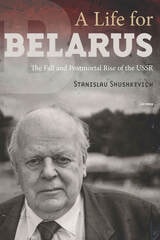
This memoir of the first president of an independent Belarus (1991-1994) tells about the revival of independent Belarus, the difficulties in establishing a democracy and a market economy, a hardened Soviet mentality, and the political immaturity of the intelligentsia and obduracy of the old nomenklatura.

Stanislau Shushkevich, born in 1934, narrates his path from a son of an “enemy of the people” to a doctorate in physics, and then to be the first head of independent Belarus. A series of entertaining essays discuss some major events as well as some minor ones that are barely known. The book describes Shushkevich’s role in hosting the Belavezha Accords, which brought about the end of the Soviet Union, and explores the motivation behind the decision for the de jure dissolution of the empire at a time when the major world leaders were categorically against the division of the USSR into independent states. The author draws particular attention to the role of the Baltic States in the late perestroika period. He also addresses the political passivity of the Soviet intelligentsia and the reasons for the revival of the Soviet Union in Russia and Belarus.

Shushkevich, who lives in Minsk, also provides valuable insights into contemporary Belarus, including an assessment of Lukashenka’s controversial role in recent events.
[more]
cover of A Life under Russian Serfdom: The Memoirs of Savva Dmitrievich Purlevskii, 1800–68

A Life under Russian Serfdom

The Memoirs of Savva Dmitrievich Purlevskii, 1800–68

Boris B. Gorshkov

Central European University Press, 2005
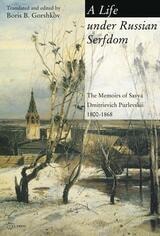
This is a translation of one of very few Russian serfs' memoirs. Savva Purlevskii recollects his life in Russian serfdom and life of his grandparents, parents, and fellow villagers. He describes family and communal life and the serfs' daily interaction with landlords and authorities. Purlevskii came from an initially prosperous family that later became impoverished. Early in his childhood, he lost his father. Purlevskii did not have a chance to gain a formal education. He lived under serfdom until 1831 when at the age of 30 he escaped his servitude.Gorshkov's introduction provides some basic knowledge about Russian serfdom and draws upon the most recent scholarship. Notes provide references and general information about events, places and people mentioned in the memoirs.
[more]
cover of A Little Hungarian Pornography

A Little Hungarian Pornography

Peter Esterhazy

Northwestern University Press, 1997

An extraordinary montage of sex and politics, Péter Esterházy's innovative novel can be seen to prefigure the liberation of Eastern Europe. Written under what the author calls "small, Hungarian, pornographic circumstances," A Little Hungarian Pornography exists in a context of official falsehood and misinformation, of lies of the body, the soul, and the state, perpetuated in the duality of language.

In a state where the lack of democracy was called socialist democracy, economic chaos a socialist economy, and revolution an anti-revolution, the notion of speech and obscenity becomes equally distorted and skewed. Under these circumstances, the author considers the shackles inherent in the vocabulary of oppression and contrasts this with the freedom of the body in sex. A kaleidoscopic digression on perversion and politics, A Little Hungarian Pornography is both satire and critique, trifle and tract, and further support for Esterházy's status as one of the best writers in Europe today.
[more]
cover of A People's History of the Russian Revolution

A People's History of the Russian Revolution

Neil Faulkner

Pluto Press, 2017

The Russian Revolution may be the most misunderstood and misrepresented event in modern history, its history told in a mix of legends and anecdotes. In A People's History of the Russian Revolution, Neil Faulkner sets out to debunk the myths and pry fact from fiction, putting at the heart of the story the Russian people who are the true heroes of this tumultuous tale. In this fast-paced introduction, Faulkner tells the powerful narrative of how millions of people came together in a mass movement, organized democratic assemblies, mobilized for militant action, and overturned a vast regime of landlords, profiteers, and warmongers.
 
Faulkner rejects caricatures of Lenin and the Bolsheviks as authoritarian conspirators or the progenitors of Stalinist dictatorship, and forcefully argues that the Russian Revolution was an explosion of democracy and creativity—and that it was crushed by bloody counter-revolution and replaced with a form of bureaucratic state-capitalism.
 
Grounded by powerful first-hand testimony, this history marks the centenary of the Revolution by restoring the democratic essence of the revolution, offering a perfect primer for the modern reader.
[more]
cover of A Stanislaw Lem Reader

A Stanislaw Lem Reader

Peter Swirski

Northwestern University Press, 1997
Polish-born Lem is one of the best-selling unknown writers of science fiction in the US. This collection assembles in-depth and insightful writings by and about, as well as interviews with, Lem. Two interviews are separated by Lem's own 1991 essay in which he surveys in detail 30 years of his earlier work, much of which has never been translated into English. Readers interested in Lem's provocative and uncompromising view of literature's role in the contemporary cultural environment, and in Lem's opinions about his own fiction, about the relation of literature to science and technology, and the dead ends of contemporary culture, will be fascinated by this eclectic collection.
 
[more]
cover of A Stricken Field: A Novel

A Stricken Field

A Novel

Martha Gellhorn

University of Chicago Press, 2011

Martha Gellhorn was one of the first—and most widely read—female war correspondents of the twentieth century. She is best known for her fearless reporting in Europe before and during WWII and for her brief marriage to Ernest Hemingway, but she was also an acclaimed novelist.
In 1938, before the Munich pact, Gellhorn visited Prague and witnessed its transformation from a proud democracy preparing to battle Hitler to a country occupied by the German army. Born out of this experience, A Stricken Field follows a journalist who returns to Prague after its annexation and finds her efforts to obtain help for the refugees and to convey the shocking state of the country both frustrating and futile. A convincing account of a people under the brutal oppression of the Gestapo, A Stricken Field is Gellhorn’s most powerful work of fiction.
 
“[A] brave, final novel. Its writing is quick with movement and with sympathy; its people alive with death, if one can put it that way. It leaves one with aching heart and questing mind.”—New York Herald Tribune
 
“The translation of [Gellhorn’s] personal testimony into the form of a novel has . . . force and point.”—Times Literary Supplement
[more]
cover of A Tale of Two Villages: Coerced Modernization in the East European Countryside

A Tale of Two Villages

Coerced Modernization in the East European Countryside

Alina Mungiu-Pippidi

Central European University Press, 2010
This dramatic story of land and power from twentieth-century Eastern Europe is set in two extraordinary villages: a rebel village, where peasants fought the advent of Communism and became its first martyrs, and a model village turned forcibly into a town, Dictator Ceausescu's birthplace. The two villages capture among themselves nearly a century of dramatic transformation and social engineering, ending up with their charged heritage in the present European Union.
[more]
cover of A Voltaire for Russia: A. P. Sumarokov's Journey from Poet-Critic to Russian Philosophe

A Voltaire for Russia

A. P. Sumarokov's Journey from Poet-Critic to Russian Philosophe

Amanda Ewington

Northwestern University Press, 2010

In A Voltaire for Russia, Amanda Ewington examines the tumultuous literary career of Alexander Petrovich Sumarokov in relation to that of his slightly older French contemporary, Voltaire. Although largely unknown in the English-speaking world, Sumarokov was one of the founding fathers of modern Russian literature, renowned in his own time as a great playwright and prolific

poet.

A Voltaire for Russia polemicizes with long-accepted readings of Sumarokov as an imitator of French neoclassical poets, ultimately questioning the very notion of a Russian “classicism.” Ewington uncovers Sumarokov’s poignantly personal devotion to Voltaire as a new framework for understanding not only his works but also his literary allegiances and agenda, as he sets out to establish a Russian literature and cultivate a reading public.
[more]
cover of Administrative Law in Central and Eastern Europe

Administrative Law in Central and Eastern Europe

Denis J. Galligan

Central European University Press, 1998
Following the constitutional and political reforms in Central and Eastern Europe of the last decade, the time has now come for the whole-scale reform of public administration and the creation of a professional civil service. What is needed is a clear sense of the objectives to be achieved by the administration; and the provision of adequate resources to perform the tasks of public administration. In addition, and perhaps most importantly of all, there must be a sound legal basis for public administration. Recognizing these realities, this book examines administrative law and administrative institutions in Central and Eastern Europe. In a series of case studies, discussing each country in the region in turn, it looks at the ways in which a range of administrative decisions are reached and at how the citizens affected by them are treated. The material for each of the fourteen chapters was collected by a person or persons native to the respective country.
[more]
cover of Aesthetics of Alienation: Reassessment of Early Soviet Cultural Theories

Aesthetics of Alienation

Reassessment of Early Soviet Cultural Theories

Evgeny Dobrenko

Northwestern University Press, 2005

This provocative work takes issue with the idea that Socialist Realism was mainly the creation of party leaders and was imposed from above on the literati who lived and worked under the Soviet regime. Evgeny Dobrenko, a leading expert on Soviet literature, argues instead--and offers persuasive evidence--that the aesthetic theories underpinning Socialist Realism arose among the writers themselves, born of their proponents' desire for power in the realm of literary policymaking. Accordingly, Dobrenko closely considers the evolution of these theories, deciphering the power relations and social conditions that helped to shape them.

In chapters on Proletkult, RAPP, LEF, and Pereval, Dobrenko reexamines the theories generated by these major Marxist literary groupings of the early Soviet Union. He shows how each approached the problems of literature's response to the presumed social mandate of the young communist society, and how Socialist Realism emerged as a conglomerate of these earlier, revolutionary theories. With extensive and detailed reference to supporting testimony and documents, Dobrenko clearly demonstrates how Socialist Realism was created from within the revolutionary culture, and how this culture and its disciples fully participated in this creative process. His work represents a major breakthrough in our current understanding of the complex sources that contributed to early Soviet culture.
[more]
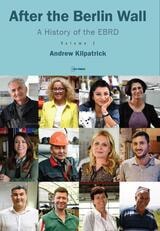
cover of After the Berlin Wall: A History of the EBRD, Volume 1

After the Berlin Wall

A History of the EBRD, Volume 1

Andrew Kilpatrick

Central European University Press, 2020

After the Berlin Wall tells the inside story of an international financial institution, the European Bank for Reconstruction and Development (EBRD), created in the aftermath of communism to help the countries of central and eastern Europe transition towards open market-oriented democratic economies. 

The first volume of a history in two parts, After the Berlin Wall charts the EBRD’s life from a fledgling high-risk start-up investing in former socialist countries from 1991 to become an established member of the international financial community, which (as of April 2020) operates in almost 40 countries across three continents. 

This volume describes the multilateral negotiations that created this cosmopolitan institution with a ‘European character’ and the emergence of the EBRD’s unique business model: a focus on the private sector and a mission to deliver development impact with sustainable financial returns. The author recounts the challenges that ‘transition’ countries faced in moving from a defunct to a functioning economic system and maps the EBRD’s response to critical events, from the dissolution of the Soviet Union, to the safe confinement of the Chernobyl disaster site, the debt default in Russia and the onset of the global financial crisis in 2008.

[more]
cover of After the Invasion: The Soviet Army and Czech Society 1968—1991

After the Invasion

The Soviet Army and Czech Society 1968—1991

Marie Cerná

Karolinum Press, 2024

Analyzes the historical significance of the Soviet invasion of Czechoslovakia. 

This book addresses different aspects of the Soviet army’s twenty-year presence in Czechoslovakia between 1968 and 1991. It explores the circumstances of the Soviet settling in the country, immediately related to the invasion of the Warsaw Pact armies in August 1968; its active interference in the political developments in the early stage of the “normalization” era; and the universal support provided by the normalization era regime. It examines the darker side of this support when the constant favoring of Soviet interests—often to the detriment of the local population and the environment—went hand in hand with the resignation of the Czechoslovak state to lawfulness and the execution of effective administration on its territory. 

Based on extensive local and national primary sources, the volume describes the often problematic coexistence of the Soviet garrisons and local inhabitants, who did not have sufficient protection at the central level. In this context, it points out the contradictory logic that framed the mutual coexistence: the official policy of friendship on the one hand and the counter-intelligence protection of Soviet military premises on the other. Marie Cerná records the traces that the presence of the Soviet army left in the collective memory and examines the circumstances of its departure from the country in 1990 and 1991, which began immediately after the change of the political regime. She presents the long-term presence of the Soviet army as a fundamentally political and politicized matter, which was first the subject of power controversies and later of propaganda and intentional manipulation. 
[more]
cover of Ageing East and West: Gerontology across the Iron Curtain

Ageing East and West

Gerontology across the Iron Curtain

Daniela Koleva

Central European University Press, 2027
Focusing on communist Bulgaria (1960s–1989), this book shows how a marginal and ostensibly ‘neutral’ science enabled unexpected flows of knowledge, expertise, and practice between the East and the West. Situating Bulgaria within broader regional and international contexts, it highlights how gerontology’s peripheral position opened space for internationalisation, collaboration, and exchange during the Cold War. By tracing these entanglements, the study challenges binary narratives of East and West and offers a new perspective on the history of medicine, ageing, and socialist science. The history of gerontology suggests that the Iron Curtain was never as impenetrable as its name implies, but woven, porous, and unexpectedly permeable, allowing ideas and practices to slip through its threads. Drawing on institutional archives, oral histories, and personal collections, the book demonstrates how gerontology shaped representations of ageing, influenced policies toward the elderly, and afforded scientists a measure of autonomy under socialism.
[more]
cover of Ageing East and West: Gerontology across the Iron Curtain

Ageing East and West

Gerontology across the Iron Curtain

Daniela Koleva

Central European University Press, 2027

Focusing on communist Bulgaria (1960s–1989), this book shows how a marginal and ostensibly ‘neutral’ science enabled unexpected flows of knowledge, expertise, and practice between the East and the West. Situating Bulgaria within broader regional and international contexts, it highlights how gerontology’s peripheral position opened space for internationalisation, collaboration, and exchange during the Cold War. By tracing these entanglements, the study challenges binary narratives of East and West and offers a new perspective on the history of medicine, ageing, and socialist science. The history of gerontology suggests that the Iron Curtain was never as impenetrable as its name implies, but woven, porous, and unexpectedly permeable, allowing ideas and practices to slip through its threads. Drawing on institutional archives, oral histories, and personal collections, the book demonstrates how gerontology shaped representations of ageing, influenced policies toward the elderly, and afforded scientists a measure of autonomy under socialism.
[more]
cover of Alienated Women: A Study on Polish Women's Writing, 1845 -1918

Alienated Women

A Study on Polish Women's Writing, 1845 -1918

Grazyna Borkowska

Central European University Press, 2001
Women’s studies are still in their infancy in Poland and this pioneering book is one of the most comprehensive and well-researched studies on nineteenth-century Polish women prose writers. Selecting writers that reflect the most turbulent time in Polish women’s literature, such as Klementyna Hoffmanowa, Narcyza Zmichovska, Eliza Orzeszkowa and Zofia Nalkowska. Borkowska’s approach of major feminist theories and post-feminist thought results in astonishing findings that throw new light on Polish women writers and their contribution to European thought. The author’s intelligent and effective use of feminist criticism and clarity of thought make Alienated Women a landmark study, suitable for (all students) and scholars of Polish literature, women’s studies and feminist theory.
[more]
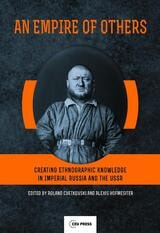
cover of An Empire of Others: Creating Ethnographic Knowledge in Imperial Russia and the USSR

An Empire of Others

Creating Ethnographic Knowledge in Imperial Russia and the USSR

Alexis Hofmeister

Central European University Press, 2014
Ethnographers helped to perceive, to understand and also to shape imperial as well as Soviet Russia's cultural diversity. This volume focuses on the contexts in which ethnographic knowledge was created. Usually, ethnographic findings were superseded by imperial discourse: Defining regions, connecting them with ethnic origins and conceiving national entities necessarily implied the mapping of political and historical hierarchies. But beyond these spatial conceptualizations the essays particularly address the specific conditions in which ethnographic knowledge appeared and changed. On the one hand, they turn to the several fields into which ethnographic knowledge poured and materialized, i.e., history, historiography, anthropology or ideology. On the other, they equally consider the impact of the specific formats, i.e., pictures, maps, atlases, lectures, songs, museums, and exhibitions, on academic as well as non-academic manifestations.
[more]
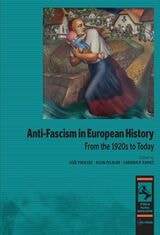
cover of Anti-fascism in European History: From the 1920s to Today

Anti-fascism in European History

From the 1920s to Today

Jože Pirjevec

Central European University Press, 2023

The increasing radicalization of political life in most countries in Europe lends special relevance to studies of the antifascist legacies on the continent. This insightful collection of essays is an in-depth review of antifascism in Slovenia, setting it in the context of related movements elsewhere in Europe. The period treated by the 19 essays comprises the interwar period, World War Two, and the post-war decades. The comparative and transnational perspectives advanced by the volume change our understanding of antifascism.

The essays deal with the right-wing but also left-wing instrumentalization of antifascism, with a particular focus on the communist and post-communist periods. The authors point out that antifascism comes in various strains, whether inspired by liberalism, social democracy, communism, monarchism, anarchism, or even Christian conservatism. The contributors bring to light several overlooked antifascist actors, campaigns, and organisations, mostly in Slovenia and the Adriatic area.
[more]
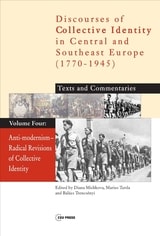
cover of Anti-modernism: Radical Revisions of Collective Identity

Anti-modernism

Radical Revisions of Collective Identity

Ahmet Ersoy

Central European University Press, 2014
The last volume of the Discourses of Collective Identity in Central and Southeast Europe 1770–1945 series presents 46 texts under the heading of "antimodernism". In a dynamic relationship with modernism, from the 1880s to the 1940s, and especially during the interwar period, the antimodernist political discourse in the region offered complex ideological constructions of national identification. These texts rejected the linear vision of progress and instead offered alternative models of temporality, such as the cyclical one as well as various narratives of decline. This shift was closely connected to the rejection of liberal democratic institutionalism, and the preference for organicist models of social existence, emphasizing the role of the elites (and charismatic leaders) shaping the whole body politic. Along these lines, antimodernist authors also formulated alternative visions of symbolic geography: rejecting the symbolic hierarchies that focused on the normativity of Western European models, they stressed the cultural and political autarchy of their own national community, which in some cases was also coupled with the reevaluation of the Orient. At the same time, this antimodernist turn should not be confused with rightwing radicalism—in fact, the dialogue with the modernist tradition was often very subtle and the anthology also contains texts which offered a criticism of 'modern' totalitarianism in an antimodernist key.
[more]
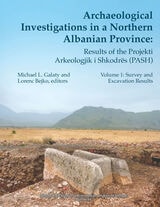
cover of Archaeological Investigations in a Northern Albanian Province: Results of the Projekti Arkeologjik i Shkodrës (PASH): Volume One: Survey and Excavation Results

Archaeological Investigations in a Northern Albanian Province

Results of the Projekti Arkeologjik i Shkodrës (PASH): Volume One: Survey and Excavation Results

Michael L. Galaty and Lorenc Bejko, Editors

University of Michigan Press, 2023

To date, very few northern Albanian archaeological sites have been surveyed and excavated. Situated beyond the reach, and allure, of the Classical Greek colonies of south-central Albania, the region has drawn less scholarly attention. But in various ways, northern Albania is just as important to the ongoing archaeological debates regarding the origins of inequality and the rise of social complexity.

Some of the earliest and largest hill forts and tumuli (burial mounds) in Albania, dating to the Bronze and Iron Age, are located in Shkodër. Shkodër (Rozafa) Castle became the capital of the so-called Illyrian Kingdom, which was conquered by Rome in the early 3rd century BC. This research report, focused on the province of Shkodër, is based on five years of field and laboratory work and is the first synthetic archaeological treatment of this region.

The results of the Projekti Arkeologjik i Shkodrës (or PASH) are presented here in two volumes. Volume 1 includes geological context, a literature review, historical background, and reports on the regional survey and test excavations at three settlements and three tumuli. In Volume 2, the authors describe the artifacts recovered through survey and excavation, including chipped stone, small finds, and pottery from the prehistoric, Classical, Roman, medieval, and post-medieval periods. They also present results of faunal, petrographic, chemical, carpological, and strontium isotope analyses of the artifacts. Extensive supporting data is available on the University of Michigan's Deep Blue data repository: 
https://doi.org/10.7302/xnpy-0e60

These two volumes place northern Albania—and the Shkodër Province in particular—at the forefront of archaeological research in the Balkans.
 
[more]
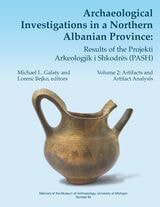
cover of Archaeological Investigations in a Northern Albanian Province: Results of the Projekti Arkeologjik i Shkodrës (PASH): Volume Two: Artifacts and Artifact Analysis

Archaeological Investigations in a Northern Albanian Province

Results of the Projekti Arkeologjik i Shkodrës (PASH): Volume Two: Artifacts and Artifact Analysis

Michael L. Galaty and Lorenc Bejko, Editors

University of Michigan Press, 2023

To date, very few northern Albanian archaeological sites have been surveyed and excavated. Situated beyond the reach, and allure, of the Classical Greek colonies of south-central Albania, the region has drawn less scholarly attention. But in various ways, northern Albania is just as important to the ongoing archaeological debates regarding the origins of inequality and the rise of social complexity.

Some of the earliest and largest hill forts and tumuli (burial mounds) in Albania, dating to the Bronze and Iron Age, are located in Shkodër. Shkodër (Rozafa) Castle became the capital of the so-called Illyrian Kingdom, which was conquered by Rome in the early 3rd century BC. This research report, focused on the province of Shkodër, is based on five years of field and laboratory work and is the first synthetic archaeological treatment of this region.

The results of the Projekti Arkeologjik i Shkodrës (or PASH) are presented here in two volumes. Volume 1 includes geological context, a literature review, historical background, and reports on the regional survey and test excavations at three settlements and three tumuli. In Volume 2, the authors describe the artifacts recovered through survey and excavation, including chipped stone, small finds, and pottery from the prehistoric, Classical, Roman, medieval, and post-medieval periods. They also present results of faunal, petrographic, chemical, carpological, and strontium isotope analyses of the artifacts. Extensive supporting data is available on the University of Michigan's Deep Blue data repository: 
https://doi.org/10.7302/xnpy-0e60

These two volumes place northern Albania—and the Shkodër Province in particular—at the forefront of archaeological research in the Balkans.
 
[more]
cover of Architects of Long Change: The Expert Roots of Post-Socialism in Czechoslovakia (1980–1995)

Architects of Long Change

The Expert Roots of Post-Socialism in Czechoslovakia (1980–1995)

Edited by Michal Kopecek

Karolinum Press, 2026

A thorough retort to the idea that the West led the transition from communism to liberal democracy.

Architects of Long Change examines expert forms of governance and their legitimization before 1989, as well as the transfer of expert knowledge and practices of political and social management during the democratic transition. The contributors argue that so-called neoliberal governance was not solely the result of imported Western political and cultural models, but was also shaped by intellectual, mental, and sociocultural continuities from the period of late socialism. These continuities—and the broader hypothesis of a “long systemic change” spanning from 1980 to 1995—are explored through case studies in legal science, sociology, urban planning, environmental studies, psychotherapy, and business management. 

Architects of Long Change offers a novel perspective on the late communist dictatorship, the democratic revolution of 1989, and the early development of liberal democracy and capitalism in Czechoslovakia and later the Czech Republic.

[more]
cover of Armenia: A Historical Atlas

Armenia

A Historical Atlas

Robert H. Hewsen

University of Chicago Press, 2001

From its conversion to Christianity to the Genocide during World War I, from the Soviet occupation to its recent independence, Armenia has seen a long and often turbulent history. In the magnificent Armenia: A Historical Atlas, Robert H. Hewsen traces Armenia's rich past from ancient times to the present day through more than two hundred full-color maps packed with information about physical geography, demography, and sociopolitical, religious, cultural, and linguistic history.

Hewsen has divided the maps into five sections, each of which begins with a chronology of important dates and a historical introduction to the period. Specialized maps include Ptolemy's second-century map of Armenia, as well as maps of Roman, Cilician, Ottoman, tsarist, and Soviet Armenia. Other maps show the Persian khanate of Erevan, the Caucasian campaigns of World War I, the Armenian Genocide, the Armenian monuments in Turkey and Transcaucasia, the worldwide diaspora, ground plans of selected cities, and plans of the great monastery of Echmiadzin in 1660, 1890, and 1990. The atlas concludes with maps portraying the Karabagh war and the new Armenian Republic, and an extensive bibliography compiles references to the vast historical, ethnological, and travel literature on the region.

The first comprehensive and authoritative atlas of any of the former Soviet republics, this book does not treat Armenia in isolation, but instead sets it within the context of Caucasia as a whole, providing detailed information on neighboring regions such as Georgia and Azerbaijan. Armenia: A Historical Atlas will be an essential reference and an important teaching tool for generations to come.
[more]
cover of Art after Philosophy: Boris Pasternak's Early Prose

Art after Philosophy

Boris Pasternak's Early Prose

Elena Glazov-Corrigan

The Ohio State University Press, 2013
Art after Philosophy: Boris Pasternak’s Early Prose, by Elena Glazov-Corrigan, redefines an area in Slavic studies which has suffered from neglect for several decades, namely, Pasternak’s early prose narratives. In her bold new study, Glazov-Corrigan analyzes the conceptual networks of thought Pasternak developed when he turned to literature after abandoning the study of Neo-Kantianism in Marburg during the summer of 1912. This book shows conclusively that Pasternak’s knowledge of philosophy is inseparable from his prose works, even though in his early stories and novellas (1913–1918) philosophical ideas operate neither as discrete textual units nor as micro-elements or clusters of possible signification. In the early Pasternak, philosophy becomes a narrative art, a large-scale narrative frame, a manner of seeing rather than of constructing reality.
 
After Roman Jakobson’s famous 1935 essay, which characterized the early Pasternak as a “virtuoso of metonymy,” in contrast to the metaphoric Mayakovsky, no other approach has been able to generate comparable scholarly influence. The present study takes up the implicit challenge of this critical impasse. Entering into a debate with Jakobson’s findings, Art after Philosophy illuminates Pasternak’s boldest artistic experiments and suggests to his readers entirely new ways of approaching not only his early but also his later writing.
[more]
cover of Art beyond Borders: Artistic Exchange in Communist Europe (1945-1989)

Art beyond Borders

Artistic Exchange in Communist Europe (1945-1989)

Jérôme Bazin

Central European University Press, 2016
This book presents and analyzes artistic interactions both within the Soviet bloc and with the West between 1945 and 1989. During the Cold War the exchange of artistic ideas and products united Europe’s avant-garde in a most remarkable way. Despite the Iron Curtain and national and political borders there existed a constant flow of artists, artworks, artistic ideas and practices. The geographic borders of these exchanges have yet to be clearly defined. How were networks, centers, peripheries (local, national and international), scales, and distances constructed? How did (neo)avant-garde tendencies relate with officially sanctioned socialist realism? The literature on the art of Eastern Europe provides a great deal of factual knowledge about a vast cultural space, but mostly through the prism of stereotypes and national preoccupations. By discussing artworks, studying the writings on art, observing artistic evolution and artists’ strategies, as well as the influence of political authorities, art dealers and art critics, the essays in Art beyond Borders compose a transnational history of arts in the Soviet satellite countries in the post war period.
[more]
cover of Athene Palace: Hitler's "New Order" Comes to Rumania

Athene Palace

Hitler's "New Order" Comes to Rumania

R. G. Waldeck

University of Chicago Press, 2013
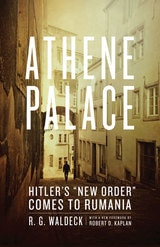
On the day that Paris fell to the Nazis, R. G. Waldeck was checking into the swankiest hotel in Bucharest, the Athene Palace. A cosmopolitan center during the war, the hotel was populated by Italian and German oilmen hoping to secure new business opportunities in Romania, international spies cloaked in fake identities, and Nazi officers whom Waldeck discovered to be intelligent but utterly bloodless. A German Jew and a reporter for Newsweek, Waldeck became a close observer of the Nazi invasion. As King Carol first tried to placate the Nazis, then abdicated the throne in favor of his son, Waldeck was dressing for dinners with diplomats and cozying up to Nazi officers to get insight and information. From her unique vantage, she watched as Romania, a country with a pro-totalitarian elite and a deep strain of anti-Semitism, suffered civil unrest, a German invasion, and an earthquake, before turning against the Nazis.
 
A striking combination of social intimacy and disinterest political analysis, Athene Palace evokes the elegance and excitement of the dynamic international community in Bucharest before the world had comes to grips with the horrors of war and genocide. Waldeck’s account strikingly presents the finely wrought surface of dinner parties, polite discourse, and charisma, while recognizing the undercurrents of violence and greed that ran through the denizens of Athene Palace.
[more]
cover of Austerities and Aspirations: A Comparative History of Growth, Consumption, and Quality of Life in East Central Europe since 1945

Austerities and Aspirations

A Comparative History of Growth, Consumption, and Quality of Life in East Central Europe since 1945

Béla Tomka

Central European University Press, 2020

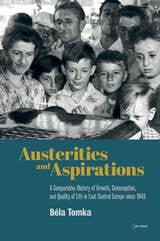
This monograph provides an analysis of the economic performance and living standard in Czechoslovakia and its successor states, Hungary, and Poland since 1945. The novelty of the book lies in its broad comparative perspective: it places East Central Europe in a wider European framework that underlines the themes of regional disparities and European commonalities. Going beyond the traditional growth paradigm, the author systematically studies the historical patterns of consumption, leisure, and quality of life—aspects that Tomka argues can best be considered in relation to one other. By adopting this “triple approach,” he undertakes a truly interdisciplinary research drawing from history, economics, sociology, and demography.

As a result of Tomka’s three-pillar comparative analysis, the book makes a major contribution to the debates on the dynamics of economic growth in communist and postcommunist East Central Europe, on the socialist consumer culture along with its transformation after 1990, and on how the accounts on East Central Europe can be integrated into the emerging field of historical quality of life research.

[more]