Results by title
421 books match the query 'Evolution' and 21 start with a

A Blessed Rage for Order
Deconstruction, Evolution, and ChaosAlexander J. Argyros
University of Michigan Press, 1992
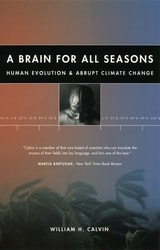
A Brain for All Seasons
Human Evolution and Abrupt Climate ChangeWilliam H. Calvin
University of Chicago Press, 2002
Our ancestors lived through hundreds of such abrupt episodes since the more gradual Ice Ages began two and a half million years ago—but abrupt cooling produced a population bottleneck each time, one that eliminated most of their relatives. We are the improbable descendants of those who survived—and later thrived.
William H. Calvin's marvelous A Brain for All Seasons argues that such cycles of cool, crash, and burn powered the pump for the enormous increase in brain size and complexity in human beings. Driven by the imperative to adapt within a generation to "whiplash" climate changes where only grass did well for a while, our ancestors learned to cooperate and innovate in hunting large grazing animals.
Calvin's book is structured as a travelogue that takes us around the globe and back in time. Beginning at Darwin's home in England, Calvin sits under an oak tree and muses on what controls the speed of evolutionary "progress." The Kalahari desert and the Sterkfontein caves in South Africa serve as the backdrop for a discussion of our ancestors' changing diets. A drought-shrunken lake in Kenya shows how grassy mudflats become great magnets for grazing animals. And in Copenhagen, we learn what ice cores have told us about abrupt jumps in past climates.
Perhaps the most dramatic discovery of all, though, awaits us as we fly with Calvin over the Gulf Stream and Greenland: global warming caused by human-made pollution could paradoxically trigger another sudden episode of global cooling. Because of the accumulation of greenhouse gases in the atmosphere, the oceanic "conveyor belt" that sends warmer waters into the North Atlantic could abruptly shut down. If that happens again, much of the Earth could be plunged into a deep chill within a few years. Europe would become as cold and dry as Siberia. Agriculture could not adapt quickly enough to avoid worldwide famines and wars over the dwindling food supplies—a crash from which it would take us many centuries to recover.
With this warning, Calvin connects us directly to evolution and the surprises it holds. Highly illustrated, conversational, and learned, A Brain for All Seasons is a fascinating view of where we came from, and where we're going.
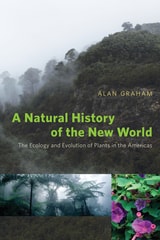
A Natural History of the New World
The Ecology and Evolution of Plants in the AmericasAlan Graham
University of Chicago Press, 2010
The paleoecological history of the Americas is as complex as the region is broad: stretching from the Arctic Circle to Tierra del Fuego, the New World features some of the most extraordinary vegetation on the planet. But until now it has lacked a complete natural history. Alan Graham remedies that with A Natural History of the New World. With plants as his scientific muse, Graham traces the evolution of ecosystems, beginning in the Late Cretaceous period (about 100 million years ago) and ending in the present, charting their responses to changes in geology and climate.
By highlighting plant communities’ roles in the environmental history of the Americas, Graham offers an overdue balance to natural histories that focus exclusively on animals. Plants are important in evolution’s splendid drama. Not only are they conspicuous and conveniently stationary components of the Earth’s ecosystems, but their extensive fossil record allows for a thorough reconstruction of the planet’s paleoenvironments. What’s more, plants provide oxygen, function as food and fuel, and provide habitat and shelter; in short, theirs is a history that can speak to many other areas of evolution.
A Natural History of the New World is an ambitious and unprecedented synthesis written by one of the world’s leading scholars of botany and geology.
A Planet of Viruses
Carl Zimmer
University of Chicago Press, 2011
For years, scientists have been warning us that a pandemic was all but inevitable. Now it's here, and the rest of us have a lot to learn.
Fortunately, science writer Carl Zimmer is here to guide us. In this compact volume, he tells the story of how the smallest living things known to science can bring an entire planet of people to a halt--and what we can learn from how we've defeated them in the past.
Planet of Viruses covers such threats as Ebola, MERS, and chikungunya virus; tells about recent scientific discoveries, such as a hundred-million-year-old virus that infected the common ancestor of armadillos, elephants, and humans; and shares new findings that show why climate change may lead to even deadlier outbreaks. Zimmer’s lucid explanations and fascinating stories demonstrate how deeply humans and viruses are intertwined. Viruses helped give rise to the first life-forms, are responsible for many of our most devastating diseases, and will continue to control our fate for centuries. Thoroughly readable, and, for all its honesty about the threats, as reassuring as it is frightening, A Planet of Viruses is a fascinating tour of a world we all need to better understand.
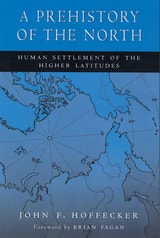
A Prehistory of the North
Human Settlement of the Higher LatitudesHoffecker, John F
Rutgers University Press, 2004
Early humans did not simply drift northward from their African origins as their abilities to cope with cooler climates evolved. The initial settlement of places like Europe and northern Asia, as well as the later movement into the Arctic and the Americas, actually occurred in relatively rapid bursts of expansion. A Prehistory of the North is the first full-length study to tell the complex story, spanning almost two million years, of how humans inhabited some of the coldest places on earth.
In an account rich with illustrations, John Hoffecker traces the history of anatomical adaptations, diet modifications, and technological developments, such as clothing and shelter, which allowed humans the continued ability to push the boundaries of their habitation. The book concludes by showing how in the last few thousand years, peoples living in the circumpolar zone—with the exception of western and central Siberia—developed a thriving maritime economy.
Written in nontechnical language, A Prehistory of the North provides compelling new insights and valuable information for professionals and students.

A Third Window
Natural Life beyond Newton and DarwinRobert W. Ulanowicz
Templeton Press, 2009
Thus far, the dominant paradigms through which modern scientists have viewed nature have been structured primarily around Newtonian and Darwinian approaches. As theoretical ecologist Robert E. Ulanowicz observes in his new work, A Third Window, neither of these models is sufficient for explaining how real change—in the form of creative advance or emergence—takes place in nature.
Drawing on the writings of Walter Elsasser, Karl Popper, Gregory Bateson, Robert Rosen, and Alfred North Whitehead, as well as his own experience as a theoretical ecologist, Ulanowicz offers a new set of axioms for how nature behaves. Chance and disarray in natural processes are shown to be necessary conditions for real change. Randomness is shown to contribute richness and autonomy to the natural world.

Across the Bridge
Understanding the Origin of the VertebratesHenry Gee
University of Chicago Press, 2018
As Gee shows, even as scientific advances have falsified a variety of theories linking these groups, the extant relatives of vertebrates are too few for effective genetic analysis. Moreover, the more we learn about the species that do remain—from sea-squirts to starfish—the clearer it becomes that they are too far evolved along their own courses to be of much use in reconstructing what the latest invertebrate ancestors of vertebrates looked like. Fossils present yet further problems of interpretation. Tracing both the fast-changing science that has helped illuminate the intricacies of vertebrate evolution as well as the limits of that science, Across the Bridge helps us to see how far the field has come in crossing the invertebrate-to-vertebrate divide—and how far we still have to go.
Adaptation in Metapopulations
How Interaction Changes EvolutionMichael J. Wade
University of Chicago Press, 2016
With Adaptation in Metapopulations, Michael J. Wade explores a key component of this new understanding of evolution: interaction. Synthesizing decades of work in the lab and in the field in a book both empirically grounded and underpinned by a strong conceptual framework, Wade looks at the role of interaction across scales from gene selection to selection at the level of individuals, kin, and groups. In so doing, he integrates molecular and organismal biology to reveal the true complexities of evolutionary dynamics from genes to metapopulations.

African Political Parties
Evolution, Institutionalisation and GovernanceEdited by M. A. Mohamed Salih
Pluto Press, 2003
Themes include the evolution and institutionalisation of African political parties; the unique historical, political and social circumstances that shaped their structures and functions.Morten Bøås In the governance trajectory, the authors question the relationship between African political parties and government; political parties and representation; political parties and electoral systems; and political parties and parliament. Case studies include Ethiopia, Ghana, Kenya, Botswana, Namibia, South Africa, Tanzania, Zambia, Zimbabwe and many others.

After Eden
The Evolution of Human DominationKirkpatrick Sale
Duke University Press, 2006
In After Eden, Kirkpatrick Sale answers these questions in a radically new way. Integrating research in paleontology, archaeology, and anthropology, he points to the beginning of big-game hunting as the origin of Homo sapiens’ estrangement from the natural world. Sale contends that a new, recognizably modern human culture based on the hunting of large animals developed in Africa some 70,000 years ago in response to a fierce plunge in worldwide temperature triggered by an enormous volcanic explosion in Asia. Tracing the migration of populations and the development of hunting thousands of years forward in time, he shows that hunting became increasingly adversarial in relation to the environment as people fought over scarce prey during Europe’s glacial period between 35,000 and 10,000 years ago. By the end of that era, humans’ idea that they were the superior species on the planet, free to exploit other species toward their own ends, was well established.
After Eden is a sobering tale, but not one without hope. Sale asserts that Homo erectus, the variation of the hominid species that preceded Homo sapiens and survived for nearly two million years, did not attempt to dominate the environment. He contends that vestiges of this more ecologically sound way of life exist today—in some tribal societies, in the central teachings of Hinduism and Buddhism, and in the core principles of the worldwide environmental movement—offering redemptive possibilities for ourselves and for the planet.
America's Snake
The Rise and Fall of the Timber RattlesnakeTed Levin
University of Chicago Press, 2016
Yet most of us have never seen a timber rattler. Though they’re found in thirty-one states, and near many major cities, in contemporary America timber rattlesnakes are creatures mostly of imagination and innate fear.
Ted Levin aims to change that with America’s Snake, a portrait of the timber rattlesnake, its place in America’s pantheon of creatures and in our own frontier history—and of the heroic efforts to protect it against habitat loss, climate change, and the human tendency to kill what we fear. Taking us from labs where the secrets of the snake’s evolutionary history are being unlocked to far-flung habitats whose locations are fiercely protected by biologists and dedicated amateur herpetologists alike, Levin paints a picture of a fascinating creature: peaceable, social, long-lived, and, despite our phobias, not inclined to bite. The timber rattler emerges here as emblematic of America and also, unfortunately, of the complicated, painful struggles involved in protecting and preserving the natural world.
A wonderful mix of natural history, travel writing, and exemplary journalism, America’s Snake is loaded with remarkable characters—none more so than the snake at its heart: frightening, perhaps; endangered, certainly; and unquestionably unforgettable.

American Pronghorn
Social Adaptations and the Ghosts of Predators PastJohn A. Byers
University of Chicago Press, 1997
In this elegantly written book, John A. Byers argues that these mystifying behaviors evolved in response to the dangerous predators with whom pronghorn shared their grassland home for nearly four million years: among them fleet hyenas, lions, and cheetahs. Although these predators died out ten thousand years ago, pronghorn still behave as if they were present—as if they were living with the ghosts of predators past.
Byers's provocative hypothesis will stimulate behavioral ecologists and mammalogists to consider whether other species' adaptations are also haunted by selective pressures from predators past. The book will also find a ready audience among evolutionary biologists and paleontologists.
Amniote Paleobiology
Perspectives on the Evolution of Mammals, Birds, and ReptilesEdited by Matthew T. Carrano, Timothy J. Gaudin, Richard W. Blob, and John R. Wi
University of Chicago Press, 2006
A collaborative effort of twenty-four researchers, Amniote Paleobiology presents thirteen new and important scientific perspectives on the evolution and biology of this familiar group. It includes new discoveries of dinosaurs and primitive relatives of mammals; studies of mammalian chewing and locomotion; and examinations of the evolutionary process in plesiosaurs, mammals, and dinosaurs. Emphasizing the rich variety of analytical techniques available to vertebrate paleontologists—from traditional description to multivariate morphometrics and complex three-dimensional kinematics—Amniote Paleobiology seeks to understand how species are related to each other and what these relationships reveal about changes in anatomy and function over time. A timely synthesis of modern contributions to the field of evolutionary studies, Amniote Paleobiology furthers our understanding of this diverse group.
An Alfred Russel Wallace Companion
Edited by Charles H. Smith, James T. Costa, and David A. Collard
University of Chicago Press, 2019
Wallace declared his eight years of exploration in southeast Asia to be “the central and controlling incident” of his life. As 2019 marks one hundred and fifty years since the publication of The Malay Archipelago, Wallace’s canonical work chronicling his epic voyage, this collaborative book gathers an interdisciplinary array of writers to celebrate Wallace’s remarkable life and diverse scholarly accomplishments. Wallace left school at the age of fourteen and was largely self-taught, a voracious curiosity and appetite for learning sustaining him throughout his long life. After years as a surveyor and builder, in 1848 he left Britain to become a professional natural history collector in the Amazon, where he spent four years. Then, in 1854, he departed for the Malay Archipelago. It was on this voyage that he constructed a theory of natural selection similar to the one Charles Darwin was developing, and the two copublished papers on the subject in 1858, some sixteen months before the release of Darwin’s On the Origin of Species.
But as the contributors to the Companion show, this much-discussed parallel evolution in thought was only one epoch in an extraordinary intellectual life. When Wallace returned to Britain in 1862, he commenced a career of writing on a huge range of subjects extending from evolutionary studies and biogeography to spiritualism and socialism. An Alfred Russel Wallace Companion provides something of a necessary reexamination of the full breadth of Wallace’s thought—an attempt to describe not only the history and present state of our understanding of his work, but also its implications for the future.

An Elusive Victorian
The Evolution of Alfred Russel WallaceMartin Fichman
University of Chicago Press, 2003
Fichman examines not only Wallace's scientific work as an evolutionary theorist and field naturalist but also his philosophical concerns, his involvement with theism, and his commitment to land nationalization and other sociopolitical reforms such as women's rights. As Fichman shows, Wallace worked throughout his life to integrate these humanistic and scientific interests. His goal: the development of an evolutionary cosmology, a unified vision of humanity's place in nature and society that he hoped would ensure the dignity of all individuals.
To reveal the many aspects of this compelling figure, Fichman not only reexamines Wallace's published works, but also probes the contents of his lesser known writings, unpublished correspondence, and copious annotations in books from his personal library. Rather than consider Wallace's science as distinct from his sociopolitical commitments, An Elusive Victorian assumes a mutually beneficial relationship between the two, one which shaped Wallace into one of the most memorable characters of his time. Fully situating Wallace's wide-ranging work in its historical and cultural context, Fichman's innovative and insightful account will interest historians of science, religion, and Victorian culture as well as biologists.
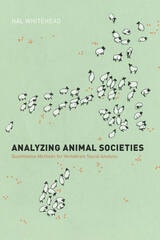
Analyzing Animal Societies
Quantitative Methods for Vertebrate Social AnalysisHal Whitehead
University of Chicago Press, 2008
Analyzing AnimalSocieties presents a conceptual framework for analyzing social behavior and demonstrates how to put this framework into practice by collecting suitable data on the interactions and associations of individuals so that relationships can be described, and, from these, models can be derived. In addition to presenting the tools, Hal Whitehead illustrates their applicability using a wide range of real data on a variety of animal species—from bats and chimps to dolphins and birds. The techniques that Whitehead describes will be profitably adopted by scientists working with primates, cetaceans, birds, and ungulates, but the tools can be used to study societies of invertebrates, amphibians, and even humans. Analyzing AnimalSocieties will become a standard reference for those studying vertebrate social behavior and will give to these studies the kind of quality standard already in use in other areas of the life sciences.
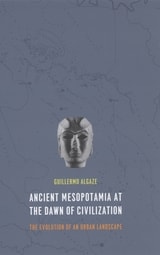
Ancient Mesopotamia at the Dawn of Civilization
The Evolution of an Urban LandscapeGuillermo Algaze
University of Chicago Press, 2008
In Ancient Mesopotamia at the Dawn of Civilization, Guillermo Algaze draws on the work of modern economic geographers to explore how the unique river-based ecology and geography of the Tigris-Euphrates alluvium affected the development of urban civilization in southern Mesopotamia. He argues that these natural conditions granted southern polities significant competitive advantages over their landlocked rivals elsewhere in Southwest Asia, most importantly the ability to easily transport commodities. In due course, this resulted in increased trade and economic activity and higher population densities in the south than were possible elsewhere. As southern polities grew in scale and complexity throughout the fourth millennium, revolutionary new forms of labor organization and record keeping were created, and it is these socially created innovations, Algaze argues, that ultimately account for why fully developed city-states emerged earlier in southern Mesopotamia than elsewhere in Southwest Asia or the world.
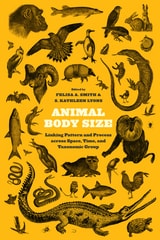
Animal Body Size
Linking Pattern and Process across Space, Time, and Taxonomic GroupEdited by Felisa A. Smith and S. Kathleen Lyons
University of Chicago Press, 2013
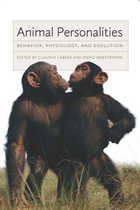
Animal Personalities
Behavior, Physiology, and EvolutionEdited by Claudio Carere and Dario Maestripieri
University of Chicago Press, 2013
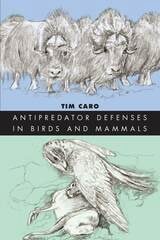
Antipredator Defenses in Birds and Mammals
Tim Caro
University of Chicago Press, 2005
In Antipredator Defenses in Birds and Mammals, Tim Caro ambitiously synthesizes predator defenses in birds and mammals and integrates all functional and evolutionary perspectives on antipredator defenses that have developed over the last century. Structured chronologically along a hypothetical sequence of predation—Caro evokes a gazelle fawn desperate to survive a cheetah attack to illustrate the continuum of the evolution of antipredator defenses—Antipredator Defenses in Birds and Mammals considers the defenses that prey use to avoid detection by predators; the benefits of living in groups; morphological and behavioral defenses in individuals and groups; and, finally, flight and adaptations of last resort.
Antipredator Defenses in Birds and Mammals will be of interest to both specialists and general readers interested in ecological issues.
Authorizing Superhero Comics
On the Evolution of a Popular Serial GenreDaniel Stein
The Ohio State University Press, 2021