Results by title
171 books match the query 'Labor unions' and 11 start with a
A Contest of Ideas
Capital, Politics and LaborNelson Lictenstein
University of Illinois Press, 2013
These incisive writings link the fate of the labor movement to the transformations in the shape of world capitalism, to the rise of the civil rights movement, and to the activists and intellectuals who have played such important roles. Tracing broad patterns of political thought, Lichtenstein offers important perspectives on the relationship of labor and the state, the tensions that sometimes exist between a culture of rights and the idea of solidarity, and the rise of conservatism in politics, law, and intellectual life. The volume closes with portraits of five activist intellectuals whose work has been vital to the conflicts that engage the labor movement, public policy, and political culture.
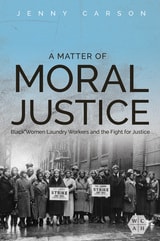
A Matter of Moral Justice
Black Women Laundry Workers and the Fight for JusticeJenny Carson
University of Illinois Press, 2021
Like thousands of African American women, Charlotte Adelmond and Dollie Robinson worked in New York’s power laundry industry in the 1930s. Jenny Carson tells the story of how substandard working conditions, racial and gender discrimination, and poor pay drove them to help unionize the city’s laundry workers. Laundry work opened a door for African American women to enter industry, and their numbers allowed women like Adelmond and Robinson to join the vanguard of a successful unionization effort. But an affiliation with the powerful Congress of Industrial Organizations (CIO) transformed the union from a radical, community-based institution into a bureaucratic organization led by men. It also launched a difficult battle to secure economic and social justice for the mostly women and people of color in the plants. As Carson shows, this local struggle highlighted how race and gender shaped worker conditions, labor organizing, and union politics across the country in the twentieth century.
Meticulous and engaging, A Matter of Moral Justice examines the role of African American and radical women activists and their collisions with labor organizing and union politics.
A Renegade Union
Interracial Organizing and Labor RadicalismLisa Phillips
University of Illinois Press, 2013
A Union for Appalachian Healthcare Workers
The Radical Roots and Hard Fights of Local 1199John Hennen
West Virginia University Press, 2021
The union of hospital workers usually referred to as the 1199 sits at the intersection of three of the most important topics in US history: organized labor, health care, and civil rights. John Hennen’s book explores the union’s history in Appalachia, a region that is generally associated with extractive industries but has seen health care grow as a share of the overall economy.
With a multiracial, largely female, and notably militant membership, 1199 was at labor’s vanguard in the 1970s, and Hennen traces its efforts in hospitals, nursing homes, and healthcare centers in West Virginia, eastern Kentucky, and Appalachian Ohio. He places these stories of mainly low-wage women workers within the framework of shake-ups in the late industrial and early postindustrial United States, relying in part on the words of Local 1199 workers and organizers themselves. Both a sophisticated account of an overlooked aspect of Appalachia’s labor history and a key piece of context for Americans’ current concern with the status of “essential workers,” Hennen’s book is a timely contribution to the fields of history and Appalachian studies and to the study of social movements.
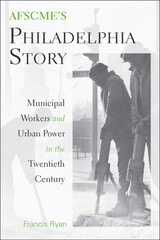
AFSCME's Philadelphia Story
Municipal Workers and Urban Power in the Twentieth CenturyFrancis Ryan
Temple University Press, 2011
AFSCME's Philadelphia Story provides the most comprehensive account of the early years of the American Federation of State, County and Municipal Employees, which is one of the nation’s largest and most politically powerful unions in the AFL-CIO. Author Francis Ryan details the emergence of the Quaker City's interracial union, charting its beginnings in the political patronage system of one of the nation's most notorious political machines to the first decade of the twenty-first century. Ryan provides new insight into the working class origins of African American political power in the late twentieth century as well as a thorough overview of the role the municipal state played in the urban economy of one of the nation's largest cities.
Ryan describes the work processes and how they changed, and uses workers' testimonies to ground the detailed accounts of issues and negotiations. Beginning in the 1920s and ending in the 2000s, Ryan's study offers a long-term analysis of the growth of a single union in a major American city.
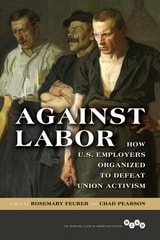
Against Labor
How U.S. Employers Organized to Defeat Union ActivismEdited by Rosemary Feurer and Chad Pearson
University of Illinois Press, 2017

All That Glitters
Class, Conflict, and Community in Cripple CreekElizabeth Jameson
University of Illinois Press, 1998
At the turn of the century, Colorado's Cripple Creek District captured the national imagination with the extraordinary wealth of its gold mines and the unquestionable strength of the militant Western Federation of Miners.
Elizabeth Jameson tells the entertaining story of Cripple Creek, the scene in 1894 of one of radical labor's most stunning victories and, in 1903 and 1904, of one of its most crushing defeats. Jameson draws on working-class oral histories, the Victor and Cripple Creek Daily Press published by 34 of the local labor unions, and the 1900 manuscript census. She connects unions with lodges and fraternal associations, ethnic identity, families, households, and partisan politics. Through these ties, she probes the differences in age, skill, gender, marital status, and ethnicity that strained working-class unity and contributed to the fall of labor in Cripple Creek.
Jameson's book will be required reading for western, ethnic, and working-class historians seeking an alternative interpretation of western mining struggles that emphasizes class, gender, and multiple sources of social identity.
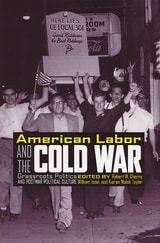
American Labor and the Cold War
Grassroots Politics and Postwar Political CultureCherny, Robert
Rutgers University Press, 2004
The American labor movement seemed poised on the threshold of unparalleled success at the beginning of the post-World War II era. Fourteen million strong in 1946, unions represented thirty five percent of non-agricultural workers. Why then did the gains made between the 1930s and the end of the war produce so few results by the 1960s?
This collection addresses the history of labor in the postwar years by exploring the impact of the global contest between the United States and the Soviet Union on American workers and labor unions. The essays focus on the actual behavior of Americans in their diverse workplaces and communities during the Cold War. Where previous scholarship on labor and the Cold War has overemphasized the importance of the Communist Party, the automobile industry, and Hollywood, this book focuses on politically moderate, conservative workers and union leaders, the medium-sized cities that housed the majority of the population, and the Roman Catholic Church. These are all original essays that draw upon extensive archival research and some upon oral history sources.
American Labor in the Southwest
The First One Hundred YearsEdited by James C. Foster
University of Arizona Press, 1982
The Western Federation of Miners
James C. Foster, D. H. Dinwoodie
The Industrial Workers of the World
Earl Bruce White, James Byrkit
The Rise of Unionized Farm Workers
H. L. Mitchell, Edward D. Beechert, Art Carstens
Mexican Labor, North and South of the Border
John M. Hart, Rodney Anderson, David Maciel
Labor and Politics
Paul Mandel, George N. Green, Charles O. Rice

Archie Green
The Making of a Working-Class HeroSean Burns
University of Illinois Press, 2011
Artisans into Workers
LABOR IN NINETEENTH-CENTURY AMERICABruce Laurie
University of Illinois Press, 1989
history, Bruce Laurie examines the character of working-class factionalism, plebian expectations of government, and relations between the organized few and the unorganized many. Laurie also examines the republican tradition and the movements that drew on it, from the General Trades Unions in the age of Jackson to the Knights of Labor later in the century.