Results by title
58 books match the query 'Mass media and culture' and 5 start with a
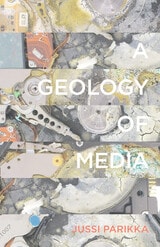
A Geology of Media
Jussi Parikka
University of Minnesota Press, 2015
Media history is millions, even billions, of years old. That is the premise of this pioneering and provocative book, which argues that to adequately understand contemporary media culture we must set out from material realities that precede media themselves—Earth’s history, geological formations, minerals, and energy. And to do so, writes Jussi Parikka, is to confront the profound environmental and social implications of this ubiquitous, but hardly ephemeral, realm of modern-day life.
Exploring the resource depletion and material resourcing required for us to use our devices to live networked lives, Parikka grounds his analysis in Siegfried Zielinski’s widely discussed notion of deep time—but takes it back millennia. Not only are rare earth minerals and many other materials needed to make our digital media machines work, he observes, but used and obsolete media technologies return to the earth as residue of digital culture, contributing to growing layers of toxic waste for future archaeologists to ponder. He shows that these materials must be considered alongside the often dangerous and exploitative labor processes that refine them into the devices underlying our seemingly virtual or immaterial practices.
A Geology of Media demonstrates that the environment does not just surround our media cultural world—it runs through it, enables it, and hosts it in an era of unprecedented climate change. While looking backward to Earth’s distant past, it also looks forward to a more expansive media theory—and, implicitly, media activism—to come.
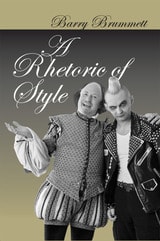
A Rhetoric of Style
Barry Brummett
Southern Illinois University Press, 2008
Exploring style in a global culture
In A Rhetoric of Style, Barry Brummett illustrates how style is increasingly a global system of communication as people around the world understand what it means to dress a certain way, to dance a certain way, to decorate a certain way, to speak a certain way. He locates style at the heart of popular culture and asserts that it is the basis for social life and politics in the twenty-first century.
Brummett sees style as a system of signification grounded largely in image, aesthetics, and extrarational modes of thinking. He discusses three important aspects of this system—its social and commercial structuring, its political consequences, and its role as the chief rhetorical system of the modern world. He argues that aesthetics and style are merging into a major engine of the global economy and that style is becoming a way to construct individual identity, as well as social and political structures of alliance and opposition. It is through style that we stereotype or make assumptions about others’ political identities, their sexuality, their culture, and their economic standing.
To facilitate theoretical and critical analysis, Brummett develops a systematic rhetoric of style and then demonstrates its use through an in-depth exploration of gun culture in the United States. Armed with an understanding of how this rhetoric of style works methodologically, students and scholars alike will have the tools to do their own analyses. Written in clear and engaging prose, A Rhetoric of Style presents a novel discussion of the workings of style and sheds new light on a venerable and sometimes misunderstood rhetorical concept by illustrating how style is the key to constructing a rhetoric for the twenty-first century.

Abject Performances
Aesthetic Strategies in Latino Cultural ProductionLeticia Alvarado
Duke University Press, 2018

Advertising as Culture
Edited by Chris Wharton
Intellect Books, 2013

American Blockbuster
Movies, Technology, and WonderCharles R. Acland
Duke University Press, 2020