Results by title
184 books match the query 'Murder' and 20 start with a

A Death in Bali
A Jenna Murphy MysteryNancy Tingley
Ohio University Press, 2018
Intrepid young curator-turned-private eye Jenna Murphy—whom readers first met in A Head in Cambodia—goes to the tourist town of Ubud to study early twentieth-century Balinese painting. But her first discovery when she arrives in Indonesia is the speared body of expat artist Flip Hendricks. She soon is working with an old friend, a detective for the Ubud police force, to seek the killer. Jenna suspects the motive for the killing has to do with Flip’s paintings. Detective Wayan Tyo is not so sure.
Is Jenna right, or are there other forces at work in this paradise overrun with tourists? The threats to Jenna’s safety pile up, until she can no longer deny that her life is in danger. Her entanglement with various men only clouds her judgment and complicates the situation.
As she did in the first Jenna Murphy book, in A Death in Bali, Nancy Tingley draws on her extensive experience as a scholar of Asian art to bring the armchair traveler an immersive, inside view of the art world.
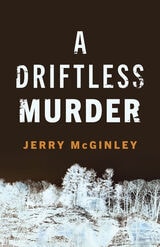
A Driftless Murder
Jerry McGinley
University of Wisconsin Press, 2021
As strange details continue to emerge, the detectives enlist the help of city cop and data expert Shea Sommers. As the team crisscrosses the state to chase a few promising leads, their search expands beyond local guides and neighbors to members of a sinister, secret hunting society. When Duggan mysteriously disappears—and becomes a suspect himself—Donegal must take over the investigation. He soon realizes the case might not only be unsolvable but could land him in prison—or an early grave.
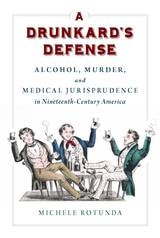
A Drunkard's Defense
Alcohol, Murder, and Medical Jurisprudence in Nineteenth-Century AmericaMichele Rotunda
University of Massachusetts Press, 2021
Is drunkenness a defense for murder? In the early nineteenth century, the answer was a resounding no. Intoxication was considered voluntary, and thus provided no defense. Yet as the century progressed, American courts began to extend exculpatory value to heavy drinking. The medicalization of alcohol use created new categories of mental illness which, alongside changes in the law, formed the basis for defense arguments that claimed unintended consequences and lack of criminal intent. Concurrently, advocates of prohibition cast “demon rum” and the “rum-seller” as the drunkard's accomplices in crime, mitigating offenders' actions. By the postbellum period, a backlash, led by medical professionals and an influential temperance movement, left the legacy of an unsettled legal standard.
In A Drunkard's Defense, Michele Rotunda examines a variety of court cases to explore the attitudes of nineteenth-century physicians, legal professionals, temperance advocates, and ordinary Americans toward the relationship between drunkenness, violence, and responsibility, providing broader insights into the country's complicated relationship with alcohol.
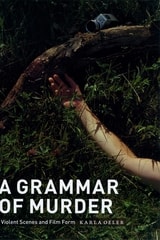
A Grammar of Murder
Violent Scenes and Film FormKarla Oeler
University of Chicago Press, 2009
The dark shadows and offscreen space that force us to imagine violence we cannot see. The real slaughter of animals spliced with the fictional killing of men. The missing countershot from the murder victim’s point of view. Such images, or absent images, Karla Oeler contends, distill how the murder scene challenges and changes film.
Reexamining works by such filmmakers as Renoir, Hitchcock, Kubrick, Jarmusch, and Eisenstein, Oeler traces the murder scene’s intricate connections to the great breakthroughs in the theory and practice of montage and the formulation of the rules and syntax of Hollywood genre. She argues that murder plays such a central role in film because it mirrors, on multiple levels, the act of cinematic representation. Death and murder at once eradicate life and call attention to its former existence, just as cinema conveys both the reality and the absence of the objects it depicts. But murder shares with cinema not only this interplay between presence and absence, movement and stillness: unlike death, killing entails the deliberate reduction of a singular subject to a disposable object. Like cinema, it involves a crucial choice about what to cut and what to keep.
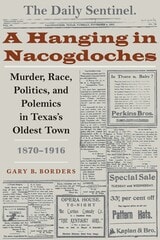
A Hanging in Nacogdoches
Murder, Race, Politics, and Polemics in Texas's Oldest Town, 1870-1916By Gary B. Borders
University of Texas Press, 2006
On October 17, 1902, in Nacogdoches, Texas, a black man named James Buchanan was tried without representation, condemned, and executed for the murder of a white family—all in the course of three hours. Two white men played pivotal roles in these events: Bill Haltom, a leading local Democrat and the editor of the Nacogdoches Sentinel, who condemned lynching but defended lynch mobs, and A. J. Spradley, a Populist sheriff who, with the aid of hundreds of state militiamen, barely managed to keep the mob from burning Buchanan alive, only to escort him to the gallows following his abbreviated trial. Each man's story serves to illuminate a part of the path that led to the terrible parody of justice which lies at the heart of A Hanging in Nacogdoches.
The turn of the twentieth century was a time of dramatic change for the people of East Texas. Frightened by the Populist Party's attempts to unite poor blacks and whites in a struggle for economic justice, white Democrats defended their power base by exploiting racial tensions in a battle that ultimately resulted in the complete disenfranchisement of the black population of East Texas. In telling the story of a single lynching, Gary Borders dramatically illustrates the way politics and race combined to bring horrific violence to small southern towns like Nacogdoches.

A Head in Cambodia
A Jenna Murphy MysteryNancy Tingley
Ohio University Press, 2017
When the alluring, eleventh-century Cambodian stone head of Radha, consort to Krishna, shows up at the Searles Museum, young curator Jenna Murphy doesn’t suspect that it will lead her to a murder. Asian art is her bailiwick, not criminal investigation, and her immediate concern is simply figuring out whether the head is one famously stolen from its body, or a fake.
When a second decapitation happens—this time of an art collector, not a statue—Jenna finds herself drawn into a different kind of mystery, and the stakes are life or death. It turns out that the same talents for research and for unraveling puzzles—the bread and butter of an art historian—have perfectly equipped her to solve crimes. She’s certain the sculpture provides clues to help her solve the case, which takes her to Thailand and Cambodia. But the collectors, dealers, and con artists of the Bangkok art world only compound her questions.
A Head in Cambodia is the fiction debut of noted Asian art expert Nancy Tingley. Readers will delight in the rarified world of collecting, as well as getting to know Jenna, an intrepid and shrewd observer who will easily find her place among V.I. Warshawski, Kinsey Milhone, and other great female sleuths.
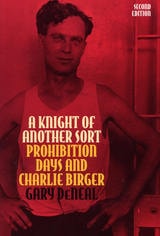
A Knight of Another Sort
Prohibition Days and Charlie Birger, Second EditionGary DeNeal. Foreword by Jim Ballowe
Southern Illinois University Press, 1998
In 1913 Charlie Birger began his career as a bootlegger, supplying southern Illinois with whiskey and beer. He was charismatic, with an easygoing manner and a cavalier generosity that made him popular. The stuff of legend, he was part monster, part Robin Hood. In the early days, he would emerge from his restaurant/saloon in tiny Ledford in Saline County with a cigar box full of coins and throw handfuls in the air for the children. Echoing the consensus on Birger, an anonymous gang member called him "enigmatic," noting that "he had a wonderful quality, a heart of gold. There in Harrisburg sometimes he'd support twelve or fifteen families, buy coal, groceries. . . . [But] he had cold eyes, a killer's eyes. He would kill you for something somebody else would punch you in the nose for."
Drawing from the colorful cast of the living, the dead, and the soon-to-be-dead—a state shared by many associated with Birger and his enemies, the Shelton gang—DeNeal re-creates Prohibition-era southern Illinois. He depicts the fatal shootout between S. Glenn Young and Ora Thomas, the battle on the Herrin Masonic Temple lawn in which six were slain and the Ku Klux Klan crushed, and the wounding of Williamson County state's attorney Arlie O. Boswell. As the gang wars escalated and the roster of corpses lengthened, the gangsters embraced technology. The Sheltons bombed Birger's roadhouse, Shady Rest, from a single-engine airplane. Both Birger and the Sheltons used armored vehicles to intimidate their enemies, and the chatter of machine gun fire grew common.
The gang wars ended with massive arrests, trials, and convictions of gangsters who once had seemed invincible. Charlie Birger was convicted of the murder of West City mayor Joe Adams and sentenced to death. On April 19, 1928, he stood on the gallows looking down on the large crowd that had come to see him die. "It's a beautiful world," Birger said softly as he prepared to leave it.
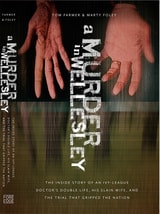
A Murder in Wellesley
The Inside Story of an Ivy-League Doctor’s Double Life, His Slain Wife, and the Trial That Gripped the NationTom Farmer and Marty Foley
University Press of New England, 2017
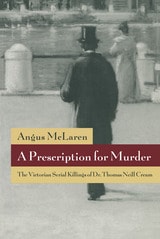
A Prescription for Murder
The Victorian Serial Killings of Dr. Thomas Neill CreamAngus McLaren
University of Chicago Press, 1993
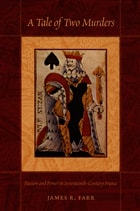
A Tale of Two Murders
Passion and Power in Seventeenth-Century FranceJames R. Farr
Duke University Press, 2005
James R. Farr reveals the Giroux affair not only as a riveting murder mystery but also as an illuminating point of entry into the dynamics of power, justice, and law in seventeenth-century France. Drawing on the voluminous trial records, Farr uses Giroux’s experience in the court system to trace the mechanisms of power—both the formal power vested by law in judicial officials and the informal power exerted by the nobility through patron-client relationships. He does not take a position on Giroux’s guilt or innocence. Instead, he allows readers to draw their own conclusions about who did what to whom on that ill-fated evening in 1638.

Age of Sex Crime
University of Wisconsin Press, 1987
Caputi asks us not only to name the phenomenon of sexually political murder, but to recognize sex crime in all of its various interconnecting manifestations.
Alchemy of Bones
Chicago's Luetgert Murder Case of 1897Robert Loerzel
University of Illinois Press, 2002
On May 1, 1897, Louise Luetgert disappeared. Although no body was found, Chicago police arrested her husband, Adolph, the owner of a large sausage factory, and charged him with murder. The eyes of the world were still on Chicago following the success of the World's Columbian Exposition, and the Luetgert case, with its missing victim, once-prosperous suspect, and all manner of gruesome theories regarding the disposal of the corpse, turned into one of the first media-fueled celebrity trials in American history.
Newspapers fought one another for scoops, people across the country claimed to have seen the missing woman alive, and each new clue led to fresh rounds of speculation about the crime. Meanwhile, sausage sales plummeted nationwide as rumors circulated that Luetgert had destroyed his wife's body in one of his factory's meat grinders.
Weaving in strange-but-true subplots involving hypnotists, palmreaders, English con artists, bullied witnesses, and insane-asylum bodysnatchers, Alchemy of Bones is more than just a true crime narrative; it is a grand, sprawling portrait of 1890s Chicago--and a nation--getting an early taste of the dark, chaotic twentieth century.
American Infanticide
Sexism, Science, and the Politics of SympathyClara S. Lewis
Rutgers University Press, 2025
Emboldened by fear, the sorority sisters investigated. In the driveway next to the kitchen door, they found Emile’s newborn baby girl dead inside a garbage bag. Emile’s crime seemed senseless and left her family and friends with an aching question: what happened?
American Infanticide situates Emile's tragic act in a long intellectual, social, and legal history, uncovering disturbing missing chapters in our national history that undercut myths that have shaped public reactions to so-called monster moms and dumpster babies since the colonial era. Ultimately, the book uncovers how bias and inconsistency dictate how women accused of infant homicide are perceived and punished and sheds new light on how and why our legal responses to infanticide are so deeply misguided.

Amy Biehl’s Last Home
A Bright Life, a Tragic Death, and a Journey of Reconciliation in South AfricaSteven D. Gish
Ohio University Press, 2018
In 1993, white American Fulbright scholar Amy Biehl was killed in a racially motivated attack near Cape Town, after spending months working to promote democracy and women’s rights in South Africa. The ironic circumstances of her death generated enormous international publicity and yielded one of South Africa’s most heralded stories of postapartheid reconciliation. Amy’s parents not only established a humanitarian foundation to serve the black township where she was killed, but supported amnesty for her killers and hired two of the young men to work for the Amy Biehl Foundation. The Biehls were hailed as heroes by Nelson Mandela, Desmond Tutu, and many others in South Africa and the United States—but their path toward healing was neither quick nor easy.
Granted unrestricted access to the Biehl family’s papers, Steven Gish brings Amy and the Foundation to life in ways that have eluded previous authors. He is the first to place Biehl’s story in its full historical context, while also presenting a gripping portrait of this remarkable young woman and the aftermath of her death across two continents.
An Organ of Murder
Crime, Violence, and Phrenology in Nineteenth-Century AmericaCourtney E. Thompson
Rutgers University Press, 2021
An Organ of Murder explores the origins of both popular and elite theories of criminality in the nineteenth-century United States, focusing in particular on the influence of phrenology. In the United States, phrenology shaped the production of medico-legal knowledge around crime, the treatment of the criminal within prisons and in public discourse, and sociocultural expectations about the causes of crime. The criminal was phrenology’s ideal research and demonstration subject, and the courtroom and the prison were essential spaces for the staging of scientific expertise. In particular, phrenology constructed ways of looking as well as a language for identifying, understanding, and analyzing criminals and their actions. This work traces the long-lasting influence of phrenological visual culture and language in American culture, law, and medicine, as well as the practical uses of phrenology in courts, prisons, and daily life.
An Unarmed Woman
John Bennion
Signature Books, 2019
Anatomy of Murder
Mystery, Detective, and Crime FictionCarl D. Malmgren
University of Wisconsin Press, 2001
Aristotle Detective
An Aristotle Detective NovelMargaret Doody
University of Chicago Press, 2014
In Aristotle Detective, we first meet Stephanos—naive Watson to Aristotle’s learned Holmes—a young landed Athenian and student of Aristotle. With the aid of his cunning, olive-loving teacher, Stephanos must clear his exiled cousin of murder and save his family’s honor in a tense public trial. Will Stephanos survive to cinch the case?
Aristotle and Poetic Justice
An Aristotle Detective NovelMargaret Doody
University of Chicago Press, 2014
Stephanos and his teacher return in Aristotle and Poetic Justice, when a party given by wealthy Athenian silver miners leads to kidnapping, a ghost, a road trip to Delphi, and, of course, murder. More historical fiction than a detective novel, this sequel runs the gamut of Athenian social customs, myth, politics, and economics—from the trials of virgin love to the dangers of silver lust.
Artful Assassins
Murder as Art in Modern MexicoFernando Fabio Sanchez
Vanderbilt University Press, 2010
Sanchez argues that the seemingly hopeless cycle of violence experienced by Mexico in the 20th century, as reflected in its "crime genre," reveals a broader intrinsic cultural and political failure that suggests grave implications for the current state of crisis. Tracing the development of a national Mexican identity from the 1910 Mexican Revolution onward, Sanchez focuses on the indelible presence of violence and crime underlying the major works that contributed to a larger communal narrative.
Artful Assassins ultimately offers a panoramic overview of the evolution of Mexican arts and letters, as well as nationalism, by claiming murder and assassination as literary and cinematic motifs. The collapse of post-revolutionary political unity was presaged all along in Mexican culture, Sanchez argues. It need only to have been sought in the art of the nation.