Results by title
114 books match the query 'Other Stories' and 12 start with a
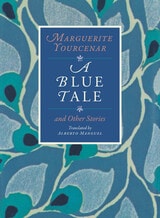
A Blue Tale and Other Stories
Marguerite Yourcenar
University of Chicago Press, 1995
Published to great acclaim in France in 1993, this collection is not only a delight for Marguerite Yourcenar fans but a welcome port of entry for any reader not yet familiar with the author's lengthier, more demanding works. This collection includes three stories written between 1927 and 1930 when the author was in her mid-twenties. These stories cover a range of themes, from an allegory on greed and a scene from the war of the sexes to a witch hunt that obsessively creates its own quarry.
For the devoted readers of Yourcenar, this collection allows a rare glimpse at the beginnings of a writer's craft. In these accomplished but forgotten pieces, edited and introduced by her biographer, Josyane Savigneau, readers will find the blend of fable and fairy tale of Oriental Tales, the psychological chronicle of Dear Departed, and the ironic realism of A Coin in Nine Hands. Read as an introduction to Yourcenar's work, the stories take us into the writer's workshop, as it were, to the early days of creation. A Blue Tale and Other Stories carries the unmistakable voice of a formidable and vastly talented writer.
Marguerite Yourcenar (her pseudonym was an anagram of her family name, Crayencour) was born in Brussels in 1903 and died in Maine in 1987. One of the most respected writers in the French language, she is best known as the author of the acclaimed Memoirs of Hadrian and The Abyss. She was awarded many literary honors, most notably election to the Académie Française in 1980, the first woman so honored.
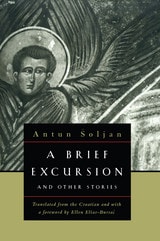
A Brief Excursion and Other Stories
Antun Soljan
Northwestern University Press, 2000
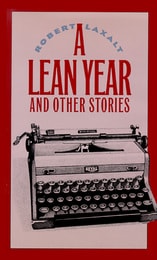
A Lean Year and Other Stories
Robert Laxalt
University of Nevada Press, 1994
In the lead story, Cowboy Clint Hamilton laments that the town is “getting more like a big city every day” as the traditional gambling joints of earlier times give way to the gaudy casinos that will soon become modern glitz.
Sobering experiences from his days as a reporter give Laxalt an insight into murderers and prison life and lethal gas chambers. In a chilling short story, “The Snake Pen,” we find the seed of Robert Laxalt’s celebrated novel, A Man In the Wheatfield.
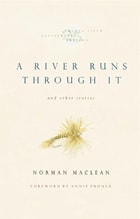
A River Runs Through It and Other Stories, Twenty-fifth Anniversary Edition
Norman Maclean
University of Chicago Press, 2001
Maclean grew up in the western Rocky Mountains in the first decades of the twentieth century. As a young man he worked many summers in logging camps and for the United States Forest Service. The two novellas and short story in this collection are based on his own experiences—the experiences of a young man who found that life was only a step from art in its structures and beauty. The beauty he found was in reality, and so he leaves a careful record of what it was like to work in the woods when it was still a world of horse and hand and foot, without power saws, "cats," or four-wheel drives. Populated with drunks, loggers, card sharks, and whores, and set in the small towns and surrounding trout streams and mountains of western Montana, the stories concern themselves with the complexities of fly fishing, logging, fighting forest fires, playing cribbage, and being a husband, a son, and a father.
By turns raunchy, poignant, caustic, and elegiac, these are superb tales which express, in Maclean's own words, "a little of the love I have for the earth as it goes by." A first offering from a 70-year-old writer, the basis of a top-grossing movie, and the first original fiction published by the University of Chicago Press, A River Runs through It and Other Stories has sold more than a million copies. As Proulx writes in her foreword to this new edition, "In 1990 Norman Maclean died in body, but for hundreds of thousands of readers he will live as long as fish swim and books are made."
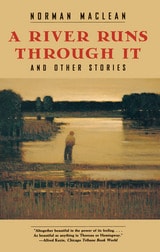
A River Runs Through It, and Other Stories
Norman Maclean
University of Chicago Press, 1976
Based on Norman Maclean's childhood experiences, the title novella has established itself as one of the most moving stories of our time; it captivates readers with vivid descriptions of life along Montana's Big Blackfoot River and its near magical blend of fly fishing with the troubling affections of the heart.
The paperback edition is now available with an evocative new cover by acclaimed Montana painter Russell Chatham.
"A masterpiece. . . . This is more than stunning fiction: It is a lyric record of a time and a life, shining with Maclean's special gift for calling the reader's attention to arts of all kinds—the arts that work in nature, in personality, in social intercourse, in fly-fishing."—Kenneth M. Pierce, Village Voice
Norman Maclean (1902-90), woodsman, scholar, teacher, and storyteller, grew up in the Western Rocky Mountains of Montana and worked for many years in logging camps and for the United States Forestry Service before beginning his academic career. He retired from the University of Chicago in 1973.
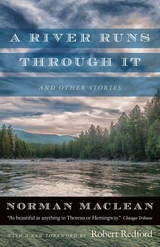
A River Runs through It and Other Stories
Norman Maclean
University of Chicago Press, 2017
Elegantly redesigned, A River Runs through It includes a new foreword by Robert Redford, director of the Academy Award-winning 1992 film adaptation of River. Based on Maclean’s own experiences as a young man, the book’s two novellas and short story are set in the small towns and mountains of western Montana. It is a world populated with drunks, loggers, card sharks, and whores, but also one rich in the pleasures of fly-fishing, logging, cribbage, and family. By turns raunchy and elegiac, these superb tales express, in Maclean’s own words, “a little of the love I have for the earth as it goes by.”
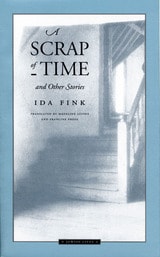
A Scrap of Time and Other Stories
Ida Fink
Northwestern University Press, 1995
Winner of the PEN/Book-of-the-Month Club Translation Prize
Winner of the Anne Frank Prize
These shattering stories describe the lives of ordinary people as they are compelled to do the unimaginable: a couple who must decide what to do with their five-year-old daughter as the Gestapo come to march them out of town; a wife whose safety depends on her acquiescence in her husband's love affair; a girl who must pay a grim price for an Aryan identity card.
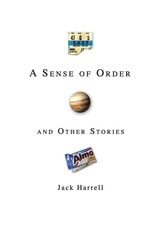
A Sense of Order
And Other StoriesJack Harrell
Signature Books, 2010
In another story, the LDS prophet is drawn to s simpler time when he could wander out unnoticed and buy a candy bar. Church Security won’t let him outside on his own and Public Relations won’t let him wear anything but a suit and tie. Still, the impulse to be a regular guy for an afternoon is compelling. Can’t he make his own decisions? He can, but what are the consequences?
And then there’s Jerry, who passes three men in suits who are talking and laughing at the loading dock behind an LDS temple. One of them looks up, drops a cigarette and crushes it, then slips into a nearby car. Another man—someone who has made Jerry’s life miserable—taunts him, saying: “Jerry, your goodness is your enemy …and tell all your friends.” Who is responsible? Maybe it’s the author’s reverie that’s to blame, but his stories have a way of getting deep inside the psyche and haunting us.
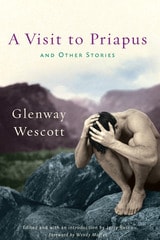
A Visit to Priapus and Other Stories
Glenway Wescott; Edited and with an introduction by Jerry Rosco; Foreword by Wendy Moffat
University of Wisconsin Press, 2013
Finalist, Gay General Fiction, Lambda Literary Awards
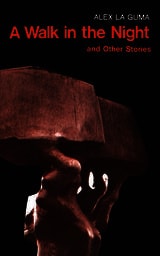
A Walk in the Night and Other Stories
Alex La Guma
Northwestern University Press, 1967

A World Apart and Other Stories
Czech Women Writers at the Fin de SiècleEdited and Translated by Kathleen Hayes
Karolinum Press, 2021
A World Apart brings together translations of eight stories by Czech women from the turn of the twentieth century—a period of female political emancipation and impressive literary development in Czechoslovakia. Though they’re little known to an English-language public today, all of the writers featured in the book were recognized in their own day and constitute a cross-section of the literary styles of the period. Anna Maria Tilschová’s “A Sad Time” is written in a naturalist style, while Růžena Jesenská’s “A World Apart” presents themes and motifs that appealed to the Decadents. Helena Malířová’s “The Sylph” is both diaristic and satirical, whereas Růžena Svobodová’s ironical “A Great Passion,” with its rural setting and folklore motifs, calls to mind the writings of Karel Jaromír Erben. Gabriela Preissová’s short story “Eva” may be read as a celebration of folk culture, and Božena Benešová’s “Friends” is interesting for its psychological presentation of a child’s point of view and its implicit criticism of anti-Semitism. The book is accompanied by the biographies of each author and an introduction by editor and translator Kathleen Hayes.
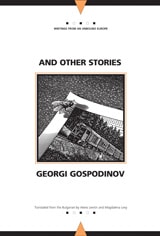
And Other Stories
Georgi Gospodinov
Northwestern University Press, 2007