Results by title
194 books match the query 'People' and 13 start with a
A Curious Mix of People
The Underground Scene of '90s AustinGreg Beets
University of Texas Press, 2023
A twisting path through Austin’s underground music scene in the twentieth century’s last decade, narrated by the people who were there.
It’s 1990 in Austin, Texas. The next decade will be a tipping point in the city's metamorphosis from sleepy college town to major city. Beneath the increasingly slick exterior, though, a group of like-minded contrarians were reimagining an underground music scene. Embracing a do-it-yourself ethos, record labels emerged to release local music, zines cheered and jeered acts beneath the radar of mainstream media outlets, and upstart clubs provided a home venue for new bands to build their sound.
This vibrant scene valued expression over erudition, from the razor-sharp songcraft of Spoon to the fuzzed-out poptones of Sixteen Deluxe, and blurred the boundaries between observer and participant. Evolving in tandem with the city’s emergence on the national stage via the film Slacker and the SXSW conference and festivals, Austin’s musical underground became a spiritual crucible for the uneasy balance between commercial success and cultural authenticity, a tension that still resonates today.
The first book about Austin underground music in the ’90s, A Curious Mix of People is an oral history that tells the story of this transformative decade through the eyes of the musicians, writers, DJs, club owners, record-store employees, and other key figures who were there.
A Mayor for All the People
Kenneth Gibson's NewarkRobert C. Holmes
Rutgers University Press, 2020
In 1970, Kenneth Gibson was elected as Newark, New Jersey’s first African-American mayor, a position he held for an impressive sixteen years. Yet even as Gibson served as a trailblazer for black politicians, he presided over a troubled time in the city’s history, as Newark’s industries declined and its crime and unemployment rates soared.
This book offers a balanced assessment of Gibson’s leadership and his legacy, from the perspectives of the people most deeply immersed in 1970s and 1980s Newark politics: city employees, politicians, activists, journalists, educators, and even fellow big-city mayors like David Dinkins. The contributors include many of Gibson’s harshest critics, as well as some of his closest supporters, friends, and family members—culminating in an exclusive interview with Gibson himself, reflecting on his time in office.
Together, these accounts provide readers with a compelling inside look at a city in crisis, a city that had been rocked by riots three years before Gibson took office and one that Harper’s magazine named “America’s worst city” at the start of his second term. At its heart, it raises a question that is still relevant today: how should we evaluate a leader who faced major structural and economic challenges, but never delivered all the hope and change he promised voters?
A Movement of the People
The Roots of Environmental Education and Advocacy in AlabamaKatie Lamar Jackson, Foreword by David Mathews
University of Alabama Press, 2017
A Movement of the People: The Roots of Environmental Education and Advocacy in Alabama is a detailed history of the Alabama Environmental Quality Association (AEQA). The AEQA helped to establish groundbreaking environmental protection and natural resource preservation policies for the state and the region and grew into one of the nation’s most progressive environmental education efforts.
The AEQA began in 1966 with the relatively simple political action agenda of cleaning up unsightly and unsanitary roadside trash. These inspired citizens collaborated with civic leaders to identify and remove illegal rural dumps and create more regulated landfills statewide. Eventually they became involved in the “Keep America Beautiful” campaign and with the US Public Health Service in its attempt to rid the state of the yellow-fever mosquito vector, Aedes aegypti, which breeds in standing, fetid water. The acme of these early efforts was the passage of Alabama’s Solid Waste Disposal Law of 1969, one of the nation’s first such bills.
The AEQA’s dedicated staff and supporters spearheaded other environmental projects, many of which remain active today, such as recycling programs with industry giants throughout the Southeast and the founding of the Bartram Trail Conference, a multistate initiative to identify and preserve the path that Quaker botanist William Bartram took through the territory before its formation into states.
Using recorded interviews with Martha McInnis, executive vice president of the AEQA, and full access to a meticulously preserved archive of the organization’s papers and artifacts, Katie Lamar Jackson relates this previously untold story of remarkable “citizen activism.” A Movementof the People is a valuable account of the organization’s growth and advancement, both economically and societally, which serves as a blueprint for successful civic activism and grassroots organizing.
A Prophet of the People
Isaiah Shembe and the Making of a South African ChurchLauren V. Jarvis
Michigan State University Press, 2024

A Supreme Court Unlike Any Other
The Deepening Divide Between the Justices and the PeopleKevin J. McMahon
University of Chicago Press, 2024
A data-rich examination of the US Supreme Court's unprecedented detachment from the democratic processes that buttress its legitimacy.
Today’s Supreme Court is unlike any other in American history. This is not just because of its jurisprudence but also because the current Court has a tenuous relationship with the democratic processes that help establish its authority. Historically, this “democracy gap” was not nearly as severe as it is today. Simply put, past Supreme Courts were constructed in a fashion far more in line with the promise of democracy—that the people decide and the majority rules.
Drawing on historical and contemporary data alongside a deep knowledge of court battles during presidencies ranging from FDR to Donald Trump, Kevin J. McMahon charts the developments that brought us here. McMahon offers insight into the altered politics of nominating and confirming justices, the shifting pool of Supreme Court hopefuls, and the increased salience of the Court in elections. A Supreme Court Unlike Any Other is an eye-opening account of today’s Court within the context of US history and the broader structure of contemporary politics.
A Supreme Court Unlike Any Other
The Deepening Divide Between the Justices and the PeopleKevin J. McMahon
University of Chicago Press, 2024
This is an auto-narrated audiobook version of this book.
A data-rich examination of the US Supreme Court's unprecedented detachment from the democratic processes that buttress its legitimacy.
Today’s Supreme Court is unlike any other in American history. This is not just because of its jurisprudence but also because the current Court has a tenuous relationship with the democratic processes that help establish its authority. Historically, this “democracy gap” was not nearly as severe as it is today. Simply put, past Supreme Courts were constructed in a fashion far more in line with the promise of democracy—that the people decide and the majority rules.
Drawing on historical and contemporary data alongside a deep knowledge of court battles during presidencies ranging from FDR to Donald Trump, Kevin J. McMahon charts the developments that brought us here. McMahon offers insight into the altered politics of nominating and confirming justices, the shifting pool of Supreme Court hopefuls, and the increased salience of the Court in elections. A Supreme Court Unlike Any Other is an eye-opening account of today’s Court within the context of US history and the broader structure of contemporary politics.

A World That Will Hold All the People
Suzanne Gardinier
University of Michigan Press, 1996
Amazonia in the Anthropocene
People, Soils, Plants, ForestsBy Nicholas C. Kawa
University of Texas Press, 2016
Widespread human alteration of the planet has led many scholars to claim that we have entered a new epoch in geological time: the Anthropocene, an age dominated by humanity. This ethnography is the first to directly engage the Anthropocene, tackling its problems and paradoxes from the vantage point of the world’s largest tropical rainforest.
Drawing from extensive ethnographic research, Nicholas Kawa examines how pre-Columbian Amerindians and contemporary rural Amazonians have shaped their environment, describing in vivid detail their use and management of the region’s soils, plants, and forests. At the same time, he highlights the ways in which the Amazonian environment resists human manipulation and control—a vital reminder in this time of perceived human dominance. Written in engaging, accessible prose, Amazonia in the Anthropocene offers an innovative contribution to debates about humanity’s place on the planet, encouraging deeper ecocentric thinking and a more inclusive vision of ecology for the future.
Ancient Plants and People
Contemporary Trends in ArchaeobotanyEdited by Marco Madella, Carla Lancelotti, and Manon Savard
University of Arizona Press, 2014
Food has both a public and a private role, and it permeates the life of all people in a society. Food choice, production, and distribution probably represent the most complex indicators of social life, and thus a study of foods consumed by ancient peoples reveals many clues about their lifestyles. But in addition to yielding information about food production, distribution, preparation, and consumption, plant remains recovered from archaeological sites offer precious insights on past landscapes, human adaptation to climate change, and the relationship between human groups and their environment. Revealing important aspects of past human societies, these plant-driven insights widen the spectrum of information available to archaeologists as we seek to understand our history as a biological and cultural species.
Often answers raise more questions. As a result, archaeobotanists are constantly pushed to reflect on the methodological and theoretical aspects of their discipline. The contributors discuss timely methodological issues and engage in debates on a wide range of topics from plant utilization by hunter-gatherers and agriculturalists, to uses of ancient DNA. Ancient Plants and People provides a global perspective on archaeobotanical research, particularly on the sophisticated interplay between the use of plants and their social or environmental context.

Archaeologists in Print
Publishing for the PeopleAmara Thornton
University College London, 2018
The image of the archaeologist as adventurous explorer of foreign lands, part spy, part foreigner, eternally alluring, solidified during this period. That legacy continues, undimmed, today.

Arms and the People
Popular Movements and the Military from the Paris Commune to the Arab SpringEdited by Mike Gonzalez and Houman Barekat
Pluto Press, 2012
Arms and the People explores the impact of profound social polarisation on the internal cohesion of the state’s ‘armed bodies of men’ and on the contested loyalties of soldiers. The different contributors examine a series of historical moments in which a crisis in the military institution has reflected a deeper social crisis which has penetrated that institution and threatened to disable it.
With a range of international contributors who have either studied or been directly involved in such social upheavals, Arms and the People is a pioneering contribution to the study of revolutionary change and will appeal to students and academics in history, politics and sociology.
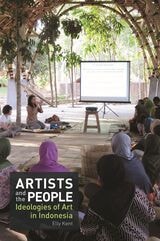
Artists and the People
Ideologies of Art in IndonesiaElly Kent
National University of Singapore Press, 2022
Exploring the work of established and emerging artists in Indonesia’s vibrant art world, this book examines why so many artists in the world’s largest archipelagic nation choose to work directly with people in their art practices. While the social dimension of Indonesian art makes it distinctive in the globalized world of contemporary art, Elly Kent is the first to explore this engagement in Indonesian terms. What are the historical, political, and social conditions that lie beneath these polyvalent practices? How do formal and informal institutions, communities, and artist-run initiatives contribute to the practices and discourses behind socially engaged art in Indonesia? Drawing on interviews with artists, translations of archival material, visual analyses, and participation in artists’ projects, this book presents a unique, interdisciplinary examination of ideologies of art in Indonesia.
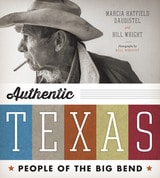
Authentic Texas
People of the Big BendBy Marcia Hatfield Daudistel and Bill Wright
University of Texas Press, 2013
Winner, Southwest Book Award, Border Regional Library Association, 2015
The Texas of vast open spaces inhabited by independent, self-reliant men and women may be more of a dream than a reality for the state’s largely urban population, but it still exists in the Big Bend. One of the most sparsely settled areas of the United States, the Big Bend attracts people who are willing to forego many modern conveniences for a lifestyle that proclaims “don’t fence me in.” Marcia Hatfield Daudistel and Bill Wright believe that the character traits exemplified by folks in the Big Bend—including self-sufficiency, friendliness, and neighborliness—go back to the founding of the state. In this book, they introduce us to several dozen Big Bend residents—old and young, long-settled and recently arrived, racially diverse—who show us what it means to be an authentic Texan.
Interviewing people in Marathon, Big Bend National Park, Terlingua, Redford, Presidio, Alpine, Marfa, Valentine, Balmorhea, Limpia Crossing, and Fort Davis, Daudistel and Wright discover the reasons why residents of the Big Bend make this remote area of Texas their permanent home. In talking to ranchers and writers, entrepreneurs and artists, people living off the grid and urban refugees, they find a common willingness to overcome difficulties through individual skill and initiative. As one interviewee remarks, you have to have a lot of “try” in you to make a life in the Big Bend. Bill Wright’s photographs of the people and landscapes are a perfect complement to the stories of these authentic Texans. Together, these voices and images offer the most complete, contemporary portrait of the Texas Big Bend.