Results by title
424 books match the query 'Russian & Soviet' and 34 start with a
A Bohemian Youth
Josef Hirsal
Northwestern University Press, 1997
Josef Hiršal's experimental novel is a Dada-like romp through the life of a young man born into a Bohemian peasant family. Told in five parts, A Bohemian Youth begins with a word to the wise, moves on to the text, continues with notes and with notes to the note, and ends with a note on the notes to the notes.
More than just a tongue-in-cheek parody of a literary memoir, A Bohemian Youth is a glimpse of the First Czechoslovak Republic as seen through the eyes of a young peasant from the provinces. Abounding in intimate details--the manners of a servant girl, the habits of the town homosexual, the sounds of popular music; the way people eat in wartime—Hiršal's novel is a wrenching and hilarious tale of a young man's emotional and sexual awakening.
A Cardboard Castle?
An Inside History of the Warsaw Pact, 1955-1991The National Security Archive Mastny
Central European University Press, 2005
A Commentary to Pushkin’s Lyric Poetry, 1826–1836
Michael Wachtel
University of Wisconsin Press, 2012
Alexander Pushkin’s lyric poetry—much of it known to Russians by heart—is the cornerstone of the Russian literary tradition, yet until now there has been no detailed commentary of it in any language.
Michael Wachtel’s book, designed for those who can read Russian comfortably but not natively, provides the historical, biographical, and cultural context needed to appreciate the work of Russia’s greatest poet. Each entry begins with a concise summary highlighting the key information about the poem’s origin, subtexts, and poetic form (meter, stanzaic structure, and rhyme scheme). In line-by-line fashion, Wachtel then elucidates aspects most likely to challenge non-native readers: archaic language, colloquialisms, and unusual diction or syntax. Where relevant, he addresses political, religious, and folkloric issues.
Pushkin’s verse has attracted generations of brilliant interpreters. The purpose of this commentary is not to offer a new interpretation, but to give sufficient linguistic and cultural contextualization to make informed interpretation possible.
A Devil's Vaudeville
The Demonic in Dostoevsky's Major FictionWilliam J. Leatherbarrow
Northwestern University Press, 2005
In fresh, often surprising readings of Dostoevsky's individual works, Leatherbarrow shows how such a "language" articulates a series of concerns linked to views expressed elsewhere—in Dostoevsky's journalism and letters—on the question of Russia's relationship to Western Europe. His study also explores the narrative and generic implications of the way Dostoevsky inscribes the demonic in his fictional works—implications that point to a new understanding of familiar concepts in the work of this Russian master. Highly original, deftly argued and written, Leatherbarrow's work offers Dostoevsky specialists and general readers alike an opportunity to rediscover and reassess the rich complexities of some of the world's greatest literature.
A Double Garland
Poetry and Art-Song in Early Nineteenth Century RussiaThomas P. Hodge
Northwestern University Press, 1999
A Generation of Writers and Bulgarian Cultural Politics
From Independence to CommunismIrina Gigova
Central European University Press, 2026
A Herzen Reader
Alexander Herzen, Kathleen Parthe
Northwestern University Press, 2012
A History of Russian Literature
From Its Beginnings to 1900D.S. Mirsky
Northwestern University Press, 1999
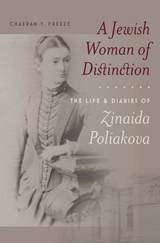
A Jewish Woman of Distinction
The Life and Diaries of Zinaida PoliakovaChaeRan Y. Freeze
Brandeis University Press, 2019
For more than seventy-five years, Poliakova kept detailed diaries of her world, giving us a rare look into the exclusive world of Jewish elites in Moscow and St. Petersburg. These rare documents reveal how Jews successfully integrated into Russian aristocratic society through their intimate friendships and patronage of the arts and philanthropy. And they did it all without converting—in fact, while staunchly demonstrating their Jewishness.
Poliakova’s life was marked by her dual identity as a Russian and a Jew. She cultivated aristocratic sensibilities and lived an extraordinarily lifestyle, and yet she was limited by the confessional laws of the empire and religious laws that governed her household. She brought her Russian tastes, habits, and sociability to France following her marriage to Reuben Gubbay (the grandson of Sir Albert Abdullah Sassoon). And she had to face the loss of almost all her family members and friends during the Holocaust.
Women’s voices are often lost in the sweep of history, and so A Jewish Women of Distinction is an exceptional, much-needed collection. These newly discovered primary sources will change the way we understand the full breadth of the Russian Jewish experience.
A Karamazov Companion
Commentary on the Genesis, Language, and Style of Dostoevsky's NovelVictor Terras
University of Wisconsin Press, 1981
In his introduction, Terras outlines the genesis, main ideas, and structural peculiarities of the novel as well as Dostoevsky’s political, philosophical, and aesthetic stance. The detailed commentary takes the reader through the novel, clarifying aspects of Russian life, the novel’s sociopolitical background, and a number of polemic issues. Terras identifies and explains hundreds of literary and biblical quotations and allusions. He discusses symbols, recurrent images, and structural stylistic patterns, including those lost in English translation.
A Little Hungarian Pornography
Peter Esterhazy
Northwestern University Press, 1997
In a state where the lack of democracy was called socialist democracy, economic chaos a socialist economy, and revolution an anti-revolution, the notion of speech and obscenity becomes equally distorted and skewed. Under these circumstances, the author considers the shackles inherent in the vocabulary of oppression and contrasts this with the freedom of the body in sex. A kaleidoscopic digression on perversion and politics, A Little Hungarian Pornography is both satire and critique, trifle and tract, and further support for Esterházy's status as one of the best writers in Europe today.
A New Word on The Brothers Karamazov
Robert Louis Jackson
Northwestern University Press, 2004
Edited by the nation's most respected senior Dostoevsky scholar, this collection brings together original work by notable writers of varying backgrounds and interests. While drawing on Dostoevsky's other fiction, journalism, and correspondence, the writing of his contemporaries, the state of Russian culture to illuminate the unfolding novel--these essays also make use of new fields of scholarship, such as cognitive psychology, as well as recent theoretical approaches and critical insights. The authors propose readings remarkable for their attentiveness to detail, relatively peripheral characters, and heretofore overlooked incidents, passages, or fragments of dialogue. Some contributors suggest readings so new that they are subvert our usual modes of approaching this novel; all reflect the immediacy of adventuresome, informed encounters with Dostoevsky's final novel. Treating The Brothers Karamazov in terms of a broad range of genres (poetry, narrative, parody, confession, detective fiction) and discourses (medical, scientific, sexual, judicial, philosophical, and theological), these essays embody on a critical and analytic level a search for coherence, meaning, and harmony that continues to animate Dostoevsky's novel in our day.
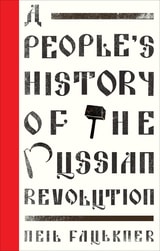
A People's History of the Russian Revolution
Neil Faulkner
Pluto Press, 2017
Faulkner rejects caricatures of Lenin and the Bolsheviks as authoritarian conspirators or the progenitors of Stalinist dictatorship, and forcefully argues that the Russian Revolution was an explosion of democracy and creativity—and that it was crushed by bloody counter-revolution and replaced with a form of bureaucratic state-capitalism.
Grounded by powerful first-hand testimony, this history marks the centenary of the Revolution by restoring the democratic essence of the revolution, offering a perfect primer for the modern reader.
A Plot of Her Own
The Female Protagonist in Russian LiteratureSona Stephan Hoisington
Northwestern University Press, 1995
A Reader's Guide to Andrei Bely's "Petersburg"
Edited by Leonard Livak
University of Wisconsin Press, 2021
Bely expected his audience to participate in unraveling the work's many meanings, narrative strains, and patterns of details. In their essays, the contributors clarify these complexities, summarize the intellectual and artistic contexts that informed Petersburg's creation and reception, and review the interpretive possibilities contained in the novel. This volume will aid a broad audience of Anglophone readers in understanding and appreciating Petersburg.
A Russian Prince in the Soviet State
Hunting Stories, Letters from Exile, and Military MemoirsVladimir Trubetskoi
Northwestern University Press, 2006
In his letters from exile, Trubetskoi describes his grim situation in Central Asia-how he snatched moments to write between mornings playing piano in a ballet studio and late nights in a restaurant band, struggling with the heat, the insect-borne illness, and the problems of a large, uprooted family. His memoirs of 1911-12, "Notes of a Cuirassier," are the culmination of his efforts and they convey in vivid detail the glittering prewar world of an elite Russian Guards regiment. These reminiscences as well as his stories offer a glimpse of what life was like for a citizen of Imperial Russia who tried to make a life for himself in the new Soviet state. Instructive, amusing, moving, Trubetskoi's stories are also an inspiring example of how a person of grace and true nobility meets large-scale social and political upheaval.
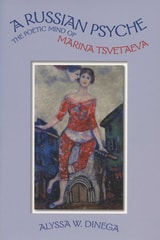
A Russian Psyche
The Poetic Mind of Marina TsvetaevaAlyssa W. Dinega
University of Wisconsin Press, 2001
Russian poet Marina Tsvetaeva’s powerful poetic voice and her tragic life have often prompted literary commentators to treat her as either a martyr or a monster. Born in Russia in 1892, she emigrated to Europe in 1922, returned to the Soviet Union at the height of the Stalinist Terror, and committed suicide in 1941. Alyssa Dinega focuses on the poetry, rediscovering Tsvetaeva as a serious thinker with a coherent artistic and philosophical vision.
A Stanislaw Lem Reader
Peter Swirski
Northwestern University Press, 1997
A Voice
Selected PoemsAnzhelina Polonskaya
Northwestern University Press, 2004
Drawn from her most recent Russian collections, A Voice: Selected Poems explores the poet's ongoing fascinations—desolate places, long journeys, a synesthesia of sensory stimulation, and the presence of death. Also on display is her Chekhovian gift for unexpected closure. This is a promising English-language debut from a poet already gaining international attention.
A Voltaire for Russia
A. P. Sumarokov's Journey from Poet-Critic to Russian PhilosopheAmanda Ewington
Northwestern University Press, 2010
In A Voltaire for Russia, Amanda Ewington examines the tumultuous literary career of Alexander Petrovich Sumarokov in relation to that of his slightly older French contemporary, Voltaire. Although largely unknown in the English-speaking world, Sumarokov was one of the founding fathers of modern Russian literature, renowned in his own time as a great playwright and prolific
poet.
A Voltaire for Russia polemicizes with long-accepted readings of Sumarokov as an imitator of French neoclassical poets, ultimately questioning the very notion of a Russian “classicism.” Ewington uncovers Sumarokov’s poignantly personal devotion to Voltaire as a new framework for understanding not only his works but also his literary allegiances and agenda, as he sets out to establish a Russian literature and cultivate a reading public.

Aesthetic Revolutions and Twentieth-Century Avant-Garde Movements
Aleš Erjavec, editor
Duke University Press, 2015
Contributors. John E. Bowlt, Sascha Bru, David Craven, Aleš Erjavec, Tyrus Miller, Raymond Spiteri, Miško Šuvakovic
Aesthetics of Alienation
Reassessment of Early Soviet Cultural TheoriesEvgeny Dobrenko
Northwestern University Press, 2005
In chapters on Proletkult, RAPP, LEF, and Pereval, Dobrenko reexamines the theories generated by these major Marxist literary groupings of the early Soviet Union. He shows how each approached the problems of literature's response to the presumed social mandate of the young communist society, and how Socialist Realism emerged as a conglomerate of these earlier, revolutionary theories. With extensive and detailed reference to supporting testimony and documents, Dobrenko clearly demonstrates how Socialist Realism was created from within the revolutionary culture, and how this culture and its disciples fully participated in this creative process. His work represents a major breakthrough in our current understanding of the complex sources that contributed to early Soviet culture.
After the Future
The Paradoxes of Postmodernism & Contemporary Russian CultureMikhail N. Epstein
University of Massachusetts Press, 1995
This book brings together for the first time in English the major writings of Mikhail Epstein, one of post-Soviet Russia's most prominent theoreticians of cultural studies and postmodernism. Written from a non-Western point of view yet informed by a familiarity with Western literary theory, it offers a fresh, lucid perspective on the post-communist literary scene as well as a practical and theoretical introduction to the new discipline of Russian “culturology.”
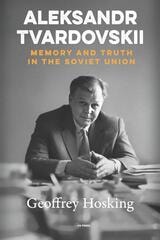
Aleksandr Tvardovskii
Memory and Truth in the Soviet UnionGeoffrey Hosking
Central European University Press, 2025
By giving a balanced account of his strengths and weaknesses, his achievements and failures, the author succeeds in giving the fullest picture available anywhere of a controversial man who turns out to be more complex than he has been portrayed so far. To understand him better is to understand why the Soviet intelligentsia changed so fundamentally in the USSR’s final decades, a change that helps to explain the rise of Gorbachev twenty years later. The study—which includes an in-depth analysis of Tvardovskii’s major works—also helps to better understand the fate of culture under an authoritarian regime and the intricacies of the struggle against censorship.
Alexander Pushkin's Little Tragedies
The Poetics of BrevitySvetlana Evdokimova
University of Wisconsin Press, 2004
Alexander Pushkin’s four compact plays, later known as The Little Tragedies, were written at the height of the author’s creative powers, and their influence on many Russian and Western writers cannot be overestimated. Yet Western readers are far more familiar with Pushkin’s lyrics, narrative poems, and prose than with his drama. The Little Tragedies have received few translations or scholarly examinations. Setting out to redress this and to reclaim a cornerstone of Pushkin’s work, Evodokimova and her distinguished contributors offer the first thorough critical study of these plays. They examine the historical roots and connective themes of the plays, offer close readings, and track the transformation of the works into other genres.
This volume includes a significant new translation by James Falen of the plays—"The Covetous Knight," "Mozart and Salieri," "The Stone Guest," and "A Feast in Time of Plague."
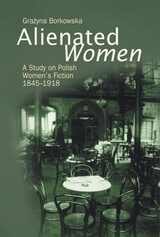
Alienated Women
A Study on Polish Women's Writing, 1845 -1918Grazyna Borkowska
Central European University Press, 2001
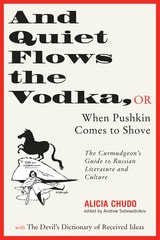
And Quiet Flows the Vodka
or When Pushkin Comes to Shove: The Curmudgeon's Guide to Russian Literature with the Devil's Dictionary of Received IdeasAlicia Chudo
Northwestern University Press, 2000
Written in the tradition of 1066 and All That, The Pooh Perplex, and The Classics Redefined, And Quiet Flows the Vodka will, with any luck, be the final word on the ghastly first two millennia of Russian literature, history, and culture.
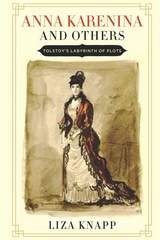
Anna Karenina and Others
Liza Knapp
University of Wisconsin Press, 2018
Knapp provides a series of readings of Anna Karenina that draw on other works that were critical to Tolstoy’s understanding of the interconnectedness of human lives. Among the texts she considers are The Scarlet Letter, a novel of adultery with a divided plot; Middlemarch, a multiplot novel with neighborly love as its ideal; and Blaise Pascal’s Pensées, which fascinated Tolstoy during his own religious crisis. She concludes with a tour-de-force reading of Mrs. Dalloway that shows Virginia Woolf constructing this novel in response to Tolstoy’s treatment of Anna Karenina and others.
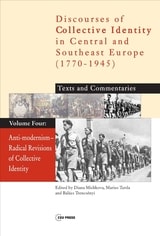
Anti-modernism
Radical Revisions of Collective IdentityAhmet Ersoy
Central European University Press, 2014
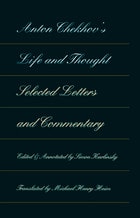
Anton Chekhov's Life and Thought
Selected Letters and CommentariesAnton Chekhov
Northwestern University Press, 1996
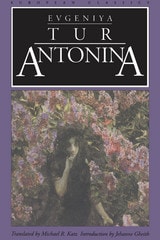
Antonina
Evgeniya Tur
Northwestern University Press, 1995
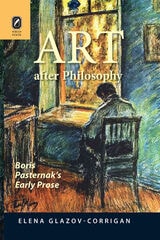
Art after Philosophy
Boris Pasternak's Early ProseElena Glazov-Corrigan
The Ohio State University Press, 2013
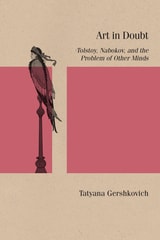
Art in Doubt
Tolstoy, Nabokov, and the Problem of Other MindsTatyana Gershkovich
Northwestern University Press, 2021
Leo Tolstoy’s and Vladimir Nabokov’s radically opposed aesthetic worldviews emanate from a shared intuition—that approaching a text skeptically is easy, but trusting it is hard
Two figures central to the Russian literary tradition—Tolstoy, the moralist, and Nabokov, the aesthete—seem to have sharply conflicting ideas about the purpose of literature. Tatyana Gershkovich undermines this familiar opposition by identifying a shared fear at the root of their seemingly antithetical aesthetics: that one’s experience of the world might be entirely one’s own, private and impossible to share through art.
Art in Doubt: Tolstoy, Nabokov, and the Problem of Other Minds reconceives the pair’s celebrated fiction and contentious theorizing as coherent, lifelong efforts to reckon with the problem of other people’s minds. Gershkovich demonstrates how the authors’ shared yearning for an impossibly intimate knowledge of others formed and deformed their fiction and brought them through parallel logic to their rival late styles: Tolstoy’s rustic simplicity and Nabokov’s baroque complexity. Unlike those authors for whom the skeptical predicament ends in absurdity or despair, Tolstoy and Nabokov both hold out hope that skepticism can be overcome, not by force of will but with the right kind of text, one designed to withstand our impulse to doubt it. Through close readings of key canonical works—Anna Karenina, The Kreutzer Sonata, Hadji Murat, The Gift, Pale Fire—this book brings the twin titans of Russian fiction to bear on contemporary debates about how we read now, and how we ought to.
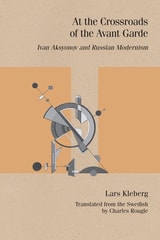
At the Crossroads of the Avant-Garde
Ivan Aksyonov and Russian ModernismLars Kleberg, Charles Rougle
Northwestern University Press, 2026
This kaleidoscopic biography offers readers a compelling microhistory of a revolutionary moment in art and politics through its portrait of an enigmatic but influential figure: Ivan Aksyonov authored the first book-length study about Pablo Picasso, translated Elizabethan drama, and was a literary adviser to Vsevolod Meyerhold, as well as a teacher of Sergei Eisenstein in Meyerhold’s institute and an important critic, before dying in 1935. Lars Kleberg traces Aksyonov’s influences, interlocutors, and creative output in multiple genres and media to bring a complicated and fascinating character back to life. Kleberg invites us to reconsider the avant-garde and to understand the political and artistic ferment of the revolutionary era and its aftermath in new, deeper ways.