Results by title
149 books match the query 'Spanish & Portuguese' and 13 start with a
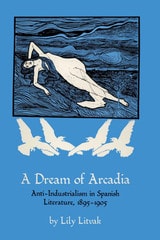
A Dream of Arcadia
Anti-Industrialism in Spanish LIterature, 1895–1905By Lily Litvak
University of Texas Press, 1975
The dream of “progress” that animated many nineteenth-century artistic and political movements gave way at the turn of the century to a dissatisfaction with the Industrial Civilization and a recurrent pessimism about a future dominated by mechanization. Art Nouveau, which was both a style and a movement, embodied this dissatisfaction, marking the turn-of-the-century period with an aesthetic that consciously set out to revolutionize literature, the arts, and society within the framework of a brutalizing, wildly burgeoning Industrial Civilization. Generally associated with northern European culture, Art Nouveau also had a great impact in the south, particularly in Spain.
A Dream of Arcadia is the first work to explore Spain’s fertile and imaginative Art Nouveau. Through the eyes of four major Spanish writers, Lily Litvak views several different aspects of the turn-of-the-century struggle against the advances of industrialism in Spain. Her interpretation of the early works of Ramón del Valle Inclán, Miguel de Unamuno, José Martínez Ruiz (Azorín), and Pío Baroja exposes a longing for a preindustrial arcadia based on a return to nature, the revival of handicrafts and medieval art, an attraction to rural primitive societies, and a revulsion against the modern city. Set against the European literary and artistic background of the period, her observations place the Spanish manifestations of Art Nouveau within the context of the better-known northern phenomena. Of particular interest is her discussion of the influences of John Ruskin, William Morris, and the Pre-Raphaelites, which demonstrates how the general European mood was articulated in Spain.
Litvak concludes that Valle Inclán, Unamuno, Azorín, and Baroja must be considered as more than simply fin de siècle writers, for they became part of a general movement, generated by Art Nouveau, that spans an entire century. A Dream of Arcadia demonstrates that Art Nouveau was more than a flash on Europe's artistic horizon; it is a philosophy with ramifications that have led to communes, handcrafted articles, and nomadic adolescents in search of truth.
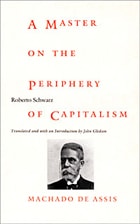
A Master on the Periphery of Capitalism
Machado de AssisRoberto Schwarz
Duke University Press, 2001
Widely acknowledged as the most important novelist to have written in Latin America before 1940, Machado had a surprisingly modern style. Schwarz notes that the unprecedented wit, sarcasm, structural inventiveness, and mercurial changes of tone and subject matter found in The Posthumous Memoirs of Brás Cubas marked a crucial moment in the history of Latin American literature. He argues that Machado’s vanguard narrative reflects the Brazilian owner class and its peculiar status in both national and international contexts, and shows why this novel’s success was no accident. The author was able to confront some of the most prestigious ideologies of the nineteenth century with some uncomfortable truths, not the least of which was that slavery remained the basis of the Brazilian economy.
A Master on the Periphery of Capitalism will appeal to those with interests in Latin American literature, nineteenth century history, and Marxist literary theory.
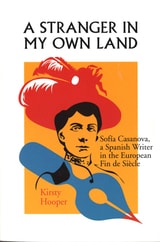
A Stranger in My Own Land
Sofia Casanova, a Spanish Writer in the European Fin de SiecleKirsty Hooper
Vanderbilt University Press, 2008
This study addresses the scandalous disappearance of Casanova and her female contemporaries from accounts of the emergence of the modern Spanish nation. Arguing that women's perceived silence during this critical period in the formation of modern Iberian identities has significant repercussions even today, it takes her works as a case study for modeling a radical rethinking of the way we teach and research the crucial years around the turn of the twentieth century. The first study of Casanova's radical and compelling, but now forgotten, early narrative, it explores the Galician, Polish and Spanish context of her work, arguing that her transnational career demonstrates the inadequacies of existing models of national literary history. At the same time, recognizing Casanova's innovative and strategic use of literary genres and techniques traditionally denominated as "feminine" (and therefore excluded from discussions of "serious" national literature), it provides a model for re-evaluating the vast cultural store of popular and sentimental literature as a key part of the debates about the transition to modernity, in Spain and beyond.
Advances in the Analysis of Spanish Exclamatives
Ignacio Bosque
The Ohio State University Press, 2017
The book begins by summarizing, commenting on, and evaluating previous descriptive and theoretical contributions on Spanish exclamatives. This introductory overview also contains a detailed classification of Spanish exclamative grammatical types, along with an analysis of their main properties. Special attention is devoted in the book throughoutto the syntactic structures displayed by exclamative patterns; the differences between exclamations and other speech acts (specifically questions and imperatives); the peculiar semantic denotation of exclamative words and their relationship to quantifiers denoting high degree; the semantics of adjectives and adverbs expressing extreme evaluation; the form and interpretation of negated and embedded exclamatives; the properties of optative utterances; and the different ways in which expressive contents are related to unexpected reactions of the speaker, as well as possible knowledge shared by interlocutors.
This groundbreaking volume provides a complete and accurate picture of Spanish exclamation by integrating its numerous component parts.
Alliance and Condemnation / Alianza y Condena
Claudio Rodríguez
Swan Isle Press, 2014
Of all his creations, the radiant poems in Alliance and Condemnation offer the best imaginable introduction to his extraordinary life and work.
An Erotic Philology of Golden Age Spain
Adrienne Laskier Martin
Vanderbilt University Press, 2007
By utilizing theories of deviance, sexuality, and gender; the rhetoric of eroticism; and textual criticism, An Erotic Philology of Golden Age Spain historicizes and analyzes the particular ways in which classical Spanish writers assign symbolic meaning to non-normative sexual practices and their practitioners. It shows how prostitutes, homosexuals, transvestites, women warriors, and female tricksters were stigmatized and marginalized as part of an ordering principle in the law, society, and in literature. It is against these sexual outlaws that early modern orthodoxy establishes and identifies itself during the Golden Age of Spanish letters.
These eroticized figures are recurring objects of contemplation and fascination for Spain's most canonical as well as lesser known writers of the period, in a variety of poetic, prose and dramatic genres. They ultimately reveal attitudes towards sexual behavior that are far more complex than was previously thought. An Erotic Philology of Golden Age Spain thoughtfully anatomizes the interdisciplinary systems at the heart of the varied sexual behaviors depicted in early modern Spanish literature.
Angels and Absences
Child Deaths in the Nineteenth CenturyLaurence Lerner
Vanderbilt University Press, 1997
What is the difference between public and private feeling, and how far can we deduce past feelings from the words that have been left us? Why do child deaths figure so often and so prominently in the literature of the nineteenth century, and how was the theme of the death of a child used to elicit such poignant responses in the readers of that era? In this fascinating new book, Laurence Lerner vividly contrasts the contempt with which twentieth- century criticism so often dismisses such works as mere sentimentality with the enthusiasm and tears of nineteenth-century contemporaries.
Drawing examples from both real and literary deaths, Lerner delves into the writings of well-known authors such as Dickens, Coleridge, Shelley, Flaubert, Mann, Huxley, and Hesse, as well as lesser known writers like Felicia Hemans and Lydia Sigourney. In the process, he synthesizes fresh ideas about the thorny subjects of sentimentality, aesthetic judgment, and the function of religion in literature.
Lerner's forthright and evocative prose style is enjoyable reading, and he excels in teasing out the moral implications and the psychosocial entanglements of his chosen narrative and lyrical texts. This is a book that will illuminate an important aspect of the history of private life. It should have wide application for those interested in the history, sociology, and literature of the nineteenth century.
Apocryphal Lorca
Translation, Parody, KitschJonathan Mayhew
University of Chicago Press, 2009
Federico García Lorca (1898–1936) had enormous impact on the generation of American poets who came of age during the cold war, from Robert Duncan and Allen Ginsberg to Robert Creeley and Jerome Rothenberg. In large numbers, these poets have not only translated his works, but written imitations, parodies, and pastiches—along with essays and critical reviews. Jonathan Mayhew’s Apocryphal Lorca is an exploration of the afterlife of this legendary Spanish writer in the poetic culture of the United States.
The book examines how Lorca in English translation has become a specifically American poet, adapted to American cultural and ideological desiderata—one that bears little resemblance to the original corpus, or even to Lorca’s Spanish legacy. As Mayhew assesses Lorca’s considerable influence on the American literary scene of the latter half of the twentieth century, he uncovers fundamental truths about contemporary poetry, the uses and abuses of translation, and Lorca himself.

Apology to Apostrophe
Autobiography and the Rhetoric of Self-Representation in SpainJames D. Fernandez
Duke University Press, 1992
As Fernández demonstrates, recent developments in critical theory provide new and fruitful approaches to autobiographical works that have long been neglected, misunderstood, or, in some cases, virtually unknown. Focusing primarily but not exclusively on nineteenth-century Spain, Fernández exposes a rhetorical tension that often occurs in autobiographical discourse, between self-justification, or "apology," and the transcendence of this worldly impulse, or "apostrophe." This tension, he argues, is of particular interest in the case of Spain, but not peculiar to that nation, and his attention to the theoretical nature of autobiography leads to insightfl considerations of many canonical European autobiographies, including those of Saint Augustine, Rousseau, Saint Teresa, and Cardinal Newman.
Considering Spanish autobiography in the context of first-person narrative in Europe and in the terms of current debates on the relationship between writing and selfhood, Apology to Apostrophe marks a significant advance in our historical understanding and critical discussion of the genre. The book will be of great value not only to Hispanists but also to those interested in autobiography and cultural history.
Archipelagoes
Insular Fictions from Chivalric Romance to the NovelSimone Pinet
University of Minnesota Press, 2010
Pinet looks closely at Amadís de Gaula and the Liber insularum archipelagi as the first examples of these genres. Both isolario and chivalric romance (libros de caballerías) make of the island a flexible yet cohesive framework that becomes intrinsic to the construction of their respective genres. The popularity of these forms throughout the seventeenth century in turn bears witness to the numerous possibilities the archipelagic structure offered, ultimately taken up by the grand genres of each discipline—the atlas and the novel.
Moving from verbal descriptions to engravings and tapestry weavings, and from the chivalric politics and ethics proposed in the Amadís de Gaula to the Insula Barataria episode in Don Quixote, Pinet’s analysis of insularity and the use of the island structure reveals diverging roles for fiction, illuminating both the emergence of the novel and contemporary philosophical discussion on fiction.
Authoring the Past
History, Autobiography, and Politics in Medieval CataloniaJaume Aurell
University of Chicago Press, 2012
Authoring the Past surveys medieval Catalan historiography, shedding light on the emergence and evolution of historical writing and autobiography in the Middle Ages, on questions of authority and authorship, and on the links between history and politics during the period. Jaume Aurell examines texts from the late twelfth to the late fourteenth century—including the Latin Gesta comitum Barcinonensium and four texts in medieval Catalan: James I’s Llibre dels fets, the Crònica of Bernat Desclot, the Crònica of Ramon Muntaner, and the Crònica of Peter the Ceremonious—and outlines the different motivations for the writing of each.
For Aurell, these chronicles are not mere archaeological artifacts but rather documents that speak to their writers’ specific contemporary social and political purposes. He argues that these Catalonian counts and Aragonese kings were attempting to use their role as authors to legitimize their monarchical status, their growing political and economic power, and their aggressive expansionist policies in the Mediterranean. By analyzing these texts alongside one another, Aurell demonstrates the shifting contexts in which chronicles were conceived, written, and read throughout the Middle Ages.
The first study of its kind to make medieval Catalonian writings available to English-speaking audiences, Authoring the Past will be of interest to scholars of history and comparative literature, students of Hispanic and Romance medieval studies, and medievalists who study the chronicle tradition in other languages.
Autobiography and Letters of a Spanish Nun
María Vela y Cueto
Iter Press, 2016
When María Vela y Cueto (1561–1617) declared that God had personally ordered her to take only the Eucharist as food and to restore primitive dress and public penance in her aristocratic convent, the entire religious community, according to her confessor, “rose up in wrath.” Yet, when Vela died, her peers joined with the populace to declare her a saint. In her autobiography and personal letters, Vela speaks candidly of the obstacles, perils, and rewards of re-negotiating piety in a convent where devotion to God was no longer expressed through rigorous asceticism. Vela’s experience, told in her own words, reveals her shrewd understanding of the persuasive power of a woman’s body.
Avenues of Translation
The City in Iberian and Latin American WritingGalasso, Regina
Bucknell University Press, 2019
Cities both near and far communicate in a variety of ways. Travel between, through, and among urban centers initiates contact, and cities themselves are sites of ever-changing cultural and historical encounters. Predictable and surprising challenges and opportunities arise when city borders are crossed, voices meet, and artistic traditions find their counterparts. Using the Latin word for “translation,” translatio, or “to carry across,” as a point of departure, Avenues of Translation explores how translation perpetuates, diversifies, deepens, and expands the literary production of cities in their greater cultural context, and how translation shapes an understanding of and access to a city's past and present literary and cultural practices. Thinking about translation and the city is a way to tell the backstories of the cities, texts, and authors that are united by acts of translation.
Published by Bucknell University Press. Distributed worldwide by Rutgers University Press.