Results by title
86 books match the query 'Translating & Interpreting' and 8 start with a
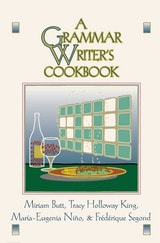
A Grammar Writer's Cookbook
Edited by Miriam Butt, Tracy Holloway King, María-Eugenia Niño, and Frédérique S
CSLI, 1999

A Grammar of Spoken Brazilian Portuguese
Earl W. Thomas
Vanderbilt University Press, 1987

Absinthe
World Literature in Translation: Vol. 24: World HellenismsAli Bolcakan, Will Stroebel and Peter Vorissis
Michigan Publishing Services, 2018
Absinthe 24 pushes and prods Hellenism beyond its geographic and cultural comfort zones, and sets it tumbling off beyond both internal and external borders of its nation-state, in a wide-ranging but always site-specific and localized itinerary. At each stop along the way, this Greekness finds its plurals—hence the “Hellenisms” of the title. While they present no unified topography, tongue or even topic, these Hellenisms map out the contours of a shared conversation. Today’s Hellenism isn’t limited to Hellas, nor to the Hellenic language. The selected texts in this volume explore Greece from the perspective of visitors, displaced persons, and marginalized people looking in, or, conversely, from the perspective of locals striving to break out.
Absinthe: A Journal of World Literature in Translation publishes foreign literature in English translation, with a particular focus on previously untranslated contemporary fiction, poetry, and creative non-fiction by living authors. The magazine has its home in the Department of Comparative Literature at the University of Michigan and is edited by graduate students in the Department, as well as by occasional guest editors.
Across Canons
Language, Latin American Immigrant Literature, and the Making of Latinx NarrativesThania Muñoz D.
University of Arizona Press, 2026
Author Thania Muñoz D. looks at immigrant experiences impacted by a prism of social and political factors, including free trade agreements, drug trafficking, political violence, massive foreign debt, and economic dependency. The author examines why these writers refuse to identify as immigrants and reject stereotypical portrayals. Throughout, Muñoz D. makes the case for a new field within Latinx literature: Latin American immigrant writing in Spanish. She explains why this type of literary work is critical across Latin American, Latinx, and U.S. literature.
This book highlights the benefits of comparative, interdisciplinary interpretations that allow readers and scholars to grapple with the realities of a multilingual Latin American–origin literary present and future of the United States.
Advances in Educational Interpreting
Elizabeth A. Winston
Gallaudet University Press, 2021
Winston and Fitzmaurice argue massive systemic paradigm shifts in interpreted educations are as needed now as they were when the first volume was published, and that these changes require the collaborative efforts of everyone on the educational team, including: administrators, general education teachers, teachers of the deaf, interpreters, and counselors. The contributors to this volume address research-based challenges and make recommendations for how interpreting practitioners, and all members of the educational team, can enact meaningful changes in their work towards becoming part of a more comprehensive solution to deaf education.
Advances in Teaching Sign Language Interpreters
Cynthia B. Roy
Gallaudet University Press, 2005
Picking up where Innovative Practices in Teaching Sign Language Interpreters left off, this new collection presents the best new interpreter teaching techniques proven in action by the eminent contributors assembled here. In the first chapter, Dennis Cokely discusses revising curricula in the new century based upon experiences at Northeastern University. Jeffrey E. Davis delineates how to teach observation techniques to interpreters, while Elizabeth Winston and Christine Monikowski suggest how discourse mapping can be considered the Global Positioning System of translation.
In other chapters, Laurie Swabey proposes ways to handle the challenge of referring expressions for interpreting students, and Melanie Metzger describes how to learn and recognize what interpreters do in interaction. Jemina Napier contributes information on training interpreting students to identify omission potential. Robert G. Lee explains how to make the interpreting process come alive in the classroom. Mieke Van Herreweghe discusses turn-taking and turn-yielding in meetings with Deaf and hearing participants in her contribution. Anna-Lena Nilsson defines “false friends,” or how contextually incorrect use of facial expressions with certain signs in Swedish Sign Language can be detrimental influences on interpreters. The final chapter by Kyra Pollitt and Claire Haddon recommends retraining interpreters in the art of telephone interpreting, completing Advances in Teaching Sign Language Interpreters as the new authoritative volume in this vital communication profession.
At Translation's Edge
Edited by Nataša Durovicová, Patrice Petro, and Lorena Terando
Rutgers University Press, 2019
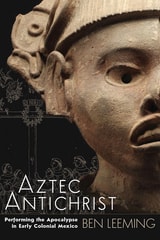
Aztec Antichrist
Performing the Apocalypse in Early Colonial MexicoBen Leeming
University Press of Colorado, 2022
Discovered in the archives of the Hispanic Society of America in New York inside a notebook of miscellaneous Nahuatl-Christian texts written almost entirely by an Indigenous writer named Fabían de Aquino, the plays are filled with references to human sacrifice, bloodletting, ritual divination, and other religious practices declared “idolatrous” at a time when ecclesiastical authorities actively sought to suppress writing about Indigenous religion. These are Indigenous plays for an Indigenous audience that reveal how Nahuas made sense of Christianity and helped form its colonial image—the title figure is a powerful Indigenous being, an “Aztec Antichrist,” who violently opposes the evangelizing efforts of the church and seeks to draw converted Nahuas back to the religious practices of their ancestors. These practices include devotion to Nahua deities such as Tlaloc, Quetzalcoatl, and Tezcatlipoca who, in one of the most striking moves made by Aquino, are cast as characters in the plays.
Along with the translations, Leeming provides context and analysis highlighting these rare and fascinating examples of early Indigenous American literature that offer a window into the complexity of Nahua interactions with Christianity in the early colonial period. The work is extremely valuable to all students and scholars of Latin American religion, colonialism, Indigenous history, and early modern history and theater.