Results by title
22279 books match the query 'Social Science' and 1819 start with a
A Violent Peace
Media, Truth, and Power at the League of NationsCarolyn N. Biltoft
University of Chicago Press, 2021
An exploration of instability in information systems, the allure of fascism, and the contradictions at the heart of a global modernity, A Violent Peace paints a rich portrait of the emergence of the age of information—and all its attendant problems.
A Vital Force
Women in American HomeopathyKirschmann, Anne Taylor
Rutgers University Press, 2003
Homeopathy, as a medical system, presented a significant institutional and economic challenge to conventional medicine in the nineteenth century. Although contemporary critics portrayed homeopathic physicians as part of a sect whose treatment of disease was beyond the pale of acceptable medical practice, homeopathy was in many ways similar to established medicine. Anne Taylor Kirschmann explores the strategic choices and consequences for women practitioners. Not only were female homeopaths respected within their communities, they also enjoyed considerable professional advantages not available to women within regular medicine.
A Vital Force: Women in American Homeopathy offers a new interpretation of women’s roles in modern medicine. Kirschmann strengthens and clarifies the history of homeopathic women physicians and creates a framework of comparison to “regular,” or orthodox, physicians. Women medical practitioners chose homeopathy in dramatic numbers from the mid-nineteenth through the early twentieth centuries, although the reasons for this preference varied over time. Linked to social reform movements in the nineteenth century, anti-modernism in the late nineteenth and early twentieth, and countercultural ideals of the 1960s and 1970s, women's advocacy of homeopathy has been intertwined with broad social and cultural issues in American society.
A Vital Frontier
Water Insurgencies in EuropeAndrea Muehlebach
Duke University Press, 2023
A Voice but No Power
Organizing for Social Justice in MinneapolisDavid Forrest
University of Minnesota Press, 2022
Examining the work of social justice groups in Minneapolis following the 2008 recession
Since the Great Recession, even as protest and rebellion have occurred with growing frequency, many social justice organizers continue to displace as much as empower popular struggles for egalitarian and emancipatory change. In A Voice but No Power, David Forrest explains why this is the case and explores how these organizers might better reach their potential as advocates for the abolition of exploitation, discrimination, and other unjust conditions.
Through an in-depth study of post-2008 Minneapolis—a center of progressive activism—Forrest argues that social justice organizers so often fall short of their potential largely because of challenges they face in building what he calls “contentious identities,” the public identities they use to represent their constituents and counteract stigmatizing images such as the “welfare queen” or “the underclass.” In the process of assembling, publicizing, and legitimating contentious identities, he shows, these organizers encounter a series of political hazards, each of which pushes them to make choices that weaken movements for equality and freedom. Forrest demonstrates that organizers can achieve better outcomes, however, by steadily working to remake their hazardous political terrain.
The book’s conclusion reflects on the 2020 uprising that followed the police killing of George Floyd, assessing what it means for the future of social justice activism. Ultimately, Forrest’s detailed analysis contributes to leading theories about organizing and social movements and charts possibilities for further emboldening grassroots struggles for a fairer society.

A Voice of Thunder
A BLACK SOLDIER'S CIVIL WAREdited by Donald Yacovone
University of Illinois Press, 1997
important African-American war correspondent of his era, served in the
famed black Fifty-fourth Massachusetts Regiment, subject of the film Glory.
His letters from the front, published in the New York Weekly Anglo-African,
brilliantly detail two wars: one against the Confederacy and one against
the brutal, debilitating racism within his own Union Army. Together with
Donald Yacovone's biographical introduction detailing Stephens's life
and times, they provide a singular perspective on the greatest crisis
in the history of the United States.
Stephens chronicled the African-American
quest for freedom in reports from southern Maryland and eastern Virginia
in 1861 and 1862 that detailed, among other issues of the day, the Army
of the Potomac's initial encounter with slavery, the heroism of fugitive
slaves, and the brutality both Southerners and Union troops inflicted
on them.
From the inception of the
Fifty-fourth early in 1863 Stephens was the unit's voice, telling of its
struggle against slavery and its quest to win the pay it had been promised.
His description of the July 18, 1863, assault on Battery Wagner near Charleston,
South Carolina, and his writings on the unit's eighteen-month campaign
to be paid as much as white troops are gripping accounts of continued
heroism in the face of persistent insult.
The Weekly Anglo-African
was the preeminent African-American newspaper of its time. Stephens's
correspondence, intimate and authoritative, takes in an expansive array
of issues and anticipates nearly all modern assessments of the black role
in the Civil War. His commentary on the Lincoln administration's wartime
policy and his conviction that the issues of race and slavery were central
to nineteenth-century American life mark him as a major American social
critic.
A Walking Disaster
What Surviving Katrina and Cancer Taught Me about Faith and ResilienceJamie Aten
Templeton Press, 2020
Is there a meaning to our suffering? Is hope realistic when tragedy befalls us? Is a return to normalcy possible after our life is uprooted by catastrophe? These are the questions that disaster psychologist Dr. Jamie Aten wrestled with when he was diagnosed with Stage IV colon cancer. In this gripping memoir, Aten shares the life-affirming and faith-renewing insights that he discovered during his tumultuous struggle against the disease.
Aten’s journey began in 2005 when Hurricane Katrina struck his community. After witnessing the devastation wrought by the storm, he dedicated his career to investigating how people respond to and recover from all manner of disasters. He studied disaster zones around the globe and founded the Humanitarian Disaster Institute at Wheaton College. His expertise, however, was little comfort when a fateful visit with his oncologist revealed advanced and aggressive cancer. “You’re in for your own personal disaster” was his doctor’s prognosis.
Thrust into a battle for his life, with cancer cells and chemotherapy ravaging his body, Aten found his professional interest taking on new meaning. His ordeal taught him firsthand how we can sustain ourselves when burdened with seemingly unbearable suffering. Some of his counterintuitive insights include: to find hope, be cautious of optimism; when you want help the least is when you need it most; and spiritual surrender, rather than a passive act, is instead an act of profound courage.
This last point speaks to the element of grace in Dr. Aten’s story. As he struggled to understand the significance of his suffering, he found himself examining his Christian faith down to its bedrock and learned to experience the redeeming presence of God in his life. Dr. Aten has a natural exuberance that shines through his writing. Infused with his compassionate voice and humanitarian concern,
A Walking Disaster is ultimately an inspirational story about the power of the human spirit to endure trauma with courage.
A Wall Is Just a Wall
The Permeability of the Prison in the Twentieth-Century United StatesReiko Hillyer
Duke University Press, 2024
A War for the Soul of America, Second Edition
A History of the Culture WarsAndrew Hartman
University of Chicago Press, 2019
“As a guide to the late twentieth-century culture wars, Hartman is unrivalled. . . . Incisive portraits of individual players in the culture wars dramas. . . . Reading Hartman sometimes feels like debriefing with friends after a raucous night out, an experience punctuated by laughter, head-scratching, and moments of regret for the excesses involved.”—New Republic
A War that Can’t Be Won
Binational Perspectives on the War on DrugsEdited by Tony Payan, Kathleen Staudt, and Z. Anthony Kruszewski
University of Arizona Press, 2013
A War that Can’t Be Won is the first book to include contributions from scholars on both sides of the US–Mexico border. It provides a unique breadth of perspective on the many dimensions of the societal crisis that affects residents of both nations—particularly those who live and work in the borderlands. It also proposes practical steps toward solving a crisis that shows no signs of abating under current policies. Each chapter is based on well-documented data, including previously unavailable evidence that was obtained through freedom-of-information inquiries in Mexico. By bringing together views from both sides of the border, as well as from various academic disciplines, this volume offers a much wider view of a complex problem—and possible solutions.
A Weak Woman in a Strong Battle
Women and Public Execution in Early Modern EnglandJennifer Lillian Lodine-Chaffey
University of Alabama Press, 2022
A scholarly study of how women’s executions were staged, interpreted, and recorded in Renaissance England
A Weak Woman in a Strong Battle: Women and Public Execution in Early Modern England provides critical insights on representations of women on the scaffold, focusing on how female victims and those writing about them constructed meaning from the ritual. Jennifer Lodine-Chaffey draws on a wide range of genres, from accounts of martyrdom to dramatic works, to explore not only the words of women executed in Tudor and Stuart England, but also the ways that writers represented female bodies as markers of penitence or deviance.
A significant part of the execution spectacle—one used to assess the victim’s proper acceptance of death and godly repentance—was the final speech offered at the foot of the gallows or before the pyre. To ensure their final words held value for audiences, women adopted conventionally gendered language and positioned themselves as subservient and modest. The reception of women’s speeches, Lodine-Chaffey argues, depended on their performances of accepted female behaviors and language as well as physical signs of interior regeneration. Indeed, when women presented themselves or were represented as behaving in stereotypically feminine and virtuous ways, they were able to offer limited critiques of their fraught positions in society.
Just as important as their words, though, were the depictions of women’s bodies. The executed woman’s body, Lodine-Chaffey contends, functioned as a text, scrutinized by witnesses and readers for markers of innocence or guilt. The intense focus on the words and bodies of women facing execution during this period, Lodine-Chaffey argues, became a catalyst for a more thorough interest in and understanding of women’s roles not just as criminals but as subjects

A White Side of Black Britain
Interracial Intimacy and Racial LiteracyFrance Winddance Twine
Duke University Press, 2010
A White-Bearded Plainsman
The Memoirs of Archaeologist W. Raymond WoodW. Raymond Wood
University of Utah Press, 2011
W. Raymond Wood played a leading role in the early days of Great Plains archaeology. In A White-Bearded Plainsman, he tells how his own career emerged, as the discipline of Plains archaeology developed during the post-World War II era. Readers will learn of the childhood influences that lead Wood to pursue the path of archaeologist, and of the events and people that shaped his professional life. In addition to telling Wood’s personal story, the book provides an intellectual history of the discipline of mid-continental archaeology over the last half century. It will thus be valuable to students and scholars in the field, as it describes how the paradigms in Plains and midwestern prehistory have changed over time. To understand the discipline, one must understand the cultural and intellectual underpinnings that shaped it. Wood’s book helps map for a new generation of archaeologists from whence they’ve come, and his role in the developments along the way.

A Wide Net of Solidarity
Antiracism and Anti-Imperialism from the Americas to the GlobeAnne Garland Mahler
Duke University Press, 2025
A Witch's Hand
Curing, Killing, Kinship, and Colonialism among the Lujere of New GuineaWilliam E. Mitchell
HAU, 2024
From 1971 to 1972, William E. Mitchell undertook fieldwork on suffering and healing among the Lujere of Papua New Guinea’s Upper Sepik River Basin. At a time when it was not yet common to make colonial agencies a subject of anthropological study, Mitchell carefully located his research on Lujere practices in the framework of a history of colonization that surrounded the Lujere with a shifting array of Western institutions, dramatically changing their society forever. Mitchell’s work has been well known among anthropologists of Oceania, but the material in this book has remained unpublished until now.
In this major new work, Mitchell revisits his early fieldwork with a three-part study of the history of colonial rule in the region, the social organization of Lujere life at the time, and the forms of affliction, witchcraft, and curing that preoccupied them. Furthermore, Mitchell offers the first sweeping cross-cultural survey of sanguma (magical murder) in Oceania. The book presents a vivid portrait of a society that has since changed dramatically as well as an approach to anthropology that was typical of the era. This is a significant contribution to the ethnography of Papua New Guinea and is sure to be an invaluable source for researchers of Melanesia, medical anthropologists, and scholars of kinship, myth, and ritual.

A Woman Speaks
The Lectures, Seminars, and Interviews of Anaïs NinEvelyn J. Hinz
Ohio University Press, 1975
In this book Anaïs Nin speaks with warmth and urgency on those themes which have always been closest to her: relationships, creativity, the struggle for wholeness, the unveiling of woman, the artist as magician, women reconstructing the world, moving from the dream outward, and experiencing our lives to the fullest possible extent.
A Woman Who Defends All the Persons of Her Sex
Selected Philosophical and Moral WritingsGabrielle Suchon
University of Chicago Press, 2010
During the oppressive reign of Louis XIV, Gabrielle Suchon (1632–1703) was the most forceful female voice in France, advocating women’s freedom and self-determination, access to knowledge, and assertion of authority. This volume collects Suchon’s writing from two works—Treatise on Ethics and Politics (1693) and On the Celibate Life Freely Chosen; or, Life without Commitments (1700)—and demonstrates her to be an original philosophical and moral thinker and writer.
Suchon argues that both women and men have inherently similar intellectual, corporeal, and spiritual capacities, which entitle them equally to essentially human prerogatives, and she displays her breadth of knowledge as she harnesses evidence from biblical, classical, patristic, and contemporary secular sources to bolster her claim. Forgotten over the centuries, these writings have been gaining increasing attention from feminist historians, students of philosophy, and scholars of seventeenth-century French literature and culture. This translation, from Domna C. Stanton and Rebecca M. Wilkin, marks the first time these works will appear in English.
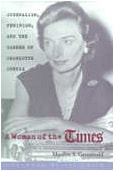
A Woman of the Times
Journalism, Feminism, and the Career of Charlotte CurtisMarilyn S. Greenwald
Ohio University Press, 1999
For twenty-five years, Charlotte Curtis was a society/women's reporter and editor and an op-ed editor at the New York Times. As the first woman section editor at the Times, Curtis was a pioneering journalist and one of the first nationwide to change the nature and content of the women's pages from fluffy wedding announcements and recipes to the more newsy, issue-oriented stories that characterize them today. In this riveting biography, Marilyn Greenwald describes how a woman reporter from Columbus, Ohio, broke into the ranks of the male-dominated upper echelon at the New York Times. It documents what she did to succeed and what she had to sacrifice.
Charlotte Curtis paved the way for the journalists who followed her. A Woman of the Times offers a chronicle of her hard-won journey as she invents her own brand of feminism during the 1960s and 1970s. In the telling of this remarkable woman’s life is the story, as well, of a critical era in the nation’s social history.
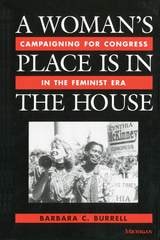
A Woman's Place Is in the House
Campaigning for Congress in the Feminist EraBarbara Burrell
University of Michigan Press, 1994
A Working Nation
Workers, Work, and Government in the New EconomyDavid T. Ellwood
Russell Sage Foundation, 2000
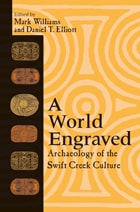
A World Engraved
Archaeology of the Swift Creek CultureEdited by Mark Williams and Daniel T. Elliott
University of Alabama Press, 1998
This major summary of the current state of archaeological research on the Swift Creek culture is the first comprehensive collection ever published concerning the Swift Creek people.
The Swift Creek people, centered in Georgia and surrounding states from A.D. 100 to 700, are best known from their pottery, which was decorated before firing with beautiful paddle-stamped designs--some of the most intricate and fascinating in the world.
Comprehensive in scope, this volume details the discovery of this culture, summarizes what is known about it at the present time, and shows how continued improvements in the collection and analysis of archaeological data are advancing our knowledge of this extinct society.
Although they know nothing of Swift Creek language and little about its society, archaeologists have collected valuable information about the
economic strategies of Swift Creek inhabitants. What archaeologists know best, however, is that the Swift Creek people were some of the best wood carvers the world has seen, and their pottery will stand as their lasting legacy for all time. This book presents and preserves their legacy.

A World Growing Old
Jeremy Seabrook
Pluto Press, 2004
Yet this is only half the story. Populations in the poorer countries of the South are also ageing. Life-expectancy has increased due the availability of lifesaving medicine. Child mortality has decreased, so people are having smaller families. India will soon have one of the largest populations of over-sixties. The one-child policy in China will similarly lead to a severe imbalance in the age-profile of the people.
In A World Grown Old, Jeremy Seabrook examines the real implications of the ageing phenomenon and challenges our preconceptions about how it should be tackled. Arguing that the accumulated skills of the elderly should be employed to enrich society, rather than being perceived as a 'burden', he calls for a radical rethinking of our attitude to population issues, migration, social structures and employment policy.
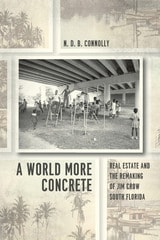
A World More Concrete
Real Estate and the Remaking of Jim Crow South FloridaN. D. B. Connolly
University of Chicago Press, 2014
A World More Concrete argues that black and white landlords, entrepreneurs, and even liberal community leaders used tenements and repeated land dispossession to take advantage of the poor and generate remarkable wealth. Through a political culture built on real estate, South Florida’s landlords and homeowners advanced property rights and white property rights, especially, at the expense of more inclusive visions of equality. For black people and many of their white allies, uses of eminent domain helped to harden class and color lines. Yet, for many reformers, confiscating certain kinds of real estate through eminent domain also promised to help improve housing conditions, to undermine the neighborhood influence of powerful slumlords, and to open new opportunities for suburban life for black Floridians.
Concerned more with winners and losers than with heroes and villains, A World More Concrete offers a sober assessment of money and power in Jim Crow America. It shows how negotiations between powerful real estate interests on both sides of the color line gave racial segregation a remarkable capacity to evolve, revealing property owners’ power to reshape American cities in ways that can still be seen and felt today.
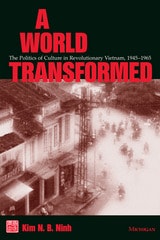
A World Transformed
The Politics of Culture in Revolutionary Vietnam, 1945-1965Kim N. B. Ninh
University of Michigan Press, 2002
The study covers the period from the Vietnamese communists' initial ascent to power in 1945 to the beginning of the escalation of the American involvement in the country's conflict in 1965, by which time a full-fledged socialist state had been in place in North Vietnam for eleven years. Through a nuanced examination of critical intellectual works, A World Transformed presents a complex view of a period fraught with contradictory possibilities and tensions that continue to resonate in Vietnam today. The extensive use of Vietnamese-language materials, access to archival data never before available, and innovative incorporation of literary and historical sources combine to make this study an invaluable depiction of the Vietnamese revolution.
Kim N. B. Ninh is Assistant Director of the Governance, Law, and Civil Society Programs, The Asia Foundation, San Francisco.

A World You Do Not Know
Settler Societies, Indigenous Peoples and the Attack on Cultural DiversityColin Samson
University of London Press, 2014
A World of Becoming
William E. Connolly
Duke University Press, 2010
Attunement to a world of becoming, Connolly argues, may help us address dangerous resonances between global finance capital, cross-regional religious resentments, neoconservative ideology, and the 24-hour mass media. Coming to terms with subliminal changes in the contemporary experience of time that challenge traditional images can help us grasp how these movements have arisen and perhaps even inspire creative counter-movements. The book closes with the chapter “The Theorist and the Seer,” in which Connolly draws insights from early Greek ideas of the Seer and a Jerry Lewis film, The Nutty Professor, to inform the theory enterprise today.

A World of Gangs
Armed Young Men and Gangsta CultureJohn M. M. Hagedorn
University of Minnesota Press, 2008
“Street gangs mirror the inhuman ambitions and greed of society’s trendsetters and deities even as they fight to the death over scraps from the table of the international drug trade. But John Hagedorn, characteristically, also finds hope in the contradictory values of outlaw youth—selflessness, solidarity, and love amid cupidity and directionless rage—and he maintains the hope that a culture of resistance will ultimately prevail over the forces of self-destruction. Whether one shares his optimism or not, he makes a compelling case that the future of the world will be determined on the streets of our cities.” —Mike Davis, from the Foreword
“A World of Gangs is an illuminating journey around the cultures, lives, tragedies, and dreams of millions of rebellious youth around the planet. It is an indispensable work to understand the world we live in and essential reading for students of cities and communities.” —Manuel Castells
For the more than a billion people who now live in urban slums, gangs are ubiquitous features of daily life. Though still most closely associated with American cities, gangs are an entrenched, worldwide phenomenon that play a significant role in a wide range of activities, from drug dealing to extortion to religious and political violence. In A World of Gangs, John Hagedorn explores this international proliferation of the urban gang as a consequence of the ravages of globalization.
Looking closely at gang formation in three world cities-Chicago, Rio de Janeiro, and Capetown-he discovers that some gangs have institutionalized as a strategy to confront a hopeless cycle of poverty, racism, and oppression. In particular, Hagedorn reveals, the nihilistic appeal of gangsta rap and its street ethic of survival “by any means necessary” provides vital insights into the ideology and persistence of gangs around the world. This groundbreaking work concludes on a hopeful note. Proposing ways in which gangs might be encouraged to overcome their violent tendencies, Hagedorn appeals to community leaders to use the urgency, outrage, and resistance common to both gang life and hip-hop in order to bring gangs into broader movements for social justice.
John M. Hagedorn is associate professor of criminal justice at the University of Illinois, Chicago. He is editor of Gangs in the Global City and author of the highly influential People and Folks: Gangs, Crime, and the Underclass in a Rustbelt City.
MacArthur fellow Mike Davis is the author of many books, including Planet of Slums and, most recently, Buda’s Wagon: A Brief History of the Car Bomb.
A World of Many Worlds
Marisol de la Cadena and Mario Blaser, editors
Duke University Press, 2018
Contributors. Mario Blaser, Alberto Corsín Jiménez, Déborah Danowski, Marisol de la Cadena, John Law, Marianne Lien, Isabelle Stengers, Marilyn Strathern, Helen Verran, Eduardo Viveiros de Castro
A World of Many
Ontology and Child Development among the Maya of Southern MexicoNorbert Ross
Rutgers University Press, 2023
A World without Words
The Social Construction of Children Born Deaf and BlindDavid Goode, foreword by Irving Kenneth Zola
Temple University Press, 1994
During the Rubella Syndrome epidemic of the 1960s, many children were born deaf, blind, and mentally disabled. David Goode has devoted his life and career to understanding such people's world, a world without words, but not, the author confirms, one without communication. This book is the result of his studies of two children with congenital deaf-blindness and mental retardation.
Goode spent countless hours observing, teaching, and playing with Christina, who had been institutionalized since age six, and Bianca, who remained in the care of her parents. He also observed the girls' parents, school, and medical environments, exploring the unique communication practices—sometimes so subtle they are imperceptible to outsiders—that family and health care workers create to facilitate innumerable every day situations. A World Without Words presents moving and convincing evidence that human beings both with and without formal language can understand and communicate with each other in many ways.
Through various experiments in such unconventional forms of communication as playing guitar, mimicking, and body movements like jumping, swinging, and rocking, Goode established an understanding of these children on their own terms. He discovered a spectrum of non-formal language through which these children create their own set of symbols within their own reality, and accommodate and maximize the sensory resources they do have. Ultimately, he suggests, it is impractical to attempt to interpret these children's behaviors using ideas about normal behavior of the hearing and seeing world.
A Xicana Codex of Changing Consciousness
Writings, 2000-2010Cherríe L. Moraga
Duke University Press, 2011
Thirty years after the publication of Anzaldúa and Moraga’s collection This Bridge Called My Back, a landmark of women-of-color feminism, Moraga’s literary and political praxis remains motivated by and intertwined with indigenous spirituality and her identity as Chicana lesbian. Yet aspects of her thinking have changed over time. A Xicana Codex of Changing Consciousness reveals key transformations in Moraga’s thought; the breadth, rigor, and philosophical depth of her work; her views on contemporary debates about citizenship, immigration, and gay marriage; and her deepening involvement in transnational feminist and indigenous activism. It is a major statement from one of our most important public intellectuals.
A Yaqui Easter
Muriel Thayer Painter
University of Arizona Press, 1971
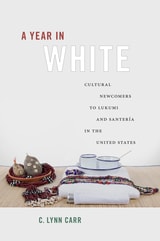
A Year in White
Cultural Newcomers to Lukumi and Santería in the United StatesCarr, C. Lynn
Rutgers University Press, 2016
In her intimate investigation of the “year in white,” Carr draws on fifty-two in-depth interviews with other participants, an online survey of nearly two hundred others, and almost a decade of her own ethnographic fieldwork, gathering stories that allow us to see how cultural newcomers and natives thought, felt, and acted with regard to their initiation. She documents how, during the iyawo year, the ritual slowly transforms the initiate’s identity. For the first three months, for instance, the iyawo may not use a mirror, even to shave, and must eat all meals while seated on a mat on the floor using only a spoon and their own set of dishes. During the entire year, the iyawo loses their name and is simply addressed as “iyawo” by family and friends.
Carr also shows that this year-long religious ritual—which is carried out even as the iyawo goes about daily life—offers new insight into religion in general, suggesting that the sacred is not separable from the profane and indeed that religion shares an ongoing dynamic relationship with the realities of everyday life. Religious expression happens at home, on the streets, at work and school.
Offering insight not only into Santería but also into religion more generally, A Year in White makes an important contribution to our understanding of complex, dynamic religious landscapes in multicultural, pluralist societies and how they inhabit our daily lives.

A Zapotec Natural History
Trees, Herbs, and Flowers, Birds, Beasts, and Bugs in the Life of San Juan GbëëEugene S. Hunn
University of Arizona Press, 2008
The contents of Part 2 are available online.
A return to the village
community ethnographies and the study of Andean culture in retrospectiveEdited by Francisco Ferreira and Billie Jean Isbell
University of London Press, 2016
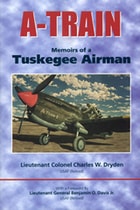
A-Train
Memoirs of a Tuskegee AirmanCharles W. Dryden
University of Alabama Press, 1997
A moving personal account of a man’s flight for freedom—above the clouds and beyond prejudice—by one of the first Tuskegee airmen.
A-Train is the story of one of the black Americans who, during World War II, graduated from Tuskegee (AL) Flying School and served as a pilot in the Army Air Corps’ 99th Pursuit Squadron. Charles W. Dryden presents a fast-paced, balanced, and personal account of what it was like to prepare for a career traditionally closed to African Americans, how he coped with the frustrations and dangers of combat, and how he, along with many fellow black pilots, navigators, bombardiers, and crewmen, emerged with a magnificent war record.
Under the command of Colonel Benjamin O. Davis Jr., the Tuskegee airmen fought over North Africa, Sicily, and Europe, escorting American bomber crews who respected their "no-losses" record. Some were shot down, many of them were killed or captured by the enemy, and several won medals of valor and honor. But the airmen still faced great barriers of racial prejudice in the armed forces and at home. As a member of that elite group of young pilots who fought for their country overseas while being denied civil liberties at home, Dryden presents an eloquent story that will touch every reader.
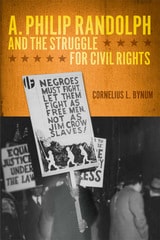
A. Philip Randolph and the Struggle for Civil Rights
Cornelius L. Bynum
University of Illinois Press, 2010
ACCESS
Multiple Avenues for Deaf PeopleDoreen DeLuca
Gallaudet University Press, 2008
The companion to Signs and Voices: Deaf Culture, Identity, Language, and Arts, this volume presents an accomplished group of contributors who address the major technological, institutional, and societal advances in access for deaf people, as well as the remaining hurdles. Part One: Assistive Technologies begins with Maggie Casteel’s description of the latest innovative hearing assistive technology. Al Sonnenstrahl discusses his career as a deaf engineer who segued into advocating for equal access in telecommunications. Robert C. O’Reilly, Amanda J. Mangiardi, and H. Timothy Bunnell outline the process of cochlear implantation in children.
Jami N. Fisher and Philip J. Mattiacci open Part Two: Education and Literacy by examining civil rights issues in education. Michael Stinson considers the conflict that inclusion creates in developing a deaf identity. Lisa Herbert discusses her identity as a signing deaf person who also has a cochlear implant. Grace Walker focuses on her experiences with a cochlear implant that eventually led her to stop using it.
In the final section, Part Three: Civil Rights, Christy Hennessey describes her work as an advocate and job placement counselor with deaf and hard of hearing people. Tony Saccente discusses HIV/AIDs counseling to the deaf gay community. Leila Monaghan follows by reviewing recent studies of deaf attitudes towards HIV/AIDs. Greg Hlibok concludes with his commentary on leading the Deaf President Now! movement and its subsequent effects on deaf civil rights.
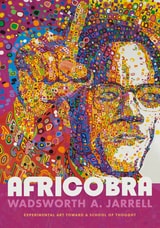
AFRICOBRA
Experimental Art toward a School of ThoughtWadsworth A. Jarrell
Duke University Press, 2020
AI for Everyone?
Critical PerspectivesPieter Verdegem
University of Westminster Press, 2021
Editor Pieter Verdegem was shortlisted for best edited collection in the 2022 MeCCSA outstanding achievement awards. See https://uwestminsterpress.blog/2022/08/18/original-and-timely-uwp-title-shortlisted-for-major-academic-book-prize/ for more details.
We are entering a new era of technological determinism and solutionism in which governments and business actors are seeking data-driven change, assuming that Artificial Intelligence is now inevitable and ubiquitous. But we have not even started asking the right questions, let alone developed an understanding of the consequences. Urgently needed is debate that asks and answers fundamental questions about power. This book brings together critical interrogations of what constitutes AI, its impact and its inequalities in order to offer an analysis of what it means for AI to deliver benefits for everyone. The book is structured in three parts: Part 1, AI: Humans vs. Machines, presents critical perspectives on human-machine dualism. Part 2, Discourses and Myths About AI, excavates metaphors and policies to ask normative questions about what is ‘desirable’ AI and what conditions make this possible. Part 3, AI Power and Inequalities, discusses how the implementation of AI creates important challenges that urgently need to be addressed. Bringing together scholars from diverse disciplinary backgrounds and regional contexts, this book offers a vital intervention on one of the most hyped concepts of our times.

AIDS Alibis
Sex, Drugs, and Crime in the AmericasStephanie Kane
Temple University Press, 1998
The stories reveal the dynamics that determine how the policy decisions of white-collar health care professionals actually play out in real life. By focusing on life-changing social problems, the narratives highlight the contradictions between public health and criminal law. Look at how HIV has transformed our social consciousness, from intimate touch to institutional outreach. But, Kane argues, these changes are dwarfed by the United States's refusal to stop the war on drugs, in effect misdirecting resources and awareness.
AIDS Alibis combines empirical and interpretive methods in a path-breaking attempt to recognize the extent to which coercive institutional practices are implicated in HIV transmission patterns. Kane shows how th e virus feeds on the politics of inequality and indifference, even as it exploits the human need for intimacy and release.
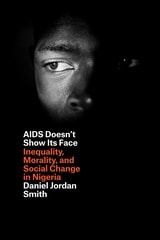
AIDS Doesn't Show Its Face
Inequality, Morality, and Social Change in NigeriaDaniel Jordan Smith
University of Chicago Press, 2014
Drawing on twenty years of fieldwork in Nigeria, Smith tells a story of dramatic social changes, ones implicated in the same inequalities that also factor into local perceptions about AIDS—inequalities of gender, generation, and social class. Nigerians, he shows, view both social inequality and the presence of AIDS in moral terms, as kinds of ethical failure. Mixing ethnographies that describe everyday life with pointed analyses of public health interventions, he demonstrates just how powerful these paired anxieties—medical and social—are, and how the world might better alleviate them through a more sensitive understanding of their relationship.
AIDS TV
Identity, Community, and Alternative VideoAlexandra Juhasz
Duke University Press, 1995
An AIDS videomaker herself, Juhasz writes from the standpoint of an AIDS activist and blends feminist film critique with her own experience. She offers a detailed description of alternative AIDS video, including her own work on the Women’s AIDS Video Enterprise (WAVE). Along with WAVE, Juhasz discusses amateur video tapes of ACT UP demonstrations, safer sex videos produced by Gay Men’s Health Crisis, public access programming, and PBS documentaries, as well as network television productions.
From its close-up look at camcorder AIDS activism to its critical account of mainstream representations, AIDS TV offers a better understanding of the media, politics, identity, and community in the face of AIDS. It will challenge and encourage those who hope to change the course of this crisis both in the ‘real world’ and in the world of representation.
AIDS and the Distribution of Crises
Jih-Fei Cheng, Alexandra Juhasz, and Nishant Shahani, editors
Duke University Press, 2020
Contributors. Cecilia Aldarondo, Pablo Alvarez, Marlon M. Bailey, Emily Bass, Darius Bost, Ian Bradley-Perrin, Jih-Fei Cheng, Bishnupriya Ghosh, Roger Hallas, Pato Hebert, Jim Hubbard, Andrew J. Jolivette, Julia S. Jordan-Zachery, Alexandra Juhasz, Dredge Byung'chu Kang-Nguyễn, Theodore (Ted) Kerr, Catherine Yuk-ping Lo, Cait McKinney, Viviane Namaste, Elton Naswood, Cindy Patton, Margaret Rhee, Juana María Rodríguez, Sarah Schulman, Nishant Shahani, C. Riley Snorton, Eric A. Stanley, Jessica Whitbread, Quito Ziegler
AIDS and the National Body
Thomas E. Yingling
Duke University Press, 1997
Contemplating the contradictions of individual identity from within a human body adapting to and living within a collective national culture, Yingling delves into such issues as canon formation, poetic theory, and the rhetoric of the body in American popular culture. In addition to Wiegman’s illuminating introduction, the conversation is joined by four other scholars—Michael Awkward, Robert L. Caserio, Stephen Melville, and David Román—whose critical and personal responses to Yingling’s writing weigh in throughout the volume. What emerges is a collection that embodies the particular difficulties of living with AIDS, of outliving someone who has died of AIDS, and of losing prematurely an important thinker.
AJS vol 122 num 5
The University of Chicago Press
University of Chicago Press Journals, 2017
AJS vol 123 num 2
The University of Chicago Press
University of Chicago Press Journals, 2017
AJS vol 125 num 3
The University of Chicago Press
University of Chicago Press Journals, 2019
Aaron Henry of Mississippi
Inside AgitatorMinion K. C. Morrison
University of Arkansas Press, 2015
When Aaron Henry returned home to Mississippi from World War II service in 1946, he was part of wave of black servicemen who challenged the racial status quo. He became a pharmacist through the GI Bill, and as a prominent citizen, he organized a hometown chapter of the NAACP and relatively quickly became leader of the state chapter.
From that launching pad he joined and helped lead an ensemble of activists who fundamentally challenged the system of segregation and the almost total exclusion of African Americans from the political structure. These efforts were most clearly evident in his leadership of the integrated Mississippi Freedom Democratic Party delegation, which, after an unsuccessful effort to unseat the lily-white Democratic delegation at the Democratic National Convention in 1964, won recognition from the national party in 1968.
The man who the New York Times described as being “at the forefront of every significant boycott, sit-in, protest march, rally, voter registration drive and court case” eventually became a rare example of a social-movement leader who successfully moved into political office. Aaron Henry of Mississippi covers the life of this remarkable leader, from his humble beginnings in a sharecropping family to his election to the Mississippi house of representatives in 1979, all the while maintaining the social-change ideology that prompted him to improve his native state, and thereby the nation.

Aazheyaadizi
Worldview, Language, and the Logics of DecolonizationMark D. Freeland
Michigan State University Press, 2020
Abalone Tales
Collaborative Explorations of Sovereignty and Identity in Native CaliforniaLes W. Field
Duke University Press, 2008
Tales about abalone and their historical and contemporary meanings are related by Field and his coauthors, who include the chair and other members of the Muwekma Ohlone Tribe; a Point Arena Pomo elder; the chair of the Wiyot tribe and her sister; several Hupa Indians; and a Karuk scholar, artist, and performer. Reflecting the divergent perspectives of various Native groups and people, the stories and analyses belie any presumption of a single, unified indigenous understanding of abalone. At the same time, they shed light on abalone’s role in cultural revitalization, struggles over territory, tribal appeals for federal recognition, and connections among California’s Native groups. While California’s abalone are in danger of extinction, their symbolic power appears to surpass even the environmental crises affecting the state’s vulnerable coastline.