5159 books match the query 'Biography' and 527 start with a
cover of Attlee

Attlee

David Howell

Haus Publishing, 2006

Former British Prime Minister best known for the creation of the National Health Service.
[more]
cover of Attorney for the Frontier: Enos Stutsmon

Attorney for the Frontier

Enos Stutsmon

Dale Gibson

University of Manitoba Press, 1983

[more]
cover of Attu Boy: A Young Alaskan's WWII Memoir

Attu Boy

A Young Alaskan's WWII Memoir

Nick Golodoff

University of Alaska Press, 2015

In the quiet of morning, exactly six months after Pearl Harbor, the Japanese touched down on American soil. Landing on the remote Alaska island of Attu, they assailed an entire village, holding the Alaskan villagers for two months and eventually corralling all survivors into a freighter bound for Japan.
One of those survivors, Nick Golodoff, became a prisoner of war at just six years old. He was among the dozens of Unangan Attu residents swept away to Hokkaido, and one of only twenty-five to survive. Attu Boy tells Golodoff’s story of these harrowing years as he found both friendship and cruelty at the hands of the Japanese. It offers a rare look at the lives of civilian prisoners and their captors in WWII-era Japan. It also tells of Golodoff’s bittersweet return to a homeland torn apart by occupation and forced internments. Interwoven with other voices from Attu, this richly illustrated memoir is a testament to the struggles, triumphs, and heartbreak of lives disrupted by war.

[more]
cover of Aubade: A Teacher's Notebook

Aubade

A Teacher's Notebook

Wallace Fowlie

Duke University Press, 1983

Wallace Fowlie describes his book as "not as much a memoir-autobiography as Journal of Rehearsals, but a reconstruction of events and thoughts that have formed me. The life of each man: a myth. The effort of each writer: to give meaning to his myth."

In Aubade: A Teacher's Notebook Fowlie writes at length of his life as a teacher at Duke University, his friendships with students and colleagues, his appreciation of movies, plays, travels, friends and books he has enjoyed and that have enhanced his life. This is an account of the life of a dedicated teacher who is also a writer-critic. Fowlie assesses his own sense of identity and the manner in which he transmits the values his studies have for him to his students through major literary texts. Aubade delineates Fowlies discovery, via his students, of the forms of a new culture arising alongside the old, which he integrates into his own intellectual life, broadening its horizons.
[more]
cover of Audubon at Sea: The Coastal and Transatlantic Adventures of John James Audubon

Audubon at Sea

The Coastal and Transatlantic Adventures of John James Audubon

Edited by Christoph Irmscher and Richard J. King

University of Chicago Press, 2022

This one-of-a-kind, lavishly illustrated anthology celebrates Audubon’s connection to the sea through both his words and art.
 
The American naturalist John James Audubon (1785–1851) is widely remembered for his iconic paintings of American birdlife. But as this anthology makes clear, Audubon was also a brilliant writer—and his keen gaze took in far more than creatures of the sky. Culled from his published and unpublished writings, Audubon at Sea explores Audubon’s diverse observations of the ocean, the coast, and their human and animal inhabitants. With Audubon expert Christoph Irmscher and scholar of the sea Richard J. King as our guides, we set sail from the humid expanses of the American South to the shores of England and the chilly landscapes of the Canadian North. We learn not only about the diversity of sea life Audubon documented—birds, sharks, fish, and whales—but also about life aboard ship, travel in early America, Audubon’s work habits, and the origins of beloved paintings. As we face an unfathomable loss of seabirds today, Audubon’s warnings about the fragility of birdlife in his time are prescient and newly relevant.

Charting the course of Audubon’s life and work, from his birth in Haiti to his death in New York City, Irmscher and King’s sweeping introduction and carefully drawn commentary confront the challenges Audubon’s legacy poses for us today, including his participation in American slavery and the thousands of birds he killed for his art. Rounded out by hundreds of historical and ornithological notes and beautiful illustrations, and with a foreword by distinguished photographer and conservationist Subhankar Banerjee, Audubon at Sea is the most comprehensively annotated collection of Audubon’s work ever published.
[more]
cover of August Reckoning: Jack Turner and Racism in Post–Civil War Alabama

August Reckoning

Jack Turner and Racism in Post–Civil War Alabama

William Warren Rogers Sr.

University of Alabama Press, 2004

An important story of one man’s life, lived with courage and principle
 
During the decades of Bourbon ascendancy after 1874, Alabama institutions like those in other southern states were dominated by whites. Former slave and sharecropper Jack Turner refused to accept a society so structured. Highly intelligent, physically imposing, and an orator of persuasive talents, Turner was fearless before whites and emerged as a leader of his race. He helped to forge a political alliance between blacks and whites that defeated and humiliated the Bourbons in Choctaw County, the heart of the Black Belt, in the election of 1882. That summer, after a series of bogus charges and arrests, Turner was accused of planning to lead his private army of blacks in a general slaughter of the county whites. Justice was forgotten in the resultant fear and hysteria.
 
[more]
cover of Austin Harrison and the English Review

Austin Harrison and the English Review

Martha S. Vogeler

University of Missouri Press, 2008
Political and literary journalist Austin Harrison became editor of the English Review in 1910. While holding that chair, he expanded the publication’s literary scope by publishing articles on such issues as women’s suffrage, parliamentary reform, the German threat, and Irish home rule. But although he edited the Review far longer than did its celebrated founder, Ford Madox Ford, history has long confined him to the shadows of not only his predecessor but also his father, the English Positivist Frederic Harrison.
 
 
            This first scholarly assessment of Harrison’s tenure at the English Review from 1910 to 1923 shows him courting controversy, establishing reputations, winning and losing authors, and pushing the limits of the publishable as he made his “Great Adult Review” the most consistently intelligent and challenging monthly of its day. Martha Vogeler offers a compelling personal and family narrative and a new perspective on British literary culture and political journalism in the years just before, during, and after the First World War.
 
 
            Vogeler provides a revealing account of Harrison the editor—his writings and opinions, his public life and relations—as she also traces the complex relationship between a son and his famous father. Balancing a scholar’s attention to detail and a fine writer’s eye for style, she relates Harrison’s improbable friendships with the notorious Frank Harris and the outrageous Aleister Crowley. And she has mined Harrison’s correspondence to lend insight into the careers of such writers as Ford Madox Ford, D. H. Lawrence, H. G. Wells, Joseph Conrad, John Masefield, Bernard Shaw, Arnold Bennett, and Marie Stopes. Other figures such as George Gissing, Bertrand Russell, Lord Northcliffe, and important Irish revolutionaries appear in new contexts.
 
 
            Ranging widely across literature, foreign relations, national politics, the women’s movement, censorship, and sexuality, Vogeler captures the themes of Harrison’s era. She describes his transformation from Germanophobe before and during World War I to an outspoken critic of the punitive measures against Germany in the Treaty of Versailles. She explores the ambiguities in his engagement with modernist aesthetics and in his attempt to escape the shadow of his father while benefiting from his family’s wealth and connections. Vogeler’s assessment of Harrison’s books further sharpens our understanding of his ideas about Germany, women, education, and Victorian family life—notably his underappreciated tribute/rebuke to his father, Frederic Harrison: Thoughts and Memories.
 
 
            This account of Austin Harrison’s career allows us to observe a journalist making his way in a highly competitive world and opens up a new window on Britain in the era of the Great War.
[more]
cover of Authoring the Past: History, Autobiography, and Politics in Medieval Catalonia

Authoring the Past

History, Autobiography, and Politics in Medieval Catalonia

Jaume Aurell

University of Chicago Press, 2012

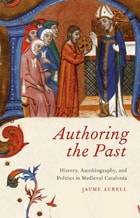
Authoring the Past surveys medieval Catalan historiography, shedding light on the emergence and evolution of historical writing and autobiography in the Middle Ages, on questions of authority and authorship, and on the links between history and politics during the period. Jaume Aurell examines texts from the late twelfth to the late fourteenth century—including the Latin Gesta comitum Barcinonensium and four texts in medieval Catalan: James I’s Llibre dels fets, the Crònica of Bernat Desclot, the Crònica of Ramon Muntaner, and the Crònica of Peter the Ceremonious—and outlines the different motivations for the writing of each. 

For Aurell, these chronicles are not mere archaeological artifacts but rather documents that speak to their writers’ specific contemporary social and political purposes. He argues that these Catalonian counts and Aragonese kings were attempting to use their role as authors to legitimize their monarchical status, their growing political and economic power, and their aggressive expansionist policies in the Mediterranean. By analyzing these texts alongside one another, Aurell demonstrates the shifting contexts in which chronicles were conceived, written, and read throughout the Middle Ages.

The first study of its kind to make medieval Catalonian writings available to English-speaking audiences, Authoring the Past will be of interest to scholars of history and comparative literature, students of Hispanic and Romance medieval studies, and medievalists who study the chronicle tradition in other languages.
[more]
cover of Autobiography and Decolonization: Modernity, Masculinity, and the Nation-State

Autobiography and Decolonization

Modernity, Masculinity, and the Nation-State

Philip Holden

University of Wisconsin Press, 2008
Philip Holden reveals deeply gendered connections between the writing of individual lives and of the narratives of nations emerging from colonialism. Autobiography and Decolonization is the first book to give serious academic attention to autobiographies of nationalist leaders in the process of decolonization, attending to them not simply as partial historical documents, but as texts involved in remaking the world views of their readers.
            Holden examines Mohandas K. Gandhi’s An Autobiography: The Story of My Experiments with Truth, Marcus Garvey’s fragmentary Autobiography,Joseph Ephraim Casely Hayford’s Ethiopia Unbound, Lee Kuan Yew’s The Singapore Story, Nelson Mandela’s Long Walk to Freedom, Jawaharlal Nehru’s An Autobiography, and Kwame Nkrumah’s Ghana:The Autobiography of Kwame Nkrumah.
            Holden argues that these examples of life writing have had significant influence on the formation of new, and often profoundly gendered, national identities. These narratives constitute the nation less as an imagined community than as an imagined individual. Moving from the past to the promise of the future, they mediate relationships between public and private, and between individual and collective stories. Ultimately, they show how the construction of modern selfhood is inextricably linked to the construction of a postcolonial polity.
[more]
cover of Autobiography and Letters of a Spanish Nun

Autobiography and Letters of a Spanish Nun

María Vela y Cueto

Iter Press, 2016

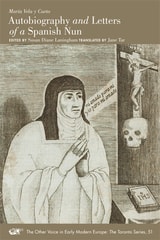
When María Vela y Cueto (1561–1617) declared that God had personally ordered her to take only the Eucharist as food and to restore primitive dress and public penance in her aristocratic convent, the entire religious community, according to her confessor, “rose up in wrath.” Yet, when Vela died, her peers joined with the populace to declare her a saint. In her autobiography and personal letters, Vela speaks candidly of the obstacles, perils, and rewards of re-negotiating piety in a convent where devotion to God was no longer expressed through rigorous asceticism. Vela’s experience, told in her own words, reveals her shrewd understanding of the persuasive power of a woman’s body.
[more]
cover of Autobiography and Other Writings

Autobiography and Other Writings

Ana de San Bartolomé

University of Chicago Press, 2008

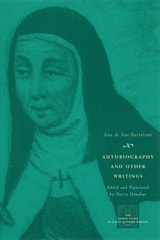
Ana de San Bartolomé (1549–1626), a contemporary and close associate of St. Teresa of Ávila, typifies the curious blend of religious activism and spiritual forcefulness that characterized the first generation of Discalced, or reformed Carmelites. Known for their austerity and ethics, their convents quickly spread throughout Spain and, under Ana’s guidance, also to France and the Low Countries. Constantly embroiled in disputes with her male superiors, Ana quickly became the most vocal and visible of these mystical women and the most fearless of the guardians of the Carmelite Constitution, especially after Teresa’s death.

Her autobiography, clearly inseparable from her religious vocation, expresses the tensions and conflicts that often accompanied the lives of women whose relationship to the divine endowed them with an authority at odds with the temporary powers of church and state. Last translated into English in 1916, Ana’s writings give modern readers fascinating insights into the nature of monastic life during the highly charged religious and political climate of late-sixteenth- and early-seventeenth-century Spain.
[more]
cover of Autobiography of Emperor Charles IV and his Legend of St Wenceslas

Autobiography of Emperor Charles IV and his Legend of St Wenceslas

Balázs Nagy

Central European University Press, 2001

One of the few autobiographies to have survived from the Middle Ages, this life history of one of the most influential rulers of the fourteenth century, Charles IV of Bohemia, covers his life from birth until his election as King of Germany in 1346.

Charles IV describes his childhood, spent mainly in the court of French kings, his juvenile years, his marriage and his first steps into the international political scene during the early part of the fourteenth century.

A unique addition to this volume is the first ever English translation of the Legend of Saint Wenceslas, written by Charles IV of Luxemburg.

[more]
cover of Autobiography of My Hungers

Autobiography of My Hungers

Rigoberto González

University of Wisconsin Press, 2019

Rigoberto González, author of the critically acclaimed memoir Butterfly Boy: Memories of a Chicano Mariposa, takes a second piercing look at his past through a startling new lens: hunger.
            The need for sustenance originating in childhood poverty, the adolescent emotional need for solace and comfort, the adult desire for a larger world, another lover, a different body—all are explored by González in a series of heartbreaking and poetic vignettes.
            Each vignette is a defining moment of self-awareness, every moment an important step in a lifelong journey toward clarity, knowledge, and the nourishment that comes in various forms—even "the smallest biggest joys" help piece together a complex portrait of a gay man of color who at last defines himself by what he learns, not by what he yearns for.

Bill Whitehead Award for Lifetime Literary Achievement, Publishing Triangle

“Told in a series of revealing vignettes and poems, González’s Autobiography of my Hungers turns moments of need and want into revelations of truth and self-awareness, creating the portrait of an artist that is complex if not entirely complete.”—El Paso Times

“Through his provocative vignettes, González communicates a lifetime of struggle for affirmation and self-acceptance.”—Make/Shift 
[more]
cover of Autobiography of Samuel S. Hildebrand: The Renowned Missouri Bushwhacker

Autobiography of Samuel S. Hildebrand

The Renowned Missouri Bushwhacker

Kirby Ross

University of Arkansas Press, 2016
Most Civil War historians now agree that the guerrilla conflict shaped the entire war in significant ways. Some of these “bushwhackers”—Nathan Bedford Forrest, William Clarke Quantrill, John Singleton Mosby—have become quite infamous. Illiterate Sam Hildebrand, one of Missouri’s most notorious guerrillas—often compared to “Rob Roy,” and the subject of dime novels—was one of the few to survive the war and have his story taken down and published. Shortly after this he was killed in a barroom brawl. “I make no apology to mankind for my acts of retaliation; I make no whining appeal to the world for sympathy. I sought revenge and I found it; the key of hell was not suffered to rust in the lock while I was on the war path.” —Sam Hildebrand Hildebrand’s reign of terror gave the Union army fits and kept much of the Trans-Mississippi, especially Missouri, roiling in the 1860s. Over seven years of fighting he and his men killed dozens of soldiers and civilians, whites and blacks; he claimed to have killed nearly one hundred himself. He was accused of many heinous acts. The historical significance of Hildebrand’s story is substantial, but his bloody tale is eminently readable and stands quite well on its own as a cold-blooded portrait of a violent time in American history. Like the nightmarish and depraved world of the Kid in Cormac McCarthy’s novel Blood Meridian, Hildebrand’s world is truly ruthless and his story is brutally descriptive in its coolly detached rendering of one man’s personal war. Published in 1870, Hildebrand’s autobiography has long been out of print and has been a rare and highly prized acquisition among Civil War
[more]
cover of Autobiography of Silas Thompson Trowbridge M.D.

Autobiography of Silas Thompson Trowbridge M.D.

Silas Thompson Trowbridge. Introduction by John S. Haller Jr. and Barbara Mason

Southern Illinois University Press, 2004

Autobiography of Silas Thompson Trowbridge M.D. is a remarkable account of nineteenth-century medicine, politics, and personal life that recovers the captivating experiences of a Civil War–era regimental surgeon who was also a president of the Illinois State Medical Society and a United States consul in Mexico. First published in 1872 by Trowbridge’s family and even printed on a family-owned press, only a handful of copies of the initial publication survive. In this first paperback edition, Trowbridge’s memoirs are reprinted as they originally appeared.

Indiana-born Trowbridge moved to Illinois in his early twenties. A teacher by trade, he continued that career while he began the study of medicine, eventually starting a medical practice near New Castle, which he later moved to Decatur. Though respected by the community, Trowbridge lacked an authentic medical degree, so he enrolled in a four-month course of medical lectures at Rush Medical College in Chicago. Autobiography describes the atmosphere of the medical school and delineates Trowbridge’s opinions on the lack of quality control in medical colleges of the day.

Although three years of study and two annual terms of sixteen weeks were the actual requirements for the degree, Trowbridge was allowed to graduate after a single course of lectures  and completion of a twenty-page thesis due to his previous experience. He then married a young widow and returned to Decatur, where he began a partnership with two local physicians and inaugurated a county medical society.  In addition to practicing medicine, he was known and respected for regulating it, too, having supported legislation that would legalize dissection and prohibit incompetent persons from practicing medicine.

In 1861, Trowbridge began service as a surgeon of the 8th Illinois Volunteer Infantry commanded by Colonel Richard J. Oglesby. Autobiography describes his experiences beginning in Cairo, Illinois, where the infantry was involved in several expeditions and where Trowbridge made his “debut at the operating table.” Revealing a litany of surgical duties, replete with gruesome details, these war-time recollections provide a unique perspective on medical practices of the day. Likewise, his commentaries on political issues and his descriptions of combat serve to correct some of the early written histories of the war’s great battles.

After receiving an honorable discharge in 1864, Trowbridge returned to Decatur to resume his partnership with Dr. W. J. Chenoweth and devote himself to surgery. His reminiscences recount several difficult surgeries, his efforts to reorganize the county medical society (which had collapsed during the war), and his communications to the Illinois legislature to set higher qualifications for practicing physicians. He was later elected president of the Illinois State Medical Society and appointed by President Grant United States Consul to Vera Cruz on the eastern coast of Mexico, where he studied and challenged the treatment of yellow fever. The autobiography ends in 1874 with a six-day family vacation and the marriage of his daughter to a merchant of Vera Cruz.
[more]
cover of Autobiography of a Yaqui Poet

Autobiography of a Yaqui Poet

Refugio Savala; Edited by Kathleen M. Sands

University of Arizona Press, 1980
This is the major literary achievement of a sensitive, gifted man. The author is a Yaqui Indian, a railroad gandy dancer who sees beauty in iron spikes and rail clamps as well as in twilight-purple mountains and glossy-leafed cottonwood trees. In the seventy years following his flight from the Yaqui-Mexican wars in Sonora, Savala became a talented poet and loving recorder of his people's cultural heritage. A large sampling of his original works appears in the interpretations section of this book. Together with the beautifully written autobiography, they offer a unique view of Arizona Yaqui culture and history, railroading in the American West, and the personal and artistic growth of a Native American man of letters.
[more]
cover of Autobiography of an Androgyne

Autobiography of an Androgyne

Ralph Werther and Edited by Scott Herring

Rutgers University Press, 2008
First printed in 1918, Ralph Werther's Autobiography of an Androgyne charts his emerging self-understanding as a member of the "third sex" and documents his explorations of queer underworlds in turn-of-the-century New York City. Werther presents a sensational life narrative that begins with a privileged upper-class birth and a youthful realization of his difference from other boys. He concludes with a decision to undergo castration. Along the way, he recounts intimate stories of adolescent sexual encounters with adult men and women, escapades as a reckless "fairie" who trolled Brooklyn and the Bowery in search of working-class Irish and Italian immigrants, and an immersion into the subculture of male "inverts." This new edition also includes a critical introduction by Scott Herring that situates the text within the scientific, historical, literary, and social contexts of urban American life in the late-nineteenth and early-twentieth centuries. Tracing how this pioneering autobiography engages with conversations on immigration, gender, economics, metropolitan working-class culture, and the invention of homosexuality across class lines, this edition is ideal for courses on topics ranging from Victorian literature to modern American sexuality.
[more]
cover of Autobiography of an Aspiring Saint

Autobiography of an Aspiring Saint

Cecilia Ferrazzi

University of Chicago Press, 1996

Charged by the Venetian Inquisition with the conscious and cynical feigning of holiness, Cecelia Ferrazzi (1609-1684) requested and obtained the unprecedented opportunity to defend herself through a presentation of her life story. Ferrazzi's unique inquisitorial autobiography and the transcripts of her preceding testimony, expertly transcribed and eloquently translated into English, allow us to enter an unfamiliar sector of the past and hear 'another voice'—that of a humble Venetian woman who had extraordinary experiences and exhibited exceptional courage.

Born in 1609 into an artisan family, Cecilia Ferrazzi wanted to become a nun. When her parents' death in the plague of 1630 made it financially impossible for her to enter the convent, she refused to marry and as a single laywoman set out in pursuit of holiness. Eventually she improvised a vocation: running houses of refuge for "girls in danger," young women at risk of being lured into prostitution.

Ferrazzi's frequent visions persuaded her, as well as some clerics and acquaintances among the Venetian elite, that she was on the right track. The socially valuable service she was providing enhanced this impresssion. Not everyone, however, was convinced that she was a genuine favorite of God. In 1664 she was denounced to the Inquisition.

The Inquisition convicted Ferrazzi of the pretense of sanctity. Yet her autobiographical act permits us to see in vivid detail both the opportunities and the obstacles presented to seventeenth-century women.
[more]
cover of Autobiography, Volume 1: 1907-1937, Journey East, Journey West

Autobiography, Volume 1

1907-1937, Journey East, Journey West

Mircea Eliade

University of Chicago Press, 1990
"Here finally are Eliade's memoirs of the first thirty years of his life in Mac Linscott Rickett's crisp and lucid English translation. They present a fascinating account of the early development of a Renaissance talent, expressed in everything from daily and periodical journalism, realistic and fantastic fiction, and general nonfiction works to distinguished contributions to the history of religions. Autobiography follows an apparently amazingly candid report of this remarkable man's progression from a mischievous street urchin and literary prodigy, through his various love affairs, a decisive and traumatic Indian sojourn, and active, brilliant participation in pre-World War II Romanian cultural life."—Seymour Cain, Religious Studies Review
[more]
cover of Autobiography, Volume 2: 1937-1960, Exile's Odyssey

Autobiography, Volume 2

1937-1960, Exile's Odyssey

Mircea Eliade

University of Chicago Press, 1988
"Here finally are Eliade's memoirs of the first thirty years of his life in Mac Linscott Rickett's crisp and lucid English translation. They present a fascinating account of the early development of a Renaissance talent, expressed in everything from daily and periodical journalism, realistic and fantastic fiction, and general nonfiction works to distinguished contributions to the history of religions. Autobiography follows an apparently amazingly candid report of this remarkable man's progression from a mischievous street urchin and literary prodigy, through his various love affairs, a decisive and traumatic Indian sojourn, and active, brilliant participation in pre-World War II Romanian cultural life."—Seymour Cain, Religious Studies Review
[more]
cover of Autobiography: Narrative of Transformation

Autobiography

Narrative of Transformation

Carolyn A. Barros

University of Michigan Press, 1997
In Autobiography: Narrative of Transformation, Carolyn Barros creates a primer for the study of autobiography, a genre many consider highly problematic. She sees autobiography as a "narrative of transformation"--a text that presents the "before" and "after" of an individual's life. Focusing on autobiography as narrative, of something that "happened to me," Barros highlights the various metamorphoses that are emplotted, bounded, and framed by the author's language and demonstrates that change is the operative metaphor in autobiographical discourse. The study focuses primarily on autobiographies from the rich Victorian period. Thomas Carlyle's Sartor Resartus, as it self-consciously fictionalized the composition of Diogenes Teufelsdröckh's life narrative, provides a striking analog and paradigm for introducing the study and its methodological approach. Barros's major chapters on John Henry Cardinal Newman, John Stuart Mill, Charles Darwin, and Margaret Oliphant detail four very different types of autobiographical transformation -- religious, philosophical, scientific, and literary -- and in Barros's judgment establish benchmarks for considering autobiographies from antiquity to the present. A final chapter discusses autobiography's significance to an individual writer's corpus, to a particular culture, and finally to a history of "narratives of transformation."
[more]
cover of Ava Helen Pauling: Partner, Activist, Visionary

Ava Helen Pauling

Partner, Activist, Visionary

Mina Carson

Oregon State University Press, 2013

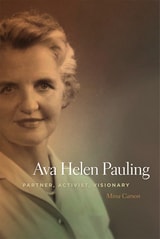
The story of Ava Helen Pauling—her rich career as an activist first for civil rights and liberties, then against nuclear testing, and finally for peace, feminism, and environmental stewardship—is best told in the context of her enduring partnership with her famous husband, Linus Pauling. In this long-awaited first biography of Ava Helen Pauling, Mina Carson reveals the complex and fascinating history behind one of the great love stories of the twentieth century.

Though she began her public career in the shadow of her spouse, Ava Helen soon found herself tugged between her ardor to support Linus in his career and her desire that he embrace the social and political causes she felt passionate about. She believed it was her destiny to accept duties as a mother and homemaker, but neither of those roles was fully satisfying. Her more complete identity emerged over decades, as she evolved as an influential activist.

Ava Helen Pauling’s story is significant because so many aspects of it were shared with countless American women of her generation and the generations surrounding her. They had new educational opportunities but were expected to conform to the same limited social roles dictated by the gender ideology of the nineteenth century. When second wave feminism erupted in the 1960s, its force did not come solely from the young women rebelling against their elders’ rules and limitations, but also from the frustrated dreams of those elders themselves.

Ava Helen did not experience overt oppression by her husband or community; she even asserted some very non-feminist positions as a young woman. This, combined with a structural lack of opportunity, contributed to the strength and persistence of role expectations in her life. At the same time, she was feisty and willful. Her personality both created her marital loyalty and eventually took her down an openly feminist path.

Ava Helen Pauling: Partner, Activist, Visionary is an important complement to writings about Linus Pauling and a welcome addition to the literature on women’s and family history. It will also appeal to students and scholars of peace and reform movements and the social history of science.

[more]
cover of Available Light: Omar Badsha and the Struggle for Change in South Africa

Available Light

Omar Badsha and the Struggle for Change in South Africa

Daniel Magaziner

Ohio University Press, 2024
Available Light tells the story of an activist, an artist, a uniquely South African individual, and his community and family across the second half of the twentieth century. Omar Badsha was born in Durban, on the country’s southeastern coast in 1945. His was the third generation of his Gujarati family to call South Africa home. Before he turned five, the country’s white electorate had voted to institute apartheid to strip the rights and privileges of citizenship from most of the population, including Badsha’s Indian community and especially the country’s Black majority. By the time he turned fifteen, nonviolent protest against apartheid had been quashed; by the time he turned twenty, so too had the armed struggle to dislodge white supremacy within the country. The ongoing, resilient, and oft-rebuffed struggle against apartheid was a definitive factor in Badsha’s life. Furthermore, Badsha was raised in a community where art—painting, carving, music, poetry, theater—was inseparable from other values, whether Islamic and conservative or radical and urgently committed. When Badsha struggled in school, he, like his father, turned to art to express what he otherwise had difficulty conveying. Art brought him into contact with people of disparate backgrounds from far beyond Durban. In time, his friendships with other artists helped him refine his voice, first in drawing and eventually in photography, and capture the political ethic by which he strove to live his life and which he shared with similarly committed artist-activists. Daniel Magaziner chronicles how art and politics became intertwined in South Africa and explains what it takes to maintain a critical aesthetic approach to political crises in the past and present. The book tracks the personal and social costs that commitment can incur, while also appreciating how Badsha and others like him have maintained their vision of an equitable, transformed society even today, when the ideals that once animated the South African struggle are on the back foot worldwide.
[more]
cover of Avery Hopwood: His Life and Plays

Avery Hopwood

His Life and Plays

Jack F. Sharrar

University of Michigan Press, 1998

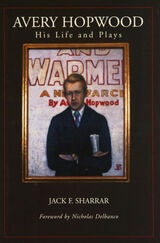
In 1920 Avery Hopwood was America's most successful playwright, achieving the distinction of having four concurrent hits on the Broadway stage.
Jack F. Sharrar's critical biography makes use of a rich array of primary sources--including Hopwood's unpublished novel and his letters to such friends as Gertrude Stein, Carl Van Vechten, and Mary Roberts Rinehart--to chronicle Hopwood's life and career. The book provides fresh insights on the playwright, his plays and the personalities who produced and performed in them, by surveying the commercial theater of the period. Until recently out of print, the new edition includes a foreword by Nicholas Delbanco, director of the University of Michigan's Hopwood Awards in Creative Writing Program; an afterword by Sharrar that sheds new light on the passionate, tumultuous relationship between Hopwood and John Floyd; and many rare illustrations from American theater history.
"The definitive biography of this fascinating, somewhat tragic man, who so often made theatergoers forget their woes but who sometimes couldn't forget his own . . . . [A] wonderful book, as deep as it is entertaining." --TheaterWeek
Jack F. Sharrar, Ph.D., is Director of Academic Affiars, American Conservatory Theater. Nicholas Delbanco is Professor of English and Director of the University of Michigan's Hopwood Awards Program. His most recent novel is Old Scores (Warner Books, 1997).
[more]
cover of Aviation's Golden Age: Portraits From 1920S And 1930S

Aviation's Golden Age

Portraits From 1920S And 1930S

William M. Leary

University of Iowa Press, 1989
[more]
cover of Awakening to Equality: A Young White Pastor at the Dawn of Civil Rights

Awakening to Equality

A Young White Pastor at the Dawn of Civil Rights

Karl E. Lutze

University of Missouri Press, 2006
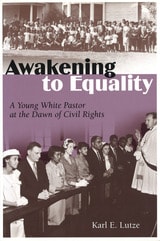
When Karl Lutze arrived in Oklahoma in 1945, he stepped into another world. A newly ordained clergyman born in Wisconsin, he was a young white man assigned to minister among Muskogee’s African American community. He soon found that in the South, crosses were as likely to be burned as revered. His recollections of postwar Oklahoma provide a compelling testament to the era’s racial conflict and some steps taken toward its resolution.
Awakening to Equality offers a unique perspective on an often-violent era that witnessed the gradual dismantling of segregation. Serving congregations in Muskogee and Tulsa, Lutze encountered a cross section of both communities—from the white and black power brokers to the most disempowered black and biracial families—and a stratified society buttressed by intimidation, cross burnings, and bombs. His activism in the Urban League and other local civil rights organizations gave him firsthand experience with forces moving toward change, as well as with the more entrenched forces resisting it.
Blending personal anecdotes and recollections of key players in this unfolding drama, Lutze puts a human face on historical and journalistic accounts of social change during the crucial early years of the civil rights movement. He takes readers back to small-town and urban Oklahoma in a time when African Americans were beginning to challenge segregation in Muskogee’s public transportation and a handful of liberal whites were trying to move their communities toward desegregation. Throughout this rich memoir, we meet actual people creating a future—one that involved the very redefinition of America.
More than a view of an earnest young clergyman trying to grow beyond the racial and social limitations of the church of his day, Awakening to Equality also depicts the struggles of Lutze’s own denomination to overcome its earlier accommodation of racism. Lutze’s success in his ministries made his achievements a model for mission work among African Americans and led to his appointment in 1959 first as field secretary and then shortly thereafter as executive director of the Lutheran Human Relations Association, a pioneering civil rights organization. Simultaneously, he taught classes as Associate Professor of Theology at Valparaiso University.
Lutze not only witnessed important events but also participated in them and found that his entire career was shaped by the experience. Awakening to Equality is a moving story that captures the real-life education of a prominent clergyman during a critical period in American life.
[more]
cover of Away Happens

Away Happens

Phil Crossman

University Press of New England, 2005

“Several years ago it was revealed to me that creative nonfiction was a legitimate literary genre,” writes Phil Crossman. “It was the most liberating experience of my life. All these years I thought I’d been simply lying.” Crossman is a humorist in the Mark Twain mold: wry, satiric, and keenly aware of the shortcomings of human beings, but with a leavening of self-deprecation and underlying sympathy. Though rooted in a regional consciousness (coastal Maine), his humor succeeds in making the local universal. Away Happens considers daily life on an island in Penobscot Bay that supports both a tight-knit local community and a larger seasonal population. Whether he is recounting a debate that happened at the Lions Club over who counts as a “local” or describing his adventures getting the Thanksgiving turkey into the oven, ruminating on how the ferry schedule shapes island life or recalling a local crime spree, Crossman is funny, unsentimental, and authentically Maine. “There are only two places, Here, this island off the coast of Maine, and Away. Here, this place, is a small place and Away, everywhere else, is a big place, but make no mistake about it, Here is Here and Away is not. 1276 people live Here. Billions more live Away than live Here, although increasingly, during the summer, it seems otherwise.” —From the Book
[more]