Results by title
8113 books match the query 'Literary Criticism' and 619 start with a
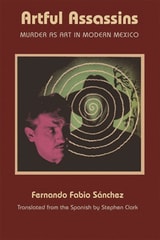
Artful Assassins
Murder as Art in Modern MexicoFernando Fabio Sanchez
Vanderbilt University Press, 2010
Sanchez argues that the seemingly hopeless cycle of violence experienced by Mexico in the 20th century, as reflected in its "crime genre," reveals a broader intrinsic cultural and political failure that suggests grave implications for the current state of crisis. Tracing the development of a national Mexican identity from the 1910 Mexican Revolution onward, Sanchez focuses on the indelible presence of violence and crime underlying the major works that contributed to a larger communal narrative.
Artful Assassins ultimately offers a panoramic overview of the evolution of Mexican arts and letters, as well as nationalism, by claiming murder and assassination as literary and cinematic motifs. The collapse of post-revolutionary political unity was presaged all along in Mexican culture, Sanchez argues. It need only to have been sought in the art of the nation.
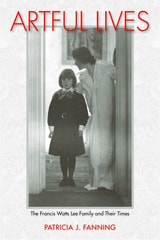
Artful Lives
The Francis Watts Lee Family and Their TimesPatricia J. Fanning
University of Massachusetts Press, 2016
Francis Watts Lee and his family hold a special place in the history of American photography. F. Holland Day completed a series of remarkable photographs of Lee's daughter Peggy, and the striking portrait of the child and her mother titled Blessed Art Thou among Women is one of Gertrude Käsebier's most iconic compositions. In Artful Lives, Patricia J. Fanning uses these and other significant images as guideposts to explore the Lee family and the art and culture of their age.
A social reform advocate, Francis Watts Lee was an artistic photographer and a talented printer, part of the circle of avant-garde artists and intellectuals who formed Boston's bohemia. He married twice, first Agnes Rand, an award-winning poet and children's book author, and later, after their divorce, Marion Lewis Chamberlain, a librarian and MIT-trained architect. Francis and Agnes's eldest daughter, Peggy, who was so integral to the work of pioneer Pictorialists, died at age seven of juvenile diabetes. Her sister, Alice, who lost her hearing in infancy, became a wood carver and sculptor.
Utilizing previously unknown family archives and institutional sources, Fanning traces the Lee family's story in the context of major artistic, political, social, and religious trends, including the Arts and Crafts movement, Christian Socialism, and Aestheticism, while also showing how their experiences reflected the national culture's evolving conceptions of family, gender, childhood, medicine, deaf education, and mourning. This richly drawn and gracefully written account of one family informs our understanding of this vibrant era, in Boston and well beyond.
Artful Truths
The Philosophy of MemoirHelena de Bres
University of Chicago Press, 2021
Artful Truths offers a concise guide to the fundamental philosophical questions that arise when writing a literary work about your own life. Bringing a philosopher’s perspective to a general audience, Helena de Bres addresses what a memoir is, how the genre relates to fiction, memoirists’ responsibilities to their readers and subjects, and the question of why to write a memoir at all. Along the way, she delves into a wide range of philosophical issues, including the nature of the self, the limits of knowledge, the idea of truth, the obligations of friendship, the relationship between morality and art, and the question of what makes a life meaningful.
Written in a clear and conversational style, it offers a resource for those who write, teach, and study memoirs, as well as those who love to read them. With a combination of literary and philosophical knowledge, de Bres takes the many challenges directed at memoirists seriously, while ultimately standing in defense of a genre that, for all its perplexities—and maybe partly because of them—continually proves to be both beloved and valuable.
Artful Truths
The Philosophy of MemoirHelena de Bres
University of Chicago Press, 2021
Offers a philosophical perspective on the nature and value of writing a memoir.
Artful Truths offers a concise guide to the fundamental philosophical questions that arise when writing a literary work about your own life. Bringing a philosopher’s perspective to a general audience, Helena de Bres addresses what a memoir is, how the genre relates to fiction, memoirists’ responsibilities to their readers and subjects, and the question of why to write a memoir at all. Along the way, she delves into a wide range of philosophical issues, including the nature of the self, the limits of knowledge, the idea of truth, the obligations of friendship, the relationship between morality and art, and the question of what makes a life meaningful.
Written in a clear and conversational style, it offers a resource for those who write, teach, and study memoirs, as well as those who love to read them. With a combination of literary and philosophical knowledge, de Bres takes the many challenges directed at memoirists seriously, while ultimately standing in defense of a genre that, for all its perplexities—and maybe partly because of them—continually proves to be both beloved and valuable.
Arthur C. Clarke
Gary Westfahl
University of Illinois Press, 2018
Gary Westfahl closely examines Clarke's remarkable career, ranging from his forgotten juvenilia to the passages he completed for a final novel, The Last Theorem. As Westfahl explains, Clarke’s science fiction offered original perspectives on subjects like new inventions, space travel, humanity’s destiny, alien encounters, the undersea world, and religion. While not inclined to mysticism, Clarke necessarily employed mystical language to describe the fantastic achievements of advanced aliens and future humans. Westfahl also contradicts the common perception that Clarke’s characters were bland and underdeveloped, arguing that these reticent, solitary individuals, who avoid conventional relationships, represent his most significant prediction of the future, as they embody the increasingly common lifestyle of people in the twenty-first century.
Arthur Miller's America
Theater and Culture in a Time of ChangeEnoch Brater, Editor
University of Michigan Press, 2005
Arthur Miller's America collects new writing by leading international critics and scholars that considers the dramatic world of icon, activist, and playwright Arthur Miller's theater as it reflects the changing moral equations of his time. Written on the occasion of Miller's 85th year, the original essays and interviews in Arthur Miller's America treat the breadth of Miller's work, including his early political writings for the campus newspaper at the University of Michigan, his famous work with John Huston, Clark Gable and Marilyn Monroe on The Misfits, and his signature plays like Death of a Salesman and All My Sons.
Arthur Schnitzler in Great Britain
An Examination of Power and TranslationNicole Robertson
University of London Press, 2022
The “amoral voice” of fin-de-siècle Vienna, Arthur Schnitzler (1862–1931) was one of the major figures of European modernist literature. Throughout his lifetime and after his death, his writing enjoyed substantial domestic and international success, yet the arrival of his dramatic works in Great Britain was plagued by false starts, short runs, and inconsistencies. Only with Tom Stoppard’s adaptations of Das weite Land and Liebelei, as Undiscovered Country and Dalliance respectively, were Schnitzler’s plays finally produced at the National Theatre.
This fascinating book studies the history of Schnitzler’s reception in Great Britain to unearth evidence of power in transcultural and translingual migrations. Surveying the field from the end of the nineteenth century to the present day, Nicole Robertson’s analysis of published translations, critical reviews, correspondence, and unpublished drafts provides expansive insight into the process of translating from page to stage. This book presents exhaustive and detailed scholarship on a fascinating, if far from smooth, journey, raising fundamental questions about the nature of authorship.
Arthurian Intertextualities
Misreading and Rereading Malory's Morte Darthur and the Alliterative and Stanzaic MortesFiona Tolhurst and K. S. Whetter
University of Michigan Press, 2025
Arthurian Intertextualities offers new readings of Malory’s Morte as well as the two English poems that most influenced him. Tolhurst and Whetter situate Malory’s Arthur story in the context of fourteenth- and fifteenth-century England. Combining these contexts with intertextual analysis of scenes and characters from Le Morte Darthur and both sources, the authors illustrate the full extent of Malory’s debt to these two English poems while making a stronger case for Malory’s artistry—and the stanzaic-poet’s artistry—than previous scholarship has acknowledged. These new readings demand a reassessment of Arthurian women, kingship, and warfare and heroism, including reconsidering the alliterative-poet’s attitude to war and to Arthur as conqueror. The authors also offer a spirited defense of Malory’s Guenevere, who remains frequently maligned by scholars, and argue for Palomydes’s acceptance by his Round Table Fellowship. Arthurian Intertextualities will appeal to readers who are interested in the book that serves as the source for most of the Arthuriana (whether novels, plays, works of art, or films) in today’s world: Le Morte Darthur.
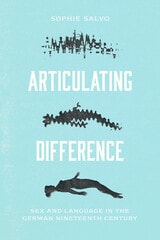
Articulating Difference
Sex and Language in the German Nineteenth CenturySophie Salvo
University of Chicago Press, 2024
Drawing on a wide range of texts, from understudied ethnographic and scientific works to canonical literature and philosophy, Sophie Salvo uncovers the prehistory of the inextricability of gender and language. Taking German discourses on language as her focus, she argues that we are not the inventors but, rather, the inheritors and adapters of the notion that gender and language are interrelated. Particularly during the long nineteenth century, ideas about sexual differences shaped how language was understood, classified, and analyzed. As Salvo explains, philosophers asserted the patriarchal origins of language, linguists investigated “women’s languages” and grammatical gender, and literary Modernists imagined “feminine” sign systems, and in doing so they not only deemed sex-based divisions to be necessary categories of language but also produced a plethora of gendered tropes and fictions, which they used both to support their claims and delimit their disciplines.
Articulating Difference charts new territory, revealing how gendered conceptions of language make possible the misogynistic logic of exclusion that underlies arguments claiming, for example, that women cannot be great orators or writers. While Salvo focuses on how male scholars aligned language study with masculinity, she also uncovers how women responded, highlighting the contributions of understudied nineteenth-century works on language that women wrote even as they were excluded from academic opportunities.
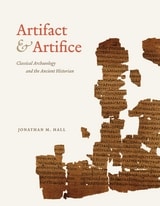
Artifact and Artifice
Classical Archaeology and the Ancient HistorianJonathan M. Hall
University of Chicago Press, 2013
Artifice and Indeterminacy
An Anthology of New PoeticsChristopher Beach
University of Alabama Press, 2007
Artifice and Indeterminacy gathers the strongest and most representative writings of the past two decades and shows more clearly than ever before the depth and breadth of contemporary American poetics. Collectively, these essays break with conventional interpretive frameworks and traditional generic boundaries of poetry to give fresh voice to the poetics of our time.
Neither dismissive of the aesthetic value(s) of poetry, nor reluctant to articulate the ways in which aesthetic evaluation is complicated by the mediating influences of history, culture, class, gender, race, and academic status, the writers presented in this anthology celebrate the artifice of the poetic text while also accepting as a given the indeterminacy of its inception and reception.
Individual pieces range in style and approach from theoretical writings to discussions of individual poets such as Emily Dickinson, Louis Zukofsky, and Bob Kaufman. The authors consider such critical issues as gender and the possibilities of a feminist poetics, the textual politics of race and class, and the broader implications of an avant-garde practice.
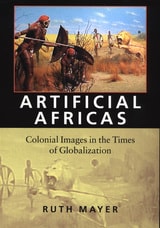
Artificial Africas
Colonial Images in the Times of GlobalizationRuth Mayer
Dartmouth College Press, 2002
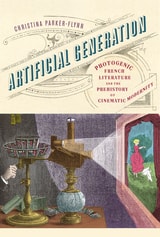
Artificial Generation
Photogenic French Literature and the Prehistory of Cinematic ModernityChristina Parker-Flynn
Rutgers University Press, 2022
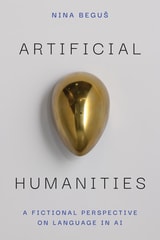
Artificial Humanities
A Fictional Perspective on Language in AINina Beguš
University of Michigan Press, 2025
Highlighting the impact of human-like AI design, from gendered virtual assistants to romanticized social robots, the book shows how these technologies intersect with longstanding humanistic questions about the concepts of creativity and language as well as the relations between humans and machines. Additionally, the book explores AI’s applications in medical fields, particularly psychiatry and neurotechnology, including how AI interacts with the human body and mind to address conditions like paralysis. By emphasizing the philosophical and cultural implications of these technologies, Beguš highlights the need for responsible innovation that prioritizes human well-being as well as machine potential outside of human imitation. Accessible and thought-provoking, Artificial Humanities offers tools for analyzing and assessing technologies while they are being developed and invites readers to see how the humanities can guide us toward a more thoughtful future for AI.

Artificial Mythologies
A Guide to Cultural InventionCraig J. SaperForeword by Laura Kipnis
University of Minnesota Press, 1997
Artificial Mythologies was first published in 1997. Minnesota Archive Editions uses digital technology to make long-unavailable books once again accessible, and are published unaltered from the original University of Minnesota Press editions.
Cultural critics teach us that myths are artificial. Cultural innovators use the artificial to make something new. In this exhilarating guide, Craig J. Saper takes us on an eye-opening tour of the process of cultural invention-willfully entertaining foolish, absurd, even fake, solutions as a way of reaching new perspectives on cultural problems. Saper deploys this method to reveal unsuspected connections among major cultural issues, such as urban decay, the dangers of television's power, family values, and conservative criticism of higher education.
The model Saper uses builds on the later works of the revered French cultural critic Roland Barthes. These works, Saper argues, suggest poignant, playful, and productive ways of engaging dominant methodologies and mythologies. Artificial Mythologies shows us how, by allowing the artificial-our received ideas, common responses, and cultural mythologies-full play, we can arrive at provocative new solutions. The book demonstrates that the very conceptions of media and sociocultural issues that stymie innovation can be made to serve the cause of invention.
Craig J. Saper is assistant professor in the Department of English at the University of Pennsylvania.
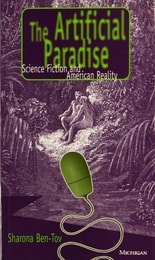
Artificial Paradise
Science Fiction and American RealitySharona Ben-Tov
University of Michigan Press, 1995
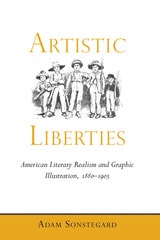
Artistic Liberties
American Literary Realism and Graphic Illustration, 1880-1905Adam Sonstegard
University of Alabama Press, 2013
Though today we commonly read major works of nineteenth-century American literature in unillustrated paperbacks or anthologies, many of them first appeared as magazine serials, accompanied by ample illustrations that sometimes made their way into the serials’ first printings as books. The graphic artists creating these illustrations often visually addressed questions that the authors had left for the reader to interpret, such as the complexions of racially ambiguous characters in Uncle Tom’s Cabin. The artists created illustrations that depicted what outsiders saw in Huck and Jim in Adventures of Huckleberry Finn, rather than what Huck and Jim learned to see in one another. These artists even worked against the texts on occasion—for instance, when the illustrators reinforced the same racial stereotypes that writers such as Paul Laurence Dunbar had intended to subvert in their works.
Authors of American realism commonly submitted their writing to editors who allowed them little control over the aesthetic appearance of their work. In his groundbreaking Artistic Liberties, Adam Sonstegard studies the illustrations from these works in detail and finds that the editors employed illustrators who were often unfamiliar with the authors’ intentions and who themselves selected the literary material they wished to illustrate, thereby taking artistic liberties through the tableaux they created.
Sonstegard examines the key role that the appointed artists played in visually shaping narratives—among them Mark Twain’s Pudd’nhead Wilson, Stephen Crane’s The Monster, and Edith Wharton’s The House of Mirth—as audiences tended to accept their illustrations as guidelines for understanding the texts. In viewing these works as originally published, received, and interpreted, Sonstegard offers a deeper knowledge not only of the works, but also of the realities surrounding publication during this formative period in American literature.
Arts of Dying
Literature and Finitude in Medieval EnglandD. Vance Smith
University of Chicago Press, 2020
Covering the emergence of English literature from the Old English to the late medieval periods, Arts of Dying argues that the problem of how to designate death produced a long tradition of literature about dying, which continues in the work of Heidegger, Blanchot, and Gillian Rose. Philosophy’s attempt to designate death’s impossibility is part of a literature that imagines a relationship with death, a literature that intensively and self-reflexively supposes that its very terms might solve the problem of the termination of life. A lyrical and elegiac exploration that combines medieval work on the philosophy of language with contemporary theorizing on death and dying, Arts of Dying is an important contribution to medieval studies, literary criticism, phenomenology, and continental philosophy.

As American as Mom, Baseball, and Apple Pie
Constructing Community in Contemporary American Horror FictionLinda J. Holland-Toll
University of Wisconsin Press, 2001
As If!
Queer Criticism Across DifferenceChase Gregory
Duke University Press, 2025
Ashes Taken for Fire
Aesthetic Modernism and the Critique of IdentityKevin M. Bell
University of Minnesota Press, 2007
Ashes of the Mind
War and Memory in Northern Literature, 1865-1900Martin Griffin
University of Massachusetts Press, 2009
The memory of the American Civil War took many forms over the decades after the conflict ended: personal, social, religious, and political. It was also remembered and commemorated by poets and fiction writers who understood that the war had bequeathed both historical and symbolic meanings to American culture. Although the defeated Confederacy became best known for producing a literature of nostalgia and an ideological defensiveness intended to protect the South's own version of history, authors loyal to the Union also confronted the question of what the memory of the war signified, and how to shape the literary response to that individual and collective experience.
In Ashes of the Mind, Martin Griffin examines the work of five Northerners—three poets and two fiction writers—who over a period of four decades tried to understand and articulate the landscape of memory in postwar America, and in particular in that part of the nation that could, with most justification, claim the victory of its beliefs and values. The book begins with an examination of the rhetorical grandeur of James Russell Lowell's Harvard Commemoration Ode, ranges across Herman Melville's ironic war poetry, Henry James's novel of North-South reconciliation, The Bostonians, and Ambrose Bierce's short stories, and ends with the bitter meditation on race and nation presented by Paul Laurence Dunbar's elegy “Robert Gould Shaw.” Together these texts reveal how a group of representative Northern writers were haunted in different ways by the memory of the
conflict and its fraught legacy.
Griffin traces a concern with individual and community loss, ambivalence toward victory, and a changing politics of commemoration in the writings of Lowell, Melville, James, Bierce, and Dunbar. What links these very different authors is a Northern memory of the war that became more complex and more compromised as the century went on, often replacing a sense of justification and achievement with a perception of irony and failed promise.
Asian American Literature
An Introduction to the Writings and Their Social ContextElaine Kim
Temple University Press, 1984
Asian American Players
Masculinity, Literature, and the Anxieties of WarAudrey Wu Clark
The Ohio State University Press, 2023
The player is a womanizer, a trickster, a gambler—but can Asian American men fully participate in this kind of masculinity? In Asian American Players, Audrey Wu Clark showcases how the literary figure of the Asian American player unsettles the hegemony of white American masculinity through mimicry, even as that masculinity socially and politically alienates him. She examines gendered and racialized US militarism through works written during major postmodern American wars, investigating how books by John Okada, David Henry Hwang, Chang-rae Lee, Frances Khirallah Noble, and Viet Thanh Nguyen (re)fashion Asian American masculinity in ways that ultimately mimic masculinist American foreign policy and military strategies during corresponding wars. She unearths a dual picture of Asian American players: as traces of the anxiety of America’s quest for empowerment and continued military and industrial dominance in the international arena and as those tarred as inferior and disloyal outsiders within this mirrored global dominance. She thus finds new inroads into understanding US imperialism and militarism and identifies ways that key literary figures have written against insidious tropes.
Asian American Plays for a New Generation
Plays for a New GenerationEdited by Josephine Lee, Don Eitel and R. A. Shiomi
Temple University Press, 2011
Asian American plays provide an opportunity to think about how racial issues are engaged through theatrical performance physical contact, bodily labor, and fleshly desire as well as through the more standard elements of plot, setting, characterization, staging, music, and action.
Asian American Plays for a New Generation showcases seven exciting new plays that dramatize timely themes that are familiar to Asian Americans. The works variously address immigration, racism, stereotyping, identity, generational tensions, assimilation, and upward mobility as well as post-9/11 paranoia, racial isolation, and adoptee experiences.
Each of these works engages directly and actively with Asian American themes through performance to provide an important starting point for building relationships, raising political awareness, and creating active communities that can foster a sense of connection or even rally individuals to collective action.
Asian American Women's Popular Literature
Feminizing Genres and Neoliberal BelongingPamela Thoma
Temple University Press, 2013
A volume in the American Literatures Initiative.
Asian Ameritopias
Asian American Speculative FictionsStephen Hong Sohn
Temple University Press, 2026
Asian American writers have long produced literary works of speculative fiction, the supergenre that employs science fictional, fantastical, or supernatural elements. Stephen Hong Sohn’s Asian Ameritopias is the first book-length study to consider how these aesthetically complex and wildly imaginative representations offer writers a way to explore themes of race and identity, as well as alternate futures and other planets.
Sohn examines how various novels and stories enable Asian American writers to engage with and reimagine issues of social justice, revisualize the bounds of social collectives, and create new pathways for precarious subjects. Asian Ameritopias assesses speculative fictions that spotlight supernatural horror and fantasy, such as ghosts and magical objects, to excavate racialized histories of oppression. Moving to science fiction, Sohn shows how Asian American cyborgs employ their technological powers to offer protection for socially marginalized groups, including sex workers, the undocumented, the poor, and the injured. He ends by analyzing three novels featuring extraterrestrials who look like Asian Americans in order to address issues of xenophobia and ostracization.
The speculative fictions Sohn unpacks in Asian Ameritopias provide a ripe opportunity to reflect on and confront our current, turbulent reality.
Asian Girlhood in the Shadows of US Empire
Sharon N. Tran
University of Minnesota Press, 2026
How the “Asian girl” is central to the story of US imperialism and the formation of Asian America
Representations of the “Asian girl” as lucky objects of humanitarian rescue and rehabilitation have been used to advance America’s imperial ambitions from World War II to the wars in Korean and Viet Nam. In this compelling work, Sharon N. Tran traces the production and instrumentalization of this figure through an examination of state documents, military newspapers, documentary photographs, and other archival materials. Theorizing “Asian girlhood” as a technology of imperial power, Tran exposes how the Asian girl is invoked as a shield that protects the innocence of US empire while she is excluded from innocence herself—relegated instead to a precarious position between child and adult, human and nonhuman, plaything and laborer.
Offering fresh insight into how imperial power operates, Tran analyzes figures such as the Japanese American school-girl in the context of World War II incarceration, the elusive “camptown girl,” and the objectified image of the “Napalm Girl.” Her innovative feminist approach interrogates the tendency to reclaim innocence for the Asian girl or to reframe her as an empowered woman. She engages the work of writers and artists such as Kiku Hughes, Nora Okja Keller, Aimee Phan, and lê thi diem thúy to demonstrate how Asian American literature offers rich theoretical interventions for critiquing the child–adult dichotomy that underpins key structures of imperial domination, illuminating more capacious conceptions of girlhood.
Restoring the dignity and agency of a figure too often denied both, Asian Girlhood in the Shadows of US Empire is a groundbreaking intersectional contribution to studies of gender, race, childhood, and state power.
Retail e-book files for this title are screen-reader friendly with images accompanied by short alt text and/or extended descriptions.
Asianfail
Narratives of Disenchantment and the Model MinorityEleanor Ty
University of Illinois Press, 2017
Asinaria
The One about the AssesPlautus; Translated and with commentary by John Henderson
University of Wisconsin Press, 2006
Aspects of Islamic Civilization
As Depicted in the Original TextsA. J. Arberry
University of Michigan Press, 1967
Islamic literature is rich, varied, and abundant, as befits the literature of a civilization which once controlled an empire as great as that of the Romans. In Aspects of Islamic Civilization, A. J. Arberry has chosen and translated passages from the most highly regarded works of Islamic literature in order to illustrate the development of Islamic civilization from its origins in the sixth century to the present.
This anthology is made up of selections from Arabic and Persian writers who have given world renown to Islamic literature—such as Hafiz, Sa'di, Jalal al-Din Rumi, Omar Khayyam, Ibn al-Farid, Avicenna, Ibn Hazm—and from such works as the Koran, the Masnavi, and the Moorish Anthology. It is an invaluable collection of sources for anyone interested in the Moslem world and a fascinating volume to browse in.
Assembling Ethnicities in Neoliberal Times
Ethnographic Fictions and Sri Lanka’s WarNimanthi Perera-Rajasingham
Northwestern University Press, 2019
Assembling Ethnicities in Neoliberal Times: Ethnographic Fictions and Sri Lanka’s War argues that the bloody war fought between the Sri Lankan state and the separatist Tamil Tigers from 1983 to 2009 should be understood as structured and animated by the forces of global capitalism. Using Aihwa Ong’s theorization of neoliberalism as a mobile technology and assemblage, this book explores how contemporary globalization has exacerbated forces of nationalism and racism.
Nimanthi Perera-Rajasingham finds that ethnographic fictions have both internalized certain colonial Orientalist impulses and critically engaged with categories of objective gazing, empiricism, and temporal distancing. She demonstrates that such fictions take seriously the task of bearing witness and documenting the complex productions of ethnic identities and the devastations wrought by warfare. To this end, Assembling Ethnicities
explores colonial-era travel writing by Robert Knox (1681) and Leonard Woolf (1913); contemporary works by Michael Ondaatje, Romesh Gunesekera, Shobasakthi, Dharmasiri Bandaranayake, and Thamotharampillai Shanaathanan; and cultural festivals and theater, including vernacular performances of Euripides’s The Trojan Women and women workers’ theater.
The book interprets contemporary fictions to unpack neoliberalism’s entanglements with nationalism and racism, engaging current issues such as human rights, the pastoral, Tamil militancy, immigrant lives, feminism and nationalism, and postwar developmentalism.
Assimilating Asians
Gendered Strategies of Authorship in Asian AmericaPatricia P. Chu
Duke University Press, 2000
Chu further demonstrates that Asian American male and female writers engage different strategies in the struggle to adapt, reflecting their particular, gender-based relationships to immigration, work, and cultural representation. While offering fresh perspectives on the well-known writings—both fiction and memoir—of Maxine Hong Kingston, Amy Tan, Bharati Mukherjee, Frank Chin, and David Mura, Assimilating Asians also provides new insight into the work of less recognized but nevertheless important writers like Carlos Bulosan, Edith Eaton, Younghill Kang, Milton Murayama, and John Okada. As she explores this expansive range of texts—published over the course of the last century by authors of Chinese, Japanese, Korean, Filipino, and Indian origin or descent—Chu is able to illuminate her argument by linking it to key historical and cultural events.
Assimilating Asians makes an important contribution to the fields of Asian American, American, and women’s studies. Scholars of Asian American literature and culture, as well as of ethnicity and assimilation, will find particular interest and value in this book.

Asylum
The Concept and the PracticeRanjana Khanna
Duke University Press, 2026
At Home in Diaspora
Black International WritingWendy Walters
University of Minnesota Press, 2005
In At Home in Diaspora, Wendy Walters investigates the work of Himes, Cliff, and three other twentieth-century black international writers—Caryl Phillips, Simon Njami, and Richard Wright—who have lived in and written from countries they do not call home. Unlike other authors in exile, those of the African diaspora are doubly displaced, first by the discrimination they faced at home and again by their life abroad. Throughout, Walters suggests that in the absence of a recoverable land of origin, the idea of diaspora comes to represent a home that is not singular or exclusionary. In this way, writing in exile is much more than a literary performance; it is a profound political act.
Wendy W. Walters is assistant professor of literature at Emerson College.
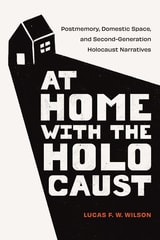
At Home with the Holocaust
Postmemory, Domestic Space, and Second-Generation Holocaust NarrativesLucas F. W. Wilson
Rutgers University Press, 2025
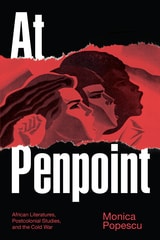
At Penpoint
African Literatures, Postcolonial Studies, and the Cold WarMonica Popescu
Duke University Press, 2020
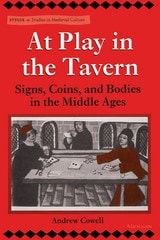
At Play in the Tavern
Signs, Coins, and Bodies in the Middle AgesAndrew Cowell
University of Michigan Press, 1999
Drawing on recent work in medieval literature, history, popular culture, gender studies, and sign theory, Andrew Cowell employs a wide range of traditional and, until now, little known sources to show the unity and importance of a countercultural literary mode.
Andrew Cowell is Assistant Professor, Department of French and Italian, University of Colorado at Boulder.
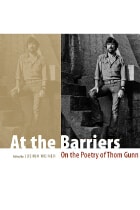
At the Barriers
On the Poetry of Thom GunnEdited by Joshua Weiner
University of Chicago Press, 2009
Maverick gay poetic icon Thom Gunn (1929–2004) and his body of work have long dared the British and American poetry establishments either to claim or disavow him. To critics in the UK and US alike, Gunn demonstrated that formal poetry could successfully include new speech rhythms and open forms and that experimental styles could still maintain technical and intellectual rigor. Along the way, Gunn’s verse captured the social upheavals of the 1960s, the existential possibilities of the late twentieth century, and the tumult of post-Stonewall gay culture.
The first book-length study of this major poet, At the Barriers surveys Gunn’s career from his youth in 1930s Britain to his final years in California, from his earliest publications to his later unpublished notebooks, bringing together some of the most important poet-critics from both sides of the Atlantic to assess his oeuvre. This landmark volume traces how Gunn, in both his life and his writings, pushed at boundaries of different kinds, be they geographic, sexual, or poetic. At the Barriers will solidify Gunn’s rightful place in the pantheon of Anglo-American letters.
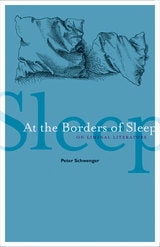
At the Borders of Sleep
On Liminal LiteraturePeter Schwenger
University of Minnesota Press, 2012
At the Borders of Sleep is a unique exploration of the connections between literature and the liminal states between waking and sleeping—from falling asleep and waking up, to drowsiness and insomnia, to states in which sleeping and waking mix. Delving into philosophy as well as literature, Peter Schwenger investigates the threshold between waking and sleeping as an important and productive state between the forced march of rational thought and the oblivion of unconsciousness.
While examining literary representations of the various states between waking and sleeping, At the Borders of Sleep also analyzes how writers and readers alike draw on and enter into these states. To do so Schwenger reads a wide range of authors for whom the borders of sleep are crucial, including Marcel Proust, Stephen King, Paul Valéry, Fernando Pessoa, Franz Kafka, Giorgio de Chirico, Virginia Woolf, Philippe Sollers, and Robert Irwin. Considering drowsiness, insomnia, and waking up, he looks at such subjects as the hypnagogic state, the experience of reading and why it is different from full consciousness, the relationships between insomnia and writing and why insomnia is often a source of creative insight, and the persistence of liminal elements in waking thought. A final chapter focuses on literature that blurs dream and waking life, giving special attention to experimental writing.
Ultimately arguing that, taking place on the edges of consciousness, both the reading and writing of literature are liminal experiences, At the Borders of Sleep suggests new ways to think about the nature of literature and consciousness.
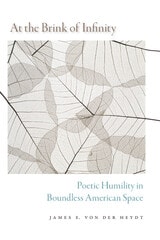
At the Brink of Infinity
Poetic Humility in Boundless American SpaceJames E. von der Heydt
University of Iowa Press, 2008
From popular culture to politics to classic novels, quintessentially American texts take their inspiration from the idea of infinity. In the extraordinary literary century inaugurated by Ralph Waldo Emerson, the lyric too seemed to encounter possibilities as limitless as the U.S. imagination. This raises the question: What happens when boundlessness is more than just a figure of speech? Exploring new horizons is one thing, but actually looking at the horizon itself is something altogether different. In this carefully crafted analysis, James von der Heydt shines a new light on the lyric craft of Emily Dickinson, Robert Frost, Elizabeth Bishop, and James Merrill and considers how their seascape-vision redefines poetry's purpose.
Emerson famously freed U.S. literature from its past and opened it up to vastness; in the following century, a succession of brilliant, rigorous poets took the philosophical challenges of such freedom all too seriously. Facing the unmarked horizon, Emersonian poets capture—and are captured by—a stark, astringent version of human beauty. Their uncompromising visions of limitlessness reclaim infinity's proper legacy—and give American poetry its edge. Von der Heydt's book recovers the mystery of their world.
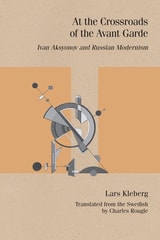
At the Crossroads of the Avant-Garde
Ivan Aksyonov and Russian ModernismLars Kleberg, Charles Rougle
Northwestern University Press, 2026
This kaleidoscopic biography offers readers a compelling microhistory of a revolutionary moment in art and politics through its portrait of an enigmatic but influential figure: Ivan Aksyonov authored the first book-length study about Pablo Picasso, translated Elizabethan drama, and was a literary adviser to Vsevolod Meyerhold, as well as a teacher of Sergei Eisenstein in Meyerhold’s institute and an important critic, before dying in 1935. Lars Kleberg traces Aksyonov’s influences, interlocutors, and creative output in multiple genres and media to bring a complicated and fascinating character back to life. Kleberg invites us to reconsider the avant-garde and to understand the political and artistic ferment of the revolutionary era and its aftermath in new, deeper ways.
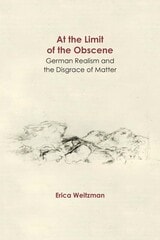
At the Limit of the Obscene
German Realism and the Disgrace of MatterErica Weitzman
Northwestern University Press, 2021
As German-language literature turned in the mid-nineteenth century to the depiction of the profane, sensual world, a corresponding anxiety emerged about the terms of that depiction—with consequences not only for realist poetics but also for the conception of the material world itself. At the Limit of the Obscene examines the roots and repercussions of this anxiety in German realist and postrealist literature. Through analyses of works by Adalbert Stifter, Gustav Freytag, Theodor Fontane, Arno Holz, Gottfried Benn, and Franz Kafka, Erica Weitzman shows how German realism’s conflicted representations of the material world lead to an idea of the obscene as an excess of sensual appearance beyond human meaning: the obverse of the anthropocentric worldview that German realism both propagates and pushes to its crisis. At the Limit of the Obscene thus brings to light the troubled and troubling ontology underlying German realism, at the same time demonstrating how its works continue to shape our ideas about representability, alterity, and the relationship of human beings to the non-human well into the present day.
At the Pivot of East and West
Ethnographic, Literary, and Filmic ArtsMichael M. J. Fischer
Duke University Press, 2023
Atlantic Double-Cross
American Literature and British Influence in the Age of EmersonRobert Weisbuch
University of Chicago Press, 1987
Describing the transatlantic "double-cross" of literary influence, Weisbuch documents both the American desire to create a literature distinctly different from English models and the English insistence that any such attempt could only fail. The American response, as he demonstrates, was to make strengths out of national disadvantages by rethinking history, time, and traditional concepts of the self, and by reinterpreting and ridiculing major British texts in mocking allusions and scornful parodies.
Weisbuch approaches a precise characterization of this "double-cross" by focusing on paired sets of English and American texts. Investigations of the causes, motives, and literary results of the struggle alternate with detailed analyses of several test cases. Weisbuch considers Melville's challenge to Dickens, Thoreau's response to Coleridge and Wordsworth, Hawthorne's adaptation of Keats and influence on Eliot, Whitman's competition with Arnold, and Poe's reshaping of Shelley. Adding a new dimension to the exploration of an emerging aesthetic consciousness, Atlantic Double-Cross provides important insights into the creation of the American literary canon.
Atlas's Bones
The African Foundations of EuropeD. Vance Smith
University of Chicago Press, 2025
Virgil. Chaucer. Petrarch. These names resonate with many as cornerstones of European culture. Yet, in Atlas’s Bones, D. Vance Smith reveals that much of what is claimed as European culture up to the Middle Ages—its great themes in literature, its sources in political thought, its religious beliefs—originated in the writings of African thinkers like Augustine, Fulgentius, and Martianus Capella, or Europeans who thought extensively about Africa. In fact, a third of Virgil’s Aeneid takes place in Africa. Francis Petrarch believed his most important achievement was his epic Africa; while Geoffrey Chaucer wrote repeatedly about the figures of Scipio Africanus, actually two different men who defeated and destroyed Carthage.
Smith tells the story of how Europe created a false “medieval” version of Africa to acquire resources and power during the era of imperialism and colonialism. The first half of the book, “Reading Africa,” traces Egypt’s, Libya’s, and Carthage’s influence on classical and medieval thinking about Africa, highlighting often ignored literary and legendary traditions, for example, that Alexander the Great named himself the son of an African god. The second part, “Writing Africa,” focuses on how the different cultures of the two great African cities—Carthage and Alexandria—shaped modern literary criticism and political theology and examines the cross-influences of modern anthropology, medieval studies, and colonial law.
Atlas’s Bones firmly re-establishes the significance of Africa in European intellectual history. It will be essential reading for anyone seeking to understand how much of Africa informs our artistic and cultural world.
Atomic Comics
Cartoonists Confront the Nuclear WorldFerenc Morton Szasz
University of Nevada Press, 2013
The advent of the Atomic Age challenged purveyors of popular culture to explain to the general public the complex scientific and social issues of atomic power. Atomic Comics examines how comic books, comic strips, and other cartoon media represented the Atomic Age from the early 1920s to the present. Through the exploits of superhero figures such as Atomic Man and Spiderman, as well as an array of nuclear adversaries and atomic-themed adventures, the public acquired a new scientific vocabulary and discovered the major controversies surrounding nuclear science. Ferenc Morton Szasz’s thoughtful analysis of the themes, content, and imagery of scores of comics that appeared largely in the United States and Japan offers a fascinating perspective on the way popular culture shaped American comprehension of the fissioned atom for more than three generations.
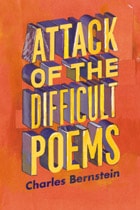
Attack of the Difficult Poems
Essays and InventionsCharles Bernstein
University of Chicago Press, 2011
Charles Bernstein is our postmodern jester of American poesy, equal part surveyor of democratic vistas and scholar of avant-garde sensibilities. In a career spanning thirty-five years and forty books, he has challenged and provoked us with writing that is decidedly unafraid of the tensions between ordinary and poetic language, and between everyday life and its adversaries. Attack of the Difficult Poems, his latest collection of essays, gathers some of his most memorably irreverent work while addressing seriously and comprehensively the state of contemporary humanities, the teaching of unconventional forms, fresh approaches to translation, the history of language media, and the connections between poetry and visual art.
Applying an array of essayistic styles, Attack of the Difficult Poems ardently engages with the promise of its title. Bernstein introduces his key theme of the difficulty of poems and defends, often in comedic ways, not just difficult poetry but poetry itself. Bernstein never loses his ingenious ability to argue or his consummate attention to detail. Along the way, he offers a wide-ranging critique of literature’s place in the academy, taking on the vexed role of innovation and approaching it from the perspective of both teacher and practitioner.
From blues artists to Tin Pan Alley song lyricists to Second Wave modernist poets, The Attack of the Difficult Poems sounds both a battle cry and a lament for the task of the language maker and the fate of invention.
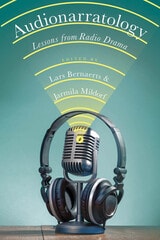
Audionarratology
Lessons from Radio DramaEdited by Lars Bernaerts and Jarmila Mildorf
The Ohio State University Press, 2021
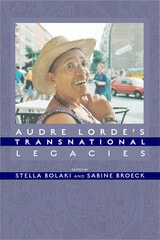
Audre Lorde’s Transnational Legacies
Stella Bolaki
University of Massachusetts Press, 2015
Audre Lorde's Transnational Legacies is the first book to systematically document and thoroughly investigate Lorde's influence beyond the United States. Arranged in three thematically interrelated sections—Archives, Connections, and Work—the volume brings together scholarly essays, interviews, Lorde's unpublished speech about Europe, and personal reflections and testimonials from key figures throughout the world. Using a range of interdisciplinary approaches, contributors assess the reception, translation, and circulation of Lorde's writing and activism within different communities, audiences, and circles. They also shed new light on the work Lorde inspired across disciplinary borders.
In addition the volume editors, contributors include Sarah Cefai, Cassandra Ellerbe-Dueck, Paul M. Farber, Tiffany N. Florvil, Katharina Gerund, Alexis Pauline Gumbs, Gloria Joseph, Jackie Kay, Marion Kraft, Christiana Lambrinidis, Zeedah Meierhofer-Mangeli, Rina Nissim, Chantal Oakes, Lester C. Olson, Pratibha Parmar, Peggy Piesche, Dagmar Schultz, Tamara Lea Spira, and Gloria Wekker.