8128 books match the query 'Literary Criticism' and 621 start with a
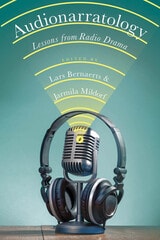
cover of Audionarratology: Lessons from Radio Drama

Audionarratology

Lessons from Radio Drama

Edited by Lars Bernaerts and Jarmila Mildorf

The Ohio State University Press, 2021
Radio drama has been around for more than one hundred years and is still vibrant in many countries. A narrative-dramatic genre and art form in its own right, radio drama has traditionally crossed medial and generic boundaries and continues to do so in our age of digitization. Audionarratology: Lessons from Audio Drama, edited by Lars Bernaerts and Jarmila Mildorf, explores radio drama from a narratological angle. The contributions cover key questions surrounding audiophonic meaning-making, storyworld creation, mediation, focalization, suspense, unreliability, and ambiguity as well as the relationship between script and performance, seriality, antinarrative tendencies, and radio drama’s political implications now and in its early days. The book thus explores the interplay between sound, voices, music, language, silence, electroacoustic manipulation, and narrative structures. Providing examples from American, Australian, British, Dutch, and German radio drama—such as I Love a Mystery, The War of the Worlds, and The Hitchhiker’s Guide to the Galaxy—this book has important insights for scholars working in transmedial narratology, media studies, literary and cultural studies, theatre and performance studies, and communication studies as well as for practitioners and lovers of radio drama alike.
[more]
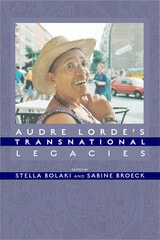
cover of Audre Lorde’s Transnational Legacies

Audre Lorde’s Transnational Legacies

Stella Bolaki

University of Massachusetts Press, 2015

Among the most influential and insightful thinkers of her generation, Audre Lorde (1934–1992) inspired readers and activists through her poetry, autobiography, essays, and her political action. Most scholars have situated her work within the context of the women's, gay and lesbian, and black civil rights movements within the United States. However, Lorde forged coalitions with women in Europe, the Caribbean, Canada, Australia, New Zealand, and Africa, and twenty years after her passing, these alliances remain largely undocumented and unexplored.

Audre Lorde's Transnational Legacies is the first book to systematically document and thoroughly investigate Lorde's influence beyond the United States. Arranged in three thematically interrelated sections—Archives, Connections, and Work—the volume brings together scholarly essays, interviews, Lorde's unpublished speech about Europe, and personal reflections and testimonials from key figures throughout the world. Using a range of interdisciplinary approaches, contributors assess the reception, translation, and circulation of Lorde's writing and activism within different communities, audiences, and circles. They also shed new light on the work Lorde inspired across disciplinary borders.

In addition the volume editors, contributors include Sarah Cefai, Cassandra Ellerbe-Dueck, Paul M. Farber, Tiffany N. Florvil, Katharina Gerund, Alexis Pauline Gumbs, Gloria Joseph, Jackie Kay, Marion Kraft, Christiana Lambrinidis, Zeedah Meierhofer-Mangeli, Rina Nissim, Chantal Oakes, Lester C. Olson, Pratibha Parmar, Peggy Piesche, Dagmar Schultz, Tamara Lea Spira, and Gloria Wekker.
[more]
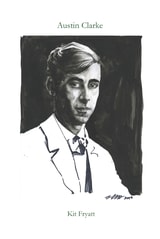
cover of Austin Clarke

Austin Clarke

Kit Fryatt

Aberdeen University Press, 2020
This is the first book to examine the work of Austin Clarke (1896-1974) in the light of modern critical and theoretical perspectives. Clarke was one of Ireland's major writers whose career was devoted as much to fiction, drama and autobiography as to poetry. Kit Fryatt assesses Clarke's work in its entirety but focuses on key works which reveal how resourcefully Clarke explored themes such as the coherence of the personality, the inner lives of women and the roots of repression.
[more]
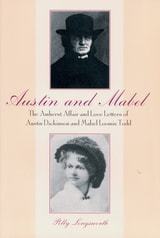
cover of Austin and Mabel: The Amherst Affair and Love Letters of Austin Dickinson and Mabel Loomis Todd

Austin and Mabel

The Amherst Affair and Love Letters of Austin Dickinson and Mabel Loomis Todd

Polly Longsworth

University of Massachusetts Press, 1999
A true tale of illicit love in the era of Emily Dickinson. The author adds her own annotations to correspondence, journals, diaries and the observations of the protagonists' peers, to paint a detailed picture of social and sexual mores in 19th-century America.
[more]
cover of Australian Voices: Writers and Their Work

Australian Voices

Writers and Their Work

By Ray Willbanks

University of Texas Press, 1991

Contemporary Australian fiction is attracting a world audience, particularly in the United States, where a growing readership eagerly awaits new works. In Australian Voices, Ray Willbanks goes beyond the books to their authors, using sixteen interviews to reveal the state of fiction writing in Australia—what nags from the past, what engages the imagination for the future.

Willbanks engages the writers in lively discussions of their own work, as well as topics of collective interest such as the past, including convict times; the nature of the land; the treatment of Aborigines; national identity and national flaws; Australian-British antipathy; sexuality and feminism; drama and film; writing, publishing, and criticism in Australia; and the continuous and pervasive influence of the United States on Australia.

The interviews in Australian Voices are gossipy, often funny, and always informative, as Willbanks builds a structured conversation that reveals biography, personality, and significant insight into the works of each writer. They will be important for both scholars and the reading public.
[more]
cover of Authentic Blackness: The Folk in the New Negro Renaissance

Authentic Blackness

The Folk in the New Negro Renaissance

J. Martin Favor

Duke University Press, 1999

What constitutes “blackness” in American culture? And who gets to define whether or not someone is truly African American? Is a struggling hip-hop artist more “authentic” than a conservative Supreme Court justice? In Authentic Blackness J. Martin Favor looks to the New Negro Movement—also known as the Harlem Renaissance—to explore early challenges to the idea that race is a static category.
Authentic Blackness looks at the place of the “folk”—those African Americans “furthest down,” in the words of Alain Locke—and how the representation of the folk and the black middle class both spurred the New Negro Movement and became one of its most serious points of contention. Drawing on vernacular theories of African American literature from such figures as Henry Louis Gates Jr. and Houston Baker as well as theorists Judith Butler and Stuart Hall, Favor looks closely at the work of four Harlem Renaissance fiction writers: James Weldon Johnson, Nella Larsen, George Schuyler, and Jean Toomer. Arguing that each of these writers had, at best, an ambiguous relationship to African American folk culture, Favor demonstrates how they each sought to redress the notion of a fixed black identity. Authentic Blackness illustrates how “race” has functioned as a type of performative discourse, a subjectivity that simultaneously builds and conceals its connections with such factors as class, gender, sexuality, and geography.

[more]
cover of Authoring the Past: History, Autobiography, and Politics in Medieval Catalonia

Authoring the Past

History, Autobiography, and Politics in Medieval Catalonia

Jaume Aurell

University of Chicago Press, 2012

Authoring the Past surveys medieval Catalan historiography, shedding light on the emergence and evolution of historical writing and autobiography in the Middle Ages, on questions of authority and authorship, and on the links between history and politics during the period. Jaume Aurell examines texts from the late twelfth to the late fourteenth century—including the Latin Gesta comitum Barcinonensium and four texts in medieval Catalan: James I’s Llibre dels fets, the Crònica of Bernat Desclot, the Crònica of Ramon Muntaner, and the Crònica of Peter the Ceremonious—and outlines the different motivations for the writing of each. 

For Aurell, these chronicles are not mere archaeological artifacts but rather documents that speak to their writers’ specific contemporary social and political purposes. He argues that these Catalonian counts and Aragonese kings were attempting to use their role as authors to legitimize their monarchical status, their growing political and economic power, and their aggressive expansionist policies in the Mediterranean. By analyzing these texts alongside one another, Aurell demonstrates the shifting contexts in which chronicles were conceived, written, and read throughout the Middle Ages.

The first study of its kind to make medieval Catalonian writings available to English-speaking audiences, Authoring the Past will be of interest to scholars of history and comparative literature, students of Hispanic and Romance medieval studies, and medievalists who study the chronicle tradition in other languages.
[more]
cover of Authorizing Superhero Comics: On the Evolution of a Popular Serial Genre

Authorizing Superhero Comics

On the Evolution of a Popular Serial Genre

Daniel Stein

The Ohio State University Press, 2021
Authorizing Superhero Comics examines the comic book superhero as a lasting phenomenon of US popular serial storytelling. Moving beyond linear- or creator-centered models of genre development, Daniel Stein identifies authorization conflicts that have driven the genre’s evolution from the late 1930s to the present. These conflicts include paratextually mediated exchanges between officially authorized comic book producers and, alternatively, authorized fans that trouble the distinction between production and its reception; storyworld-building processes that subsume producers and fans into a collective rooted in a common style; parodies that ensure the genre’s longevity by deflating criticism through self-reflexive humor; and collecting and archiving as forms of memory management that align the genre’s past with the demands of the present. Taking seriously the serial agencies of the superhero comic book as a material artifact with a particular mediality, the study analyzes letter columns, editorial commentary, fanzines, encyclopedias, and other forms of comic book communication as critical frameworks for understanding the evolution of the genre—assessing rarely covered archival sources alongside some of the most treasured figures from the superhero’s multi-decade history, from Batman and Spider-Man to Wonder Woman and Captain America.
[more]
cover of Authorship in the Long Eighteenth Century

Authorship in the Long Eighteenth Century

Dustin Griffin

University of Delaware Press, 2014

This book deals with changing conditions and conceptions of authorship in the long eighteenth century, a period often said to have witnessed the birth of the modern author. It focuses not on authorial self-presentation or self-revelation but on an author’s interactions with booksellers, collaborators, rivals, correspondents, patrons, and audiences. Challenging older accounts of the development of authorship in the period as well as newer claims about the “public sphere” and the “professional writer,” it engages with recent work on print culture and the history of the book. Methodologically eclectic, it moves from close readings to strategic contextualization. The book is organized both chronologically and topically. Early chapters deal with writers – notably Milton and Dryden – at the beginning of the long eighteenth century, and later chapters focus more on writers — among them Johnson, Gray, and Gibbon — toward its end. Looking beyond the traditional canon, it considers a number of little-known or little-studied writers, including Richard Bentley, Thomas Birch, William Oldys, James Ralph, and Thomas Ruddiman. Some of the essays are organized around a single writer, but most deal with a broad topic – literary collaboration, literary careers, the republic of letters, the alleged rise of the “professional writer,” and the rather different figure of the “author by profession.”

Published by University of Delaware Press. Distributed worldwide by Rutgers University Press.
 
[more]
cover of Autistic Disturbances: Theorizing Autism Poetics from the DSM to Robinson Crusoe

Autistic Disturbances

Theorizing Autism Poetics from the DSM to Robinson Crusoe

Julia Miele Rodas

University of Michigan Press, 2018
While research on autism has sometimes focused on special talents or abilities, autism is typically characterized as impoverished or defective when it comes to language. Autistic Disturbances reveals the ways interpreters have failed to register the real creative valence of autistic language and offers a theoretical framework for understanding the distinctive aesthetics of autistic rhetoric and semiotics. Reinterpreting characteristic autistic verbal practices such as repetition in the context of a more widely respected literary canon, Julia Miele Rodas argues that autistic language is actually an essential part of mainstream literary aesthetics, visible in poetry by Walt Whitman and Gertrude Stein, in novels by Charlotte Brontë and Daniel Defoe, in life writing by Andy Warhol, and even in writing by figures from popular culture. Autistic Disturbances pursues these resonances and explores the tensions of language and culture that lead to the classification of some verbal expression as disordered while other, similar expression enjoys prized status as literature. It identifies the most characteristic patterns of autistic expression-repetition, monologue, ejaculation, verbal ordering or list-making, and neologism-and adopts new language to describe and reimagine these categories in aesthetically productive terms. In so doing, the book seeks to redress the place of verbal autistic language, to argue for the value and complexity of autistic ways of speaking, and to invite recognition of an obscured tradition of literary autism at the very center of Anglo-American text culture.
[more]
cover of Autobiographies of Orhan Pamuk: The Writer in His Novels

Autobiographies of Orhan Pamuk

The Writer in His Novels

Michael McGaha

University of Utah Press, 2008

"Pamuk is a writer who shares my reverence for the great art of the novel. He takes the novel seriously in a way that is perhaps no longer possible for Western writers, boldly describing it as European civilization’s greatest invention."—Michael McGaha

Turkish novelist Orhan Pamuk is a prominent voice in Turkish literature, speaking to the country’s history, culture, and politics. In 2006, he became the first Turkish writer to receive the Nobel Prize for Literature.

Autobiographies of Orhan Pamuk is the first book-length study of the life and writings of Pamuk. It provides both a historical and cultural context that will help readers better understand and appreciate both the man and his work. It begins with a brief biography, outlines Pamuk’s contributions to Turkish literature and history, examines how his art has evolved over the past thirty years, and discusses some of the writers who provided inspiration. Though his books deal with specifically Turkish issues, like all great literature the themes they explore are universal. In addition to a thorough analysis of his seven published novels, including Snow and My Name is Red, an entire chapter is devoted to his first two novels, Cevdet Bey and Sons and The Silent House, which have yet to be translated into English.

This is a comprehensive examination of the Nobel laureate’s work, free of jargon and of interest to anyone who enjoys good literature.
[more]
cover of Autobiography and Letters of a Spanish Nun

Autobiography and Letters of a Spanish Nun

María Vela y Cueto

Iter Press, 2016

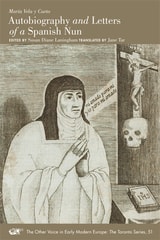
When María Vela y Cueto (1561–1617) declared that God had personally ordered her to take only the Eucharist as food and to restore primitive dress and public penance in her aristocratic convent, the entire religious community, according to her confessor, “rose up in wrath.” Yet, when Vela died, her peers joined with the populace to declare her a saint. In her autobiography and personal letters, Vela speaks candidly of the obstacles, perils, and rewards of re-negotiating piety in a convent where devotion to God was no longer expressed through rigorous asceticism. Vela’s experience, told in her own words, reveals her shrewd understanding of the persuasive power of a woman’s body.

[more]
cover of Autobiography and Postmodernism

Autobiography and Postmodernism

Kathleen Ashley

University of Massachusetts Press, 1994

Exploring the connections between autobiography and postmodernism, this book addresses self-representation in a variety of literature—Native American, British, Chicana, immigrant, and lesbian, among others—in genres as diverse as poetry, naming, and confession, photography, and the manifesto. The essays examine how different writers respond to the culturally specific pressures of genre, how these constraints are negotiated, and what self-representation reveals about the politics of identity.

In contrast to those critics of postmodernism who fear the dissolution of the active subject, the contributors here demonstrate that autobiography gives postmodernism a discourse through which to theorize human agency. The autobiographical subject that emerges is not the decentered human agent of so many versions of postmodernism but the producer of texts that call attention to the contradictions in dominant modes of self-representation and demonstrate the possibilities of writing from from other locations.

Contributors are Betty Bergland, Andrei Codrescu, Michael M. J. Fischer, Leigh Gilmore, David P. Haney, Paul Jay, Shirley Neuman, Christopher Ortiz, Sidonie Smith, Kirsten Wasson, and Hertha D. Wong.
[more]
cover of Autobiography: Narrative of Transformation

Autobiography

Narrative of Transformation

Carolyn A. Barros

University of Michigan Press, 1997
In Autobiography: Narrative of Transformation, Carolyn Barros creates a primer for the study of autobiography, a genre many consider highly problematic. She sees autobiography as a "narrative of transformation"--a text that presents the "before" and "after" of an individual's life. Focusing on autobiography as narrative, of something that "happened to me," Barros highlights the various metamorphoses that are emplotted, bounded, and framed by the author's language and demonstrates that change is the operative metaphor in autobiographical discourse. The study focuses primarily on autobiographies from the rich Victorian period. Thomas Carlyle's Sartor Resartus, as it self-consciously fictionalized the composition of Diogenes Teufelsdröckh's life narrative, provides a striking analog and paradigm for introducing the study and its methodological approach. Barros's major chapters on John Henry Cardinal Newman, John Stuart Mill, Charles Darwin, and Margaret Oliphant detail four very different types of autobiographical transformation -- religious, philosophical, scientific, and literary -- and in Barros's judgment establish benchmarks for considering autobiographies from antiquity to the present. A final chapter discusses autobiography's significance to an individual writer's corpus, to a particular culture, and finally to a history of "narratives of transformation."
[more]
cover of Autochthonomies: Transnationalism, Testimony, and Transmission in the African Diaspora

Autochthonomies

Transnationalism, Testimony, and Transmission in the African Diaspora

Myriam J. A. Chancy

University of Illinois Press, 2020

In Autochthonomies, Myriam J. A. Chancy engages readers in an interpretive journey. She lays out a radical new process that invites readers to see creations by artists of African descent as legible within the context of African diasporic historical and cultural debates. By invoking a transnational African/diasporic lens and negotiating it through a lakou or ”yard space,” we can see such identities transfigured, recognized, and exchanged. Chancy demonstrates how the process can examine the salient features of texts and art that underscore African/diasporic sensibilities and render them legible. What emerges is a potential for richer readings of African diasporic works that also ruptures the Manichean binary dynamics that have dominated previous interpretations of the material. The result: an enriching interpretive mode focused on the transnational connections between subjects of African descent as the central pole for reader investigation.

A bold challenge to established scholarship, Autochthonomies ranges from Africa to Europe and the Americas to provide powerful new tools for charting the transnational interactions between African cultural producers and sites.
[more]
cover of Autonomy: The Social Ontology of Art under Capitalism

Autonomy

The Social Ontology of Art under Capitalism

Nicholas Brown

Duke University Press, 2019
In Autonomy Nicholas Brown theorizes the historical and theoretical argument for art's autonomy from its acknowledged character as a commodity. Refusing the position that the distinction between art and the commodity has collapsed, Brown demonstrates how art can, in confronting its material determinations, suspend the logic of capital by demanding interpretive attention. He applies his readings of Marx, Hegel, Adorno, and Jameson to a range of literature, photography, music, television, and sculpture, from Cindy Sherman's photography and the novels of Ben Lerner and Jennifer Egan to The Wire and the music of the White Stripes. He demonstrates that through their attention and commitment to form, such artists turn aside the determination posed by the demand of the market, thereby defeating the foreclosure of meaning entailed in commodification. In so doing, he offers a new theory of art that prompts a rethinking of the relationship between art, critical theory, and capitalism.
[more]
cover of Available Surfaces: Essays on Poesis

Available Surfaces

Essays on Poesis

T. R. Hummer

University of Michigan Press, 2012

In Available Surfaces , T. R. Hummer explores the art of making both poetry and music, and of the concept of "making" itself. He draws on childhood experiences and experiences as an adult, as a poet, and as an explorer of unworldly spaces to examine that "something ineffable about the process of making of which the poem is the exemplary artifact."

Hummer grew up in the deep South, and spent many of his high school years playing saxophone in various rock and roll bands before he met poetry. This musical influence is visible in his work: he often discusses poetry together with music, or music with poetry, and his career has included both writing and performance.
[more]
cover of Avenues of Translation: The City in Iberian and Latin American Writing

Avenues of Translation

The City in Iberian and Latin American Writing

Galasso, Regina

Bucknell University Press, 2019

Winner of the 2020 SAMLA Studies Book Award — Edited Collection

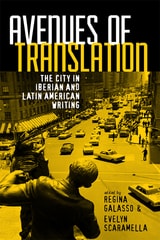
Cities both near and far communicate in a variety of ways. Travel between, through, and among urban centers initiates contact, and cities themselves are sites of ever-changing cultural and historical encounters. Predictable and surprising challenges and opportunities arise when city borders are crossed, voices meet, and artistic traditions find their counterparts. Using the Latin word for “translation,” translatio, or “to carry across,” as a point of departure, Avenues of Translation explores how translation perpetuates, diversifies, deepens, and expands the literary production of cities in their greater cultural context, and how translation shapes an understanding of and access to a city's past and present literary and cultural practices. Thinking about translation and the city is a way to tell the backstories of the cities, texts, and authors that are united by acts of translation.

Published by Bucknell University Press. Distributed worldwide by Rutgers University Press.
[more]
cover of Avery Hopwood: His Life and Plays

Avery Hopwood

His Life and Plays

Jack F. Sharrar

University of Michigan Press, 1998
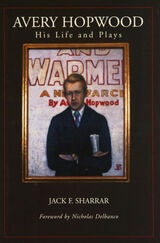
In 1920 Avery Hopwood was America's most successful playwright, achieving the distinction of having four concurrent hits on the Broadway stage.
Jack F. Sharrar's critical biography makes use of a rich array of primary sources--including Hopwood's unpublished novel and his letters to such friends as Gertrude Stein, Carl Van Vechten, and Mary Roberts Rinehart--to chronicle Hopwood's life and career. The book provides fresh insights on the playwright, his plays and the personalities who produced and performed in them, by surveying the commercial theater of the period. Until recently out of print, the new edition includes a foreword by Nicholas Delbanco, director of the University of Michigan's Hopwood Awards in Creative Writing Program; an afterword by Sharrar that sheds new light on the passionate, tumultuous relationship between Hopwood and John Floyd; and many rare illustrations from American theater history.
"The definitive biography of this fascinating, somewhat tragic man, who so often made theatergoers forget their woes but who sometimes couldn't forget his own . . . . [A] wonderful book, as deep as it is entertaining." --TheaterWeek
Jack F. Sharrar, Ph.D., is Director of Academic Affiars, American Conservatory Theater. Nicholas Delbanco is Professor of English and Director of the University of Michigan's Hopwood Awards Program. His most recent novel is Old Scores (Warner Books, 1997).
[more]
cover of Avocado Dreams: Remaking Salvadoran Life and Art in the Washington, D.C. Metro Area

Avocado Dreams

Remaking Salvadoran Life and Art in the Washington, D.C. Metro Area

Ana Patricia Rodríguez

University of Arizona Press, 2025

For more than four generations, Salvadorans have made themselves at home in the greater Washington, D.C. metropolitan area and have transformed the region, contributing their labor, ingenuity, and culture to the making of a thriving but highly neglected and overlooked community.

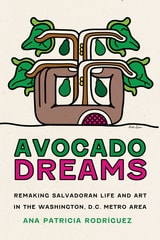
In Avocado Dreams, Ana Patricia Rodríguez draws from her own positionality as a Salvadoran transplant to examine the construction of the unique Salvadoran cultural imaginary made in the greater D.C. area. Through a careful reading of the creative works of local writers, performers, artists, and artivists, Rodríguez demonstrates how the people have remade themselves in relation to the cultural, ethnoracial, and sociolinguistic diversity of the area. She discusses how Salvadoran people have developed unique, intergenerational Salvadoreñidades, manifested in particular speech and symbolic acts, ethnoracial embodiments, and local identity formations in relation to the diverse communities, most notably Black Washingtonians, who co-inhabit the region. 

This timely and relevant work not only enriches our understanding of Salvadoran diasporic experiences but also contributes significantly to broader discussions on migration, identity, and cultural production in the United States.
[more]
cover of Ay Tú!: Critical Essays on the Life and Work of Sandra Cisneros

Ay Tú!

Critical Essays on the Life and Work of Sandra Cisneros

Sonia Saldívar-Hull and Geneva M. Gano

University of Texas Press, 2024

A comprehensive volume on the life and work of renowned Chicana author Sandra Cisneros.

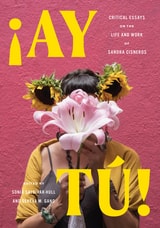
Sandra Cisneros (b. 1954), author of the acclaimed novel The House on Mango Street and a recipient of the National Medal of the Arts, a MacArthur “Genius Grant” and the PEN/Nabokov Award for International Literature, was the first Chicana to be published by a major publishing house. ¡Ay Tú! is the first book to offer a comprehensive, critical examination of her life and work as a whole. Edited by scholars Sonia Saldívar-Hull and Geneva M. Gano, this volume addresses themes that pervade Cisneros’s oeuvre, like romantic and erotic love, female friendship, sexual abuse and harassment, the exoticization of the racial and ethnic “other,” and the role of visual arts in the lives of everyday people. Essays draw extensively on the newly opened Cisneros Papers, housed in the Wittliff Collections at Texas State University, and the volume concludes with a new long-form interview with Cisneros by the award-winning journalist Macarena Hernández.

As these essays reveal, Cisneros’s success in the literary field was integrally connected to the emergent Chicana feminist movement and the rapidly expanding Chicanx literary field of the late twentieth century. This collection shows that Cisneros didn’t achieve her groundbreaking successes in isolation and situates her as a vital Chicana feminist writer and artist.

[more]