Results by title
18284 books match the query 'United States' and 1653 start with a
Academic Freedom Imperiled
The Mccarthy Era At The University Of NevadaJ. Dee Kille
University of Nevada Press, 2004
Academic Librarianship
G. Edward Evans
American Library Association, 2018
Ideal for practitioners looking to advance their careers and for use in LIS programs, this "comprehensive overview" (Journal of Access Services) has been thoroughly revised and updated to provide a timely exploration of the characteristics of academic librarianship and its place in the ever-changing environment of higher education. Evans and new coauthor Greenwell guide readers towards understanding what is required to have a successful career in academic librarianship, explaining why academic libraries are distinct from other types of libraries and lending practical insight into their unique political and operational characteristics. The text offers comprehensive coverage of such key issues as
- teaching faculty roles and the status of the academic librarian;
- governance and the growing tension on some campuses between faculty and administration;
- curriculum, with a discussion of the balance between general education requirements and applied courses;
- the student body;
- collections, data management, digitization, and metadata;
- scholarly communication, plus alternative models such as open educational resources (OERs);
- providing quality service, and the role of user experience (UX) in assessment;
- ACRL's Information Literacy Framework;
- funding, including how and where to find detailed higher education expenditure data;
- classrooms, common learning spaces, and other facilities;
- staffing and professional development;
- technology and IT support;
- career development, with advice on preparing a vita and undergoing a successful interview; and
- the future of academic librarianship.
This updated edition enables readers to understand how academic libraries deliver information, offer services, and provide learning spaces in new ways to better meet the needs of today's students, faculty, and other communities of academic library users.

Academic Librarianship
Camila Alire
American Library Association, 2010
Academic Libraries for Commuter Students
Research-Based StrategiesMariana Regalado
American Library Association, 2018

Academic Library Management
Case StudiesTammy Nickelson Dearie
American Library Association, 2017

Academic Listening Strategies
A Guide to Understanding LecturesJulia Salehzadeh
University of Michigan Press, 2005
Unit 1 begins with a diagnostic exercise to help students identify areas of lecture comprehension that may be most difficult for them. In Unit 2, students are introduced to some key bottom-up features (sound or word-level patterns) in everyday speech and given helpful strategies to begin unscrambling the stream of language that they will encounter in lectures. Unit 3 gives students a detailed look at common patterns in lectures and presents additional strategies that will help them to understand definitions, opinions, and jokes.
By the end of the book, students will gain the skills necessary to:
" Prepare for lectures
" Listen more effectively during lectures
" Recognize what information may have been missed
" Compensate for missed information with methods other than reading and rereading the assigned texts.
The book is also sold packaged with the DVDs. The DVDs are NOT sold separately.
Academic Motherhood
How Faculty Manage Work and FamilyWard, Kelly
Rutgers University Press, 2012
Academic Motherhood tells the story of over one hundred women who are both professors and mothers and examines how they navigated their professional lives at different career stages. Kelly Ward and Lisa Wolf-Wendel base their findings on a longitudinal study that asks how women faculty on the tenure track manage work and family in their early careers (pre-tenure) when their children are young (under the age of five), and then again in mid-career (post-tenure) when their children are older. The women studied work in a range of institutional settings—research universities, comprehensive universities, liberal arts colleges, and community colleges—and in a variety of disciplines, including the sciences, the humanities, and the social sciences.
Much of the existing literature on balancing work and family presents a pessimistic view and offers cautionary tales of what to avoid and how to avoid it. In contrast, the goal of Academic Motherhood is to help tenure track faculty and the institutions at which they are employed “make it work.” Writing for administrators, prospective and current faculty as well as scholars, Ward and Wolf-Wendel bring an element of hope and optimism to the topic of work and family in academe. They provide insight and policy recommendations that support faculty with children and offer mechanisms for problem-solving at personal, departmental, institutional, and national levels.
Academic Science, Higher Education, and the Federal Government, 1950-1983
John T. Wilson
University of Chicago Press, 1983

Academic Tribes
Hazard Adams
University of Illinois Press, 1988
Academic and Entrepreneurial Research
Consequences of Diversity in Federal Evaluation StudiesIlene Nagel Bernstein
Russell Sage Foundation, 1975
Academic and Professional Writing in an Age of Accountability
Edited by Shirley Wilson Logan and Wayne H. Slater, with an Afterword by Jessica Enoch and Scott Wible
Southern Illinois University Press, 2018
The first two essays in the book provide a history of the academic and professional writing program at the University of Maryland. Subsequent essays explore successes and challenges in the establishment and development of writing programs at four other major institutions, identify the features of language that facilitate academic and professional communication, look at the ways digital practices in academic and professional writing have shaped how writers compose and respond to texts, and examine the role of assessment in curriculum and pedagogy. An afterword by distinguished rhetoric and composition scholars Jessica Enoch and Scott Wible offers perspectives on the future of academic and professional writing.
This collection takes stock of the historical, rhetorical, linguistic, digital, and evaluative aspects of the teaching of writing in higher education. Among the critical issues addressed are how university writing programs were first established and what early challenges they faced, where writing programs were housed and who administered them, how the language backgrounds of composition students inform the way writing is taught, the ways in which current writing technologies create new digital environments, and how student learning and programmatic outcomes should be assessed.
Academically Adrift
Limited Learning on College CampusesRichard Arum and Josipa Roksa
University of Chicago Press, 2010
In spite of soaring tuition costs, more and more students go to college every year. A bachelor’s degree is now required for entry into a growing number of professions. And some parents begin planning for the expense of sending their kids to college when they’re born. Almost everyone strives to go, but almost no one asks the fundamental question posed by Academically Adrift: are undergraduates really learning anything once they get there?
For a large proportion of students, Richard Arum and Josipa Roksa’s answer to that question is a definitive no. Their extensive research draws on survey responses, transcript data, and, for the first time, the state-of-the-art Collegiate Learning Assessment, a standardized test administered to students in their first semester and then again at the end of their second year. According to their analysis of more than 2,300 undergraduates at twenty-four institutions, 45 percent of these students demonstrate no significant improvement in a range of skills—including critical thinking, complex reasoning, and writing—during their first two years of college. As troubling as their findings are, Arum and Roksa argue that for many faculty and administrators they will come as no surprise—instead, they are the expected result of a student body distracted by socializing or working and an institutional culture that puts undergraduate learning close to the bottom of the priority list.
Academically Adrift holds sobering lessons for students, faculty, administrators, policy makers, and parents—all of whom are implicated in promoting or at least ignoring contemporary campus culture. Higher education faces crises on a number of fronts, but Arum and Roksa’s report that colleges are failing at their most basic mission will demand the attention of us all.
Accent On Privilege
English Identities & Anglophilia In The U.S.Katharine Jones
Temple University Press, 2001
The political and cultural ties between England and the US act as a backdrop for the identity negotiations of these English people, many of whom do not even consider themselves to be immigrants. This unique exploration of the workings of white privilege offers an important new understanding of the paradoxes of how class, gender, and race are formed in the US and, by implication, in the UK.
Acceptable Risks
Politics, Policy, and Risky TechnologiesC. F. Larry Heimann
University of Michigan Press, 1998

Accessible Citizenships
Disability, Nation, and the Cultural Politics of Greater MexicoJulie Avril Minich
Temple University Press, 2013
A volume in the American Literatures Initiative

Accidental Pluralism
America and the Religious Politics of English Expansion, 1497-1662Evan Haefeli
University of Chicago Press, 2021
Accidental archaeologist
memoirs of Jesse D. JenningsJesse David Jennings
University of Utah Press, 1994
Accomplishing NAGPRA
Perspectives on the Intent, Impact, and Future of the Native American Graves Protection and Repatriation ActSangita Chari and Jaime M. N. Lavallee
Oregon State University Press, 2013
NAGPRA requires museums and federal agencies to return requested Native American cultural items to lineal descendants, culturally affiliated Indian tribes, and Native Hawai’ian organizations. Since the 1990 passage of the act, museums and federal agencies have made more than one million cultural items—and the remains of nearly forty thousand Native Americans—available for repatriation.
Drawing on case studies, personal reflections, historical documents, and statistics, the volume examines NAGPRA and its grassroots, practical application throughout the United States.? Accomplishing NAGPRA will appeal to professionals and academics with an interest in cultural resource management, Indian and human rights law, Indigenous studies, social justice movements, and public policy.
Accountability in State Legislatures
Steven Rogers
University of Chicago Press, 2023
A troubling portrait of democracy in US state legislatures.
State legislatures hold tremendous authority over key facets of our lives, ranging from healthcare to marriage to immigration policy. In theory, elections create incentives for state legislators to produce good policies. But do they?
Drawing on wide-ranging quantitative and qualitative evidence, Steven Rogers offers the most comprehensive assessment of this question to date, testing different potential mechanisms of accountability. His findings are sobering: almost ninety percent of American voters do not know who their state legislator is; over one-third of incumbent legislators run unchallenged in both primary and general elections; and election outcomes have little relationship with legislators’ own behavior.
Rogers’s analysis of state legislatures highlights the costs of our highly nationalized politics, challenging theories of democratic accountability and providing a troubling picture of democracy in the states.
Accountability-Based Reforms
The Impact on Deaf and Hard of Hearing StudentsStephanie W. Cawthon
Gallaudet University Press, 2011
For years, school reform efforts targeted either students in regular education or those with special needs, but not both. As a result of the No Child Left Behind legislation (NCLB) and its focus on accountability, administrators established policies that would integrate the needs of students who previously were served under separate frameworks. Using the NCLB structure as a starting point, Stephanie W. Cawthon’s new book Accountability-Based Reforms: The Impact on Deaf and Hard of Hearing Students discusses key assumptions behind accountability reforms. She specifically examines how elements of these reforms affect students who are deaf or hard of hearing, their teachers, and their families.
Cawthon begins by providing a brief introduction to the deaf education context, offering detailed information on student demographics, settings, and academic outcomes for deaf students. She then outlines the evolution of accountability-based education reforms, following with a chapter on content standards, assessment accommodations, accountability as sanctions, and students with disabilities. The remaining chapters in Accountability-Based Reforms closely examine educational professionals, accountability, and students who are deaf or hard of hearing; school choice policies and parents; and deaf education and measures of success. Each chapter presents an overview of an important component of accountability reform, available research, and how it has been implemented in the United States. These chapters also offer recommendations for future action by educators, parents, researchers, and education policymakers.
Accounting for Capitalism
The World the Clerk MadeMichael Zakim
University of Chicago Press, 2018
The story of how everyday nineteenth-century clerks helped to articulate modern capitalism.
The clerk attended his desk and counter at the intersection of two great themes of modern historical experience: the development of a market economy and a society governed from below. Who better illustrates the daily practice and production of this modernity than someone of no particular account assigned with overseeing all the new buying and selling? In Accounting for Capitalism, Michael Zakim has written their story, a social history of capital that seeks to explain how the “bottom line” became a synonym for truth in an age shorn of absolutes, grafted onto our very sense of reason and trust.
This is a big story, told through an ostensibly marginal event: the birth of a class of “merchant clerks” in the United States in the middle of the nineteenth century. The personal trajectory of these young men from farm to metropolis, homestead to boarding house, and, most significantly, from growing things to selling them exemplified the enormous social effort required to domesticate the profit motive and turn it into the practical foundation of civic life. As Zakim reveals in his highly original study, there was nothing natural or preordained about the stunning ascendance of this capitalism and its radical transformation of the relationship between “Man and Mammon.”
Acculturated
23 Savvy Writers Find Hidden Virtue in Reality TV, Chic Lit, Video Games, and Other Pillars of Pop CultureNaomi Schaefer Riley
Templeton Press, 2012
Contemporary popular culture, from books to film to television to music to the deepest corners of the internet, has provoked much criticism, some of it well deserved. Yet, popular culture is culture for many Americans—particularly younger Americans. It is the only kind of cultural experience they seek and the currency in which they trade.
In Acculturated, twenty-three thinkers examine the rituals, the myths, the tropes, the peculiar habits, the practices, and the neuroses of our modern era. Every culture finds a way for people to tell stories about themselves. We rely on these stories to teach us why we do the things we do, to test the limits of our experience, to reaffirm deeply felt truths about human nature, and to teach younger generations about vice and virtue, honor and shame, and a great deal more. A phenomenon like the current crop of reality television shows, for example, with their bevy of “real” housewives, super-size families, and toddler beauty-pageant candidates, seems an unlikely place to find truths about human nature or examples of virtue. And yet, on these shows, and in much else of what passes for popular culture these days, a surprising theme emerges: Move beyond the visual excess and hyperbole, and you will find the makings of classic morality tales.
As the title suggests, readers will find in these pages “A-Culture Rated.” This lively roundtable of “raters” includes renowned cultural critics like Caitlin Flannigan and Chuck Colson and celebrated culture creators like the producers of the hit ABC comedy Modern Family and the host of TLC’s What Not to Wear. Editors Christine Rosen and Naomi Schaefer Riley have tasked these contributors—both the critics and the insiders—with taking a step or two back from the unceasing din of popular culture so that they might better judge its value and its values and help readers think more deeply about the meaning of the narratives with which they are bombarded every waking minute. In doing so, the editors hope to foster a wide-reaching public conversation to help us think more clearly about our culture.
CONTRIBUTORS INCLUDE Judy Bachrach, Megan Basham, Mark Bauerlein, Pia Catton, Chuck Colson, Paul Corrigan, Caitlin Flanagan, Meghan Cox Gurdon, Margo Howard, Kay S. Hymowitz, Jonathan V. Last, Herb London, Stacy London, Rob Long, Megan McArdle, Wilfred M. McClay, Caitrin Nicol, Joe Queenan, Emily Esfahani Smith, Brad Walsh, and Tony Woodlief.
Acheson and Empire
The British Accent in American Foreign PolicyJohn T. McNay
University of Missouri Press, 2001
Acheson and Empire offers a compelling reassessment of Dean Acheson's policies toward the former colonial world during his period as secretary of state from 1949 to 1953. John T. McNay argues that Acheson inherited through his own personal history a way of understanding the world that encouraged imperial-style international relationships. This worldview represented a well-developed belief system rooted in his Ulster Protestant heritage that remained consistent throughout his life.
By exploring relationships of the United States with Britain and countries formerly or then controlled by Britain, such as India, Ireland, Iran, and Egypt, McNay shows the significance of Acheson's beliefs. McNay argues that Acheson's support of existing imperial relationships was so steadfast that it often led other nations to perceive that the United States was nothing more than a front for British interests. He believes this approach to foreign policy damaged American relations with emerging countries and misled the British regarding possibilities of an Anglo-American partnership.
Acheson and Empire contends that the widely accepted view of Acheson as a foreign policy realist is misleading and that historians should acknowledge that his affinity for the British Empire went beyond his clothing and mannerisms. McNay maintains that the widely accepted view of Acheson as one of a group of "wise men" who shaped the Cold War world by basing their decisions on cold calculation of American interests should be reconsidered.
Drawing from extensive research in archival sources, including the Truman Library, the National Archives, the Public Record Office in London, and Acheson's personal papers at Yale, Acheson and Empire offers a fresh look at Dean Acheson that runs counter to previous biographies and many histories of the Cold War.
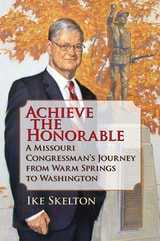
Achieve the Honorable
A Missouri Congressman's Journey from Warm Springs to WashingtonIke Skelton
Southern Illinois University Press, 2013
During his years in the U.S. House of Representatives, Skelton became known as a bipartisan negotiator and a champion of the Armed Services. Throughout the decades, he helped steer the nation through its most dangerous challenges, from Communism to terrorism; took a leading role in the reform of the Department of Defense; dedicated himself to fulfilling the interests of his constituents; and eventually rose to become chair of the House Armed Services Committee during such pivotal events as the wars in Iraq and Afghanistan. In addition to detailing Skelton’s political career and its accompanying challenges and triumphs, Achieve the Honorable provides inside glimpses into the lives of political titans like Harry Truman, Richard Nixon, and Bill Clinton. Along the way, we are treated to Skelton’s engaging humor and shrewd insight into twentieth- and twenty-first-century U.S. politics.

Achieving Anew
How New Immigrants Do in American Schools, Jobs, and NeighborhoodsMichael J. White
Russell Sage Foundation, 2009
Achieving National Board Certification for School Library Media Specialists
A Study GuideGail Dickinson
American Library Association, 2005
Acholi Intellectuals
Knowledge, Power, and the Making of Colonial Northern Uganda, 1850–1960Patrick William Otim
Ohio University Press, 2024
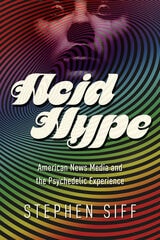
Acid Hype
American News Media and the Psychedelic ExperienceSteven Siff
University of Illinois Press, 2015
Acid Hype offers the untold tale of LSD's wild journey from Brylcreem and Ivory soap to incense and peppermints. As Stephen Siff shows, the early attention lavished on the drug by the news media glorified its use in treatments for mental illness but also its status as a mystical--yet legitimate--gateway to exploring the unconscious mind. Siff's history takes readers to the center of how popular media hyped psychedelic drugs in a constantly shifting legal and social environment, producing an intricate relationship between drugs and media experience that came to define contemporary pop culture. It also traces how the breathless coverage of LSD gave way to a textbook moral panic, transforming yesterday's refined seeker of truths into an acid casualty splayed out beyond the fringe of polite society.

Acid Rain and Friendly Neighbors
The Policy Dispute Between Canada and the United StatesJurgen Schmandt, Judith Clarkson, and Hilliard Roderick
Duke University Press, 1988
“Covers a wide range of issues with balance and clarity. . . . I can recommend the book highly as an intermediate-level source of information and insight into the international aspects of the acid rain problem.”—J. F. Hornig, Ambio
“A masterful analysis of the policy problems raised by acid rain in the U.S. and Canada . . . detailed, objective, understandable, and compelling. Weaving substantive and institutional factors into their analysis, the authors skillfully portray the controversy’s multifaceted nature.”—Tracy Dobson, American Journal of International Law
“[A] thorough, well-balanced analysis . . . [that] could serve as a model for analysis of complex policy issues.”—Choice
“Reveals the interface between science, technology, and public policy as being the co-extensive network it really is. . . . Timely and welcomed.”—John de la Mothe, Canadian Public Policy/Analyse de Politiques

Acid Revival
The Psychedelic Renaissance and the Quest for Medical LegitimacyDanielle Giffort
University of Minnesota Press, 2020
A vivid analysis of the history and revival of clinical psychedelic science
Psychedelic drugs are making a comeback. In the mid-twentieth century, scientists actively studied the potential of drugs like LSD and psilocybin for treating mental health problems. After a decades-long hiatus, researchers are once again testing how effective these drugs are in relieving symptoms for a wide variety of psychiatric conditions, from depression and obsessive–compulsive disorder to posttraumatic stress disorder and substance addiction. In Acid Revival, Danielle Giffort examines how this new generation of researchers and their allies are working to rehabilitate psychedelic drugs and to usher in a new era of psychedelic medicine.
As this team of researchers and mental health professionals revive the field of psychedelic science, they are haunted by the past and by one person in particular: psychedelic evangelist Timothy Leary. Drawing on extensive archival research and interviews with people working on scientific psychedelia, Giffort shows how today’s researchers tell stories about Leary as an “impure” scientist and perform his antithesis to address a series of lingering dilemmas that threaten to rupture their budding legitimacy. Acid Revival presents new information about the so-called psychedelic renaissance and highlights the cultural work involved with the reassembly of dormant areas of medical science.
This colorful and accessible history of the rise, fall, and reemergence of psychedelic medicine is infused with intriguing narratives and personalities—a story for popular science aficionados as well as for scholars of the history of science and medicine.
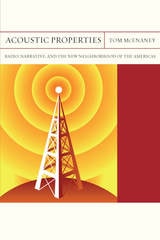
Acoustic Properties
Radio, Narrative, and the New Neighborhood of the AmericasTom McEnaney
Northwestern University Press, 2017
Based on original archival research in Buenos Aires, Havana, Paris, and the United States, the book develops a literary media theory that understands sound as a transmedial phenomenon and radio as a transnational medium. Analyzing the construction of new social and political relations in the wake of the United States’ 1930s Good Neighbor Policy, Acoustic Properties challenges standard narratives of hemispheric influence through new readings of Richard Wright’s cinematic work in Argentina, Severo Sarduy’s radio plays in France, and novels by John Dos Passos, Manuel Puig, Raymond Chandler, and Carson McCullers. Alongside these writers, the book also explores Che Guevara and Fidel Castro’s Radio Rebelde, FDR’s fireside chats, Félix Caignet’s invention of the radionovela in Cuba, Evita Perón’s populist melodramas in Argentina, Orson Welles’s experimental New Deal radio, Cuban and U.S. “radio wars,” and the 1960s African American activist Robert F. Williams’s proto–black power Radio Free Dixie.
From the doldrums of the Great Depression to the tumult of the Cuban Revolution, Acoustic Properties illuminates how novelists in the radio age converted writing into a practice of listening, transforming realism as they struggled to channel and shape popular power.
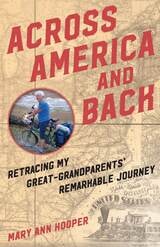
Across America and Back
Retracing My Great-Grandparents' Remarkable JourneyMary Ann Hooper
University of Nevada Press, 2018
Using the common thread of the same train trip across the American landscape, she weaves together the two stories—her great grandparents, Charles and Fannie Crosby’s leisurely Victorian tourist trip described in both their diaries—and her own trip. Mary Ann’s adventurous and determined voice fills the pages with entertaining encounters on the train, escapades on her folding bike, and her reflections on her birth country and her own life story.
During her journey, she discovers the stories of her 1950s childhood reflect a “Wild West” at odds with the West her great-grandparents record in their diaries, leading her to uncover more of the real and meatier history of the American West—going through conquest, rapid settlement, and economic development. As Mary Ann fulfills her quest to understand better why glorified myths were created to describe the Wild West of her childhood, and reflects on the pitfalls of what “progress” is doing to the environment, she is left with a much bigger question: Can we transform our way of doing things quickly enough to stop our much-loved West becoming an uninhabitable desert?
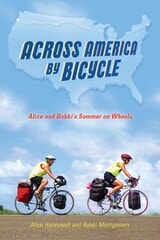
Across America by Bicycle
Alice and Bobbi's Summer on WheelsAlice Honeywell
University of Wisconsin Press, 2010
Biking from Oregon to Maine is no small feat, especially for two newly retired women who carry everything they need for three months, powered only by the strength of their legs and a desire for adventure. Alice Honeywell and Bobbi Montgomery invite readers to follow their ride by bicycle across the United States, as they face scorching sun, driving rain, buffeting winds, equipment failures, killer hills, wild fires, and even a plague of grasshoppers.
As Alice and Bobbi pedal along their 3,600-mile journey, they test and deepen their friendship, defy their aches and pains, experience the vast and varied beauties of their country, and discover the challenges and satisfaction of a scaled-down lifestyle. And, they encounter unfailing generosity from people they meet—from the prayers of a North Dakota woman for their safekeeping, to the offer of a house in Michigan, to invitations for dinner and a place to sleep at stops all along the way. And there are incidents to laugh over, too, such as the bewildered woman who asked them, “Well, but where do you pack your dresses?”
Ride along with Alice and Bobbi as they embrace retirement with gusto and live their dream.
Winner (Gold Medalist), Travel Essays, Foreword Magazine’s Books of the Year
Across Canons
Language, Latin American Immigrant Literature, and the Making of Latinx NarrativesThania Muñoz D.
University of Arizona Press, 2026
Author Thania Muñoz D. looks at immigrant experiences impacted by a prism of social and political factors, including free trade agreements, drug trafficking, political violence, massive foreign debt, and economic dependency. The author examines why these writers refuse to identify as immigrants and reject stereotypical portrayals. Throughout, Muñoz D. makes the case for a new field within Latinx literature: Latin American immigrant writing in Spanish. She explains why this type of literary work is critical across Latin American, Latinx, and U.S. literature.
This book highlights the benefits of comparative, interdisciplinary interpretations that allow readers and scholars to grapple with the realities of a multilingual Latin American–origin literary present and future of the United States.
Across The Pacific
Asian Americans and GlobalizationEvelyn Hu-Dehart, E
Temple University Press, 2000
Members of the Asian American community have always been trans-Pacific, but are now more than ever, since the 1965 change in U.S. immigration law. Entering the U.S. at the culmination of the Civil Rights movement, Asians becoming Asian Americans have joined a self-consciously multicultural society. Asian economies roared onto the world stage, creating new markets while circulating capital and labor at an unprecedented scale and intensity, thereby helping drive the forces of modern globalization. These essays by well-known scholars in the field of Asian American studies consider such topics as the impact of new migrations on Asian American subjectivity and politics, Asian American activism and U.S. foreign policy, and the role of Asian Americans in Pacific Rim economies.
Considering issues of diaspora, transmigrancy, assimilation, institutionalized racism, and community, Across the Pacific covers such cutting-edge subjects as the cultural expressions of dislocation among contemporary Asian American writers, as well as the impact of the new migrations on Asian American subjectivity and politics.

Across The Red Line
Stories From The Surgical LifeRichard C. Karl
Temple University Press, 2003
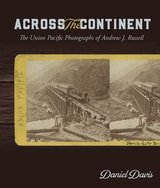
Across the Continent
The Union Pacific Photographs of Andrew Joseph RussellDaniel Davis
University of Utah Press, 2018
Copublished with the Utah State Historical Society. Affiliated with the Utah Division of State History, Utah Department of Heritage & Arts
Andrew J. Russell is primarily known as the man who photographed the famous “East and West Shaking Hands” image of the Golden Spike ceremony on May 10, 1869. He also took nearly one thousand other images that document almost every aspect of the construction of the Union Pacific Railroad. Across the Continent is the most detailed study to date of the life and work of an often-overlooked but prolific artist who contributed immensely not only to documentation of the railroad but also to the nation’s visualization of the American West and, earlier, the Civil War.
The central focus in the book is on the large body of work Russell produced primarily to satisfy the needs of the Union Pacific. Daniel Davis posits that this set of Russell’s photos is best understood not through one or a handful of individual images, but as a photographic archive. Taken as a whole, that archive shows that Russell intended for viewers never to forget who built the Union Pacific. His images celebrate working people—masons working on bridge foundations, freighters and their wagons, surveyors with their transits, engine crews posed on their engines, as well as tracklayers, laborers, cooks, machinists, carpenters, graders, teamsters, and clerks pushing paper.
Russell contributed to a golden age of Western photography that visually introduced the American West to the nation, changing its public image from that of a Great American Desert to a place of apparently unlimited economic potential.
Across the Plains
Sarah Royce’s Western NarrativeSarah Royce; Edited by Jennifer Dawes Adkison
University of Arizona Press, 2009
In a new introduction Adkison reveals Across the Plains to be far more than a simple narrative of one pioneer woman’s journey west. She explains that Royce wrote the book at the request of her son, Josiah Royce, a well-known professor of philosophy at Harvard University with motives of his own. She crafted the narrative that her son wanted: an argument for spiritual faith and fortitude as foundational to California’s history. Yet the narrative itself, in addition to offering a window into a world that has long lacked close documentation, gives us the opportunity to study the ways in which nineteenth-century western women asserted this primacy of faith and crafted their experience into stories with larger cultural and social resonance.
Scholars have long used Across the Plains to mold and support an iconic image of the resolute pioneer woman. However, until now no one has considered Royce’s own self-conscious creation of this persona. Readers will discover that in many ways, Sarah Royce’s careful construction of this cultural portrait deepens our respect for her and our delight in her travels, travails, and triumphs.
Across the Waves
How the United States and France Shaped the International Age of RadioDerek Vaillant
University of Illinois Press, 2017
Drawing on a broad range of American and French archives, Derek Vaillant joins textual and aural materials with original data analytics and maps to illuminate U.S.-French broadcasting's political and cultural development. Vaillant focuses on the period from 1931 until France dismantled its state media system in 1974. His analysis examines mobile actors, circulating programs, and shifting institutions that shaped international radio's use in times of war and peace. He explores the extraordinary achievements, the miscommunications and failures, and the limits of cooperation between America and France as they shaped a new media environment. Throughout, Vaillant explains how radio's power as an instantaneous mass communications tool produced, legitimized, and circulated various notions of states, cultures, ideologies, and peoples as superior or inferior.
A first comparative history of its subject, Across the Waves provocatively examines how different strategic agendas, aesthetic aims and technical systems shaped U.S.-French broadcasting and the cultural politics linking the United States and France.
Act Like You Know
African-American Autobiography and White IdentityCrispin Sartwell
University of Chicago Press, 1998
There is, Sartwell contends, a fundamental elusiveness to that identity. Whiteness defines itself as normative, as a neutral form of the human condition, marking all other forms of identity as "racial" or "ethnic" deviations. Invisible to itself, white identity seeks to define its essence over and against those other identities, in effect defining itself through opposition and oppression. By maintaining fictions of black licentiousness, violence, and corruption, white identity is able to cast itself as humane, benevolent, and pure; the stereotype fabricates not only the oppressed but the oppressor as well. Sartwell argues that African-American autobiography perceives white identity from a particular and unique vantage point; one that is knowledgeable and intimate, yet fundamentally removed from the white world and thus unencumbered by its obfuscating claims to normativity.
Throughout this provocative work, Sartwell steadfastly recognizes the many ways in which he too is implicated in the formulation and perpetuation of racial attitudes and discourse. In Act Like You Know, he challenges both himself and others to take a long, hard look in the mirror of African-American autobiography, and to find there, in the light of those narratives, the visible features of white identity.

Act Like You're Having a Good Time
EssaysMichele Weldon
Northwestern University Press, 2020
Winner, 2021 Gilda Women's Book Award
In this honest and tender collection of essays, award-winning memoirist Michele Weldon asks what it means to be a mature woman seeking a life of purpose and meaning through work, family, and relationships. Facing ageism and invisibility within popular culture, Weldon examines the effects of raising children, striving for applause, failing expectations, forming new friendships, reconciling lost dreams, and restoring one’s faith. With sincerity and humor, she unwraps family traditions, painting classes, lap swimming, dress codes, and career disappointments. She addresses white privilege and her evolving understanding of racism. And she asks crucial questions about mortality, finding connection in writing and stories.
Frank, eloquent, and daring, Weldon dissects the intricacies of life, journeying toward self-discovery as a mother, daughter, sister, and friend. Readers of any age or gender will recognize the universal experience of learning to accept oneself and asking essential questions—even if there are no easy answers.
Acting Jewish
Negotiating Ethnicity on the American Stage and ScreenHenry Bial
University of Michigan Press, 2005
Acting Jewish documents this history, looking at the work of Jewish writers, directors, and actors in the American entertainment industry with particular attention to the ways in which these artists offer behavioral models for Jewish-American audiences. The book spans the period from 1947 to the present and takes a close look at some of America's favorite plays (Death of a Salesman, Fiddler on the Roof, Angels in America), films (Gentleman's Agreement, AnnieHall), and television shows (The Goldbergs, Seinfeld), identifying a double-coding by which performers enact, and spectators read, Jewishness in contemporary performance-and, by extension, enact and read other minority identities. The book thus explores and illuminates the ever-changing relationship between Jews and mainstream American culture.
"Fascinating and original . . . Bial's command of sources is impressive, and his concept of 'double-coding' is convincing . . . the book should have no trouble finding a large audience."
-Barbara Grossman, author of Funny Woman: The Life and Times of Fanny Brice
Acting Up and Getting Down
Plays by African American TexansBy Sandra M. Mayo and Elvin Holt
University of Texas Press, 2014
One of the few books of its kind, Acting Up and Getting Down brings together seven African American literary voices that all have a connection to the Lone Star state. Covering Texas themes and universal ones, this collection showcases often-overlooked literary talents to bring to life inspiring facets of black theatre history.
Capturing the intensity of racial violence in Texas, from the Battle of San Jacinto to a World War I–era riot at a Houston training ground, Celeste Bedford Walker’s Camp Logan and Ted Shine’s Ancestors provide fascinating narratives through the lens of history. Thomas Meloncon’s Johnny B. Goode and George Hawkins’s Br’er Rabbit explore the cultural legacies of blues music and folktales. Three unflinching dramas (Sterling Houston’s Driving Wheel, Eugene Lee’s Killingsworth, and Elizabeth Brown-Guillory’s When the Ancestors Call) examine homosexuality, a death in the family, and child abuse, bringing to light the private tensions of intersections between the individual and the community.
Supplemented by a chronology of black literary milestones as well as a playwrights’ canon, Acting Up and Getting Down puts the spotlight on creative achievements that have for too long been excluded from Texas letters. The resulting anthology not only provides new insight into a regional experience but also completes the American story as told onstage.

Acting for America
Movie Stars of the 1980sEberwein, Robert
Rutgers University Press, 2010
Scholars employing a variety of useful approaches explore how these movie stars' films speak to an increased audience awareness of advances in feminism, new ideas about masculinity, and the complex political atmosphere in the Age of Reagan. The essays demonstrate the range of these stars' contributions to such conversations in a variety of films, including blockbusters and major genres.
Action Plan for Outcomes Assessment in Your Library
Peter Hernon
American Library Association, 2002
Action Writing
Jack Kerouac's Wild FormMichael Hrebeniak
Southern Illinois University Press, 2008
Action Writing: Jack Kerouac's Wild Form connects the personal and creative development of the Beat generation's famous icon with cultural changes in postwar America. Michael Hrebeniak asserts that Jack Kerouac's "wild form"—self-organizing narratives free of literary, grammatical, and syntactical conventions—moves within an experimental continuum across the arts to generate a Dionysian sense of writing as raw process. Action Writing highlights how Kerouac made concrete his 1952 intimation of "something beyond the novel" by assembling ideas from Beat America, modernist poetics, action painting, bebop, and subterranean oral traditions.
Geared to scholars and students of American literature, Beat studies, and creative writing, Action Writing places Kerouac's writing within the context of the American art scene at midcentury. Reframing the work of Kerouac and the Beat generation within the experimental modernist and postmodernist literary tradition, this probing inquiry offers a direct engagement with the social and cultural history at the foreground of Kerouac's career from the 1940s to the late 1960s.
Action before Westport, 1864
Revised EditionHoward N. Monnett
University Press of Colorado, 1995
In addition to incorporating official records, newspaper accounts, letters, diaries, journals, and privately printed records, Monnett consulted several previously undiscovered manuscripts, two of them the work of key Confederate generals in the raid. The result is a classic work that is both immensely readable and impressive in its documentation.

ActivAmerica
Meagan Cass
University of North Texas Press, 2018
Actively Seeking Work?
The Politics of Unemployment and Welfare Policy in the United States and Great BritainDesmond King
University of Chicago Press, 1995
The goal of work-welfare policy in both countries has been to provide financial aid, training, and placement services for the unemployed. In order to muster support for these programs, however, work-welfare programs had to incorporate liberal requirements that they not interfere with private market forces, and that they prevent the "undeserving" from obtaining benefits. For King, the attempt to integrate these incompatible functions is the defining feature of British and American policies as well as the cause of their failure.
Activism, Majority Rule, and Local Democracy
Rethinking Public InfluenceBrian E. Adams
Temple University Press, 2026
Local democracy doesn’t work as it should, declares Brian Adams in Activism, Majority Rule, and Local Democracy. Local politics is where citizens have the most opportunity for direct participation, control, and influence, but that activism doesn’t necessarily translate into majority rule.
While greater local engagement can produce policy that better reflects activists’ strong preferences, Adams explains that activists are not representative of the public-at-large and states that a reconceptualization of how the public should be able to influence local officials is required. Based on interviews with activists in San Diego, California, Adams concludes that activism can be beneficial, but we need to view it as distinct from majority rule, with a focus on managing the tension between the two.
Improving local democracy is not just a matter of generating more activism. It requires articulating when we want policy to reflect majority preferences and when we want activists to hold sway.