Results by title
18284 books match the query 'United States' and 1653 start with a
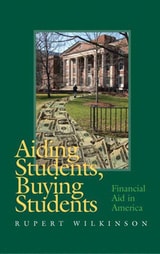
Aiding Students, Buying Students
Financial Aid in AmericaRupert Wilkinson
Vanderbilt University Press, 2005
From the first scholarship donated to Harvard in 1643 to today's world of "enrollment management" and federal grants and loans, the author gives a lively social and economic history of the conflicting purposes of student aid and makes proposals for the future. His research for this book is based on archives and interviews at 131 public and private institutions across the United States.
In the words of Joe Paul Case, Dean and Director of Financial Aid, Amherst College, "Wilkinson has mined the archives of dozens of institutions to create a mosaic that details the progress of student assistance from the 17th century to the present. He gives particular attention to the origins of need-based assistance, from the charitable benevolence of early colleges to the regulation-laden policies of the federal government. He gives due consideration to institutional motive--he challenges the egalitarian platitudes of affluent colleges and questions the countervailing market and economic forces that may imperil need-based aid at less competitive institutions. By drawing on scores of personal interviews and exchanges of correspondence with aid practitioners, Wilkinson fleshes out recent decades, helping the reader to understand new trends in the provision of aid."

Ain't But a Few of Us
Black Music Writers Tell Their StoryWillard Jenkins, editor
Duke University Press, 2022
Contributors
Eric Arnold, Bridget Arnwine, Angelika Beener, Playthell Benjamin, Herb Boyd, Bill Brower, Jo Ann Cheatham, Karen Chilton, Janine Coveney, Marc Crawford, Stanley Crouch, Anthony Dean-Harris, Jordannah Elizabeth, Lofton Emenari III, Bill Francis, Barbara Gardner, Farah Jasmine Griffin, Jim Harrison, Eugene Holley Jr., Haybert Houston, Robin James, Willard Jenkins, Martin Johnson, LeRoi Jones, Robin D. G. Kelley, Tammy Kernodle, Steve Monroe, Rahsaan Clark Morris, John Murph, Herbie Nichols, Don Palmer, Bill Quinn, Guthrie P. Ramsey Jr., Ron Scott, Gene Seymour, Archie Shepp, Wayne Shorter, A. B. Spellman, Rex Stewart, Greg Tate, Billy Taylor, Greg Thomas, Robin Washington, Ron Welburn, Hollie West, K. Leander Williams, Ron Wynn
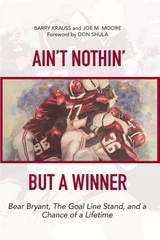
Ain't Nothin' But a Winner
Bear Bryant, The Goal Line Stand, and a Chance of a LifetimeBarry Krauss and Joe M. Moore With a Foreword by Don Shula
University of Alabama Press, 2006
No university has won more football championships than Alabama, and Barry Krauss played a key role in one of them. The linebacker’s fourth down stop of Penn State’s Mike Guman in the Sugar Bowl on January 1, 1979, was recently named by ESPN as one of the ten most important plays of the 20th century.
The Goal Line Stand, as the play became known, immortalized Krauss among legions of fans. More than twenty-five years later, people still tell him exactly what they were doing and how they felt when he collided in mid-air with Guman that New Year’s Day—and almost never mention his twelve-year career in the NFL.
In this entertaining and well-illustrated memoir, Krauss tells of scrimmaging on front lawns with friends as a kid in Pompano Beach, Florida, and of his childhood dream to play for Don Shula. He acknowledges how Coach Bear Bryant tamed his free spirit and shaped him into the football player—and the man—he became. In addition, he emphasizes the importance of team, weaving together the personal stories of his Alabama teammates on the field during the Goal Line Stand, and acknowledges their significant roles in winning the game and the championship.
Ain’t Nothin’ But a Winner offers an insider’s look at how a team is built, tested, and becomes a national champion—and how that process sometimes calls upon an individual to rise to the challenge presented by his own personal gut check.
Air Transport Labor Relations
Robert W. Kaps
Southern Illinois University Press, 1997
Robert W. Kaps examines air transport labor law in the United States as well as the underlying legislative and policy directives established by the federal government. The body of legislation governing labor relations in the private sector of the U.S. economy consists of two separate and distinct acts: the Railway Labor Act (RLA), which governs labor relations in the railroad and airline industries, and the National Labor Relations Act (NLRA), which governs labor relations in all other industrial sectors.
Although the NLRA closely follows the pattern established by the RLA, Kaps notes that the two laws are distinguishable in several important areas. Labor contracts negotiated under the RLA continue in perpetuity, for example, whereas all other labor contracts expire at a specified date. Other important areas of difference relate to the collective bargaining process itself, the procedures for the arbitration of disputes and grievances, and the spheres of authority and jurisdiction to consider such matters as unfair labor practices.
Congress established a special labor law for railroad and airline workers for several reasons. Because of transportation’s critical importance to the economy, an essential goal of public policy has been to ensure that both passenger and freight transportation services continue without interruption. Production can cease—at least temporarily—in most other industries without causing significant harm to the economy. When transportation stops, however, production stops. Thus Congress saw fit to enact a statute that contained provisions to ensure that labor strife would not halt rail services. Primarily because of the importance of air mail transportation, the Railway Labor Act of 1926 was extended to the airline industry in 1936.
The first section of this book introduces labor policy and presents a history of the labor movement in the United States. Discussing early labor legislation, Kaps focuses on unfair labor practices and subsequent major labor statutes.
The second section provides readers with a comparison of labor provisions that apply to the railroad and airline industries as well as to the remainder of the economy.
The final section centers on the evolution of labor in the airline industry. The author pays particular attention to recent events affecting labor in commercial aviation, particularly the effect of airline deregulation on airline labor.

Air Wars
Fight To Reclaim Public BroadcastingJerold Starr
Temple University Press, 2001
These citizens believed strongly in public television's unique mission to serve the diverse social and cultural needs of local communities. When their own station neglected this mission in the search for national prestige and bigger revenues, they felt profoundly betrayed.
Jerold Starr exposes the political and commercial pressures that made strange bedfellows of the top officials of public broadcasting, the Democratic Party establishment, Pat Robertson and the Christian Coalition, home-shopping and "infomall" king Lowell "Bud" Paxson, and billionaire right-wing publisher/philanthropist Richard Mellon Scaife.
What began as a bitterly contested local struggle that disturbed the serenity of Mister Rogers' Neighborhood later became front-page national news with revelations of presidential candidate John McCain's influence-peddling scandal on behalf of media mogul Paxson. This was followed by congressional resolutions attacking the FCC's authority to regulate noncommercial educational broadcast licenses. The "Pittsburgh case" promises to be in the news for some time to come.
Far beyond Pittsburgh, Starr looks at how the reform movement has spread to major cities like Chicago, Phoenix, Jacksonville, and San Francisco, where citizen activists have successfully challenged public stations to be more community responsive.
Finally, he outlines an innovative plan for restructuring the public broadcasting service as an independently funded public trust. Joining this vision with a practical strategy, Starr describes the formation of Citizens for Independent Public Broadcasting, a national membership organization with a grassroots approach to putting the public back into public broadcasting.

Airborne Dreams
"Nisei" Stewardesses and Pan American World AirwaysChristine R. Yano
Duke University Press, 2011

Al Qaeda Declares War
The African Embassy Bombings and America’s Search for JusticeTod Hoffman
University Press of New England, 2014
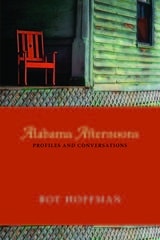
Alabama Afternoons
Profiles and ConversationsRoy Hoffman
University of Alabama Press, 2011
Alabama Afternoons is a collection of portraits of many notable Alabamians, famous and obscure, profiled by award-winning journalist and novelist Roy Hoffman. Written as Sunday feature stories for the Mobile Press-Register with additional pieces from the New York Times, Preservation, and Garden & Gun, these profiles preserve the individual stories—and the individual voices within the stories—that help to define one of the most distinctive states in the union.
Hoffman recounts his personal visits with writer Mary Ward Brown in her library in Hamburg, with photographer William Christenberry in a field in Newbern, and with storyteller Kathryn Tucker Windham and folk artist Charlie “Tin Man” Lucas at their neighboring houses in Selma. Also highlighted are the lives of numerous alumni of The University of Alabama—among them Mel Allen, the “Voice of the Yankees” from 1939 to 1964; Forrest Gump author Winston Groom; and Vivian Malone and James Hood, the two students who entered the schoolhouse door in 1963. Hoffman profiles distinguished Auburn University alumni as well, including Eugene Sledge, renowned World War II veteran and memoirist, and Neil Davis, the outspoken, nationally visible editor of the Lee County Bulletin.
Hoffman also profiles major and minor players in the civil rights movement, from Johnnie Carr, raised in segregated Montgomery and later president of the Montgomery Improvement Association; and George Wallace Jr., son of the four-time governor; to Theresa Burroughs, a Greensboro beautician trampled in the march over the Edmund Pettus Bridge; and Diane McWhorter, whose award- winning book explores the trouble- filled Birmingham civil rights experience. Juxtaposed with these are accounts of lesser-known individuals, such as Sarah Hamm, who attempts to preserve the fading Jewish culture in Eufaula; Edward Carl, who was butler and chauffeur to Bellingrath Gardens founder Walter Bellingrath in Theodore; and cousins William Bolton and Herbert Henson, caretakers of the coon dog cemetery in Russellville.
Hoffman’s compilation of life stories creates an engaging and compelling look into what it means to be from, and shaped by, Alabama. “Alabama Afternoons,” he writes in the introduction, “is a small part of the even bigger question of what it means to be an American.”
Read an article about domestic lives by Roy Hoffman in the New York Times here: http://www.nytimes.com/2010/11/25/garden/25Domestic.html

Alabama Blast Furnaces
Joseph H. Woodward II, with an introduction by James R. Bennett II
University of Alabama Press, 2007
Forging Alabama’s legacy: The definitive history of every blast furnace from pioneer charcoal fires to industrial giants.
Alabama Blast Furnaces by Joseph H. Woodward II offers the only comprehensive history of every blast furnace constructed in Alabama between 1815 and 1940, tracing a vital chapter in the state's iron and steel legacy. Beginning with the pioneering Cedar Creek charcoal furnace in 1815, Woodward meticulously chronicles four distinct eras:
Pioneer Era (1815–1861): Early, locally focused furnaces that laid the foundation of Alabama’s iron industry;
Civil War Era (1861–1865): Furnaces mobilized for the Confederate war effort, including Northern raids, labor shortages,
and innovation under duress;
Reconstruction Era (1866–1879): Transition from stone-stack furnaces toward iron- and steel-shelled technology; and
Modern Era (1880–1940): The rise of large-scale coke-fired plants that propelled Alabama onto the national and international stage.
The heart of the book is a rich series of illustrated, furnace-by-furnace histories—capturing specifics on every site, including four that were built but never operated. With 50 detailed illustrations and rigorous documentation, this reissue—part of the Library of Alabama Classics series—features a new introduction by historian James R. Bennett, who situates Woodward’s work in its historical context and underscores its lasting relevance.
Originally compiled in 1940 by a member of the Woodward Iron Company family, the volume remains a seminal reference for scholars, students, and industrial history enthusiasts. Its thorough scope ensures every furnace—whether a modest pioneer operation or a towering industrial complex—has its story preserved. As one reviewer notes, this work covers furnaces that “made Alabama internationally significant in the iron and steel industry,” offering a level of detail unmatched in regional history.
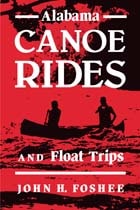
Alabama Canoe Rides and Float Trips
John Foshee
University of Alabama Press, 1986
A detailed guide to 102 canoe trips on the Cahaba River and 40 other creeks and rivers within the state.
John H. Foshee’s popular and informative Alabama Canoe Rides and Float Trips has been a favorite of canoeing enthusiasts since 1975, providing a detailed guide to 102 canoe trips on the Cahaba River and 40 other creeks and rivers within the state. The trips highlighted in the book range from 3½ to 14 miles in length, with difficulty factors varying from leisurely float trips to Class 4 rapids.
This handy guide will assist beginning and expert canoeists in the selection of and preparation for a variety of float experiences. The author gives suggestions for river safety and makes recommendations for equipment. In addition, he points out major danger areas and obstacles that may be encountered and includes information on river access and use of topographical maps. An appendix contains brief descriptions of the rides, including their put-ins and take-outs, and follows the general format of the individual trip descriptions.
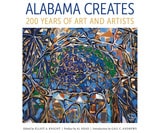
Alabama Creates
200 Years of Art and ArtistsEdited by Elliot A. Knight
University of Alabama Press, 2019
A visually rich survey of two hundred years of Alabama fine arts and artists
Alabama artists have been an integral part of the story of the state, reflecting a wide-ranging and multihued sense of place through images of the land and its people. Quilts, pottery, visionary paintings, sculpture, photography, folk art, and abstract art have all contributed to diverse visions of Alabama’s culture and environment. The works of art included in this volume have all emerged from a distinctive milieu that has nourished the creation of powerful visual expressions, statements that are both universal and indigenous.
Published to coincide with the state’s bicentennial, Alabama Creates: 200 Years of Art and Artists features ninety-four of Alabama’s most accomplished, noteworthy, and influential practitioners of the fine arts from 1819 to the present. The book highlights a broad spectrum of artists who worked in the state, from its early days to its current and contemporary scene, exhibiting the full scope and breadth of Alabama art.
This retrospective volume features biographical sketches and representative examples of each artist’s most masterful works. Alabamians like Gay Burke, William Christenberry, Roger Brown, Thornton Dial, Frank Fleming, the Gee’s Bend Quilters, Lonnie Holley, Dale Kennington, Charlie Lucas, Kerry James Marshall, David Parrish, and Bill Traylor are compared and considered with other nationally significant artists.
Alabama Creates is divided into four historical periods, each spanning roughly fifty years and introduced by editor Elliot A. Knight. Knight contextualizes each era with information about the development of Alabama art museums and institutions and the evolution of college and university art departments. The book also contains an overview of the state’s artistic heritage by Gail C. Andrews, director emerita of the Birmingham Museum of Art. Alabama Creates conveys in a sweeping and captivating way the depth of talent, the range of creativity, and the lasting contributions these artists have made to Alabama’s extraordinarily rich visual and artistic heritage.
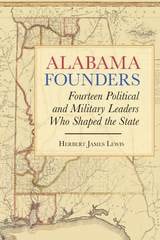
Alabama Founders
Fourteen Political and Military Leaders Who Shaped the StateHerbert James Lewis
University of Alabama Press, 2018
While much has been written about the significant events in the history of early Alabama, there has been little information available about the people who participated in those events. In Alabama Founders:Fourteen Political and Military Leaders Who Shaped the State Herbert James Lewis provides an important examination of the lives of fourteen political and military leaders. These were the men who opened Alabama for settlement, secured Alabama’s status as a territory in 1817 and as a state in 1819, and helped lay the foundation for the political and economic infrastructure of Alabama in its early years as a state.
While well researched and thorough, this book does not purport to be a definitive history of Alabama’s founding. Lewis has instead narrowed his focus to only those he believes to be key figures—in clearing the territory for settlement, serving in the territorial government, working to achieve statehood, playing a key role at the Constitutional Convention of 1819, or being elected to important offices in the first years of statehood.
The founders who readied the Alabama Territory for statehood include Judge Harry Toulmin, Henry Hitchcock, and Reuben Saffold II. William Wyatt Bibb and his brother Thomas Bibb respectively served as the first two governors of the state, and Charles Tait, known as the “Patron of Alabama,” shepherded Alabama’s admission bill through the US Senate. Military figures who played roles in surveying and clearing the territory for further settlement and development include General John Coffee, Andrew Jackson’s aide and land surveyor, and Samuel Dale, frontiersman and hero of the “Canoe Fight.” Those who were instrumental to the outcome of the Constitutional Convention of 1819 and served the state well in its early days include John W. Walker, Clement Comer Clay, Gabriel Moore, Israel Pickens, and William Rufus King.
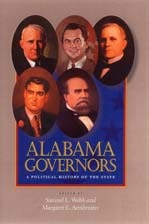
Alabama Governors
A Political History of the StateSamuel L. Webb
University of Alabama Press, 2001
The story of Alabama's governors has been often bizarre, occasionally inspiring, but never dull. Several of the state's early governors fought duels; one killed his wife's lover. A Reconstruction era-governor barricaded himself in his administrative office and refused to give it up when voters failed to reelect him. A 20th-century governor, an alumnus of Yale, married his first cousin and served as an officer in the Ku Klux Klan.
This collection of biographical essays, written by 34 noted historians and political scientists, chronicles the foibles and idiosyncrasies, in and out of office, of those who have served as the state's highest elected official. It also describes their courage; their meaningful policy initiatives; their accomplishments and failures; the complex factors that led to their actions or inaction; and the enormous consequences of their choices on the state's behalf.
Taken together, the essays provide a unified history of the state, with its recurring themes of race, federal-state relations, economic development, taxation, and education. Alabama Governors is certain to become an invaluable resource for teachers, students, librarians, journalists, and anyone interested in the colorful history and politics of the state.
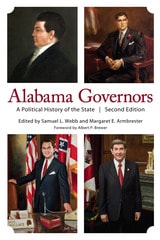
Alabama Governors
A Political History of the StateSamuel L. Webb
University of Alabama Press, 2014
This collection of biographical essays, written by thirty-four noted historians and political scientists, chronicles the times, careers, challenges, leadership, and legacies of the fifty-seven men and one woman who have served as the state's highest elected official. The book is organized chronologically into six sections that cover Alabama’s years as a US territory and its early statehood, the 1840s through the Civil War and Reconstruction, the late nineteenth-century Bourbon era, twentieth-century progressive and wartime governors, the Civil Rights era and George Wallace’s period of influence, and recent chief executives in the post-Wallace era.
The political careers of these fifty-eight individuals reflect the story of Alabama itself. Taken together, these essays provide a unified history of the state, with its recurring themes of race, federal-state relations, tensions between north and south Alabama, economic development, taxation, and education.
Alabama Governors expertly delineates the decisions and challenges of the chief executives, their policy initiatives, their accomplishments and failures, and the lasting impact of their terms. The book also includes the true and sometimes scandalous anecdotes that pepper Alabama’s storied history. Several of the state's early governors fought duels; one killed his wife's lover. A Reconstruction era-governor barricaded himself in his office and refused to give it up when voters failed to reelect him. A twentieth-century governor, an alumnus of Yale, served as an officer in the Ku Klux Klan.
This entirely updated and revised edition includes enlarged and enhanced images of each governor. Published as Alabama prepares for its sixty-fourth gubernatorial election, Alabama Governors is certain to become a valuable resource for teachers, students, librarians, journalists, and anyone interested in the colorful history of Alabama politics.
Alabama Heritage, Vol. 152
Edited by Susan Reynolds
University of Alabama Press, 2024
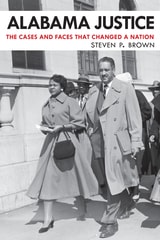
Alabama Justice
The Cases and Faces That Changed a NationSteven P. Brown
University of Alabama Press, 2020
WINNER OF THE ANNE B. & JAMES B. MCMILLAN PRIZE IN SOUTHERN HISTORY
Examines the legacies of eight momentous US Supreme Court decisions that have their origins in Alabama legal disputes.
Unknown to many, Alabama has played a remarkable role in a number of Supreme Court rulings that continue to touch the lives of every American. In Alabama Justice: The Cases and Faces That Changed a Nation, Steven P. Brown has identified eight landmark cases that deal with religion, voting rights, libel, gender discrimination, and other issues, all originating from legal disputes in Alabama.
Written in a concise and accessible manner, each case law chapter begins with the circumstances that created the dispute. Brown then provides historical and constitutional background for the issue followed by a review of the path of litigation. Excerpts from the Court’s ruling in the case are also presented, along with a brief account of the aftermath and significance of the decision. The First Amendment (New York Times v. Sullivan), racial redistricting (Gomillion v. Lightfoot), the Equal Protection Clause of the Fourteenth Amendment (Frontiero v. Richardson), and prayer in public schools (Wallace v. Jaffree) are among the pivotal issues stamped indelibly by disputes with their origins in Alabama legal, political, and cultural landscapes. By examining such landmark twentieth-century milestones and eras such as the Scottsboro Boys trial, the Civil Rights movement, and the fight for women’s rights through a legal lens, Brown sheds new and unexpected light on the ways that events in Alabama have shaped the nation.
In addition to his analysis of cases, Brown discusses the three associate Supreme Court justices from Alabama to the Supreme Court: John McKinley, John Archibald Campbell, and Hugo Black. Their cumulative influence on constitutional interpretation, the institution of the Court, and the day-to-day rights and liberties enjoyed by every American is impossible to measure. A closing chapter examines the careers and contributions of these three Alabamians.
Alabama Politics in the Twenty-First Century
William H. Stewart
University of Alabama Press, 2016
An essential guide to understanding politics, power, and governance in modern Alabama.
Why does Alabama rank so low on many of the indicators of quality of life? Why did some of the most dramatic developments in the civil rights revolution of the 1960s take place in Alabama? Why is it that a few interest groups seem to have the most political power in Alabama? William H. Stewart’s Alabama Politics in the Twenty-First Century explores these questions and more, illuminating many of the often misunderstood details of contemporary Alabama politics in this cohesive and comprehensive publication.
The Alabama state government, especially as a specimen of Deep South politics, is a topic of frequent discussion by its general public—second only to college football. However, there remains a surprising lack of literature focusing on the workings of the state’s bureaucracy in an extensive and systematic way. Bearing in mind the Yellowhammer State’s long and rich political history, Stewart concentrates on Alabama’s statecraft from the first decade of the twenty-first century through the November 2010 elections and considers what the widespread Republican victories mean for their constituents. He also studies several different themes prominent during the 2010 elections, including the growing number and influence of special interest groups, the respective polarization of whites and blacks into the Republican and Democratic parties, and the increasingly unwieldy state constitution.
This fascinating and revealing text provides a wealth of information about an extremely complex state government. Featuring detailed descriptions of important concepts and events presented in a thorough and intelligible manner, Alabama Politics in the Twenty-First Century is perfect for scholars, students, everyday Alabamians, or anyone who wants the inside scoop on the subtle inner workings of the Cotton State’s politics.

Alabama Railroads
Wayne Cline
University of Alabama Press, 1997
A comprehensive, illustrated history that shows Alabama's important role in the development of the nation's railroad system
Alabama Railroads is the first extensive history of the state’s railway system, from the chartering of the Tuscumbia Railway Company in January 1830, to the maturity of the system in the latter half of the 20th century, when Amtrak assumed control of the nation’s passenger service.
Railroads built Alabama. Without them the state’s vast natural resources could not have been developed. Scores of Alabama towns, including the city of Birmingham, owe their existence to the railroads. Moreover, Alabama legislators were instrumental in securing passage of momentous land grant legislation that brought the railroad—and settlers—to every section of the American frontier.
During the Civil War, the state’s rail system was a primary objective of Union raiders, and an Alabama rail connection into Chattanooga proved to be a vital key to victory. After the war, the railroad shaped politics and economic development in the state. Indeed, most of the important events of the first 100 years of Alabama history were influenced in a significant manner by the railroad. Alabama Railroads chronicles these events—from land grant legislation and the strategic importance of Alabama’s railroads in the Civil War to the founding of Birmingham and the development of the state’s agricultural, mineral, and timber regions.
Wayne Cline traces the development of all the major lines as well as the most prominent short lines, from the day in 1832 when the first horse-drawn cars rolled over primitive tracks at Tuscumbia, to the night in 1971 at Sylacauga when the final operating order was issued for one of the 20th century’s most famous streamliners. Along the way we meet the varied cast of colorful characters who pioneered the railway system that serves the state today. With more than 100 rare and vintage illustrations from the 19th and early 20th centuries, Alabama Railroads places Alabama’s rail heritage in a national context and allows students of southern history as well as railroad enthusiasts to view this Deep South state from an entirely fresh perspective.

Alabama in the Twentieth Century
Wayne Flynt
University of Alabama Press, 2004
An authoritative popular history that places the state in regional and national context.
Penned by one of Alabama’s most distinguished historians, this masterful work offers a sweeping yet intimate portrait of a century that reshaped both the state and the nation. With clarity, wit, and deep insight, the author traces the dramatic arc of the 20th century—from the dawn of flight and the rise of industrial power to revolutions in psychology, literature, and morality—all through the lens of Alabama’s unique experience.
Far more than a catalog of events, this book is a meditation on transformation. It captures the spirit of Alabamians as they confronted change with determination and vision, reckoning with the promises and perils of modernity. The author’s deep respect for archival sources and fellow scholars is matched by his gift for storytelling, making this an accessible and compelling read for both academics and general audiences.
With a voice honed by decades of scholarship and a heart rooted in Southern soil, the author brings history to life—illuminating how one state mirrored the nation’s evolution while forging its own path. This is essential reading for anyone seeking to understand Alabama’s place in the American story.
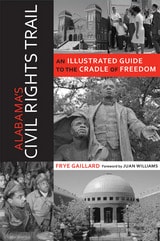
Alabama's Civil Rights Trail
An Illustrated Guide to the Cradle of FreedomFrye Gaillard
University of Alabama Press, 2009
Alabama’s great civil rights events in a compact and accessible narrative, paired with a practical guide to Alabama’s preserved civil rights sites and monuments
No other state has embraced and preserved its civil rights history more thoroughly than Alabama. Nor is there a place where that history is richer. Alabama’s Civil Rights Trail tells of Alabama’s great civil rights events, as well as its lesser-known moments, in a compact and accessible narrative, paired with a practical guide to Alabama’s preserved civil rights sites and monuments.
In this history of Alabama’s civil rights movement, Cradle of Freedom (University of Alabama Press, 2004), Frye Gaillard contends that Alabama played the lead role in a historic movement that made all citizens of the nation, black and white, more free. This book, geared toward the casual traveler and the serious student alike, showcases in a vividly illustrated and compelling manner, valuable and rich details. It provides a user-friendly, graphic tool for the growing number of travelers, students, and civil rights pilgrims who visit the state annually.
The story of the civil rights movement in Alabama is told city by city, region by region, and town by town, with entries on Montgomery, Birmingham, Selma, Tuscaloosa, Tuskegee, and Mobile, as well as chapters on the Black Belt and the Alabama hill country. Smaller but important locales such as Greensboro, Monroeville, and Scottsboro are included, as are more obscure sites like Hale County’s Safe House Black History Museum and the birthplace of the Black Panther Party in Lowndes County.
Alabama's Outlaw Sheriff, Stephen S. Renfroe
William Warren Rogers Sr.
University of Alabama Press, 2005
Among the villains, heroes, rogues and demigods who inhabit Southern folklore, Stephen S. Renfroe deserves a place. In the twentieth-century a few popular magazine and newspaper articles have been written about Renfroe, while Carl Carmer’s Stars Fell on Alabama, published in 1934, devoted several pages to him. Other than this, all is previously know about the enigmatic sheriff who because an outlaw is in the form of a legend.
In general, Renfroe appeared in the Black Belt town of Livingston, Alabama in the late 1860s and quickly became a member of the Ku Klux Klan. Allegedly playing a major role in driving out carpetbaggers and ridding Sumter County of Radical Republican rule, he was awarded with the office of sheriff. However, he reverted to a pattern of crime that earned him disgrace and ostracism.
As to his origins, his background, and the details of his career—much has been speculated but little has been documented. Although no statue commemorates Renfroe’s role as a statesman, educator, or solider (his highest military rank was that of private), a case can be made that he helped shape the course of politics in Alabama’s Black Belt.
Alabama
The History of a Deep South StateWilliam Warren Rogers
University of Alabama Press, 1994
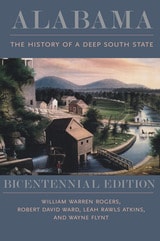
Alabama
The History of a Deep South State, Bicentennial EditionWilliam Warren Rogers, Robert David Ward, Leah Rawls Atkins, and Wayne Flynt
University of Alabama Press, 2018
A definitive bicentennial history of Alabama and its place in the American South.
Alabama: The History of a Deep South State, Bicentennial Edition is a comprehensive narrative account of the state from its earliest days to the present. This edition, updated to celebrate the state’s bicentennial year, offers a detailed survey of the colorful, dramatic, and often controversial turns in Alabama’s evolution. Organized chronologically and divided into three main sections—the first concluding in 1865, the second in 1920, and the third bringing the story to the present—makes clear and interprets the major events that occurred during Alabama’s history within the larger context of the South and the nation.
Once the home of aboriginal inhabitants, Alabama was claimed and occupied by a number of European nations prior to becoming a permanent part of the United States in 1819. A cotton and slave state for more than half of the nineteenth century, Alabama seceded in 1861 to join the Confederate States of America, and occupied an uneasy and uncertain place in America’s post-Civil War landscape. Alabama’s role in the twentieth century has been equally tumultuous and dramatic.
General readers as well as scholars will welcome this up-to-date and scrupulously researched history of Alabama, which examines such traditional subjects as politics, military history, economics, race, and class. It contains essential accounts devoted to Native Americans, women, and the environment, as well as detailed coverage of health, education, organized labor, civil rights, and the many cultural developments, from literature to sport, that have enriched Alabama’s history. The stories of individual leaders, from politicians to creative artists, are also highlighted. A key facet of this landmark historical narrative is the strong emphasis placed on the common everyday people of Alabama, those who have been rightly described as the “bone and sinew” of the state.
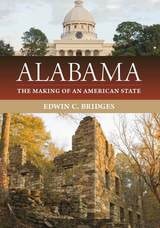
Alabama
The Making of an American StateEdwin C. Bridges
University of Alabama Press, 2016
The story of Alabama—where history shaped a state and a nation.
Alabama: The Making of an American State is itself a watershed event in the long and storied history of the state of Alabama. Here, presented for the first time ever in a single, magnificently illustrated volume, Edwin C. Bridges conveys the magisterial sweep of Alabama’s rich, difficult, and remarkable history with verve, eloquence, and an unblinking eye.
From Alabama’s earliest fossil records to its settlement by Native Americans and later by European settlers and African slaves, from its territorial birth pangs and statehood through the upheavals of the Civil War and the civil rights movement, Bridges makes evident in clear, direct storytelling the unique social, political, economic, and cultural forces that have indelibly shaped this historically rich and unique American region.
Illustrated lavishly with maps, archival photographs, and archaeological artifacts, as well as art works, portraiture, and specimens of Alabama craftsmanship—many never before published—Alabama: The Making of an American State makes evident as rarely seen before Alabama’s most significant struggles, conflicts, achievements, and developments.
Drawn from decades of research and the deep archival holdings of the Alabama Department of Archives and History, this volume will be the definitive resource for decades to come for anyone seeking a broad understanding of Alabama’s evolving legacy.
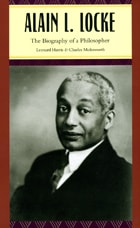
Alain L. Locke
The Biography of a PhilosopherLeonard Harris and Charles Molesworth
University of Chicago Press, 2008

Alandra's Lilacs
The Story of a Mother and Her Deaf DaughterTressa Bowers
Gallaudet University Press, 1999
When, in 1968, 19-year-old Tressa Bowers took her baby daughter to an expert on deaf children, he pronounced that Alandra was “stone deaf,” she most likely would never be able to talk, and she probably would not get much of an education because of her communication limitations. Tressa refused to accept this stark assessment of Alandra’s prospects. Instead, she began the arduous process of starting her daughter’s education.
Economic need forced Tressa to move several times, and as a result, she and Alandra experienced a variety of learning environments: a pure oralist approach, which discouraged signing; Total Communication, in which the teachers spoke and signed simultaneously; a residential school for deaf children, where Signed English was employed; and a mainstream public school that relied upon interpreters. Changes at home added more demands, from Tressa’s divorce to her remarriage, her long work hours, and the ongoing challenge of complete communication within their family. Through it all, Tressa and Alandra never lost sight of their love for each other, and their affection rippled through the entire family. Today, Tressa can triumphantly point to her confident, educated daughter and also speak with pride of her wonderful relationship with her deaf grandchildren. Alandra’s Lilacs is a marvelous story about the resiliency and achievements of determined, loving people no matter what their circumstances might be.
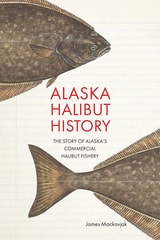
Alaska Halibut History
The Story of Alaska's Commercial Halibut FisheryJames Mackovjak
University of Alaska Press, 2027
Alaska Halibut History—the latest installment in James Mackovjak’s Alaska fisheries series—chronicles one of the grandest and most storied fisheries in the region. Author of Alaska Codfish Chronicle and Alaska Herring History, Mackovjak tells the story of the flatfish that has long been a favorite among chefs globally. A staple in the diet of many Native populations, the halibut has also played a key role in Indigenous mythology across the northern Pacific region. Tracing the evolution of Alaska’s halibut fishery over time, Mackovjak reveals the cultural, economic, and environmental impact of halibut fishing in Alaska and the fish’s vital role in commercial, sport, and subsistence fishing within the state.
Mackovjak considers the organization and chronology of halibut fishery as well as the various factors that have affected fishery management over the years, such as bycatch (the portion of commercial fishing catch that includes animals other than the target species), guided sportfishing, fishermen’s unionization, technological and environmental changes, and major world events. Through detailed analysis and exploration of government reports and fisheries publications, Alaska Halibut History offers a glimpse into the development of the modern-day halibut fishery and the nuances of and challenges behind providing the fish so often seen on a menu. It is an indispensable work for anyone interested in the halibut and fishing in the northern Pacific region.
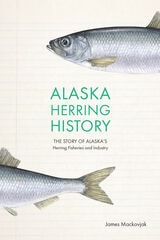
Alaska Herring History
The Story of Alaska’s Herring Fisheries and Industryby James Mackovjak
University of Alaska Press, 2022
The book is divided into three parts based on the purposes for which herring have been harvested. Part I is a history of the reduction (fertilizer/fish meal/fish oil) and cured (salted) herring industries and the
bait-herring fisheries; part II is a history of the roe-herring fisheries in Southeast Alaska, Prince William Sound, Kodiak Island, lower Cook Inlet, Togiak, and Norton Sound; and part III is a history of the herring spawn-on-kelp industry. Historical and contemporary photos and illustrations—as well as graphs and charts that help summarize the development and, in some cases, the demise of the fisheries—augment this detailed look at the evolution of Alaska's herring fisheries.
Balancing scientific details, historical facts, and personal anecdotes from experts in the field, Alaska Herring History will be of interest to historians, social scientists, biologists, and fishery managers and makes an important contribution to Alaska fisheries literature.
Alaska Native Cultures and Issues
Responses to Frequently Asked QuestionsEdited by Libby Roderick
University of Alaska Press, 2010
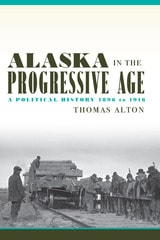
Alaska in the Progressive Age
A Political History, 1896 to 1916Thomas Alton
University of Alaska Press, 2019
Alaska in the Progressive Age looks at how this national movement affected the Alaska territory. Though the reigning view is that Alaska was neglected and even abused by the federal government, Alton argues that from 1896 to 1916 the territory benefitted richly in the age of Progressive Democracy. As the population of Alaska grew, Congress responded to the needs of the nation’s northern possession, giving the territory a delegate to Congress, a locally elected legislature, and ultimately in 1914, the federally funded Alaska Railroad.
Much has been written about the development of modern-day Alaska, especially in terms of the Gold Rush and the origins of the Alaska Railroad. But this is the first history to put this era in the context of Progressive Age American politics. This unexplored look at how Progressivism reached the furthest corners of the United States is an especially timely book as the Progressive Movement shows signs of affecting Alaska again.

Alaska on the Go
Exploring the 49th State with ChildrenErin Kirkland
University of Alaska Press, 2014
Journalist and Alaska resident Erin Kirkland knows every corner of the state, and she has crossed thousands of miles with her son. In Alaska on the Go, she offers a fresh take on exploring some of the most beautiful land in the world, with tips and tricks that only an insider knows. Serving as the perfect tour guide, Kirkland identifies the best and most kid-friendly destinations in cities across Alaska. She offers practical advice on everything from restaurants to rest stops and from weather surprises to wild animals. Photos, maps, and sample itineraries make it easy for parents to plan a trip that will delight and entertain everyone.
The only family travel guide to Alaska written by a current Alaskan, Alaska on the Go makes the state more accessible than ever. Whether traveling via car, cruise ship, or dogsled, this practical, portable guide will open up a new world of memorable adventures.

Alaska on the Go
Exploring the Alaska Marine Highway System with ChildrenErin Kirkland
University of Alaska Press, 2017
A staple of coastal transportation since the 1950s, the Alaska Marine Highway System is a vital link to cities that are often inaccessible except by air. Alaska on the Go offers fascinating accounts of both the small coastal towns and the larger population centers serviced by the highway along with easy-to-navigate route descriptions, helpful packing lists, and tips for inland and onboard adventures. Portable and personable, and covering all thirty routes that make up the Alaska Marine Highway System, Alaska on the Go is the perfect companion for the intrepid traveler.

Alaska's Microgrid Innovators
How Communities Are Responding to Today's Energy ChallengesPeter Asmus
University of Alaska Press, 2026
As glaciers melt, treasured species such as salmon and crab decline, oil reserves wane, and consumer energy bills continue to rise, Alaska is reevaluating its energy future, and the state’s rural communities are leading the way. Alaska's Microgrid Innovators explores how climate change refocuses the story of the state’s energy development history, looking not at the well-told story of oil and natural gas but instead at wind, solar, hydro, and other low-carbon energy sources that have delivered immense economic savings and environmental benefits to both Alaska state residents and the world.
Renewable energy integration projects have sprung up in Alaska’s rural communities since the mid-1990s not due to regulatory fiat but rather to economic necessity. In Alaska’s Microgrid Innovators, pioneers across the stakeholder spectrum—including professionals, academics, Native peoples, policy makers, and other industry participants—describe how they have helped to develop more affordable and sustainable energy systems.
Along with chronicling technological innovation, Alaska’s Microgrid Innovators looks to the future, making the case for succession planning and new public policies as integral for Alaska to meet today’s energy challenges and those to come.
Alaska
Reflections on Land and SpiritEdited by Robert Hedin and Gary Holthaus
University of Arizona Press, 1989
Alchemical Laboratory Notebooks and Correspondence
George Starkey
University of Chicago Press, 2004
The editors present in this volume transcriptions of Starkey's texts, their translations, and valuable commentary for the modern reader. Dispelling the myth that alchemy was an irrational enterprise, this remarkable collection of laboratory notebooks and correspondence reveals the otherwise hidden methodologies of one of the seventeenth century's most influential alchemists.

Alchemies of Theater
Plays, Scores, WritingsDick Higgins
University of Michigan Press, 2024
Alchemies of Theater brings together a broad selection of Higgins’s writings and theater-related work, much of it unpublished or long out of print, including plays and performance scores, drawings, and writings on theater and performance. As this book demonstrates, Higgins deconstructed the drama long before it became a project of theater; undercut the traditional roles of author and director; created what is now considered “devised” theater; pioneered the use of media in theater, writing the first electronic opera; and was a precursor in deconstruction and “postdramatic” avant-garde traditions. His Intermedia manifesto offered a sweeping view of interdisciplinarity—in effect, a new arts ecology.
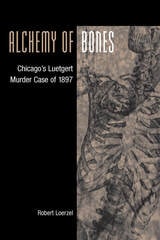
Alchemy of Bones
Chicago's Luetgert Murder Case of 1897Robert Loerzel
University of Illinois Press, 2002
On May 1, 1897, Louise Luetgert disappeared. Although no body was found, Chicago police arrested her husband, Adolph, the owner of a large sausage factory, and charged him with murder. The eyes of the world were still on Chicago following the success of the World's Columbian Exposition, and the Luetgert case, with its missing victim, once-prosperous suspect, and all manner of gruesome theories regarding the disposal of the corpse, turned into one of the first media-fueled celebrity trials in American history.
Newspapers fought one another for scoops, people across the country claimed to have seen the missing woman alive, and each new clue led to fresh rounds of speculation about the crime. Meanwhile, sausage sales plummeted nationwide as rumors circulated that Luetgert had destroyed his wife's body in one of his factory's meat grinders.
Weaving in strange-but-true subplots involving hypnotists, palmreaders, English con artists, bullied witnesses, and insane-asylum bodysnatchers, Alchemy of Bones is more than just a true crime narrative; it is a grand, sprawling portrait of 1890s Chicago--and a nation--getting an early taste of the dark, chaotic twentieth century.
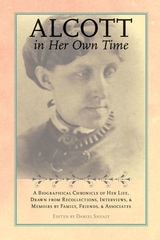
Alcott in Her Own Time
A Biographical Chronicle of Her LIfe, Drawn from Recollections, Interviews, and Memoirs by Family, Friends, and AssociatesShealy, Daniel
University of Iowa Press, 2005
Many of the printed recollections in this book appeared after Alcott became famous and showcase her as a literary lion, but others focus on her teen years, when she was living the life of Jo March; these intimate glimpses into the life of the Alcott family lead the reader to one conclusion: the family was happy, fun, and entertaining, very much like the fictional Marches. The recollections about an older and wealthier Alcott show a kind and generous, albeit outspoken, woman little changed by her money and status.
From Annie Sawyer Downs’s description of life in Concord to Anna Alcott Pratt’s recollections of the Alcott sisters’ acting days to Julian Hawthorne’s neighborly portrait of the Alcotts, the thirty-six recollections in this copiously illustrated volume tell the private and public story of a remarkable life.
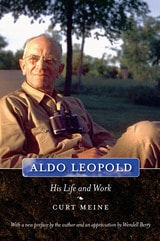
Aldo Leopold
His Life and WorkCurt D. Meine
University of Wisconsin Press, 2010
This biography of Aldo Leopold follows him from his childhood as a precocious naturalist to his profoundly influential role in the development of conservation and modern environmentalism in the United States. This edition includes a new preface by author Curt Meine and an appreciation by acclaimed Kentucky writer and farmer Wendell Berry.

Alec Wilder
Philip Lambert
University of Illinois Press, 2013
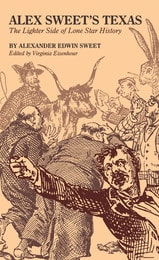
Alex Sweet's Texas
The Lighter Side of Lone Star HistoryBy Alexander Edwin Sweet
University of Texas Press, 1986
Alexander Edwin Sweet (1841-1901) is Texas's own "Sifter," whose humorous columns appeared in the Galveston Daily News in the late 1870s and early 1880s. In his wickedly funny, tongue-in-cheek sketches, readers learned of an astonishing variety of frontier phenomena, some familiar, others downright odd. For example, there was the typical nineteenth-century custom of New Year's Day receptions for bachelor guests only, with refreshments consisting largely of strong drink and equally strong fruitcake. Imbibing a bit more cheer at each stop, according to Sweet, the bachelors brought the last prospective sweethearts they visited New Year's greetings as incoherent as they were heartfelt.
At times Sweet parodied the Yankee image of the typical Texan, whom he described as "half alligator, half human," eating raw buffalo and toting an arsenal of weaponry like a "perambulating gun-rack." But he also did as much as any writer to establish and enlarge upon the national image of Texas and Texans. Even the irascible red ant and the other "critters" in Sweet's column were Texas big and Texas-fabulous!
In 1881 Sweet co-founded Texas Siftings, a humor magazine that moved from Austin to New York to become one of the most popular periodicals of its kind in the United States. From Texas Siftings, from Sweet's two published books (one called by John Jenkins in Basic Texas Books the "best volume of 19th century Texas humor"), and from many never-before-collected newspaper columns, editor Virginia Eisenhour has assembled an Alex Sweet sampler that presents the very best of the timeless humorist's work. The result—Alex Sweet's Texas—clearly demonstrates why the New York Journal pronounced Sweet "second to no living writer in freshness, originality, sparkling wit, and refined humor." A century later, that wit still sparkles and is guaranteed to delight Texans present as it once did Texans past.
Alexander Dallas Bache
Building the American Nation through Science and Education in the Nineteenth CenturyAxel Jansen
Campus Verlag, 2011
Alexander Dallas Bache (1806–1867) was one of the leaders of American science in the nineteenth century. Driven by a vision of science as a key component of an integrated U.S. nation-state, he guided the nascent American Association for the Advancement of Science and also led what was at that point the nation’s largest scientific enterprise, the U.S. Coast Survey. In this analytical biography, Axel Jansen explains and explores Bache’s efforts to build and shape public institutions as aids to his goal of creating a national foundation for a shared culture—efforts that culminated in his work during the Civil War as one of the founders of the National Academy of Sciences, which he saw as a key symbol of the continued viability of a unified American nation.
Alexander Hamilton's Public Administration
Richard T. Green
University of Alabama Press, 2019
Examines how Hamilton’s thoughts and experiences about public administration theory and practice have shaped the nation
American public administration inherited from Alexander Hamilton a distinct republican framework through which we derive many of our modern governing standards and practices. His administrative theory flowed from his republican vision, prescribing not only the how of administration but also what should be done and why. Administration and policy merged seamlessly in his mind, each conditioning the other. His Anti-Federalist detractors clearly saw this and fought his vision tooth and nail.
That conflict endures to this day because Americans still have not settled on just one vision of the American republic. That is why, Richard Green argues, Hamilton is a pivotal figure in our current reckoning. If we want to more fully understand ourselves and our ways of governing today, we must start by understanding Hamilton, and we cannot do that without exploring his administrative theory and practice in depth.
Alexander Hamilton’s Public Administration considers Hamilton both as a founder of the American republic, steeped in the currents of political philosophy and science of his day, and as its chief administrative theorist and craftsman, deeply involved in establishing the early institutions and policies that would bring his interpretation of the written Constitution to life. Accordingly, this book addresses the complex mix of classical and modern ideas that informed his vision of a modern commercial and administrative republic; the administrative ideas, institutions, and practices that flowed from that vision; and the substantive policies he deemed essential to its realization. Green’s analysis grows out of an immersion in Hamilton’s extant papers, including reports, letters, pamphlets, and essays. Readers will find a comprehensive explanation of his theoretical contributions and a richly detailed account of his ideas and practices in historical context.
Alexander Hamilton
From Obscurity to GreatnessJohn P. Kaminski
Wisconsin Historical Society Press, 2016
Editor John P. Kaminski has gathered a remarkable collection of quotations by and about Alexander Hamilton that paint for us a nuanced portrait of a complex man. Through his own words and the words of his contemporaries -- including the man who killed him in a duel, Aaron Burr -- we can gain a better understanding of this fascinating man who rose from anonymity on a small Caribbean island to the corridors of power.
Alexander Robey Shepherd
The Man Who Built the Nation’s CapitalJohn P. Richardson
Ohio University Press, 2016
With Alexander Robey Shepherd, John P. Richardson gives us the first full-length biography of his subject, who as Washington, D.C.’s, public works czar (1871–74) built the infrastructure of the nation’s capital in a few frenetic years after the Civil War. The story of Shepherd is also the story of his hometown after that cataclysm, which left the city with churned-up streets, stripped of its trees, and exhausted.
An intrepid businessman, Shepherd became president of Washington’s lower house of delegates at twenty-seven. Garrulous and politically astute, he used every lever to persuade Congress to realize Peter L’Enfant’s vision for the capital. His tenure produced paved and graded streets, sewer systems, trees, and gaslights, and transformed the fetid Washington Canal into one of the city’s most stately avenues. After bankrupting the city, a chastened Shepherd left in 1880 to develop silver mines in western Mexico, where he lived out his remaining twenty-two years.
In Washington, Shepherd worked at the confluence of race, party, region, and urban development, in a microcosm of the United States. Determined to succeed at all costs, he helped force Congress to accept its responsibility for maintenance of its stepchild, the nation’s capital city.

Alexander Watkins Terrell
Civil War Soldier, Texas Lawmaker, American DiplomatBy Lewis L. Gould
University of Texas Press, 2004
Alexander Terrell's career placed him at the center of some of the most pivotal events in nineteenth- and early twentieth-century history, ranging from the Civil War to Emperor Maximilian's reign over Mexico and an Armenian genocide under the Ottoman Empire. Alexander Watkins Terrell at last provides the first complete biographical portrait of this complex figure.
Born in Virginia in 1827, Terrell moved to Texas in 1852, rising to the rank of Confederate brigadier general when the Civil War erupted. Afterwards, he briefly served in Maximilian's army before returning to Texas, where he was elected to four terms in the state Senate and three terms in the House. President Grover Cleveland appointed him minister to the Ottoman Empire, dispatching him to Turkey and the Middle East for four years while the issues surrounding the existence of Christians in a Muslim empire stoked violent confrontations there. His other accomplishments included writing legislation that created the Texas Railroad Commission and what became the Permanent University Fund (the cornerstone of the University of Texas's multibillion-dollar endowment).
In this balanced exploration of Terrell's life, Gould also examines Terrell's views on race, the impact of the charges of cowardice in the Civil War that dogged him, and his spiritual searching beyond the established religions of his time. In his rich and varied life, Alexander Watkins Terrell experienced aspects of nineteenth-century Texas and American history whose effects have continued down to the present day.
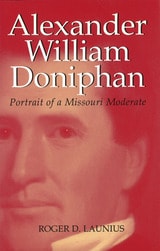
Alexander William Doniphan
Portrait of a Missouri ModerateRoger D. Launius
University of Missouri Press, 1997
Alexander William Doniphan (1808-1887)--Missouri attorney, military figure, politician, and businessman--is one of the most significant figures in antebellum Missouri. From the 1830s to the 1880s, Doniphan was active in a variety of affairs in Missouri and held firm to several underlying principles, including loyalty, hard work, the sanctity of the republic, and commitment to Christian charity. However, the key to Doniphan's importance was his persistent moderation on the critical issues of his day.
Doniphan became a household name when he served as the commanding officer of the famed First Missouri Mounted Volunteers during the Mexican-American War. It was during this time that he won two battles, established an Anglo-American-based democracy in New Mexico, and paved the way for the annexation of the territory that became New Mexico and Arizona. He is also recognized by the Mormons for his assistance to their beleaguered church during Missouri's "Mormon War" and for his refusal to execute Joseph Smith when ordered to do so by his commanding officer.
Although Doniphan was a slaveholding unionist, he sought a middle ground to stave off war in the 1850s and early 1860s and served as a delegate to the Washington Peace Conference in 1861. When conflict escalated along the western border of Missouri in 1862, Doniphan moved to St. Louis, where he worked as a lawyer with the Missouri Claims Commission, seeking pensions for refugees.
Doniphan early adopted the Whig ideal of the "positive liberal state" and sought to use the power of government to remake society into something better. Once he saw the heavy-handed use of state power during Reconstruction, however, Doniphan reversed his views on the role of the government in society. For the rest of his life, he resisted government incursions into the lives of the people and sought to restore a healthy Union.
Alexander William Doniphan will be of interest to academic specialists and general readers alike, especially those interested in Mormon studies, Missouri history, military history, and Western history.

Algerian Diary
Frank Kearns and the "Impossible Assignment" for CBS NewsGerald Davis
West Virginia University Press, 2016
Frank Kearns was the go-to guy at CBS News for danger- ous stories in Africa and the Middle East in the 1950s, ‘60s, and early ‘70s. By his own account, he was nearly killed 114 times. He took stories that nobody else wanted to cover and was challenged to get them on the air when nobody cared about this part of the world. But his stories were warning shots for conflicts that play out in the headlines today.
In 1957, Senator John Kennedy described America’s view of the Algerian war for independence as the Eisenhower Administration’s “head in the sand policy.” So CBS News decided to find out what was really happening there and to determine where Algeria’s war for independence fit into the game plan for the Cold War. They sent Frank Kearns to find out.
Kearns took with him cameraman Yousef (“Joe”) Masraff and 400 pounds of gear, some of which they shed, and they hiked with FLN escorts from Tunisia, across a wide “no-man’s land,” and into the Aures Mountains of eastern Algeria, where the war was bloodiest. They carried no passports or visas. They dressed as Algerians. They refused to bear weapons. And they knew that if captured, they would be executed and left in unmarked graves. But their job as journalists was to seek the truth whatever it might turn out to be.
This is Frank Kearns’s diary.

Alice Hamilton
A LIFE IN LETTERSBarbara Sicherman
University of Illinois Press, 2003
This legendary figure now comes to life in an integrated work of biography and letters that reveals the personal as well as the professional woman. In documenting Hamilton's evolution from a childhood of privilege to a life of social advocacy, the volume opens a window on women reformers and their role in Progressive Era politics and reform. Because Hamilton was a keen observer and vivid writer, her letters--more than 100 are included here--bring an unmatched freshness and immediacy to a range of subjects, such as medical education; personal relationships and daily life at Hull House; the women's peace movement; struggles for the protection of workers' health; academic life at Harvard; politics and civil liberties during the cold war; and the process of growing old. Her story takes the reader from the Gilded Age to the Vietnam War.

Alice Morse Earle and the Domestic History of Early America
Susan Reynolds Williams
University of Massachusetts Press, 2013
Author, collector, and historian Alice Morse Earle (1851–1911) was among the most important and prolific writers of her day. Between 1890 and 1904, she produced seventeen books as well as numerous articles, pamphlets, and speeches about the life, manners, customs, and material culture of colonial New England. Earle's work coincided with a surge of interest in early American history, genealogy, and antique collecting, and more than a century after the publication of her first book, her contributions still resonate with readers interested in the nation's colonial past.
An intensely private woman, Earle lived in Brooklyn, New York, with her husband and four children and conducted much of her research either by mail or at the newly established Long Island Historical Society. She began writing on the eve of her fortieth birthday, and the impressive body of scholarship she generated over the next fifteen years stimulated new interest in early American social customs, domestic routines, foodways, clothing, and childrearing patterns.
Written in a style calculated to appeal to a wide readership, Earle's richly illustrated books recorded the intimate details of what she described as colonial “home life.” These works reflected her belief that women had played a key historical role, helping to nurture communities by constructing households that both served and shaped their families. It was a vision that spoke eloquently to her contemporaries, who were busily creating exhibitions of early American life in museums, staging historical pageants and other forms of patriotic celebration, and furnishing their own domestic interiors.