Results by title
1116 books match the query 'Africa' and 141 start with a
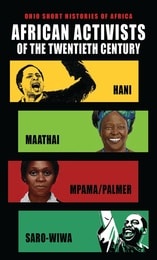
African Activists of the Twentieth Century
Hani, Maathai, Mpama/Palmer, Saro-WiwaHugh Macmillan
Ohio University Press, 2022
An omnibus collection of concise and up-to-date biographies of four influential figures from modern African history.
Chris Hani, by Hugh Macmillan
Chris Hani was one of the most highly respected leaders of the African National Congress, the South African Communist Party, and uMkhonto we Sizwe. His assassination in 1993 threatened to upset the country’s transition to democracy and prompted an intervention by Nelson Mandela that ultimately accelerated apartheid’s demise.
Wangari Maathai, by Tabitha Kanogo
This concise biography tells the story of Wangari Maathai, the Kenyan activist and Nobel Peace Prize winner who devoted her life to campaigning for environmental conservation, sustainable development, democracy, human rights, gender equality, and the eradication of poverty.
Josie Mpama/Palmer: Get Up and Get Moving, by Robert R. Edgar
Highly critical of the patriarchal attitudes that hindered Black women’s political activism, South Africa’s Josie Mpama/Palmer was an outspoken advocate for women’s social and political equality, a member of the Communist Party of South Africa, and an antiapartheid activist.
Ken Saro-Wiwa, by Roy Doron and Toyin Falola
A penetrating, accessible portrait of the Nigerian activist whose execution galvanized the world. Ken Saro-Wiwa became a martyr and symbolized modern Africans’ struggle against military dictatorship, corporate power, and environmental exploitation.

African Animation
History, Culture, and IndustryBoukary Sawadogo
Rutgers University Press, 2027
Against the backdrop of the rising interest in African stories in mainstream media, African Animation looks at a more than century-old animation practice that remains largely unknown. Carefully organized, this book offers a comprehensive treatment that canvases animation from all over the continent, analyzing its history, socio-political contexts, artistic and technological development, visual cultures, and economic market conditions. African animation also contributes to the broader landscape of animation studies: how does our view of the history of animation change when we add an African perspective to the otherwise dominating perspectives of Hollywood, Japanese, and Korean animation? What does animation look and feel like in other parts of the world? African animation has always been there; this book helps us pay attention to it. This is a must-read for those interested in African animation, including artists, industry insiders, and fans.

African Apocalypse
The Story of Nontetha Nkwenkwe, a Twentieth-Century South African ProphetRobert R. Edgar; Hilary SapireRobert R.
Ohio University Press, 1999
African Art and Leadership
Edited by Douglas Fraser and Herbert M. Cole
University of Wisconsin Press, 1972
African Asylum at a Crossroads
Activism, Expert Testimony, and Refugee RightsIris Berger
Ohio University Press, 2015
African Asylum at a Crossroads: Activism, Expert Testimony, and Refugee Rights examines the emerging trend of requests for expert opinions in asylum hearings or refugee status determinations. This is the first book to explore the role of court-based expertise in relation to African asylum cases and the first to establish a rigorous analytical framework for interpreting the effects of this new reliance on expert testimony.
Over the past two decades, courts in Western countries and beyond have begun demanding expert reports tailored to the experience of the individual claimant. As courts increasingly draw upon such testimony in their deliberations, expertise in matters of asylum and refugee status is emerging as an academic area with its own standards, protocols, and guidelines. This deeply thoughtful book explores these developments and their effects on both asylum seekers and the experts whose influence may determine their fate.
Contributors: Iris Berger, Carol Bohmer, John Campbell, Katherine Luongo, E. Ann McDougall, Karen Musalo, Tricia Redeker Hepner, Amy Shuman, Joanna T. Tague, Meredith Terretta, and Charlotte Walker-Said.

African Democracies and African Politics
M. A. Mohamed Salih
Pluto Press, 2001
African Diasporic Cinema
Aesthetics of ReconstructionDaniela Ricci
Michigan State University Press, 2020
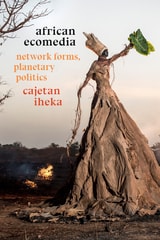
African Ecomedia
Network Forms, Planetary PoliticsCajetan Iheka
Duke University Press, 2021
African Encounters with Domesticity
Karen Tranberg Hansen
Rutgers University Press, 1992
Anthropologists usually think of domesticity as the activities related to the home and the family. Such activities have complex meanings associated with the sense of space, work, gender, and power. The contributors to this interdisciplinary collection of papers examine how indigenous African notions of domesticity interact with Western notions to transform the meaning of such activities. They explore the interactions of notions of domesticity in a number of settings in the twentieth century and the kinds of personal troubles and public issues these interactions have provoked. They also demonstrate that domesticity, as it emerged in Africa through the colonial encounter, was culturally constructed, and they show how ideologies of work, space, and gender interact with broader political-economic processes.
In her introduction, Hansen explains how the meaning of domesticity has changed and been contested in the West, specifies which of these shifting meanings are relevant in the African context, and summarizes the historical processes that have affected African ideologies of domesticity.African Entrepreneurship
Muslim Fula Merchants in Sierra LeoneAlusine Jalloh
Ohio University Press, 1999
Departing from the prevailing scholarship, Jalloh characterizes the Fula businesses as independent, rather than appendages of Western expatriate commerce. In addition to establishing successful businesses, Fula merchants established Islamic educational institutions for propogating the Muslim faith and promoting Islamic scholarship.
This study also examines the evolution of Fula chieftaincy from the colonial era to the postcolonial period and documents the importance of mercantile wealth and networks in the election of Fula chiefs in Freetown. African Entrepreneurship makes an important contribution to the understudied role of African business in Sierra Leone.
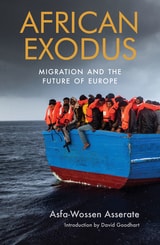
African Exodus
Migration and the Future of EuropeAsfa-Wossen Asserate
Haus Publishing, 2018
Asfa-Wossen Asserate argues here that building higher fences or finding more effective methods of integration will only, in the long term, perpetuate rather than solve the problems associated with these large numbers of displaced refugees. We need to realize that we are only treating the symptoms of an oncoming catastrophe and that, if we are to respond to mass migration, we will ultimately have to understand its causes. African Exodus places its emphasis firmly on the causes of the refugee crisis, which are to be found not least in Europe itself, and charts ways in which we might deal with it effectively in the long term.
In the course of this analysis, Asserate asks why our view of Africa—a troubled continent, but rich in so many ways—is so distorted. How can we combat the corrupt, authoritarian regimes that stymie progress and development? Why are millions fleeing to Europe? How is the EU complicit in the migration crisis? And finally, in practical terms: what can be done, and what prospects does the future hold?
African Filmmaking
Five FormationsKenneth W. Harrow
Michigan State University Press, 2017
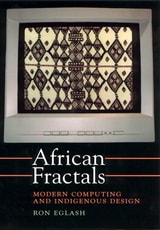
African Fractals
Modern Computing and Indigenous DesignEglash, Ron
Rutgers University Press, 1999
Anthropologists have observed that the patterns produced in different cultures can be characterized by specific design themes. In Europe and America, we often see cities laid out in a grid pattern of straight streets and right-angle corners. In contrast, traditional African settlements tend to use fractal structures-circles of circles of circular dwellings, rectangular walls enclosing ever-smaller rectangles, and streets in which broad avenues branch down to tiny footpaths with striking geometric repetition. These indigenous fractals are not limited to architecture; their recursive patterns echo throughout many disparate African designs and knowledge systems.
Drawing on interviews with African designers, artists, and scientists, Ron Eglash investigates fractals in African architecture, traditional hairstyling, textiles, sculpture, painting, carving, metalwork, religion, games, practical craft, quantitative techniques, and symbolic systems. He also examines the political and social implications of the existence of African fractal geometry. His book makes a unique contribution to the study of mathematics, African culture, anthropology, and computer simulations.
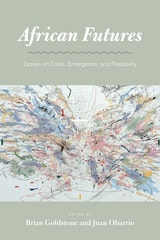
African Futures
Essays on Crisis, Emergence, and PossibilityEdited by Brian Goldstone and Juan Obarrio
University of Chicago Press, 2017
The experts in this book address Africa’s future as it is embedded within various social and cultural forms emerging on the continent today: the reconfiguration of the urban, the efflorescence of signs and wonders and gospels of prosperity, the assorted techniques of legality and illegality, lotteries and Ponzi schemes, apocalyptic visions, a yearning for exile, and many other phenomena. Bringing together social, political, religious, and economic viewpoints, the book reveals not one but multiple prospects for the future of Africa. In doing so, it offers a pathbreaking model of pluralistic and open-ended thinking and a powerful tool for addressing the vexing uncertainties that underlie so many futures around the world.

African Hustler Narratives
E-Fraud Economy and Postmillennial CapitalismDaniel Chukwuemeka
University of Michigan Press, 2027
Across contemporary African literature, hustlers appear as online scammers, sex workers, undocumented migrants, and others who pursue self-advancement through unconventional or compromising means. African Hustler Narratives asks what these figures reveal when we look beyond the familiar discourse of morality or criminality. Daniel Chukwuemeka argues that the hustler’s pursuit of self-advancement through improvised means constitutes a response to structural exclusion from global capitalism, which a purely moral or criminal framing misses entirely.
Moving from earlier forms of hustling to the digital world of e-fraud, Chukwuemeka shows how African writers use these morally complicated figures to explore economic inequality and the difficult choices that arise when the neoliberal promise of opportunity collides with the realities of systemic exclusion. Chukwuemeka also extends the hustler motif to those who tell and study these stories. Though their work differs from the e-scammer’s, African writers and critics negotiate Global North publishing and academic valuation systems that reproduce the disparities they interrogate, making the e-scammer their doppelgänger.
African Intellectual Heritage
Molefi Asante
Temple University Press, 1996

African Intellectuals and Decolonization
Nicholas M. Creary
Ohio University Press, 2012
African Intimacies
Race, Homosexuality, and GlobalizationNeville Hoad
University of Minnesota Press, 2007
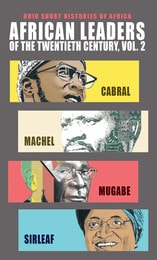
African Leaders of the Twentieth Century, Volume 2
Cabral, Machel, Mugabe, SirleafAllen F. Isaacman
Ohio University Press, 2022
This omnibus edition brings together concise and up-to-date biographies of Amílcar Cabral, Samora Machel, Robert Mugabe, and Ellen Johnson Sirleaf. African Leaders of the Twentieth Century, Volume 2 complements courses in history and political science and is an informative collection for general readers.
Amílcar Cabral: A Nationalist and Pan-Africanist Revolutionary, by Peter Karibe Mendy
Amílcar Cabral’s charismatic and visionary leadership, his pan-Africanist solidarity and internationalist commitment to “every just cause in the world,” remain relevant to contemporary struggles for emancipation and self-determination. This concise biography is an ideal introduction to his life and legacy.
Mozambique’s Samora Machel: A Life Cut Short, by Allen F. Isaacman and Barbara S. Isaacman
From his anti-colonial military leadership to the presidency of independent Mozambique, Samora Machel held a reputation as a revolutionary hero to the oppressed. Although killed in a 1987 plane crash, for many Mozambicans his memory lives on as a beacon of hope for the future.
Robert Mugabe, by Sue Onslow and Martin Plaut
For some, Zimbabwe’s Robert Mugabe was a liberation hero who confronted white rule and oversaw the radical redistribution of land. For others, he was a murderous dictator who drove his country to poverty. This concise biography reveals the complexity of the man who led Zimbabwe for its first decades of independence.
Ellen Johnson Sirleaf, by Pamela Scully
Nobel Peace Prize–winner and two-time Liberian president Ellen Johnson Sirleaf speaks to many of the key themes of the twenty-first century. Among these are the growing power of women in the arenas of international politics and human rights; the ravaging civil wars of the post–Cold War era in which sexual violence is used as a weapon; and the challenges of transitional justice in building postconflict societies.
African Leaders of the Twentieth Century
Biko, Selassie, Lumumba, SankaraLindy Wilson
Ohio University Press, 2015
African Masks and Emotions
In Theory and in PracticeZ. S. Strother
J. Paul Getty Trust, The, 0
In this groundbreaking book, Z. S. Strother, inspired by dialogues with African masquerade patrons and performers, disputes assumptions that masks universally hide, reveal, or transform.
In Western European languages, the word mask exerts a powerful presence as a figure of speech. To masquerade is to pretend to be someone or something one is not. By extension, unmasking is a heroic metaphor for exposing a hidden truth. In this volume, art historian Z. S. Strother counters that narrative, using African case studies to offer an alternative vision of masquerading. She explores the aesthetic emotions aroused by masks, or more precisely, by “dances of masks”: joy, wonder, awe, fear, and the release of laughing out loud. She also investigates the uncanny—a sensation of “delicious shiveriness” triggered when familiar spaces and individuals become strange and changeable. Inspired by Strother’s studies in DR Congo, African Masks and Emotions takes a comparative perspective and moves emotion from the periphery to the center of analysis.
Reflecting Getty's commitment to open content, African Masks and Emotions is available for free download in ePub and PDF formats at: https://www.getty.edu/publications-reports/item/2F27A4. This paperback edition is available for sale for readers who wish to have a bound reference copy.
African Miracle, African Mirage
Transnational Politics and the Paradox of Modernization in Ivory CoastAbou B. Bamba
Ohio University Press, 2016
Throughout the 1960s and 1970s, Ivory Coast was touted as an African miracle, a poster child for modernization and the ways that Western aid and multinational corporations would develop the continent. At the same time, Marxist scholars—most notably Samir Amin—described the capitalist activity in Ivory Coast as empty, unsustainable, and incapable of bringing real change to the lives of ordinary people. To some extent, Amin’s criticisms were validated when, in the 1980s, the Ivorian economy collapsed.
In African Miracle, African Mirage, Abou B. Bamba incorporates economics, political science, and history to craft a bold, transnational study of the development practices and intersecting colonial cultures that continue to shape Ivory Coast today. He considers French, American, and Ivorian development discourses in examining the roles of hydroelectric projects and the sugar, coffee, and cocoa industries in the country’s boom and bust. In so doing, he brings the agency of Ivorians themselves to the fore in a way not often seen in histories of development. Ultimately, he concludes that the “maldevelopment” evident by the mid-1970s had less to do with the Ivory Coast’s “insufficiently modern” citizens than with the conflicting missions of French and American interests within the context of an ever-globalizing world.
African Motors
Technology, Gender, and the History of DevelopmentJoshua Grace
Duke University Press, 2021

African Performance Arts and Political Acts
Naomi André, Yolanda Covington-Ward, and Jendele Hungbo, Editors
University of Michigan Press, 2021
African Performance Arts and Political Actspresents innovative formulations for how African performance and the arts shape the narratives of cultural history and politics. This collection, edited by Naomi André, Yolanda Covington-Ward, and Jendele Hungbo, engages with a breadth of African countries and art forms, bringing together speech, hip hop, religious healing and gesture, theater and social justice, opera, radio announcements, protest songs, and migrant workers’ dances. The spaces include village communities, city landscapes, prisons, urban hostels, Township theaters, opera houses, and broadcasts through the airwaves on television and radio as well as in cyberspace. Essays focus on case studies from Cameroon, the Democratic Republic of the Congo, Nigeria, Senegal, South Africa, and Tanzania.
African Pharmakon
The Asylum as Shrine from Slavery to the ReturnNana Osei Quarshie
University of Chicago Press, 2025
For centuries, mental distress in West Africa has been subject to a mix of healing, harming, ritual, and regulation. In African Pharmakon, Nana Osei Quarshie questions conventional narratives about colonial psychiatry. Instead of displacing African therapeutic traditions, he argues, European psychiatric institutions in fact built upon them, adapting long-standing techniques of social control and healing.
With a focus on Ghana, Quarshie explores the shifting landscape of West African mental health practices, tracking their transformation from shrine-based rituals to colonial asylums and modern psychiatric institutions. Combining extensive archival research and ethnographic fieldwork, including the first scholarly examination of patient records from the Accra Psychiatric Hospital, Quarshie identifies five enduring techniques that have shaped the treatment of mental distress: spiritual pawning, logging, manhunting, mass expulsion, and pharmacotherapy.
Rejecting the simplistic opposition of Indigenous healing versus colonial oppression, African Pharmakon provides a nuanced account of how psychiatric care in Ghana became a tool of empowerment as well as exclusion. This pioneering study reframes our understanding of psychiatry and mental health governance in West Africa, past and present.
African Political Parties
Evolution, Institutionalisation and GovernanceEdited by M. A. Mohamed Salih
Pluto Press, 2003
Themes include the evolution and institutionalisation of African political parties; the unique historical, political and social circumstances that shaped their structures and functions.Morten Bøås In the governance trajectory, the authors question the relationship between African political parties and government; political parties and representation; political parties and electoral systems; and political parties and parliament. Case studies include Ethiopia, Ghana, Kenya, Botswana, Namibia, South Africa, Tanzania, Zambia, Zimbabwe and many others.
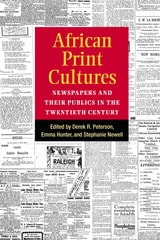
African Print Cultures
Newspapers and Their Publics in the Twentieth CenturyEdited by Derek R. Peterson, Emma Hunter, and Stephanie Newell
University of Michigan Press, 2016
The essays collected in African Print Cultures claim African newspapers as subjects of historical and literary study. Newspapers were not only vehicles for anticolonial nationalism. They were also incubators of literary experimentation and networks by which new solidarities came into being. By focusing on the creative work that African editors and contributors did, this volume brings an infrastructure of African public culture into view.
The first of four thematic sections, “African Newspaper Networks,” considers the work that newspaper editors did to relate events within their locality to happenings in far-off places. This work of correlation and juxtaposition made it possible for distant people to see themselves as fellow travellers. “Experiments with Genre” explores how newspapers nurtured the development of new literary genres, such as poetry, realist fiction, photoplays, and travel writing in African languages and in English. “Newspapers and Their Publics” looks at the ways in which African newspapers fostered the creation of new kinds of communities and served as networks for public interaction, political and otherwise. The final section, “Afterlives, ” is about the longue durée of history that newspapers helped to structure, and how, throughout the twentieth century, print allowed contributors to view their writing as material meant for posterity.
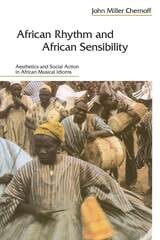
African Rhythm and African Sensibility
Aesthetics and Social Action in African Musical IdiomsJohn M. Chernoff
University of Chicago Press, 1981
"John Miller Chernoff, who spent 10 years studying African drumming, has a flair for descriptive writing, and his first-person narratives should be easily understood by any reader, while ringing unmistakably true for the reader who has also been to West Africa."—Roderick Knight, Washington Post Book World
"Ethnomusicologists must be proud that their discipline has produced a book that will, beyond doubt, rank as a classic of African studies."—Peter Fryer, Research in Literatures
"A marvelous book. . . . Not many scholars will ever be able to achieve the kind of synthesis of 'doing' and 'writing about' their subject matter that Chernoff has achieved, but he has given us an excellent illustration of what is possible."—Chet Creider, Culture
"Chernoff develops a brilliant and penetrating musicological essay that is, at the same time, an intensely personal and even touching account of musical and cultural discovery that anyone with an interest in Africa can and should read. . . . No other writing comes close to approaching Chernoff's ability to convey a feeling of how African music 'works'"—James Koetting, Africana Journal
"Four stars. One of the few books I know of that talks of the political, social, and spiritual meanings of music. I was moved. It was so nice I read it twice."—David Byrne of "Talking Heads"
The companion cassette tape has 44 examples of the music discussed in the book. It consists of field recordings illustrating cross-rhythms, multiple meters, call and response forms, etc.
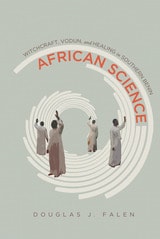
African Science
Witchcraft, Vodun, and Healing in Southern BeninDouglas J. Falen
University of Wisconsin Press, 2020
Although the Beninese understanding of àze reflects positive scientific properties in its use of specialized knowledge to harness nature's energy and realize economic success, its boundless power is inherently ambivalent because it can corrupt its users, who dispense death and destruction. Witches and healers are equivalent to supervillains and superheroes, locked in epic battles over malevolent and benevolent human desires. Beninese people's discourse about such mystical confrontations expresses a philosophy of moral duality and cosmic balance. Falen demonstrates how a deep engagement with another lived reality opens our minds and contributes to understanding across cultural difference.
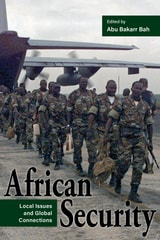
African Security
Local Issues and Global ConnectionsAbu Bakarr Bah
Ohio University Press, 2024

African Soccerscapes
How a Continent Changed the World’s GamePeter Alegi
Ohio University Press, 2010

African Students in East Germany, 1949-1975
Sara Pugach
University of Michigan Press, 2022
This book explores the largely unexamined history of Africans who lived, studied, and worked in the German Democratic Republic. African students started coming to the East in 1951 as invited guests who were offered scholarships by the East German government to prepare them for primarily technical and scientific careers once they returned home to their own countries. Drawn from previously unexplored archives in Germany, Ghana, Kenya, Zambia, and the United Kingdom, African Students in East Germany, 1949–1975 uncovers individual stories and reconstructs the pathways that African students took in their journeys to the GDR and what happened once they got there. The book places these experiences within the larger context of German history, questioning how ideas of African racial difference that developed from the eighteenth through the early twentieth centuries impacted East German attitudes toward the students.
The book additionally situates African experiences in the overlapping contexts of the Cold War and decolonization. During this time, nations across the Western and Soviet blocs were inviting Africans to attend universities and vocational schools as part of a drive to offer development aid to newly independent countries and encourage them to side with either the United States or Soviet Union in the Cold War. African leaders recognized their significance to both Soviet and American blocs, and played on the desire of each to bring newly independent nations into their folds. Students also recognized their importance to Cold War competition, and used it to make demands of the East German state. The book is thus located at the juncture of many different histories, including those of modern Germany, modern Africa, the Global Cold War, and decolonization.
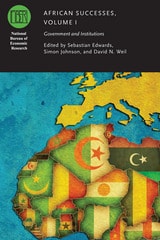
African Successes, Volume I
Government and InstitutionsEdited by Sebastian Edwards, Simon Johnson, and David N. Weil
University of Chicago Press, 2016
The first volume in the series, African Successes: Governments and Institutions considers the role governments and institutions have played in recent developments and identifies the factors that enable economists to predict the way institutions will function.
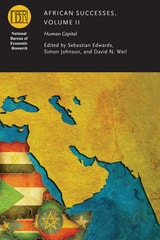
African Successes, Volume II
Human CapitalEdited by Sebastian Edwards, Simon Johnson, and David N. Weil
University of Chicago Press, 2016
The second volume in the series, African Successes: Human Capital turns the focus toward Africa’s human capital deficit, measured in terms of health and schooling. It offers a close look at the continent’s biggest challenges, including tropical disease and the spread of HIV.
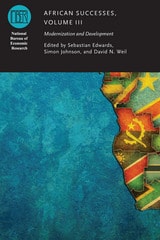
African Successes, Volume III
Modernization and DevelopmentEdited by Sebastian Edwards, Simon Johnson, and David N. Weil
University of Chicago Press, 2016
The third volume in the series, African Successes: Modernization and Development looks at the rise in private production in spite of difficult institutional and physical environments. The volume emphasizes the ways that technologies, including mobile phones, have made growth in some areas especially dynamic.
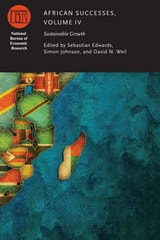
African Successes, Volume IV
Sustainable GrowthEdited by Sebastian Edwards, Simon Johnson, and David N. Weil
University of Chicago Press, 2016
The fourth volume in the series, African Successes: Sustainable Growth combines informative case studies with careful empirical analysis to consider the prospects for future African growth.
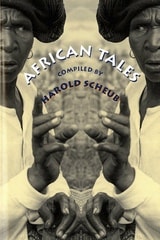
African Tales
Compiled by Harold Scheub
University of Wisconsin Press, 2005

African Theatre for Development
Edited by Kamal Salhi
Intellect Books, 1998
• reveals the dynamic position of the arts and culture in post-independent countries as well as changes in influences and audiences,
• shows African theatre to be about aesthetics and rituals, the sociological and the political, the anthropological and the historical,
• examines theatre's role as a performing art throughout the continent, representing ethnic identities and defining intercultural relationships,
• investigates African theatre's capacity to combine contemporary cultural issues into the whole artistic fabric of performing arts, and
• considers the variety of voices, forms and practices through which contemporary African intellectual circles are negotiating the forces of tradition and modernity.
The book provides an opportunity to discover contemporary material from experts, critics and artists from across the world. The contributions are in a language and style that allow them to be read either as aids to formal study or as elements of discussion to interest the general reader.

African Underclass
Urbanization, Crime & Colonial Order in Dar es Salaam 1919-61Andrew Burton
Ohio University Press, 2005
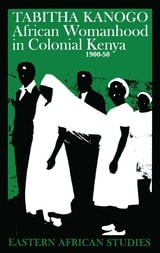
African Womanhood in Colonial Kenya, 1900–1950
1900-1950Tabitha Kanogo
Ohio University Press, 2000
This book explores the history of African womanhood in colonial Kenya. By focussing on key sociocultural institutions and practices around which the lives of women were organized, and on the protracted debates that surrounded these institutions and practices during the colonial period, it investigates the nature of indigenous, mission, and colonial control of African women.
The pertinent institutions and practices include the legal and cultural status of women, clitoridectomy, dowry, marriage, maternity and motherhood, and formal education. By following the effects of the all-pervasive ideological shifts that colonialism produced in the lives of women, the study investigates the diverse ways in which a woman’s personhood was enhanced, diminished, or placed in ambiguous predicaments by the consequences, intended and unintended, of colonial rule as administered by both the colonizers and the colonized. The study thus tries to historicize the reworkings of women’s lives under colonial rule. The transformations that resulted from these reworkings involved the negotiation and redefinition of the meaning of individual liberties and of women’s agency, along with the reconceptualization of kinship relations and of community.
These changes resulted in—and often resulted from—increased mobility for Kenyan women, who were enabled to cross physical, cultural, economic, social, and psychological frontiers that had been closed to them prior to colonial rule. The conclusion to which the experiences of women in colonial Kenya points again and again is that for these women, the exercise of individual agency, whether it was newly acquired or repeatedly thwarted, depended in large measure on the unleashing of forces over which no one involved had control. Over and over, women found opportunities to act amid the conflicting policies, unintended consequences, and inconsistent compromises that characterized colonial rule.
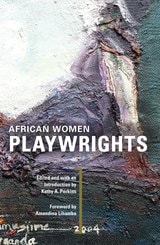
African Women Playwrights
Edited and with an Introduction by Kathy A. Perkins. Foreword by Amandina Lihamb
University of Illinois Press, 2008
This anthology consists of nine plays by a diverse group of women from throughout the African continent. The plays focus on a wide range of issues, such as cultural differences, AIDS, female circumcision, women's rights to higher education, racial and skin color identity, prostitution as a form of survival for young girls, and nonconformist women resisting old traditions. In addition to the plays themselves, this collection includes commentaries by the playwrights on their own plays, and editor Kathy A. Perkins provides additional commentary and a bibliography of published and unpublished plays by African women.
The playwrights featured are Ama Ata Aidoo, Violet R. Barungi, Tsitsi Dangarembga, Nathalie Etoke, Dania Gurira, Andiah Kisia, Sindiwe Magona, Malika Ndlovu (Lueen Conning), Juliana Okoh, and Nikkole Salter.
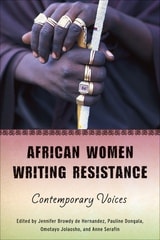
African Women Writing Resistance
An Anthology of Contemporary VoicesJennifer Browdy de Hernandez
University of Wisconsin Press, 2010
Contributors include internationally recognized authors and activists such as Wangari Maathai and Nawal El Saadawi, as well as a host of vibrant new voices from all over the African continent and from the African diaspora. Interdisciplinary in scope, this collection provides an excellent introduction to contemporary African women’s literature and highlights social issues that are particular to Africa but are also of worldwide concern. It is an essential reference for students of African studies, world literature, anthropology, cultural studies, postcolonial studies, and women’s studies.
Outstanding Book, selected by the Public Library Association
Best Books for High Schools, Best Books for Special Interests, and Best Books for Professional Use, selected by the American Association of School Libraries
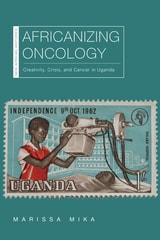
Africanizing Oncology
Creativity, Crisis, and Cancer in UgandaMarissa Mika
Ohio University Press, 2021
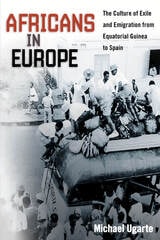
Africans in Europe
The Culture of Exile and Emigration from Equatorial Guinea to SpainMichael Ugarte
University of Illinois Press, 2013
Based on personal stories of people forced to leave and those who left of their own accord, Africans in Europe captures the nuanced realities and widespread impact of mobile populations. By focusing on the geographical, emotional, and intellectual dynamics of Equatorial Guinea's human movements, readers gain an inroad to "the consciousness of an age" and an understanding of the global realities that will define the cultural, economic, and political currents of the twenty-first century.
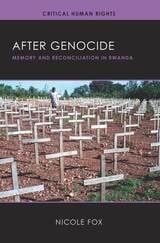
After Genocide
Memory and Reconciliation in RwandaNicole Fox
University of Wisconsin Press, 2023
In the wake of unthinkable atrocities, it is reasonable to ask how any population can move on from the experience of genocide. Simply remembering the past can, in the shadow of mass death, be retraumatizing. So how can such momentous events be memorialized in a way that is productive and even healing for survivors? Genocide memorials tell a story about the past, preserve evidence of the violence that occurred, and provide emotional support to survivors. But the goal of amplifying survivors’ voices can fade amid larger narratives entrenched in political motivations.
In After Genocide,Nicole Fox investigates the ways memorials can shape the experiences of survivors decades after mass violence has ended. She examines how memorializations can both heal and hurt, especially when they fail to represent all genders, ethnicities, and classes of those afflicted. Drawing on extensive interviews with Rwandans, Fox reveals their relationships to these spaces and uncovers those voices silenced by the dominant narrative—arguing that the erasure of such stories is an act of violence itself. The book probes the ongoing question of how to fit survivors in to the dominant narrative of healing and importantly demonstrates how memorials can shape possibilities for growth, national cohesion, reconciliation, and hope for the future.
After the TRC
Reflections on Truth and ReconciliationWilmot James
Ohio University Press, 2001
Has South Africa dealt effectively with the past, and is the country ready to face the future? What are the challenges facing both government and civil society in the years ahead? These and other questions are explored in this collection of essays by international and local commentators on the Truth and Reconciliation Commission.
A range of perspectives on whether the TRC met its objectives of truth and reconciliation is presented. The areas of particular contention-the payment of reparation, the granting of amnesty, and memorialization-are also examined.
Finally, the major challenges facing South Africa are identified, and ways of meeting these challenges and developing the assets of the nation are explored.
Contributors: Haribert Adam, Kanya Adam, Alex Boraine, Colin Bundy, Mary Burton, John de Gruchy, Richard Goldstone, Willem Heath, Wilmot James, Jeffrey Lever, Mahmood Mamdani, Gary Minkley, Njabulo Ndebele, Dumisa Ntsebeza, Kaizer Nyatsumba, Grace Naledi Pandor, Mamphela Ramphele, Ciraj Rassool, Albie Sachs, Patricia Valdez, Linda van de Vijver, Jan van Eck, Frederik Van Zyl Slabbert, Charles Villa-Vicencio, Francis Wilson, and Leslie Witz

After the Thrill Is Gone
A Decade of Post-Apartheid South Africa, Volume 103Grant Farred and Rita Barnard, eds.
Duke University Press, 0
In a range of politically inflected essays by philosophers, community activists, political scientists, sociologists, literary scholars, and cultural and postcolonial theorists—many of whom are diasporic or resident South Africans—this special issue of SAQ provides a critical look at the realities of black majority governance, at the African National Congress, and at the costs of ANC rule to the populace. One essay draws a condemning sketch of poverty and violence in the townships and the growing communities of squatters that continue despite the emergence of democracy. A philosophical piece contemplates the practice of human rights in a South African society grappling with the memory of apartheid abuses. The fiction and poetry in the collection explore sexual identity, including issues created by the AIDS epidemic, and offer critiques of government policies. Using comic strips, another contributor demonstrates the ability of South African popular culture to satirize the nation’s political status quo. Taken together, the essays in After the Thrill Is Gone open a sobering perspective on South Africa’s recent history, its present, and its future.
Contributors. Rita Barnard, Patrick Bond, Ashwin Desai, Emmanuel Chukwudi Eze, Grant Fared, Michiel Heyns, Shaun Irlam, Neil Lazarus, Michael MacDonald, Zine Magubane, Richard Pithouse, Lesego Rampolokeng, Adam Sitze
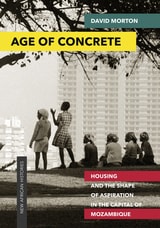
Age of Concrete
Housing and the Shape of Aspiration in the Capital of MozambiqueDavid Morton
Ohio University Press, 2019
Age of Concrete is a history of the making of houses and homes in the subúrbios of Maputo (Lourenço Marques), Mozambique, from the late 1940s to the present. Often dismissed as undifferentiated, ahistorical “slums,” these neighborhoods are in fact an open-air archive that reveals some of people’s highest aspirations. At first people built in reeds. Then they built in wood and zinc panels. And finally, even when it was illegal, they risked building in concrete block, making permanent homes in a place where their presence was often excruciatingly precarious.
Unlike many histories of the built environment in African cities, Age of Concrete focuses on ordinary homebuilders and dwellers. David Morton thus models a different way of thinking about urban politics during the era of decolonization, when one of the central dramas was the construction of the urban stage itself. It shaped how people related not only to each other but also to the colonial state and later to the independent state as it stumbled into being.
Original, deeply researched, and beautifully composed, this book speaks in innovative ways to scholarship on urban history, colonialism and decolonization, and the postcolonial state. Replete with rare photographs and other materials from private collections, Age of Concrete establishes Morton as one of a handful of scholars breaking new ground on how we understand Africa’s cities.
Agency in African History
Lauren V. Jarvis, Rachel M. Petrocelli, and Wallace Teska
Ohio University Press, 2027
Agency in African History is the first edited volume of African history to offer sustained engagement with the idea of agency. Agency is ubiquitous and invisible, contested and yet foundational to the field. These contradictory qualities contribute to the polarization of the term and a stalemate in debates surrounding its use. This volume proposes a way forward by breaking agency down into parts, disaggregating the terms and concepts often associated with agency, and reckoning with historians’ uses and misuses of the term. The book explores how agency has shaped the field of African history and the historical discipline more broadly. Tracing the concept back to the contributions of Black abolitionists and intellectuals in the eighteenth century, the volume challenges popular genealogies of agency in Western academe. Simultaneously, it suggests productive future possibilities for the framework.
The volume contributes to lively debates on the concept of agency in adjoining fields. Recent works in cultural theory, including Naminata Diabate’s Naked Agency (Duke University Press, 2020) and Olúf?´mi Táíwò’s Against Decolonisation (Hurst, 2022), have reinvigorated discussions within African studies about the applicability of agency. In the broader historical discipline, special issues of the Journal of Social History and the American Historical Review (both 2023) have centered on the problems and promises of agency as a historiographical framework, mostly from a Euro-American perspective. This volume makes an urgent intervention in these important conversations, arguing that historians of Africa must both adapt to new scholarly insights and contribute their unique perspectives from a field typically ignored in the formulation of world-historical concepts.
Agency in African History is addressed to historians of Africa and to a broader interdisciplinary audience interested in agency. This interdisciplinary audience includes scholars of African studies—cultural theorists, political scientists, anthropologists, and others—as well as historians of world regions beyond Africa. Individual contributions cover the seventeenth century to the present day and range in subject matter from histories of decolonization and international relations to the Atlantic slave trade, art history, urban studies, sports studies, and cultural theory.
Contributors
Mathew Ayodele
Felicitas Becker
Emily S. Burrill
Robin P. Chapdelaine
Kate Cowcher
Naminata Diabate
Walter Hawthorne
Lauren V. Jarvis
Rachel M. Petrocelli
Ian Read
Jodie Yuzhou Sun
Wallace Teska
Chepchirchir Tirop
Aid to Africa
So Much To Do, So Little DoneCarol Lancaster
University of Chicago Press, 1999
This balanced but tough-minded analysis does not reject the potential usefulness of foreign aid but does offer recommendations for fundamental changes in how governments and multilateral aid agencies can operate more effectively.