Results by title
1563 books match the query 'African American & Black Studies' and 135 start with a
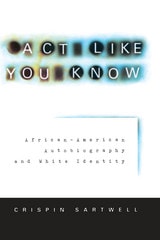
Act Like You Know
African-American Autobiography and White IdentityCrispin Sartwell
University of Chicago Press, 1998
There is, Sartwell contends, a fundamental elusiveness to that identity. Whiteness defines itself as normative, as a neutral form of the human condition, marking all other forms of identity as "racial" or "ethnic" deviations. Invisible to itself, white identity seeks to define its essence over and against those other identities, in effect defining itself through opposition and oppression. By maintaining fictions of black licentiousness, violence, and corruption, white identity is able to cast itself as humane, benevolent, and pure; the stereotype fabricates not only the oppressed but the oppressor as well. Sartwell argues that African-American autobiography perceives white identity from a particular and unique vantage point; one that is knowledgeable and intimate, yet fundamentally removed from the white world and thus unencumbered by its obfuscating claims to normativity.
Throughout this provocative work, Sartwell steadfastly recognizes the many ways in which he too is implicated in the formulation and perpetuation of racial attitudes and discourse. In Act Like You Know, he challenges both himself and others to take a long, hard look in the mirror of African-American autobiography, and to find there, in the light of those narratives, the visible features of white identity.
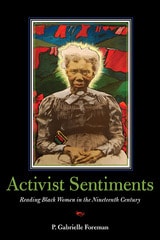
Activist Sentiments
Reading Black Women in the Nineteenth CenturyP. Gabrielle Foreman
University of Illinois Press, 2009
Activist Sentiments takes as its subject women who in fewer than fifty years moved from near literary invisibility to prolific productivity. Grounded in primary research and paying close attention to the historical archive, this book offers against-the-grain readings of the literary and activist work of Harriet Jacobs, Harriet Wilson, Frances E. W. Harper, Victoria Earle Matthews and Amelia E. Johnson.
Part literary criticism and part cultural history, Activist Sentiments examines nineteenth-century social, political, and representational literacies and reading practices. P. Gabrielle Foreman reveals how Black women's complex and confrontational commentary–often expressed directly in their journalistic prose and organizational involvement--emerges in their sentimental, and simultaneously political, literary production.

Adolescence in a Moroccan Town
Davis, Susan S
Rutgers University Press, 1999
Rashid was eighteen in 1982, when he helped us understand the feelings and activities of young people in his neighborhood, no longer a boy but not quite a man. He liked to talk about how his feelings and his understanding had grown from the time described, when he was just a kid. He recalled his dreams and plans in one of the hundreds of conversations we had about adolescence in this Moroccan town. His generation of youth in "Zawiya," on the western edge of North Africa, are the subject of this book.

Adopted Territory
Transnational Korean Adoptees and the Politics of BelongingEleana J. Kim
Duke University Press, 2010
Adventures in Shondaland
Identity Politics and the Power of RepresentationGriffin, Rachel Alicia
Rutgers University Press, 2018
Shonda Rhimes is one of the most powerful players in contemporary American network television. Beginning with her break-out hit series Grey’s Anatomy, she has successfully debuted Private Practice, Scandal, How to Get Away with Murder, The Catch, For The People, and Station 19. Rhimes’s work is attentive to identity politics, “post-” identity politics, power, and representation, addressing innumerable societal issues. Rhimes intentionally addresses these issues with diverse characters and story lines that center, for example, on interracial friendships and relationships, LGBTIQ relationships and parenting, the impact of disability on familial and work dynamics, and complex representations of womanhood. This volume serves as a means to theorize Rhimes’s contributions and influence by inspiring provocative conversations about television as a deeply politicized institution and exploring how Rhimes fits into the implications of twenty-first century television.

Affirmative Action in Medicine
Improving Health Care for EveryoneJames L. Curtis, M.D.
University of Michigan Press, 2003
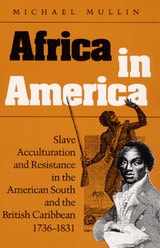
Africa in America
Slave Acculturation and Resistance in the American South and the British Caribbean, 1736-1831Michael Mullin
University of Illinois Press, 1992
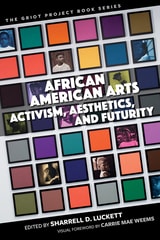
African American Arts
Activism, Aesthetics, and Futurityweems, carrie mae
Bucknell University Press, 2020
Contributors: Carrie Mae Weems, Carmen Gillespie, Rikki Byrd, Amber Lauren Johnson, Doria E. Charlson, Florencia V. Cornet, Daniel McNeil, Lucy Caplan, Genevieve Hyacinthe, Sammantha McCalla, Nettrice R. Gaskins, Abby Dobson, J. Michael Kinsey, Shondrika Moss-Bouldin, Julie B. Johnson, Sharrell D. Luckett, Jasmine Eileen Coles, Tawnya Pettiford-Wates, Rickerby Hinds.
Published by Bucknell University Press. Distributed worldwide by Rutgers University Press.
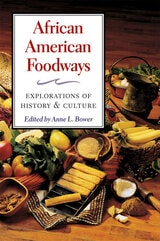
African American Foodways
Explorations of History and CultureEdited by Anne L. Bower
University of Illinois Press, 2006
Ranging from seventeenth-century West African fare to contemporary fusion dishes using soul food ingredients, the essays in this book provide an introduction to many aspects of African American foodways and an antidote to popular misconceptions about soul food. Examining the combination of African, Caribbean, and South American traditions, the volume's contributors offer lively insights from history, literature, sociology, anthropology, and African American studies to demonstrate how food's material and symbolic values have contributed to African Americans' identity for centuries. Individual chapters examine how African foodways survived the passage into slavery, cultural meanings associated with African American foodways, and the contents of African American cookbooks, both early and recent.
Contributors are Anne L. Bower, Robert L. Hall, William C. Whit, Psyche Williams-Forson, Doris Witt, Anne Yentsch, Rafia Zafar.

African American Fraternal Associations and the History of Civil Society in the United States, Volume 28
Katherine A. Lynch, ed.
Duke University Press, 0
The contributors construct a historical portrait of black fraternal orders during the nineteenth and twentieth centuries. They argue that African Americans were more likely than whites to form fraternal orders and to sustain them, using them to guard members against unemployment and other misfortunes. They examine the ritual life of fraternal organizations, paying particular attention to rites of initiation and to the values they reflected about collective identity, gender relations, equality, and collective action. Finally, they show how social networks that black fraternal organizations fostered led to successful legal battles for the right to assemble and to the later civil rights movement of the twentieth century.
Contributors. Bayliss J. Camp, Marshall Ganz, Orit Kent, Ariane Liazos, Jennifer Lynn Oser, Theda Skocpol, Joe W. Trotter
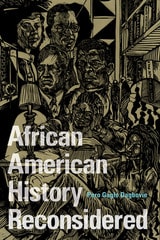
African American History Reconsidered
Pero Gaglo Dagbovie
University of Illinois Press, 2010
This groundbreaking volume establishes new perspectives on black history--its scholarship and pedagogy, scholars and interpreters, and evolution as a profession.
Pero Gaglo Dagbovie discusses a wide range of issues and themes for understanding and analyzing African American history, the twentieth century black historical enterprise, and the teaching of African American history for the twenty-first century. Additional topics include the hip-hop generation's relationship to and interpretations of African American history; past, present, and future approaches to the subject; and the social construct of knowledge in African American historiography. An examination of definitions of black history from W. E. B. Du Bois's The Souls of Black Folk and a survey of early black women historians lend further dimension and authenticity to the volume. A bold contribution to the growing fields of African American historiography and the philosophy of black history, African American History Reconsidered offers numerous analytical frameworks for understanding and delving into a variety of dimensions of the African American historical experience.
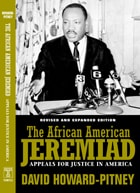
African American Jeremiad Rev
Appeals For Justice In AmericaDavid Howard-Pitney
Temple University Press, 2005
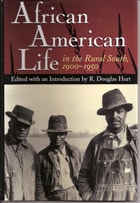
African American Life in the Rural South, 1900-1950
Edited with an introduction by R. Douglas Hurt
University of Missouri Press, 2003
African American Organized Crime
A Social HistorySchatzberg, Rufus
Rutgers University Press, 1997
While stories of organized crime most often dwell on groups like the Mafia and Chinese Triad or Tongs, African Americans also have a long history of organized crime. Why have scholars and journalists paid so little attention to African American organized crime? What can a history of these criminal networks teach us about the social, political, and economic challenges that face African Americans today? What is specific to African American organized crime, and how do these networks differ from the criminal organizations of other racial and ethnic groups? How can a historical study of African American organized crime enrich our understanding of all criminal activity?
Rufus Schatzberg and Robert Kelly take us through almost a century of African American organized crime. Chapters focus on the numbers gambling that took place in New York City from 1920 to 1940, the criminal groups that operated in ghettos from the 1940s to the 1970s, and the gang activities that began in the 1970s and continues today. While providing a compelling analysis of African American organized crime, the authors also challenge existing stereotypes of African Americans and demonstrate the importance of studying any criminal activity within its historical and social context.
African American Perspectives on Political Science
edited by Wilbur C. Rich, foreword by Charles V. Hamilton
Temple University Press, 2007
African American Political Thought
A Collected HistoryEdited by Melvin L. Rogers and Jack Turner
University of Chicago Press, 2021
While African American political thought is inextricable from the historical movement of American political thought, this volume stresses the individuality of Black thinkers, the transnational and diasporic consciousness, and how individual speakers and writers draw on various traditions simultaneously to broaden our conception of African American political ideas. This landmark volume gives us the opportunity to tap into the myriad and nuanced political theories central to Black life. In doing so, African American Political Thought: A Collected History transforms how we understand the past and future of political thinking in the West.
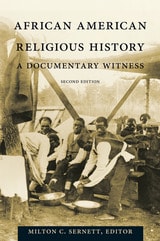
African American Religious History
A Documentary WitnessMilton C. Sernett, ed.
Duke University Press, 2000
Originally published in 1985, this expanded second edition includes new sources on women, African missions, and the Great Migration. Milton C. Sernett provides a general introduction as well as historical context and comment for each document.
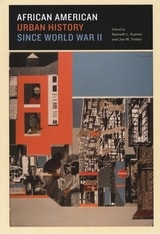
African American Urban History since World War II
Edited by Kenneth L. Kusmer and Joe W. Trotter
University of Chicago Press, 2009
Historians have devoted surprisingly little attention to African American urban history ofthe postwar period, especially compared with earlier decades. Correcting this imbalance, African American Urban History since World War II features an exciting mix of seasoned scholars and fresh new voices whose combined efforts provide the first comprehensive assessment of this important subject.
The first of this volume’s five groundbreaking sections focuses on black migration and Latino immigration, examining tensions and alliances that emerged between African Americans and other groups. Exploring the challenges of residential segregation and deindustrialization, later sections tackle such topics as the real estate industry’s discriminatory practices, the movement of middle-class blacks to the suburbs, and the influence of black urban activists on national employment and social welfare policies. Another group of contributors examines these themes through the lens of gender, chronicling deindustrialization’s disproportionate impact on women and women’s leading roles in movements for social change. Concluding with a set of essays on black culture and consumption, this volume fully realizes its goal of linking local transformations with the national and global processes that affect urban class and race relations.
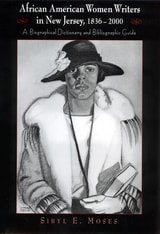
African American Women Writers in New Jersey, 1836-2000
A Biographical Dictionary and Bibliographic GuideMoses, Sibyl E
Rutgers University Press, 2006
Selected as a "New Jersey Notable Book for 1995-2005" by the New Jersey Center for the Book
Awarded the 2004 Certificate of Commendation by the American Association for State and Local History
African American Women Writers in New Jersey, 1836-2000 is the first and only reference book to identify and document the lives, intellectual contributions, and publications of over one hundred African American women writers in the Garden State from 1836 through 2000. Many, such as Jessie Redmon Fauset, Alice Perry Johnson, Sharon Bell Mathis, Ntozake Shange, Claudia C. Tate, Ruby Ora Williams, and Marion Thompson Wright, were born in the state. Others, like Amina Baraka, E. Alma Flagg, Helen Jackson Lee, Gertrude Williams Pitts, and Dorothy Porter Wesley, although not born there, were residents of New Jersey for more than fifteen years, and made significant contributions during that time.
This volume contains biographical and bibliographical information for each author. There are photographs of the writers as well as citations for their published pamphlets, books, reports, and articles. Sibyl E. Moses has enhanced the text with characteristic excerpts from the poetry and prose of selected writers. The two appendixes highlight the distribution of African American women writers in New Jersey both by city or town, and by genre.
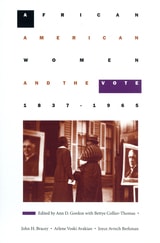
African American Women and the Vote, 1837–1965
Ann D. Gordon
University of Massachusetts Press, 1997
Written by leading scholars of African American and women's history, the essays in this volume seek to reconceptualize the political history of black women in the United States by placing them “at the center of our thinking.” The book explores how slavery, racial discrimination, and gender shaped the goals that African American women set for themselves, their families, and their race and looks at the political tools at their disposal. By identifying key turning points for black women, the essays create a new chronology and a new paradigm for historical analysis. The chronology begins in 1837 with the interracial meeting of antislavery women in New York City and concludes with the civil rights movement of the 1960s.
The contributors focus on specific examples of women pursuing a dual ambition: to gain full civil and political rights and to improve the social conditions of African Americans. Together, the essays challenge us to rethink common generalizations that govern much of our historical thinking about the experience of African American women.
Contributors include Bettina Aptheker, Elsa Barkley Brown, Willi Coleman, Gerald R. Gill, Ann D. Gordon, Evelyn Brooks Higginbotham, Cynthia Neverdon-Morton, Martha Prescod Norman, Janice Sumler-Edmond, Rosalyn Terborg-Penn, and Bettye Collier-Thomas.
African American Women in Congress
Gill, LaVerne McCain
Rutgers University Press, 1997
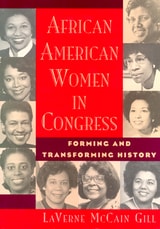
African American Women in Congress details the life and career histories of Shirley Chisholm, Barbara Jordan, Yvonne Burke, Cardiss Collins, Katie Hall, Eleanor Holmes Norton, Maxine Waters, Barbara-Rose Collins, Carol Moseley-Braun, Corinne Brown, Carrie Meek, Cynthia McKinney, Eva Clayton, Eddie Bernice Johnson, and Sheila Jackson-Lee. Each profile contains a picture of its subject, interview material, and resumés. Arranged chronologically, the book introduces the reader to issues of vital importance to the Black community—Reconstruction, enfranchisement, lynchings and harassment, civil rights struggles, the founding of advocacy groups, the power of the Congressional Black Caucus, the creation of majority minority districts that allowed greater representation in Congress, the struggle of largely Black Washington, D.C., for representation, and the recent dismantling of past gains by a Republican majority. Gill also describes the uphill battles for social justice and the rights of women that the fifteen women had to wage even within their own political parties, political organizations, and districts.
For general readers, high school and college students, and anyone interested in the political process, this book is illuminating and inspiring reading.
African Americans and Jews in the Twentieth Century
Studies in Convergence and ConflictEdited by V.P. Franklin, Nancy L. Grant, Harold M. Kletnick, & Genna Rae McNeil
University of Missouri Press, 1998
In 1993 distinguished historian Nancy L. Grant organized "Blacks and Jews: An American Historical Perspective," a conference held at Washington University in St. Louis and dedicated to the exploration of Black-Jewish relations in twentieth-century America. Featuring presentations by historians, sociologists, and political scientists, this conference reflected Grant's devotion to scholarship on multicultural relations and the continuing struggle for racial equality in the United States. After Grant's untimely death in 1995, V. P. Franklin and the other contributors completed the work of readying these essays for publication with the assistance of the coeditors. African Americans and Jews in the Twentieth Century is the culmination of the innovative research and ideas presented at the conference.
In the long struggle to bring social justice to American society, Blacks and Jews have often been close allies. In both the past and the present, however, there has also been serious conflict and competition between the groups in social, economic, and political spheres.
Focusing on the complexity of the relationships between Blacks and Jews in America, these essays examine the convergence and conflict that have characterized Black-Jewish interactions over the past century. African Americans and Jews in the Twentieth Century provides an intellectual foundation for continued dialogue and future cooperative efforts to improve social justice in this society and will be an invaluable resource for the study of race relations in the United States in the twentieth century.
African Americans in U.S. Foreign Policy
From the Era of Frederick Douglass to the Age of ObamaEdited by Linda Heywood, Allison Blakely, Charles Stith, and Joshua C. Yesnowitz
University of Illinois Press, 2015
Groundbreaking and critical, African Americans in U.S. Foreign Policy expands on the scope and themes of recent collections to offer the most up-to-date scholarship to students in a range of disciplines, including U.S. and African American history, Africana studies, political science, and American studies.
African Americans in the Furniture City
The Struggle for Civil Rights in Grand RapidsRandal Maurice Jelks
University of Illinois Press, 2006
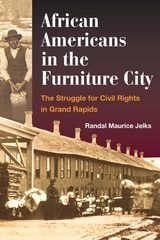
Focusing on the intersection of African Americans' nineteenth-century cultural values and the changing social and political conditions in the first half of the twentieth century, Jelks pays particularly close attention to the religious community's influence during their struggle toward a respectable social identity and fair treatment under the law. He explores how these competing values defined the community's politics as it struggled to expand its freedoms and change its status as a subjugated racial minority.
African Intellectual Heritage
Molefi Asante
Temple University Press, 1996
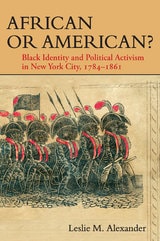
African or American?
Black Identity and Political Activism in New York City, 1784-1861Leslie M. ALexander
University of Illinois Press, 2012
During the early national and antebellum eras, black leaders in New York City confronted the tenuous nature of Northern emancipation. Despite the hope of freedom, black New Yorkers faced a series of sociopolitical issues including the persistence of Southern slavery, the threat of forced removal, racial violence, and the denial of American citizenship. Even efforts to create community space within the urban landscape, such as the African Burial Ground and Seneca Village, were eventually demolished to make way for the city's rapid development. In this illuminating history, Leslie M. Alexander chronicles the growth and development of black activism in New York from the formation of the first black organization, the African Society, in 1784 to the eve of the Civil War in 1861. In this critical period, black activists sought to formulate an effective response to their unequal freedom. Examining black newspapers, speeches, and organizational records, this study documents the creation of mutual relief, religious, and political associations, which black men and women infused with African cultural traditions and values.
As Alexander reveals, conflicts over early black political strategy foreshadowed critical ideological struggles that would bedevil the black leadership for generations to come. Initially, black leaders advocated racial uplift through a sense of communalism and connection to their African heritage. Yet by the antebellum era, black activists struggled to reconcile their African identity with a growing desire to gain American citizenship. Ultimately, this battle resulted in competing agendas; while some leaders argued that the black community should dedicate themselves to moral improvement and American citizenship, others began to consider emigrating to Africa or Haiti. In the end, the black leadership resolved to assert an American identity and to expand their mission for full equality and citizenship in the United States. This decision marked a crucial turning point in black political strategy, for it signaled a new phase in the quest for racial advancement and fostered the creation of a nascent Black Nationalism.
African-American Mayors
Race, Politics, and the American CityEdited by David R. Colburn and Jeffrey S. Adler
University of Illinois Press, 2001
Once in office, African-American mayors faced vexing challenges. In large and small cities from the Sunbelt to the Rustbelt, black mayors assumed office during economic downturns and confronted the intractable problems of decaying inner cities, white flight, a dwindling tax base, violent crime, and diminishing federal support for social programs. Many encountered hostility from their own parties, city councils, and police departments; others worked against long-established power structures dominated by local business owners or politicians. Still others, while trying to respond to multiple demands from a diverse constituency, were viewed as traitors by blacks expecting special attention from a leader of their own race. All struggled with the contradictory mandate of meeting the increasing needs of poor inner-city residents while keeping white businesses from fleeing to the suburbs.
This is the first comprehensive treatment of the complex phenomenon of African-American mayors in the nation's major urban centers. Offering a diverse portrait of leadership, conflict, and almost insurmountable obstacles, this volume assesses the political alliances that brought black mayors to office as well as their accomplishments--notably, increased minority hiring and funding for minority businesses--and the challenges that marked their careers. Mayors profiled include Carl B. Stokes (Cleveland), Richard G. Hatcher (Gary), "Dutch" Morial (New Orleans), Harold Washington (Chicago), Tom Bradley (Los Angeles), Marion Barry (Washington, D.C.), David Dinkins (New York City), Coleman Young (Detroit), and a succession of black mayors in Atlanta (Maynard Jackson, Andrew Young, and Bill Campbell).Probing the elusive economic dimension of black power, African-American Mayors demonstrates how the same circumstances that set the stage for the victories of black mayors exaggerated the obstacles they faced.

African-American Poetry of the Nineteenth Century
AN ANTHOLOGYEdited by Joan R. Sherman
University of Illinois Press, 1992
from first editions and are annotated in detail.
Africana Studies
Theoretical FuturesEdited by Grant Farred
Temple University Press, 2022
As Africana Studies celebrates its fiftieth anniversary throughout the United States, this invigor ating collection presents possibilities for the future of the discipline’s theoretical paths. The essays in Africana Studies focus on philosophy, science, and technology; poetry, literature, and music; the crisis of the state; issues of colonialism, globalization, and neoliberalism; and the ever-expanding diaspora. The editor and contributors to this volume open exciting avenues for new narratives, philosophies, vision, and scale in this critical field of study—formed during the 1960s around issues of racial injustice in America—to show what Africana Studies is already in the process of becoming.
Africana Studies recognizes how the discipline has been shaped, changing over the decades as scholars have opened new modes of theoretical engagement such as addressing issues of gender and sexuality, politics, and cultural studies. The essays debate and (re)consider black and diasporic life to sustain, provoke, and cultivate Africana Studies as a singular yet polyvalent mode of thinking.
Contributors: Akin Adeṣọkan, John E. Drabinski, Zeyad El Nabolsy, Pierre-Philippe Fraiture, Kasareka Kavwahirehi, Gregory Pardlo, Radwa Saad, Sarah Then Bergh, and the editor

Africana Thought, Volume 108
Grant Farred, ed.
Duke University Press, 0
One essay reveals the intricate richness of Africana thought, moving through psychoanalysis, folktales, Western metaphysics, and a critique of the political. Another essay offers a cautionary tale about the prospects for black life in the United States, even in the wake of Barack Obama’s historic political victory. A third essay argues that a “dead zone”—a place where black lives are lost, where hopes are dashed, where history has failed the black subject—exists between the black elite and the disenfranchised black underclass. Still another essay addresses how the discourse about the political has triumphed over everything else in considerations of colonialism and its aftermath and proposes that a turn to culture might offer a new thinking of black futures.
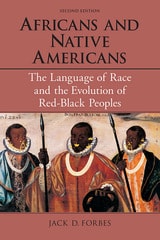
Africans and Native Americans
The Language of Race and the Evolution of Red-Black PeoplesJack D. Forbes
University of Illinois Press, 1993
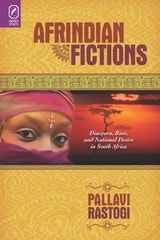
Afrindian Fictions
Diaspora, Race, and National Desire in South AfricaPallavi Rastogi
The Ohio State University Press, 2008
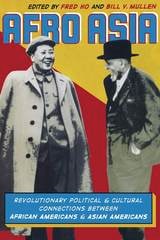
Afro Asia
Revolutionary Political and Cultural Connections between African Americans and Asian AmericansFred Ho and Bill V. Mullen, eds.
Duke University Press, 2008
Afro Asia opens with analyses of historical connections between people of African and of Asian descent. An account of nineteenth-century Chinese laborers who fought against slavery and colonialism in Cuba appears alongside an exploration of African Americans’ reactions to and experiences of the Korean “conflict.” Contributors examine the fertile period of Afro-Asian exchange that began around the time of the 1955 Bandung Conference, the first meeting of leaders from Asian and African nations in the postcolonial era. One assesses the relationship of two important 1960s Asian American activists to Malcolm X and the Black Panthers. Mao Ze Dong’s 1963 and 1968 statements in support of black liberation are juxtaposed with an overview of the influence of Maoism on African American leftists.
Turning to the arts, Ishmael Reed provides a brief account of how he met and helped several Asian American writers. A Vietnamese American spoken-word artist describes the impact of black hip-hop culture on working-class urban Asian American youth. Fred Ho interviews Bill Cole, an African American jazz musician who plays Asian double-reed instruments. This pioneering collection closes with an array of creative writing, including poetry, memoir, and a dialogue about identity and friendship that two writers, one Japanese American and the other African American, have performed around the United States.
Contributors: Betsy Esch, Diane C. Fujino, royal hartigan, Kim Hewitt, Cheryl Higashida, Fred Ho,
Everett Hoagland, Robin D. G. Kelley, Bill V. Mullen, David Mura, Ishle Park, Alexs Pate, Thien-bao Thuc Phi, Ishmael Reed, Kalamu Ya Salaam, Maya Almachar Santos, JoYin C. Shih, Ron Wheeler, Daniel Widener, Lisa Yun
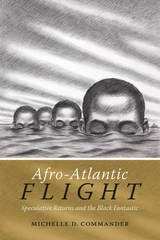
Afro-Atlantic Flight
Speculative Returns and the Black FantasticMichelle D. Commander
Duke University Press, 2017
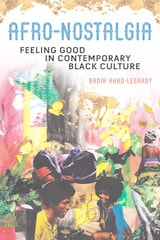
Afro-Nostalgia
Feeling Good in Contemporary Black CultureBadia Ahad-Legardy
University of Illinois Press, 2021
Badia Ahad-Legardy mines literature, visual culture, performance, and culinary arts to form an archive of black historical joy for use by the African-descended. Her analysis reveals how contemporary black artists find more than trauma and subjugation within the historical past. Drawing on contemporary African American culture and recent psychological studies, she reveals nostalgia’s capacity to produce positive emotions. Afro-nostalgia emerges as an expression of black romantic recollection that creates and inspires good feelings even within our darkest moments.
Original and provocative, Afro-Nostalgia offers black historical pleasure as a remedy to contend with the disillusionment of the present and the traumas of the past.
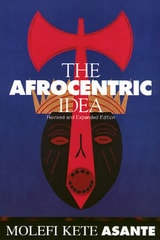
Afrocentric Idea Revised
Molefi Asante
Temple University Press, 1998

Afrofuturism, Volume 20
Alondra Nelson
Duke University Press, 0
The collection includes a reflection on the ideologies of race created by cultural critics in their analyses of change wrought by the information age; an interview with Nalo Hopkinson, the award-winning novelist and author of speculative fiction novels Midnight Robber and Brown Girl in the Ring, who fuses futuristic thinking with Caribbean traditions; an essay on how contemporary R&B music presents African American reflections on the technologies of everyday life; and an article examining early interventions by the black community to carve out a distinct niche in cyberspace.
Contributors. Ron Eglash, Anna Everett, Tana Hargest, Nalo Hopkinson, Tracie Morris, Alondra Nelson, Kalí Tal, Fatimah Tuggar, Alexander G. Weheliye
Alondra Nelson is a Ph.D. candidate in the American Studies Program at New York University and is the Ann Plato Fellow at Trinity College. She will begin teaching in the African American Studies and Sociology Departments at Yale University in the fall of 2002.
Contributors. Ron Eglash, Anna Everett, Tana Hargest, Nalo Hopkinson, Alondra Nelson, Tracie Morris, Kali Tal, Fatimah Tuggar, Alexander G. Weheliye
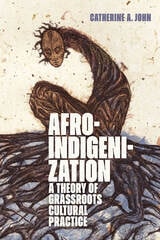
Afroindigenization
A Theory of Grassroots Cultural PracticeCatherine A. John
Duke University Press, 2026

Afromodernism
Six Turning PointsKobena Mercer
Duke University Press, 2027
After #Ferguson, After #Baltimore
The Challenge of Black Death and Black Life for Black Political ThoughtBarnor Hesse and Juliet Hooker, special issue editors
Duke University Press, 2017
Topics in this issue include the contemporary politics of black rage; the significance of the Ferguson and Baltimore black protests in circumventing formal electoral politics; the ways in which centering the dead black male body draws attention away from other daily forms of racial and gender violence that particularly affect black women; the problem of white nationalisms motivated by a sense of white grievance; the international and decolonial dimensions of black politics; and the relation between white sovereignty and black life politics.
Contributors. Barnor Hesse, Juliet Hooker, Minkah Makalani, John Márquez, Junaid Rana, Deborah Thompson, Shatema Threadcraft
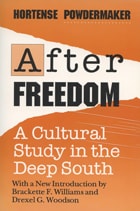
After Freedom
A Cultural Study In The Deep SouthHortense Powdermaker
University of Wisconsin Press, 1993
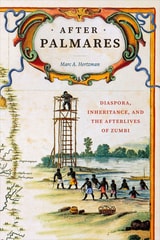
After Palmares
Diaspora, Inheritance, and the Afterlives of ZumbiMarc A. Hertzman
Duke University Press, 2024
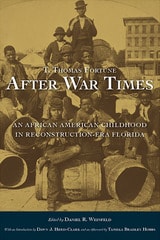
After War Times
An African American Childhood in Reconstruction-Era FloridaT. Thomas Fortune
University of Alabama Press, 2014
A firsthand account of African American childhood, freedom, and resilience in Reconstruction-era Florida.
T. Thomas Fortune was a leading African American publisher, editor, and journalist of the late nineteenth and early twentieth centuries, who was born a slave in antebellum Florida, lived through emancipation, and rose to become a literary lion of his generation. In T. Thomas Fortune's “After War Times,” Daniel R. Weinfeld brings together a series of twenty-three autobiographical articles Fortune wrote about his formative childhood during Reconstruction and subsequent move to Washington, DC.
By 1890, Fortune had founded a predecessor organization to the National Association for the Advancement of Colored People, known as the National Afro-American League, but his voice found its most powerful expression and influence in poetry, prose, and journalism. It was as a journalist that Fortune stirred national controversy by issuing a passionate appeal to African American southerners: “I propose to start a crusade,” he proclaimed in June 1900, “to have the negroes of the South leave that section and to come north or go elsewhere. It is useless to remain in the South and cry Peace! Peace! When there is no peace.” The movement he helped propel became known as “the Great Migration.”
By focusing on Thomas’s ruminations about his disillusion with post–Civil War Florida, Weinfeld highlights the sources of Fortune’s deep disenchantment with the South, which intensified when the Reconstruction order gave way to Jim Crow–era racial discrimination and violence. Decades after he left the South, Fortune’s vivid memories of incidents and personalities in his past informed his political opinions and writings. Scholars and readers interested in Southern history in the aftermath of the Civil War, especially the experiences of African Americans, will find much of interest in this vital collection of primary writings.
Against the Closet
Black Political Longing and the Erotics of RaceAliyyah I. Abdur-Rahman
Duke University Press, 2012
Abdur-Rahman brings black feminist, psychoanalytic, critical race, and poststructuralist theories to bear on literary genres from slave narratives to science fiction. Analyzing works by African American writers, including Frederick Douglass, Pauline Hopkins, Harriet Jacobs, James Baldwin, and Octavia Butler, she shows how literary representations of transgressive sexuality expressed the longings of African Americans for individual and collective freedom. Abdur-Rahman contends that those representations were fundamental to the development of African American forms of literary expression and modes of political intervention and cultural self-fashioning.
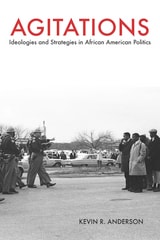
Agitations
Ideologies and Strategies in African American PoliticsKevin R. Anderson
University of Arkansas Press, 2010
Though the activities of the National Association for the Advancement of Colored People (NAACP), the Southern Christian Leadership Conference (SCLC), and the Student Nonviolent Coordinating Committee (SNCC) were unified in their common idea of resistance to oppression, these groups fought their battles on multiple fronts. The NAACP filed lawsuits and aggressively lobbied Congress and state legislatures, while Martin Luther King Jr. and SCLC challenged the racial status quo through nonviolent mass action, and the SNCC focused on community empowerment activities. In Agitations, Kevin Anderson studies these various activities in order to trace the ideological foundations of these groups and to understand how diversity among African Americans created multiple political strategies.
Agitations goes beyond the traditionally acknowledged divide between integrationist and accommodationist wings of African American politics to explore the diverse fundamental ideologies and strategic outcomes among African American activists that still define, influence, and complicate political life today.
Ain't But a Few of Us
Black Music Writers Tell Their StoryWillard Jenkins, editor
Duke University Press, 2022
Contributors
Eric Arnold, Bridget Arnwine, Angelika Beener, Playthell Benjamin, Herb Boyd, Bill Brower, Jo Ann Cheatham, Karen Chilton, Janine Coveney, Marc Crawford, Stanley Crouch, Anthony Dean-Harris, Jordannah Elizabeth, Lofton Emenari III, Bill Francis, Barbara Gardner, Farah Jasmine Griffin, Jim Harrison, Eugene Holley Jr., Haybert Houston, Robin James, Willard Jenkins, Martin Johnson, LeRoi Jones, Robin D. G. Kelley, Tammy Kernodle, Steve Monroe, Rahsaan Clark Morris, John Murph, Herbie Nichols, Don Palmer, Bill Quinn, Guthrie P. Ramsey Jr., Ron Scott, Gene Seymour, Archie Shepp, Wayne Shorter, A. B. Spellman, Rex Stewart, Greg Tate, Billy Taylor, Greg Thomas, Robin Washington, Ron Welburn, Hollie West, K. Leander Williams, Ron Wynn

Ain't I an Anthropologist
Zora Neale Hurston Beyond the Literary IconJennifer L. Freeman Marshall
University of Illinois Press, 2023
Perceptive and original, Ain’t I an Anthropologist is an overdue reassessment of Zora Neale Hurston’s place in American cultural and intellectual life.
AlabamaNorth
African-American Migrants, Community, and Working-Class Activism in Cleveland, 1915-45Kimberley L. Phillips
University of Illinois Press, 1999
Langston Hughes called it "a great dark tide from the South": the unprecedented influx of blacks into Cleveland that gave the city the nickname "Alabama North." Kimberley L. Phillips reveals the breadth of working class black experiences and activities in Cleveland and the extent to which these were shaped by traditions and values brought from the South.
Migrants' moves north established complex networks of kin and friends and infused Cleveland with a highly visible southern African American culture. Phillips examines the variety of black fraternal, benevolent, social, and church-based organizations that working class migrants created and demonstrates how these groups prepared the way for new forms of individual and collective activism in workplaces and the city. Giving special consideration to the experiences of working class black women, AlabamaNorth reveals how migrants' expressions of tradition and community gave them a new consciousness of themselves as organized workers and created the underpinning for new forms of black labor activism.
Albert Murray and the Aesthetic Imagination of a Nation
Edited by Barbara A. Baker
University of Alabama Press, 2010
Reimagining America Through the Blues, Jazz, and the Cultural Vision of Albert Murray.
This collection consists of essays written by prominent African American literature, jazz, and Albert Murray scholars, reminiscences from Murray protégés and associates, and interviews with Murray himself. It illustrates Murray’s place as a central figure in African American arts and letters and as an American cultural pioneer.
Born in Nokomis, Alabama, and raised in Mobile, Albert Murray graduated from Tuskegee University, where he later taught, but he has long resided in New York City. He is the author of many critically acclaimed novels, memoirs, and essay collections, among them The Omni-Americans, South to a Very Old Place, Train Whistle Guitar, The Spyglass Tree, and The Seven League Boots. He is also a critic and visual artist, as well as a lifelong friend of and collaborator with artistic luminaries such as Ralph Ellison, Duke Ellington, and Romare Bearden. As such, his life and work are testaments to the centrality of southern and African American aesthetics in American art. Murray is widely viewed as a figure who, through his art and criticism, transforms the “fakelore” of white culture into a new folklore that illustrates the centrality of the blues and jazz idioms and reveals the black vernacular as what is most distinct about American art.
Alien Soil
Oral Histories of Great Migration NewarkKatie Singer
Rutgers University Press, 2024
The book begins with the Krueger-Scott Mansion’s deep history, followed by the sequence of events surrounding the proposed Cultural Center. Last owned by African-American millionaire and beauty-culture entrepreneur Louise Scott, the Victorian Krueger-Scott Mansion was built by beer baron Gottfried Krueger in 1888. Through the history of the Mansion, and the ultimately failed Cultural Center project, one learns about the Newark that African Americans migrated to, what they found when they got there, how living in the city changed them, and how they, individually and collectively, changed Newark.
After the Cultural Center project was officially halted in 2000, the cassette tapes of the oral history interviews were stored away at the Newark Public Library. Ten years later they were unearthed, and ultimately digitized. As of yet, no one has applied these sources directly to their research. Deeply committed to these rich, insightful stories, Singer calls for a more thoughtful consideration of all cities, reminding us that Newark is much more than its 1967 rebellion.