Results by title
653 books match the query 'Animals' and 84 start with a
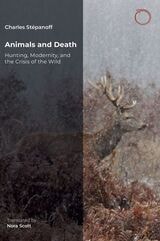
Animals and Death
Hunting, Modernity, and the Crisis of the WildCharles Stépanoff
HAU, 2026
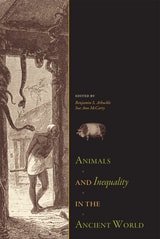
Animals and Inequality in the Ancient World
Benjamin S. Arbuckle
University Press of Colorado, 2014
The authors provide a global range of case studies from both New and Old World archaeology—a royal Aztec dog burial, the monumental horse tombs of Central Asia, and the ceremonial macaw cages of ancient Mexico among them. They explore the complex relationships between people and animals in social, economic, political, and ritual contexts, incorporating animal remains from archaeological sites with artifacts, texts, and iconography to develop their interpretations.
Animals and Inequality in the Ancient World presents new data and interpretations that reveal the role of animals, their products, and their symbolism in structuring social inequalities in the ancient world. The volume will be of interest to archaeologists, especially zooarchaeologists, and classical scholars of pre-modern civilizations and societies.
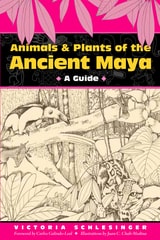
Animals and Plants of the Ancient Maya
A GuideBy Victoria Schlesinger
University of Texas Press, 2002
A growing interest in all things Maya brings an increasing number of visitors to prehistoric Maya ruins and contemporary Maya communities in Guatemala, Belize, El Salvador, western Honduras, the Yucatán Peninsula, and the southern areas of Chiapas and Tabasco, Mexico. For these visitors and indeed everyone with an interest in the Maya, this field guide highlights nearly 100 species of plants and animals that were significant to the ancient Maya and that continue to inhabit the Maya region today.
Drawing from the disciplines of biology, ecology, and anthropology, Victoria Schlesinger describes each plant or animal's habitat and natural history, identifying characteristics (also shown in a black-and-white drawing), and cultural significance to the ancient and contemporary Maya. An introductory section explains how to use the book and offers a concise overview of the history, lifeways, and cosmology of the ancient Maya. The concluding section describes the collapse of ancient Maya society and briefly traces the history of the Maya region from colonial times to the present.
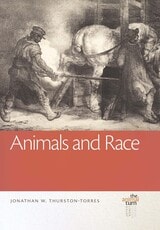
Animals and Race
Jonathan W. Thurston-Torres
Michigan State University Press, 2023
Animals and Women
Feminist Theoretical ExplorationsCarol J. Adams and Josephine Donovan, eds.
Duke University Press, 1995
This wide-ranging multidisciplinary anthology presents original material from scholars in a variety of fields, as well as a rare, early article by Virginia Woolf. Exploring the leading edge of the species/gender boundary, it addresses such issues as the relationship between abortion rights and animal rights, the connection between woman-battering and animal abuse, and the speciesist basis for much sexist language. Also considered are the ways in which animals have been regarded by science, literature, and the environmentalist movement. A striking meditation on women and wolves is presented, as is an examination of sexual harassment and the taxonomy of hunters and hunting. Finally, this compelling collection suggests that the subordination and degradation of women is a prototype for other forms of abuse, and that to deny this connection is to participate in the continued mistreatment of animals and women.
Animals and the Law in Antiquity
Saul M. Olyan
SBL Press, 2021
Animal law has become a topic of growing importance internationally, with animal welfare and animal rights often assuming center stage in contemporary debates about the legal status of animals. While nonspecialists routinely decontextualize ancient texts to support or deny rights to animals, experts in fields such as classics, biblical studies, Assyriology, Egyptology, rabbinics, and late antique Christianity have only just begun to engage the topic of animals and the law in their respective areas. This volume consists of original studies by scholars from a range of Mediterranean and West Asian fields on a variety of topics at the intersection of animals and the law in antiquity. Contributors include Rozenn Bailleul-LeSuer, Beth Berkowitz, Andrew McGowan, F. S. Naiden, Saul M. Olyan, Seth Richardson, Jordan D. Rosenblum, Andreas Schüle, Miira Tuominen, and Daniel Ullucci. The volume is essential reading for scholars and students of both the ancient world and contemporary law.
Animals and the Maya in Southeast Mexico
E. N. Anderson and Felix Medina Tzuc
University of Arizona Press, 2005
This book combines the insights of an anthropologist with the hands-on experience of a Maya campesino with the aim of improving the management of Quintana Roo’s wild lands and animal resources. E. N. Anderson and Felix Medina Tzuc pool their knowledge to document Yucatec Maya understanding and use of animals and to address practical matters related to wider conservation issues.
The book reflects a wealth of knowledge gathered from individuals regarded as experts on particular aspects of animal management, whether hunting, herding, or beekeeping. It also offers case studies of conservation successes and failures in various communities, pointing to the need for cooperation by the Mexican government and Maya people to save wildlife. Appendixes provide an extensive animal classification and a complete list of all birds identified in the area.
Even though sustainable forestry has finally come to the Yucatán, sustainable game use is practiced by only a few communities. Animals and the Maya in Southeast Mexico is a complete ethnozoology for the region, offered in the hope that it will encourage the recognition of Quintana Roo’s forests and wildlife as no less deserving of protection than ancient Maya cities.
Animals as Domesticates
A World View through HistoryJuliet Clutton-Brock
Michigan State University Press, 2012
Drawing on the latest research in archaeozoology, archaeology, and molecular biology, Animals as Domesticates traces the history of the domestication of animals around the world. From the llamas of South America and the turkeys of North America, to the cattle of India and the Australian dingo, this fascinating book explores the history of the complex relationships between humans and their domestic animals. With expert insight into the biological and cultural processes of domestication, Clutton-Brock suggests how the human instinct for nurturing may have transformed relationships between predator and prey, and she explains how animals have become companions, livestock, and laborers. The changing face of domestication is traced from the spread of the earliest livestock around the Neolithic Old World through ancient Egypt, the Greek and Roman empires, South East Asia, and up to the modern industrial age.
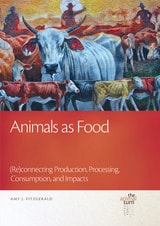
Animals as Food
(Re)connecting Production, Processing, Consumption, and ImpactsAmy J. Fitzgerald
Michigan State University Press, 2015
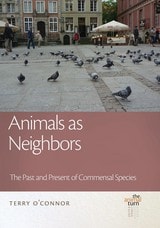
Animals as Neighbors
The Past and Present of Commensal AnimalsTerry O'Connor
Michigan State University Press, 2013
In this fascinating book, Terry O’Connor explores a distinction that is deeply ingrained in much of the language that we use in zoology, human-animal studies, and archaeology—the difference between wild and domestic. For thousands of years, humans have categorized animals in simple terms, often according to the degree of control that we have over them, and have tended to see the long story of human-animal relations as one of increasing control and management for human benefit. And yet, around the world, species have adapted to our homes, our towns, and our artificial landscapes, finding ways to gain benefit from our activities and so becoming an important part of our everyday lives. These commensal animals remind us that other species are not passive elements in the world around us but intelligent and adaptable creatures. Animals as Neighbors shows how a blend of adaptation and opportunism has enabled many species to benefit from our often destructive footprint on the world. O’Connor investigates the history of this relationship, working back through archaeological records. By requiring us to take a multifaceted view of human-animal relations, commensal animals encourage a more nuanced understanding of those relations, both today and throughout the prehistory of our species.
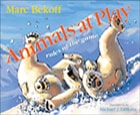
Animals at Play
Rules of the GameMarc Bekoff
Temple University Press, 2008
What can we learn from watching animals play? Dogs chase each other and wrestle. Cats pounce and bite. These animals may look like they are fighting, but if you pay close attention— as world-renowned biologist Marc Bekoff does—you can see they are playing and learning the rules of their games. In Animals at Play, Bekoff shows us how animals behave when they play, with full-color illustrations showing animals in action and having fun—from squirrels climbing up a tree to polar bears somersaulting in the snow.
Bekoff emphasizes how animals communicate, cooperate and learn to play fair and what happens when they break the rules. He uses lively illustrations and simple explanations of what it means when a sea lion swims with kelp in its mouth or when two dogs bow to each other. Bekoff also describes what happens when animals become too aggressive and how they apologize, forgive and learn to trust one another. This entertaining and informative book will delight every child and show readers how animals—and humans—interact when they are having fun.

Animals in Four Worlds
Sculptures from IndiaStella Snead
University of Chicago Press, 1989
In this splendid and unique collection of photographs, Stella Snead captures the extraordinary vitality, intelligence, and variety of animals in Indian sculpture found at sites from prehistory through the eighteenth century. Here are cats, peacocks, mongooses, anteaters, cows, hyenas, and tigers, as well as such fantastic creatures as double-bodied lions and elephants with fish tails. Collected from all areas of India, these photographs include images from famous Indian monuments, and museum collections, as well as images from remote sites, some of which have never before been published.
Wendy Doniger's essay explores and explains the four worlds or dimensions that animals occupy in Indian thought: nature, the human world, the divine world, and the world of fantasy. George Michell places Indian sculptures of animals in their architectural and art historical context. His chronological survey identifies the location and the subject of the animals photographed and describes the artistic activity of the regions and period from which the photographs are drawn.
This beautifully illustrated book will appeal to a wide audience: to those interested in Asian studies, art, architecture, and animals, and to those drawn to Snead's powerful photographs, which capture both the idiosyncratic genius of tiny details and the grand sweep of cosmic symbols.
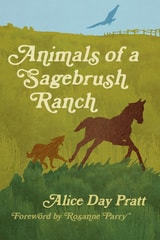
Animals of a Sagebrush Ranch
Alice Day Pratt
Oregon State University Press, 1931
“I hope readers will be delighted by these stories, which fully inhabit each animal from the smallest newly hatched chick to the wisest mother cow and the most faithful ranch dog and the wiliest coyote.” —Rosanne Parry, from the Foreword
In this classic collection of charming tales from 1931, writer, teacher, and homesteader Alice Day Pratt shares her love of animals and of the West. Animals of a Sagebrush Ranch features Bingo, the lovable and intelligent big brown setter; Fly, the fine white mare, and Babe, the ebony-black colt; Kitty Kat and her kitten, El Dorado; Rab, the sturdy cow pony; and the many other animals who romped over the hills of Central Oregon’s Broadview Ranch.
Introducing Pratt’s ranch animals to today’s readers, this edition includes a new foreword by award-winning author Rosanne Parry and the original and timeless illustrations by Kurt Wiese. Animal lovers of all ages will delight in these splendid stories from the high desert and enjoy reading and rereading these adventures that still capture youthful joy.

Animals on the Agenda
Questions about Animals for Theology and EthicsEdited by Andrew Linzey and Dorothy Yamamoto
University of Illinois Press, 1998
Renowned animal rights intellectual Andrew Linzey and Dorothy Yamamoto edit the now-classic collection of works examining religious and ethical thought on humanity's relationship to animals. The contributors address issues within the context of scriptural perspectives, the Christian tradition, historical disputes, and our obligations to animals. In addition, many of the authors provide guidance on how to put humane, progressive ideas into practice. Throughout, the contributors challenge mainstream Christianity's propagation of ideas that negative impact animals' lives and well-being.
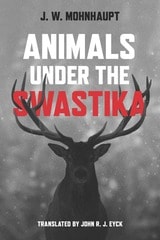
Animals under the Swastika
J. W. Mohnhaupt, translated by John R. J. Eyck
University of Wisconsin Press, 2022
Drawing from diaries, journals, school textbooks, and printed propaganda, J.W. Mohnhaupt tells these animals’ stories vividly and with an eye for everyday detail, focusing each chapter on a different facet of Nazism by way of a specific animal species: red deer, horses, cats, and more. Animals under the Swastika illustrates the complicated, thought-provoking relationship between Nazis and animals.
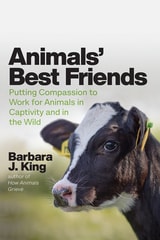
Animals' Best Friends
Putting Compassion to Work for Animals in Captivity and in the WildBarbara J. King
University of Chicago Press, 2021
Finalist for the 2021 Siskiyou Prize for New Environmental Literature
As people come to understand more about animals’ inner lives—the intricacies of their thoughts and the emotions that are expressed every day by whales and cows, octopus and mice, even bees—we feel a growing compassion, a desire to better their lives. But how do we translate this compassion into helping other creatures, both those that are and are not our pets? Bringing together the latest science with heartfelt storytelling, Animals’ Best Friends reveals the opportunities we have in everyday life to help animals in our homes, in the wild, in zoos, and in science labs, as well as those considered to be food.
Barbara J. King, an expert on animal cognition and emotion, guides us on a journey both animal and deeply human. We meet cows living relaxed lives in an animal sanctuary—and cows with plastic portals in their sides at a university research station. We observe bison free-roaming at Yellowstone National Park and chimpanzees confined to zoos. We learn with King how to negotiate vegetarian preferences in omnivore restaurants. We experience the touch of a giant Pacific octopus tasting King’s skin with one of his long, neuron-rich arms. We reflect on animal testing as King shares her own experience as the survivor of a particularly nasty cancer. And in a moment all too familiar to many of us, we recover from a close encounter with two spiders in the home.
This is a book not of shaming and limitation, but of uplift and expansion. Throughout this journey, King makes no claims of personal perfection. Though an animal expert, she is just like the rest of us: on a journey still, learning each day how to be better, and do better, for animals. But as Animals’ Best Friends makes clear, challenging choices can bring deep rewards. By turning compassion into action on behalf of animals, we not only improve animals’ lives—we also immeasurably enrich our own.

Animals, Aging, and the Aged
Leo K. Bustad
University of Minnesota Press, 1981
Animals, Aging, and the Aged was first published in 1981. Minnesota Archive Editions uses digital technology to make long-unavailable books once again accessible, and are published unaltered from the original University of Minnesota Press editions.
This volume explores the significant contributions of animals to our understanding of aging, to improving geriatric medicine, and to providing companionship and assistance to the elderly. Leo L. Bustad discusses what can be learned from animal life-span studies about the process of aging, including the problems of cardiovascular disease, cancer, osteoporosis, and age-related mental conditions. The results of these studies suggest that changes in life-style—especially the diet—may modify the effects of chronic degenerative diseases.
Other studies show that caring for a pet can contribute greatly to the health and well being of the elderly. Bustad surveys experiments using animals in therapy and he presents, for the first time, evaluative instruments for choosing the appropriate pet. Companion animals allow many elderly people to maintain their independence. Animals are also helpful as aids for those with visual, hearing, and physical impairments. An appendix lists agencies that train dogs as aids to the physically impaired.
Animals, Aging, and the Aged is a thoughtful discussion of the physical, psychological, and social problems faced by the elderly, with emphasis on the ways that animals have contributed to the solution of some of those problems. As such, it will be useful for those involved in geriatric medicine and social work and in veterinary medicine and research. This book is volume 5 in the series Wesley W. Spink Lectures in Comparative Medicine.
Animals, Mind, and Matter
The Inside StoryJosephine Donovan
Michigan State University Press, 2022
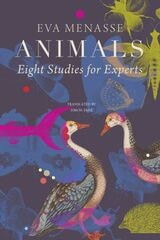
Animals
Eight Studies for ExpertsEva Menasse
Seagull Books, 2023
Animals is a collection of short stories in which each story takes a peculiar item about animals that appears, like fables, to shine a spotlight on different aspects of human behavior—like caterpillars digging their own graves, sharks in need of artificial respiration, ducks that keep an eye out for hungry predators even in their sleep. It is a treat to watch Eva Menasse spin these observations into scenes of people battling their everyday anxieties and doubts. An old tyrant realizes that he is unable to prevent his wife’s worsening dementia from erasing his own past as it erases hers. A mother who tries to protect a Muslim child from hostile accusations finds that her own boundaries between good and evil begin to blur. A woman realizes how starkly her father’s traumatic past has shaped her quirky habits and deepest fears. Combining biting wit, mystery, and melancholy, these tales are the work of a masterful storyteller.
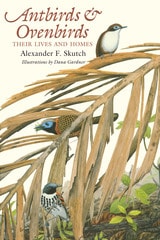
Antbirds and Ovenbirds
Their Lives and HomesBy Alexander F. Skutch
University of Texas Press, 1996
Western Books Exhibition, Rounce and Coffin Club
Antbirds and ovenbirds, two of the five largest families of birds found only in the Western Hemisphere, have been among Alexander Skutch's favorites for more than six decades. In this book, he draws on years of observations to describe the life cycle of these fascinating birds, which inhabit Latin America from tropical Mexico to Tierra del Fuego.
Skutch covers all aspects of the birds' lives, including the various species in each family, food and foraging, daily life, voice, displays and courtship, nests and incubation, and parental care. He also recounts anecdotes from his own experiences, creating vivid pictures of antbirds foraging for the insects Skutch stirs up on walks through the rainforest and of ovenbirds repairing the observation holes that he opens in their elaborate nests.
As some of tropical America's least studied birds, antbirds and ovenbirds surely merit the extensive treatment given them here by one of our most distinguished senior ornithologists. Over fifty line drawings by noted bird artist Dana Gardner make this book a delight for both armchair and field naturalists.
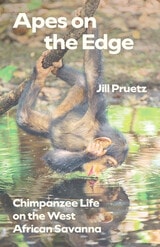
Apes on the Edge
Chimpanzee Life on the West African SavannaJill Pruetz
University of Chicago Press, 2025
Fongoli chimpanzees are unique for many reasons. Their female hunters are the only apes that regularly hunt with tools, seeking out tiny bush babies with wooden spears. Unlike most other chimps, these apes fear neither water nor fire, using shallow pools to cool off in the Senegalese heat. Up to 90 percent of their home range burns annually—the result of human hunting or clearing for gold mining—and Fongoli chimpanzees have learned to predict the movement of such fires and to avoid them.
The study of Fongoli chimps is also unique. While most primate research occurs in isolated reserves, Fongoli chimpanzees live alongside humans, and as primatologist and anthropologist Jill Pruetz reports, this shared habitat creates both challenges and opportunities. The issues faced by Fongoli chimpanzees—particularly food scarcity and environmental degradation—are also issues faced by their human neighbors. This connection is one reason Pruetz, who has studied Fongoli apes for over two decades, created the nonprofit Neighbor Ape in 2008 to provide for the welfare of the humans who share their landscape with apes. It is also why Pruetz decided to write this book, the first to offer readers a view of these chimps’ lives and to explain the specific conservation efforts needed to help them. Incorporating stories from Pruetz’s time in the field, including the compelling rescue of a young chimp from poachers, Apes on the Edge opens a fascinating window into primate research, conservation, and the inner workings of a very special population of our closest nonhuman relatives.
Apes on the Edge
Chimpanzee Life on the West African SavannaJill Pruetz
University of Chicago Press, 2025
A moving story of survival and an eye-opening introduction to an extraordinary community of chimps and people.
Fongoli chimpanzees are unique for many reasons. Their female hunters are the only apes that regularly hunt with tools, seeking out tiny bush babies with wooden spears. Unlike most other chimps, these apes fear neither water nor fire, using shallow pools to cool off in the Senegalese heat. Up to 90 percent of their home range burns annually—the result of human hunting or clearing for gold mining—and Fongoli chimpanzees have learned to predict the movement of such fires and to avoid them.
The study of Fongoli chimps is also unique. While most primate research occurs in isolated reserves, Fongoli chimpanzees live alongside humans, and as primatologist and anthropologist Jill Pruetz reports, this shared habitat creates both challenges and opportunities. The issues faced by Fongoli chimpanzees—particularly food scarcity and environmental degradation—are also issues faced by their human neighbors. This connection is one reason Pruetz, who has studied Fongoli apes for over two decades, created the nonprofit Neighbor Ape in 2008 to provide for the welfare of the humans who share their landscape with apes. It is also why Pruetz decided to write this book, the first to offer readers a view of these chimps’ lives and to explain the specific conservation efforts needed to help them. Incorporating stories from Pruetz’s time in the field, including the compelling rescue of a young chimp from poachers, Apes on the Edge opens a fascinating window into primate research, conservation, and the inner workings of a very special population of our closest nonhuman relatives.
Apocalyptic Sheep and Goats in Matthew and 1 Enoch
Elekosi F. Lafitaga
SBL Press, 2022
An alternative understanding of apocalyptic eschatology in the Gospel of Matthew
Matthew’s eschatological imageries of judgment are often identified as apocalyptic and referred to as Matthew’s apocalyptic discourses. In this volume Elekosi F. Lafitaga reexamines Matthew’s vision of the sheep and goats in the judgment of the nations, which are often interpreted as metaphors for the saved and the condemned. Lafitaga views these images in the wider context of the rhetoric of apocalyptic communication stretching back to Matthew 3. This broader context reveals that the vision of Matthew 25 serves to exhort Israel in the here and now according to the torah, with salvation for Israel involving an indispensable responsibility to love and serve humanity. Central to Lafitaga’s analysis is the highly probable scenario that the material in Matthew is dependent on the Book of Dreams (1 Enoch 83–90).
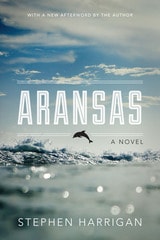
Aransas
A NovelBy Stephen Harrigan
University of Texas Press, 2014
Architecture by Birds and Insects
A Natural ArtPaintings by Peggy Macnamara
University of Chicago Press, 2008
A visual celebration of these natural feats of engineering and ingenuity, Architecture by Birds and Insects allows readers a peek inside a wide range of nests, offering a rare opportunity to get a sense of the materials and methods used to build them. Here, we see the kinds of places where nests are built—for instance, the house wren has been known to occupy cow skulls, flower pots, tin cans, and the pockets of hanging laundry, while the uglynest caterpillar prefers rose bushes and cherry trees. Inspired by the vast nest collection at the Field Museum, which features specimens gathered throughout North and South America, Peggy Macnamara’s paintings are enhanced by text written by museum curators. This narrative provides a foundation in natural history for each painting, as well as fascinating anecdotes about the nests and their builders.
Like so many natural treasures, nests are easy to ignore. But Macnamara’s gorgeous paintings will undoubtedly change that. Architecture by Birds and Insects at last gives the tiniest engineers their rightful moment in the spotlight, and in so doing increases awareness and encourages the protection of birds, insects, and their habitats. Readers will never look at a Frank Gehry design, or a treetop nest, the same way again.
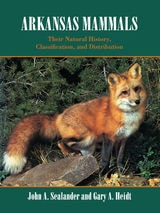
Arkansas Mammals
Their Natural History, Classification, and DistributionJohn A. Sealander
University of Arkansas Press, 1990
Heavily illustrated with color photographs, Arkansas Mammals is the comprehensive guide to the state’s mammal population. Endangered or threatened species of mammals and missing species known to have been present in recent times are discussed, along with non-native species that have become an important part of the mammal fauna in Arkansas and adjacent states.
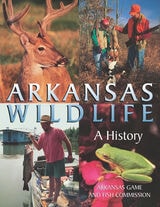
Arkansas Wildlife
A HistoryKeith B. Sutton
University of Arkansas Press, 1998
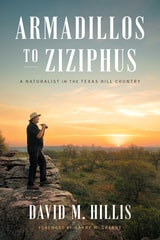
Armadillos to Ziziphus
A Naturalist in the Texas Hill CountryDavid M. Hillis, foreword by Harry W. Greene
University of Texas Press, 2023
A collection of essays on the ecology, biodiversity, and restoration of the Texas Hill Country.
For most of five decades, evolutionary biologist David Hillis has studied the biodiversity of the Texas Hill Country. Since the 1990s, he has worked to restore the natural beauty and diversity of his Mason County ranch, the Double Helix. In his excursions around his ranch and across the Edwards Plateau, Hillis came to realize how little most people know about the plants and animals around them or their importance to our everyday lives. He began thinking about how natural history is connected to our enjoyment of life, especially in a place as beautiful and beloved as the Hill Country, which, not coincidentally, happens to be one of the most biodiverse parts of Texas.
Featuring short nontechnical essays accompanied by vivid color photos, Armadillos to Ziziphus is a charming and casual introduction to the environment of the region. Whether walking the pasture with his Longhorn cattle, explaining the ecological significance of microscopic organisms in springtime mud puddles, or marveling at the local Ziziphus (aka Lotebush, a spiny shrub), Hillis guides first-time visitors and long-term residents alike in an appreciation for the Hill Country’s natural beauty and diversity.
Artist Animal
Steve Baker
University of Minnesota Press, 2013
Animals have always been compelling subjects for artists, but the rise of animal advocacy and posthumanist thought has prompted a reconsideration of the relationship between artist and animal. In this book, Steve Baker examines the work of contemporary artists who directly confront questions of animal life, treating animals not for their aesthetic qualities or as symbols of the human condition but rather as beings who actively share the world with humanity.
The concerns of the artists presented in this book—Sue Coe, Eduardo Kac, Lucy Kimbell, Catherine Chalmers, Olly and Suzi, Angela Singer, Catherine Bell, and others—range widely, from the ecological to the philosophical and from those engaging with the modification of animal bodies to those seeking to further the cause of animal rights. Drawing on extensive interviews he conducted with the artists under consideration, Baker explores the vital contribution that contemporary art can make to a broader conception of animal life, emphasizing the importance of creativity and trust in both the making and understanding of these artworks.
Throughout, Baker is attentive to issues of practice, form, and medium. He asks, for example, whether the animal itself could be said to be the medium in which these artists are working, and he highlights the tensions between creative practice and certain kinds of ethical demands or expectations. Featuring full-color, vivid examples of their work, Artist Animal situates contemporary artists within the wider project of thinking beyond the human, asserting art’s power to open up new ways of thinking about animals.
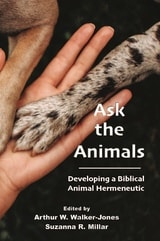
Ask the Animals
Developing a Biblical Animal HermeneuticArthur W. Walker-Jones
SBL Press, 2024
Ask the animals, and they will tell you.
Birds, beasts, and creeping things swarm throughout the Bible’s pages. Despite their prevalence, most biblical scholars have viewed them merely as metaphors, passive objects, or background embellishment to the human experience. This collection seeks to move beyond this traditional view of biblical animals by engaging the growing interdisciplinary field of animal studies. Contributors Peter Joshua Atkins, Jared Beverly, William P. Brown, Margaret Cohen, Jacob R. Evers, Michael J. Gilmour, William “Chip” Gruen, Dong Hyeon Jeong, Brian Fiu Kolia, Anne Létourneau, Robert R. MacKay, Suzanna R. Millar, Timothy J. Sandoval, Robert Paul Seesengood, Ken Stone, Brian James Tipton, Arthur W. Walker-Jones, and Jaime L. Waters showcase the breadth and depth of inquiry that animal studies can foster in biblical studies as well as what animal studies can gain from a more rigorous engagement with biblical texts. Together the essays offer an animal hermeneutic that supports the flourishing of all creatures.
At Home in the Anthropocene
Amy D. Propen
The Ohio State University Press, 2022
By employing the tenets of posthumanism, compassionate conservation, and entangled empathy—and making them accessible through storytelling and narrative—Propen offers new perspectives about how to more compassionately and productively understand ideas about home, connectivity, and coexistence across a range of places and ecosystems. Uniquely conceptualized to include narrative related to the Anthropause, as well as travel and nature writing amidst COVID-19, At Home in the Anthropocene engages with questions about home and belonging in generative ways that attempt to open up possibilities for sustainable futures in which we may productively coexist with our more-than-human kin.

Atlas of Oregon Wildlife
Blair Csuti
Oregon State University Press, 1997
Atlas of Oregon Wildlife, 2nd Ed
Distribution, Habitat, and Natural HistoryBlair Csuti
Oregon State University Press, 2001
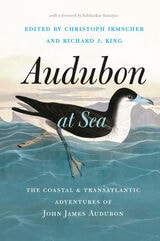
Audubon at Sea
The Coastal and Transatlantic Adventures of John James AudubonEdited by Christoph Irmscher and Richard J. King
University of Chicago Press, 2022
The American naturalist John James Audubon (1785–1851) is widely remembered for his iconic paintings of American birdlife. But as this anthology makes clear, Audubon was also a brilliant writer—and his keen gaze took in far more than creatures of the sky. Culled from his published and unpublished writings, Audubon at Sea explores Audubon’s diverse observations of the ocean, the coast, and their human and animal inhabitants. With Audubon expert Christoph Irmscher and scholar of the sea Richard J. King as our guides, we set sail from the humid expanses of the American South to the shores of England and the chilly landscapes of the Canadian North. We learn not only about the diversity of sea life Audubon documented—birds, sharks, fish, and whales—but also about life aboard ship, travel in early America, Audubon’s work habits, and the origins of beloved paintings. As we face an unfathomable loss of seabirds today, Audubon’s warnings about the fragility of birdlife in his time are prescient and newly relevant.
Charting the course of Audubon’s life and work, from his birth in Haiti to his death in New York City, Irmscher and King’s sweeping introduction and carefully drawn commentary confront the challenges Audubon’s legacy poses for us today, including his participation in American slavery and the thousands of birds he killed for his art. Rounded out by hundreds of historical and ornithological notes and beautiful illustrations, and with a foreword by distinguished photographer and conservationist Subhankar Banerjee, Audubon at Sea is the most comprehensively annotated collection of Audubon’s work ever published.