Results by title
5159 books match the query 'Biography' and 527 start with a
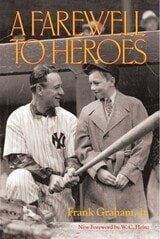
A Farewell to Heroes
Frank Graham Jr. Foreword by W.C. Heinz
Southern Illinois University Press, 2003
Originally published in 1981 and long out of print, this dual autobiography covers five unforgettable decades of the New York sporting life from 1915 to 1965. Told initially from the point of view of Frank Graham, premier sportswriter for TheNew York Sun, A Farewell to Heroes also includes the chronicles of Frank, Jr., who picks up the narrative as he becomes a sports journalist in his own right.
Frank Graham, Sr., was a self-taught writer known for his uncanny ability to capture the high drama of a game-winning play or the color of a fight mob’s conversation in spare, straightforward prose. As a reporter, he covered the rough-and-tumble Giants of John McGraw’s day and continued through boxing’s greatest era, spanning the reigns of Jack Dempsey and Joe Louis.
As the younger Frank tells more of the story, we watch Lou Gehrig take Babe Ruth’s place as the Yankees’ star and then trace his glorious career to its tragic conclusion. We see firsthand the legendary Branch Rickey and Jackie Robinson and boxing’s brief but golden age on television in the 1950s.
Aided by sixteen photographs and preserving the most masterful of his father’s writing while adding to it the best of his own, Frank Graham, Jr., has given the sports fan A Farewell to Heroes, perhaps the ultimate sports reminiscence of a time when the romance of sport gave life a golden hue, when heroes still roamed the earth.
“In what he calls this ‘kind of dual autobiography,’ he is his father’s son, having learned to look and listen as his father did and still go his own way,” says W. C. Heinz, longtime sportswriter for The New York Sun, in his new foreword to this paperback edition.
A Fatherless Child
Autobiographical Perspectives of African American MenTara T. Green
University of Missouri Press, 2009
Through her analysis, Green emphasizes the role of community as a father-substitute in producing successful black men, the impact of fatherlessness on self-perceptions and relationships with women, and black men’s engagement with healing the pain of abandonment. She also looks at why these four men visited Africa to reclaim a cultural history and identity, showing how each developed a clearer understanding of himself as an American man of African descent.
A Feminist Legacy
The Rhetoric and Pedagogy of Gertrude BuckSuzanne Bordelon
Southern Illinois University Press, 2007
The first book-length investigation of a pioneering English professor and theorist at Vassar College, A Feminist Legacy: The Rhetoric and Pedagogy of Gertrude Buck explores Buck’s contribution to the fields of education and rhetoric during the Progressive Era. By contextualizing Buck’s academic and theoretical work within the rise of women’s educational institutions like Vassar College, the social and political movement toward suffrage, and Buck’s own egalitarian political and social ideals, Suzanne Bordelon offers a scholarly and well-informed treatment of Buck’s achievements that elucidates the historical and contemporary impact of her work and life.
Bordelon argues that while Buck did not call herself a feminist, she embodied feminist ideals by demanding the full participation of her female students and by challenging power imbalances at every academic, social, and political level.
A Feminist Legacy reveals that Vassar College is an undervalued but significant site in the history of women’s argumentation and pedagogy. Drawing on a rich variety of archival sources, including previously unexamined primary material, A Feminist Legacy traces the beginnings of feminist theories of argumentation and pedagogy and their lasting legacy within the fields of education and rhetoric.
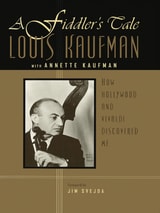
A Fiddler's Tale
How Hollywood and Vivaldi Discovered MeLouis Kaufman with Annette Kaufman; Foreword by Jim Svejda
University of Wisconsin Press, 2003
Once called by the New York Times "a violinist's violinist and a musician's musician," Louis Kaufman was born in 1905 in Portland, Oregon. He studied violin with Franz Kneisl at New York's Institute of Musical Art. He was the original violist of the Musical Art Quartet (1926-1933) and won the Naumburg Award in 1928, the year of his American solo recital debut in New York's Town Hall.
During these early years, he played chamber music with Pablo Casals, Mischa Elman, Jascha Heifetz, Fritz Kreisler, Gregor Piatigorsky, and Efrem Zimbalist, among others. After performing the violin solos for Ernst Lubitsch's 1934 film The Merry Widow, Kaufman became the most sought after violin soloist in Hollywood, playing in some 500 films, including Casablanca, Gone with the Wind, The Diary of Anne Frank, Wuthering Heights, The Grapes of Wrath, and Spartacus. He worked closely with Robert Russell Bennett, Bernard Herrmann, Erich Wolfgang Korngold, Alfred Newman, Miklós Rózsa, Max Steiner, Franz Waxman, and Victor Young.
Extraordinary as it seems today, Kaufman was largely responsible for bringing the once-forgotten music of Antonio Vivaldi to its current popularity worldwide among both classical musicians and the general population of music lovers.
The book includes a music CD with Kaufman’s performances of Vivaldi’s Concerto 2 of op. 9, Havanaise by Camille Saint Saëns, Nocturne for Violin and Piano by Aaron Copland, Much Ado about Nothing Suite for violin and piano by Erich Wolfgang Korngold, and Smoke Gets in Your Eyes by Jerome Kern, among other favorites.
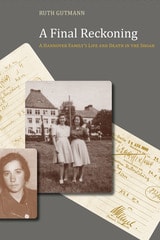
A Final Reckoning
A Hannover Family's Life and Death in the ShoahRuth Gutmann, Foreword by Kenneth Waltzer
University of Alabama Press, 2013
A work of both childhood memory and adult reflection undergirded with scholarly research
Ruth Herskovits Gutmann’s powerful memoir recounts her life not only as a concentration camp inmate and survivor, but also as a sister and daughter. Born in 1928, Gutmann and her twin sister, Eva, escaped the growing Nazi threat in Germany on a Kindertransport to Holland in 1939.
Gutmann’s compelling story captures many facets of the Jewish experience in Nazi Germany. She describes her early life in Hannover as the daughter of a prominent and patriotic member of the Jewish community. Her flight on the Kindertransport offers a vivid, firsthand account of that effort to save the children of Jewish families. Her memories of the camps include coming to the attention of Josef Mengele, who often used twins in human experiments. Gutmann writes with moving clarity and nuance about the complex feelings of survivorship.
A Final Reckoning provides not only insights into Gutmann’s own experience as a child in the midst of the atrocities of the Holocaust, but also a window into the lives of those, like her father, who were forced to carry on and comply with the regime that would ultimately bring about their demise.
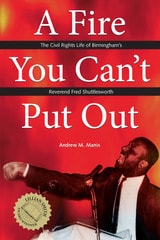
A Fire You Can't Put Out
The Civil Rights Life of Birmingham's Reverend Fred ShuttlesworthAndrew M. Manis
University of Alabama Press, 2001
WINNER, LILLIAN SMITH AWARD
WINNER, JAMES F. SULZBY, JR. AWARD
The fire of freedom that changed Birmingham—and America.
When Fred Shuttlesworth suffered only a bump on the head in the 1956 bombing of his home, members of his church called it a miracle. Shuttlesworth took it as a sign that God would protect him on the mission that had made him a target that night. Standing in front of his demolished home, Shuttlesworth vigorously renewed his commitment to integrate Birmingham's buses, lunch counters, police force, and parks. The incident transformed him, in the eyes of Birmingham's blacks, from an up-and-coming young minister to a virtual folk hero and, in the view of white Birmingham, from obscurity to rabble-rouser extraordinaire.
From his 1956 founding of the Alabama Christian Movement for Human Rights through the historic demonstrations of 1963, driven by a sense of divine mission, Shuttlesworth pressured Jim Crow restrictions in Birmingham with radically confrontational acts of courage. His intensive campaign pitted him against the staunchly segregationist police commissioner Eugene "Bull" Connor and ultimately brought him to the side of Martin Luther King Jr. and to the inner chambers of the Kennedy White House.
First published in 1999, Andrew Manis's award-winning biography of "one of the nation's most courageous freedom fighters" demonstrates compellingly that Shuttleworth's brand of fiery, outspoken confrontation derived from his prophetic understanding of the pastoral role. Civil rights activism was tantamount to salvation in his understanding of the role of Christian minister.
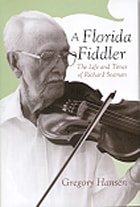
A Florida Fiddler
The Life and Times of Richard SeamanGregory Hansen
University of Alabama Press, 2007
Exploring Florida's cultural landscape through the life of a legendary fiddler.
This biography of 97-year-old Richard Seaman, who grew up in Kissimmee Park, Florida, relies on oral history and folklore research to define the place of musicianship and storytelling in the state's history from one artist's perspective. Gregory Hansen presents Seaman’s assessment of Florida’s changing cultural landscape through his tall tales, personal experience narratives, legends, fiddle tune repertory, and descriptions of daily life.
Seaman’s childhood memories of fiddling performances and rural dances explain the role such gatherings played in building and maintaining social order within the community. As an adult, Seaman moved to Jacksonville, Florida, where he worked as a machinist and performed with his family band. The evolution of his musical repertory from the early 1920s through the 1950s provides a resource for reconstructing social life in the rural south and for understanding how changes in musical style reflect the state's increasingly urban social structure. Hansen includes a set of Seaman's fiddle tunes, transcribed for the benefit of performer and researcher alike. The thirty tall tales included in the volume constitute a representative sample of Florida’s oral tradition in the early years of the 20th century.
A Fly in the Soup
MemoirsCharles Simic
University of Michigan Press, 2003
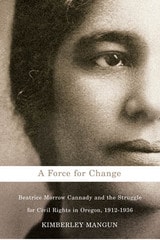
A Force for Change
Beatrice Morrow Cannady and the Struggle for Civil Rights in Oregon, 1912-1936Kimberley Mangun
Oregon State University Press, 2010
A Force for Change is the first full-length study of the life and work of one of Oregon’s most dynamic civil rights activists, African American journalist Beatrice Morrow Cannady. Between 1912 and 1936, Cannady tirelessly promoted interracial goodwill and fought segregation and discrimination.
She gave hundreds of lectures to high school and college students and shared her message with radio listeners across the Pacific Northwest. She was assistant editor, and later publisher, of The Advocate, Oregon’s largest African American newspaper. Cannady was the first black woman to graduate from law school in Oregon, and the first to run for state representative. She held interracial teas in her home in Northeast Portland and protested repeated showings of the racist film The Birth of a Nation. And when the Ku Klux Klan swept into Oregon, she urged the governor to act quickly to protect black Oregonians’ right to live and work without fear. Despite these accomplishments—and many more during her twenty-five-year career—Beatrice Cannady fell into obscurity when she left Oregon in about 1938.
A Force for Change illuminates Cannady’s important role in advocating for better race relations in Oregon in the early decades of the twentieth century. It describes her encounters with the period’s leading black artists, editors, politicians, and intellectuals, including W.E.B. Du Bois, Langston Hughes, A. Philip Randolph, Oscar De Priest, Roland Hayes, and James Weldon Johnson. It dispels the myth that African Americans played little part in Oregon’s history and enriches our understanding of the black experience in Oregon.
A Force for Change is an invaluable resource for students and scholars of women’s history, gender studies, African American history, journalism history, and Pacific Northwest history. It belongs on the shelf of any reader interested in a richer understanding of the civil rights movement in Oregon and across the country.

A Force for Nature
Nancy Russell's Fight to Save the Columbia GorgeBowen Blair
Oregon State University Press, 2022
The 85-mile-long Columbia Gorge forms part of the border between Oregon and Washington and is one of the nation’s most historic and scenic landscapes. Many of the region’s cultural divisions boil over here—urban versus rural, west of the mountains versus east—as well as clashes over private property rights, management of public lands, and tribal treaty rights.
In the early 1980s, as a new interstate bridge linked the City of Portland to rural counties in Washington, the Gorge’s renowned vistas were on the brink of destruction. Nancy Russell, forty-eight years old and with no experience in advocacy, fundraising, or politics, built a grassroots movement that overcame 70 years of failed efforts and bitter opposition from both Oregon and Washington governors, five of the six Gorge counties, 41,000 Gorge residents, and the Reagan administration. While building her campaign, Russell stopped subdivisions, factories, and government neglect through litigation brought by her organization, Friends of the Columbia Gorge, and last-second land purchases by the Trust for Public Land (TPL). Initially ignored, then demonized, Russell’s tires were slashed and her life threatened.
The Columbia River Gorge National Scenic Area Act barely passed—on the last day of the congressional session in 1986—and was signed by a reluctant President Reagan hours before the bill would die. Russell positioned the Friends to be a watchdog and orchestrated the purchase of thousands of acres of land for the public. Bowen Blair, an attorney, former executive director of Friends of the Columbia Gorge, and TPL senior vice president, brings an insider’s perspective to the tumultuous and inspiring story of this conservation battle.

A French Aristocrat in the American West
The Shattered Dreams of De Lassus De LuzièresCarl J. Ekberg & Foreword by Marie-Sol de La Tour d'Auvergne
University of Missouri Press, 2010
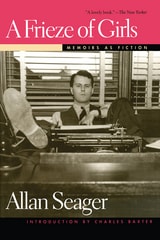
A Frieze of Girls
Memoirs as FictionAllan Seager
University of Michigan Press, 2004
A Frieze of Girls speaks with a fresh voice from an American era long past. This is more than Allan Seager's story of what happened; it is also about how "the feel of truth is very like the feel of fiction, especially when either is at all strange."
Seager gives us his coming-of-age story, from a high-school summer as a sometime cowboy in the Big Horn mountains to a first job at seventeen managing an antiquated factory in Memphis to a hard-drinking scholarship year in Oxford, cut short by tuberculosis. At once funny with an undercurrent of pain, the stories in A Frieze of Girls remind us of the realities we create to face the world and the past, and in turn of the realities of the world we must inevitably also confront. "Time makes fiction out of our memories," writes Seager. "We all have to have a self we can live with and the operation of memory is artistic---selecting, suppressing, bending, touching up, turning our actions inside out so that we can have not necessarily a likable, merely a plausible identity." A Frieze of Girls is Allan Seager at the top of his form, and a reminder that great writing always transcends mere fashion.
Allan Seager was Professor of English at the University of Michigan and author of many highly praised short stories and novels, including Amos Berry. He died in Tecumseh, Michigan, in 1968. Novelist Charles Baxter is the author of Saul and Patsy.
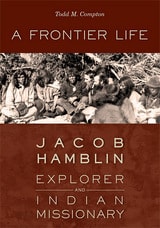
A Frontier Life
Jacob Hamblin, Explorer and Indian MissionaryTodd M. Compton
University of Utah Press, 2013
Winner of the Evans Biography Award, the John Whitmer Historical Society Best Biography Award, and the Francis Armstrong Madsen Best Book Award
Frontiersman, colonizer, missionary to the Indians, and explorer of the American West, Jacob Hamblin has long been one of the most enigmatic figures in Mormon history. In this defining biography, Todd Compton examines and disentangles many of the myths and controversies surrounding Hamblin. His Grand Canyon adventures and explorations as a guide alongside John Wesley Powell are well documented, as are his roles as a missionary, cultural liaison, and negotiator to the Indian tribes of southern Utah and Arizona. Hamblin struggled in this latter role, sometimes unable to bridge the gulf between Mormonism and Indian culture. He disavowed violent conflict and ceaselessly sought peaceful resolutions where others resorted to punitive action. He strove above all for mutual understanding in the absence of conversion.
A Frontier Life provides a rich narrative that fleshes out a picture of a sometimes vilified figure, particularly in regard to his connection to the infamous Mountain Meadows Massacre, where Compton provides nuanced discussion clarifying Hamblin’s post-massacre role—he was not present at the massacre, but reported on it to both Brigham Young and military investigators. Compton’s engagement with Mormon historiography and previous Hamblin portrayals will make this work of particular interest to both scholars and students. The casual reader will take pleasure in learning of a true pioneer who lived life at the geographical, cultural, and spiritual boundaries of his era. This dramatic, entertaining biography is a truly significant contribution to Mormon history.
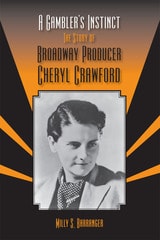
A Gambler’s Instinct
The Story of Broadway Producer Cheryl CrawfordMilly S. Barranger
Southern Illinois University Press, 2010
Broadway producer Cheryl Crawford (1902–1986) declared in her 1977 autobiography, “The theatre has been my life.” Crawford was notoriously circumspect about her private life, and only now, with Milly S. Barranger’s insightful biography, is her full story revealed.
A major Broadway producer in an era when women producers were exceedingly rare, Crawford found unprecedented success with the plays of Tennessee Williams, including The Rose Tattoo and Sweet Bird of Youth, but her enduring legend is as a musical producer, having brought Kurt Weill’s One Touch of Venus, Lerner and Loewe’s Brigadoon and Paint Your Wagon to the stage. Her commercial success, though, was balanced with the founding of studios that would enable actors to explore their art outside the strictures of commercial theater. She cofounded the Group Theatre with Harold Clurman and Lee Strasberg, the American Repertory Theatre with Margaret Webster and Eva Le Gallienne, and the Actors Studio with Elia Kazan and Robert Lewis, but her idealism was constantly frustrated by unfulfilled artistic promises from her male counterparts and by the chronic shortage of funding for the nonprofit enterprises.
As Barranger traces Crawford’s career as an independent producer, she tells the parallel story of American theater in the mid-twentieth century, making A Gambler’s Instinct both an enjoyable and informative biography of a remarkable woman and an important addition to the literature of the modern theater.
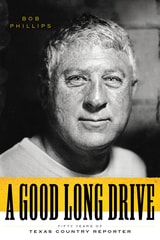
A Good Long Drive
Fifty Years of Texas Country ReporterBob Phillips
University of Texas Press, 2021
In 2021, Texas Country Reporter celebrates its fiftieth season on the air. Broadcast every week on stations across Texas, it focuses on “ordinary people doing extraordinary things.” And at the center of it is Bob Phillips, the show’s creator and host—an erstwhile poor kid from Dallas who ended up with a job that allowed him to rub elbows with sports figures, entertainers, and politicians but who preferred to spend his time on the back roads, listening to less-famous Texans tell their stories.
In this memoir, Phillips tells his own story, from his early days as a reporter and his initial pitch for the show while a student at SMU to his ongoing work at the longest-running independently produced TV show in American television history. As we travel with Phillips on his journey, we meet Willie Nelson and former Dallas Cowboys coach Tom Landry; reflect on memorable, unusual, and challenging show segments; experience the behind-the-scenes drama that goes on in local television; witness the launching of an annual festival; and discover the unbelievable allure of Texas, its culture, and, especially, its people. Spanning generations, A Good Long Drive is proof that life’s journey really is a destination unto itself.
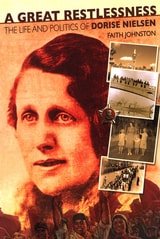
A Great Restlessness
The Life and Politics of Dorise NielsenFaith Johnston
University of Manitoba Press, 2006
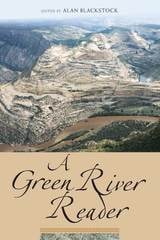
A Green River Reader
Alan Blackstock
University of Utah Press, 2005
"There is something ominous about a swift river, and something thrilling about a river of any kind."—from Beyond the Hundredth Meridian by Wallace Stegner
Beginning above Flaming Gorge Dam in southwestern Wyoming, the Green River traverses the complete variety of terrain on the Colorado Plateau before joining the Colorado River above Cataract Canyon in southeastern Utah. Like its more famous cousin, the Colorado, the Green has captivated, capsized, and cajoled all types of characters with challenges and beauty to match its geologic variety.
In A Green River Reader editor Alan Blackstock brings this mysterious, magnificent, thrilling river to the reader with an interpretive guide that will inform both river novices and river veterans. Assembled here is every significant written testament to this "awesome ditch," from Domínguez-Escalante to Kit Carson and John C. Frémont; to contemporary American naturalists and writers including Wallace Stegner, Bernard DeVoto, David Brower, Ann Zwinger, Ellen Melloy, and Edward Abbey. Those with a story to tell—those who trapped the Green’s beavers, endured its wild rapids, were humbled by its imposing canyon walls, fought for its beautiful landscapes, or whose "pulse was hurried" by the "lofty chasms, walled in by precipices of red rock"—are collected here.
If you’re headed down the Green, make sure that your dry bag or ammo can has room for just one more thing, your copy of A Green River Reader.

A Grotesque Animal
Amy Lee Lillard
University of Iowa Press, 2024
A Grotesque Animal explores the making, unmaking, and making again of a woman with an undiagnosed disorder. How did a working- class background and a deep-rooted Midwest culture of silence lead to hiding in plain sight for decades? How did sexuality and anger hide the roots of trauma among the women in her family? And what does it mean to be a queer, disabled, aging woman, a descendent of wild but tamed mothers and a survivor of the things patriarchy inflicts?
Through wide-ranging styles and a combination of personal storytelling and cultural analysis, Lillard dissects anger, sexuality, autistic masking, bodies, punk, and female annihilation to create a new picture of modern women.
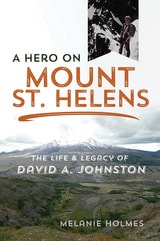
A Hero on Mount St. Helens
The Life and Legacy of David A. JohnstonMelanie Holmes. Foreword by Jeff Renner
University of Illinois Press, 2019
Melanie Holmes tells the story of Johnston's journey from a nature-loving Boy Scout to a committed geologist. Blending science with personal detail, Holmes follows Johnston through his encounters with Aleutian volcanoes, his work helping the Portuguese government assess the geothermal power of the Azores, and his dream job as a volcanologist with the U.S. Geological Survey. Interviews and personal writings reveal what a friend called “the most unjaded person I ever met,” an imperfect but kind and intelligent young scientist passionately in love with his life and work and determined to make a difference.

A Historian and His World
A Life of Christopher Dawson, 1889-1970Christina Scott
Catholic University of America Press, 2023
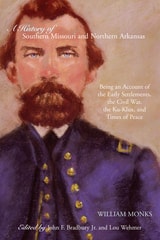
A History of Southern Missouri and Northern Arkansas
Being an Account of the Early Settlements, the Civil War, the Ku-Klux, and Times of PeaceWilliam Monks
University of Arkansas Press, 2006
Originally published in 1907 and now reprinted for the first time, this is the only account published by a Union guerrilla in the border region of the central Ozarks, where political and civil violence lasted from the Civil War well into the 1880s.
There were probably many people who wanted to shoot Billy Monks. He was a Union patriot and skilled guerrilla fighter to some, but others called him a bushwhacker, a murderer, and a thief. His was a very personal combat: he commanded, rallied, arrested, killed, quarreled with, and sued people he knew. His life provides a striking example of the cliché that the war did not end in 1865, but continued fiercely on several fronts for another decade as partisan factions settled old scores and battled for local political control.
This memoir was Monks’s last salvo at his old foes, by turns self-defense and an uncompromising affirmation of the Radical Union cause in the Ozarks. The editors include a new biographical sketch of the author, fill in gaps in his narrative, identify all the people and places to which he refers, and offer a detailed index. Monks himself illustrated the volume with staged photographs of key events re-created by aged comrades who appear to have been just barely able to hoist the muskets they hold as props.
A Hitler Youth in Poland
The Nazi Children's Evacuation Program During World War IIJost Hermand
Northwestern University Press, 1997
During the Nazi era, millions of German children between the ages of seven and sixteen were taken from their homes and sent to Hitler Youth paramilitary camps to be toughened up and taught how to be "German." Separated from their families and sent to the far-flung corners of Europe, these children often endured incredible abuse by the adults in charge. In this memoir, Jost Hermand, a cultural critic and historian who spent much of his youth in five different camps, writes about his experiences as a small, unathletic boy thrown into a "wolf pack" governed by brutalization, dreary routine, and sadism.
Intelligent and persuasive, A Hitler Youth in Poland should be read by anyone interested in psychology or the history of everyday life in Hitler's Germany and the mental scars of adults born during the Nazi regime.
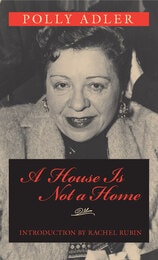
A House Is Not a Home
Polly Adler
University of Massachusetts Press, 2006
Polly Adler's “house”—the brothel that gave this best-selling 1953 autobiography its title—was a major site of New York City underworld activity from the 1920s through the 1940s. Adler's notorious Lexington Avenue house of prostitution functioned as a sort of social club for New York's gangsters and a variety of other celebrities, including Robert Benchley and his friend Dorothy Parker. According to one New York tabloid, it made Adler's name “synonymous with sin.”
This new edition of Adler's autobiography brings back into print a book that was a mass phenomenon, in both hardback and paperback, when it was first published. A self-consciously literary work, A House Is Not a Home provides an informal social history of immigrant mobility, prostitution, Jewish life in New York, police dishonesty, the “white slavery” scare of the early twentieth century, and political corruption.
Adler's story fills an important gap in the history of immigrant life, urban experience, and organized crime in New York City. While most other accounts of the New York underworld focus on the lives of men, from Herbert Asbury's Gangs of New York through more recent works on Jewish and Italian gangsters, this book brings women's lives and problems to the forefront.
A House Is Not a Home is compellingly readable and was popular enough to draw Hollywood's attention in the early 1960s—leading to a film starring Shelley Winters as Adler. The book has been largely forgotten in the ensuing decades, lost both to its initial audience of general readers and to scholars in women's studies, immigration history, and autobiography who are likely to find it a treasure trove. Now, with a new introduction by Rachel Rubin that contextualizes Adler's life and literary achievement, A House Is Not a Home is again available to the many readers who have come to understand such “marginal” life stories as a special refraction of the more typical American success narrative.
A House on Stilts
Mothering in the Age of Opioid AddictionPaula Becker
University of Iowa Press, 2019
More than 2.5 million Americans are addicted to opioids, some half-million of these to heroin. For many of them, their drug addiction leads to lives of demoralization, homelessness, and constant peril. For parents, a child’s addiction upends family life, catapulting them onto a path no longer prescribed by Dr. Spock, but by Dante’s Inferno. Within this ten-year crucible, Paula is transformed by an excruciating, inescapable truth: the difference between what she can do and what she cannot do.
A Hunger for High Country
One Woman’s Journey to the Wild in Yellowstone CountrySusan Marsh
Oregon State University Press, 2014
A Jewish Family in Germany Today
An Intimate PortraitY. Michal Bodemann
Duke University Press, 2005
Among the Kalman cousins are an art gallery owner, a body builder, a radio personality, a former chief financial officer of a prominent U.S. bank, and a sculptor. They discuss Zionism, anti-Semitism, what it means to root for the German soccer team, Schindler’s List, money, success, marriage and intermarriage, and family history. They reveal their different levels of engagement with Judaism and involvement with local Jewish communities. Kalman is a pseudonym, and their anonymity allows the family members to talk with passion and candor about their relationships and their lives as Jews.
A Jewish Kapo in Auschwitz
History, Memory, and the Politics of SurvivalTuvia Friling
Brandeis University Press, 2014
A Journey to Point Omega
Autobiography from 1964Josef Pieper
St. Augustine's Press, 2018
Themes with which the reader of his previous works would be well acquainted recur in this volume. The dedicated Catholic philosopher, who preferred his independence as a trainer of teachers to the less independent role of a professor in a Catholic university, was quite prepared to criticize developments in the Church which resulted from Vatican II. In his defense of the sacred, which he deemed threatened by popularizing trends in the Church, he criticized what he saw as the watered down language in modern German translations of Church liturgical texts; the growing preference for secular garb; and the compromising developments which saw the sacramental signs – surrounding baptism, for instance – being reduced to such an extent that they no longer had the power to signify their sacred meaning even to a well-intentioned congregation.
A great lover of the philosophy of Plato, Augustine, and Aquinas – among many others –, Pieper highlighted the need for living a life of truth. He did not consider truth to be merely something abstract but as something to be lived existentially. While he could explain his philosophy in clear rational terms, something which especially stood to him in his post-war lectures to eager students who were hungry for intellectual guidance and leadership, the great interest of his philosophy was, possibly, his preoccupation with mystery – that which impinges on our inner lives but frustrates all our attempts to account for it in purely rational terms.
As a philosopher – one might say a Christian philosopher – Pieper seems to have observed the traditional boundaries drawn between philosophy and theology. His generation was exposed to the modernist debates in the Church. It would have been deemed heretical to say that the Divine could be grasped by our purely human thought processes – access to the Divine being only possible through faith and grace. Pieper was no heretic. But he was also not altogether conservative. In fact, his philosophy, closely allied to existentialism – despite his care, for instance, to distance himself from the negative existentialism of Sartre – focused on the individual’s inner existential grasp of the most profound reality. Truth is to be found within us, even if it remains a mystery. What lies beyond death is, for the individual, the ultimate mystery.
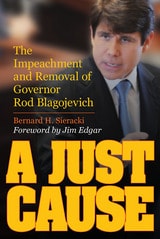
A Just Cause
The Impeachment and Removal of Governor Rod BlagojevichBernard H. Sieracki. Foreword by Jim Edgar
Southern Illinois University Press, 2016
During the predawn hours of December 9, 2008, an FBI team swarmed the home of Illinois governor Rod Blagojevich and took him away in handcuffs. The shocking arrest, based on allegations of corruption and extortion, launched a chain of political events never before seen in Illinois. In A Just Cause, Bernard H. Sieracki delivers a dynamic firsthand account of this eight-week political crisis, beginning with Blagojevich’s arrest, continuing through his impeachment and trial, and culminating in his conviction and removal from office. Drawing on his own eyewitness observations of the hearings and trial, the comments of interviewees, trial transcripts, and knowledge gained from decades of work with the Illinois legislature, Sieracki tells the compelling story of the first impeachment and removal from office of an Illinois governor, while providing a close look at the people involved.
A Just Cause depicts Blagojevich as a master of political gamesmanship, a circus ringmaster driven by personal ambition and obsessed with private gain. Sieracki examines in depth the governor’s unethical behavior while in office, detailing a litany of partisan and personal hostilities that spanned years. He thoroughly covers the events leading to Blagojevich’s downfall and the reactions of the governor’s cohorts. The author discusses the numerous allegations against Blagojevich, including attempts to “sell” appointments, jobs, and contracts in exchange for financial contributions. Sieracki then exhaustively recounts Blagojevich’s senate trial and the governor’s removal from office.
This engrossing volume is both a richly detailed case study of the American checks-and-balances system and an eyewitness account of unprecedented events. It will appeal to anyone interested in the stunning, true tale of a state upholding the maxim “The welfare of the people is the supreme law.”
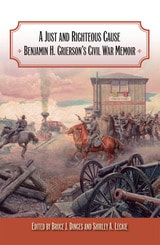
A Just and Righteous Cause
Benjamin H. Grierson’s Civil War MemoirEdited by Bruce J. Dinges and Shirley A. Leckie
Southern Illinois University Press, 2008
General Benjamin H. Grierson is most widely known as the brilliant cavalryman whose actions in the Civil War's Mississippi Valley campaign facilitated Ulysses S. Grant's capture of Vicksburg. There is, however, much more to this key Union officer than a successful raid into Confederate-held Mississippi. In A Just and Righteous Cause: Benjamin H. Grierson's Civil War Memoir, edited by Bruce J. Dinges and Shirley A. Leckie, Grierson tells his story in forceful, direct, and highly engaging prose.
A Just and Righteous Cause paints a vivid picture of Grierson's prewar and Civil War career, touching on his antislavery views, Republican Party principles, and military strategy and tactics. His story begins with his parents' immigration to the United States and follows his childhood, youth, and career as a musician; the early years of his arriage; his business failures prior to becoming a cavalry officer in an Illinois regiment; his experiences in battle; and his Reconstruction appointment. Grierson also provides intimate accounts of his relationships with such prominent politicians and Union leaders as Abraham Lincoln, Richard Yates, Andrew Johnson, William T. Sherman, Ulysses S.
Grant, John C. Frémont, and Benjamin Prentiss.
Because Grierson wrote the memoir mainly with his family as the intended audience, he manages to avoid the self-promotion that plagues many of his contemporaries' chronicles. His reliance on military records and correspondence, along with family letters, lends an immediacy rarely found in military memoirs. His reminiscences also add fuel to a reemerging debate on soldiers' motivations for enlisting—in Grierson's case, patriotism and ideology—and shed new light on the Western theater of the Civil War, which has seen a recent surge in interest among Civil War enthusiasts.
A non-West Point officer, Grierson owed his developing career to his independent studies of the military and his connections to political figures in his home state of Illinois and later to important Union leaders. Dinges and Leckie provide a helpful introduction, which gives background on the memoir and places Grierson's career into historical context. Aided by fourteen photos and two maps, as well as the editors' superb annotations, A Just and Righteous Cause is a valuable addition to Civil War history.
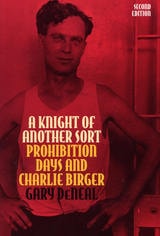
A Knight of Another Sort
Prohibition Days and Charlie Birger, Second EditionGary DeNeal. Foreword by Jim Ballowe
Southern Illinois University Press, 1998
In 1913 Charlie Birger began his career as a bootlegger, supplying southern Illinois with whiskey and beer. He was charismatic, with an easygoing manner and a cavalier generosity that made him popular. The stuff of legend, he was part monster, part Robin Hood. In the early days, he would emerge from his restaurant/saloon in tiny Ledford in Saline County with a cigar box full of coins and throw handfuls in the air for the children. Echoing the consensus on Birger, an anonymous gang member called him "enigmatic," noting that "he had a wonderful quality, a heart of gold. There in Harrisburg sometimes he'd support twelve or fifteen families, buy coal, groceries. . . . [But] he had cold eyes, a killer's eyes. He would kill you for something somebody else would punch you in the nose for."
Drawing from the colorful cast of the living, the dead, and the soon-to-be-dead—a state shared by many associated with Birger and his enemies, the Shelton gang—DeNeal re-creates Prohibition-era southern Illinois. He depicts the fatal shootout between S. Glenn Young and Ora Thomas, the battle on the Herrin Masonic Temple lawn in which six were slain and the Ku Klux Klan crushed, and the wounding of Williamson County state's attorney Arlie O. Boswell. As the gang wars escalated and the roster of corpses lengthened, the gangsters embraced technology. The Sheltons bombed Birger's roadhouse, Shady Rest, from a single-engine airplane. Both Birger and the Sheltons used armored vehicles to intimidate their enemies, and the chatter of machine gun fire grew common.
The gang wars ended with massive arrests, trials, and convictions of gangsters who once had seemed invincible. Charlie Birger was convicted of the murder of West City mayor Joe Adams and sentenced to death. On April 19, 1928, he stood on the gallows looking down on the large crowd that had come to see him die. "It's a beautiful world," Birger said softly as he prepared to leave it.
A Lawless Breed
John Wesley Hardin, Texas Reconstruction, and Violence in the Wild WestChuck Parsons
University of North Texas Press, 2013
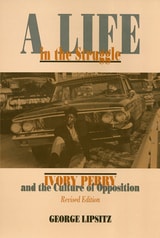
A Life In The Struggle
Ivory Perry and the Culture of OppositionGeorge Lipsitz
Temple University Press, 1995
A Life Teaching Languages
A Memoir from Mississippi to the BronxLinda Watkins-Goffman
University of Michigan Press, 2015
In this memoir of an educator, Watkins-Goffman offers insights she has gained from her years of traveling, teaching, and writing and shares how her experiences have shaped her teaching philosophy. According to Watkins-Goffman, teachers must communicate authentically to teach effectively and, to accomplish this, they must connect their own experiences in some way with those of their students. The stories she tells are sure to resonate with pre-service and practicing teachers alike. Her reflections about her own experiences will be useful to readers who plan to become ESL educators, or those who simply seek inspiration about teaching.

A Life in Music from the Soviet Union to Canada
Memoirs of a Madrigal Ensemble SingerAlexander Tumanov
University of North Texas Press, 2019
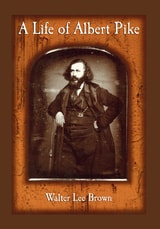
A Life of Albert Pike
Walter Lee Brown
University of Arkansas Press, 1997
Drawing on original documents, Pike’s copious writings, and interviews with Pike’s descendants, Walter Lee Brown presents a fascinating personal history that also serves as a rich compendium of Arkansas’s antebellum history.
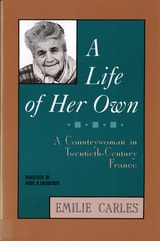
A Life of Her Own
A Countrywoman in Twentieth-Century FranceCarles, Émilie
Rutgers University Press, 1991
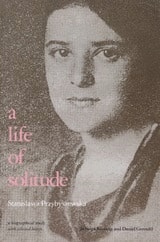
A Life of Solitude
Stanislawa Przybyszewska, a Biographical Study with Selected LettersJadwiga Kosicka
Northwestern University Press, 1986
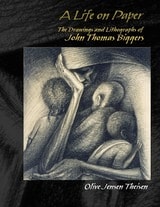
A Life on Paper
The Drawings and Lithographs of John Thomas BiggersOllie Jensen Theisen
University of North Texas Press, 2006
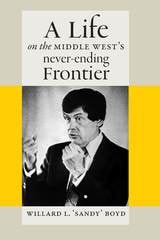
A Life on the Middle West's Never-Ending Frontier
Willard L. Boyd
University of Iowa Press, 2019
His memoir, interspersed with personal wisdom gleaned over more than six decades of service and leadership, encapsulates Sandy’s shrewd yet optimistic view of the public university as an institution. At every stage in his life—in the U.S. Navy during World War II, while practicing law or teaching, and in leadership positions at Chicago’s Field Museum and the University of Iowa— Sandy relied on his principles of open disclosure, inclusiveness, and respect for differences to guide him on issues that matter.
This chronicle of Sandy’s experiences throughout his life shows us the evolution both of the University of Iowa and of the nation writ large. More importantly, this book gives us a lens through which to examine our present situation, whether debating free speech on campus, the role of the arts and humanities in civil society, or the importance of funding for educational and cultural institutions.
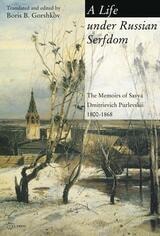
A Life under Russian Serfdom
The Memoirs of Savva Dmitrievich Purlevskii, 1800–68Boris B. Gorshkov
Central European University Press, 2005
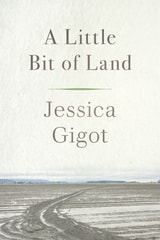
A Little Bit of Land
Jessica Gigot
Oregon State University Press, 2022
From midwifing new lambs to harvesting basil, Jessica Gigot invites the reader into her life on a small farm and the uncommon road that led her there. Fascinated by farming and the burgeoning local food movement, she spent her twenties wandering the Pacific Northwest, interning at small farms and doing graduate work in horticulture, always with an eye towards learning as much as she could about how and why people farm. Despite numerous setbacks and the many challenges of farming, she created a family and farm life defined by resilience and a genuine love of the land.
In A Little Bit of Land, Gigot explores the intricacies of small-scale agriculture in the Pacific Northwest and the changing role of women in this male-dominated industry. Gigot alternates between chapters describing joys, routines, and challenges of farm life and chapters reflecting on her formative experiences in agriculture, on farms and in classrooms from Ashland to the Skagit Valley. Throughout, she explores questions of sustainability, economics, health, and food systems.
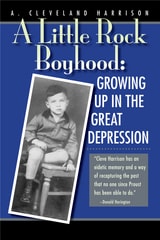
A Little Rock Boyhood
Growing Up in the Great DepressionA. Cleveland Harrison
Butler Center for Arkansas Studies, 2010
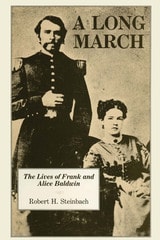
A Long March
The Lives of Frank and Alice BaldwinBy Robert H. Steinbach
University of Texas Press, 1990
During a distinguished military career, in which he rose to the rank of brigadier general and twice won the Medal of Honor, Frank Baldwin saw service in the Civil War, the Indian wars on the Great Plains, and the Spanish-American War. His wife, Alice Blackwood Baldwin, shared the "long march" with him, from his Plains service onward. In this first biography of the Baldwins, Robert Steinbach combines military and personal history to vividly portray a marriage that survived both the harshness of frontier army life and the restrictive Victorian concept of "separate spheres" for husband and wife.
Drawing on a wealth of diaries, letters, and other family papers, Steinbach re-creates the Baldwins' life on the Plains. Moving from post to post in Kansas, New Mexico, Montana, North Dakota, and Texas, they faced danger, excitement, separations, poverty, and many other hardships. Frequently they clashed over Alice's desire to be something more than "an ornament to society"—a wish eventually granted as Frank's long absences and chronic ill health required Allie to take responsibility for herself and their daughter.
With insights into military campaigns on the Great Plains in the years 1865–1890 and a revealing look at the human side of those campaigns, A Long March will appeal to a wide audience.
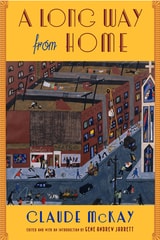
A Long Way From Home
Jarrett, Gene A
Rutgers University Press, 2007
Claude McKay (1889–1948) was one of the most prolific and sophisticated African American writers of the early twentieth century. A Jamaican-born author of poetry, short stories, novels, and nonfiction, McKay has often been associated with the “New Negro” or Harlem Renaissance, a movement of African American art, culture, and intellectualism between World War I and the Great Depression. But his relationship to the movement was complex. Literally absent from Harlem during that period, he devoted most of his time to traveling through Europe, Russia, and Africa during the 1920s and 1930s. His active participation in Communist groups and the radical Left also encouraged certain opinions on race and class that strained his relationship to the Harlem Renaissance and its black intelligentsia. In his 1937 autobiography, A Long Way from Home, McKay explains what it means to be a black “rebel sojourner” and presents one of the first unflattering, yet informative, exposés of the Harlem Renaissance. Reprinted here with a critical introduction by Gene Andrew Jarrett, this book will challenge readers to rethink McKay’s articulation of identity, art, race, and politics and situate these topics in terms of his oeuvre and his literary contemporaries between the world wars.

A Love Affair with Birds
The Life of Thomas Sadler RobertsSue Leaf
University of Minnesota Press, 2021
The father of Minnesota ornithology, whose life story opens a window on a lost world of nature and conservation in the state’s early days
Imagine a Minneapolis so small that, on calm days, the roar of St. Anthony Falls could be heard in town, a time when passenger pigeons roosted in neighborhood oak trees. Now picture a dapper professor conducting his ornithology class (the university’s first) by streetcar to Lake Harriet for a morning of bird-watching. The students were mostly young women—in sunhats, sailor tops, and long skirts, with binoculars strung around their necks. The professor was Thomas Sadler Roberts (1858–1946), a doctor for three decades, a bird lover virtually from birth, the father of Minnesota ornithology, and the man who, perhaps more than any other, promoted the study of the state’s natural history. A Love Affair with Birds is the first full biography of this key figure in Minnesota’s past.
Roberts came to Minnesota as a boy and began keeping detailed accounts of Minneapolis’s birds. These journals, which became the basis for his landmark work The Birds of Minnesota, also inform this book, affording a view of the state’s rich avian life in its early days—and of a young man whose passion for birds and practice of medicine in a young Minneapolis eventually dovetailed in his launching of the beloved Bell Museum of Natural History.
Bird enthusiast, doctor, author, curator, educator, conservationist: every chapter in Roberts’s life is also a chapter in the state’s history, and in his story acclaimed author Sue Leaf—an avid bird enthusiast and nature lover herself—captures a true Minnesota character and his time.
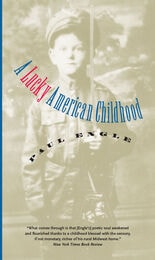
A Lucky American Childhood
Paul Engle
University of Iowa Press, 1996
A Lucky American Childhood will appeal to people with memories of the small-town America that Paul Engle describes with such affectionate realism and to all those interested in the roots of this renowned man of letters.
A Machine-Gunner in France
The Memoirs of Ward Schrantz, 35th Division, 1917-1919Ward Schrantz
University of North Texas Press, 2019
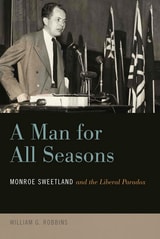
A Man for All Seasons
Monroe Sweetland and the Liberal ParadoxWilliam Robbins
Oregon State University Press, 2015
Historian William G. Robbins illuminates the wrenching transformation of American political culture in A Man for All Seasons: Monroe Sweetland and the Liberal Paradox. Racial and economic inequalities motivated much of Sweetland’s civic life, including his lifelong memberships in the American Civil Liberties Committee, the National Association for the Advancement of Colored People, the Urban League, the Japanese American Citizens League, and the Red Cross, where Sweetland worked repatriating American prisoners of war after Japan’s surrender.
Robbins’ portrait is holistic, exploring Sweetland’s socialist beginnings, inconsistencies in his politics—especially during the Cold War—and his regional legacy. He was the most important person in the resurgence of the modern, liberal Oregon Democratic Party from the late 1940s to the 1960s. He joined the National Education Association in 1964 and became the driving force behind the Bilingual Education Act of 1968 and the fight for the age-18 vote, achieved in the ratification of the 26th amendment in 1971. Monroe Sweetland was a nationally prominent figure, whose fights bequeathed to modern America important legislation that shaped its political landscape.
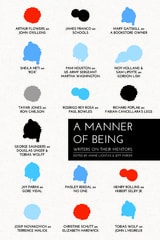
A Manner of Being
Writers on Their MentorsAnnie Liontas
University of Massachusetts Press, 2015
What do the punk singer Henry Rollins, the Guatemalan writer Rodrigo Rey Rosa, the American authors Tobias Wolff, Tayari Jones, and George Saunders, the Canadian writer Sheila Heti, and the Russian poet Polina Barskova have in common? At some point they all studied the art of writing deeply with someone.
The nearly seventy short essays in A Manner of Being, by some of the best contemporary writers from around the world, pay homage to mentors—the writers, teachers, nannies, and sages—who enlighten, push, encourage, and sometimes hurt, fail, and limit their protégés. There are mentors encountered in the schoolhouse and on farms, in NYC and in MFA programs; mentors who show up exactly when needed, offering comfort, a steadying hand, a commiseration, a dose of tough love. This collection is rich with anecdotes from the heartfelt to the salacious, gems of writing advice, and guidance for how to live the writing life in a world that all too often doesn't care whether you write or not.
Each contribution is intimate and distinct—yet a common theme is that mentors model a manner of being.
Selections include:
Arthur Flowers on John O'Killens
James Franco on Harmony Korine
Mary Gaitskill on an Ann Arbor bookstore owner
Noy Holland and Sam Lipsyte on Gordon Lish
Tayari Jones on Ron Carlson
Henry Rollins on Hubert Selby Jr.
Rodrigo Rey Rosa on Paul Bowles
George Saunders on Douglas Unger and Tobias Wolff
Christine Schutt on Elizabeth Hardwick
Tobias Wolff on John L'Heureux
. . . and many more