Results by title
1882 books match the query 'Criticism and interpretation' and 144 start with a

After The Grapes Of Wrath
Essays On John Steinbeck In Honor of Tetsumaro HayashiDonald V. Coers
Ohio University Press, 1994
Traditionally, the critical reputation of Nobel Prize-winning American novelist John Steinbeck (1902-1968) has rested on his achievements of the 1930s, especially In Dubious Battle (1936), Of Mice and Men (19370, The Long Valley (1938), and, of course, The Grapes of Wrath (1939), one of the most powerful – and arguable on of the greatest – American novels of this century.
Book reviewers and academic critics often turned antagonistic toward Steinbeck when he no longer produced work with the sweeping reach and social consciousness of The Grapes of Wrath. He was accused of selling out, or co-opting his talent, when in fact the inordinate public success of Grapes and especially its attendant notoriety had caused a backlash for Steinbeck. As a result he became self-conscious about his own ability, and suspicious of that “clumsy vehicle,” the novel. The very act of researching and writing Grapes, which occupied him fully for several years and which he had already conceived as his final book on proletarian themes, changed him drastically.
No longer willing to be the chronicler of Depression-era subjects, Steinbeck went afield to find new roots, new sources, new forms. For example, in the six years following the publication of Grapes, Steinbeck completed a suit of love poems; a full-length novel (bastardized by Alfred Hitchcock in his 1943 film, Lifeboat); a nonfiction scientific book, Sea of Cortez: A Leisurely Journal of Travel and Research (with Edward F. Ricketts); a documentary film, The Forgotten Village; a documentary book to help the war effort, Bombs Away: The Story of a Bomber Team; a series of articles he wrote as a war correspondent for the New York Herald Tribune (later collected as Once There Was a War); and two novels, The Moon Is Down and Cannery Row.
Steinbeck came to define himself less as a novelist and more as a man of letters, a restless experimenter with form and subject matter, and a prophetic postmodernist whose key subject for the rest of his career was the dilemma of individual choice and ethical consciousness. Thus, Steinbeck’s later fiction, from The Moon Is Down (1942) through The Winter of Our Discontent (1962), and his later nonfiction, from Sea of Cortez (1941) through Travels with Charley (1962) and America and Americans (1966), often shows a different set of stylistic, thematic, and philosophical bearings from his earlier work and underscores his dramatic shift toward “individual thinking.” A full appreciation of Steinbeck’s mid-career metamorphosis and, consequently, of his later achievement requires a corresponding shift in critical approach – a departure from the traditional New Critical norms. Instead of marginalizing these works, all the contributors to this volume agree that Steinbeck’s later publications merit – indeed, demand – closer scrutiny.
Written especially for this collection in honor of Professor Tetsumaro Hayashi, the distinguished founder and editor-in-chief of the Steinbeck Quarterly, on his retirement from Ball State University and his move to Kwassui Women’s College in Nagasaki, Japan, these essays explore new ways of addressing Steinbeck’s later work and career, and include forays into subjects as diverse as ethnicity and music. They range from treatment of his post-structuralist use of language in Sea of Cortez and his involvement as a speech writer for Franklin Delano Roosevelt’s reelection bid in 1944 to the influence of Charles Darwin’s theories of sexual selection in The Wayward Bus, his revision of the myth of Cain in The Winter of Our Discontent, and his employment of Arthurian quest values in his last book, America and Americans.
For this group of critics – which includes respected veteran Steinbeck scholars Robert DeMott, John Ditsky, Mimi Gladstein, Cliff Lewis, Robert Morsberger, Susan Shillinglaw, and Roy Simmonds, as well as talented new voices Debra Barker, Kevin Hearle, Michael Meyer, Brian Railsback, Eiko Shiraga, and Geralyn Strecker – The Moon is Down and The Wayward Bus loom as significant works in the post 1930s re-evaluation (two essays each appear on these works). The book also includes Donald Coers’s interview with the writer’s widow, Elaine Steinbeck, the first of its kind ever published. After The Grapes of Wrath opens with eminent Americanist Warren French’s appreciation of Professor Hayashi’s distinguished career and his influence in Steinbeck studies; a bibliography of Hayashi’s major publication concludes this honorary gathering.
After the Nation
Postnational Satire in the Works of Carlos Fuentes and Thomas PynchonPedro García-Caro Foreword by Jean Franco
Northwestern University Press, 2014
After the Nation proposes a series of groundbreaking new approaches to novels, essays, and short stories by Carlos Fuentes and Thomas Pynchon within the framework of a hemispheric American studies. García-Caro offers a pioneering comparativist approach to the contemporary American and Mexican literary canons and their underlying nationalist encodement through the study of a wide range of texts by Pynchon and Fuentes which question and historicize in different ways the processes of national definition and myth-making deployed in the drawing of literary borders. After the Nation looks at these literary narratives as postnational satires that aim to unravel and denounce the combined hegemonic processes of modernity and nationalism while they start to contemplate the ensuing postnational constellations. These are texts that playfully challenge the temporal and spatial designs of national themes while they point to and debase “holy” borders, international borders as well as the internal lines where narratives of nation are embodied and consecrated.
After the Whale
Melville in the Wake of Moby-DickClark Davis
University of Alabama Press, 1995
Beyond Moby-Dick: Reinterpreting Melville's later works through language, embodiment, and literary transformation.
The study focuses on Melville’s vision of the purpose and function of language from Moby-Dick through Billy Budd with a special emphasis on how language—in function and form—follows and depends on the function and form of the body, how Melville’s attitude toward words echoes his attitude toward fish. Davis begins by locating and describing the fundamental dialectic formulated in Moby-Dick in the characters of Ahab and Ishmael. This dialectic produces two visions of bodily reality and two corresponding visions of language: Ahab’s, in which language is both weapon and substitute body, and Ishmael’s, in which language is an extension of the body—a medium of explanation, conversation, and play. These two forms of language provide a key to understanding the difficult relationships and formal changes in Melville’s writings after Moby-Dick.
By following each work’s attitude toward the dialectic, we can see the contours of the later career more clearly and so begin a movement away from weakly contextualized readings of individual novels and short stories to a more complete consideration of Melville’s career. Since the rediscovery of Herman Melville in the early decades of this century, criticism has been limited to the prose in general and to a few major works in particular.
Those who have given significant attention to the short fiction and poetry have done so frequently out of context, that is, in multi-author works devoted exclusively to these genres. The result has been a criticism with large gaps, most especially for works from Melville’s later career. The relative lack of interest in the poetry has left us with little understanding of how Melville’s later voices developed, of how the novels evolved into tales, the tales into poetry, and the poetry back into prose. In short, the development of Melville’s art during the final three decades of his life remains a subject of which we have been afforded only glimpses, rarely a continuous attention. After the Whale provides a new, more comprehensive understanding of Melville’s growth as a writer.
Agnes Varda
Kelley Conway
University of Illinois Press, 2015
Ain't I an Anthropologist
Zora Neale Hurston Beyond the Literary IconJennifer L. Freeman Marshall
University of Illinois Press, 2023
Perceptive and original, Ain’t I an Anthropologist is an overdue reassessment of Zora Neale Hurston’s place in American cultural and intellectual life.
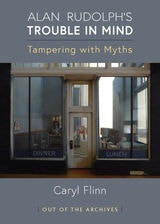
Alan Rudolph's Trouble in Mind
Tampering with MythsCaryl Flinn
University of Michigan Press, 2023
Despite a career spanning over forty years, filmmaker Alan Rudolph has flown largely under the radar of independent film scholars and enthusiasts, often remembered as Robert Altman’s protégé. Through a reading of his 1985 film Trouble in Mind, Caryl Flinn demonstrates that Rudolph is long overdue for critical re-evaluation.
Exploring Trouble in Mind’s influence on indie filmmaking, Rudolph’s dream-like style, and the external political influences of the Reagan era, Flinn effectively conveys the originality of Rudolph’s work through this multifaceted film. Utilizing archival materials and interviews with Rudolph himself and his collaborators, Flinn argues for this career-defining film’s relevance to American independent cinema and the decade of the 1980s. Amply illustrated with frame enlargements and set photographs, this book uncovers new production stories and reception contexts of a film that Flinn argues deserves a place in the limelight.
Alarms & Epitaphs
The Art of Eric AmblerPeter Wolfe
University of Wisconsin Press, 1993
Albert Camus' Critique of Modernity
Ronald D. Srigley
University of Missouri Press, 2011
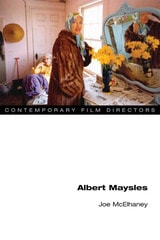
Albert Maysles
Joe McElhaney
University of Illinois Press, 2008

Albrecht Altdorfer and the Origins of Landscape
Christopher S. Wood
University of Chicago Press, 1993
Albrecht Durer's Renaissance
Humanism, Reformation, and the Art of FaithDavid Hotchkiss Price
University of Michigan Press, 2003
David Price is Associate Professor of History and of Church History, Southern Methodist University.
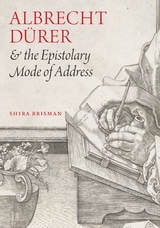
Albrecht Dürer and the Epistolary Mode of Address
Shira Brisman
University of Chicago Press, 2016
In the early modern period, before the establishment of a reliable postal system, letters faced risks of interception and delay. During the Reformation, the printing press threatened to expose intimate exchanges and blur the line between public and private life. Exploring the complex travel patterns of sixteenth-century missives, Brisman explains how these issues of sending and receiving informed Dürer’s artistic practices. His success, she contends, was due in large part to his development of pictorial strategies—an epistolary mode of address—marked by a direct, intimate appeal to the viewer, an appeal that also acknowledged the distance and delay that defers the message before it can reach its recipient. As images, often in the form of prints, coursed through an open market, and artists lost direct control over the sale and reception of their work, Germany’s chief printmaker navigated the new terrain by creating in his images a balance between legibility and concealment, intimacy and public address.
Alchemies of Theater
Plays, Scores, WritingsDick Higgins
University of Michigan Press, 2024
Alchemies of Theater brings together a broad selection of Higgins’s writings and theater-related work, much of it unpublished or long out of print, including plays and performance scores, drawings, and writings on theater and performance. As this book demonstrates, Higgins deconstructed the drama long before it became a project of theater; undercut the traditional roles of author and director; created what is now considered “devised” theater; pioneered the use of media in theater, writing the first electronic opera; and was a precursor in deconstruction and “postdramatic” avant-garde traditions. His Intermedia manifesto offered a sweeping view of interdisciplinarity—in effect, a new arts ecology.
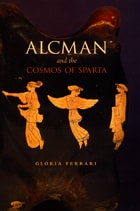
Alcman and the Cosmos of Sparta
Gloria Ferrari
University of Chicago Press, 2008
Alejandro González Iñárritu
Celestino Deleyto and Maria del Mar Azcona
University of Illinois Press, 2010

Aleksandr Sokurov
Russian ArkBirgit Beumers
Intellect Books, 2016
This companion to Russian Ark addresses all key aspects of the film, beginning with a comprehensive synopsis, an in-depth analysis, and an account of the production history. Birgit Beumers goes on from there to discuss the work that went into the now-legendary Steadicam shot—which required two thousand actors and three orchestras—and she also offers an account of the film’s critical and public reception, showing how it helped to establish director Aleksandr Sokurov as perhaps the leading filmmaker in Russia today.
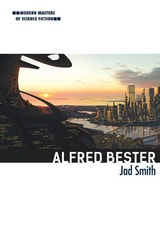
Alfred Bester
Jad Smith
University of Illinois Press, 2016
Jad Smith traces the career of the unlikeliest of SF icons. Winner of the first Hugo Award for The Demolished Man, Bester also worked in comics, radio, and TV, and his intermittent SF writing led some critics to brand him a dabbler. In the 1960s, however, New Wave writers championed his work, and his reputation grew. Smith follows Bester's journey from consummate outsider to an artist venerated for foundational works that influenced the New Wave and cyberpunk revolutions. He also explores the little-known roots of a wayward journey fueled by curiosity, disappointment with the SF mainstream, and an artist's determination to go his own way.
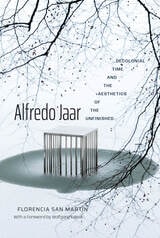
Alfredo Jaar
Decolonial Time and the Aesthetics of the UnfinishedFlorencia San Martin. With a Foreword by Wolfgang Kaleck.
Duke University Press, 2026
In Alfredo Jaar, Florencia San Martín analyzes the work of the prominent Chilean-born artist Alfredo Jaar, whose work challenges the linear and triumphalist temporality of Western modernity that obscures the violence of colonization and globalization. San Martín argues that Jaar’s work represents decolonial time, exposing the limits of the violent systems we inhabit. His art, she maintains, is informed by and responds to two interconnected historical events relevant to his own life: the US-backed military coup that established Pinochet’s dictatorship in Chile and the implementation around the world of the corollary neoliberal economic system. San Martín explores the key themes in Jaar’s artistic practice—mourning, accountability, and failure—which situates the victims of the Chilean regime in a global context, directly confronts the architects of atrocity, and questions how ideas of diversity and inclusion have been co-opted by modern neoliberal discourses. Alfredo Jaar enables us to reimagine art history, offering a fresh paradigm with which to think about global contemporary art.
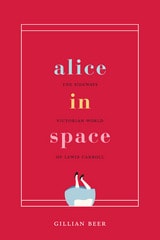
Alice in Space
The Sideways Victorian World of Lewis CarrollGillian Beer
University of Chicago Press, 2016
Gillian Beer explores Carroll’s work through the speculative gaze of Alice, for whom no authority is unquestioned and everything can speak. Parody and Punch, evolutionary debates, philosophical dialogues, educational works for children, math and logic, manners and rituals, dream theory and childhood studies—all fueled the fireworks. While much has been written about Carroll’s biography and his influence on children’s literature, Beer convincingly shows him at play in the spaces of Victorian cultural and intellectual life, drawing on then-current controversies, reading prodigiously across many fields, and writing on multiple levels to please both children and adults in different ways.
With a welcome combination of learning and lightness, Beer reminds us that Carroll’s books are essentially about curiosity, its risks and pleasures. Along the way, Alice in Space shares Alice’s exceptional ability to spark curiosity in us, too.
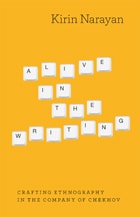
Alive in the Writing
Crafting Ethnography in the Company of ChekhovKirin Narayan
University of Chicago Press, 2012
Anton Chekhov is revered as a boldly innovative playwright and short story writer—but he wrote more than just plays and stories. In Alive in the Writing—an intriguing hybrid of writing guide, biography, and literary analysis—anthropologist and novelist Kirin Narayan introduces readers to some other sides of Chekhov: his pithy, witty observations on the writing process, his life as a writer through accounts by his friends, family, and lovers, and his venture into nonfiction through his book Sakhalin Island. By closely attending to the people who lived under the appalling conditions of the Russian penal colony on Sakhalin, Chekhov showed how empirical details combined with a literary flair can bring readers face to face with distant, different lives, enlarging a sense of human responsibility.
Highlighting this balance of the empirical and the literary, Narayan calls on Chekhov to bring new energy to the writing of ethnography and creative nonfiction alike. Weaving together selections from writing by and about him with examples from other talented ethnographers and memoirists, she offers practical exercises and advice on topics such as story, theory, place, person, voice, and self. A new and lively exploration of ethnography, Alive in the Writing shows how the genre’s attentive, sustained connection with the lives of others can become a powerful tool for any writer.
All Contraries Confounded
The Lyrical FictionKaren Kaivola
University of Iowa Press, 1991
Kaivola has worked out a strikingly original means of reading difference—and reading differently—in order to account for what has been inexplicable in different literary texts by women. All Contraries Confounded seeks to problematize feminist theory that celebrates resistance in fiction by women, for it questions the ability of dominant modes of feminist critical theory to recognize and address fully the forms of contradiction and ambivalence that riddle women's writings—and women's lives.
All about Almodóvar
A Passion for CinemaBrad Epps
University of Minnesota Press, 2009
All about Almodóvar offers new perspectives on the filmmaker’s artistic vision and cinematic preoccupations, influences, and techniques. Through overviews of his oeuvre and in-depth analyses of specific films, the essays here explore a diverse range of subjects: Almodóvar’s nuanced use of television and music in his films; his reworkings of traditional film genres such as comedy, horror, and film noir; his penchant for melodrama and its relationship to melancholy, violence, and coincidence; his intricate questioning of sexual and national identities; and his increasingly sophisticated inquiries into visuality and its limits.
Closing with Almodóvar’s own diary account of the making of Volver and featuring never-before-seen photographs from El Deseo production studio, All about Almodóvar both reflects and illuminates its subject’s dazzling eclecticism.
Allen Tate
John V. Glass III
Catholic University of America Press, 2016
Althusser, The Infinite Farewell
Emilio de Ipola
Duke University Press, 2018
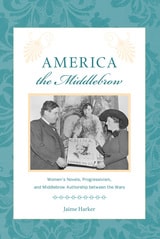
America the Middlebrow
Women's Novels, Progressivism, and Middlebrow Authorship between the WarsJaime Harker
University of Massachusetts Press, 2007
Between the two world wars, American publishing entered a “golden age” characterized by an explosion of new publishers, authors, audiences, distribution strategies, and marketing techniques. The period was distinguished by a diverse literary culture, ranging from modern cultural rebels to working-class laborers, political radicals, and progressive housewives. In America the Middlebrow, Jaime Harker focuses on one neglected mode of authorship in the interwar period—women's middlebrow authorship and its intersection with progressive politics.
With the rise of middlebrow institutions and readers came the need for the creation of the new category of authorship. Harker contends that these new writers appropriated and adapted a larger tradition of women's activism and literary activity to their own needs and practices. Like sentimental women writers and readers of the 1850s, these authors saw fiction as a means of reforming and transforming society. Like their Progressive Era forebears, they replaced religious icons with nationalistic images of progress and pragmatic ideology. In the interwar period, this mode of authorship was informed by Deweyan pragmatist aesthetics, which insisted that art provided vicarious experience that could help create humane, democratic societies.
Drawing on letters from publishers, editors, agents, and authors, America the Middlebrow traces four key moments in this distinctive culture of letters through the careers of Dorothy Canfield, Jessie Fauset, Pearl Buck, and Josephine Herbst. Both an exploration of a virtually invisible culture of letters and a challenge to monolithic paradigms of modernism, the book offers fresh insight into the ongoing tradition of political domestic fiction that flourished between the wars.
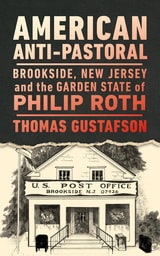
American Anti-Pastoral
Brookside, New Jersey and the Garden State of Philip RothThomas Gustafson
Rutgers University Press, 2024
American Anti-Pastoral reads the events in Roth’s novel in relation to the history of Brookside and its region. While Roth’s protagonist Seymour “Swede” Levov initially views Old Rimrock as an idyllic paradise within the Garden State, its real-world counterpart has a more complex past in its origins as a small industrial village, as well as a site for the politics of exclusionary zoning and a 1960s anti-war protest at its celebrated 4th of July parade. Literary historian and Brookside native Thomas Gustafson casts Roth’s canonical novel in a fresh light as he studies both Old Rimrock in comparison to Brookside and the novel in relationship to NJ literature, making a case for it as the Great New Jersey novel. For Roth fans and history buffs alike, American Anti-Pastoral peels back the myths about the bucolic Garden State countryside to reveal deep fissures along the fault-lines of race and religion in American democracy.
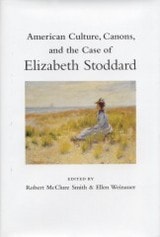
American Culture, Canons, and the Case of Elizabeth Stoddard
Robert McClure Smith
University of Alabama Press, 2003
Elizabeth Stoddard was a gifted writer of fiction, poetry, and journalism; successfully published within her own lifetime; esteemed by such writers as William Dean Howells and Nathaniel Hawthorne; and situated at the epicenter of New York’s literary world. Nonetheless, she has been almost excluded from literary memory and importance. This book seeks to understand why. By reconsidering Stoddard’s life and work and her current marginal status in the evolving canon of American literary studies, it raises important questions about women’s writing in the 19th century and canon formation in the 20th century.
Essays in this study locate Stoddard in the context of her contemporaries, such as Dickinson and Hawthorne, while others situate her work in the context of major 19th-century cultural forces and issues, among them the Civil War and Reconstruction, race and ethnicity, anorexia and female invalidism, nationalism and localism, and incest. One essay examines the development of Stoddard’s work in the light of her biography, and others probe her stylistic and philosophic originality, the journalistic roots of her voice, and the elliptical themes of her short fiction. Stoddard’s lifelong project to articulate the nature and dynamics of woman’s subjectivity, her challenging treatment of female appetite and will, and her depiction of the complex and often ambivalent relationships that white middle-class women had to their domestic spaces are also thoughtfully considered.
The editors argue that the neglect of Elizabeth Stoddard’s contribution to American literature is a compelling example of the contingency of critical values and the instability of literary history. This study asks the question, “Will Stoddard endure?” Will she continue to drift into oblivion or will a new generation of readers and critics secure her tenuous legacy?
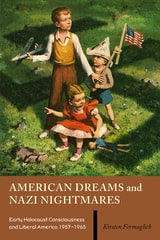
American Dreams and Nazi Nightmares
Early Holocaust Consciousness and Liberal America, 1957-1965Kirsten Fermaglich
University Press of New England, 2007
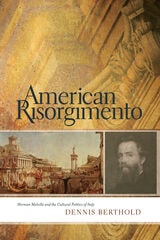
American Risorgimento
Herman Melville and the Cultural Politics of ItalyDennis Berthold
The Ohio State University Press, 2009
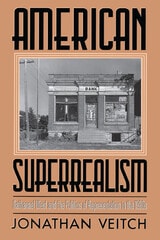
American Superrealism
Nathanael West and the Politics of Representation in the 1930sJonathan Veitch
University of Wisconsin Press, 1997
Nathanael West has been hailed as “an apocalyptic writer,” “a writer on the left,” and “a precursor to postmodernism.” But until now no critic has succeeded in fully engaging West’s distinctive method of negation. In American Superrealism, Jonathan Veitch examines West’s letters, short stories, screenplays and novels—some of which are discussed here for the first time—as well as West’s collaboration with William Carlos Williams during their tenure as the editors of Contact. Locating West in a lively, American avant-garde tradition that stretches from Marcel Duchamp to Andy Warhol, Veitch explores the possibilities and limitations of dada and surrealism—the use of readymades, scatalogical humor, human machines, “exquisite corpses”—as modes of social criticism. American Superrealism offers what is surely the definitive study of West, as well as a provocative analysis that reveals the issue of representation as the central concern of Depression-era America.
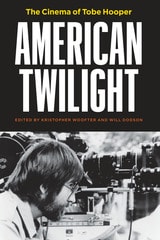
American Twilight
The Cinema of Tobe HooperBy Kristopher Woofter and Will Dodson
University of Texas Press, 2021
A master of gritty horror, Tobe Hooper captured on-screen an America in constant crisis and upended myths of prosperity to reveal the country’s internal decay.
Tobe Hooper's productions, which often trespassed upon the safety of the family unit, cast a critical eye toward an America in crisis. Often dismissed by scholars and critics as a one-hit wonder thanks to his 1974 horror classic The Texas Chain Saw Massacre, Hooper nevertheless was instrumental in the development of a robust and deeply political horror genre from the 1960s until his death in 2017. In American Twilight, the authors assert that the director was an auteur whose works featured complex monsters and disrupted America’s sacrosanct perceptions of prosperity and domestic security.
American Twilight focuses on the skepticism toward American institutions and media and the articulation of uncanny spaces so integral to Hooper’s vast array of feature and documentary films, made-for-television movies, television episodes, and music videos. From Egg Shells (1969) to Poltergeist (1982), Djinn (2013), and even Billy Idol’s music video for “Dancing with Myself” (1985), Tobe Hooper provided a singular directorial vision that investigated masculine anxiety and subverted the idea of American exceptionalism.
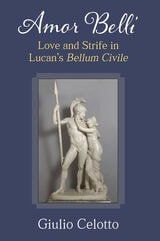
Amor Belli
Love and Strife in Lucan's Bellum CivileGiulio Celotto
University of Michigan Press, 2022
Compelled by the emperor Nero to commit suicide at age 25 after writing uncomplimentary poems, Latin poet Lucan nevertheless left behind a significant body of work, including the Bellum Civile (Civil War). Sometimes also called the Pharsalia, this epic describes the war between Julius Caesar and Pompey.Author Giulio Celotto provides an interpretation of this civil war based on the examination of an aspect completely neglected by previous scholarship: Lucan’s literary adaptation of the cosmological dialectic of Love and Strife.
According to a reading that has found favor over the last three decades, the poem is an unconventional epic that does not conform to Aristotelian norms: Lucan composes a poem characterized by fragmentation and disorder, lacking a conventional teleology, and whose narrative flow is constantly delayed. Celotto’s study challenges this interpretation by illustrating how Lucan invokes imagery of cosmic dissolution, but without altogether obliterating epic norms. The poem transforms them from within, condemning the establishment of the Principate and the Julio-Claudian dynasty.
Amy Levy
Critical EssaysLinda Hunt Beckman
Ohio University Press, 2000
Amy Levy
Critical EssaysNaomi Hetherington
Ohio University Press, 2010
Amy Levy has risen to prominence in recent years as one of the most innovative and perplexing writers of her generation. Embraced by feminist scholars for her radical experimentation with queer poetic voice and her witty journalistic pieces on female independence, she remains controversial for her representations of London Jewry that draw unmistakably on contemporary antisemitic discourse.
Amy Levy: Critical Essays brings together scholars working in the fields of Victorian cultural history, women’s poetry and fiction, and the history of Anglo-Jewry. The essays trace the social, intellectual, and political contexts of Levy’s writing and its contemporary reception. Working from close analyses of Levy’s texts, the collection aims to rethink her engagement with Jewish identity, to consider her literary and political identifications, to assess her representations of modern consumer society and popular culture, and to place her life and work within late-Victorian cultural debate.
This book is essential reading for undergraduate and postgraduate students offering both a comprehensive literature review of scholarship-to-date and a range of new critical perspectives.
Contributors:
Susan David Bernstein,University of Wisconsin-Madison
Gail Cunningham,Kingston University
Elizabeth F. Evans,Pennslyvania State University–DuBois
Emma Francis,Warwick University
Alex Goody,Oxford Brookes University
T. D. Olverson,University of Newcastle upon Tyne
Lyssa Randolph,University of Wales, Newport
Meri-Jane Rochelson,Florida International University
Américo Paredes
Culture and CritiqueBy José E. Limón
University of Texas Press, 2012
Several biographies of Américo Paredes have been published over the last decade, yet they generally overlook the paradoxical nature of his life’s work. Embarking on an in-depth, critical exploration of the significant body of work produced by Paredes, José E. Limón (one of Paredes’s students and now himself one of the world’s leading scholars in Mexican American studies) puts the spotlight on Paredes as a scholar/citizen who bridged multiple arenas of Mexican American cultural life during a time of intense social change and cultural renaissance.
Serving as a counterpoint to hagiographic commentaries, Américo Paredes challenges and corrects prevailing readings by contemporary critics of Paredes’s Asian period and of such works as the novel George Washington Gómez, illuminating new facets in Paredes’s role as a folklorist and public intellectual. Limón also explores how the field of cultural studies has drifted away from folklore, or “the poetics of everyday life,” while he examines the traits of Mexican American expressive culture. He also investigates the scholarly paradigm of ethnography itself, a stimulating inquiry that enhances readings of Paredes’s best-known study, “With His Pistol in His Hand,” and other works. Underscoring Paredes’s place in folklore and Mexican American literary production, the book questions the shifting reception of Paredes throughout his academic career, ultimately providing a deep hermeneutics of widely varied work. Offering new conceptions, interpretations, and perspectives, Américo Paredes gives this pivotal literary figure and his legacy the critical analysis they deserve.
An Archaeology of Sympathy
The Sentimental Mode in Literature and CinemaJames Chandler
University of Chicago Press, 2013
An Eye for Hitchcock
Pomerance, Murray
Rutgers University Press, 2004
In An Eye for Hitchcock, these movies are seen in a striking new way. Pomerance takes us deep into the structure of Hitchcock’s vision and his screen architecture, revealing key elements that have never been written about before. Pomerance also clearly reveals the link between Hitchcock’s work and a wide range of thinkers and artists in other fields, thereby offering viewers of Hitchcock’s films the rare opportunity to see them in an entirely new light.
Analogical Thinking
Post-Enlightenment Understanding in Language, Collaboration, and InterpretationRonald Schleifer
University of Michigan Press, 2001
The book traces this mode of thinking in linguistics, collaborative intellectual work in the arts and sciences, and interpretations of literary and sacred texts, concluding with a reading of the concept of Enlightenment in a comparison of Descartes and Foucault. The book examines the poststructuralism of Derrida; the collaborations of information theory and modern science as opposed to the individualism of Adam Smith and others, and analogical interpretations of Yeats, Dinesen, the Bible, Dreiser, and Mailer. Its overall aim is to present an interdisciplinary examination of a particular kind of understanding that responds to the experiences of our time.
Ronald Schleifer is Professor of English, University of Oklahoma. His books include Rhetoric and Death: The Language of Modernism and Postmodern Discourse Theory, Criticism and Culture; and Culture and Cognition: The Boundaries of Literary and Scientific Inquiry.

Andrea del Castagno and His Patrons
John R. Spencer
Duke University Press, 1991
Through careful and detailed archival research, Spencer creates a fascinating portrait of Castagno’s patronage as a web, at the center of which was Cosimo de’ Medici, who constituted the focal point of a network of business partnerships, real estate transactions, loans, and special privileges in which the artist’s patrons were enmeshed. The author constructs partial biographies of unknown and lesser-known patrons to show the relation of these patrons to each other and to the artist, demonstrating the degree to which artistic production in Renaissance Italy was tied to politics and economics.
Spencer discusses each of Castagno’s extant and some of his lost paintings, dating the works with greater accuracy than ever before. His understanding of the patrons and of the motivations behind the commissions makes it possible for Spencer to bring new interpretations to many of these works. This book offers a deeper understanding of a particular artist’s life and work while also exploring the larger question of the unique relationship between private patrons and independent artists in the Italian Renaissance.
András Visky's Barrack Dramaturgy
Memories of the BodyEdited by Jozefina Komporaly
Intellect Books, 2017
The book includes the first English-language anthology of Visky’s best known plays—Juliet, I Killed My Mother, and Porn—as well as critical analysis and an exploration of Visky’s “Barrack Dramaturgy,” a dramaturgical theory in which he considers the theater as a space for exploring feelings of cultural and personal captivity. Inspired by personal experience of the oppressive communist regime in Romania, Visky’s work explores the themes of gender, justice, and trauma, encouraging shared moments of remembrance and collective memory. This collection makes use of scripts and director’s notes, as well as interviews with creative teams behind the productions, to reveal a holistic, insider’s view of Visky’s artistic vision. Scholars and practitioners alike will benefit from this rare, English-language collection of Visky’s work and dramaturgy.
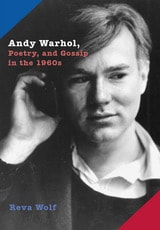
Andy Warhol, Poetry, and Gossip in the 1960s
Reva Wolf
University of Chicago Press, 1997
Wolf investigates the underground culture of poets, artists, and filmmakers who interacted with Warhol regularly. She claims that Warhol understood the literary imagination of his generation and that recognizing Warhol's literary activities is essential to understanding his art. Drawing on a wealth of unpublished material, including interviews, personal and public archives, tape recordings, documentary photographs, and works of art, Wolf offers dramatic evidence that Warhol's interactions with writers functioned like an extended conversation and details how this process impacted his work. This highly original and fascinating study gives us fresh insight into Warhol's art as practice and reformulates the myth that surrounds this popular American artist.
Anger, Mercy, Revenge
Lucius Annaeus Seneca
University of Chicago Press, 2010
Lucius Annaeus Seneca (4 BCE–65 CE) was a Roman Stoic philosopher, dramatist, statesman, and adviser to the emperor Nero, all during the Silver Age of Latin literature. The Complete Works of Lucius Annaeus Seneca is a fresh and compelling series of new English-language translations of his works in seven accessible volumes. Edited by world-renowned classicists Elizabeth Asmis, Shadi Bartsch, and Martha C. Nussbaum, this engaging collection restores Seneca—whose works have been highly praised by modern authors from Desiderius Erasmus to Ralph Waldo Emerson—to his rightful place among the classical writers most widely studied in the humanities.
Anger, Mercy, Revenge comprises three key writings: the moral essays On Anger and On Clemency—which were penned as advice for the then young emperor, Nero—and the Apocolocyntosis, a brilliant satire lampooning the end of the reign of Claudius. Friend and tutor, as well as philosopher, Seneca welcomed the age of Nero in tones alternately serious, poetic, and comic—making Anger, Mercy, Revenge a work just as complicated, astute, and ambitious as its author.
Anglo-American Feminist Challenges to the Rhetorical Traditions
Virginia Woolf, Mary Daly, Adrienne RichKrista Ratcliffe
Southern Illinois University Press, 1996
Although women and men have different relationships to language and to each other, traditional theories of rhetoric do not foreground such gender differences. Krista Ratcliffe argues that because feminists generally have not conceptualized their language theories from the perspective of rhetoric and composition studies, rhetoric and composition scholars must construct feminist theories of rhetoric by employing a variety of interwoven strategies: recovering lost or marginalized texts; rereading traditional rhetoric texts; extrapolating rhetorical theories from such nonrhetoric texts as letters, diaries, essays, cookbooks, and other sources; and constructing their own theories of rhetoric.
Focusing on the third option, Ratcliffe explores ways in which the rhetorical theories of Virginia Woolf, Mary Daly, and Adrienne Rich may be extrapolated from their Anglo-American feminist texts through examination of the interrelationship between what these authors write and how they write. In other words, she extrapolates feminist theories of rhetoric from interwoven claims and textual strategies. By inviting Woolf, Daly, and Rich into the rhetorical traditions and by modeling the extrapolation strategy/methodology on their writings, Ratcliffe shows how feminist texts about women, language, and culture may be reread from the vantage point of rhetoric to construct feminist theories of rhetoric. She also outlines the pedagogical implications of these three feminist theories of rhetoric, thus contributing to ongoing discussions of feminist pedagogies.
Traditional rhetorical theories are gender-blind, ignoring the reality that women and men occupy different cultural spaces and that these spaces are further complicated by race and class, Ratcliffe explains. Arguing that issues such as who can talk, where one can talk, and how one can talk emerge in daily life but are often disregarded in rhetorical theories, Ratcliffe rereads Roland Barthes’ "The Old Rhetoric" to show the limitations of classical rhetorical theories for women and feminists. Discovering spaces for feminist theories of rhetoric in the rhetorical traditions, Ratcliffe invites readers not only to question how women have been located as a part of— and apart from—these traditions but also to explore the implications for rhetorical history, theory, and pedagogy.
Anna Karenina and Others
Liza Knapp
University of Wisconsin Press, 2018
Knapp provides a series of readings of Anna Karenina that draw on other works that were critical to Tolstoy’s understanding of the interconnectedness of human lives. Among the texts she considers are The Scarlet Letter, a novel of adultery with a divided plot; Middlemarch, a multiplot novel with neighborly love as its ideal; and Blaise Pascal’s Pensées, which fascinated Tolstoy during his own religious crisis. She concludes with a tour-de-force reading of Mrs. Dalloway that shows Virginia Woolf constructing this novel in response to Tolstoy’s treatment of Anna Karenina and others.
Anne Carson
Ecstatic LyreJoshua Marie Wilkinson, editor
University of Michigan Press, 2015
Anne Sexton
Telling the TaleSteven E. Colburn, Editor
University of Michigan Press, 1988
Anne Tyler as Novelist
Dale Salwak
University of Iowa Press, 1994
Another Steven Soderbergh Experience
Authorship and Contemporary HollywoodBy Mark Gallagher
University of Texas Press, 2013
How do we determine authorship in film, and what happens when we look in-depth at the creative activity of living filmmakers rather than approach their work through the abstract prism of auteur theory? Mark Gallagher uses Steven Soderbergh’s career as a lens through which to re-view screen authorship and offer a new model that acknowledges the fundamentally collaborative nature of authorial work and its circulation. Working in film, television, and digital video, Soderbergh is the most prolific and protean filmmaker in contemporary American cinema. At the same time, his activity typifies contemporary screen industry practice, in which production entities, distribution platforms, and creative labor increasingly cross-pollinate.
Gallagher investigates Soderbergh’s work on such films as The Limey, Erin Brockovich, Ocean’s Eleven and its sequels, Solaris, The Good German, Che, and The Informant!, as well as on the K Street television series. Dispensing with classical auteurist models, he positions Soderbergh and authorship in terms of collaborative production, location filming activity, dealmaking and distribution, textual representation, genre and adaptation work, critical reception, and other industrial and cultural phenomena. Gallagher also addresses Soderbergh’s role as standard-bearer for U.S. independent cinema following 1989’s sex, lies and videotape, as well as his cinephilic dialogues with different forms of U.S. and international cinema from the 1920s through the 1970s. Including an extensive new interview with the filmmaker, Another Steven Soderbergh Experience demonstrates how industries and institutions cultivate, recognize, and challenge creative screen artists.
Anti-Blackness and Human Monstrosity in Black American Horror Fiction
Jerry Rafiki Jenkins
The Ohio State University Press, 2024
Anti-Nazi Modernism
The Challenges of Resistance in 1930s FictionMia Spiro
Northwestern University Press, 2013