Results by title
1104 books match the query 'Gender Studies' and 61 start with a
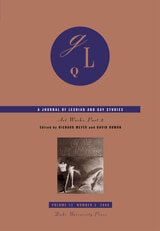
Art Works
Part 2, Volume 12Richard Meyer and David Román, eds.
Duke University Press, 0
Arguing for the primacy of the arts in queer life, the contributors show how art and performance can constitute a form of critical theorizing rather than simply an illustration of it. In different ways, each author demonstrates how art works to invigorate queer critique. The first issue includes a special dossier on AIDS activist film and video, marking the twenty-fifth year of the AIDS pandemic, and essays on late-nineteenth-century male nudes, lesbian surrealism, homoerotic photography in the Deep South, and the transnational, transgender contexts of the Pulitzer Prize–winning play I Am My Own Wife. Essays in the second issue focus on a series of queer case studies, including gay power graphics and psychedelia, female duets on the Broadway stage, Keith Haring and racial politics, British Vogue in the 1920s, and lesbian-feminist magazines of the 1970s. The issue concludes with a dossier of three shorter pieces on queer art and performance: an interview with the Chicano drag street performer Robert Legoretta (“Cyclona”), an essay on blogs and the Five Lesbian Brothers, and a discussion of a rarely exhibited work about cruising and public space by the contemporary artist Glenn Ligon.
Contributors. Deborah Bright, Jill Dolan, Jens Giersdorf, Jason Goldman, Scott Herring, Lucas Hilderbrand, Alexandra Juhasz, Tirza Latimer, Glenn Ligon, Richard Meyer, Rachel Middleman, Ricardo Montez, Erica Rand, Christopher Reed, David Román, Jennifer Flores Sternad, Margo Hobbs Thompson, Stacy Wolf
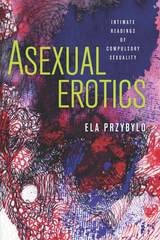
Asexual Erotics
Intimate Readings of Compulsory SexualityEla Przybylo
The Ohio State University Press, 2019
Through a wide-ranging analysis of pivotal queer, feminist, and anti-racist movements; television and film; art and photography; and fiction, nonfiction, and theoretical texts, each chapter explores asexual erotics and demonstrates how asexuality has been vital to the formulation of intimate ways of knowing and being. Asexual Erotics assembles a compendium of asexual possibilities that speaks against the centralization of sex and sexuality, asking that we consider the ways in which compulsory sexuality is detrimental not only to asexual and nonsexual people but to all.
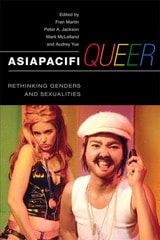
AsiaPacifiQueer
Rethinking Genders and SexualitiesEdited by Fran Martin, Peter A. Jackson, Mark McLelland, and Audrey Yue
University of Illinois Press, 2007
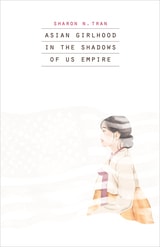
Asian Girlhood in the Shadows of US Empire
Sharon N. Tran
University of Minnesota Press, 2026
How the “Asian girl” is central to the story of US imperialism and the formation of Asian America
Representations of the “Asian girl” as lucky objects of humanitarian rescue and rehabilitation have been used to advance America’s imperial ambitions from World War II to the wars in Korean and Viet Nam. In this compelling work, Sharon N. Tran traces the production and instrumentalization of this figure through an examination of state documents, military newspapers, documentary photographs, and other archival materials. Theorizing “Asian girlhood” as a technology of imperial power, Tran exposes how the Asian girl is invoked as a shield that protects the innocence of US empire while she is excluded from innocence herself—relegated instead to a precarious position between child and adult, human and nonhuman, plaything and laborer.
Offering fresh insight into how imperial power operates, Tran analyzes figures such as the Japanese American school-girl in the context of World War II incarceration, the elusive “camptown girl,” and the objectified image of the “Napalm Girl.” Her innovative feminist approach interrogates the tendency to reclaim innocence for the Asian girl or to reframe her as an empowered woman. She engages the work of writers and artists such as Kiku Hughes, Nora Okja Keller, Aimee Phan, and lê thi diem thúy to demonstrate how Asian American literature offers rich theoretical interventions for critiquing the child–adult dichotomy that underpins key structures of imperial domination, illuminating more capacious conceptions of girlhood.
Restoring the dignity and agency of a figure too often denied both, Asian Girlhood in the Shadows of US Empire is a groundbreaking intersectional contribution to studies of gender, race, childhood, and state power.
Retail e-book files for this title are screen-reader friendly with images accompanied by short alt text and/or extended descriptions.
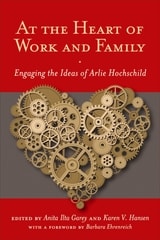
At the Heart of Work and Family
Engaging the Ideas of Arlie HochschildEdited by Anita Ilta Garey and Karen V. Hansen
Rutgers University Press, 2011

Atomic Bombshells
How Plastics Shaped Postwar BodiesIsabelle Held
Duke University Press, 2026
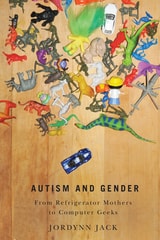
Autism and Gender
From Refrigerator Mothers to Computer GeeksJordynn Jack
University of Illinois Press, 2014
In Autism and Gender: From Refrigerator Mothers to Computer Geeks, Jack focuses on the ways gender influences popular discussion and understanding of autism's causes and effects. She identifies gendered theories like the “refrigerator mother” theory, for example, which blames emotionally distant mothers for autism, and the “extreme male brain” theory, which links autism to the modes of systematic thinking found in male computer geeks. Jack's analysis reveals how people employ such highly gendered theories to craft rhetorical narratives around stock characters--fix-it dads, heroic mother warriors rescuing children from autism--that advocate for ends beyond the story itself while also allowing the storyteller to gain authority, understand the disorder, and take part in debates.
Autism and Gender reveals the ways we build narratives around controversial topics while offering new insights into the ways rhetorical inquiry can and does contribute to conversations about gender and disability.
Autobiography and Decolonization
Modernity, Masculinity, and the Nation-StatePhilip Holden
University of Wisconsin Press, 2008
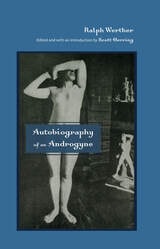
Autobiography of an Androgyne
Ralph Werther and Edited by Scott Herring
Rutgers University Press, 2008
Awesome Families
The Promise of Healing Relationships in the International Churches of ChristKathleen Jenkins
Rutgers University Press, 2005
Denounced by some as a dangerous cult and lauded by others as a miraculous faith community, the International Churches of Christ was a conservative evangelical Christian movement that grew rapidly in the 1980s and 1990s.
Among its followers, promises to heal family relationships were central to the group's appeal. Members credit the church for helping them develop so-called "awesome families"-successful marriages and satisfying relationships with children, family of origin, and new church "brothers and sisters." The church engaged an elaborate array of services, including round-the-clock counseling, childcare, and Christian dating networks-all of which were said to lead to fulfilling relationships and exciting sex lives. Before the unified movement's demise in 2003-2004, the lure of blissful family-life led more than 100,000 individuals worldwide to be baptized into the church.
In Awesome Families, Kathleen Jenkins draws on four years of ethnographic research to explain how and why so many individuals-primarily from middle- to upper-middle-class backgrounds-were attracted to this religious group that was founded on principles of enforced community, explicit authoritative relationships, and therapeutic ideals. Weaving classical and contemporary social theory, she argues that members were commonly attracted to the structure and practice of family relationships advocated by the church, especially in the context of contemporary society where gender roles and family responsibilities are often ambiguous.
Tracing the rise and fall of this fast-growing religious movement, this timely study adds to our understanding of modern society and offers insight to the difficulties that revivalist movements have in sustaining growth.

an other
a black feminist consideration of animal lifeSharon Patricia Holland
Duke University Press, 2023