Results by title
1993 books match the query 'Latin America' and 133 start with a

Accounting for Violence
Marketing Memory in Latin AmericaKsenija Bilbija and Leigh A. Payne, eds.
Duke University Press, 2011
Contributors. Rebecca J. Atencio, Ksenija Bilbija, Jo-Marie Burt, Laurie Beth Clark, Cath Collins, Susana Draper, Nancy Gates-Madsen, Susana Kaiser, Cynthia E. Milton, Alice A. Nelson, Carmen Oquendo Villar, Leigh A. Payne, José Ramón Ruisánchez Serra, Maria Eugenia Ulfe
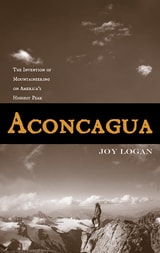
Aconcagua
The Invention of Mountaineering on America’s Highest PeakJoy Logan
University of Arizona Press, 2011
Having done fieldwork on Aconcagua for six years, Logan offers keen insights into how the invention of mountaineering in the nineteenth century—and adventure tourism a century later—have both shaped and been shaped by local and global cultural narratives. She examines the roles and functions of mountain guides, especially in regard to notions of gender and nation; re-reads the mountaineering stories forged by explorers, scientists, tourism officials, and the gear industry; and considers the distinctions between foreign and Argentine climbers (some of whom are celebrities in their own right).
In Logan’s revealing analysis, Aconcagua is emblematic of the tensions produced by modernity, nation-building, tourism development, and re-ethnification. The evolution of mountain climbing on Aconcagua registers seismic shifts in attitudes toward adventure, the national, and the global. With an eye for detail and a flair for description, Logan invites her readers onto the mountain and into the lives it supports.
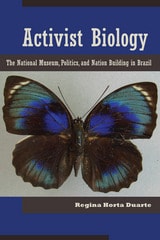
Activist Biology
The National Museum, Politics, and Nation Building in BrazilRegina Horta Duarte
University of Arizona Press, 2016
For the first time in English, Brazil’s leading environmental historian, Regina Horta Duarte, brings us a nuanced analysis of the National Museum of Brazil’s contribution to that country’s formation and history. In Activist Biology, Duarte explores the careers of three of these scientists as they leveraged biology as a strategy for change. Devoted to educational initiatives, they organized exhibits, promoted educational film and radio, wrote books, published science communication magazines, fostered school museums, and authored textbooks for young people. Their approach was transdisciplinary, and their reliance on multimedia formats was pioneering.
Capturing a crucial period in Brazil’s history, this portrait of science as a creative and potentially transformative pathway will intrigue anyone fascinated by environmental history, museums, and the history of science. Duarte skillfully shows how Brazilian science furthered global scientific knowledge in ways that are relevant now more than ever.
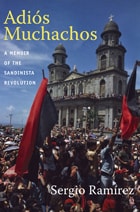
Adiós Muchachos
A Memoir of the Sandinista RevolutionSergio Ramírez
Duke University Press, 2012
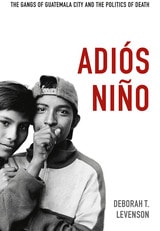
Adiós Niño
The Gangs of Guatemala City and the Politics of DeathDeborah T. Levenson
Duke University Press, 2013
Adoptive Migration
Raising Latinos in SpainJessaca B. Leinaweaver
Duke University Press, 2013
Advances in Titicaca Basin Archaeology–III
Edited by Alexei Vranich, Elizabeth A. Klarich and Charles Stanish
University of Michigan Press, 2012
Affective Intellectuals and the Space of Catastrophe in the Americas
Judith Sierra-Rivera
The Ohio State University Press, 2018
Pursuing this argument, Sierra-Rivera examines print, radio, and web materials by authors whose emotional discourses have also had a measurable impact on the formation of communities that demand their full political inclusion in society. This book therefore fills a significant gap in the study of the relationship between materiality (space and bodies), emotions, and the political imagination. Affective Intellectuals demonstrates that writers and intellectuals themselves are vital in reshaping their communities and fighting for social justice in the Hemispheric Americas.
Africans to Spanish America
Expanding the DiasporaEdited by Sherwin K. Bryant, Rachel Sarah O’Toole, & Ben Vinson III
University of Illinois Press, 2014
Contributors are Joan C. Bristol, Nancy E. van Deusen, Leo J. Garofalo, Herbert S. Klein, Charles Beatty-Medina, Karen Y. Morrison, Rachel Sarah O'Toole, Frank "Trey" Proctor III, and Michele Reid-Vazquez.
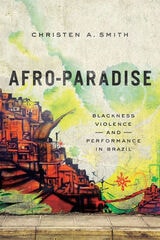
Afro-Paradise
Blackness, Violence, and Performance in BrazilChristen A. Smith
University of Illinois Press, 2016
Christen A. Smith argues that the dialectic of glorified representations of black bodies and subsequent state repression reinforces Brazil's racially hierarchal society. Interpreting the violence as both institutional and performative, Smith follows a grassroots movement and social protest theater troupe in their campaigns against racial violence. As Smith reveals, economies of black pain and suffering form the backdrop for the staged, scripted, and choreographed afro-paradise that dazzles visitors. The work of grassroots organizers exposes this relationship, exploding illusions and asking unwelcome questions about the impact of state violence performed against the still-marginalized mass of Afro-Brazilians.
Based on years of field work, Afro-Paradise is a passionate account of a long-overlooked struggle for life and dignity in contemporary Brazil.
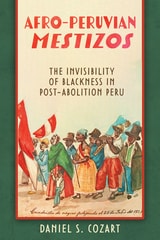
Afro-Peruvian Mestizos
The Invisibility of Blackness in Post-Abolition PeruDaniel S. Cozart
University of Alabama Press, 2025
A transformative study by Daniel S. Cozart, Afro-Peruvian Mestizos redefines the narrative of mestizaje in post-abolition Peru, uncovering the hidden histories and enduring strength of Afro-Peruvian communities.
Afro-Peruvian Mestizos: The Invisibility of Blackness in Post-Abolition Peru by Daniel S. Cozart investigates the ideologies of mestizaje, or racial mixing, that Latin American elites used to construct modern national identities during the nineteenth and twentieth centuries. Through close reading of archival records, legal documents, and literary works, Cozart uncovers the systematic exclusion of Afro-Peruvians from the nation's narrative of progress, revealing how their presence was deliberately omitted from official histories and censuses. The abolition of slavery in 1855 marked the beginning of a process where Afro-Peruvians were marginalized, their identities overshadowed by a national narrative that prioritized Indigenous heritage and whiteness.
Drawing on Michel-Rolph Trouillot's framework of historical production, the book traces the contradictions inherent in liberal and positivist ideologies that sought to forge a "raceless" society, all while silencing Afro-Peruvian voices and erasing their history. The conclusion reflects on the significance of erasure for Afro-Peruvians in the twentieth and twenty-first centuries, as they now demand to be seen. This book is a powerful examination of historical silences and the ongoing struggle for recognition in the face of systemic racism.
Afrodescendants, Identity, and the Struggle for Development in the Americas
Bernd Reiter
Michigan State University Press, 2012
Indigenous people and African descendants in Latin America and the Caribbean have long been affected by a social hierarchy established by elites, through which some groups were racialized and others were normalized. Far from being “racial paradises” populated by an amalgamated “cosmic race” of mulattos and mestizos, Latin America and the Caribbean have long been sites of shifting exploitative strategies and ideologies, ranging from scientific racism and eugenics to the more sophisticated official denial of racism and ethnic difference. This book, among the first to focus on African descendants in the region, brings together diverse reflections from scholars, activists, and funding agency representatives working to end racism and promote human rights in the Americas. By focusing on the ways racism inhibits agency among African descendants and the ways African-descendant groups position themselves in order to overcome obstacles, this interdisciplinary book provides a multi-faceted analysis of one of the gravest contemporary problems in the Americas.

After Neoliberalism
What Next for Latin America?Lance Taylor, Editor
University of Michigan Press, 1999
This book offers an intellectual and historical background for these policy choices, specifically in Argentina, Brazil, Chile, Colombia, Mexico, and Peru. The contributors detail the structural reform and economic policies in Latin America and discuss the various and often contradictory effects neoliberalism, such as fluctuating growth rates and saving-investment balances, worsened corruption, growth of exports, falling wages, and rising unemployment. In addition, each case study forecasts the effects of neoliberal policies on future growth and income distribution in the respective countries. Finally, it offers policy alternatives to neoliberalism.
The essays in this volume are: an introduction by Lance Taylor; "The Argentine Experience with Stabilization and Structural Reform," by José María Fanelli and Roberto Frenkel; "Opening, Stabilization, and Macroeconomic Sustainability in Brazil," by Edward Amadeo, "An Ongoing Structural Transformation: The Colombian Economy, 1986-96," by José Antonio Ocampo; "Economic Reforms, Stabilization Policies, and the 'Mexican Disease,'" by Nora Claudia Lustig and Jaime Ros; and "Structural Reforms and Macroeconomic Policy in Peru: 1990-96," by Oscar Dancourt.
Lance Taylor is the Arnhold Professor of International Cooperation and Development, New School for Social Research.
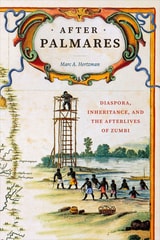
After Palmares
Diaspora, Inheritance, and the Afterlives of ZumbiMarc A. Hertzman
Duke University Press, 2024
After San Jacinto
The Texas-Mexican Frontier, 1836-1841By Joseph Milton Nance
University of Texas Press, 1963
The stage was set for conflict: The First Congress of the Republic of Texas had arbitrarily designated the Rio Grande as the boundary of the new nation. Yet the historic boundaries of Texas, under Spain and Mexico, had never extended beyond the Nueces River. Mexico, unwilling to acknowledge Texas independence, was even more unwilling to allow this further encroachment upon her territory.
But neither country was in a strong position to substantiate claims; so the conflict developed as a war of futile threats, border raids, and counterraids. Nevertheless, men died—often heroically—and this is the first full story of their bitter struggle. Based on original sources, it is an unbiased account of Texas-Mexican relations in a crucial period.
After Spanish Rule
Postcolonial Predicaments of the AmericasMark Thurner and Andrés Guerrero, eds.
Duke University Press, 2003
Challenging the universalizing tendencies of postcolonial theory as it has developed in the Anglophone academy, the contributors are attentive to the crucial ways in which the histories of Latin American countries—with their creole elites, hybrid middle classes, subordinated ethnic groups, and complicated historical relationships with Spain and the United States—differ from those of other former colonies in the southern hemisphere. Yet, while acknowledging such differences, the volume suggests a host of provocative, critical connections to colonial and postcolonial histories around the world.
Contributors
Thomas Abercrombie
Shahid Amin
Jorge Cañizares-Esguerra
Peter Guardino
Andrés Guerrero
Marixa Lasso
Javier Morillo-Alicea
Joanne Rappaport
Mauricio Tenorio-Trillo
Mark Thurner
After the Coup
An Ethnographic Reframing of Guatemala 1954Edited by Timothy J. Smith and Abigail E. Adams
University of Illinois Press, 2011
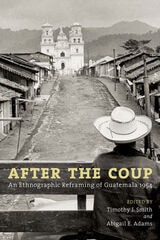
Recent research and the release of newly declassified U.S. government documents underscore the importance of reading Guatemala's current history through the lens of 1954. Scholars and researchers who have worked in Guatemala from the 1940s to the present articulate how the coup fits into ethnographic representations of Guatemala. Highlighting the voices of individuals with whom they have lived and worked, the contributors also offer an unmatched understanding of how the events preceding and following the coup played out on the ground.
Contributors are Abigail E. Adams, Richard N. Adams, David Carey Jr., Christa Little-Siebold, Judith M. Maxwell, Victor D. Montejo, June C. Nash, and Timothy J. Smith.
Against Abstraction
Notes from an Ex-Latin AmericanistBy Alberto Moreiras
University of Texas Press, 2020
In 2015, members of the philosophy department at the University of Madrid conducted an interview with Alberto Moreiras for the university’s digital archive. The resulting dialogues and the Spanish edition of this work, Marranismo e inscripción, o el abandono de la conciencia desdichada, are the basis for Against Abstraction, supplemented with an interview conducted for the Chilean journal Papel máquina. In these landmark conversations, Moreiras describes how, though he was initially committed to Latin American literary studies, he eventually transitioned to become an eminent scholar of critical theory, existential philosophy, and ultimately infrapolitics and posthegemony.
Blending intellectual autobiography with a survey of Hispanism as practiced in universities in the United States (including the schisms in Latin American subaltern studies that eventually led to Moreiras’s departure from Duke University), these narratives read like a picaresque and a polemic on the symbolic power of scholars. Drawing on the concept of marranism (originally a term for Iberian Jews and Muslims forced to convert to Christianity during the Middle Ages) to consider the situations and allegiances he has navigated over the years, Moreiras has produced a multifaceted self-portrait that will surely spark further discourse.
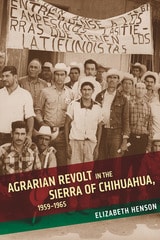
Agrarian Revolt in the Sierra of Chihuahua, 1959–1965
Elizabeth Henson
University of Arizona Press, 2019
Thousands of students joined the campesino protests in long-distance marches, land invasions, and direct actions that transcended political parties and marked the participants’ emergence as political subjects. The Popular Guerrilla Group (GPG) took shape from sporadic armed conflicts in the sierra. Early victories in the field encouraged the GPG to pursue more ambitious targets, and on September 23, 1965, armed farmers, agricultural workers, students, and teachers attacked an army base in Madera, Chihuahua. This bold move had deadly consequences.
With a sympathetic yet critical eye, historian Elizabeth Henson argues that the assault undermined and divided the movement that had been in its cradle, sacrificing the most militant, audacious, and serious of a generation at a time when such sacrifices were more frequently observed. Henson shows how local history merged with national tensions over one-party rule, the unrealized promises of the Mexican Revolution, and international ideologies.
Agricultural Intensification and Prehistoric Health in the Valley of Oaxaca, Mexico
Denise C. Hodges
University of Michigan Press, 1989
Alcohol in Latin America
A Social and Cultural HistoryEdited by Gretchen Pierce and Áurea Toxqui
University of Arizona Press, 2014
Alcohol in Latin America is the first interdisciplinary study to examine the historic role of alcohol across Latin America and over a broad time span. Six locations—the Andean region, Argentina, Brazil, Chile, Guatemala, and Mexico—are seen through the disciplines of anthropology, archaeology, art history, ethnohistory, history, and literature. Organized chronologically beginning with the pre-colonial era, it features five chapters on Mesoamerica and five on South America, each focusing on various aspects of a dozen different kinds of beverages.
An in-depth look at how alcohol use in Latin America can serve as a lens through which race, class, gender, and state-building, among other topics, can be better understood, Alcohol in Latin America shows the historic influence of alcohol production and consumption in the region and how it is intimately connected to the larger forces of history.

Alfredo Jaar
Decolonial Time and the Aesthetics of the UnfinishedFlorencia San Martin. With a Foreword by Wolfgang Kaleck.
Duke University Press, 2026
In Alfredo Jaar, Florencia San Martín analyzes the work of the prominent Chilean-born artist Alfredo Jaar, whose work challenges the linear and triumphalist temporality of Western modernity that obscures the violence of colonization and globalization. San Martín argues that Jaar’s work represents decolonial time, exposing the limits of the violent systems we inhabit. His art, she maintains, is informed by and responds to two interconnected historical events relevant to his own life: the US-backed military coup that established Pinochet’s dictatorship in Chile and the implementation around the world of the corollary neoliberal economic system. San Martín explores the key themes in Jaar’s artistic practice—mourning, accountability, and failure—which situates the victims of the Chilean regime in a global context, directly confronts the architects of atrocity, and questions how ideas of diversity and inclusion have been co-opted by modern neoliberal discourses. Alfredo Jaar enables us to reimagine art history, offering a fresh paradigm with which to think about global contemporary art.
Allegories Of Underdevelopment
Aesthetics and Politics in Modern Brazilian CinemaIsmail Xavier
University of Minnesota Press, 1997
Examines the centrality of Cinema Novo to filmmaking in Brazil.
“A camera in the hand and ideas in the head” was the primary axiom of the young originators of Brazil’s Cinema Novo. This movement of the 1960s and early 1970s overcame technical constraints and produced films on minimal budgets. In Allegories of Underdevelopment, Ismail Xavier examines a number of these films, arguing that they served to represent a nation undergoing a political and social transformation into modernity.
Its best-known voice, filmmaker Glauber Rocha claimed that Cinema Novo was driven by an “aesthetics of hunger.” This scarcity of means demanded new cinematic approaches that eventually gave rise to a legitimate and unique Third World cinema. Xavier stands in the vanguard of scholars presenting and interpreting these revolutionary films—from the masterworks of Rocha to the groundbreaking experiments of Julio Bressane, Rogério Sganzerla, Andrea Tonacci and Arthur Omar—to an English-speaking audience. Focusing on each filmmaker’s use of narrative allegories for the “conservative modernization” Brazil and other nations underwent in the 1960s and 1970s, Xavier asks questions relating to the connection between film and history. He examines the way Cinema Novo transformed Brazil’s cultural memory and charts the controversial roles that Marginal Cinema and Tropicalism played in this process. Among the films he discusses are Black God, White Devil, Land in Anguish, Red Light Bandit, Macunaíma, Antônio das Mortes, The Angel Is Born, and Killed the Family and Went to the Movies.A compelling chronicle of the history of modern Brazilian cinema, Allegories of Underdevelopment brings to light the work of many filmmakers who are virtually unknown in the English-speaking world.
Alone Before God
The Religious Origins of Modernity in MexicoPamela Voekel
Duke University Press, 2002
Drawing on the archival research of wills, public documents, and other texts from late-colonial and early-republican Mexico, Voekel describes the marked scaling-down of the pomp and display that had characterized baroque Catholic burials and the various devices through which citizens sought to safeguard their souls in the afterlife. In lieu of these baroque practices, the new enlightened Catholics, claims Voekel, expressed a spiritually and hygienically motivated preference for extremely simple burial ceremonies, for burial outside the confines of the church building, and for leaving their earthly goods to charity. Claiming that these changes mirrored a larger shift from an external, corporate Catholicism to a more interior piety, she demonstrates how this new form of Catholicism helped to initiate a cultural and epistemic shift that placed the individual at the center of knowledge.
Breaking with the traditional historiography to argue that Mexican liberalism had deeply religious roots, Alone Before God will be of interest to specialists in Latin American history, modernity, and religion.
Alone in Mexico
The Astonishing Travels of Karl Heller, 1845–1848Karl Bartolomeus Heller, and translated and edited by Terry Rugeley
University of Alabama Press, 2007
This volume is the first-ever English translation of the memoirs of Karl Heller, a twenty-year-old aspiring Austrian botanist who traveled to Mexico in 1845 to collect specimens. He passed through the Caribbean, lived for a time in the mountains of Veracruz, and journeyed to Mexico City through the cities of Puebla and Cholula. After a brief residence in the capital, Heller moved westward to examine the volcanoes and silver mines near Toluca. When the United States invaded Mexico in 1846–47 conditions became chaotic, and the enterprising botanist was forced to flee to Yucatán. Heller lived in the port city of Campeche, but visited Mèrida, the ruins of Uxmal, and the remote southern area of the Champotòn River. From there Heller, traveling by canoe, journeyed through southern Tabasco and northern Chiapas and finally returned to Vienna through Cuba and the United States bringing back thousands of samples of Mexican plants and animals.
Heller's account is one of the few documents we have from travelers who visited Mexico in this period, and it is particularly useful in describing conditions outside the capital of Mexico City. In 1853 Heller published his German-language account as Reisen in Mexiko, but the work has remained virtually unknown to English or Spanish readers. This edition now provides a complete, annotated, and highly readable translation.

Alternative Maternities
Bodies, Death, and Argentine Citizenship Since 1820Madison Felman-Panagotacos
Rutgers University Press, 2026
Alternative Maternities: Bodies, Death, and Argentine Citizenship Since 1820 interrogates the intimate and symbolic relationship between maternity and nationhood in Argentina through the lens of post-mortem maternal bodies. This interdisciplinary study brings together literary analysis, archival research, visual culture, and political history to examine how cultural productions deploy the image of the dead mother to define — and challenge — the boundaries of Argentine citizenship, especially for women, trans/travesti individuals, and those of Indigenous heritage. It focuses on the 200-year period between independence in 1820, when Argentine identity began to be defined, until the legalization of abortion at the end of 2020, which codified the right to non-maternity.
By tracing hagiographic and sacrificial depictions of figures like La Difunta Correa and Eva Perón across poetry, literature, visual art, and contemporary protest culture, the book reveals how narratives of Republican Motherhood continue to structure political and social belonging. Ultimately, this work shows how contemporary artists and authors are reconfiguring these maternal myths to queer, expand, and decolonize national identity.
Alva Ixtlilxochitl's Native Archive and the Circulation of Knowledge in Colonial Mexico
Amber Brian
Vanderbilt University Press, 2016
Born between 1568 and 1580, Alva Ixtlilxochitl was a direct descendant of Ixtlilxochitl I and Ixtlilxochitl II, who had been rulers of Texcoco, one of the major city-states in pre-Conquest Mesoamerica. After a distinguished education and introduction into the life of the empire of New Spain in Mexico, Ixtlilxochitl was employed by the viceroy to write histories of the indigenous peoples in Mexico. Engaging with this history and delving deep into the resultant archives of this life's work, Amber Brian addresses the question of how knowledge and history came to be crafted in this era.
Brian takes the reader through not only the history of the archives itself, but explores how its inheritors played as crucial a role in shaping this indigenous history as the author. The archive helped inspire an emerging nationalism at a crucial juncture in Latin American history, as Creoles and indigenous peoples appropriated the history to give rise to a belief in Mexican exceptionalism. This belief, ultimately, shaped the modern state and impacted the course of history in the Americas. Without the work of Ixtlilxochitl, that history would look very different today.
Amazon Town TV
An Audience Ethnography in Gurupá, BrazilBy Richard Pace and Brian P. Hinote
University of Texas Press, 2013
In 1983, anthropologist Richard Pace began his fieldwork in the Amazonian community of Gurupá one year after the first few television sets arrived. On a nightly basis, as the community’s electricity was turned on, he observed crowds of people lining up outside open windows or doors of the few homes possessing TV sets, intent on catching a glimpse of this fascinating novelty. Stoic, mute, and completely absorbed, they stood for hours contemplating every message and image presented. So begins the cultural turning point that is the basis of Amazon Town TV, a rich analysis of Gurupá in the decades during and following the spread of television.
Pace worked with sociologist Brian Hinote to explore the sociocultural implications of television’s introduction in this community long isolated by geographic and communication barriers. They explore how viewers change their daily routines to watch the medium; how viewers accept, miss, ignore, negotiate, and resist media messages; and how television’s influence works within the local cultural context to modify social identities, consumption patterns, and worldviews.
Amazons, Wives, Nuns, and Witches
Women and the Catholic Church in Colonial Brazil, 1500-1822By Carole A. Myscofski
University of Texas Press, 2013
The Roman Catholic church played a dominant role in colonial Brazil, so that women’s lives in the colony were shaped and constrained by the Church’s ideals for pure women, as well as by parallel concepts in the Iberian honor code for women. Records left by Jesuit missionaries, Roman Catholic church officials, and Portuguese Inquisitors make clear that women’s daily lives and their opportunities for marriage, education, and religious practice were sharply circumscribed throughout the colonial period. Yet these same documents also provide evocative glimpses of the religious beliefs and practices that were especially cherished or independently developed by women for their own use, constituting a separate world for wives, mothers, concubines, nuns, and witches.
Drawing on extensive original research in primary manuscript and printed sources from Brazilian libraries and archives, as well as secondary Brazilian historical works, Carole Myscofski proposes to write Brazilian women back into history, to understand how they lived their lives within the society created by the Portuguese imperial government and Luso-Catholic ecclesiastical institutions. Myscofski offers detailed explorations of the Catholic colonial views of the ideal woman, the patterns in women’s education, the religious views on marriage and sexuality, the history of women’s convents and retreat houses, and the development of magical practices among women in that era. One of the few wide-ranging histories of women in colonial Latin America, this book makes a crucial contribution to our knowledge of the early modern Atlantic World.
Ambassadors of the Working Class
Argentina's International Labor Activists and Cold War Democracy in the AmericasErnesto Semán
Duke University Press, 2017
Ambitious Rebels
Remaking Honor, Law, and Liberalism in Venezuela, 1780-1850Reuben Zahler
University of Arizona Press, 2013
In a highly engaging style, Zahler examines gender and class against the backdrop of Venezuelan institutions and culture during the late colonial period through post-independence (known as the “middle period”). His fine-grained analysis shows that liberal ideals permeated the elite and popular classes to a substantial degree while Venezuelan institutions enjoyed impressive levels of success. Showing remarkable ambition, Venezuela’s leaders aspired to transform a colony that adhered to the king, the church, and tradition into a liberal republic with minimal state intervention, a capitalistic economy, freedom of expression and religion, and an elected, representative government.
Subtle but surprisingly profound changes of a liberal nature occurred, as evidenced by evolving standards of honor, appropriate gender roles, class and race relations, official conduct, courtroom evidence, press coverage, economic behavior, and church-state relations. This analysis of the philosophy of the elites and the daily lives of common men and women reveals in particular the unwritten, unofficial norms that lacked legal sanction but still greatly affected political structures.
Relying on extensive archival resources, Zahler focuses on Venezuela but provides a broader perspective on Latin American history. His examination provides a comprehensive look at intellectual exchange across the Atlantic, comparative conditions throughout the Americas, and the tension between traditional norms and new liberal standards in a postcolonial society.

American Extremes
Extremos de AméricaBy Daniel Cosío Villegas
University of Texas Press, 1964
In this notable collection of essays, written in the middle of the twentieth century, a towering Mexican thinker discusses both Latin America's internal problems and its relations with the United States, Russia, and the rest of the world. This perceptive examination of many political and economic topics will be of interest to all readers concerned with what our southern neighbors think on subjects important to us.
The author brings into particularly sharp focus the relationship of Mexico and other Latin American countries to the United States. Cosío Villegas bluntly tells the reader how much remains to be accomplished: " . . . I believe that Mexico and the United States are so far from resolving their problems that, in truth, it can be said that the process of understanding has not yet even begun." He then impartially analyzes the problems that stand in the way of improved relations, and he looks at these difficulties from an altogether fresh perspective.
Another major theme is the Mexican Revolution, what it did, and what it became. In many important ways, the author feels, the Revolution failed. For the rejuvenation that Mexico needs, should it look toward the United States or toward Russia? And what resources within itself does it need to develop in order to provide the leadership that Latin America requires? Cosío Villegas evaluates the permanent impact of the Cuban Revolution on our hemisphere. He considers where Latin American interests lie in the cold war and suggests how that area may use its voice most effectively in global decisions.
With the increase in world tensions and the decrease in world size, this book will be extremely valuable for every thinking citizen.
Americans All
Good Neighbor Cultural Diplomacy in World War IIBy Darlene J. Sadlier
University of Texas Press, 2012
Cultural diplomacy—“winning hearts and minds” through positive portrayals of the American way of life—is a key element in U.S. foreign policy, although it often takes a backseat to displays of military might. Americans All provides an in-depth, fine-grained study of a particularly successful instance of cultural diplomacy—the Office of the Coordinator of Inter-American Affairs (CIAA), a government agency established by President Franklin D. Roosevelt in 1940 and headed by Nelson A. Rockefeller that worked to promote hemispheric solidarity and combat Axis infiltration and domination by bolstering inter-American cultural ties.
Darlene J. Sadlier explores how the CIAA used film, radio, the press, and various educational and high-art activities to convince people in the United States of the importance of good neighbor relations with Latin America, while also persuading Latin Americans that the United States recognized and appreciated the importance of our southern neighbors. She examines the CIAA’s working relationship with Hollywood’s Motion Picture Society of the Americas; its network and radio productions in North and South America; its sponsoring of Walt Disney, Orson Welles, John Ford, Gregg Toland, and many others who traveled between the United States and Latin America; and its close ties to the newly created Museum of Modern Art, which organized traveling art and photographic exhibits and produced hundreds of 16mm educational films for inter-American audiences; and its influence on the work of scores of artists, libraries, book publishers, and newspapers, as well as public schools, universities, and private organizations.
Americans in the Treasure House
Travel to Porfirian Mexico and the Cultural Politics of EmpireBy Jason Ruiz
University of Texas Press, 2014
When railroads connected the United States and Mexico in 1884 and overland travel between the two countries became easier and cheaper, Americans developed an intense curiosity about Mexico, its people, and its opportunities for business and pleasure. Indeed, so many Americans visited Mexico during the Porfiriato (the long dictatorship of Porfirio Díaz, 1876–1911) that observers on both sides of the border called the hordes of tourists and business speculators a “foreign invasion,” an apt phrase for a historical moment when the United States was expanding its territory and influence.
Americans in the Treasure House examines travel to Mexico during the Porfiriato, concentrating on the role of travelers in shaping ideas of Mexico as a logical place for Americans to extend their economic and cultural influence in the hemisphere. Analyzing a wealth of evidence ranging from travelogues and literary representations to picture postcards and snapshots, Jason Ruiz demonstrates that American travelers constructed Mexico as a nation at the cusp of modernity, but one requiring foreign intervention to reach its full potential. He shows how they rationalized this supposed need for intervention in a variety of ways, including by representing Mexico as a nation that deviated too dramatically from American ideals of progress, whiteness, and sexual self-control to become a modern “sister republic” on its own. Most importantly, Ruiz relates the rapid rise in travel and travel discourse to complex questions about national identity, state power, and economic relations across the U.S.–Mexico border.
Amplifications of Black Sound from Colonial Mexico
Vocality and BeyondSarah Finley
Vanderbilt University Press, 2024
Amplifications of Black Sound from Colonial Mexico is the first extensive study of Afro-descendant sonorities in New Spain or elsewhere in colonial Latin America. In this context, it attends to Black sounds through a framework that remixes Jacques Derrida’s reading of the ear’s anatomy with theories like Gilroy’s lower frequencies or Fred Moten’s phonic materiality. Sarah Finley’s aim is to unsettle the divide between self and other so the auditory archive might emerge as a polyphonic record that exceeds dichotomies of sounding object / listening subject. Through sampling the Afro-descendant sounds of this archive, this book recovers and rearticulates Black voices and auditory practices in New Spain.
Améfrica in Letters
Literary Interventions from Mexico to the Southern ConeJennifer Carolina Gómez Menjívar
Vanderbilt University Press, 2022
An Aqueous Territory
Sailor Geographies and New Granada's Transimperial Greater Caribbean WorldErnesto Bassi
Duke University Press, 2017
An Ecology of Knowledges
Fear, Love, and Technoscience in Guatemalan Forest ConservationMicha Rahder
Duke University Press, 2020
An Expedition to the Ranquel Indians
Excursion a los indios ranquelesBy Lucio V. Mansilla
University of Texas Press, 1997
The encounter between Native American peoples and Europeans and their descendants has marked the history of every nation in the Americas, both North and South. Lucio Mansilla's Una excursión a los indios ranqueles, published in Argentina in 1870, is one of very few works in American letters that presents a vivid, firsthand account of a noncombative encounter between Native American and European civilizations.
This volume is the first English translation of Mansilla's classic work. Long noted for its humor, adventurousness, and narrative ingenuity, the book offers penetrating insights into fundamental issues of "civilization and barbarism," immigration, ethnic and racial diversity, and land ownership and tenancy.
Mansilla alone among his contemporaries espoused open dialogue as the best approach to the "Indian problem." Although the peace accord he sought to enact with the Ranquels was summarily disregarded by the Argentine government, which slowly gravitated towards a policy of ethnic cleansing and expropriation of Indian lands, the Expedition does narrate a rehearsal for a reconciliation that in the end never took place.
An Open Secret
The History of Unwanted Pregnancy and Abortion in Modern BoliviaNatalie L. Kimball
Rutgers University Press, 2020
Anarchism & The Mexican Working Class, 1860-1931
By John M. Hart
University of Texas Press, 1978
The anarchist movement had a crucial impact upon the Mexican working class between 1860 and 1931. John M. Hart destroys some old myths and brings new information to light as he explores anarchism's effect on the development of the Mexican urban working-class and agrarian movements.
Hart shows how the ideas of European anarchist thinkers took root in Mexico, how they influenced revolutionary tendencies there, and why anarchism was ultimately unsuccessful in producing real social change in Mexico. He explains the role of the working classes during the Mexican Revolution, the conflict between urban revolutionary groups and peasants, and the ensuing confrontation between the new revolutionary elite and the urban working class.
The anarchist tradition traced in this study is extremely complex. It involves various social classes, including intellectuals, artisans, and ordinary workers; changing social conditions; and political and revolutionary events which reshaped ideologies. During the nineteenth century the anarchists could be distinguished from their various working- class socialist and trade unionist counterparts by their singular opposition to government. In the twentieth century the lines became even clearer because of hardening anarchosyndicalist, anarchistcommunist, trade unionist, and Marxist doctrines. In charting the rise and fall of anarchism, Hart gives full credit to the roles of other forms of socialism and Marxism in Mexican working-class history.
Mexican anarchists whose contributions are examined here include nineteenth-century leaders Plotino Rhodakanaty, Santiago Villanueva, Francisco Zalacosta, and José María Gonzales; the twentieth-century revolutionary precursor Ricardo Flores Magón; the Casa del Obrero founders Amadeo Ferrés, Juan Francisco Moncaleano, and Rafael Quintero; and the majority of the Centro Sindicalista Ubertario, leaders of the General Confederation of Workers.
This work is based largely on primary sources, and the bibliography contains a definitive listing of anarchist and radical working-class newspapers for the period.
Anarchists and Communists in Brazil, 1900-1935
By John Dulles
University of Texas Press, 1973
In providing a detailed account of the leftist opposition and its bloody repression in Brazil during the Old Republic and the early years of the Vargas regime, John W. F. Dulles gives considerable attention to the labor movement, generally neglected by historians. This study focuses on the formation and activities of anarchists and Communists, the two most important radical groups working within Brazilian labor. Relying on a wide variety of sources, including interviews and personal papers, Dulles supplies information that for the most part is unavailable in English and not easily accessible in Portuguese.
The struggles of Brazilian workers—usually against an alliance of company owners, state and federal troops, and state and federal governments—suffered reverses in 1920 and 1921. These setbacks were cited by Astrogildo Pereira and other admirers of Bolshevism as reasons for the proletariat to forsake anarchism and adhere to the Communist Party, Brazilian Section of the Communist International.
Anarchists and Communists, struggling against each other in the labor unions in the mid 1920’s, joined opposition journalists and politicians in supporting military rebels in a romantic uprising marked by adventure and suffering, jailbreaks and long marches, and death in the backlands.
Slowly, Brazilian Communism gained strength during the latter part of the 1920’s, but 1930 brought the beginnings of failure. Worse for the Party than the government crackdown and the Trotskyite dissidence was the growing attraction of the Aliança Liberal, the oppositionist political movement that brought Getúlio Vargas to power. While workers and Party members flocked to the Aliança in defiance of Party orders, sectarian edicts from Moscow resulted in the expulsion or demotion of the Party’s former leaders and in the condemnation of intellectuals.
Luís Carlos Prestes, “the Cavalier of Hope” who had led the military rebels in the mid-1920’s, turned to Communism—only to find himself not welcome in the Party. Taken to Russia by the Communist International in 1931, he was finally accepted into the Brazilian Party in absentia in 1934. Later that year, misled in Moscow by optimistic reports brought by Brazilian Communists, he agreed to lead a rebellion in Brazil. That decision and its consequences in 1935 were disastrous to Brazilian Communism.
The struggles among anarchists, Stalinists, and Trotskyites in Brazil were reflections of a worldwide struggle. This study discloses and assesses the effects of Moscow policy changes on Communism in Brazil and contributes to an understanding of Moscow’s policies throughout Latin America during this period.
Anay's Will to Learn
A Woman's Education in the Shadow of the MaquiladorasBy Elaine Hampton with Anay Palomeque de Carrillo
University of Texas Press, 2013
The opening of free trade agreements in the 1980s caused major economic changes in Mexico and the United States. These economic activities spawned dramatic social changes in Mexican society. One young Mexican woman, Anay Palomeque de Carrillo, rode the tumultuous wave of these economic activities from her rural home in tropical southern Mexico to the factories in the harsh desert lands of Ciudad Juárez during the early years of the city’s notorious violence.
During her years as an education professor at the University of Texas at El Paso, author Elaine Hampton researched Mexican education in border factory (maquiladora) communities. On one trip across the border into Ciudad Juárez, she met Anay, who became her guide in uncovering the complexities of a factory laborer’s experiences in these turbulent times.
Hampton here provides an exploration of education in an era of dramatic social and economic upheaval in rural and urban Mexico. This critical ethnographic case study presents Anay’s experiences in a series of narrative essays addressing the economic, social, and political context of her world. This young Mexican woman leads us through Ciudad Juárez in its most violent years, into women’s experiences in the factories, around family and religious commitments as well as personal illness, and on to her achievement of an education through perseverance and creativity.
Ancient Andean Political Economy
By Charles Stanish
University of Texas Press, 1992
For more than two millennia prior to the Spanish conquest, the southern region of the central Andes was home to dozens of societies, ranging from modest chiefdoms to imperial states. Attempts to understand the political and economic dynamics of this complex region have included at least two major theories in Andean anthropology. In this pathfinding study, Charles Stanish shows that they are not exclusive and competing models, but rather can be understood as variations within a larger theoretical framework.
Stanish builds his arguments around a case study from the Moquequa region of Peru, augmented with data from Puno. He uses the "archaeological household" as his basic unit of analysis. This approach allows him to reconcile the now-classic model of zonal complementarity proposed by John Murra with the model of craft specialization and exchange offered by Maria Rostworowski de Diez Canseco. These models of political economy are analyzed with the concepts of economic anthropology in the tradition of Karl Polanyi.
For students of archaeology, Andean studies, anthropology, and economic history, Ancient Andean Political Economy will be important reading.
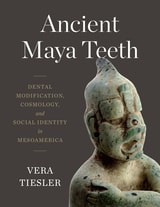
Ancient Maya Teeth
Dental Modification, Cosmology, and Social Identity in MesoamericaVera Tiesler
University of Texas Press, 2024
A study of Maya dental modification from archaeological sites spanning three millennia.
Dental modification was common across ancient societies, but perhaps none were more avid practitioners than the Maya. They filed their teeth flat or pointy, polished and drilled them, and crafted decorative inlays of jade and pyrite. Unusually, Maya of all social classes, ages, and professions engaged in dental modification. What did it mean to them?
Ancient Maya Teeth is the most comprehensive study of Maya dental modification ever published, based on thousands of teeth recovered from 130 sites spanning three millennia. Esteemed archaeologist Vera Tiesler sifts the evidence, much of it gathered with her own hands and illustrated here with more than a hundred photographs. Exploring the underlying theory and practice of dental modification, Tiesler raises key questions. How did modifications vary across the individual’s lifespan? What tools were used? How did the Maya deal with pain—and malpractice? How did they keep their dentitions healthy, functioning, and beautiful? What were the relationships among gender, social identity, and religious identifications? Addressing these and other issues, Ancient Maya Teeth reveals how dental-modification customs shifted over the centuries, indexing other significant developments in Mayan cultural history.
Ancient Maya Traders of Ambergris Caye
Thomas H. Guderjan
University of Alabama Press, 2007
Ancient Mesoamerican Population History
Urbanism, Social Complexity, and ChangeAdrian S. Z. Chase, Arlen F. Chase, and Diane Z. Chase
University of Arizona Press, 2024
Establishing ancient population numbers and determining how they were distributed across a landscape over time constitute two of the most pressing problems in archaeology. Accurate population data is crucial for modeling, interpreting, and understanding the past. Now, advances in both archaeology and technology have changed the way that such approximations can be achieved.
Including research from both highland central Mexico and the tropical lowlands of the Maya and Olmec areas, this book reexamines the demography in ancient Mesoamerica. Contributors present methods for determining population estimates, field methods for settlement pattern studies to obtain demographic data, and new technologies such as LiDAR (light detecting and ranging) that have expanded views of the ground in forested areas. Contributions to this book provide a view of ancient landscape use and modification that was not possible in the twentieth century. This important new work provides new understandings of Mesoamerican urbanism, development, and changes over time.
Contributors
Traci Ardren
M. Charlotte Arnauld
Bárbara Arroyo
Luke Auld-Thomas
Marcello A. Canuto
Adrian S. Z. Chase
Arlen F. Chase
Diane Z. Chase
Elyse D. Z. Chase
Javier Estrada
Gary M. Feinman
L. J. Gorenflo
Julien Hiquet
Scott R. Hutson
Gerardo Jiménez Delgado
Eva Lemonnier
Rodrigo Liendo Stuardo
José Lobo
Javier López Mejía
Michael L. Loughlin
Deborah L. Nichols
Christopher A. Pool
Ian G. Robertson
Jeremy A. Sabloff
Travis W. Stanton
Ancient Nasca Settlement
Helaine Silverman
University of Iowa Press, 2002
Nasca society arose on the south coast of Peru two thousand years ago and evolved over the course of the next seven hundred years. Helaine Silverman's long-term, multistage work on the south coast of Peru has established her as one of the world's preeminent authorities on this brilliant and enigmatic civilization. Ancient Nasca Settlement and Society is the first extended treatment of the range of sites occupied by the people responsible for some of the most exquisite art, largest ground drawings, most intense hunting of human heads as trophies, and most ingenious hydraulic engineering of the pre-Columbian world.
Ancient Nasca Settlement and Society is based on Silverman's comprehensive survey of the Ingenio Valley, a water-rich tributary of the Río Grande de Nazca drainage; it also includes a critical synthesis of the settlement pattern data from the other river valleys of the system maps and tables, Silverman allows comparisons among the various phases of change in Nasca society. A companion CD-ROM provides a great deal of graphic material and allows users to manipulate the data in alternative scenarios.
Silverman situates the various classes of Nasca material culture within the spatial, social, economic, political, and ideological realities that can be adduced from the archaeological record. A work of archaeo-logical ethnography focused on a once-living society, this convincing and highly original book illuminates the ancient Nasca people's social construction of space and cultural meaning through their manipulation of their natural setting and their creation of particular kinds of built environments.
Ancient Origins of the Mexican Plaza
From Primordial Sea to Public SpaceBy Logan Wagner, Hal Box, and Susan Kline Morehead
University of Texas Press, 2013
The plaza has been a defining feature of Mexican urban architecture and culture for at least 4,000 years. Ancient Mesoamericans conducted most of their communal life in outdoor public spaces, and today the plaza is still the public living room in every Mexican neighborhood, town, and city—the place where friends meet, news is shared, and personal and communal rituals and celebrations happen. The site of a community’s most important architecture—church, government buildings, and marketplace—the plaza is both sacred and secular space and thus the very heart of the community.
This extensively illustrated book traces the evolution of the Mexican plaza from Mesoamerican sacred space to modern public gathering place. The authors led teams of volunteers who measured and documented nearly one hundred traditional Mexican town centers. The resulting plans reveal the layers of Mesoamerican and European history that underlie the contemporary plaza. The authors describe how Mesoamericans designed their ceremonial centers as embodiments of creation myths—the plaza as the primordial sea from which the earth emerged. They discuss how Europeans, even though they sought to eradicate native culture, actually preserved it as they overlaid the Mesoamerican sacred plaza with the Renaissance urban concept of an orthogonal grid with a central open space. The authors also show how the plaza’s historic, architectural, social, and economic qualities can contribute to mainstream urban design and architecture today.
Andean Cosmopolitans
Seeking Justice and Reward at the Spanish Royal CourtBy José Carlos de la Puente Luna
University of Texas Press, 2018
Winner, Premio Flora Tristán Al Mejor Libro, Peru Section, Latin American Studies Association, 2019
After the Spanish victories over the Inca claimed Tawantinsuyu for Charles V in the 1530s, native Andeans undertook a series of perilous trips from Peru to the royal court in Spain. Ranging from an indigenous commoner entrusted with delivering birds of prey for courtly entertainment to an Inca prince who spent his days amid titles, pensions, and other royal favors, these sojourners were both exceptional and paradigmatic. Together, they shared a conviction that the sovereign’s absolute authority would guarantee that justice would be done and service would receive its due reward. As they negotiated their claims with imperial officials, Amerindian peoples helped forge the connections that sustained the expanding Habsburg realm’s imaginary and gave the modern global age its defining character.
Andean Cosmopolitans recovers these travelers’ dramatic experiences, while simultaneously highlighting their profound influences on the making and remaking of the colonial world. While Spain’s American possessions became Spanish in many ways, the Andean travelers (in their cosmopolitan lives and journeys) also helped to shape Spain in the image and likeness of Peru. De la Puente brings remarkable insights to a narrative showing how previously unknown peoples and ideas created new power structures and institutions, as well as novel ways of being urban, Indian, elite, and subject. As indigenous people articulated and defended their own views regarding the legal and political character of the “Republic of the Indians,” they became state-builders of a special kind, cocreating the colonial order.