Results by title
914 books match the query 'Medieval' and 71 start with a
Aqueduct Hunting in the Seventeenth Century
Raffaele Fabretti's De aquis et aquaeductibus veteris RomaeHarry B. Evans
University of Michigan Press, 2002
Fabretti's treatise, De aquis et aquaeductibus veteris Romae dissertationes tres, is cited as a matter of course by all later scholars working in the area of Roman topography. Its findings--while updated and supplemented by more recent archaeological efforts--have never been fully superseded. Yet despite its enormous importance and impact on scholarly efforts, the De aquis has never yet been translated from the original Latin. Aqueduct Hunting in the Seventeenth Century provides a full translation of and commentary on Fabretti's writings, making them accessible to a broad audience and carefully assessing their scholarly contributions.
Harry B. Evans offers his reader an introduction to Fabretti and his scholarly world. A complete translation and a commentary that focuses primarily on the topographical problems and Fabretti's contribution to our understanding of them are also provided. Evans also assesses the contributions and corrections of later archaeologists and topographers and places the De aquis in the history of aqueduct studies.
Evans demonstrates that Fabretti's conclusions, while far from definitive, are indeed significant and merit wider attention than they have received to date. This book will appeal to classicists and classical archaeologists, ancient historians, and readers interested in the history of technology, archaeology, and Rome and Italy in the seventeenth century.
Harry B. Evans is Professor of Classics, Fordham University.
Aquinas and Analogy
Ralph McInerny
Catholic University of America Press, 1996
Aquinas and the Platonist Tradition
Fran O'Rourke
Catholic University of America Press, 2026
Aquinas on Crime
Charles P. Nemeth
St. Augustine's Press, 2008
Not much escapes the intellect and imagination of the Angelic Doctor, St. Thomas Aquinas. Whether it be love, children, education, moral reasoning, happiness or the proper dispositions for human existence, St. Thomas seems an expert in all of it. Crime and criminal conduct are no exceptions to this general tendency with him. Not only does he have much to say about it, what he relates is perpetually fresh and surely the bedrock of what is now taken for granted. In this short treatise, the focus targets St. Thomas’s criminal codification – his law of crimes.
Indeed the magnanimity of his crimes code is a subject matter not yet treated in any detail in the scholarly literature. While parts and pieces are covered in many quarters, the literature has yet to develop a systematic, codified examination of Thomistic criminal law. The essence of the endeavor is threefold: first, how does St. Thomas factor the nature of the human person into the concept of criminal culpability and personal responsibility; second, what types of criminal conduct does St. Thomas specifically delineate and define; and lastly, what is Thomas’s view of mitigation and defense, as well as the corresponding punishment meted out for criminal conduct? This short commentary zeroes in on Thomistic Criminal Law – a project which will illuminate the root, the heritage and the foundation of modern criminal codification.
Aquinas on Emotion's Participation in Reason
Nicholas Kahm
Catholic University of America Press, 2019
Aquinas on Imitation of Nature
Source of Principles of Moral ActionWojciech Golubiewski
Catholic University of America Press, 2022
Arbitrary Rule
Slavery, Tyranny, and the Power of Life and DeathMary Nyquist
University of Chicago Press, 2013
Throughout, Nyquist demonstrates how principles relating to political slavery and tyranny are bound up with a Roman jurisprudential doctrine that sanctions the power of life and death held by the slaveholder over slaves and, by extension, the state, its representatives, or its laws over its citizenry.
Archipelagoes
Insular Fictions from Chivalric Romance to the NovelSimone Pinet
University of Minnesota Press, 2010
Pinet looks closely at Amadís de Gaula and the Liber insularum archipelagi as the first examples of these genres. Both isolario and chivalric romance (libros de caballerías) make of the island a flexible yet cohesive framework that becomes intrinsic to the construction of their respective genres. The popularity of these forms throughout the seventeenth century in turn bears witness to the numerous possibilities the archipelagic structure offered, ultimately taken up by the grand genres of each discipline—the atlas and the novel.
Moving from verbal descriptions to engravings and tapestry weavings, and from the chivalric politics and ethics proposed in the Amadís de Gaula to the Insula Barataria episode in Don Quixote, Pinet’s analysis of insularity and the use of the island structure reveals diverging roles for fiction, illuminating both the emergence of the novel and contemporary philosophical discussion on fiction.
Arcimboldo
Visual Jokes, Natural History, and Still-Life PaintingThomas DaCosta Kaufmann
University of Chicago Press, 2010
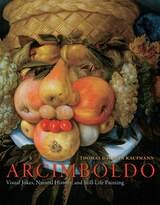
In Giuseppe Arcimboldo’s most famous paintings, grapes, fish, and even the beaks of birds form human hair. A pear stands in for a man’s chin. Citrus fruits sprout from a tree trunk that doubles as a neck. All sorts of natural phenomena come together on canvas and panel to assemble the strange heads and faces that constitute one of Renaissance art’s most striking oeuvres. The first major study in a generation of the artist behind these remarkable paintings, Arcimboldo tells the singular story of their creation.
Drawing on his thirty-five-year engagement with the artist, Thomas DaCosta Kaufmann begins with an overview of Arcimboldo’s life and work, exploring the artist’s early years in sixteenth-century Lombardy, his grounding in Leonardesque traditions, and his tenure as a Habsburg court portraitist in Vienna and Prague. Arcimboldo then trains its focus on the celebrated composite heads, approaching them as visual jokes with serious underpinnings—images that poetically display pictorial wit while conveying an allegorical message. In addition to probing the humanistic, literary, and philosophical dimensions of these pieces, Kaufmann explains that they embody their creator’s continuous engagement with nature painting and natural history. He reveals, in fact, that Arcimboldo painted many more nature studies than scholars have realized—a finding that significantly deepens current interpretations of the composite heads.
Demonstrating the previously overlooked importance of these works to natural history and still-life painting, Arcimboldo finally restores the artist’s fantastic visual jokes to their rightful place in the history of both science and art.
Arguing it Out
Discussion in Twelfth-Century ByzantiumAveril Cameron
Central European University Press, 2016
Art, Culture, and Cuisine
Ancient and Medieval GastronomyPhyllis Pray Bober
University of Chicago Press, 1999
Bober draws on archaeology and art history to examine prehistoric eating customs in ancient Turkey; traditions of the great civilizations of Egypt, Mesopotamia, Greece, and Rome; and rituals of the Middle Ages. Both elegant and entertaining, Art, Culture, and Cuisine reveals cuisine and dining's place at the heart of cultural, religious, and social activities that have shaped Western sensibilities.
Arthurian Intertextualities
Misreading and Rereading Malory's Morte Darthur and the Alliterative and Stanzaic MortesFiona Tolhurst and K. S. Whetter
University of Michigan Press, 2025
Arthurian Intertextualities offers new readings of Malory’s Morte as well as the two English poems that most influenced him. Tolhurst and Whetter situate Malory’s Arthur story in the context of fourteenth- and fifteenth-century England. Combining these contexts with intertextual analysis of scenes and characters from Le Morte Darthur and both sources, the authors illustrate the full extent of Malory’s debt to these two English poems while making a stronger case for Malory’s artistry—and the stanzaic-poet’s artistry—than previous scholarship has acknowledged. These new readings demand a reassessment of Arthurian women, kingship, and warfare and heroism, including reconsidering the alliterative-poet’s attitude to war and to Arthur as conqueror. The authors also offer a spirited defense of Malory’s Guenevere, who remains frequently maligned by scholars, and argue for Palomydes’s acceptance by his Round Table Fellowship. Arthurian Intertextualities will appeal to readers who are interested in the book that serves as the source for most of the Arthuriana (whether novels, plays, works of art, or films) in today’s world: Le Morte Darthur.
Artisan/Practitioners and the Rise of the New Sciences, 1400-1600
Pamela O. Long
Oregon State University Press, 2011
Arts of Dying
Literature and Finitude in Medieval EnglandD. Vance Smith
University of Chicago Press, 2020
Covering the emergence of English literature from the Old English to the late medieval periods, Arts of Dying argues that the problem of how to designate death produced a long tradition of literature about dying, which continues in the work of Heidegger, Blanchot, and Gillian Rose. Philosophy’s attempt to designate death’s impossibility is part of a literature that imagines a relationship with death, a literature that intensively and self-reflexively supposes that its very terms might solve the problem of the termination of life. A lyrical and elegiac exploration that combines medieval work on the philosophy of language with contemporary theorizing on death and dying, Arts of Dying is an important contribution to medieval studies, literary criticism, phenomenology, and continental philosophy.

Aspects of Old English Poetic Syntax
WHERE CLAUSES BEGINMary Blockley
University of Illinois Press, 2001
Distinguished by a remarkable combination of erudition and lucidity, Aspects of Old English Poetic Syntax provides new insight into the rules that govern syntactic relationships and indicates how these rules differ for prose and verse. Blockley considers the functions of four of the most common and most syntactically important words in Old English, as well as such features of clauses as verb-initial order, negative contraction, and unexpressed but understood subjects. Picking up where Bruce Mitchell's classic Old English Syntax left off, Blockley shows how such common words and structures mark the relationships between phrases and clauses.
Blockley also considers how the poetic tradition compensated for the loss in written texts of the syntactic functions served by intonation and inflection. Arguing that verse relied instead on a prescriptively regulated, unambiguous syntax, she suggests principles that promise more complex and subtle interpretations of familiar texts such as Beowulf as well as a wealth of other Old English writings.
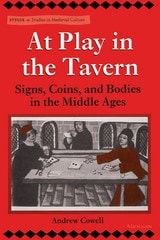
At Play in the Tavern
Signs, Coins, and Bodies in the Middle AgesAndrew Cowell
University of Michigan Press, 1999
Drawing on recent work in medieval literature, history, popular culture, gender studies, and sign theory, Andrew Cowell employs a wide range of traditional and, until now, little known sources to show the unity and importance of a countercultural literary mode.
Andrew Cowell is Assistant Professor, Department of French and Italian, University of Colorado at Boulder.
At the Margins
Minority Groups in Premodern ItalyStephen J. Milner
University of Minnesota Press, 2005
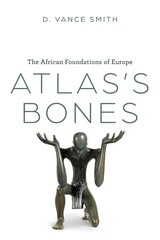
Atlas's Bones
The African Foundations of EuropeD. Vance Smith
University of Chicago Press, 2025
Virgil. Chaucer. Petrarch. These names resonate with many as cornerstones of European culture. Yet, in Atlas’s Bones, D. Vance Smith reveals that much of what is claimed as European culture up to the Middle Ages—its great themes in literature, its sources in political thought, its religious beliefs—originated in the writings of African thinkers like Augustine, Fulgentius, and Martianus Capella, or Europeans who thought extensively about Africa. In fact, a third of Virgil’s Aeneid takes place in Africa. Francis Petrarch believed his most important achievement was his epic Africa; while Geoffrey Chaucer wrote repeatedly about the figures of Scipio Africanus, actually two different men who defeated and destroyed Carthage.
Smith tells the story of how Europe created a false “medieval” version of Africa to acquire resources and power during the era of imperialism and colonialism. The first half of the book, “Reading Africa,” traces Egypt’s, Libya’s, and Carthage’s influence on classical and medieval thinking about Africa, highlighting often ignored literary and legendary traditions, for example, that Alexander the Great named himself the son of an African god. The second part, “Writing Africa,” focuses on how the different cultures of the two great African cities—Carthage and Alexandria—shaped modern literary criticism and political theology and examines the cross-influences of modern anthropology, medieval studies, and colonial law.
Atlas’s Bones firmly re-establishes the significance of Africa in European intellectual history. It will be essential reading for anyone seeking to understand how much of Africa informs our artistic and cultural world.
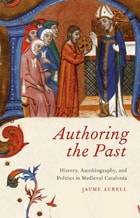
Authoring the Past
History, Autobiography, and Politics in Medieval CataloniaJaume Aurell
University of Chicago Press, 2012
Authoring the Past surveys medieval Catalan historiography, shedding light on the emergence and evolution of historical writing and autobiography in the Middle Ages, on questions of authority and authorship, and on the links between history and politics during the period. Jaume Aurell examines texts from the late twelfth to the late fourteenth century—including the Latin Gesta comitum Barcinonensium and four texts in medieval Catalan: James I’s Llibre dels fets, the Crònica of Bernat Desclot, the Crònica of Ramon Muntaner, and the Crònica of Peter the Ceremonious—and outlines the different motivations for the writing of each.
For Aurell, these chronicles are not mere archaeological artifacts but rather documents that speak to their writers’ specific contemporary social and political purposes. He argues that these Catalonian counts and Aragonese kings were attempting to use their role as authors to legitimize their monarchical status, their growing political and economic power, and their aggressive expansionist policies in the Mediterranean. By analyzing these texts alongside one another, Aurell demonstrates the shifting contexts in which chronicles were conceived, written, and read throughout the Middle Ages.
The first study of its kind to make medieval Catalonian writings available to English-speaking audiences, Authoring the Past will be of interest to scholars of history and comparative literature, students of Hispanic and Romance medieval studies, and medievalists who study the chronicle tradition in other languages.
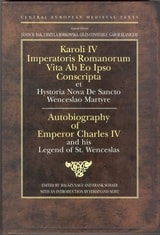
Autobiography of Emperor Charles IV and his Legend of St Wenceslas
Balázs Nagy
Central European University Press, 2001
One of the few autobiographies to have survived from the Middle Ages, this life history of one of the most influential rulers of the fourteenth century, Charles IV of Bohemia, covers his life from birth until his election as King of Germany in 1346.
Charles IV describes his childhood, spent mainly in the court of French kings, his juvenile years, his marriage and his first steps into the international political scene during the early part of the fourteenth century.
A unique addition to this volume is the first ever English translation of the Legend of Saint Wenceslas, written by Charles IV of Luxemburg.
Averroes' Middle Commentary on Aristotle's Poetics
St. Augustine's Press, 1999