Results by title
754 books match the query 'Native American Studies' and 76 start with a

Amulets, Effigies, Fetishes, and Charms
Native American Artifacts and Spirit Stones from the NortheastEdward J. Lenik
University of Alabama Press, 2016
Interpreting Sacred Objects: Indigenous Material Culture and Spiritual Meaning in the Northeast.
Decorated stone artifacts are a significant part of archaeological studies of Native Americans in the Northeast. The artifacts illuminated in Amulets, Effigies, Fetishes, and Charms: Native American Artifacts and Spirit Stones from the Northeast include pecked, sculpted, or incised figures, images, or symbols. These are rendered on pebbles, plaques, pendants, axes, pestles, and atlatl weights, and are of varying sizes, shapes, and designs. Lenik draws from Indian myths and legends and incorporates data from ethnohistoric and archaeological sources together with local environmental settings in an attempt to interpret the iconography of these fascinating relics. For the Algonquian and Iroquois peoples, they reflect identity, status, and social relationships with other Indians as well as beings in the spirit world.
Lenik begins with background on the Indian cultures of the Northeast and includes a discussion of the dating system developed by anthropologists to describe prehistory. The heart of the content comprises more than eighty examples of portable rock art, grouped by recurring design motifs. This organization allows for in-depth analysis of each motif. The motifs examined range from people, animals, fish, and insects to geometric and abstract designs. Information for each object is presented in succinct prose, with a description, illustration, possible interpretation, the story of its discovery, and the location where it is now housed. Lenik also offers insight into the culture and lifestyle of the Native American groups represented. An appendix listing places to see and learn more about the artifacts and a glossary are included.
The material in this book, used in conjunction with Lenik’s previous research, offers a reference for virtually every known example of northeastern rock art. Archaeologists, students, and connoisseurs of Indian artistic expression will find this an invaluable work.
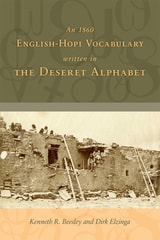
An 1860 English-Hopi Vocabulary Written in the Deseret Alphabet
Kenneth R. Beesley
University of Utah Press, 2014
The volume reproduces all 486 vocabulary entries of the original manuscript, presenting the Deseret and the modern English and Hopi translations. It explains the history of the Deseret Alphabet as well as that of the Mormon missions to the Hopi, while fleshing out the background of the two missionaries, Marion Jackson Shelton, who wrote the manuscript, and his companion, Thales Hastings Haskell. The book will be of interest to linguists, historians, ethnographers, and others who are curious about the unique combination of topics this work connects.

An Ojibwe Home in the City
White Earth Women and Community Organizing in MinneapolisSasha Maria Suarez
University of Minnesota Press, 2026
The story of generations of Ojibwe women who built a thriving Indigenous home in the urban heart of Minneapolis
Minneapolis became home to White Earth Ojibwe people not through a centralized movement but through generations of determined, behind-the-scenes work by Ojibwe women. These women were organizing not in the streets, but in sewing clubs, churches, classrooms, and kitchens to bring people together and form interconnected communities. Rooted in care, tradition, and persistence, their labor laid the foundation for a thriving urban Indigenous population that continues to shape the city today.
An Ojibwe Home in the City tells the histories of Louise and Emily Peake, Winnie Jourdain, Ignatia Broker, and other Ojibwe women who endeavored to make space for Native families in South Minneapolis. From the 1930s through the 1970s, these women built institutions, secured services, and fought for culturally grounded education—all while working inside systems never intended for them. Their efforts led to the creation of vital community hubs such as the Division of Indian Work and the Minneapolis American Indian Center and helped ensure that future generations would stay connected to their culture, even in an urban setting.
Far broader than a local history, this book challenges what we think we know about Native activism in the twentieth century, shifting the focus from protest to perseverance and steady commitment. Intimate, compelling, and deeply grounded in community, An Ojibwe Home in the City is both a tribute and a revelation—an essential and personal account of how Indigenous women made a place for their people in a changing world.
Retail e-book files for this title are screen-reader friendly with images accompanied by short alt text and/or extended descriptions.
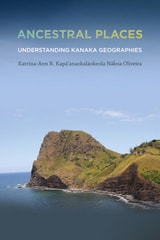
Ancestral Places
Understanding Kanaka GeographiesKatrina-Ann R. Kapa'anaokalaokeola Nakoa Oliveira
Oregon State University Press, 2014
Katrina-Ann R. Kapa‘anaokalaokeola Nakoa Oliveira elucidates a Kanaka geography and provides contemporary scholars with insights regarding traditional culture—including the ways in which Kanaka utilize cartographic performances to map our ancestral places and retain our mo‘olelo, such as reciting creation accounts, utilizing nuances embedded in language, and dancing hula.
A Kanaka by birth, a kumu ‘olelo Hawai‘i (language teacher) by profession, and a geographer by training, Oliveira’s interests intersect at the boundary where words and place-making meet her ancestral land. Thus, Ancestral Places imbues the theoretical with sensual practice. The book’s language moves fluidly between Hawaiian and English, terms are nimbly defined, and the work of the field is embodied: geographic layers are enacted within the text, new understandings created—not just among lexica, but amidst illustrations, charts, terms, and poetry.
In Ancestral Places, Oliveira reasserts both the validity of ancestral knowledge systems and their impact in modernity. Her discussion of Kanaka geographies encompasses the entire archipelago, offering a new framework in Kanaka epistemology.
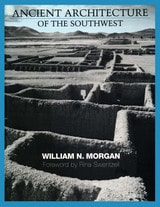
Ancient Architecture of the Southwest
By William N. Morgan
University of Texas Press, 1994
During more than a thousand years before Europeans arrived in 1540, the native peoples of what is now the southwestern United States and northern Mexico developed an architecture of rich diversity and beauty. Vestiges of thousands of these dwellings and villages still remain, in locations ranging from Colorado in the north to Chihuahua in the south and from Nevada in the west to eastern New Mexico.
This study presents the most comprehensive architectural survey of the region currently available. Organized in five chronological sections that include 132 professionally rendered site drawings, the book examines architectural evolution from humble pit houses to sophisticated, multistory pueblos. The sections explore concurrent Mogollon, Hohokam, and Anasazi developments, as well as those in the Salado, Sinagua, Virgin River, Kayenta, and other areas, and compare their architecture to contemporary developments in parts of eastern North America and Mesoamerica. The book concludes with a discussion of changes in Native American architecture in response to European influences.
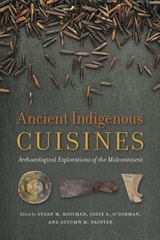
Ancient Indigenous Cuisines
Archaeological Explorations of the MidcontinentEdited by Susan M. Kooiman, Jodie A. O'Gorman, and Autumn M. Painter
University of Alabama Press, 2025
New essays from foodways archaeology related to cuisine in social, cultural, and environmental contexts.
This collection of original essays is the first to cover recent trends in foodways archaeology in the Midwest using the concept of cuisine: the selection of food ingredients and methods of food preparation, cooking, and serving/consumption in relation to their social, cultural, and environmental contexts. This work span the Early Archaic (9000 BC) to Late Precontact (up to around AD 1500) in ecological zones of present-day Michigan, Indiana, Illinois, Wisconsin, Minnesota, North Dakota, and Manitoba. Chapters trace development from hunter-gathering to horticultural practices to the more robust farming/fishing/hunting model centered on maize, squash, and other domesticates.
As Susan M. Kooiman, Jodie A. O’Gorman, and Autumn M. Painter note, identification of past cooking habits and evolving methods for foodstuffs identification can help archaeologists to reconstruct foodways and connect food behaviors with identity and associated fundamental societal beliefs. Contributors to this collection use cutting-edge methods and perspectives and consider a range of questions and outcomes that demonstrate the versatility and strength of culinary studies. To move the field forward, contributors also note areas for further analysis and improvement.
This volume targets archaeologists and students, archaeobotanists and zooarchaeologists, and those curious about Indigenous food culture. Engaging content includes chapters on the construction of earth ovens, the use-alteration of pottery and residue, a discussion of cuisine combining plant and animal data with ceramic trends, and the various contexts of plates to understand cooking methods and the social role of cuisine. Others examine faunal remains, the plant remains of feasting, the introduction of maize, the use of limestone nixtamalization, and archaeobotanical assemblages that reveal shifts in cuisine. A conclusion addresses the question, Why cuisine?
CONTRIBUTORS
Rebecca K. Albert / Alleen Betzenhauser / Jennifer R. Haas / Mary M. King / Susan M. Kooiman / Mary E. Malainey / Terrance J. Martin / Fernanda Neubauer / Kelsey Nordine / Jodie A. O’Gorman / Autumn M. Painter / Jeffrey M. Painter / Kimberly Schaefer / Mary Simon
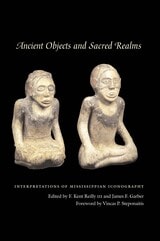
Ancient Objects and Sacred Realms
Interpretations of Mississippian IconographyEdited by F. Kent Reilly, III, and James F. Garber
University of Texas Press, 2006
Between AD 900-1600, the native peoples of the Mississippi River Valley and other areas of the Eastern Woodlands of the United States conceived and executed one of the greatest artistic traditions of the Precolumbian Americas. Created in the media of copper, shell, stone, clay, and wood, and incised or carved with a complex set of symbols and motifs, this seven-hundred-year-old artistic tradition functioned within a multiethnic landscape centered on communities dominated by earthen mounds and plazas. Previous researchers have referred to this material as the Southeastern Ceremonial Complex (SECC).
This groundbreaking volume brings together ten essays by leading anthropologists, archaeologists, and art historians, who analyze the iconography of Mississippian art in order to reconstruct the ritual activities, cosmological vision, and ideology of these ancient precursors to several groups of contemporary Native Americans. Significantly, the authors correlate archaeological, ethnographic, and art historical data that illustrate the stylistic differences within Mississippian art as well as the numerous changes that occur through time. The research also demonstrates the inadequacy of the SECC label, since Mississippian art is not limited to the Southeast and reflects stylistic changes over time among several linked but distinct religious traditions. The term Mississippian Iconographic Interaction Sphere (MIIS) more adequately describes the corpus of this Mississippian art. Most important, the authors illustrate the overarching nature of the ancient Native American religious system, as a creation unique to the native American cultures of the eastern United States.
Anonimo Mexicano
Richley Crapo and Bonnie Glass-Coffin
Utah State University Press, 2005
Anthropologists and Indians in the New South
Edited by Rachel Bonney and J. Anthony Paredes; Foreword by Raymond D. Fogelson
University of Alabama Press, 2001
A clear assessment of the growing mutual respect and strengthening bond between modern Native Americans and the researchers who explore their past
Southern Indians have experienced much change in the last half of the 20th century. In rapid succession since World War II, they have passed through the testing field of land claims litigation begun in the 1950s, played upon or retreated from the civil rights movement of the 1960s, seen the proliferation of “wannabe” Indian groups in the 1970s, and created innovative tribal enterprises—such as high-stakes bingo and gambling casinos—in the 1980s. The Native American Graves Protection and Repatriation Act of 1990 stimulated a cultural renewal resulting in tribal museums and heritage programs and a rapprochement with their western kinsmen removed in “Old South” days.
Anthropology in the South has changed too, moving forward at the cutting edge of academic theory. This collection of essays reflects both that which has endured and that which has changed in the anthropological embrace of Indians from the New South. Beginning as an invited session at the 30th-anniversary meeting of the Southern Anthropological Society held in 1996, the collection includes papers by linguists, archaeologists, and physical anthropologists, as well as comments from Native Americans.
This broad scope of inquiry—ranging in subject from the Maya of Florida, presumed biology, and alcohol-related problems to pow-wow dancing, Mobilian linguistics, and the “lost Indian ancestor” myth—results in a volume valuable to students, professionals, and libraries. Anthropologists and Indians in the New South is a clear assessment of the growing mutual respect and strengthening bond between modern Native Americans and the researchers who explore their past.
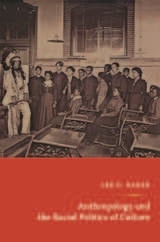
Anthropology and the Racial Politics of Culture
Lee D. Baker
Duke University Press, 2010
Baker argues that the concept of culture developed by ethnologists to understand American Indian languages and customs in the nineteenth century formed the basis of the anthropological concept of race eventually used to confront “the Negro problem” in the twentieth century. As he explores the implications of anthropology’s different approaches to African Americans and Native Americans, and the field’s different but overlapping theories of race and culture, Baker delves into the careers of prominent anthropologists and ethnologists, including James Mooney Jr., Frederic W. Putnam, Daniel G. Brinton, and Franz Boas. His analysis takes into account not only scientific societies, journals, museums, and universities, but also the development of sociology in the United States, African American and Native American activists and intellectuals, philanthropy, the media, and government entities from the Bureau of Indian Affairs to the Supreme Court. In Anthropology and the Racial Politics of Culture, Baker tells how anthropology has both responded to and helped shape ideas about race and culture in the United States, and how its ideas have been appropriated (and misappropriated) to wildly different ends.
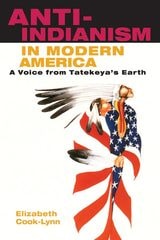
Anti-Indianism in Modern America
A Voice from Tatekeya's EarthElizabeth Cook-Lynn
University of Illinois Press, 2000
Addressing Native American studies past, present, and future, the essays in New Indians, Old Wars tackle the discipline head-on, presenting a radical revision of the popular view of the American West in the process. Instead of luxuriating in the West's past glories or accepting the widespread historians' view of it as a shared place, Elizabeth Cook-Lynn argues that the American West should be fundamentally understood as stolen.
Cook-Lynn says that the Indian Wars of Resistance to the nineteenth- and twentieth-century colonial effort to seize native lands and resources must be given standing in the face of the ever-growing imperial narrative of America--because the terror the world is now witnessing may be the direct consequence of events which began in America's earliest dealings with the natives of this continent. Cook-Lynn's story examines the ongoing and perennial relationship of conflict between colonizers and indigenous people, and it is a story that every American must read.
Cook-Lynn understands that the story of the American West teaches the political language of land theft and tyranny. She argues that to remedy this situation, Native American studies must be considered and pursued as its own discipline, rather than as a subset of history or anthropology. She makes an impassioned claim that such a shift, not merely an institutional or theoretical change, could allow Native American studies to play an important role in defending the sovereignty of indigenous nations today.
Apachean Culture History and Ethnology
Keith H. Basso
University of Arizona Press, 1971
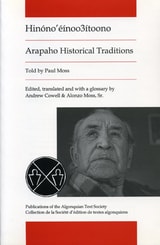
Arapaho Historical Traditions
Hinono'einoo3itoonoAlonzo Moss, Sr.
University of Manitoba Press, 2005

Arikara Agriculture
Mother Corn’s Gift to the Sahnish PeopleArikara Agriculture Project; With collaborators Kelly Kindscher, Loren Yellow Bird, Michael Yellow Bird, Logan Sutton, Loren White, and Lisa Castle
University of Arizona Press, 2027
Drawing on a remarkable combination of early twentieth-century field notes, archaeological evidence, historical accounts, and the voices of Arikara collaborators, Arikara Agriculture: Mother Corn’s Gift to the Sahnish People offers a richly layered account of one of the Plains’ most accomplished agricultural societies.
Living along the Missouri River in present-day North and South Dakota, the Sahnish (Arikara) people cultivated expansive fields of corn, beans, squash, sunflowers, and other crops, sustaining vibrant communities and extensive trade networks. At the heart of this remarkable book are the invaluable records of ethnobotanist Melvin Gilmore, who documented the knowledge of Arikara elders between 1916 and 1924, capturing a lifeway on the cusp of profound change.
More than a historical study, this volume foregrounds the cultural, spiritual, and ecological significance of agriculture in Sahnish life. The contributors discuss how corn was the center of the Arikaras’ world and how it, and other agricultural crops, were important not just as food but also for the culture. The book illuminates traditional horticultural methods, food preparation techniques, and the enduring relevance of these practices today.
Both a vital contribution to ethnobiology and a community-centered preservation of knowledge, this work speaks to ongoing conversations about Indigenous foodways, resilience, and the revitalization of traditional ecological knowledge.
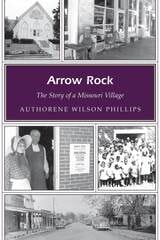
Arrow Rock
The Story of a Missouri VillageAuthorene Wilson Phillips
University of Missouri Press, 2005
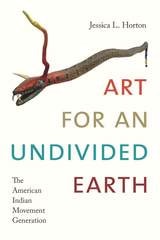
Art for an Undivided Earth
The American Indian Movement GenerationJessica L. Horton
Duke University Press, 2017
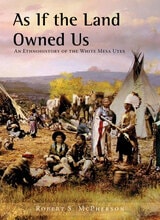
As If the Land Owned Us
An Ethnohistory of the White Mesa UtesRobert S. McPherson
University of Utah Press, 2011
The Ute people of White Mesa have a long, colorful, but neglected history in the Four Corners region. Although they ranged into the Great Basin, Southwest, and parts of the Rocky Mountains as hunters, gatherers, and warriors, southeastern Utah was home. There they adapted culturally and physically to the austere environment while participating in many of the well-known events of their times.
In As If the Land Owned Us, Robert McPherson has gathered the wisdom of White Mesa elders as they imparted knowledge about their land—place names, uses, teachings, and historic events tied to specific sites—providing a fresh insight into the lives of these little-known people. While there have been few published studies about the Southern Utes, this ethnohistory is the first to mix cultural and historic events. The book illustrates the life and times of the White Mesa Utes as they faced multiple changes to their lifeways. It is time for their history to be told in their terms.
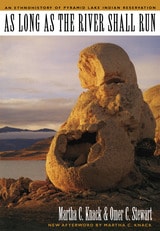
As Long As The River Shall Run
An Ethnohistory Of Pyramid Lake Indian ReservationMartha C. Knack
University of Nevada Press, 1999

As Long as the Rivers Run
Hydroelectric Development and Native CommunitiesJames B. Waldram
University of Manitoba Press, 1993
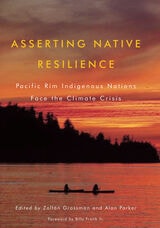
Asserting Native Resilience
Pacific Rim Indigenous Nations Face the Climate CrisisEdited by Zoltán Grossman and Alan Parker
Oregon State University Press, 2012
Native American tribes in the Pacific Northwest and Indigenous peoples around the Pacific Rim have already been deeply affected by droughts, flooding, reduced glaciers and snowmelts, seasonal shifts in winds and storms, and the northward movement of species on the land and in the ocean. Using tools of resilience, Native peoples are creating defenses to strengthen their communities, mitigate losses, and adapt where possible.
Asserting Native Resilience presents a rich variety of perspectives on Indigenous responses to the climate crisis, reflecting the voices of more than twenty contributors, including tribal leaders, scientists, scholars, and activists from the Pacific Northwest, British Columbia, Alaska, and Aotearoa / New Zealand, and beyond. Also included is a resource directory of Indigenous governments, NGOs, and communities and a community organizing booklet for use by Northwest tribes.

At Home in the World
Michael Jackson
Duke University Press, 1995
Something of a nomad himself, having lived in New Zealand, Sierra Leone, England, France, Australia, and the United States, Jackson is deft at capturing the ambiguities of home as a lived experience among the Warlpiri. Blending narrative ethnography, empirical research, philosophy, and poetry, he focuses on the existential meaning of being at home in the world. Here home becomes a metaphor for the intimate relationship between the part of the world a person calls "self" and the part of the world called "other." To speak of "at-homeness," Jackson suggests, implies that people everywhere try to strike a balance between closure and openness, between acting and being acted upon, between acquiescing in the given and choosing their own fate. His book is an exhilarating journey into this existential struggle, responsive at every turn to the political questions of equity and justice that such a struggle entails.
A moving depiction of an aboriginal culture at once at home and in exile, and a personal meditation on the practice of ethnography and the meaning of home in our increasingly rootless age, At Home in the World is a timely reflection on how, in defining home, we continue to define ourselves.
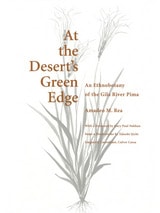
At the Desert's Green Edge
An Ethnobotany of the Gila River PimaAmadeo M. Rea; With a Foreword by Gary Paul Nabhan; Sumi-e Illustrations by Takashi Ijichi; Linguistic Consultant Culver Cassa
University of Arizona Press, 1997
At the Desert's Green Edge weaves the Pima view of the plants found in their environment with memories of their own history and culture, creating a monumental testament to their traditions and way of life. Rea first discusses the Piman people, environment, and language, then proceeds to share their botanical knowledge in entries for 240 plants that systematically cover information on economic botany, folk taxonomy, and linguistics. The entries are organized according to Pima life-form categories such as plants growing in water, eaten greens, and planted fruit trees. All are anecdotal, conveying the author's long personal involvement with the Pimas, whether teaching in their schools or learning from them in conversations and interviews.
At the Desert's Green Edge is an archive of otherwise unavailable plant lore that will become a benchmark for botanists and anthropologists. Enhanced by more than one hundred brush paintings of plants, it is written to be equally useful to nonspecialists so that the Pimas themselves can turn to it as a resource regarding their former lifeways. More than an encyclopedia of facts, it is the Pimas' own story, a witness to a changing way of life in the Sonoran Desert.

At the Risk of Being Heard
Identity, Indigenous Rights, and Postcolonial StatesBartholomew Dean and Jerome M. Levi, Editors
University of Michigan Press, 2003
Combining rich ethnographic descriptions with clear theoretical analyses, At the Risk of Being Heard considers the paradoxical challenges and opportunities confronting indigenous peoples at the dawn of the twenty-first century. In the face of state-sanctioned violence, indigenous peoples encounter considerable risks when asserting their rights, especially to self-determination. Yet, if they remain silent or absent from new arenas of power, hiding in marginalized homelands or cultural practices, they risk being invisible to those allies that would aid them in their struggles for survival.
At the Risk of Being Heard offers needed insights for individuals working on issues of governance, sustainable development, resource management, globalization, and indigenous affairs. It will undoubtedly appeal to undergraduate and graduate students in anthropology, sociology, history, political science, peace studies, and to those students in courses that explore relationships among postcolonial states, indigenous peoples, and human rights.
Bartholomew Dean is Assistant Professor of Anthropology, University of Kansas. Jerome M. Levi is Associate Professor of Anthropology, Carleton College.

Aymara Indian Perspectives on Development in the Andes
Amy Eisenberg
University of Alabama Press, 2013
Aymara Indians are a geographically isolated, indigenous people living in the Andes Mountains near Chile’s Atacama Desert, one of the most arid regions of the world. As rapid economic growth in the area has begun to divert scarce water to hydroelectric and agricultural projects, the Aymara struggle to maintain their sustainable and traditional systems of water use, agriculture, and pastoralism.
In Aymara Indian Perspectives on Development in the Andes, Amy Eisenberg provides a detailed exploration of the ethnoecological dimensions of the tension between the Aymara, whose economic, spiritual, and social life are inextricably tied to land and water, and three major challenges: the paving of Chile Highway 11, the diversion of the Altiplano waters of the Río Lauca for irrigation and power-generation, and Chilean national park policies regarding Aymara communities, their natural resources, and cultural properties within Parque Nacional Lauca, the International Biosphere Reserve.
Pursuing collaborative research, Eisenberg performed ethnographic interviews with Aymara people in more than sixteen Andean villages, some at altitudes of 4,600 meters. Drawing upon botany, agriculture, natural history, physical and cultural geography, history, archaeology, and social and environmental impact assessment, she presents deep, multifaceted insights from the Aymara’s point of view.
Illustrated with maps and dramatic photographs by John Amato, Aymara Indian Perspectives on Development in the Andes provides an account of indigenous perspectives and concerns related to economic development that will be invaluable to scholars and policy-makers in the fields of natural and cultural resource preservation in and beyond Chile.
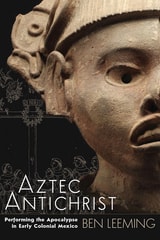
Aztec Antichrist
Performing the Apocalypse in Early Colonial MexicoBen Leeming
University Press of Colorado, 2022
Discovered in the archives of the Hispanic Society of America in New York inside a notebook of miscellaneous Nahuatl-Christian texts written almost entirely by an Indigenous writer named Fabían de Aquino, the plays are filled with references to human sacrifice, bloodletting, ritual divination, and other religious practices declared “idolatrous” at a time when ecclesiastical authorities actively sought to suppress writing about Indigenous religion. These are Indigenous plays for an Indigenous audience that reveal how Nahuas made sense of Christianity and helped form its colonial image—the title figure is a powerful Indigenous being, an “Aztec Antichrist,” who violently opposes the evangelizing efforts of the church and seeks to draw converted Nahuas back to the religious practices of their ancestors. These practices include devotion to Nahua deities such as Tlaloc, Quetzalcoatl, and Tezcatlipoca who, in one of the most striking moves made by Aquino, are cast as characters in the plays.
Along with the translations, Leeming provides context and analysis highlighting these rare and fascinating examples of early Indigenous American literature that offer a window into the complexity of Nahua interactions with Christianity in the early colonial period. The work is extremely valuable to all students and scholars of Latin American religion, colonialism, Indigenous history, and early modern history and theater.
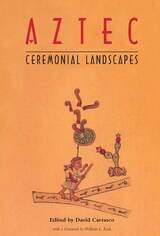
Aztec Ceremonial Landscapes
Davíd Carrasco
University Press of Colorado, 1999