Results by title
4917 books match the query 'Philosophy' and 406 start with a
A Legal Theory for Autonomous Artificial Agents
Samir Chopra and Laurence F. White
University of Michigan Press, 2011
“An extraordinarily good synthesis from an amazing range of philosophical, legal, and technological sources . . . the book will appeal to legal academics and students, lawyers involved in e-commerce and cyberspace legal issues, technologists, moral philosophers, and intelligent lay readers interested in high tech issues, privacy, [and] robotics.”
—Kevin Ashley, University of Pittsburgh School of Law
As corporations and government agencies replace human employees with online customer service and automated phone systems, we become accustomed to doing business with nonhuman agents. If artificial intelligence (AI) technology advances as today’s leading researchers predict, these agents may soon function with such limited human input that they appear to act independently. When they achieve that level of autonomy, what legal status should they have?
Samir Chopra and Laurence F. White present a carefully reasoned discussion of how existing philosophy and legal theory can accommodate increasingly sophisticated AI technology. Arguing for the legal personhood of an artificial agent, the authors discuss what it means to say it has “knowledge” and the ability to make a decision. They consider key questions such as who must take responsibility for an agent’s actions, whom the agent serves, and whether it could face a conflict of interest.
A Life Worthy of the Gods
The Materialist Psychology of EpicurusDavid Konstan
Parmenides Publishing, 2008
A Long Saturday
ConversationsGeorge Steiner with Laure Adler
University of Chicago Press, 2017
In a stimulating series of conversations, Steiner and journalist Laure Adler discuss a range of topics, including Steiner’s boyhood in Vienna and Paris, his education at the University of Chicago and Harvard, and his early years in academia. Books are a touchstone throughout, but Steiner and Adler’s conversations also range over music, chess, psychoanalysis, the place of Israel in Jewish life, and beyond. Blending thoughts on subjects of broad interest in the humanities—the issue of honoring Richard Wagner and Martin Heidegger in spite of their politics, or Virginia Woolf’s awareness of the novel as a multivocal form, for example—with personal reflections on life and family, Steiner demonstrates why he is considered one of today’s greatest minds. Revealing and exhilarating, A Long Saturday invites readers to pull up a chair and listen in on a conversation with a master.
A Love of UIQ
Félix Guattari
University of Minnesota Press, 2016
Throughout a large part of the 1980s, Félix Guattari, known for his collaborations with Gilles Deleuze and his experimental and groundbreaking practices in psychotherapy, decides to shift his experimental work into a different medium of artistic and creative thought practice: the world of science fiction. Part self-analysis, part cinematic expression of his theoretical work, Guattari’s screenplay merges his theoretical concepts with his passion for comic books, free radio movements, and film. So begins Guattari’s journey to write a screenplay wherein a group of squatters makes contact with a superior intelligence coming from the infinitely small Universe of the Infra-quark (UIQ). Guattari worked feverishly on his film, attempting to secure a budget, traveling to Hollywood, and enlisting the help of American screenwriter Robert Kramer. But the film would never see the light of day. Through the important archival work of artists, Silvia Maglioni and Graeme Thomson, Guattari’s script is now published here, for the first time in English.
A Manual of Intensional Logic
2nd EditionJohan van Benthem
CSLI, 1988
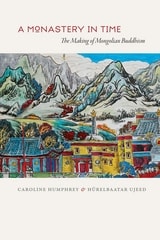
A Monastery in Time
The Making of Mongolian BuddhismCaroline Humphrey and Hurelbaatar Ujeed
University of Chicago Press, 2013
A Moral Military
Sidney Axinn
Temple University Press, 2008
In this new edition of the classic book on the moral conduct of war, Sidney Axinn provides a full-length treatment of the military conventions from a philosophical point of view. Axinn considers these basic ethical questions within the context of the laws of warfare: Should a good soldier ever disobey a direct military order? Are there restrictions on how we fight a war? What is meant by “military honor,” and does it really affect the contemporary soldier? Is human dignity possible under battlefield conditions?
Axinn answers “yes” to these questions. His objective in A Moral Military is to establish a basic framework for moral military action and to assist in analyzing military professional ethics. He argues for the seriousness of the concept of military honor but limits honorable military activity by a strict interpretation of the notion of war crime.
With revisions and expansions throughout, including a new chapter on torture, A Moral Military is an essential guide on the nature of war during a time when the limits of acceptable behavior are being stretched in new directions.
A More Beautiful Question
The Spiritual in Poetry and ArtGlenn Hughes
University of Missouri Press, 2011
Hughes offers the idea that the modern “crisis of faith” is not a matter of vanishing spiritual concerns and energy but rather of their disorientation, even as they remain pervasive forces in human affairs. And because art is the most effective medium for spiritually evocation, it is our most significant touchstone for examining this spiritual disorientation, just as it remains a primary source of inspiration for spiritual experience.
A More Beautiful Question is concerned with how art, and especially poetry, functions as a vehicle of spiritual expression in today’s modern cultures. The book considers the meeting points of art, poetry, religion, and philosophy, in part through examining the treatments of consciousness, transcendence, and art in the writings of twentieth-century philosophers Eric Voegelin and Bernard Lonergan. A major portion of A More Beautiful Question is devoted to detailed “case studies” of three influential modern poets: Gerard Manley Hopkins, Emily Dickinson, and T. S. Eliot. In these and its other chapters, the book examines the human need for artistic symbols that evoke the mystery of transcendence, the ways in which poetry and art illuminate the spiritual meanings of freedom, and the benefits of an individual’s loving study of great literature and art.
A More Beautiful Question has a distinctive aim—to clarify the spiritual functions of art and poetry in relation to contemporary confusion about transcendent reality—and it meets that goal in a manner accessible by the layperson as well as the scholar. By examining how the best art and poetry address our need for spiritual orientation, this book makes a valuable contribution to the philosophies of art, literature, and religion, and brings deserved attention to the significance of the “spiritual” in the study of these disciplines.
A More Conservative Place
Intellectual Culture in the Bush EraPaul A. Bové
Dartmouth College Press, 2013
A Natural History of Negation
Laurence R. Horn
CSLI, 1989
A New Basis for Animal Ethics
Telos and Common SenseBernard E. Rollin
University of Missouri Press, 2016
A New Constitutionalism
Designing Political Institutions for a Good SocietyEdited by Stephen L. Elkin and Karol Edward Soltan
University of Chicago Press, 1993
Believing that constitutionalism needs to go beyond the classical goal of limiting the arbitrary exercise of political power, the contributors argue that it should—and can—be designed to achieve economic efficiency, informed democratic control, and other valued political ends. More broadly, they believe that political and social theory needs to turn away from the negativism of critical theory to consider how a good society should be "constituted" and to direct the work of designing institutions that can constitute a "good polity," in both the economic and civic senses.
Stephen L. Elkin and Karol Edward Soltan begin with an overview of constitutionalist theory and a discussion of the new constitutionalism within the broader intellectual and historical context of political and social thought. Charles Anderson, James Ceaser, and the editors then offer different interpretations of the central issues regarding institutional design in a constitutionalist social science, consider various ways of performing the task, and discuss the inadequacy of recent political science to the job it ought to be doing. The book concludes with essays by Ted Lowi, Cass Sunstein and Edwin Haefele which apply these themes to the American regime.
A New Philosophy of History
Edited by Frank Ankersmit and Hans Kellner
University of Chicago Press, 1995
The range of approaches found in A New Philosophy of History ensures that this book will establish itself as required reading not only for historians, but for everyone interested in literary theory, philosophy, or cultural studies.
This volume presents essays by Hans Kellner, Nancy F. Partner, Richard T. Vann, Arthur C. Danto, Linda Orr, Philippe Carrard, Ann Rigney, Allan Megill, Robert Berkhofer, Stephen Bann, and Frank Ankersmit.
A Nice Derangement of Epistemes
Post-positivism in the Study of Science from Quine to LatourJohn H. Zammito
University of Chicago Press, 2004
Zammito shows how problems that Quine and Kuhn saw in the philosophy of the natural sciences inspired a turn to the philosophy of language for resolution. This linguistic turn led to claims that science needs to be situated in both historical and social contexts, but the claims of recent "science studies" only deepened the philosophical quandary. In essence, Zammito argues that none of the problems with positivism provides the slightest justification for denigrating empirical inquiry and scientific practice, delivering quite a blow to the "discipline" postmodern science studies.
Filling a gap in scholarship to date, A Nice Derangement of Epistemes will appeal to historians, philosophers, philosophers of science, and the broader scientific community.
A Paradigm for Program Semantics
Chris Brink and Ingrid Rewitsky
CSLI, 2001
A Passion for Specificity
Confronting Inner Experience in Literature and ScienceMarco Caracciolo and Russell Hurlburt
The Ohio State University Press, 2016
A Passion for Specificity, with its personal revelations, unexpected twists, and confrontational style, reads like an epistolary novel, but it is a serious exploration of ideas at the heart of literature and science. It is a thoughtful attempt at advancing the emerging “cognitive humanities,” clarifying a number of core issues in the cross-pollination of literature, psychology, philosophy, and consciousness science.

A Phenomenology of Trumpism
America Talks with the Origins of the WestMichael Arvanitopoulos
Intellect Books, 2026
This book traces our escalating geopolitical chaos to the utter failure of Western education. The purging of the Greeks from our schools with the masquerade that was modernity, combined with the prevalence of Teutonic neo-barbarism in Europe and a constitutional anti-intellectualism in America, has bred compiling generations of citizens bereft of a kind of thought that is essentially human. In the absence of human thought, market ideologies from Karl Marx to Adam Smith have enjoyed a long leash to establish as incontestable the idea that any existential proposition other than their own is nothing but an arrogant desire to redesign life itself. Thus Western “democracies” alternatively keep voting in Satan to fend off Beelzebub, having to choose between either a preanthropic Hobbesian, or a metanthropic Sartrean future, with not much in between. From what universal constancy, and from what kind of “education,” can an anthropic measure show beyond doubt that there is an alternative path? This is the riddle of the Age of Trumpism, the book argues; and forces the Statue of Liberty into a syzetetic discussion with the Greek statue, through a critical phenomenological return to the things themselves that bridges Heidegger’s thought with the metaphysics of Greek tragic art.
A Philosopher's Economist
Hume and the Rise of CapitalismMargaret Schabas and Carl Wennerlind
University of Chicago Press, 2020
Although David Hume’s contributions to philosophy are firmly established, his economics has been largely overlooked. A Philosopher’s Economist offers the definitive account of Hume’s “worldly philosophy” and argues that economics was a central preoccupation of his life and work. Margaret Schabas and Carl Wennerlind show that Hume made important contributions to the science of economics, notably on money, trade, and public finance. Hume’s astute understanding of human behavior provided an important foundation for his economics and proved essential to his analysis of the ethical and political dimensions of capitalism. Hume also linked his economic theory with policy recommendations and sought to influence people in power. While in favor of the modern commercial world, believing that it had and would continue to raise standards of living, promote peaceful relations, and foster moral refinement, Hume was not an unqualified enthusiast. He recognized many of the underlying injustices of capitalism, its tendencies to promote avarice and inequality, as well as its potential for political instability and absolutism.
Hume’s imprint on modern economics is profound and far-reaching, whether through his close friend Adam Smith or later admirers such as John Maynard Keynes and Friedrich Hayek. Schabas and Wennerlind’s book compels us to reconsider the centrality and legacy of Hume’s economic thought—for both his time and ours—and thus serves as an important springboard for reflections on the philosophical underpinnings of economics.
A Philosophical Introduction to Probability
Maria Carla Galavotti
CSLI, 2004
A Philosophical Novelist
George Santayana and the Last PuritanH. T. Kirby-Smith
Southern Illinois University Press, 1997
H. T. Kirby-Smith uses Santayana’s 1936 novel, The Last Puritan, as both an occasion and a means for bringing into focus the complex relations between Santayana’s life, his personality, and his philosophy. Opening with an account of Santayana’s various literary styles and arguing for the significance of Santayana’s writing of philosophy as literature, Kirby-Smith notes that Santayana saw the rational life as a continual adjustment and accommodation of contradictory claims. And he saw a literary style as an accommodation of the author to the reader.
Chapters 2 through 5 provide the philosophical background for a consideration of The Last Puritan, summarizing exactly how Santayana assimilated other philosophies into his own.
Chapters 6 and 7 incorporate Santayana’s three-volume autobiography, his letters and memoirs, and biographical studies by others into a psychological portrait of the author. All of this is in preparation for chapters 8 and 9, which focus on The Last Puritan. Kirby-Smith closes with a chapter that serves as a legal brief in defense of the author against the harsh, sometimes malicious attacks of his critics.
A Philosophy of Boredom
Lars Svendsen
Reaktion Books, 2005
Lars Svendsen brings together observations from philosophy, literature, psychology, theology, and popular culture, examining boredom's pre-Romantic manifestations in medieval torpor, philosophical musings on boredom from Pascal to Nietzsche, and modern explorations into alienation and transgression by twentieth-century artists from Beckett to Warhol. A witty and entertaining account of our dullest moments and most maddening days, A Philosophy of Boredom will appeal to anyone curious to know what lies beneath the overwhelming inertia of inactivity.
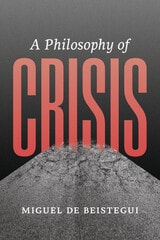
A Philosophy of Crisis
Miguel de Beistegui
University of Chicago Press, 2024
Crises abound—so many that it can be easy to lose perspective. In A Philosophy of Crisis, Miguel de Beistegui traces the intellectual development of ideas about crisis and identifies four distinct forms a crisis might take: crises of deviation, exception, contradiction, and extinction. Drawing on a range of examples (from economic crises to social uprisings, pandemics, and ecological devastation) and discourses (from ancient medicine to legal theory, political economy, philosophy, the earth sciences, and ecocriticism), A Philosophy of Crisis offers new conceptual tools for both understanding and avoiding the dangers of our crisis-saturated time.
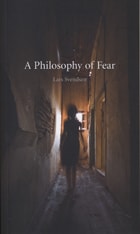
A Philosophy of Fear
Lars Svendsen
Reaktion Books, 2008
Svendsen delves into science, politics, sociology, and literature to explore the nature of fear. He examines the biology behind the emotion, from the neuroscience underlying our “fight or flight” instinct to how fear induces us to take irrational actions in our attempts to minimize risk. The book then turns to the political and social realms, investigating the role of fear in the philosophies of Machiavelli and Hobbes, the rise of the modern “risk society,” and how fear has eroded social trust. Entertainment such as the television show “Fear Factor,” competition in extreme sports, and the political use of fear in the ongoing “War on Terror” all come under Svendsen’s probing gaze, as he investigates whether we can ever disentangle ourselves from the continual state of alarm that defines our age.
Svendsen ultimately argues for the possibility of a brighter, less fearful future that is marked by a triumph of humanist optimism. An incisive and thought-provoking meditation, A Philosophy of Fear pulls back the curtain that shrouds dangers imagined and real, forcing us to confront our fears and why we hold to them.
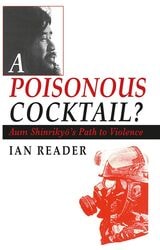
A Poisonous Cocktail?
Aum Shinrikyo's Path to ViolenceIan Reader
National University of Singapore Press, 1996
This highly acclaimed study describes Aum Shinrikyo’s history, examines the various conflicts it was involved in, and discusses the contents of Asahara’s sermons and prophecies. Reader suggests that the Aum case is not unique but similar to other cases of religious violence.
The March 1995 gas attack on the Tokyo subway system killed 12 people and injured thousands. Massive police raids and the subsequent investigation linked this attack (plus a variety of other criminal activities including murders) to Aum Shinrikyo, a small religious movement whose leader, Asahara Shoko, had prophesied that Armageddon was at hand.
Many questions have been raised by the Aum affair. What were Aum's spiritual roots and the focus of Asahara's teaching? Why did a religious movement ostensibly focused on yoga, meditation, asceticism and the pursuit of enlightenment become involved in violent activities? What factors brought Aum into conflict with society at large, caused it to believe it was the victim of a huge conspiracy to destroy it, and impelled it to experiment with making nerve gasses, build weapons and form its own 'alternative government'?
Ian Reader examines these questions by describing Aum's history, examining the various conflicts it was involved in, and discussing the contents of Asahara's sermons and prophesies. In so doing, he points to a combination of factors which together took Aum down a path of violence. Suggesting that the Aum case is not unique, he shows how it displays similarities with other cases of violence and conflict among religious and political movements in Japan and elsewhere.
A Political Economy of Justice
Edited by Danielle Allen, Yochai Benkler, Leah Downey, Rebecca Henderson, and Josh Simons
University of Chicago Press, 2022
If we can agree that our current social-political moment is tenuous and unsustainable—and indeed, that may be the only thing we can agree on right now—then how do markets, governments, and people interact in this next era of the world? A Political Economy of Justice considers the strained state of our political economy in terms of where it can go from here. The contributors to this timely and essential volume look squarely at how normative and positive questions about political economy interact with each other—and from that beginning, how to chart a way forward to a just economy.
A Political Economy of Justice collects fourteen essays from prominent scholars across the social sciences, each writing in one of three lanes: the measures of a just political economy; the role of firms; and the roles of institutions and governments. The result is a wholly original and urgent new benchmark for the next stage of our democracy.
A Possible Anthropology
Methods for Uneasy TimesAnand Pandian
Duke University Press, 2019
A Power to Translate the World
New Essays on Emerson and International CultureEdited by David LaRocca and Ricardo Miguel-Alfonso
Dartmouth College Press, 2016
A Pragmatic Theory of Fallacy
Douglas Walton
University of Alabama Press, 1995
Although fallacies have been common since Aristotle, until recently little attention has been devoted to identifying and defining them. Furthermore, the concept of fallacy itself has lacked a sufficiently clear meaning to make it a useful tool for evaluating arguments. Douglas Walton takes a new analytical look at the concept of fallacy and presents an up-to-date analysis of its usefulness for argumentation studies. Walton uses case studies illustrating familiar arguments and tricky deceptions in everyday conversation where the charge of fallaciousness is at issue.
The numerous case studies show in concrete terms many practical aspects of how to use textual evidence to identify and analyze fallacies and to evaluate arguments as fallacious. Walton looks at how an argument is used in the context of conversation. He defines a fallacy as a conversational move, or sequence of moves, that is supposed to be an argument that contributes to the purpose of the conversation but in reality interferes with it. The view is a pragmatic one, based on the assumption that when people argue, they do so in a context of dialogue, a conventionalized normative framework that is goal-directed. Such a contextual framework is shown to be crucial in determining whether an argument has been used correctly. Walton also shows how examples of fallacies given in the logic textbooks characteristically turn out to be variants of reasonable, even if defeasible or questionable arguments, based on presumptive reasoning. This is the essence of the evaluation problem. A key thesis of the book, which must not be taken for granted as previous textbooks have so often done, is that you can spot a fallacy from how it was used in a context of dialogue. This is an innovative and even, as Walton notes, "a radical and controversial" theory of fallacy.

A Pragmatism of Beginnings
Governing Crises in the AnthropocenePol Bargués
University of Michigan Press, 2027
As climate change, pandemics, disasters, migrations, and conflicts increasingly overlap, crises are becoming more complex and difficult to address. The Anthropocene is an era characterized by uncertainty and contestation, in which traditional approaches to crisis management are no longer working. This book examines the ideas that have emerged to help societies move forward, including resilience, navigation, adaptation, precaution, and slow peacebuilding. While these approaches promise hope and progress, A Pragmatism of Beginnings critically highlights their limitations, showing how they often focus on coping with crises in ways that merely preserve and reproduce a decaying status quo.
Drawing on philosophical pragmatism, the book places these imaginaries that drive crisis management today in dialogue with the work of the classical pragmatists William James, John Dewey, and Jane Addams, as well as contemporary philosophers Bruno Latour, Graham Harman, and Elizabeth Grosz, to assess both their promises and their limitations. Across a series of case studies covering disaster response, peacebuilding, global health, climate governance, migration management, and the Women, Peace and Security agenda, the book shows how contemporary crisis governance often seeks to preserve the status quo by managing risks and avoiding breakdown rather than pursue transformative change. A Pragmatism of Beginnings argues that responding to today’s crises requires more; it also demands the courage and imagination to seize new beginnings.
A Pragmatist Philosophy of Life in Ortega y Gasset
John T. Graham
University of Missouri Press, 1994
Jose Ortega y Gasset (1883-1955), the most widely known and well liked of Spanish philosophers, was much admired in the United States from the 1930s through the 1960s for Revolt of the Masses, History as a System, and Dehumanization of Art, among other works. Those popular works, however, poorly reflected the complexity of Ortega's philosophy. In this first historical analysis of all the parts of Ortega's total thought, John Graham explores the extent to which Ortega's metaphysics was built not only on a native Spanish realism but also upon the pragmatism of William James. Graham details the extent to which Ortega developed an existentialsim before Martin Heidegger and a new historicism less absolute than Benedetto Croce's, by means of a phenomenological method-all within a comprehensive philosophy of life similar to Wilhelm Dilthey's, but more realist and social. In addition, an extensive bibliographical essay examines how Ortega's philosophy, as a whole and in each part, has stood in the estimation of critics worldwide from the 1920s to the present.
Over ten years in preparation, A Pragmatist Philosophy of Life in Ortega y Gasset reveals how open, adaptable, and inventive was pragmatism as Ortega elaborated its philosophical implications and applications for Spain, Europe, and the Americas. It is based on extensive use of the twelve volumes of Ortega's Obras completas, the eighty microfilm reels of his archive in the Library of Congress, and his private library of fifteen hundred volumes in Madrid. These sources, many of which have not been available previously, provide the essential evidence needed to demonstrate the novelty and subtlety, the diversity and unity, of Ortega's thematic "system" of thought.
Students and scholars of intellectual history, Spanish literature, and philosophy will welcome this important new study.
A Precarious Happiness
Adorno and the Sources of NormativityPeter E. Gordon
University of Chicago Press, 2023
A strikingly original account of Theodor Adorno’s work as a critique animated by happiness—now in paperback.
"Gordon’s confidently gripping and persistently subtle interpretation brings a new tone to the debate about Adorno’s negativism."—Jürgen Habermas
Theodor Adorno is often portrayed as a totalizing negativist, a scowling contrarian who looked upon modern society with despair. Peter E. Gordon thinks we have this wrong: if Adorno is uncompromising in his critique, it is because he sees in modernity an unfulfilled possibility of human flourishing. In a damaged world, Gordon argues, all happiness is likewise damaged but not wholly absent. Through a comprehensive rereading of Adorno’s work, A Precarious Happiness recovers Adorno’s commitment to traces of happiness—fragments of the good amid the bad. Ultimately, Gordon argues that social criticism, while exposing falsehoods, must also cast a vision for an unrealized better world.
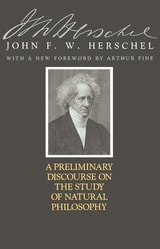
A Preliminary Discourse on the Study of Natural Philosophy
John F. W. Herschel
University of Chicago Press, 1987
"Herschel's book . . . brilliantly analyzes both the history and nature of science."—Keith Stewart Thomson, American Scientist
A Primer of Probability Logic
Ernest W. Adams
CSLI, 1996
This book is meant to be a primer, that is, an introduction, to probability logic, a subject that appears to be in its infancy. Probability logic is a subject envisioned by Hans Reichenbach and largely created by Adams. It treats conditionals as bearers of conditional probabilities and discusses an appropriate sense of validity for arguments such conditionals, as well as ordinary statements as premisses.
This is a clear well-written text on the subject of probability logic, suitable for advanced undergraduates or graduates, but also of interest to professional philosophers. There are well-thought-out exercises, and a number of advanced topics treated in appendices, while some are brought up in exercises and some are alluded to only in footnotes. By this means, it is hoped that the reader will at least be made aware of most of the important ramifications of the subject and its tie-ins with current research, and will have some indications concerning recent and relevant literature.
A Process Model
Eugene T. Gendlin; Foreword by Robert A. Parker
Northwestern University Press, 2018
A Process Model, Gendlin’s magnum opus, offers no less than a new alternative to the dualism of mind and body. Beginning with living process, the body’s simultaneous interaction and identity with its environment, Gendlin systematically derives nonreductive concepts that offer novel and rigorous ways to think from within lived precision. In this way terms such as body, environment, time, space, behavior, language, culture, situation, and more can be understood with both great force and great subtlety.
Gendlin’s project is relevant to discussions not only in philosophy but in other fields in which life process is central—including biology, environmental management, environmental humanities, and ecopsychology. It provides a genuinely new philosophical approach to complex societal challenges and environmental issues.
A Question of Voice
Philosophy and the Search for LegitimacyRon Scapp
University of Michigan Press, 2020
A Search for Clarity
Science and Philosophy in Lacan's OeuvreJean-Claude Milner; Translated from the French by Ed Pluth
Northwestern University Press, 2021
In A Search for Clarity, Jean‑Claude Milner argues that although Jacques Lacan’s writing is notoriously obscure his oeuvre is entirely clear. In a discussion that considers the difference between the esoteric and exoteric works of Plato and Aristotle, Milner argues that Lacan’s oeuvre is to be found in his published writings alone, not his transcribed seminars, and that these published writings contain his official doctrine. Thus, Lacan’s oeuvre is already complete, even though many of his seminars remain unpublished.
According to Milner, Lacan’s fundamental idea is that the subject psychoanalysis works on is the subject of science. Milner suggests that this is a supplement to Alexandre Koyré’s and Alexandre Kojève’s accounts of modern science, for which mathematization and a break from the ancient episteme were key.
A Search for Clarity is the definitive statement on how Lacan viewed the relationship between psychoanalysis and science, and on how Lacan’s thinking evolved as he struggled to draw out the consequences of the equation he posited between psychoanalysis and science. Milner’s work on Lacan has been essential reading in French for decades. This English translation will make his illuminating work accessible to a broader audience.
A Sense of Brutality
Philosophy after Narco-CultureCarlos Alberto Sánchez
Amherst College Press, 2020
"The study is original, bringing a wide range of voices into dialogue to present a problem that is pressing and deserving of careful analysis. The study will contribute to the field of Latin American philosophy in important ways... This is the only book by a philosopher on the topic of narco-culture, and I think it’s an important contribution to a topic that should be addressed by philosophers." —Elizabeth Millán, DePaul University
A Short Commentary on Kant's Critique of Pure Reason
A. C. Ewing
University of Chicago Press, 1967
A. C. Ewing (1899-1973) was a member of the Faculty of Moral Science at Cambridge University and a Fellow of the British Academy. He taught at several universities in the United States including Princeton University and Northwestern University. His many books include and The Fundamental Questions of Philosophy and The Definition of Good.
A Short History of Thomism
Romanus Cessario, O.P.
Catholic University of America Press, 2005
A Short Treatise on the Metaphysics of Tsunamis
Jean-Pierre Dupuy
Michigan State University Press, 2015
Jean-Pierre Dupuy asks whether, from Lisbon to Sumatra, mankind has really learned nothing about evil. When moral crimes are unbearably great, he argues, our ability to judge evil is gravely impaired, and the temptation to regard human atrocity as an attack on the natural order of the world becomes irresistible. This impulse also suggests a kind of metaphysical ruse that makes it possible to convert evil into fate, only a fate that human beings may choose to avoid. Postponing an apocalyptic future will depend on embracing this paradox and regarding the future itself in a radically new way.
The American edition of Dupuy’s classic essay, first published in 2005, also includes a postscript on the 2011 nuclear accident that occurred in Japan, again as the result of a tsunami.
A Significant Life
Human Meaning in a Silent UniverseTodd May
University of Chicago Press, 2015
What makes for a good life, or a beautiful one, or, perhaps most important, a meaningful one? Throughout history most of us have looked to our faith, our relationships, or our deeds for the answer. But in A Significant Life, philosopher Todd May offers an exhilarating new way of thinking about these questions, one deeply attuned to life as it actually is: a work in progress, a journey—and often a narrative. Offering moving accounts of his own life and memories alongside rich engagements with philosophers from Aristotle to Heidegger, he shows us where to find the significance of our lives: in the way we live them.
May starts by looking at the fundamental fact that life unfolds over time, and as it does so, it begins to develop certain qualities, certain themes. Our lives can be marked by intensity, curiosity, perseverance, or many other qualities that become guiding narrative values. These values lend meanings to our lives that are distinct from—but also interact with—the universal values we are taught to cultivate, such as goodness or happiness. Offering a fascinating examination of a broad range of figures—from music icon Jimi Hendrix to civil rights leader Fannie Lou Hamer, from cyclist Lance Armstrong to The Portrait of a Lady’s Ralph Touchett to Claus von Stauffenberg, a German officer who tried to assassinate Hitler—May shows that narrative values offer a rich variety of criteria by which to assess a life, specific to each of us and yet widely available. They offer us a way of reading ourselves, who we are, and who we might like to be.
Clearly and eloquently written, A Significant Life is a recognition and a comfort, a celebration of the deeply human narrative impulse by which we make—even if we don’t realize it—meaning for ourselves. It offers a refreshing way to think of an age-old question, of quite simply, what makes a life worth living.
A Significant Life
Human Meaning in a Silent UniverseTodd May
University of Chicago Press, 2015
This is an auto-narrated audiobook edition of this book.
What makes for a good life, or a beautiful one, or, perhaps most important, a meaningful one? Throughout history most of us have looked to our faith, our relationships, or our deeds for the answer. But in A Significant Life, philosopher Todd May offers an exhilarating new way of thinking about these questions, one deeply attuned to life as it actually is: a work in progress, a journey—and often a narrative. Offering moving accounts of his own life and memories alongside rich engagements with philosophers from Aristotle to Heidegger, he shows us where to find the significance of our lives: in the way we live them.
May starts by looking at the fundamental fact that life unfolds over time, and as it does so, it begins to develop certain qualities, certain themes. Our lives can be marked by intensity, curiosity, perseverance, or many other qualities that become guiding narrative values. These values lend meanings to our lives that are distinct from—but also interact with—the universal values we are taught to cultivate, such as goodness or happiness. Offering a fascinating examination of a broad range of figures—from music icon Jimi Hendrix to civil rights leader Fannie Lou Hamer, from cyclist Lance Armstrong to The Portrait of a Lady’s Ralph Touchett to Claus von Stauffenberg, a German officer who tried to assassinate Hitler—May shows that narrative values offer a rich variety of criteria by which to assess a life, specific to each of us and yet widely available. They offer us a way of reading ourselves, who we are, and who we might like to be.
Clearly and eloquently written, A Significant Life is a recognition and a comfort, a celebration of the deeply human narrative impulse by which we make—even if we don’t realize it—meaning for ourselves. It offers a refreshing way to think of an age-old question, of quite simply, what makes a life worth living.
A Socratic Introduction to Plato's Republic
Peter Kreeft
St. Augustine's Press, 2026
- Beginners who want an introduction to philosophy;
- Those who have already had an introduction to philosophy and who would like to see it in action now applied to a great book written by a great philosophy, but who have never read Plato’s Republic, the most famous and influential philosophy book ever written;
- Those who have read Plato’s Republic before but did not understand its deepest significance.
Peter Kreeft has taught philosophy for over 50 years, including one section of a course for beginners every semester. He has tried just about everything possible, and a few new things that are impossible. He has experimented with every one of the many alternative methods available for teaching beginners. (He has A.D.D., so he easily gets bored and likes to try new things all the time.) But he has never found anything nearly as successful as Plato.
Plato is the best writer in the history of philosophy. Most philosophers are dull, undramatic, abstract writers. (There are a few other exceptions besides Plato: Augustine, Pascal, Nietzsche, Kierkegaard.) But Plato wrote dramatic dialogues, in which Socrates, his famous teacher, interacts with a great variety of fools. These dialogues are like intellectual swordfights, and even though you know Socrates is going to win, they are exciting because you see his ideas come alive, like a sword in the handoff a master. Plato is a great dramatist, a great poet, and a great psychologist as well as a great philosopher. Nobody else who ever lived combined those four talents as well as Plato did.
Apprenticeship to a great master is the best way to learn any art. The student will understand what philosophy is better by watching a master do it than by reading abstract definitions of it from a second-rate philosopher, or by a mere scholar. Concrete examples are always the easiest way to learn things. Plato’s dialogues are the world’s first, and still the best, concrete example of philosophizing.
Kreeft introduces his students to this love affair through a great matchmaker, Plato, who is a better teacher than the student will ever meet in the land of the living.
In fact, Plato still is in the land of the living. He’s still alive and kicking in his dialogues. He rubs off on those who are wise and humble enough to become a student.
A Sourcebook for Classical Logic
John Tomarchio
Catholic University of America Press, 2023
A Stranger's Knowledge
Statesmanship, Philosophy, and Law in Plato's StatesmanXavier Márquez
Parmenides Publishing, 2012
Marquez shows how this impasse is the key to understanding the ambiguous reevaluation of the rule of law that is the most striking feature of the political philosophy of the Statesman. The law appears here as a mere approximation of the expertise of the inevitably absent statesman, dim images and static snapshots of the clear and dynamic expertise required to steer the ship of state across the storms of the political world. Yet such laws, even when they are not created by genuine statesmen, can often provide the city with a limited form of cognitive capital that enables it to preserve itself in the long run, so long as citizens, and especially leaders, retain a “philosophical” attitude towards them. It is only when rulers know that they do not know better than the laws what is just or good (and yet want to know what is just and good) that the city can be preserved. The dialogue is thus, in a sense, the vindication of the philosopher-king in the absence of genuine political knowledge.
A Stroll with William James
Jacques Barzun
University of Chicago Press, 1983
A Study of Dialectic in Plato's Parmenides
Eric Sanday
Northwestern University Press, 2014
A Study of Husserl's Formal and Transcendental Logic
Suzanne Bachelard
Northwestern University Press, 1968
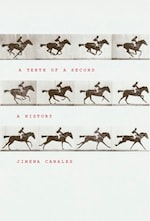
A Tenth of a Second
A HistoryJimena Canales
University of Chicago Press, 2009
In the late fifteenth century, clocks acquired minute hands. A century later, second hands appeared. But it wasn’t until the 1850s that instruments could recognize a tenth of a second, and, once they did, the impact on modern science and society was profound. Revealing the history behind this infinitesimal interval, A Tenth of a Second sheds new light on modernity and illuminates the work of important thinkers of the last two centuries.
Tracing debates about the nature of time, causality, and free will, as well as the introduction of modern technologies—telegraphy, photography, cinematography—Jimena Canales locates the reverberations of this “perceptual moment” throughout culture. Once scientists associated the tenth of a second with the speed of thought, they developed reaction time experiments with lasting implications for experimental psychology, physiology, and optics. Astronomers and physicists struggled to control the profound consequences of results that were a tenth of a second off. And references to the interval were part of a general inquiry into time, consciousness, and sensory experience that involved rethinking the contributions of Descartes and Kant.
Considering its impact on much longer time periods and featuring appearances by Henri Bergson, Walter Benjamin, and Albert Einstein, among others, A Tenth of a Second is ultimately an important contribution to history and a novel perspective on modernity.

A Theory of Assembly
From Museums to MemesKyle Parry
University of Minnesota Press, 2022
A vital reckoning with how we understand the basic categories of cultural expression in the digital era
Digital and social media have transformed how much and how fast we communicate, but they have also altered the palette of expressive strategies: the cultural forms that shape how citizens, activists, and artists speak and interact. Most familiar among these strategies are storytelling and representation. In A Theory of Assembly, Kyle Parry argues that one of the most powerful and pervasive cultural forms in the digital era is assembly.
Whether as subtle photographic sequences, satirical Venn diagrams, or networked archives, projects based in assembly do not so much narrate or represent the world as rearrange it. This work of rearranging can take place at any scale, from a simple pairing of images, undertaken by one person, to the entire history of internet memes, undertaken by millions. With examples ranging from GIFs and paintings to museum exhibitions and social movement hashtags, Parry shows how, in the internet age, assembly has come to equal narrative and representation in its reach and influence, particularly as a response to ecological and social violence. He also emphasizes the ambivalence of assembly—the way it can be both emancipatory and antidemocratic.
As the world becomes ever hotter, more connected, and more algorithmic, the need to map—and remake—assembly’s powers and perils becomes all the more pressing. Interdisciplinary, engaging, and experimental, A Theory of Assembly serves as a playbook of strategies and critical frameworks for artists, activists, and content creators committed to social and environmental justice, ultimately arguing for a collective reenvisioning of which cultural forms matter.
Cover alt text: Letters from the title appear in a jumble, each colored in a blue-orange gradient. Readable title and author sits below the jumble.