Results by title
2916 books match the query 'Politics and government' and 222 start with a
A Pragmatic Alliance
Jewish-Lithuanian political cooperation at the beginning of the 20th centuryVladas Sirutavicius
Central European University Press, 2011
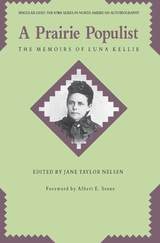
A Prairie Populist
The Memoirs of Luna KellieJane Taylor Nelsen
University of Iowa Press, 1992
Kellie actively sought to organize Nebraska into cooperatives and educate rural people about land, transportation, and money reform. Her compelling, often heartbreaking memoirs—written on the backs of ornate red-and-gold Farmers' Alliance certificates in 1925—give us her own description of how she became motivated to join the Alliance and participate in the Populist party. Kellie writes of her homesteading and political life from the age of eighteen to forty, of failed crops, mortgaged fields, intense hardships, and her devastation at the death of her children.
A Presidential Civil Service
FDR's Liaison Office for Personnel ManagementMordecai Lee
University of Alabama Press, 2016
Revealing the overlooked agency that transformed presidential personnel management and modern federal governance.
A Presidential Civil Service offers a comprehensive and definitive study of President Franklin Delano Roosevelt’s Liaison Office for Personnel Management (LOPM). Established in 1939 following the release of Roosevelt’s Brownlow Committee report, LOPM became a key milestone in the evolution of the contemporary executive-focused civil service.
The Progressive Movement of the nineteenth and early twentieth centuries comprised groups across the political spectrum with quite different. All, however, agreed on the need for a politically autonomous and independent federal Civil Service Commission (CSC) to eliminate patronage and political favoritism. In A Presidential Civil Service, public administration scholar Mordecai Lee explores two models open to later reformers: continuing a merit-based system isolated from politics or a management-based system subordinated to the executive and grounded in the growing field of managerial science.
Roosevelt’s 1937 Brownlow Committee, formally known as the President’s Committee on Administrative Management, has been widely studied including its recommendation to disband the CSC and replace it with a presidential personnel director. What has never been documented in detail was Roosevelt’s effort to implement that recommendation over the objections of Congress by establishing the LOPM as a nonstatutory agency.
The role and existence of LOPM from 1939 to 1945 has been largely dismissed in the history of public administration. Lee’s meticulously researched A Presidential Civil Service, however, persuasively shows that LOPM played a critical role in overseeing personnel policy. It was involved in every major HR initiative before and during World War II. Though small, the agency’s deft leadership almost always succeeded at impelling the CSC to follow its lead.
Roosevelt’s actions were in fact an artful and creative victory, a move finally vindicated when, in 1978, Congress abolished the CSC and replaced it with an Office of Personnel Management headed by a presidential appointee. A Presidential Civil Service offers a fascinating account and vital reassessment of the enduring legacy of Roosevelt’s LOPM.
A Promise And A Way Of Life
White Antiracist ActivismBecky Thompson
University of Minnesota Press, 2001
The first in-depth look at white people’s activism in fighting racism during the past fifty years.
Not since the Civil Rights Movement of the 1950s and 1960s, when many white college students went south to fight against Jim Crow laws, has white antiracist activity held the public’s attention. Yet there have always been white people involved in fighting racism. In this passionate work, Becky Thompson looks at white Americans who have struggled against racism, offering examples of both successes and failures, inspirations, practical philosophies, and a way ahead.
A Promise and a Way of Life weaves an account of the past half-century based on the life histories of thirty-nine people who have placed antiracist activism at the center of their lives. Through a rich and fascinating narrative that links individual experiences with social and political history, Thompson shows the ways, both public and personal, in which whites have opposed racism during several social movements: the Civil Rights and Black Power movements, multiracial feminism, the Central American peace movement, the struggle for antiracist education, and activism against the prison industry. Beginning with the diverse catalysts that started these activists on their journeys, this book demonstrates the contributions and limitations of white antiracism in key social justice movements.
Through these stories, crucial questions are raised: Does antiracist work require a repudiation of one’s whiteness or can that identity be transformed through political commitment and alliances? What do white people need to do to undermine white privilege? What would it take to build a multiracial movement in which white people are responsible for creating antiracist alliances while not co-opting people of color?
Unique in its depth and thoroughness, A Promise and a Way of Life is essential for anyone currently fighting racism or wondering how to do so. Through its demonstration of the extraordinary personal and social transformations ordinary people can make, it provides a new paradigm for movement activity, one that will help to incite and guide future antiracist activism.

A Pryor Commitment
David Pryor
Butler Center for Arkansas Studies, 2009
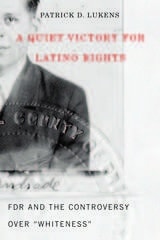
A Quiet Victory for Latino Rights
FDR and the Controversy Over "Whiteness"Patrick D. Lukens
University of Arizona Press, 2012
In 1935 a federal court judge handed down a ruling that could have been disastrous for Mexicans, Mexican Americans, and all Latinos in the United States. However, in an unprecedented move, the Roosevelt administration wielded the power of "administrative law" to neutralize the decision and thereby dealt a severe blow to the nativist movement. A Quiet Victory for Latino Rights recounts this important but little-known story.
To the dismay of some nativist groups, the Immigration Act of 1924, which limited the number of immigrants who could be admitted annually, did not apply to immigrants from Latin America. In response to nativist legal maneuverings, the 1935 decision said that the act could be applied to Mexican immigrants. That decision, which ruled that the Mexican petitioners were not "free white person[s]," might have paved the road to segregation for all Latinos.
The League of United Latin American Citizens (LULAC), founded in 1929, had worked to sensitize the Roosevelt administration to the tenuous position of Latinos in the United States. Advised by LULAC, the Mexican government, and the US State Department, the administration used its authority under administrative law to have all Mexican immigrants—and Mexican Americans—classified as "white." It implemented the policy when the federal judiciary "acquiesced" to the New Deal, which in effect prevented further rulings.
In recounting this story, complete with colorful characters and unlikely bedfellows, Patrick D. Lukens adds a significant chapter to the racial history of the United States.
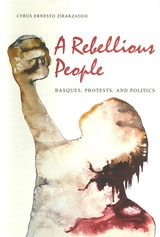
A Rebellious People
Basques, Protests, And PoliticsCyrus Ernesto Zirakzadeh
University of Nevada Press, 1991
In this scholarly work, Zirakzadeh argues that there is a calculated reasoning behind ETA's political violence that is often overlooked by researchers. His book is a comprehensive account of the Basque region's grassroots politics.
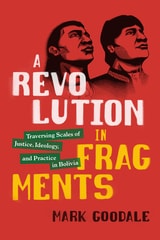
A Revolution in Fragments
Traversing Scales of Justice, Ideology, and Practice in BoliviaMark Goodale
Duke University Press, 2019
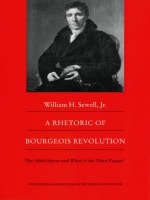
A Rhetoric of Bourgeois Revolution
The Abbe Sieyes and What is the Third Estate?William H. Jr. Sewell
Duke University Press, 1994
This book studies the powerful rhetoric of the great pamphlet and the brilliant but enigmatic thought of its author. William H. Sewell’s insightful analysis reveals the fundamental role played by the new discourse of political economy in Sieyes’s thought and uncovers the strategies by which this gifted rhetorician gained the assent of his intended readers—educated and prosperous bourgeois who felt excluded by the nobility in the hierarchical social order of the old regime. He also probes the contradictions and incoherencies of the pamphlet’s highly polished text to reveal fissures that reach to the core of Sieyes’s thought—and to the core of the revolutionary project itself.
Combining techniques of intellectual history and literary analysis with a deep understanding of French social and political history, Sewell not only fashions an illuminating portrait of a crucial political document, but outlines a fresh perspective on the history of revolutionary political culture.

A Rule of Property for Bengal
An Essay on the Idea of Permanent SettlementRanajit Guha
Duke University Press, 1996
By proclaiming the Permanent Settlement in 1793, the British hoped to promote a prosperous capitalist agriculture of the kind that had developed in England. The act renounced for all time the state’s right to raise the assessment already made upon landowners and thus sought to establish a system of property that was, in the British view, necessary for the creation of a stable government. Guha traces the origins of the Permanent Settlement to the anti-feudal ideas of Phillip Francis and the critique of feudalism provided by physiocratic thought, the precursor of political economy. The central question the book asks is how the Permanent Settlement, founded in anti-feudalism and grafted onto India by the most advanced capitalist power of the day became instrumental in the development of a neo-feudal organization of landed property and in the absorption and reproduction of precapitalist elements in a colonial regime.
Guha’s examination of the British attempt to mold Bengal to the contours of its own society without an understanding of the traditions and obligations upon which the Indian agrarian system was based is a truly pioneering work. The implications of A Rule of Property for Bengal remain rich for the current discussions from the postcolonialist perspective on the meaning of modernity and enlightenment.
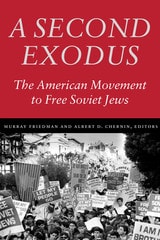
A Second Exodus
The American Movement to Free Soviet JewsEdited by Murray Friedman and Albert D. Chernin
Brandeis University Press, 1999
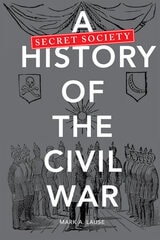
A Secret Society History of the Civil War
Mark A. Lause
University of Illinois Press, 2014
Antebellum secret societies ranged politically from those with progressive or even revolutionary agendas to those that pursued conservative or oppressive goals. This book shows how, in the years leading up to the Civil War, these clandestine organizations exacerbated existing sectional tensions in the United States. Lause's research indicates that the pervasive influence of secret societies may have played a part in key events such as the Freesoil movement, the beginning of the Republican party, John Brown's raid on Harpers Ferry, Lincoln's election, and the Southern secession process of 1860-1861.
This exceptional study encompasses both white and African American secret society involvement, revealing the black fraternal experience in antebellum America as well as the clandestine operations that provided assistance to escaped slaves via the Underground Railroad. Unraveling these pervasive and extensive networks of power and influence, A Secret Society History of the Civil War demonstrates that antebellum secret societies played a greater role in affecting Civil War-era politics than has been previously acknowledged.

A Short History of San Francisco
Robert W. Cherny
University of Nevada Press, 2026

A Short History of Wisconsin
Erika Janik
Wisconsin Historical Society Press, 2010
Rediscover Wisconsin history from the very beginning. A Short History of Wisconsin recounts the landscapes, people, and traditions that have made the state the multifaceted place it is today. With an approach both comprehensive and accessible, historian Erika Janik covers several centuries of Wisconsin's remarkable past, showing how the state was shaped by the same world wars, waves of new inhabitants, and upheavals in society and politics that shaped the nation.
Swift, authoritative, and compulsively readable, A Short History of Wisconsin commences with the glaciers that hewed the region's breathtaking terrain, the Native American cultures who first called it home, and French explorers and traders who mapped what was once called "Mescousing." Janik moves through the Civil War and two world wars, covers advances in the rights of women, workers, African Americans, and Indians, and recent shifts involving the environmental movement and the conservative revolution of the late 20th century. Wisconsin has hosted industries from fur-trapping to mining to dairying, and its political landscape sprouted figures both renowned and reviled, from Fighting Bob La Follette to Joseph McCarthy. Janik finds the story of a state not only in the broad strokes of immigration and politics, but also in the daily lives shaped by work, leisure, sports, and culture. A Short History of Wisconsin offers a fresh understanding of how Wisconsin came into being and how Wisconsinites past and present share a deep connection to the land itself.
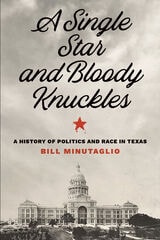
A Single Star and Bloody Knuckles
A History of Politics and Race in TexasBy Bill Minutaglio
University of Texas Press, 2021
For John Nance “Cactus Jack” Garner, there was one simple rule in politics: “You’ve got to bloody your knuckles.” It’s a maxim that applies in so many ways to the state of Texas, where the struggle for power has often unfolded through underhanded politicking, backroom dealings, and, quite literally, bloodshed. The contentious history of Texas politics has been shaped by dangerous and often violent events, and been formed not just in the halls of power but by marginalized voices omitted from the official narratives.
A Single Star and Bloody Knuckles traces the state’s conflicted and dramatic evolution over the past 150 years through its pivotal political players, including oft-neglected women and people of color. Beginning in 1870 with the birth of Texas’s modern political framework, Bill Minutaglio chronicles Texas political life against the backdrop of industry, the economy, and race relations, recasting the narrative of influential Texans. With journalistic verve and candor, Minutaglio delivers a contemporary history of the determined men and women who fought for their particular visions of Texas and helped define the state as a potent force in national affairs.
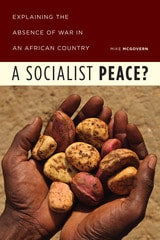
A Socialist Peace?
Explaining the Absence of War in an African CountryMike McGovern
University of Chicago Press, 2017
Guinea is rich in resources, but its people are some of the poorest in the world. Its political situation is polarized by fiercely competitive ethnic groups. Weapons flow freely through its lands and across its borders. And, finally, it is still recovering from the oppressive regime of Sékou Touré. McGovern argues that while Touré’s reign was hardly peaceful, it was successful—often through highly coercive and violent measures—at establishing a set of durable national dispositions, which have kept the nation at peace. Exploring the ambivalences of contemporary Guineans toward the afterlife of Touré’s reign as well as their abiding sense of socialist solidarity, McGovern sketches the paradoxes that undergird political stability.
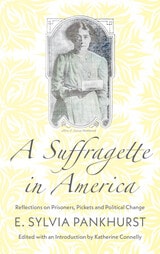
A Suffragette in America
Reflections on Prisoners, Pickets and Political ChangeSylvia Pankhurst
Pluto Press, 2019
This book gathers Pankhurst’s writings from the year-long visit, in which she reveals her shock at the darkness hidden in American life, and draws parallels to her experiences of imprisonment and misogyny in her own country. Never before published, these writings mark an important stage in the development of the suffragette's thought, which she brought back to Britain to inform the burgeoning suffrage campaign there.
A Supreme Court Unlike Any Other
The Deepening Divide Between the Justices and the PeopleKevin J. McMahon
University of Chicago Press, 2024
A data-rich examination of the US Supreme Court's unprecedented detachment from the democratic processes that buttress its legitimacy.
Today’s Supreme Court is unlike any other in American history. This is not just because of its jurisprudence but also because the current Court has a tenuous relationship with the democratic processes that help establish its authority. Historically, this “democracy gap” was not nearly as severe as it is today. Simply put, past Supreme Courts were constructed in a fashion far more in line with the promise of democracy—that the people decide and the majority rules.
Drawing on historical and contemporary data alongside a deep knowledge of court battles during presidencies ranging from FDR to Donald Trump, Kevin J. McMahon charts the developments that brought us here. McMahon offers insight into the altered politics of nominating and confirming justices, the shifting pool of Supreme Court hopefuls, and the increased salience of the Court in elections. A Supreme Court Unlike Any Other is an eye-opening account of today’s Court within the context of US history and the broader structure of contemporary politics.
A Task for Sisyphus
Why Europe’s Roma Policies FailIulius Rostas
Central European University Press, 2020
A Technomoral Politics
Good Governance, Transparency, and Corruption in IndiaAradhana Sharma
University of Minnesota Press, 2024
Examining anticorruption battles and transparency laws to ask: what makes for good governance, and can it limit liberal democratic politics as much as encourage it?
Good governance is meant to empower citizens, increase democratic participation, and make states transparent and accountable, yet this liberal democratic imperative can also promote populist authoritarian rule. Bringing together discourses on ethical goodness with the technicalities of governance as expressed in laws and policies, Aradhana Sharma develops the concept of “technomoral politics” to navigate this fraught topic. With a focus on the work of activists, citizens, and state officials, she offers an ethnographic account of the contradictions and dangers of good-governance politics in twenty-first-century India.
A Technomoral Politics follows the evolution of a group of activists in New Delhi led by Arvind Kejriwal from 2008 to 2014 as they morphed from a protransparency NGO to a mass movement against state corruption to a populist party that promised to change the political system through laws and policies. Sharma explores the technomoral framing of state opacity and corruption as well as the limits of the law in resolving these issues, probing such themes as the contradictory relationship between transparency and bureaucracy and the classed and gendered nature of democratic state institutions.
By examining scalar dimensions of good-governance politics, from the hyperlocal work of activists to global trends, A Technomoral Politics illuminates the paradoxes, limits, and risks of a system that is meant to spread liberal democratic principles but that also ends up promoting antidemocratic, populist-authoritarian forms of rule.
Retail e-book files for this title are screen-reader friendly.

A Thomas More Source Book
Gerard B. Wegemer
Catholic University of America Press, 2004
A Thousand Steps to Parliament
Constructing Electable Women in MongoliaManduhai Buyandelger
University of Chicago Press, 2022
Mongolia has often been deemed an “island of democracy,” commended for its rapid adoption of free democratic elections in the wake of totalitarian socialism. The democratizing era, however, brought alongside it a phenomenon that Manduhai Buyandelger terms “electionization”—a restructuring of elections from time-grounded events into a continuous neoliberal force that governs everyday life beyond the electoral period. In this way, electoral campaigns have come to substitute for the functions of governing, from social welfare to the private sector, requiring an accumulation of wealth and power beyond the reach of most women candidates. In A Thousand Steps to Parliament, Buyandelger shows how successful women candidates instead use strategies of self-polishing to cultivate charisma and a reputation for being oyunlag, or intellectful. This carefully crafted identity can be called the “electable self”: treating their bodies and minds as pliable and renewable, women candidates draw from the same practices of neoliberalism that have unsustainably commercialized elections. By tracing the complicated, contradictory paths to representation that women in Mongolia must walk, A Thousand Steps to Parliament holds a mirror up to democracies the world over, revealing an urgent need to grapple with the encroaching effects of neoliberalism in our global political systems.
A Troubled Birth
The 1930s and American Public OpinionSusan Herbst
University of Chicago Press, 2021
Herbst contends that the idea that there was a public—whose opinions mattered—emerged during the Great Depression, with the diffusion of radio, the devastating impact of the economic collapse on so many people, the appearance of professional pollsters, and Franklin Roosevelt’s powerful rhetoric. She argues that public opinion about issues can only be seen as a messy mixture of culture, politics, and economics—in short, all the things that influence how people live. Herbst deftly pins down contours of public opinion in new ways and explores what endures and what doesn’t in the extraordinarily troubled, polarized, and hyper-mediated present. Before we can ask the most important questions about public opinion in American democracy today, we must reckon yet again with the politics and culture of the 1930s.
A Voice but No Power
Organizing for Social Justice in MinneapolisDavid Forrest
University of Minnesota Press, 2022
Examining the work of social justice groups in Minneapolis following the 2008 recession
Since the Great Recession, even as protest and rebellion have occurred with growing frequency, many social justice organizers continue to displace as much as empower popular struggles for egalitarian and emancipatory change. In A Voice but No Power, David Forrest explains why this is the case and explores how these organizers might better reach their potential as advocates for the abolition of exploitation, discrimination, and other unjust conditions.
Through an in-depth study of post-2008 Minneapolis—a center of progressive activism—Forrest argues that social justice organizers so often fall short of their potential largely because of challenges they face in building what he calls “contentious identities,” the public identities they use to represent their constituents and counteract stigmatizing images such as the “welfare queen” or “the underclass.” In the process of assembling, publicizing, and legitimating contentious identities, he shows, these organizers encounter a series of political hazards, each of which pushes them to make choices that weaken movements for equality and freedom. Forrest demonstrates that organizers can achieve better outcomes, however, by steadily working to remake their hazardous political terrain.
The book’s conclusion reflects on the 2020 uprising that followed the police killing of George Floyd, assessing what it means for the future of social justice activism. Ultimately, Forrest’s detailed analysis contributes to leading theories about organizing and social movements and charts possibilities for further emboldening grassroots struggles for a fairer society.
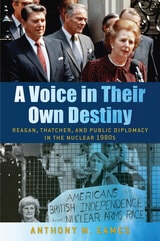
A Voice in Their Own Destiny
Reagan, Thatcher, and Public Diplomacy in the Nuclear 1980sAnthony M. Eames
University of Massachusetts Press, 2023
On June 8, 1982, Ronald Reagan delivered a historic address to the British Parliament, promising that the United States would give people around the world “a voice in their own destiny” in the struggle against Soviet totalitarianism. While British Prime Minister Margaret Thatcher celebrated Reagan’s visit and thanked him for putting “freedom on the offensive,” over 100,000 Britons marched from Hyde Park to Trafalgar Square to protest his arrival and call for nuclear disarmament. Reagan’s homecoming was equally eventful, with 1,000,000 protesters marking his return with a rally for nuclear disarmament in Central Park—the largest protest in American history up to that point.
Employing a wide range of previously unexamined primary sources, Anthony M. Eames demonstrates how the Reagan and Thatcher administrations used innovations in public diplomacy to build back support for their foreign policy agendas at a moment of widespread popular dissent. A Voice in Their Own Destiny traces how competition between the governments of Reagan and Thatcher, the Anglo-American antinuclear movement, and the Soviet peace offensive sparked a revolution in public diplomacy.
A War State All Over
Alabama Politics and the Confederate CauseBen H. Severance
University of Alabama Press, 2020
Alabama’s military forces were fierce and dedicated combatants for the Confederate cause.In his study of Alabama during the Civil War, Ben H. Severance argues that Alabama’s electoral and political attitudes were, in their own way, just as unified in their support for the cause of southern independence. To be sure, the civilian populace often expressed unease about the conflict, as did a good many of Alabama’s legislators, but the majority of government officials and military personnel displayed pronounced Confederate loyalty and a consistent willingness to accept a total war approach in pursuit of their new nation’s aims. As Severance puts it, Alabama was a “war state all over.”
In A War State All Over: Alabama Politics and the Confederate Cause, Severance examines the state’s political leadership at multiple levels of governance—congressional, gubernatorial, and legislative—and orients much of his analysis around the state elections of 1863. Coming at the war’s midpoint, these elections provide an invaluable gauge of popular support for Alabama’s role in the Civil War, particularly at a time when the military situation for Confederate forces was looking bleak. The results do not necessarily reflect a society that was unreservedly prowar, but they clearly establish a polity that was committed to an unconditional Confederate victory, in spite of the probable costs.
Severance’s innovative work focuses on the martial character of Alabama’s polity while simultaneously acknowledging the widespread angst of Alabama’s larger culture and society. In doing so, it puts a human face on the election returns by providing detailed character sketches of the principal candidates that illuminate both their outlook on the war and their role in shaping policy.
A War of Words
The Rhetorical Leadership of Jefferson DavisR. Jarrod Atchison
University of Alabama Press, 2017
Numerous biographies of Jefferson Davis have been penned; however, until now, there had been no substantive analysis of his public discourse as president of the Confederacy. R. Jarrod Atchison’s A War of Words uses concepts from rhetorical theory and public address to help answer a question that has intrigued scholars from a variety of disciplines since the collapse of the Confederacy: what role, if any, did Davis play in the collapse of Confederate nationalism?
Most discussions of Davis and nationalism focus on the military outcomes of his controversial wartime decisions. A War of Words focuses less on military outcomes and argues instead that, in the context of the Confederacy, Jefferson Davis’s rhetorical leadership should have been responsible for articulating a vision for the nation—including the core tenets of its identity, the values the nation should hold dear, the principles it should never compromise, and the goals it should set for its future. Undoubtedly, Davis possessed the skills necessary to make a persuasive public argument. It is precisely because Davis’s oratory skills were so powerful that there is room to judge how he used them. In short, being a great orator is not synonymous with successful rhetorical leadership.
Atchison posits that Davis’s initial successes constrained his rhetorical options later in the war. A War of Words concludes that, in the end, Davis’s rhetorical leadership was a failure because he was unable to articulate a coherent Confederate identity in light of the sacrifices endured by the populace in order to sustain the war effort.

A Woman in the Crossfire
Diaries of the Syrian RevolutionSamar Yazbek
Haus Publishing, 2012
A Woman's Place Is in the House
Campaigning for Congress in the Feminist EraBarbara Burrell
University of Michigan Press, 1994
A World Transformed
The Politics of Culture in Revolutionary Vietnam, 1945-1965Kim N. B. Ninh
University of Michigan Press, 2002
The study covers the period from the Vietnamese communists' initial ascent to power in 1945 to the beginning of the escalation of the American involvement in the country's conflict in 1965, by which time a full-fledged socialist state had been in place in North Vietnam for eleven years. Through a nuanced examination of critical intellectual works, A World Transformed presents a complex view of a period fraught with contradictory possibilities and tensions that continue to resonate in Vietnam today. The extensive use of Vietnamese-language materials, access to archival data never before available, and innovative incorporation of literary and historical sources combine to make this study an invaluable depiction of the Vietnamese revolution.
Kim N. B. Ninh is Assistant Director of the Governance, Law, and Civil Society Programs, The Asia Foundation, San Francisco.

Aazheyaadizi
Worldview, Language, and the Logics of DecolonizationMark D. Freeland
Michigan State University Press, 2020
Abiding by Sri Lanka
On Peace, Place, and PostcolonialityQadri Ismail
University of Minnesota Press, 2005
Abiding by Sri Lanka examines how the disciplines of anthropology, history, and literature treat the Sri Lankan ethnic conflict. Anthropology, Ismail contends, approaches Sri Lanka as an object from an “outside” and western point of view. History, addressing the conflict from the “inside,” abides by the place and so promotes change that is nationalist and exclusive. Neither of these fields imagines an inclusive community. Literature, Ismail argues, can.
With close readings of texts that “abide” by Sri Lanka, texts that have a commitment to it, Ismail demonstrates that the problems in Sri Lanka raise fundamental concerns for us all regarding the relationship between democracies and minorities. Recognizing the structural as well as political tendencies of representative democracies to suppress minorities, Ismail rethinks democracy by redefining the concept of the minority perspective, not as a subject-position of numerical insignificance, but as a conceptual space that opens up the possibility for distinction without domination and, ultimately, peace.
Qadri Ismail is associate professor of English at the University of Minnesota. He has also been a journalist in Sri Lanka.
Abolition Of White Democracy
Joel Olson
University of Minnesota Press, 2004
Offers a new way of understanding the tortured relationship between race and democracy in the United States
Racial discrimination embodies inequality, exclusion, and injustice and as such has no place in a democratic society. And yet racial matters pervade nearly every aspect of American life, influencing where we live, what schools we attend, the friends we make, the votes we cast, the opportunities we enjoy, and even the television shows we watch.
Joel Olson contends that, given the history of slavery and segregation in the United States, American citizenship is a form of racial privilege in which whites are equal to each other but superior to everyone else. In Olson’s analysis we see how the tension in this equation produces a passive form of democracy that discourages extensive participation in politics because it treats citizenship as an identity to possess rather than as a source of empowerment. Olson traces this tension and its disenfranchising effects from the colonial era to our own, demonstrating how, after the civil rights movement, whiteness has become less a form of standing and more a norm that cements white advantages in the ordinary operations of modern society. To break this pattern, Olson suggests an “abolitionist-democratic” political theory that makes the fight against racial discrimination a prerequisite for expanding democratic participation.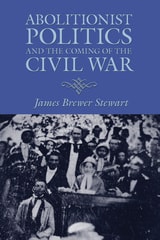
Abolitionist Politics and the Coming of the Civil War
James Brewer Stewart
University of Massachusetts Press, 2008
Before the Civil War, slaveholders made themselves into the most powerful, most deeply rooted, and best organized private interest group within the United States. Not only did slavery represent the national economy's second largest capital investment, exceeded only by investment in real estate, but guarantees of its perpetuation were studded throughout the U.S. Constitution. The vast majority of white Americans, in North and South, accepted the institution, and pro-slavery presidents and congressmen consistently promoted its interests.
In Abolitionist Politics and the Coming of the Civil War, James Brewer Stewart explains how a small group of radical activists, the abolitionist movement, played a pivotal role in turning American politics against this formidable system. He examines what influence the movement had in creating the political crises that led to civil war and evaluates the extent to which a small number of zealous reformers made a truly significant political difference when demanding that their nation face up to its most excruciating moral problem. In making these assessments, Stewart addresses a series of more specific questions: What were the abolitionists actually up against when seeking the overthrow of slavery and white supremacy? What motivated and sustained them during their long and difficult struggles? What larger historical contexts (religious, social, economic, cultural, and political) influenced their choices and determined their behavior? What roles did extraordinary leaders play in shaping the movement, and what were the contributions of abolitionism's unheralded “foot soldiers”? What factors ultimately determined, for better or worse, the abolitionists' impact on American politics and the realization of their equalitarian goals?
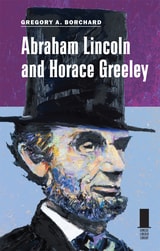
Abraham Lincoln and Horace Greeley
Gregory A. Borchard
Southern Illinois University Press, 2011
Borchard begins with an overview of the lives of both Lincoln and Greeley, delving particularly into their mutual belief in Henry Clay’s much-debated American System, and investigating the myriad similarities between the two political giants, including their comparable paths to power and their statuses as self-made men, their reputations as committed reformers, and their shared dedication to social order and developing a national infrastructure. Also detailed are Lincoln’s and Greeley’s personal quests to end slavery in the United States, as well as their staunch support of free-soil homesteads in the West.
Yet despite their ability to work together productively, both men periodically found themselves on opposite ends of the political spectrum. Their by turns harmonious and antagonistic relationship often played out on the front pages of Greeley’s influential newspaper, the New York Tribune. Drawing upon historical gems from the Tribune, as well as the personal papers of both Lincoln and Greeley, Borchard explores in depth the impact the two men had on their times and on each other, and how, as Lincoln’s and Greeley’s paths often crossed—and sometimes diverged—they personified the complexities, virtues, contradictions, and faults of their eras.
Abraham Lincoln and Horace Greeley goes beyond tracing each man’s personal and political evolution to offer a new perspective on the history-changing events of the times, including the decline of the Whig Party and the rise of the Republicans, the drive to extend American borders into the West; and the bloody years of the Civil War. Borchard finishes with reflections on the deaths of Lincoln and Greeley and how the two men have been remembered by subsequent generations.
Sure to become an essential volume in the annals of political history and journalism, Abraham Lincoln and Horace Greeley is a compelling testament to the indelible mark these men left on both their contemporaries and the face of America’s future.
Abraham Lincoln and the Bible
A Complete CompendiumGordon Leidner
Southern Illinois University Press, 2023
How did Abraham Lincoln’s lifelong study of scripture influence him as a man and, ultimately, as president? Historian Gordon Leidner believes the impact was profound—more than previously recognized—and has investigated all the known writings of Abraham Lincoln to identify, catalog, and study every instance in which Lincoln quoted from or alluded to the Bible. Rather than dwelling on the never-ending debate about Lincoln’s religious beliefs, Leidner shows how scripture affected Lincoln personally, professionally, and politically.
Leidner offers first a short biography that focuses on Lincoln’s use of the Bible, how it shaped him as a person, how its influence changed over time, and how biblical quotations peppered his letters, speeches, and conversations. The book concludes with an unparalleled appendix that tabulates nearly 200 instances of Lincoln’s quoting from or alluding to scripture, giving locators for the Bible and Roy P. Basler’s nine volume Collected Works of Abraham Lincoln and quotations from both sources. The appendix also includes when and where Lincoln used each quote, providing valuable context, whether the use was in personal letters such as one to Queen Victoria after the death of Prince Albert, political speeches such as the Gettysburg Address, or state addresses such as the Second Inaugural Address.
By showcasing Lincoln’s specific biblical references and influences, Leidner reframes the question of Lincoln’s religious beliefs so that readers may evaluate for themselves what solace and guidance the Bible afforded the sixteenth president.
Abraham Lincoln as a Man of Ideas
Allen C. Guelzo, with a Foreword by Michael Lind
Southern Illinois University Press, 2009
Despite the most meager of formal educations, Lincoln had a tremendous intellectual curiosity that drove him into the circle of Enlightenment philosophy and democratic political ideology. And from these, Lincoln developed a set of political convictions that guided him throughout his life and his presidency. This compilation of ten essays from Lincoln scholar Allen C. Guelzo uncovers the hidden sources of Lincoln’s ideas and examines the beliefs that directed his career and brought an end to slavery and the Civil War.
Abraham Lincoln
The Observations of John G. Nicolay and John HayEdited by Michael Burlingame
Southern Illinois University Press, 2007
Editor Michael Burlingame sifted through the original forty-seven-hundred-page work and selected only the personal observations of the secretaries during the Lincoln presidency, placing ten excerpts in chronological order in Abraham Lincoln: The Observations of John G. Nicolay and John Hay. The result is an important collection of Nicolay and Hay’s interpretations of Lincoln’s character, actions, and reputation, framed by Burlingame’s compelling preface, introduction, chapter introductions, and notes. The volume provides vivid descriptions of such events as Election Day in 1860, the crisis at Fort Sumter, the first major battle of the war at Bull Run, and Lincoln’s relationship with Edwin Stanton and George McClellan.
In this clear and captivating new work, Burlingame has made key portions of Nicolay and Hay’s immense biography available to a wide audience of today’s readers.
Abraham Lincoln’s Statesmanship and the Limits of Liberal Democracy
Jon D. Schaff
Southern Illinois University Press, 2019
Though Lincoln’s presidency is inextricably linked to the Civil War, and he is best known for his defense of the Union and executive wartime leadership, Lincoln believed that Congress should be at the helm of public policy making. Likewise, Lincoln may have embraced limited government in vague terms, but he strongly supported effective rule of law and distribution of income and wealth. Placing the Lincoln presidency within a deeper and more meaningful historical context, Abraham Lincoln’s Statesmanship and the Limits of Liberal Democracy highlights Lincoln’s significance in the development of American power institutions and social movement politics.
Using Lincoln’s prepresidential and presidential words and actions, this book argues that decent government demands a balance of competing goods and the strong statesmanship that Lincoln exemplified. Instead of relying too heavily on the will of the people and institutional solutions to help prevent tyranny, Jon D. Schaff proposes that American democracy would be better served by a moderate and prudential statesmanship such as Lincoln’s, which would help limit democratic excesses.
Schaff explains how Lincoln’s views on prudence, moderation, natural rights, and economics contain the notion of limits, then views Lincoln’s political and presidential leadership through the same lens. He compares Lincoln’s views on governmental powers with the defense of unlimited government by twentieth-century progressives and shows how Lincoln’s theory of labor anticipated twentieth-century distributist economic thought. Schaff’s unique exploration falls squarely between historians who consider Lincoln a protoprogressive and those who say his presidency was a harbinger of industrialized, corporatized America.
In analyzing Lincoln’s approach, Abraham Lincoln’s Statesmanship and the Limits of Liberal Democracy rejects the idea he was a revolutionary statesman and instead lifts up Lincoln’s own affinity for limited presidential power, making the case for a modest approach to presidential power today based on this understanding of Lincoln’s statesmanship. As a counterpoint to the contemporary landscape of bitter, uncivil politics, Schaff points to Lincoln’s statesmanship as a model for better ways of engaging in politics in a democracy.
Absolutist Attachments
Emotion, Media, and Absolutism in Seventeenth-Century FranceChloé Hogg
Northwestern University Press, 2019
In Absolutist Attachments, Chloé Hogg uncovers the affective and media connections that shaped Louis XIV’s absolutism. Studying literature, painting, engravings, correspondence, and the emerging periodic press, Hogg diagnoses the emotions that created absolutism’s feeling subjects and publics.
Louis XIV’s subjects explored new kinds of affective relations with their sovereign, joining with the king in acts of aesthetic judgment, tender feeling, or the “newsiness” of emerging print news culture. Such alternative modes of adhesion countered the hegemonic model of kingship upheld by divine right, reason of state, or corporate fidelities and privileges with subject-driven attachments and practices. Absolutist Attachments discovers absolutism’s alternative political and cultural legacy—not the spectacle of an unbound king but the binding connections of his subjects.
Achieve the Honorable
A Missouri Congressman's Journey from Warm Springs to WashingtonIke Skelton
Southern Illinois University Press, 2013
During his years in the U.S. House of Representatives, Skelton became known as a bipartisan negotiator and a champion of the Armed Services. Throughout the decades, he helped steer the nation through its most dangerous challenges, from Communism to terrorism; took a leading role in the reform of the Department of Defense; dedicated himself to fulfilling the interests of his constituents; and eventually rose to become chair of the House Armed Services Committee during such pivotal events as the wars in Iraq and Afghanistan. In addition to detailing Skelton’s political career and its accompanying challenges and triumphs, Achieve the Honorable provides inside glimpses into the lives of political titans like Harry Truman, Richard Nixon, and Bill Clinton. Along the way, we are treated to Skelton’s engaging humor and shrewd insight into twentieth- and twenty-first-century U.S. politics.
Acholi Intellectuals
Knowledge, Power, and the Making of Colonial Northern Uganda, 1850–1960Patrick William Otim
Ohio University Press, 2024
Across The Pacific
Asian Americans and GlobalizationEvelyn Hu-Dehart, E
Temple University Press, 2000
Members of the Asian American community have always been trans-Pacific, but are now more than ever, since the 1965 change in U.S. immigration law. Entering the U.S. at the culmination of the Civil Rights movement, Asians becoming Asian Americans have joined a self-consciously multicultural society. Asian economies roared onto the world stage, creating new markets while circulating capital and labor at an unprecedented scale and intensity, thereby helping drive the forces of modern globalization. These essays by well-known scholars in the field of Asian American studies consider such topics as the impact of new migrations on Asian American subjectivity and politics, Asian American activism and U.S. foreign policy, and the role of Asian Americans in Pacific Rim economies.
Considering issues of diaspora, transmigrancy, assimilation, institutionalized racism, and community, Across the Pacific covers such cutting-edge subjects as the cultural expressions of dislocation among contemporary Asian American writers, as well as the impact of the new migrations on Asian American subjectivity and politics.
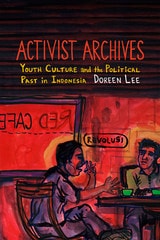
Activist Archives
Youth Culture and the Political Past in IndonesiaDoreen Lee
Duke University Press, 2016
Advice and Consent
The Development of the Policy SciencesPeter DeLeon
Russell Sage Foundation, 1988
Affective Intellectuals and the Space of Catastrophe in the Americas
Judith Sierra-Rivera
The Ohio State University Press, 2018
Pursuing this argument, Sierra-Rivera examines print, radio, and web materials by authors whose emotional discourses have also had a measurable impact on the formation of communities that demand their full political inclusion in society. This book therefore fills a significant gap in the study of the relationship between materiality (space and bodies), emotions, and the political imagination. Affective Intellectuals demonstrates that writers and intellectuals themselves are vital in reshaping their communities and fighting for social justice in the Hemispheric Americas.
African American Political Thought
A Collected HistoryEdited by Melvin L. Rogers and Jack Turner
University of Chicago Press, 2021
While African American political thought is inextricable from the historical movement of American political thought, this volume stresses the individuality of Black thinkers, the transnational and diasporic consciousness, and how individual speakers and writers draw on various traditions simultaneously to broaden our conception of African American political ideas. This landmark volume gives us the opportunity to tap into the myriad and nuanced political theories central to Black life. In doing so, African American Political Thought: A Collected History transforms how we understand the past and future of political thinking in the West.
African Americans in U.S. Foreign Policy
From the Era of Frederick Douglass to the Age of ObamaEdited by Linda Heywood, Allison Blakely, Charles Stith, and Joshua C. Yesnowitz
University of Illinois Press, 2015
Groundbreaking and critical, African Americans in U.S. Foreign Policy expands on the scope and themes of recent collections to offer the most up-to-date scholarship to students in a range of disciplines, including U.S. and African American history, Africana studies, political science, and American studies.

African Democracies and African Politics
M. A. Mohamed Salih
Pluto Press, 2001
African Intimacies
Race, Homosexuality, and GlobalizationNeville Hoad
University of Minnesota Press, 2007