Results by title
1325 books match the query 'Psychology' and 104 start with a
Advances in Behavioral Finance
Richard H. Thaler
Russell Sage Foundation, 1993
Affect, Animals, and Autists
Feeling Around the Edges of the Human in PerformanceMarla Carlson
University of Michigan Press, 2018
By analyzing specific structures of affect with the vocabulary of emotions, Marla Carlson builds upon the conception of affect articulated by psychologist Silvan Tomkins. The book treats a diverse selection of live performance and archival video and analyzes the ways in which they affect their audiences. The range of performances includes commercially successful productions such as The Curious Incident of the Dog in the Night-Time, War Horse, and The Lion King as well as to the more avant-garde and experimental theater created by Robert Wilson and Christopher Knowles, Back to Back Theatre, Elevator Repair Service, Pig Iron Theatre, and performance artist Deke Weaver.
Affective Ecologies
Empathy, Emotion, and Environmental NarrativeAlexa Weik von Mossner
The Ohio State University Press, 2017
How do we experience the virtual environments we encounter in literature and film on the sensory and emotional level? How do environmental narratives invite us to care for human and nonhuman others who are put at risk? And how do we feel about the speculative futures presented to us in ecotopian and ecodystopian texts? Weik von Mossner explores these central questions that are important to anyone with an interest in the emotional appeal and persuasive power of environmental narratives.
African Vodun
Art, Psychology, and PowerSuzanne Preston Blier
University of Chicago Press, 1994
In this first major study of its kind, Suzanne Preston Blier examines the artworks of the contemporary vodun cultures of southern Benin and Togo in West Africa as well as the related voudou traditions of Haiti, New Orleans, and historic Salem, Massachusetts. Blier employs a variety of theoretically sophisticated psychological, anthropological, and art historical approaches to explore the contrasts inherent in the vodun arts—commoners versus royalty, popular versus elite, "low" art versus "high." She examines the relation between art and the slave trade, the psychological dynamics of artistic expression, the significance of the body in sculptural expression, and indigenous perceptions of the psyche.
Throughout, Blier pushes African art history to a new height of cultural awareness that recognizes the complexity of traditional African societies as it acknowledges the role of social power in shaping aesthetics and meaning generally. This book will be of critical importance not only to those concerned with African, African American, and Caribbean art, but also to anthropologists, African diaspora scholars, students of comparative religion and comparative psychology, and anyone fascinated by the traditions of voudou and vodun.
"An extraordinary tour de force."—Choice
"Extraordinarily detailed....Blier's examination of the entire, often mysterious history of vodun is...in a word, definitive."—Booklist
"A serious study that concentrates on the hidden power of objects and the meaning behind that potency is long overdue. Welcome Susan Blier's African Vodun....Certainly a must for...those concerned with the psychology of art."—Janet L. Stanley, Art Documentation
"[Blier] is usually sensitive to the need to resist imposing Western artistic values and academic methodologies inappropriately upon such art. But she offers the reader a gift even more precious; she offers rare insights into how various art forms—sculpture and home architecture in particular—yield meanings for the African users of such art.—Norman Weinstein, Boston Book Review
After Effects
A Memoir of Complicated GriefAndrea Gilats
University of Minnesota Press, 2021
An intensely moving and revelatory memoir of enduring and emerging from exceptional grief
To grieve after a profound loss is perfectly natural and healthy. To be debilitated by grief for more than a decade, as Andrea Gilats was, is something else. In her candid, deeply moving, and ultimately helpful memoir of breaking free of death’s relentless grip on her life, Gilats tells her story of living with prolonged, or “complicated,” grief and offers insight, hope, and guidance to others who suffer as she did.
Thomas Dayton, Andrea Gilats’s husband of twenty years, died at 52 after a five-month battle with cancer. In After Effects Gilats describes the desolation that followed and the slow and torturous twenty-year journey that brought her back to life. In the two years immediately following his death, Gilats wrote Tom daily letters, desperately trying to maintain the twenty-year conversation of their marriage. Excerpts from these letters reveal the depth of her despair but also the glimmer of an awakening as they also trace a different, more typical course of the grief experienced by one of Gilats's colleagues, also widowed. Gilats’s struggle to rescue herself takes her through the temptation of suicide, the threat of deadly illness, the overwhelming challenges of work, and the rigor of learning and eventually teaching yoga, to a moment of reckoning and, finally, reconciliation to a life without her beloved partner. Her story is informed by the lessons she learned about complicated grief as a disorder that, while intensely personal, can be defined, grappled with, and overcome.
Though complicated grief affects as many as one in seven of those stricken by the loss of a close loved one, it is little known outside professional circles. After Effects points toward a path of recuperation and provides solace along the way—a service and a comfort that is all the more timely and necessary in our pandemic-ravaged world of loss and isolation.
After Freud Left
A Century of Psychoanalysis in AmericaEdited by John Burnham
University of Chicago Press, 2012
From August 29 to September 21, 1909, Sigmund Freud visited the United States, where he gave five lectures at Clark University in Worcester, Massachusetts. This volume brings together a stunning gallery of leading historians of psychoanalysis and of American culture to consider the broad history of psychoanalysis in America and to reflect on what has happened to Freud’s legacy in the United States in the century since his visit.
After High School - What?
Ralph F. Berdie
University of Minnesota Press, 1954
After High School - What? was first published in 1954. Minnesota Archive Editions uses digital technology to make long-unavailable books once again accessible, and are published unaltered from the original University of Minnesota Press editions.
Whether a high school graduate enters college, goes to work, takes vocational training, or follows any other path open to him is of concern not only to the youth himself but to the nation and its manpower needs. This study throws light on the question of what influences determine the decision for a college education. It is based on information obtained from 25,000 graduating high school seniors in Minnesota, interviews with a sampling of their parents, and a follow-up study to check on how closely the young people followed the plans they indicated in the original survey. The book, a volume in the Minnesota Library on Student Personnel Work, will be helpful to high school and college administrators and counselors.
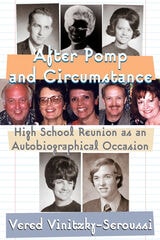
After Pomp and Circumstance
High School Reunion as an Autobiographical OccasionVered Vinitzky-Seroussi
University of Chicago Press, 1998
As autobiographical occasions, reunions prompt us to examine our own life narratives, the stories we tell ourselves about who we are and how we have come to be that person. But at the same time, they can threaten the integrity of those very stories, subjecting them to the scrutiny of others whose memories of the past and ourselves may be altogether different from our own. Reunions, then, engender a fragile community held together by the resources of a shared past, yet imperiled by the tensions of competing histories. Inevitably—for both those who attend and those who choose not to—the reunion forces a kind of biographical confrontation, an unavoidable and often pivotal engagement between a carefully constructed personal identity and the socially prevalent standards of success and accomplishment.
Though many see in today's culture the gradual demise of personal identity, Vinitzky-Seroussi's carefully researched study reveals something quite different— After Pomp and Circumstance explores a struggle we all experience: the desire to resolve the tension between public conceptions and internal understandings, to maintain a sense of continuity between past and present lives, and to lay claim to both an integrated self and a unified life history.
After the Bloodbath
Is Healing Possible in the Wake of Rampage Shootings?James D. Diamond
Michigan State University Press, 2019
Aged by Culture
Margaret Morganroth Gullette
University of Chicago Press, 2003
In this illuminating book, Margaret Morganroth Gullette reveals that aging doesn't start in our chromosomes, but in midlife downsizing, the erosion of workplace seniority, threats to Social Security, or media portrayals of "aging Xers" and "greedy" Baby Boomers. To combat the forces aging us prematurely, Gullette invites us to change our attitudes, our life storytelling, and our society. Part intimate autobiography, part startling cultural expose, this book does for age what gender and race studies have done for their categories. Aged by Culture is an impassioned manifesto against the pernicious ideologies that steal hope from every stage of our lives.
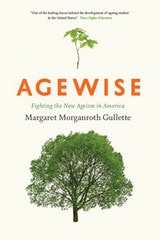
Agewise
Fighting the New Ageism in AmericaMargaret Morganroth Gullette
University of Chicago Press, 2011
Let’s face it: almost everyone fears growing older. We worry about losing our looks, our health, our jobs, our self-esteem—and being supplanted in work and love by younger people. It feels like the natural, inevitable consequence of the passing years, But what if it’s not? What if nearly everything that we think of as the “natural” process of aging is anything but?
In Agewise, renowned cultural critic Margaret Morganroth Gullette reveals that much of what we dread about aging is actually the result of ageism—which we can, and should, battle as strongly as we do racism, sexism, and other forms of bigotry. Drawing on provocative and under-reported evidence from biomedicine, literature, economics, and personal stories, Gullette probes the ageism thatdrives discontent with our bodies, our selves, and our accomplishments—and makes us easy prey for marketers who want to sell us an illusory vision of youthful perfection. Even worse, rampant ageism causes society to discount, and at times completely discard, the wisdom and experience acquired by people over the course of adulthood. The costs—both collective and personal—of this culture of decline are almost incalculable, diminishing our workforce, robbing younger people of hope for a decent later life, and eroding the satisfactions and sense of productivity that should animate our later years.
Once we open our eyes to the pervasiveness of ageism, however, we can begin to fight it—and Gullette lays out ambitious plans for the whole life course, from teaching children anti-ageism to fortifying the social safety nets, and thus finally making possible the real pleasures and opportunities promised by the new longevity. A bracing, controversial call to arms, Agewise will surprise, enlighten, and, perhaps most important, bring hope to readers of all ages.
Aging in the Church
How Social Relationships Affect HealthNeal M. Krause
Templeton Press, 2008
A growing number of studies indicate that older people in the church form social ties that have a significant positive impact on their physical and mental health. In Aging in the Church, Neal Krause comprehensively assesses the various relationships that stem from church involvement.
Among the many types of relationships Krause explores are close companion friendships, social-support structures (such as assistance provided by fellow church members during difficult times), and interactions that arise from Bible study and prayer groups. Through his thorough investigation of the underlying links between these relationships and the ways they relate to attributes like forgiveness, hope, gratitude, and altruism, the author hopes to explain why older adults who are involved in religious activities tend to enjoy better physical and mental health than those who are not engaged in religious communities. Going beyond merely reviewing the existing research on this subject, Aging in the Church provides a blueprint for taking research on church-based social relationships and health to the next level by identifying conceptual and methodological issues that investigators will confront as they delve more deeply into these connections.
Though these are complex issues, readers will find plain language and literature drawn from a wide array of disciplines, including sociology, psychology, public health, medicine, psychiatry, nursing, social work, gerontology, and theology. Literature, poetry, philosophy, and ethical ideas supplement the insights from these diverse fields. As a result, Aging in the Church takes on a genuinely interdisciplinary focus that will appeal to various scholars, researchers, and students.
Algorithmic Desire
Toward a New Structuralist Theory of Social MediaMatthew Flisfeder
Northwestern University Press, 2021
In Algorithmic Desire, Matthew Flisfeder shows that social media is a metaphor that reveals the dominant form of contemporary ideology: neoliberal capitalism. The preeminent medium of our time, social media’s digital platform and algorithmic logic shape our experience of democracy, enjoyment, and desire. Weaving between critical theory and analyses of popular culture, Flisfeder uses examples from The King’s Speech, Black Mirror, Gone Girl, The Circle, and Arrival to argue that social media highlights the antisocial dimensions of twenty‑first-century capitalism. He counters leading critical theories of social media—such as new materialism and accelerationism—and thinkers such as Gilles Deleuze and Michel Foucault, proposing instead a new structuralist account of the ideology and metaphor of social media. Emphasizing the structural role of crises, gaps, and negativity as central to our experiences of reality, Flisfeder interprets the social media metaphor through a combination of dialectical, Marxist, and Lacanian frameworks to show that algorithms may indeed read our desire, but capitalism, not social media, truly makes us antisocial. Wholly original in its interdisciplinary approach to social media and ideology, Flisfeder’s conception of “algorithmic desire” is timely, intriguing, and sure to inspire debate.
Alice in Pornoland
Hardcore Encounters with the Victorian GothicLaura Helen Marks
University of Illinois Press, 2018
Laura Helen Marks investigates the contradictions and seesawing gender dynamics in Victorian-inspired adult films and looks at why pornographers persist in drawing substance and meaning from the era's Gothic tales. She focuses on the particular Victorianness that pornography prefers, and the mythologies of the Victorian era that fuel today's pornographic fantasies. In turn, she exposes what porning the Victorians shows us about pornography as a genre.
A bold foray into theory and other forbidden places, Alice in Pornoland reveals how modern-day Victorian Gothic pornography constantly emphasizes, navigates, transgresses, and renegotiates issues of gender, sexuality, and race.
All My Friends Live in My Computer
Trauma, Tactical Media, and MeaningSamira Rajabi
Rutgers University Press, 2021
Alterity
Jean-Michel Oughourlian
Michigan State University Press, 2023
Altruism, Morality, and Economic Theory
Edmund S. Phelps
Russell Sage Foundation, 1975
Am I Still A Woman
Hysterectomy And Gender IdentityJean Elson
Temple University Press, 2003
American Beliefs About Intelligence
Orville G., Jr. Brim
Russell Sage Foundation, 1969
American Dream, American Burnout
How to cope when it all gets to be too muchGerald Loren Fishkin, Ph.D.
Parkhurst Brothers, Inc., 0
This book was written for anyone who wants to be free from the tyranny of stress and burnout. Burnout can affect anyone, especially in today’s world, where “The American Dream” has been replaced by the realities of a faltering economy, breakdown of the family and societal distintegration. Burnout is not a natural state, and no one should have to live with its emotional pain. Dr. Fishkin explains how to readjust couterproductive thought processes and behaviors and learn new, healthy methods for coping. He details both self-help techniques and suggested resources to reach out to the community or the workplace for assistance.
American Indian Life Skills Development Curriculum
Teresa D. LaFromboise
University of Wisconsin Press, 1996
Suicide is a significant problem for many adolescents in Native American Indian populations. American Indian Life Skills Development Curriculum is a course for high school students and some middle school students that is designed to drastically reduce suicidal thinking and behavior.
Created in collaboration with students and community members from the Zuni Pueblo and the Cherokee Nation of Oklahoma, this curriculum addresses key issues in Native American Indian adolescents’ lives and teaches such life skills as communication, problem solving, depression and stress management, anger regulation, and goal setting. The course is unique in its skills-based approach. After first increasing awareness and knowledge of suicide, it then teaches students specific methods to help a peer turn away from suicidal thinking and seek help from an appropriate help-giver.
The skills-based approach of this curriculum follows well-established teaching methods to develop social skills. Teachers and peers inform students of the rationale and components of a particular skill, model and demonstrate the skill for them, and later provide feedback on individual skill performance.
American Lobotomy
A Rhetorical HistoryJenell Johnson
University of Michigan Press, 2014
Amy, Wendy, and Beth
Learning Language in South BaltimoreBy Peggy J. Miller
University of Texas Press, 1982
Amy, Wendy, and Beth, the 1980 recipient of the New York Academy of Sciences Edward Sapir Award, is a lively in-depth study of how three young children from an urban working-class community learned language under everyday conditions. It is a sensitive portrayal of the children and their families and offers an innovative approach to the study of language development and social class.
A major conclusion of the study is that the linguistic abilities of working-class children are consistent with previous cross-cultural accounts of the development of communicational skills and, as such, lend no support to past claims that children from the lower classes are linguistically deprived. Instead, Amy, Wendy, and Beth emerge as able and enthusiastic language learners; their families, as caring and competent partners in the language socialization process.
Sound scholarship and original findings about a hitherto neglected population of children lend special value to this work not only for scholars in psychology, linguistics, and anthropology, but for educators and policymakers as well.

An Alternative History of Hyperactivity
Food Additives and the Feingold DietSmith, Matthew
Rutgers University Press, 2011
Matthew Smith asserts that those scientific conclusions were, in fact, flawed. An Alternative History of Hyperactivity explores the origins of the Feingold diet, revealing why it became so popular, and the ways in which physicians, parents, and the public made decisions about whether it was a valid treatment for hyperactivity. Arguing that the fate of Feingold's therapy depended more on cultural, economic, and political factors than on the scientific protocols designed to test it, Smith suggests the lessons learned can help resolve medical controversies more effectively.
An Atlas of Juvenile MMPI Profiles
Starke Hathaway
University of Minnesota Press, 1961

An Erotic Philology of Golden Age Spain
Adrienne Laskier Martin
Vanderbilt University Press, 2007
By utilizing theories of deviance, sexuality, and gender; the rhetoric of eroticism; and textual criticism, An Erotic Philology of Golden Age Spain historicizes and analyzes the particular ways in which classical Spanish writers assign symbolic meaning to non-normative sexual practices and their practitioners. It shows how prostitutes, homosexuals, transvestites, women warriors, and female tricksters were stigmatized and marginalized as part of an ordering principle in the law, society, and in literature. It is against these sexual outlaws that early modern orthodoxy establishes and identifies itself during the Golden Age of Spanish letters.
These eroticized figures are recurring objects of contemplation and fascination for Spain's most canonical as well as lesser known writers of the period, in a variety of poetic, prose and dramatic genres. They ultimately reveal attitudes towards sexual behavior that are far more complex than was previously thought. An Erotic Philology of Golden Age Spain thoughtfully anatomizes the interdisciplinary systems at the heart of the varied sexual behaviors depicted in early modern Spanish literature.
An Ideological Death
Suicide in Israeli LiteratureRachel S. Harris
Northwestern University Press, 2014
Yehudit Katzir, Etgar Keret, Amos Oz, Yaakov Shabtai, Benjamin Tammuz, and A. B. Yehoshua are among the writers who engage with depictions of suicide in a critical and rhetorical process that reconsiders myths at the heart of the Zionist project. In Israeli literature, suicide is linked to a society’s compulsion to create impossible ideals that leave its populace disappointed and deluded. Yet, as Rachel S. Harris shows, even at their harshest these writers also acknowledge the idealism that helped build Israel as a modern nation-state.
An Intellectual History of Psychology
Daniel N. Robinson
University of Wisconsin Press, 1995
An Intellectual History of Psychology, already a classic in its field, is now available in a concise new third edition. It presents psychological ideas as part of a greater web of thinking throughout history about the essentials of human nature, interwoven with ideas from philosophy, science, religion, art, literature, and politics.
Daniel N. Robinson demonstrates that from the dawn of rigorous and self-critical inquiry in ancient Greece, reflections about human nature have been inextricably linked to the cultures from which they arose, and each definable historical age has added its own character and tone to this long tradition. An Intellectual History of Psychology not only explores the most significant ideas about human nature from ancient to modern times, but also examines the broader social and scientific contexts in which these concepts were articulated and defended. Robinson treats each epoch, whether ancient Greece or Renaissance Florence or Enlightenment France, in its own terms, revealing the problems that dominated the age and engaged the energies of leading thinkers.
Robinson also explores the abiding tension between humanistic and scientific perspectives, assessing the most convincing positions on each side of the debate. Invaluable as a text for students and as a stimulating and insightful overview for scholars and practicing psychologists, this volume can be read either as a history of psychology in both its philosophical and aspiring scientific periods or as a concise history of Western philosophy’s concepts of human nature.
An Interpretation of Desire
Essays in the Study of SexualityJohn Gagnon
University of Chicago Press, 2003
Gagnon may be best known as the coauthor of Sexual Conduct—a book that introduced the seminal concept of sexual scripting—and as one of the coauthors of The Social Organization of Sexuality, a foundational work that is widely considered to be the most important study of human sexual behavior since the Kinsey report. The essays collected here first trace the influence of scripting theory on Gagnon, outlining the radical departure he took from the dominant biological and psychiatric models of sex research. The volume then turns to more recent essays that consider such vexed issues as homosexuality, the theories of Sigmund Freud, HIV, hazardous sex, and the social aspects of sexually transmitted diseases.
An MMPI Handbook
Volume II. Research ApplicationsLeona Dahlstrom
University of Minnesota Press, 1975
Analog Hunger in a Digital World
Confronting Today's Identity CrisisPaul Vitz
St. Augustine's Press, 2024
Vitz argues that the "special digital way in which technology is destroying our well-being will require some new vocabulary… [while] making the case that analog experience is the only reliable source of meaning in our lives and that its loss has led to the growth of meaninglessness and especially to the loss of [personal identity." This book is written for those who are enthralled by the digital realm and tech advancements, but also for those who are affected by contemporary crises in culture and identity. Vitz's approach is far-reaching and concise. "After describing the nature of analog and digital codes in chapters 1 and 2, I then note the great importance of the right and left brain hemispheres to analog and digital differences in chapters 3 and 4. Chapter 5 introduces the cultural crisis of today as analog hunger in a digital world. Chapters 6 and 7 identify the problem as extreme uncontrolled digitalism, with a focus on transhumanism. Chapter 8 presents ways to recover analog life and chapter 9 makes clear we need both codes. Chapter 10 provides a solution involving the integration of the two codes in the service of the analog from a distinctly religious perspective."
Anatomy of a Train Wreck
The Rise and Fall of Priming ResearchRuth Leys
University of Chicago Press, 2024
In 2012, a team of Belgian scientists reported that they had been unable to replicate a canonical experiment in the field of psychology known as “priming.” The original experiment, performed by John Bargh in the nineties, had purported to show that words connoting old age unconsciously influenced—or primed—research subjects, causing them to walk more slowly. When subsequent researchers could not replicate these results, Nobel-winning psychologist Daniel Kahneman warned of a “train wreck looming” if Bargh and his colleagues could not address doubts about their work. Since then, the inability to replicate other well-known priming experiments has helped precipitate an ongoing debate over what has gone wrong in psychology, raising fundamental questions about the soundness of research practices in the field.
Anatomy of a Train Wreck offers the first detailed history of priming research from its origins in the early 1980s to its recent collapse. Ruth Leys places priming experiments in the context of contemporaneous debates over not only the nature of automaticity but also the very foundations of social psychology. While these latest discussions about priming have largely focused on methodology—including sloppy experimental practices, inadequate statistical methods, and publication bias—Leys offers a genealogy of the theoretical expectations and scientific paradigms that have guided and motivated priming research itself. Examining scientists’ intellectual strategies, their responses to criticism, and their assumptions about the nature of subjectivity, Anatomy of a Train Wreck raises crucial questions about the evidence surrounding unconscious influence and probes the larger stakes of the replication crisis: psychology’s status as a science.

Ancestral Places
Understanding Kanaka GeographiesKatrina-Ann R. Kapa'anaokalaokeola Nakoa Oliveira
Oregon State University Press, 2014
Katrina-Ann R. Kapa‘anaokalaokeola Nakoa Oliveira elucidates a Kanaka geography and provides contemporary scholars with insights regarding traditional culture—including the ways in which Kanaka utilize cartographic performances to map our ancestral places and retain our mo‘olelo, such as reciting creation accounts, utilizing nuances embedded in language, and dancing hula.
A Kanaka by birth, a kumu ‘olelo Hawai‘i (language teacher) by profession, and a geographer by training, Oliveira’s interests intersect at the boundary where words and place-making meet her ancestral land. Thus, Ancestral Places imbues the theoretical with sensual practice. The book’s language moves fluidly between Hawaiian and English, terms are nimbly defined, and the work of the field is embodied: geographic layers are enacted within the text, new understandings created—not just among lexica, but amidst illustrations, charts, terms, and poetry.
In Ancestral Places, Oliveira reasserts both the validity of ancestral knowledge systems and their impact in modernity. Her discussion of Kanaka geographies encompasses the entire archipelago, offering a new framework in Kanaka epistemology.
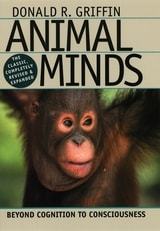
Animal Minds
Beyond Cognition to ConsciousnessDonald R. Griffin
University of Chicago Press, 2001
With this new edition of his classic book, which he has completely revised and updated, Griffin moves beyond considerations of animal cognition to argue that scientists can and should investigate questions of animal consciousness. Using examples from studies of species ranging from chimpanzees and dolphins to birds and honeybees, he demonstrates how communication among animals can serve as a "window" into what animals think and feel, just as human speech and nonverbal communication tell us most of what we know about the thoughts and feelings of other people. Even when they don't communicate about it, animals respond with sometimes surprising versatility to new situations for which neither their genes nor their previous experiences have prepared them, and Griffin discusses what these behaviors can tell us about animal minds. He also reviews the latest research in cognitive neuroscience, which has revealed startling similarities in the neural mechanisms underlying brain functioning in both humans and other animals. Finally, in four chapters greatly expanded for this edition, Griffin considers the latest scientific research on animal consciousness, pro and con, and explores its profound philosophical and ethical implications.
Anorexia and Mimetic Desire
René Girard
Michigan State University Press, 2008

Anti-Apocalypse
Exercises in Genealogical CriticismLee Quinby
University of Minnesota Press, 1994
Anti-Apocalypse was first published in 1994. Minnesota Archive Editions uses digital technology to make long-unavailable books once again accessible, and are published unaltered from the original University of Minnesota Press editions.
As the year 2000 looms, heralding a new millennium, apocalyptic thought abounds-and not merely among religious radicals. In politics, science, philosophy, popular culture, and feminist discourse, apprehensions of the End appear in images of cultural decline and urban chaos, forecasts of the end of history and ecological devastation, and visions of a new age of triumphant technology or a gender-free utopia. There is, Lee Quinby contends, a threatening "regime of truth" prevailing in the United States-and this regime, with its enforcement of absolute truth and morality, imperils democracy. In Anti-Apocalypse, Quinby offers a powerful critique of the millenarian rhetoric that pervades American culture. In doing so, she develops strategies for resisting its tyrannies.
Drawing on feminist and Foucauldian theory, Quinby explores the complex relationship between power, truth, ethics, and apocalypse. She exposes the ramifications of this relationship in areas as diverse as jeanswear magazine advertising, the Human Genome project, contemporary feminism and philosophy, texts by Henry Adams and Zora Neale Hurston, and radical democratic activism. By bringing together such a wide range of topics, Quinby shows how apocalypse weaves its way through a vast network of seemingly unrelated discourses and practices. Tracing the deployment of power through systems of alliance, sexuality, and technology, Quinby reveals how these power relationships produce conflicting modes of subjectivity that create possibilities for resistance. She promotes a variety of critical stances—genealogical feminism, an ethics of the flesh, and "pissed criticism"—as challenges to apocalyptic claims for absolute truth and universal morality. Far-reaching in its implications for social and cultural theory as well as for political activism, Anti-Apocalypse will engage readers across the cultural spectrum and challenge them to confront one of the most subtle and insidious orthodoxies of our day.Lee Quinby is associate professor of English and American studies at Hobart and William Smith Colleges. She is the author of Freedom, Foucault, and the Subject of America (1991) and coeditor (with Irene Diamond) of Feminism and Foucault: Reflections on Resistance (1988).

Anxiety in and about Africa
Multidisciplinary Perspectives and ApproachesAndrea Mariko Grant
Ohio University Press, 2021
How does anxiety impact narratives about African history, culture, and society?
This volume demonstrates the richness of anxiety as an analytical lens within African studies. Contributors call attention to ways of thinking about African spaces—physical, visceral, somatic, and imagined—as well as about time and temporality. Through a multidisciplinary approach, the volume also brings histories of anxiety in colonial settings into conversation with work on the so-called negative emotions in disciplines beyond history. While anxiety has long been acknowledged for its ability to unsettle colonial narratives, to reveal the vulnerability of the colonial enterprise, this volume shows it can equally complicate contemporary narratives, such as those of sustainable development, migration, sexuality, and democracy. These essays therefore highlight the need to take emotions seriously as contemporary realities with particular histories that must be carefully mapped out.
Aquamarine Blue 5
Personal Stories of College Students with AutismDawn Prince-Hughes
Ohio University Press, 2002
Rated Outstanding by the American Association of School Libraries
This is the first book to be written by autistic college students about the challenges they face. Aquamarine Blue 5 details the struggle of these highly sensitive students and shows that there are gifts specific to autistic students that enrich the university system, scholarship, and the world as a whole.
Dawn Prince-Hughes presents an array of writings by students who have been diagnosed with Asperger’s Syndrome or High-Functioning Autism, showing their unique ways of looking at and solving problems. In their own words, they portray how their divergent thinking skills could be put to great use if they were given an opportunity. Many such students never get the chance because the same sensitivity that gives them these insights makes the flicker of fluorescent lights and the sound of chalk on the board unbearable For simple—and easily remedied—reasons, we lose these students, who are as gifted as they are challenged.
Aquamarine Blue 5 is a showcase of the strength and resilient character of individuals with Asperger’s Syndrome. It will be an invaluable resource for those touched by this syndrome, their friends and families, and school administrators.

Armageddon in Waco
Critical Perspectives on the Branch Davidian ConflictEdited by Stuart A. Wright
University of Chicago Press, 1996
Could the tragedy have been prevented? Was it necesary for the BATF agents to do what they did? What could have been done differently? Armageddon in Waco offers the most detailed, wide-ranging analysis of events surrounding Waco. Leading scholars in sociology, history, law, and religion explore all facets of the confrontation in an attempt to understand one of the most confusing government actions in American history.
The book begins with the history of the Branch Davidians and the story of its leader, David Koresh. Chapters show how the Davidians came to trouble authorities, why the group was labeled a "cult," and how authorities used unsubstantiated allegations of child abuse to strengthen their case against the sect.
The media's role is examined next in essays that considering the effect on coverage of lack of time and resources, the orchestration of public relations by government officials, the restricted access to the site or to countervailing evidence, and the ideologies of the journalists themselves. Several contributors then explore the relation of violence to religion, comparing Waco to Jonestown.
Finally, the role played by "experts" and "consultants" in defining such conflicts is explored by two contributors who had active roles as scholarly experts during and after the siege The legal and consitutional implications of the government's actions are also analyzed in balanced, clearly written detail.
Armed Forces
Masculinity and Sexuality in the American War FilmEberwein, Robert
Rutgers University Press, 2007
In war films, the portrayal of deep friendships between men is commonplace. Given the sexually anxious nature of the American imagination, such bonds are often interpreted as carrying a homoerotic subtext. In Armed Forces , Robert Eberwein argues that an expanded conception of masculinity and sexuality is necessary in order to understand more fully the intricacy of these intense and emotional human relationships. Drawing on a range of examples from silent films such as What Price Glory and Wings to sound era works like The Deer Hunter, Platoon, Three Kings, and Pearl Harbor , he shows how close readings of war films, particularly in relation to their cultural contexts, demonstrate that depictions of heterosexual love, including those in romantic triangles, actually help to define and clarify the nonsexual nature of male love. The book also explores the problematic aspects of masculinity and sexuality when threatened by wounds, as in The Best Years of Our Lives, and considers the complex and persistent analogy between weapons and the male body, as in Full Metal Jacket and Saving Private Ryan .
ArtBreak
A Creative Guide to Joyful and Productive ClassroomsKatherine Ziff
Ohio University Press, 2016
Play is the central, universally significant activity of childhood. Self-directed play in which adults have a supporting rather than directing role is critical to the development and well-being of children. Yet as children have their days and nights increasingly scripted and planned for them, opportunities for play have disappeared over the last half century, especially in schools.
ArtBreak’s innovation lies in its creative framework. Former school counselor, current professor of counseling, and practicing artist Katherine Ziff developed and tested the program over five years, integrating theory and practice from art therapy, counseling, and child-centered education. The result is a choice-based, guided play experience based on the developmental and restorative possibilities of art making.
A detailed how-to guide, this book is the flexible and accessible toolbox that teachers, parents, and counselors need to facilitate relaxing, art-based play that allows children to freely explore, plan, and pursue their own interests with adult support. Easy to implement, ArtBreak can be added to the regular routines of classroom, home, therapy office, or other community setting at whatever scale suits space, time, and budget. No art training is required, only a willingness to embark on a play journey with children.
Aspiring in Later Life
Movements across Time, Space, and GenerationsMegha Amrith
Rutgers University Press, 2023
This book is also freely available online as an open-access digital edition.
Download the open access book here.
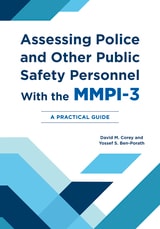
Assessing Police and Other Public Safety Personnel with the MMPI-3
A Practical GuideDavid M. Corey
University of Minnesota Press, 2024
A hands-on guide for using the MMPI-3 when assessing suitability and fitness for duty of public safety personnel
Factors unique to police and public safety candidate selection require adjustments to standard guidelines when interpreting MMPI-3 scores. David M. Corey and Yossef S. Ben-Porath’s latest work broadly focuses on use of the MMPI-3 in both prehire suitability evaluations and posthire fitness-for-duty evaluations of individuals in public safety occupations.
This practical guide was written for clinicians who conduct evaluations of incumbent public safety personnel as well as candidates for law enforcement, correctional, firefighter/medic, or emergency dispatcher positions. The chapters are devoted to foundational and practical knowledge required for conducting these evaluations, including a concise primer on the MMPI-3, common procedural and legal requirements, and contextual factors affecting evaluations. The book also provides case illustrations that demonstrate use of integrative models in preemployment and fitness-for-duty evaluations and includes expanded coverage of the updated MMPI-3 Police Candidate Interpretive Report as well as the newly released Correctional Candidate Interpretive Report, Dispatcher Candidate Interpretive Report, and Firefighter Candidate Interpretive Report.
Assessment of Chronic Pain Patients with the MMPI-2
Laura S. Keller
University of Minnesota Press, 1991
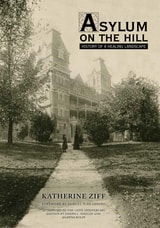
Asylum on the Hill
History of a Healing LandscapeKatherine Ziff
Ohio University Press, 2012
Asylum on the Hill is the story of a great American experiment in psychiatry, a revolution in care for those with mental illness, as seen through the example of the Athens Lunatic Asylum. Built in southeast Ohio after the Civil War, the asylum embodied the nineteenth-century “gold standard” specifications of moral treatment. Stories of patients and their families, politicians, caregivers, and community illustrate how a village in the coalfields of the Hocking River valley responded to a national movement to provide compassionate care based on a curative landscape, exposure to the arts, outdoor exercise, useful occupation, and personal attention from a physician.
Katherine Ziff’s compelling presentation of America’s nineteenth-century asylum movement shows how the Athens Lunatic Asylum accommodated political, economic, community, family, and individual needs and left an architectural legacy that has been uniquely renovated and repurposed. Incorporating rare photos, letters, maps, and records, Asylum on the Hill is a fascinating glimpse into psychiatric history.
At Home with the Holocaust
Postmemory, Domestic Space, and Second-Generation Holocaust NarrativesLucas F. W. Wilson
Rutgers University Press, 2025
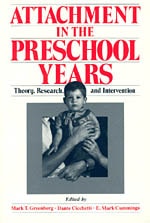
Attachment in the Preschool Years
Theory, Research, and InterventionEdited by Mark T. Greenberg, Dante Cicchetti, and E. Mark Cummings
University of Chicago Press, 1993
"There is a wealth of information and thought in this book; it does not have a weak or uninteresting chapter, starting with the Preface by Emde, and as a whole, it forms a sort of seminar."—John E. Bates, Contemporary Psychology

Audiences and Publics
When Cultural Engagement Matters for the Public SphereEdited by Sonia Livingstone
Intellect Books, 2005
Aussie Fans
Uniquely Placed in Global Popular CultureCelia Lam and Jackie Raphael
University of Iowa Press, 2019
Australia holds a unique place in the global scheme of fandom. Much of the media consumed by Australian audiences originates from either the United States or the United Kingdom, yet several Australian productions have also attracted international fans in their own right. This first-ever academic study of Australian fandom explores the national popular culture scene through themes of localization and globalization.
The essays within reveal how Australian audiences often seek authentic imports and eagerly embrace different cultures, examining both Hollywood’s influence on Australian fandom and Australian fan reactions to non-Western content. By shining a spotlight on Australian fandom, this book not only provides an important case study for fan studies scholars, it also helps add nuance to a field whose current literature is predominantly U.S. and U.K. focused.Contributors: Kate Ames, Ahmet Atay, Jessica Carniel, Toija Cinque, Ian Dixon, Leigh Edmonds, Sharon Elkind, Jacqui Ewart, Lincoln Geraghty, Sarah Keith, Emerald L. King, Renee Middlemost
Authors of the Storm
Meteorologists and the Culture of PredictionGary Alan Fine
University of Chicago Press, 2007
Whether it is used as an icebreaker in conversation or as the subject of serious inquiry, “the weather” is one of the few subjects that everyone talks about. And though we recognize the faces that bring us the weather on television, how government meteorologists and forecasters go about their jobs is rarely scrutinized. Given recent weather-related disasters, it’s time we find out more. In Authors of the Storm, Gary Alan Fine offers an inside look at how meteorologists and forecasters predict the weather.
Based on field observation and interviews at the Storm Prediction Center in Oklahoma, the National Weather Service in Washington, D.C., and a handful of midwestern outlets, Fine finds a supremely hard-working, insular clique of professionals who often refer to themselves as a “band of brothers.” In Fine’s skilled hands, we learn their lingo, how they “read” weather conditions, how forecasts are written, and, of course, how those messages are conveyed to the public. Weather forecasts, he shows, are often shaped as much by social and cultural factors inside local offices as they are by approaching cumulus clouds. By opening up this unique world to us, Authors of the Storm offers a valuable and fascinating glimpse of a crucial profession.